
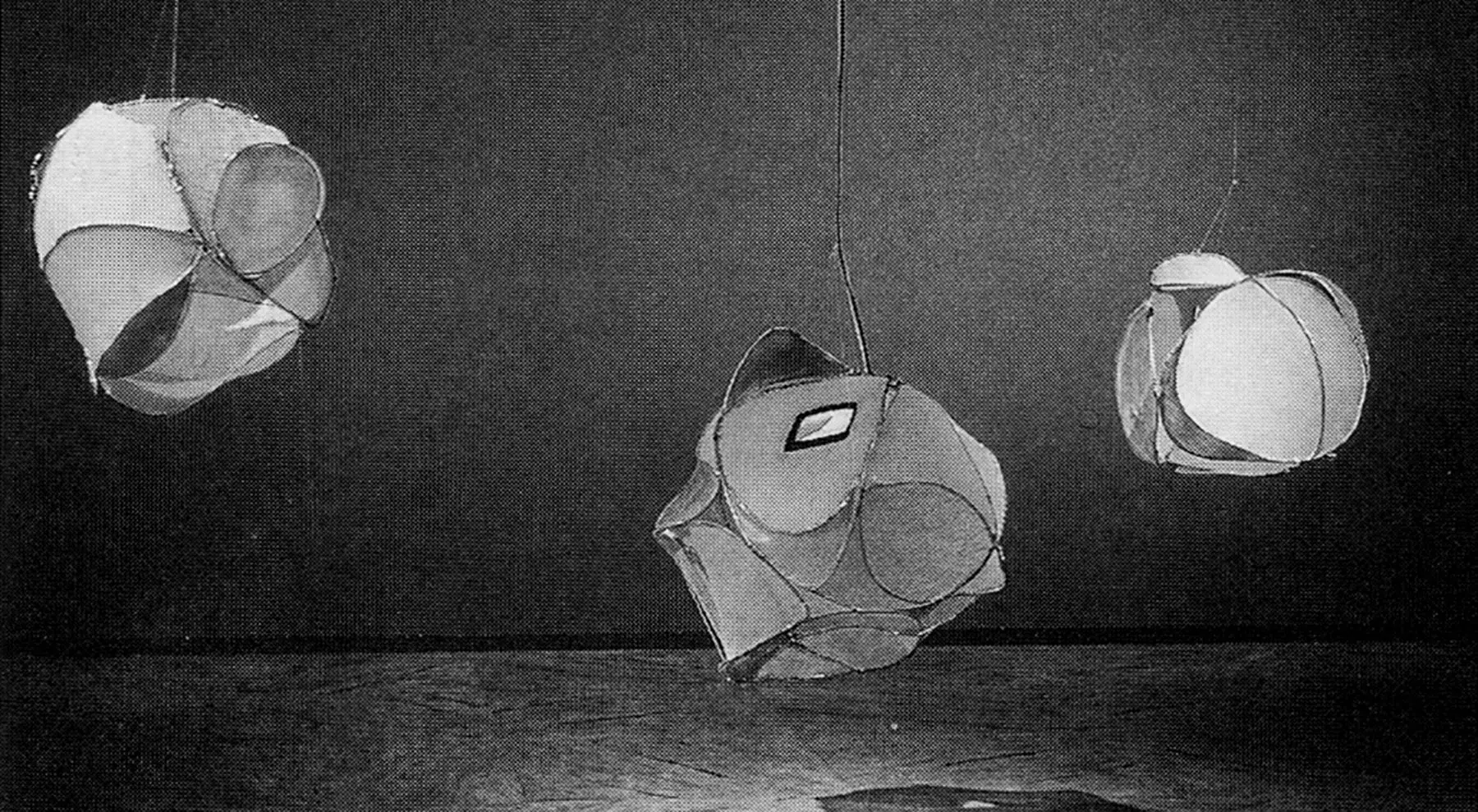
In spite of the adverse reactions that technological proposals still generate in the Venezuelan artistic context, they acquire a dominant presence in the expositive agenda of the country’s principal museums and galleries. Among the most recent manifestations of this phenomenon is Videohabitats, a show held between May 4th and June 25th at the Museum of Fine Arts of Caracas. Curated by Benjamín Villares and coordinated by Paula Martínez, the exhibition presents a panoramic vision of video art in its different modalities.
Videohabitats gathers sixteen works by nineteen artists, some of whom present their work as cuatro manos. The group is large and heterogeneous, which allows for the coexistence of diverse aesthetic and conceptual formulations. In this sense, we find pieces that use the video as an autonomous language, along with others that use it as part of sculptures, settings, and installations. From a thematic point of view, references to bodily experience, the sacred, desire, and femininity abound. In general, the works of this exhibition contain lyrical allusions, ludic moments, and tragic denouements. These aspects acquire greater relevance in the context of a museographical staging whose purpose is not only to show objects, but also to re-create a total spectacle dominated by penumbra and splendors.
In spite of the show’s thematic diversity, some recurring motifs may be distinguished, particularly with regard to water. This phenomenon refers to the element where the first microorganisms that gave birth to life developed, and also to its symbolism as a means of spiritual purification. Nela Ochoa’s Péndulo virtual (Virtual pendulum) is made up of a sort of circular lagoon on which the image of a model subject rests while, from the ceiling, drops of water drip regularly. In addition, José Antonio Hernández-Díez’s Sin título (Untitled) reproduces the act of drinking water, thus creating a continual flow between his mouth and the fountain. Magdalena Fernández, in turn, presents 3i000, a large rectangle of water projected onto the floor where transparencies, sheens, and reflections suggest indefinite structures. Finally, Nenúfares (Water lilies), by José Luis López Reus and Jonathan Gutiérrez, re-creates an aquatic world invaded by figures that glide in an atmosphere of smooth liquidity.
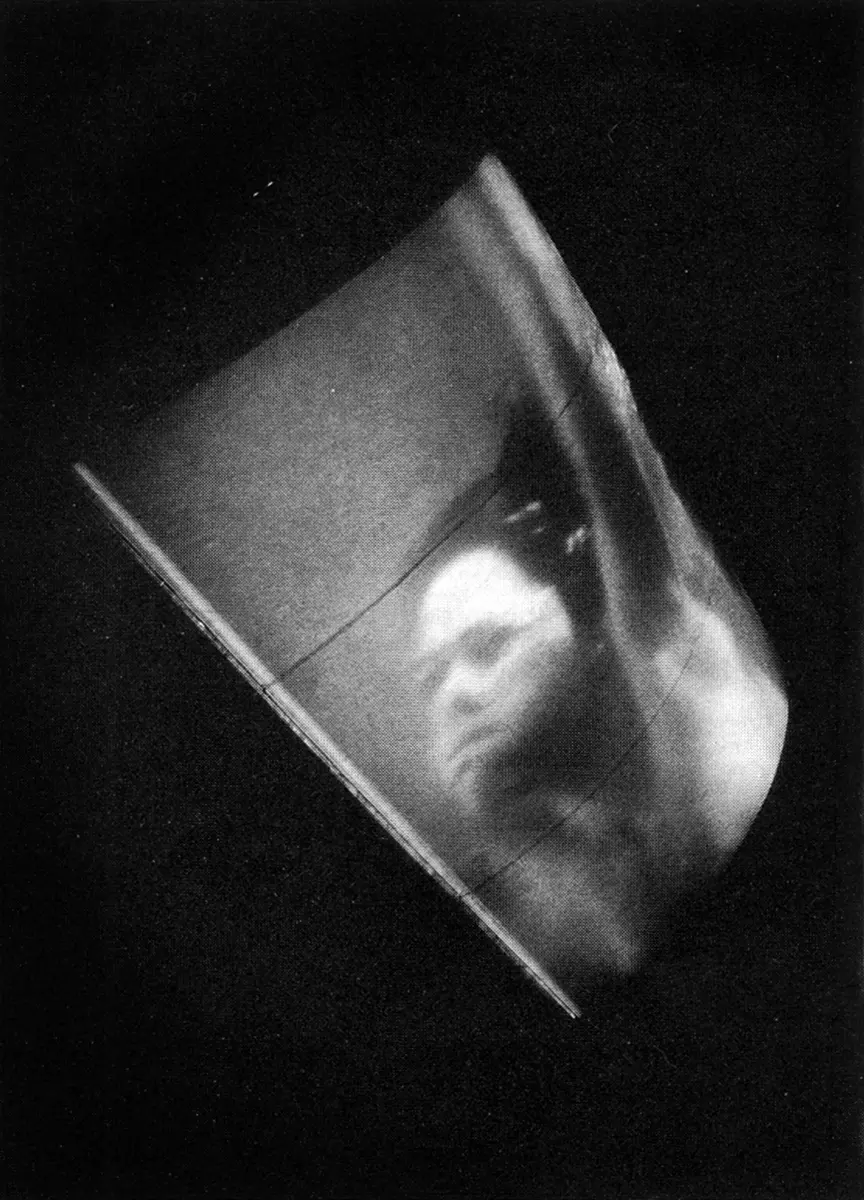
Likewise, we see a strong somatic presence linked to the notions of identity, desire, and fertility. In that area, the body appears as an object of seduction and a sacrificial vehicle in an attempt to evade the ontological void of the
contemporary subject. Look Your Eyes, a video installation by Nan González, puts the viewer face to face with a sleepless eye that watches him from the screen. Valentina Gamero’s ccx is a sort of “binocular theater” inserted into a sphere where images of pleasure are projected. And Respirando entre membranas (Breathing between membranes), by Patricia Cazorla and Uli Brahmst (Essentially Female), proposes a sort of virtual incubator conceived in a post-human world.
There is also a certain predilection for allegorical themes that touch upon determined aspects of sacredness and mythology. In Cordero de Dios ( Lamb of God) by Adriana Barrios and Reinaldo Guédez, the audiovisual image serves as a vehicle for a suggestive revision of the Bible story. Carlos Castillo’s Del cielo al suelo (From Heaven to earth) re-edits the legend of Icarus but in today’s context. Up and down are two coordinates that refer to an extreme vision of human destiny: ascent and fall. Yucef Merhi’s Wizart: del pensamiento a la palabra (Wizart: from thought to word) unfolds a symbolic constellation in cyberspace. The piece uses the net as a support, which allows it to transcend the physical consistency of an object of traditional art.
Luis Poleo’s Hongos para el 2000 (Mushrooms for 2000) deserves a separate mention. It is made up of a series of images of psychedelic appearance which reproduce almost fractally on the wall. The projection is presented as a visual experiment that generates successive loops of forms and colors. Mushrooms—who knows if they are nuclear or hallucinogenic? —instead of fireworks to celebrate the advent of the new millennium on an uncertain planet. But beyond these groups of works, the pieces participating in Videohabitats strengthen, each one in its own way, the idea that any part is an ideal place for life to emerge and develop; it does not matter if it happens on imaginary territory or in virtual space. There, in that intangible sphere, human utopias and aversions dwell. In that context, the audiovisual technology ceases to be a prosthesis that turns the individual into a disabled person, and it becomes a tool more at the service of creation. Only, in this case, the artistic meaning does not depend on the skill with which the pencil, the brush, or the chisel are used, but rather on the ability to communicate something, using the language of “our time.”
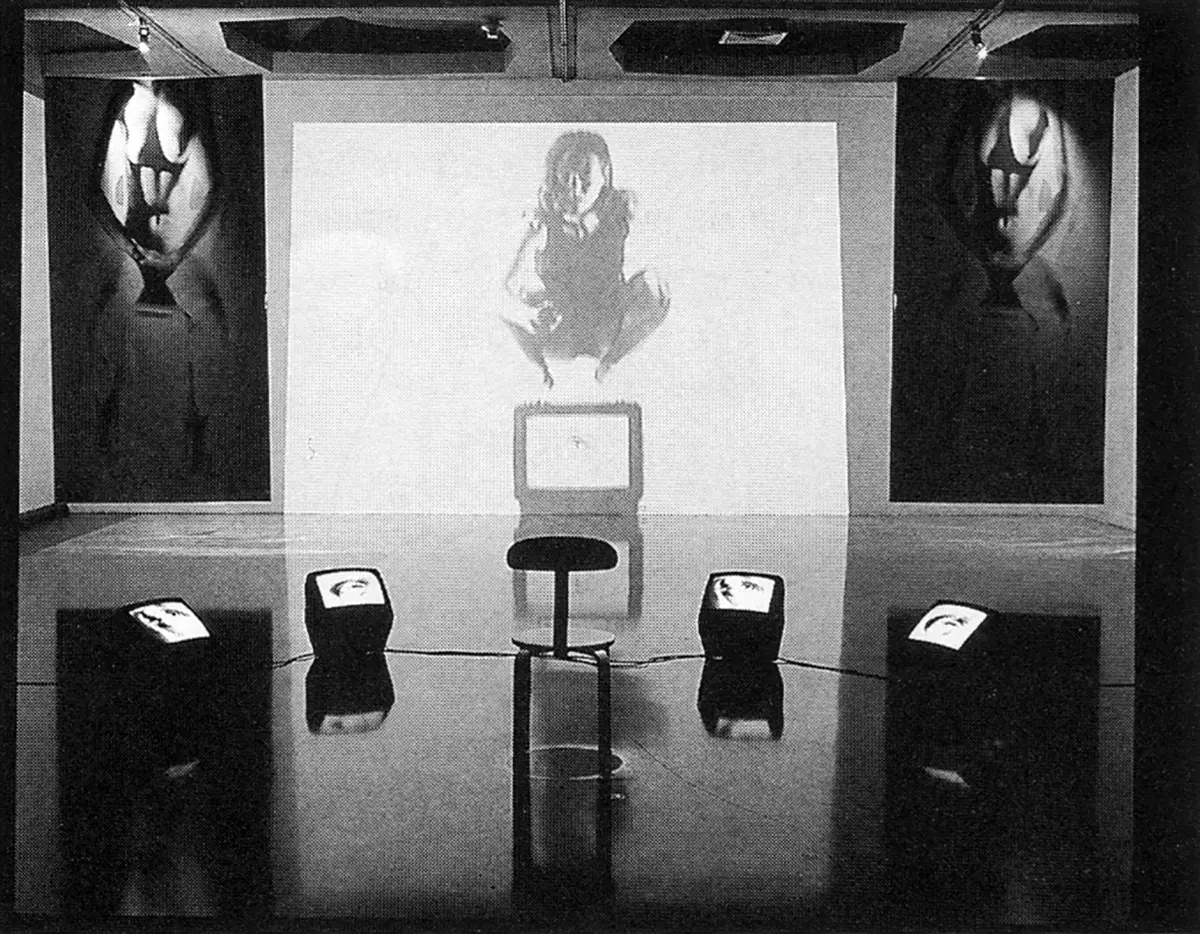
The world seen through monitors and screens acquires a distinct and seductive consistency that is not based on the physical materiality of things, but rather on their informative accessibility. The very concept of place is modified, for virtual space exceeds geography and plays down the idea of time. We can be here and there in one single instant, since the audiovisual medium paves the way for a strange communion between the distant and the near, between the before, the now, and the after. A parallel and enchanted world, subjected to the momentary eclipses of the gaze. A blink, a “twinkling of the eye,” can invert the logic of things and replace the order of the tangible with the control of the visible. A deferred, unconstrasting world, a web of dancing images that pierce the penumbra without leaving evidence of what they are or have been: are they perhaps ghostly images of a reality that cannot be defined, or simply corporealized desires?
This is how Videohabitats records a change in spatial, perceptive relationships that transcend the coordinates of the phenomenic universe and establish a more active link between the work and the viewer. It is no longer a question of “being in the world” as one more object among things, but rather of submerging oneself in the torrent of images that slip out through the screen. Consequently, the subject is displaced through an illusory galaxy where all places are within reach of the gaze. It could not be otherwise. The audiovisual language has penetrated every corner of civilization, eliminating geographical borders and creating a territory inhabited by images that do not establish any distinction between the real and the apparent.
However, the proposals that we have commented on are inserted into a cultural medium framed by profound socio-economic contrasts, where “communicational opulence” and marginality coexist. As Jesús Martín Barbero observes: "(...) with a certain ease, people can assimilate the technological instruments and images of modernization, but they can only mend their system of values, ethical norms, and civic virtues very slowly and painfully.”1 The crisis of the ideological and cognitive maps "leaves us without the categories of interpretation capable of grasping the course of the vertiginous transformations in which we live."2 In the face of this situation, the alliance between art and new technologies is subject to revision. This does not mean that the work should solve the contradictions of real society, but instead, it should critically confront the conflicts that involve the advent of virtual utopia.
NOTES
1. Jesus Martin Barbero. “Hegemonia comunicacional y descentramiento cultural”, in Enfoques sobre posmodernidad en America Latina. Roberto Follari and Rigoberto Lanz (compilators), Editorial Sentido. Caracas, 19998, p. 40.
2. Same as above.
FÉLIX SUAZO