
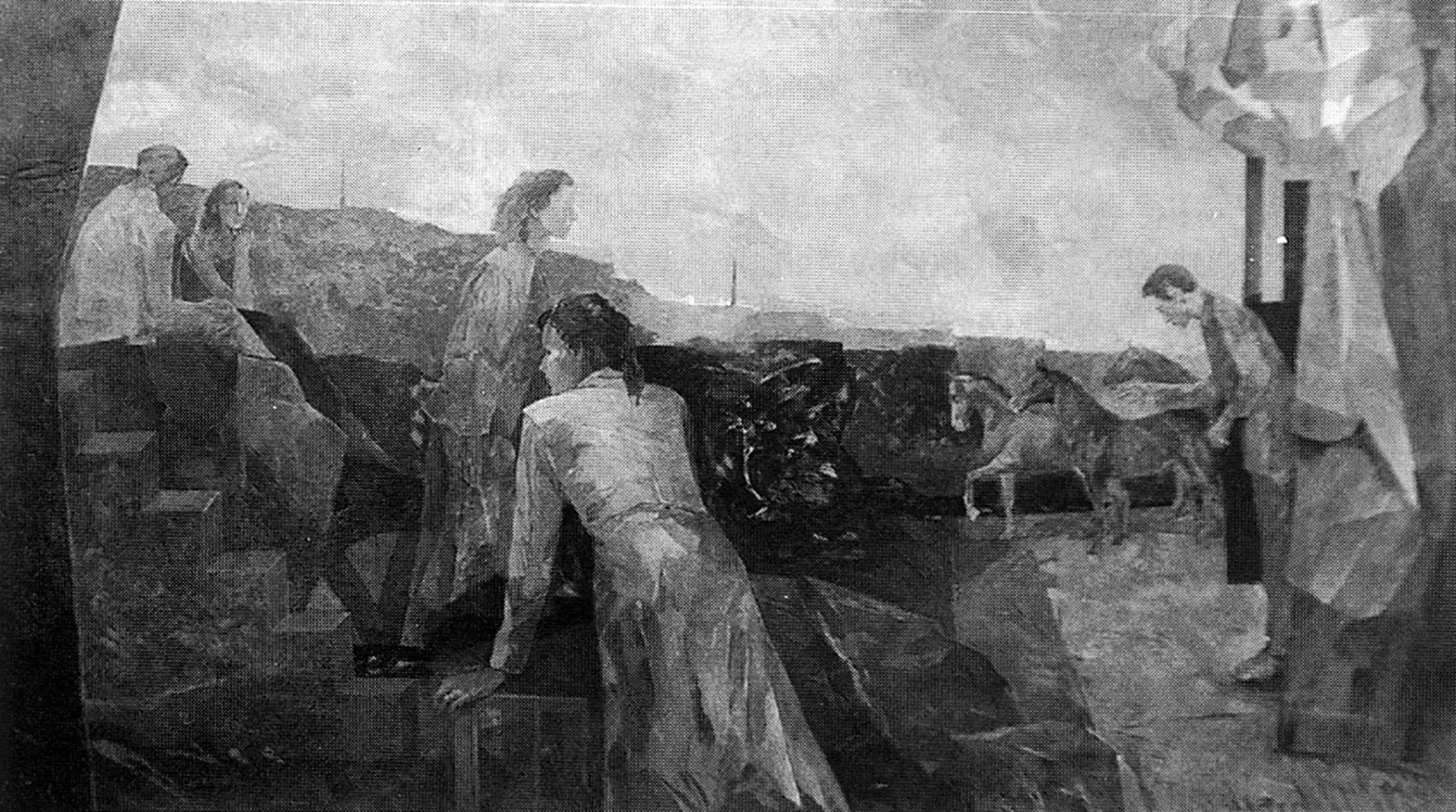
Galería Espacio, San Salvador Galería Espacio in San Salvador commemorates the new millennium with XI Muestra de Pintura y Escultura (XI Exhibition of Painting and Sculpture), once more keeping its annual commitment to bringing together a select group of paintings and sculptures by Latin American artists. In the interest of representing the Southern hemisphere’s stamp on the plastic arts, the exhibition’s director, a well-known promoter of El Salvadoran art and culture, Rhina Avilés, gathered a strong group of different artists with diverse styles (albeit all representational artists) in an exhibition which traditionally has strong reverberations in the Central American plastic arts. These reverberations center around the face-off between changing attitudes in the visual arts that call for more individualistic thinking and discourse about issues surrounding the figurative approach, whether it be novel or traditional, to which Latin American visual culture has given rise.
Over the eleven consecutive years of its existence, this exhibition, practically the only one of its kind in Central America, has set a precedent for bringing the public closer to art and to artists. Especially important is its contribution to broadening the horizon for emerging young visual artists.
The exhibition is anticipated each year with high expectations, and each year it becomes almost the sole meeting place for works, artists, collectors, and interested viewers from all Central American countries who come to look at and admire work by the continent’s renowned plastic masters. The exhibition at Galería Espacio could be considered a window open to knowledge, one more means for the dissemination and promotion of the arts, an extended classroom in which young artists and masters can interact. It is a place to experience and above all, a place to reflect on a work of art. Naturally, the host country had the greatest number of representatives. The presence of outstanding masters such as Alejandro Aróstegui from Nicaragua, José Luis Cuevas from México, Fernando de Szyszlo from Perú, Antonio Seguí, Sergio Camporeale and Delia Cugat from Argentina, Guillermo Trujillo from Panamá, Ana Mercedes Hoyos from Colombia and Manolo Valdés from Spain, was highlighted, and their work made a strong impression on the public.
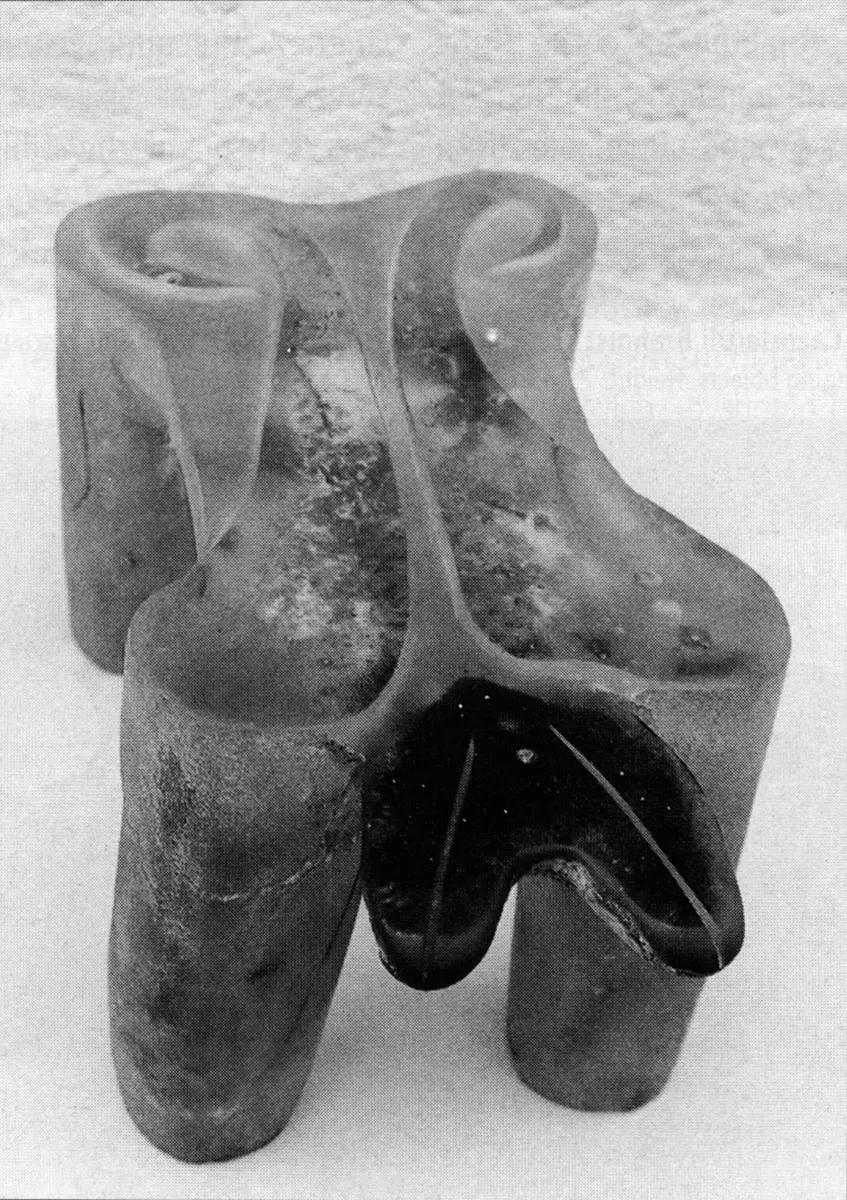
As we have said, this exhibition is a defense of figuration in all of its forms, from the most stringent hyperrealism to expressionism, with subjects ranging from the figure to landscape. Four different approaches are evinced in the sculpture of the Mexicans Javier Marín and Paloma Torres, the Salvadoran, Tití Escalante, and the Costa Rican, Jiménez Deredia. Marín’s convulsive and nearly winged figures, as much an expression as a technique, contrast with the work of Jiménez Deredia, whose solid pieces of lustrous surfaces and peaceful appearance occupy space. Torres leans toward the totemic in his ceramicware pieces of ancestral mystery, while Escalante imbues the body of a frog taken from nature with almost human characteristics.
The veteran painters showed work they are known for: Carmen Aldunate her appropriations of Renaissance court ladies; Cuevas his usual neo-figurative, desolate figures, De Szyszlo his extraordinary landscapes, rigorously grounded in abstraction. Delia Cugat is always surprising with her views of ports with departing ships and the occasional figure, almost always female, wandering aimlessly and absorbed in thought.
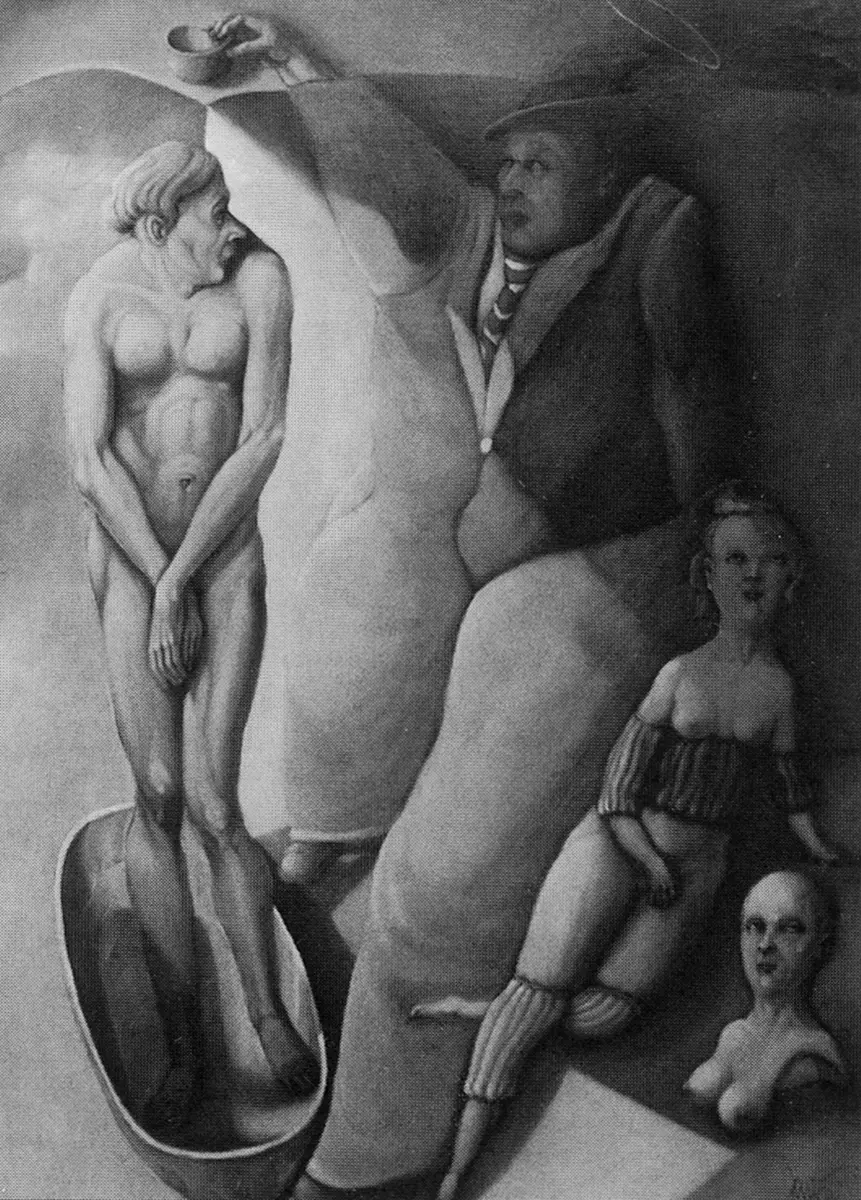
On another level, not to be overlooked is the work of the vanished Salvadoran artist, Benjamín Cañas. His foreshortened figures in impossible scenarios are among the most magical within the genre of the fantastic. His young and extremely active compatriot, César Menéndez, stands out with a large-scale urban landscape full of contrasts of color and value. The already renowned Guatemalan artist, Luis González Palma made an impact not with his strong photos known by the good art-loving public, for his visual explorations have taken him to another level in that field. Elmar Rojas, also from Guatemala, surprised the public by incorporating into the canvas small, burnt ragdolls. Armando Lara, the renowned young Honduran artist, showed a new facet of his painting, charged with contorted figures gyrating frenetically on the picture plane. The already quite well-known Colombian, Ana Mercedes Hoyos, showed a large, vibrant painting, a new version of the tropical still life in her characteristic expressionist colors.
It is no easy task to organize an exhibition such as this, taking into account the number of artists and the fact that each artist is represented by a single piece, making individual analysis difficult. It is particularly challenging to achieve a balance in the quality of the work. This was a concern for the organizer and curator of the exhibition, Rhina Avilés, who selected the artists and the works. The show is not just a regional show and has a scope beyond El Salvador. Each year, it draws greater numbers of enthusiastic viewers from all over Central America. In addition to the exhibition itself, one of the appeals of this event are the activities organized around the visiting artists—individual talks, meetings and fora—all in a warm, informal atmosphere. On this occasion people were able to talk with José Luis Cuevas, Fernando de Szyslo, Delia Cugat, Inés Tor and other Salvadoran artists, as well as with Nina Nolte, who lives in Spain. The exhibition is held each year from September to October, and is always eagerly anticipated.
BÉLGICA RODRÍGUEZ