
What does it mean, in an oppressive society or political climate, to resist? Resistance is an act of holding ground, and art that stubbornly resists a nation’s political practices or cultural ideologies does the delicate dance of a tightrope walker poised above a deep ravine. The danger of social or political retaliation is real. To be effective, therefore, art that criticizes or seeks social or political transformation must find avenues for speaking that can hide in plain sight.
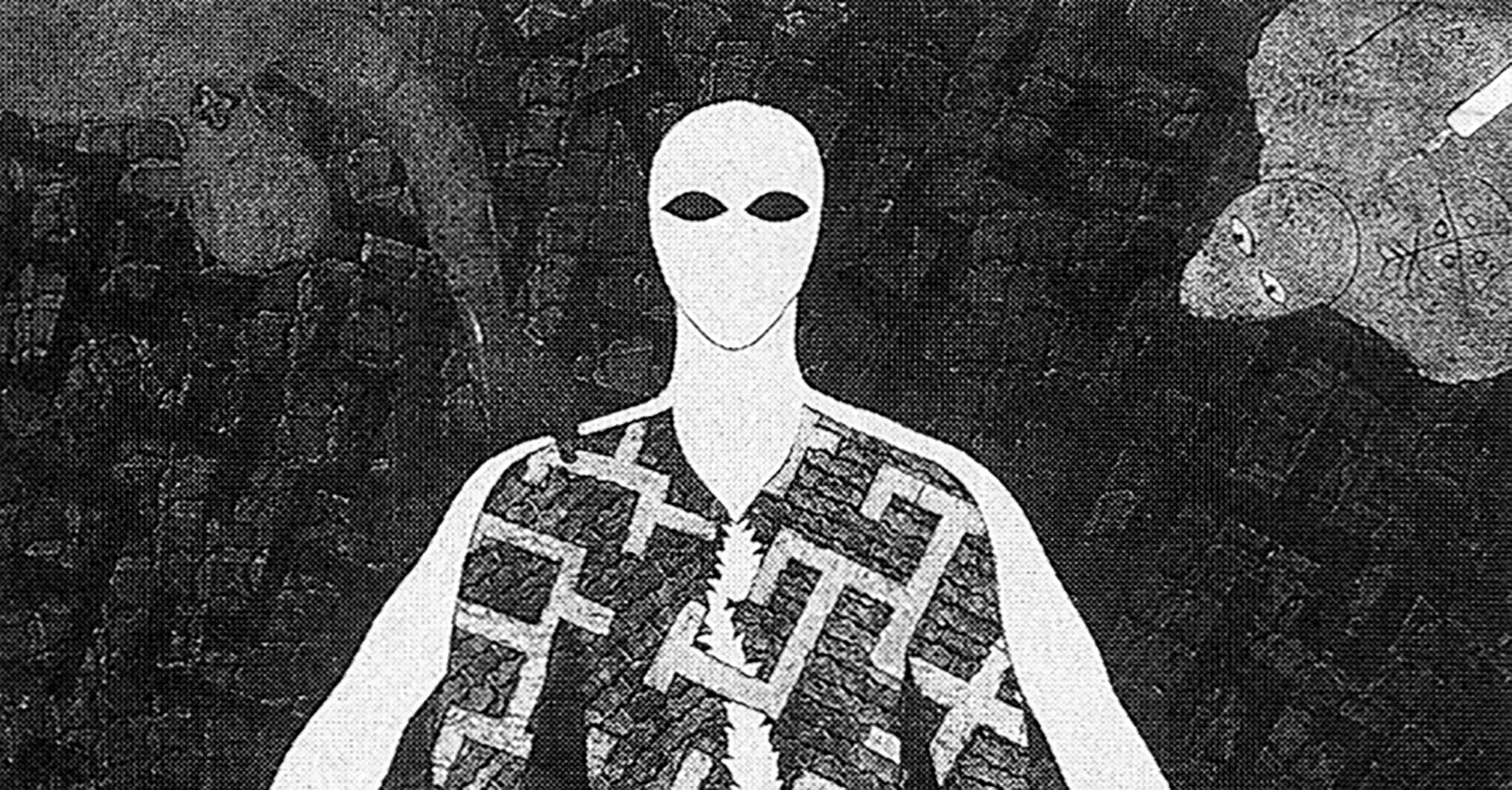
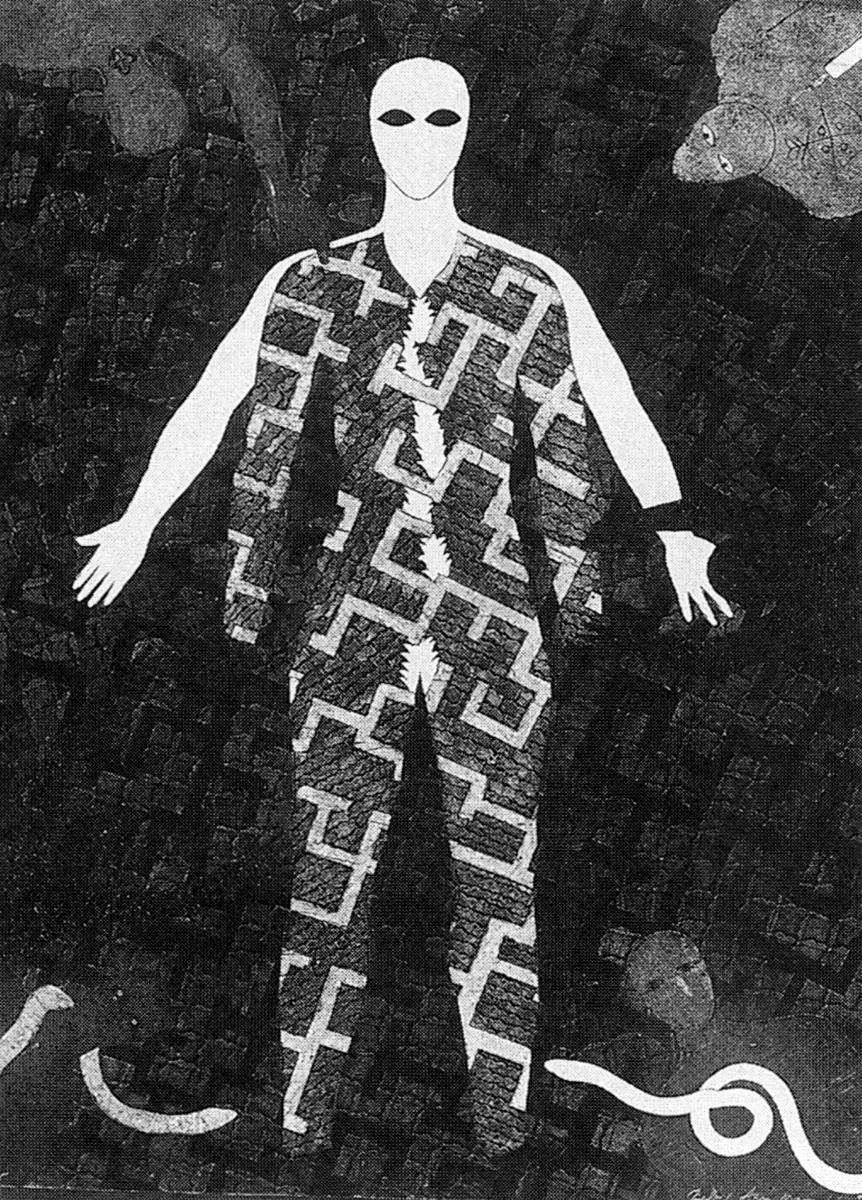
In Cultural Critics, a strong exhibition of political prints at Cal Poly Pomona’s Kellogg Gallery curated by Patrick Merrill, the Cuban artist Belkis Ayón (1967-1999), found a platform on which to speak of race and female subjugation in her nation’s fables of Sikan. Allowing those stories of a black heroine to veil her own experience as a woman of African heritage in a male-dominated society let her images develop their own life. Dark and broodingly beautiful, her collographic images speak metaphorically of racial and sexual polarity, secrecy, religion, and fear of discovery. Like the feminist performance artist Eleanor Antin whose alternative personalities allow her to disappear within the performance, Ayón’s social critique is masked yet still active within the society viewing the imagery.
Ral Veroni of Argentina uses humor to comment on the spiraling inflation of his country by tying a nation’s belief in the redemptive power of a good economy to their feelings about their own worth. By using devalued printed currency from the time of the dictatorship as the cheap “paper” for his rough but charming images and texts Veroni attacks the worthlessness of the government money while allowing that devaluation to color his ruminations about life and a pursuit of capitalist style wealth. It’s a method similar in spirit to North America artist JSG Boggs who undermines the efficacy and power of cash within capitalist society by creating outrageous forgeries of paper money and then bartering with them for goods and services. Similarly, Veroni produces art that upends the economic dialogue, by co-opting the discussion of money and re-casting it as a discussion of value, ethics, mortality, and other intangibles he sees as part of the Macabre Dance or the Struggle for Life.
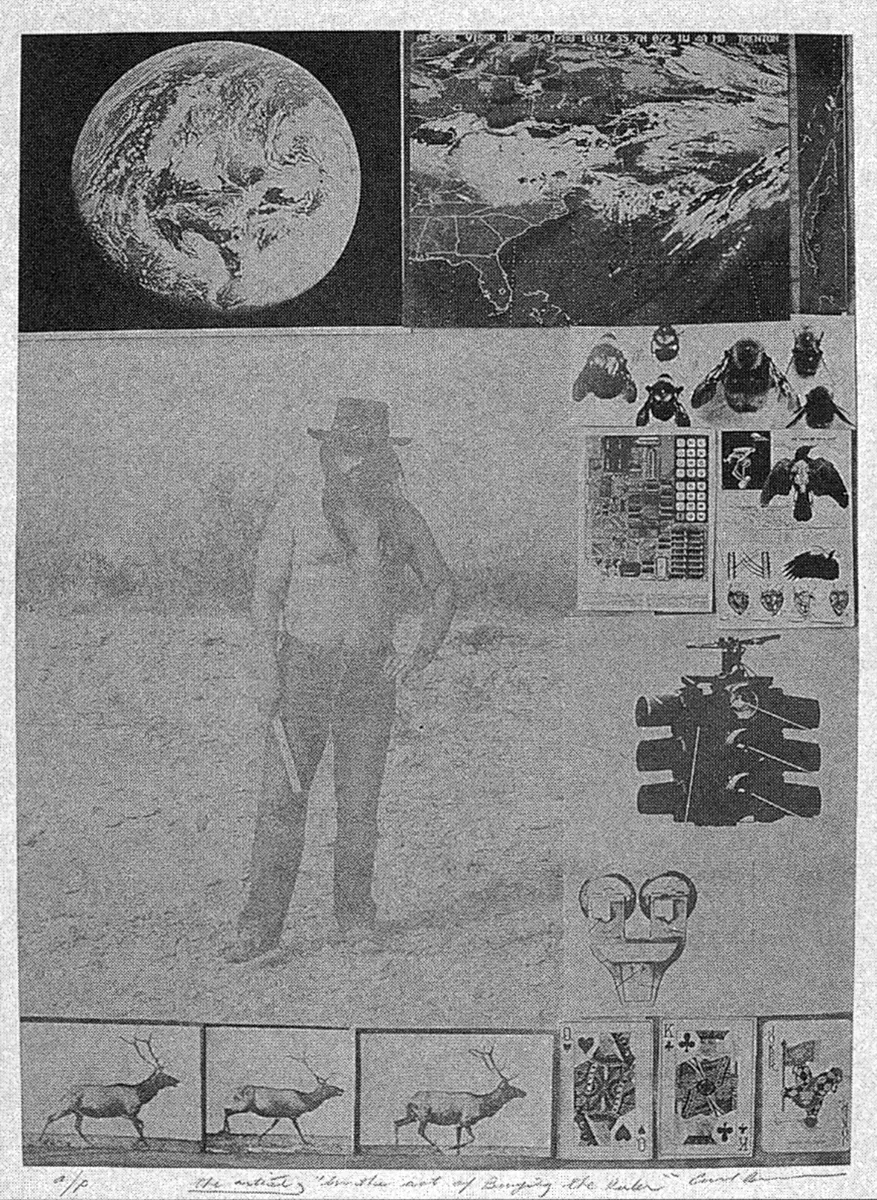
For Canadian artist Carl Beam the struggle to expand the North American dialogue of culture to include the experience and lives of First Nation peoples like himself means mimicking the texts that encode a cultural paradigm. His prints combine images taken from schoolbooks, encyclopedias, and newspapers showing native people, and their cultural icons with other symbols for contemporary thought, technology and daily living. The juxtapositions are both seamless and jarring, turning the conventional dialogue about how we know what we know into something less fixed and more layered.
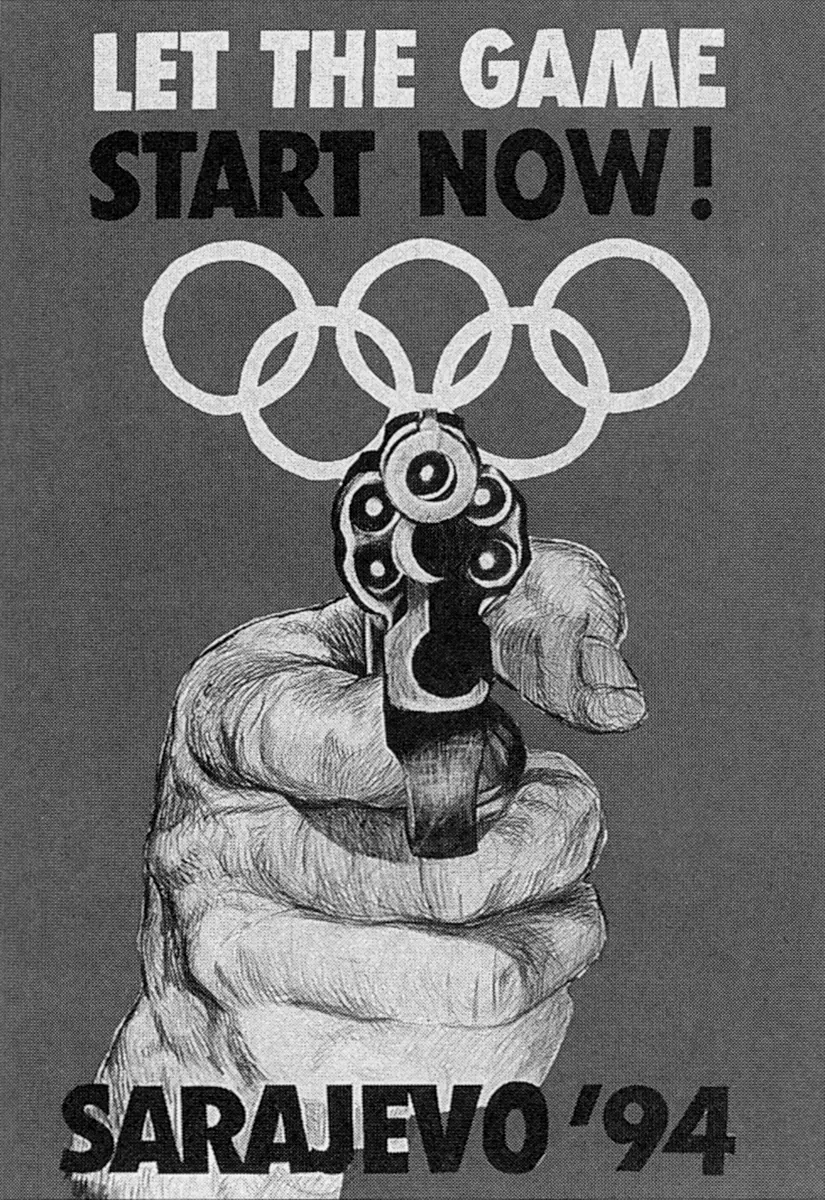
Like Beam, artists from war-torn Bosnia also resist politically by refashioning the tools of culture’s visual voice. For the 1994 Olympics the design team of Trio: Bojan Halilovic and Dalida Durakovic, produced pop art-inspired posters critiquing the marketing of Sarajevo to the world. Playing off the flash and hype of advertising, their slick yet handmade signage (done without electricity because of the war), underlines the dichotomies of global politics as well as the corruptive and disruptive effect of big-stakes economic games on a country’s consciousness as it parlays culture and resources into bids for a piece of the world economy.
For Jusuf Hadzifejzovic, an expatriated Muslim and Bosnian artist currently living in Antwerp, the invitation to exhibit in the1994 Centinje Art Biennial in Montenegro was a tense and intense opportunity to use that public forum to highlight real danger for his people. Montenegro was also the home of special paramilitary units that regularly drove into Bosnian territory to massacre Muslims. For the Biennial the artist rented a taxi and gathered twenty-one of his Muslim family members together for a group portrait. The resulting image publicly displayed at the Biennial is more mundane than the danger it created for the people pictured. But like the title The Fear of Drinking Water, it reminds us that oppression makes even ordinary actions require courage. It also emphasizes the moral imperative demonstrated by all the artists in the exhibit, that it is the duty of art to imagine ways to counter the silence oppression imposes.
SUVAN GEER