
Graciela Sacco is an artist whose work investigates the complex relationships that exist between art, society, and daily life. Her conceptual recherché is grounded in a critical opening of the traditional channels of diffusion and legitimization through which the work of art, understood as
an object/good, circulates. She thus “goes down” into the street, playing with the anonymous fabric of cities pierced by time.
The street is the elusive enclave in which she arranges an enigmatic corpus of lurking figures that spring from socio-political tension: emigrants with no clear direction, groups of demonstrators with closed hands and fists that signal, shoot, or throw rocks. There is an ostensible gesture in Sacco’s images that intimidates and interrogates the most unprepared viewer, staging a permanent dialogue between memory and the present.
Born in Rosario, Argentina, in 1956, Sacco is heir to the best avant-garde tradition of her native city. Her work recovers the iconic power of fellow rosarino Antonio Berni’s critical figuration. As in the great allegorical cycles of the author of Desocupados (Unemployed), Sacco’s art scrutinizes, with acute lucidity, the most critical and controversial aspects of great South American metropolises. Making use of an iconic repertoire charged with an undeniable dose of social pathos, the artist shows that which wounds, hurts, and perturbs.
From the strategic threshold of the ‘90s and an incipient third millennium, Sacco’s gaze is both distant and displaced. However, she maintains close ties that link her, on one hand, to the tensional vision of the existent, proposed by Berni’s political neorealism, and on the other hand, to the mythical group Tucumán Arde, of notorious attraction in the panorama of Argentine art of the ‘60s.
Sacco’s most current work is also no stranger to the luminous paradigm of the ambienti spaziali of another rosarino, Lucio Fontana, with his weightless use of light as a material that shapes and defines spaces.
In this respect, and for over a decade, the artist has been developing an important investigation, both practical and theoretical, on heliography. This is a well-known procedure in technical and architectural drawing studios, based on the use of a photosensitive emulsion that covers the role of “recipient” on which the original is placed, subjecting it to an intense luminous source. Escrituras solares. La heliografía en el campo artístico (Solar writings: heliography in the artistic field) is an important study by the artist on the reception and expressive reaches of the heliographic technique.1
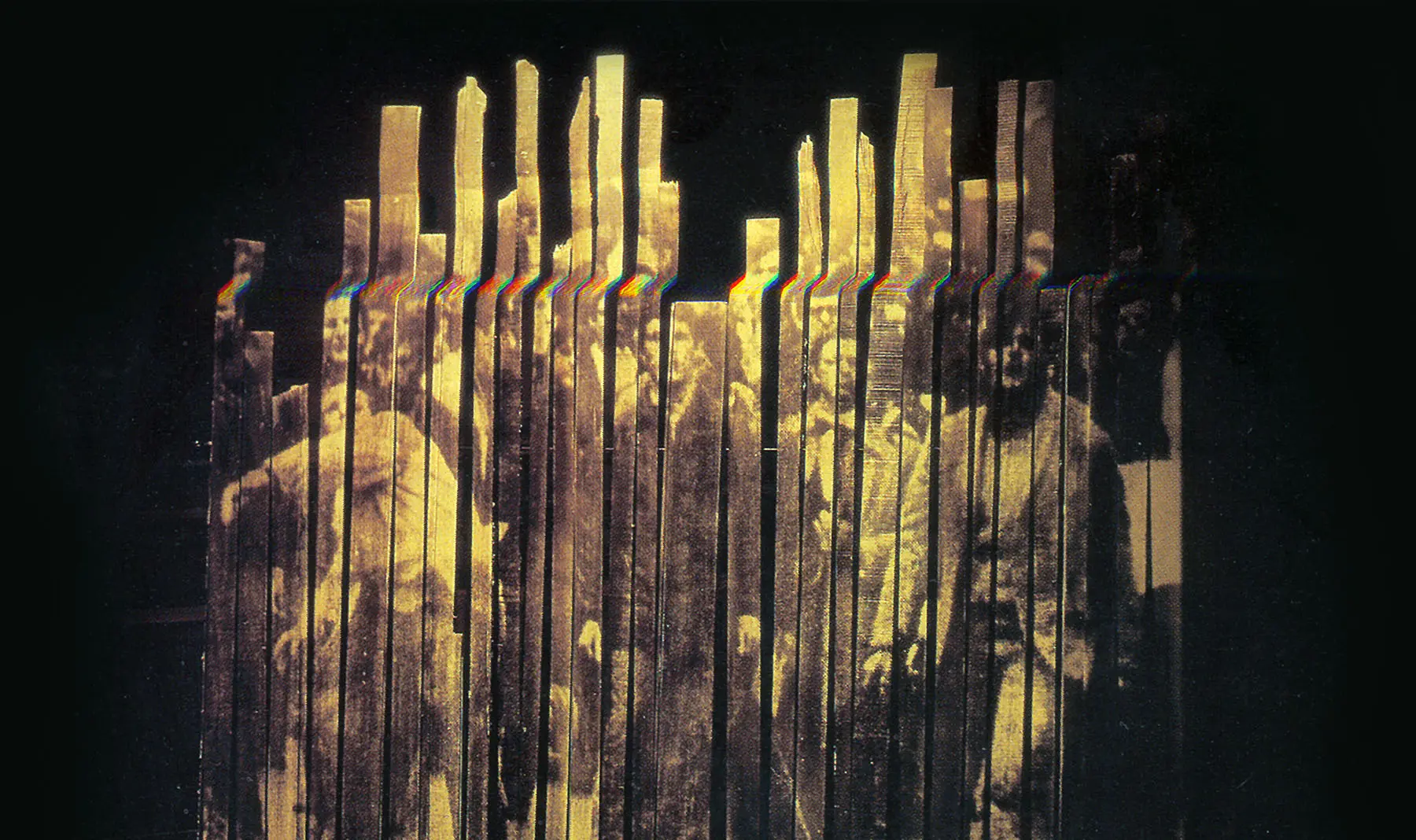
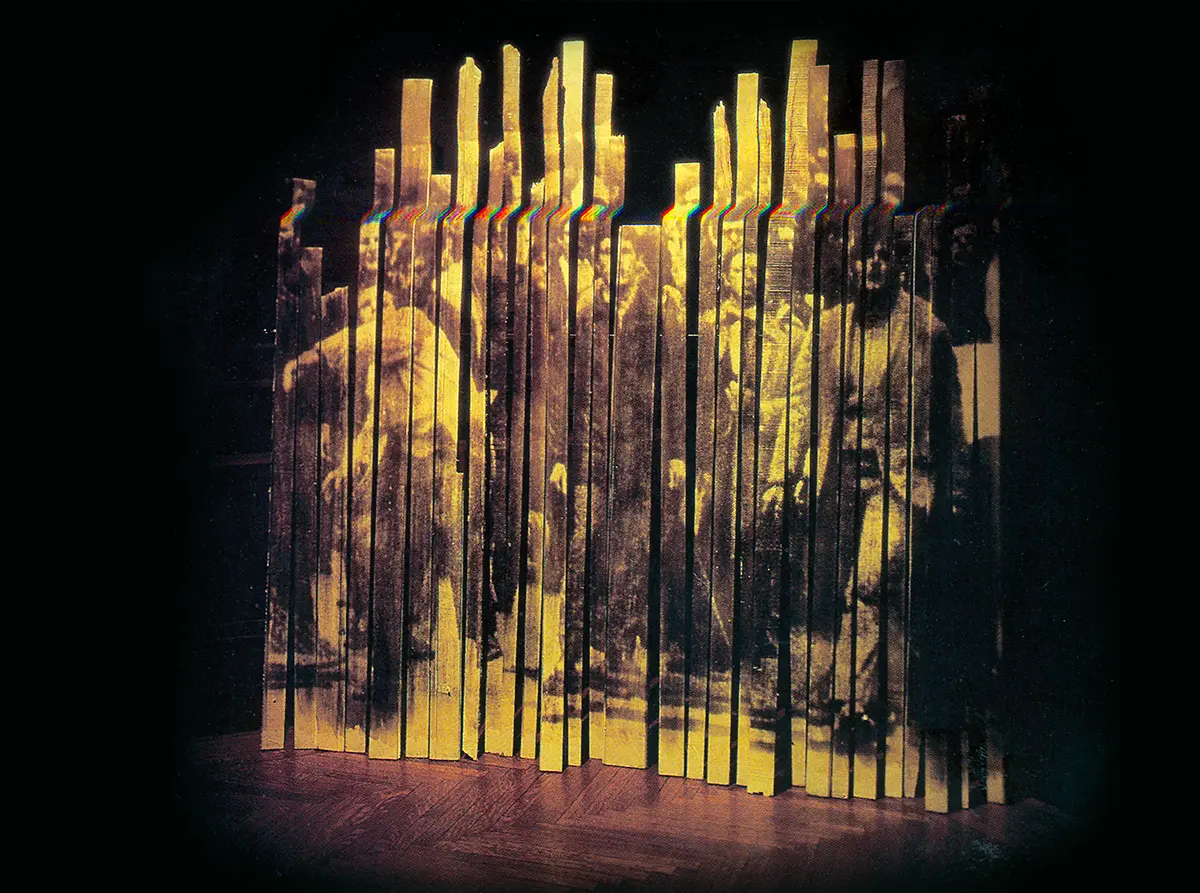
In 1996, Sacco was the only Argentine representative at the 23rd International Biennial of São Paulo. The following year, she participated as an exhibitor at the Sixth Havana Biennial and at the First Biennial of Visual Arts of Mercosur in the city of Porto Alegre. The year 2000 has been particularly prolific for her artistic production, as can be seen in important events, international fairs, and biennials to which she was invited, such as ARCO 2000 (Madrid), Art Basel 2000, the Ninth Photography Biennial of Mexico, her recent solo shows at the Argentine consulate in New York, where she displayed a heliographic installation printed on wood that makes up the series titled Outside / Presencias Urbanas, along with her two simultaneous retrospectives at Boston’s MassArt, and at the Juan B. Castagnino Municipal Museum of Fine Arts in Rosario. Between the months of October and December of 2000 she participated as the Argentine representative at the Ninth International Biennial of Photography of Vigo (Spain). We must also make note of her presence in the Seventh International Biennial of Havana, which took place in November and December of 2000. There, the Argentine artist presented a luminous environment titled Sombras del Sur y del Norte (Shadows From The South And The North, 1999), a project that works with natural and/or artificial lighting. Sacco has been working on this design based on diverse bodies of work already installed in cities like Rosario, Mexico City, and Caracas. In Sombras del Sur y del Norte, the artist emphasizes, from the perspective of her figurative iconographic power, the North-South polarity, as well as the existent frictions between the icy borders of conflicting territories.
Urban interferences
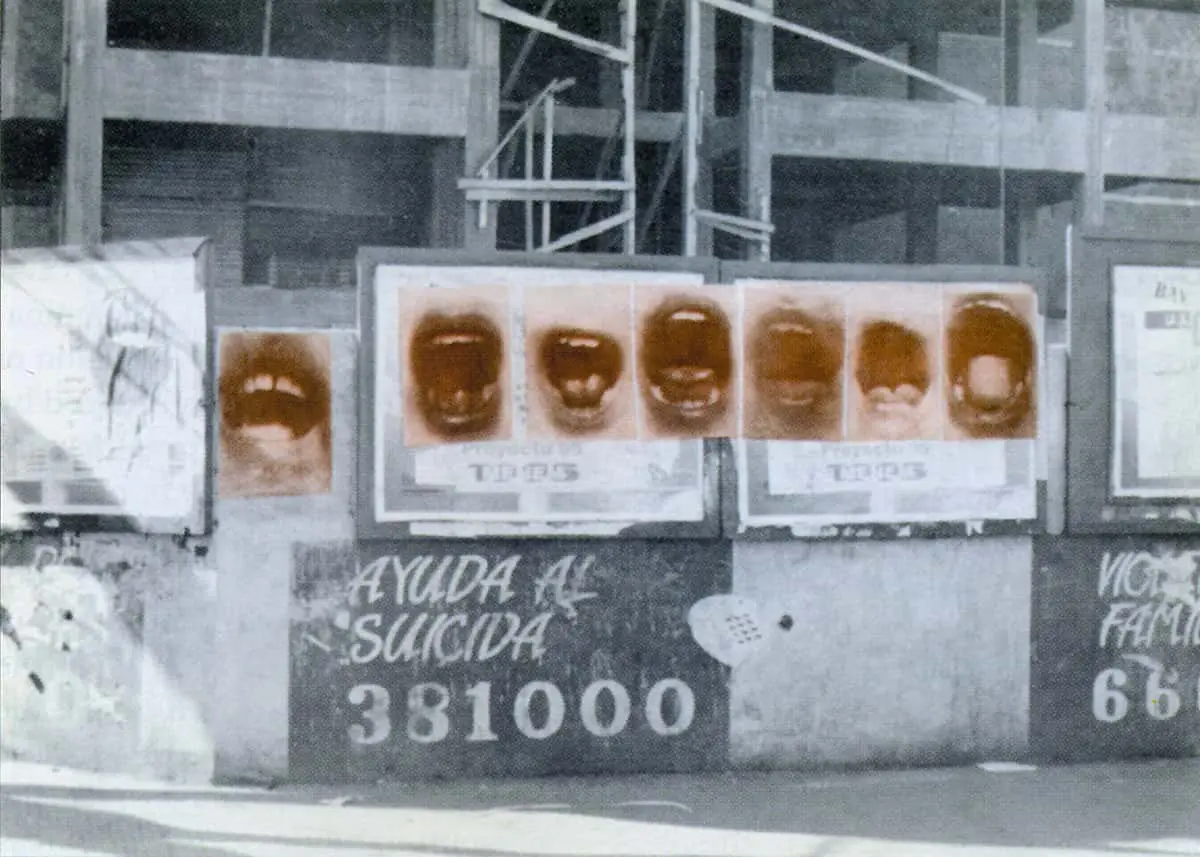
Sacco’s “urban interferences” formulate a segmentation of the photographic continuum. They are working with a photographic base that adopts the format of the advertising poster. Their presence is provocatively anonymous and silent, camouflaged with the labels and images of the street. They join, in a parasitical way, the random graffiti and the intricate network of advertising. The series Bocanada (Mouthful) from 1997 makes up one paradigmatic example. Here, Sacco’s mute action operates on a strategy of aesthetic de-territorialization of the viewer, simultaneously situated both inside and outside the museum or gallery.
Bocanada presents enormous open mouths that allude to burning themes, such as the problems of hunger and poverty in the world. The repetition of these frontal images, stripped of texts and inscriptions, competes with the message of the posters of political campaigns, thus producing contamination of visual signs. This operation of aesthetic delimitation is reinforced by the anonymous character of urban interference. By erasing the brand, Sacco’s visual action is premeditatedly hybridized with the advertising spot and the political poster. However, in her recent anthological show at the Castagnino Museum in Rosario, the tense and pathetic image of Bocanada now appears “marked” upon the worn-out skin of a soccer ball. This image “interferes” not only outside the art circuit but from the very entrails of the same, in the exhibition space of the museum. Here, Sacco’s strategy of objectual appropriation establishes a line of direct affiliation with the paradigm of the Duchampian objet trouvé, mediated by the image of an open mouth. The work bears the suggestive title ¡Ay de mí! (Woe is me!). In it, the body of the dysfunctional utensil serves as an alternative support to the sheet of paper or the transparent acrylic screen, matrices traditionally used by Sacco to exhibit her heliographic work. This theatrical staging is reinforced by a text by Cuban author Virgilio Piñera, extracted from the story La carne (Flesh). A fragment of the same story is inscribed on the museum walls, thus confronting the objectualized heliographic image. The result is an interjection of dialogues between the visual-objectual text and the written text. The relationship of artistic and literary interdiscursivity is strengthened thanks to the semantic anchoring supplied by Piñera’s text, which reads thus: "The mayor expressed his desire: that his beloved town should live on its reserves, that is, on its own flesh. And in the street, the most delicious scenes were taking place: two ladies could not give each other a kiss for they had used their lips in the preparation of some fried foods. And some, not all, could no longer speak, for they had swallowed their tongue which, let it be said in passing, is a dish fit for a king."2
Analogously, the ball is the place of an ethical/social interrogation, as well as a cannibalistic practice. In short, it is a ball that bites. Moreover, the way in which we relate to it always implies a certain quota of violence: the ball is thrown or kicked. Hence the elliptical reference to the poetics of qualifications faced by the artist.
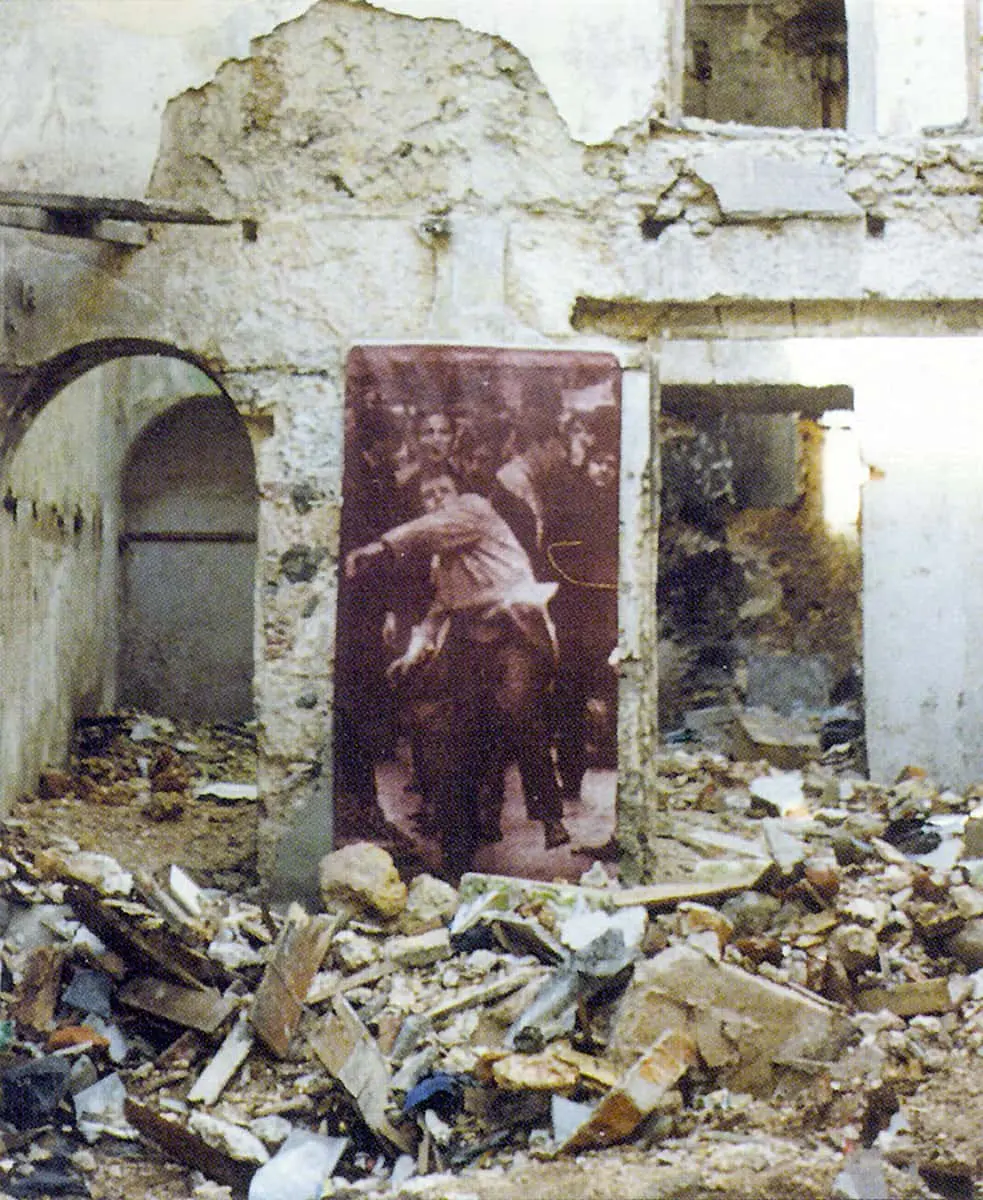
Following the nomadic journey of Sacco’s iconographical repertoire, we take up once more the line of street action, present in her gigantic achromatic graphics. Such is the case of the figure of the “rock thrower,” situated in a building in ruins in Havana’s historical center. There, the image became perfectly related to the topos that received it, at the same time as it modified the horizon of its reception. The public’s responses ranged from the most absolute identification to annoyance or irritated rejection.
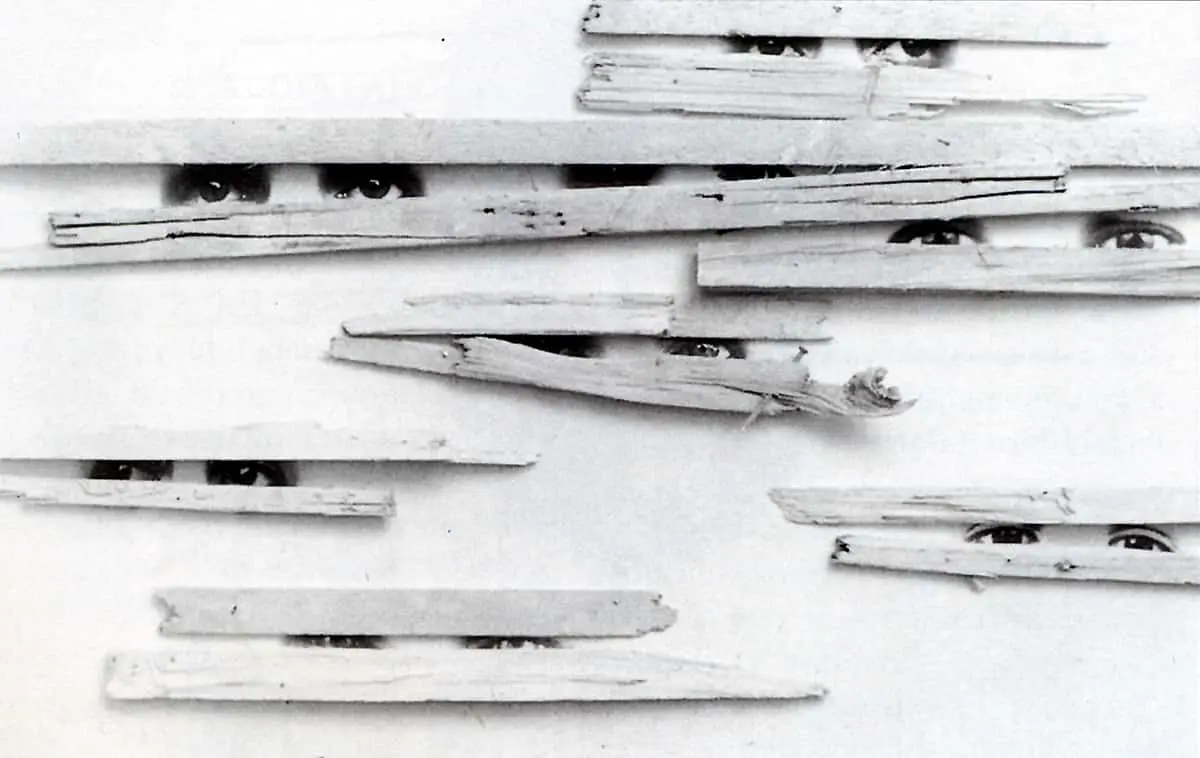
In order to define her particular style of affecting sensibility, the artist prefers to discard the term “urban intervention” and replace it with “urban interference,” “signalization,” and “visual action.” In this respect, she points out the following: “In the case of the posters, prefer to speak of interference because it is a matter of a minimal visual vibration that, nonetheless, never goes unnoticed.”3 In effect, the term “interfere” can denote a weaker action, but at the same time, more annoying. It does not have the weight of urban intervention, but it imposes an obstacle to overcome, a visual obstruction that alters and modifies the floor of certainties on which our contemporary visual culture stands. In it, the smallest perturbing gesture generates anguish and uncertainty.
In Sacco’s work, the act of “stamping events” follows the Situationist matrix of Guy Debord. The Situationist methodology comprised the realization of performative experiments and interactive environments that altered the public’s behavior, involving it in a socio-political commitment. By creating “situations” that sensibly modified the viewer’s conduct, the Situationist practice criticized the capitalist, imperialist, and colonialist excesses of the world. Also, the repulsion felt by its members toward the control of urban spaces and the general mediocrity of intellectual life is well known.
The radicalization of Situationist clichés is made present in Sacco’s political conceptualism. Installed in urban space, her work becomes, in and of itself, a space of questioning. Moreover, her Situationist art develops groups of works articulated in two alternative circuits: interior (the gallery, the exhibition room, the museum) and exterior (the street, the subway, public buildings, squares, and parks).
In some cases, the Situationist double road of inside/outside coincides, as when the artist “simulates” the presentation of an urban-postal interference in the Consolation station of São Paulo’s subway, in conjunction with a fenced-in installation, visible on the biennial’s exhibition property. It is worth noting that the interference of the São Paulo subway never took place. It was the fiction of a visual action that never occurred. However, the local and international press took for granted the incontrovertible nature of the doctored image. Here, the artist operates once more on the urban fabric, creating strongly paradoxical situations. This type of photographic montage refers once more, intertextually, to the famous mass-media simulacrum organized by Ives Klein with his famous doctored photo performance titled Salto en el vacío (A Leap into the Void). The main act was never executed by the new French realist, just as Sacco’s postal action in the Consolation station was never acted out. However, everyone believed that it had happened, including the newspapers. Here, the artist’s hypothesis is corroborated once more: The notion of “seeing in order to believe” has been substituted by “believing in order to see.”4
The memory of objects
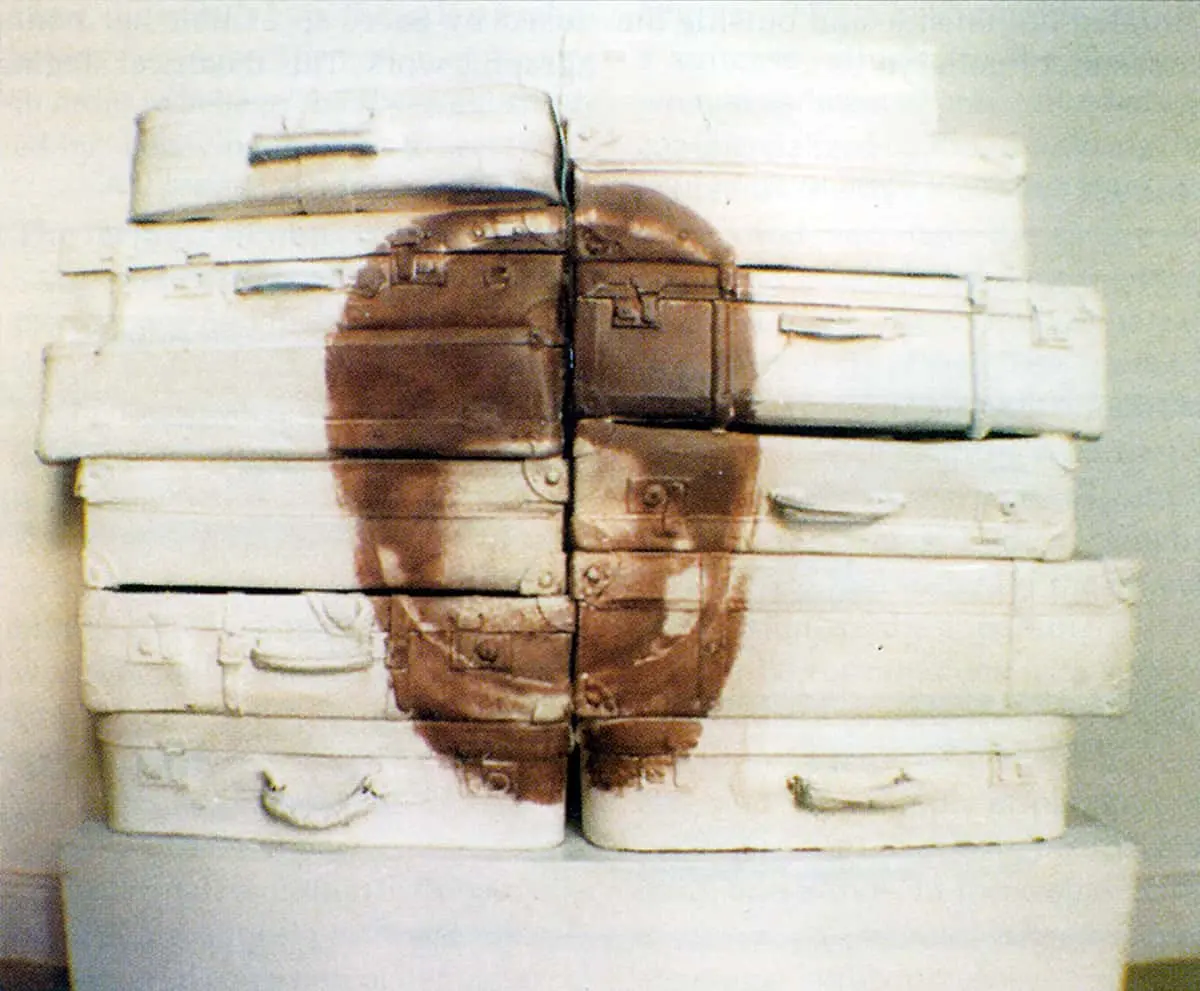
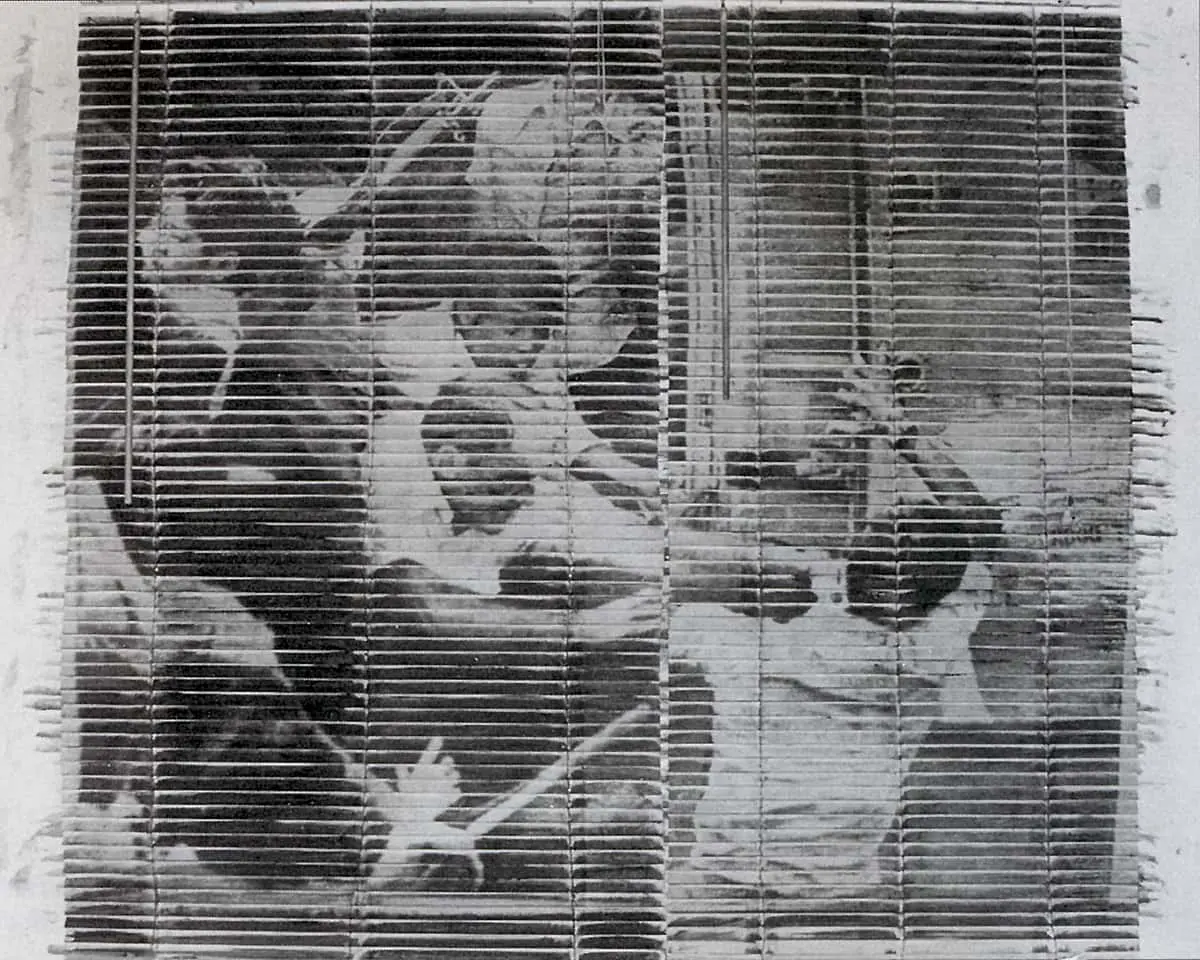
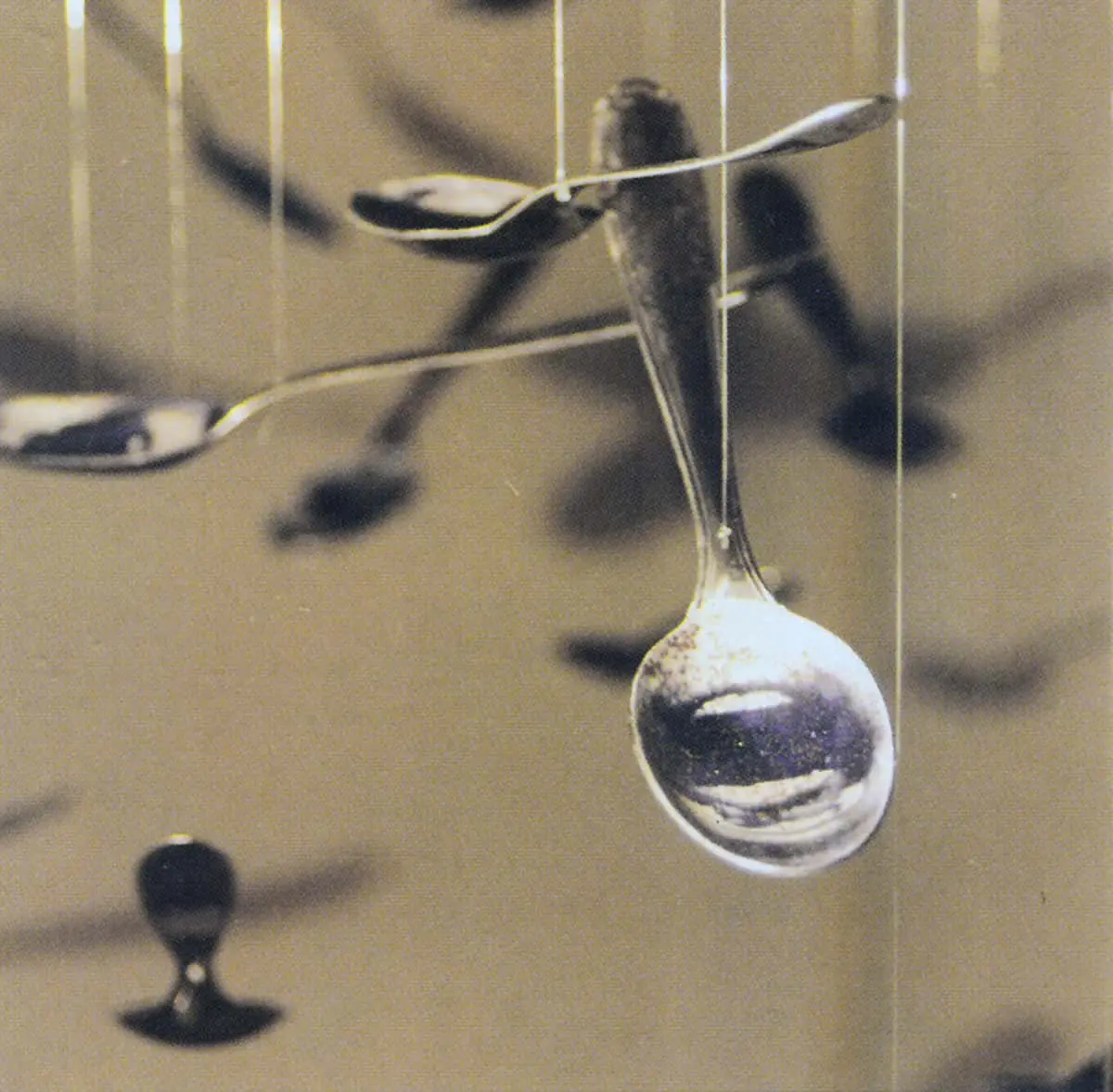
Against the static condition of the fixed image and the smooth surface of the photographic print, Sacco turns to the heliographic technique. Its use allows her to transpose photography to a heterogeneous group of extra-artistic objects and supports buckets, spoons, curtains, stamps, Venetian blinds, suitcases, and soccer balls. The world of daily objectuality, in its most prosaic character, is now endowed with an unknown aesthetic autonomy that competes on equal terms with iconic representation.
The formal resolution in these works is very bare, almost post-minimalist. In the material concision of her objectual works, Sacco begins with a citation, free and loose, of certain minimalist objectives, such as the use of geometric modules and the instances of parallelism and serialization.
Sacco’s photographic nomadism is inscribed onto the most diverse utilitarian supports. An object mediated by the image, like Adiós Ulises (Goodbye, Ulysses, 1997), a heliographic print on a suitcase, alludes to the figure of a woman as “meat of prey,” divided and commercialized by the advertising discourse of the mass media. Sacco arranges and rearranges the images of a torso and a female back on the body of the suitcase. These images narrate the ritual of striptease. The “nomad” photographs, inscribed on the leather of the suitcase, acquire a decidedly three-dimensional statute. Carefully framed, the female body fragments aestheticize and resignify the anonymous “skin” of the apparatus.
After her installations with suitcases, spoons, and balls, Sacco gradually abandons serial arrangement, planimetry, and the example of parallelisms present in her series with boards, curtains, and blinds. In these objects, the work ceases to be a vision and becomes a genuine bodily presence.
Praise of shadow
The presence of light and shadow is central in Sacco’s recent production. Proof of this can be seen in the book/installation Un Lugar Bajo El Sol (A Place Under The Sun, 1999), where she reflects on diverse problems, such as exile, banishment, urban violence, the erasing of the visual borders between the work and its recipient and, in a broader sense, the modes of contemporary exclusion.
Un lugar bajo el sol is a luminous environment divided serially into pages that unfold into a completely dark room. Making use of diverse photoserigraphic procedures applied to thin acrylic sheets, the artist decides to hang them from the ceiling of an intentionally darkened room. Each of the pages bears the printed image of a photograph extracted from the written press. Moreover, the visitor is supplied with a lantern that bears the image of a revolver, which will be used to shoot light onto the acrylic sheets. Sacco leaves to the viewer’s free will the emergence and definitive construction of the image, a voyeuristic gaze that, through the shadows, illuminates raw aspects of contemporary Latin American society. The artist explains: “It is impossible to remain outside of the work because it can only be appreciated if the darkness of the room is penetrated, where these images are spread out." Once the threshold of the shadows is overcome, it becomes necessary to “give body,” through the lanterns, to this dramatic repertoire of vague, blurred, and evanescent images.
The staging of the play of gazes comes from darkness, and not from light. At first, the viewer is imprisoned in the blackness, in the penumbrous effect that creates a new achromatic “tonality” of the image.5 But it then has the opportunity to throw light by “opening fire.” The artist says: "Through acrylics with printed images that look carved in an almost invisible way, we approach an almost magical instant in which the ray of light of the lantern makes visible what seems non-existent."
Just as in the allegorical tale of Plato’s cave, Sacco develops a sort of ski-agraphy, that is, a writing based on shadows ephemerally projected onto transparent screens.
In the installation Sombras del sur y de norte, integrated by photo prints on plexiglass screens, and exhibited in 2000, during her mass-art retrospective in Boston, she also turns to the scenographic theatricality of a dark area. Standing before an object that is no longer visible, the viewer feels that he is watched, and questioned by it.6
This “nocturnal” experience of the gaze gives us back the sensation of space as it erases the limits of personal identity.
A Decentered Subject
When the world of objects that are clear and articulated by light turns out to be abolished, our perceptive being is decentered and defocused. Amputated from its world, the subject draws, as best it can, an absent spatiality of objects. Darkness imposes a space of pure reflection, of pure thought, stripped of outlines, of artists, and of fixed borders, very similar to what Sacco proposes to us through her silent and evanescent “demonstrations.”
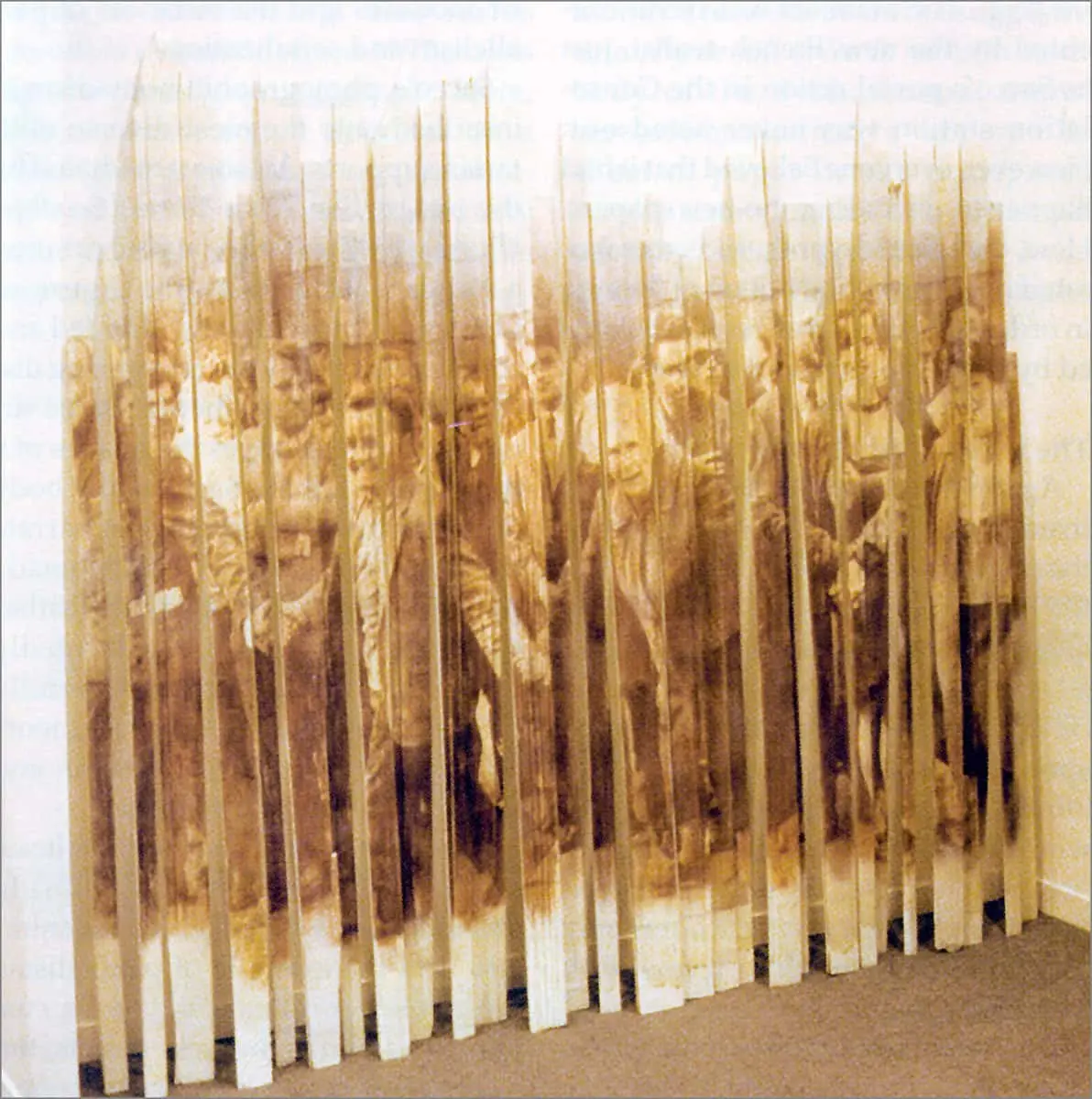
In this sense, the works that make up the series Outside / Presencias Urbanas are related to the project Sombras del Sur y del Norte, integrated by successive series of luminographic environments conceived around the idea of the shadow being thrown onto interior and exterior space. If they should work with natural light, the specter of the occasional passerby gets mixed up with the shadow printed on the Plexiglas screen. The past time of a street demonstration understood as a street memory, coincides with the viewer’s present time. Both shadows possess the same luminous value and the same conceptual thickness. A tension of presence and absence, of virtual and real spatiality. As Barthes observed in Camera lucida: “I am neither subject nor object, but rather a subject that feels himself transform into an object. I really turn into a ghost.”7 In the somber topology of the street, no man’s land, the artist asks: Who is who?
Sacco’s photographic installations do not represent a “disinformed” street scene. On the contrary, they “inform” what the contemporary subject seeks in the street: shock, intensity, and strangeness.
The mobilizations, the crowds, the popular demonstrations, and the groups of people in continuous advance, also formulate the question about who is who in the dramatic staging of the urban.
Deterritorialized Photography
For the artist, photographic language is a source of continual reflection and photography is an instrument of great signal efficiency that allows her to appropriate the very precise fragments of the surrounding reality. But at the same time, photography winds up deterritorialized, questioning its own intrinsic nature. In this sense, her aesthetic discourse moves between two well-differentiated attitudes, at times convergent and interchangeable. The first of these consists of a photo-documentary, based on the strict authenticity of the graphic image (the artist works with images taken from the written press and, in general, from the world of mass media). The second is nothing other than the fiction of theatrical staging, unfolded in the street or in interior spaces.
Document and theatricality, reality and fiction, these are the concepts that, in short, tighten Sacco’s unique work.
NOTES
1. Graciela Sacco, Escrituras Solares. La heliografía en el campo artístico (Rosario: Talleres Gráficos del Colegio Salesiano San José, 1994).
2. Virgilio Piñera, La carne, cited by Sacco in the catalog for the retrospective show Outside (Rosario: Museo Castagnino, 2000).
3. Author’s interview with the artist. Rosario, 17 July 2000.
4. Claudia Laudanno, “El contexto como referencia en la producción de Graciela Sacco.” Rosario/12. Section Plástica. 10 Oct. 2000: 6.
5. Lyle Rexer, “Bringing Argentina out of the shadows,” The New York Times, Art/Architecture section, 9 July 2000.
6. Georges Didi-Huberman, Ce que nous voyons, ce qui nous regarde (Paris: Minuit, 1992).
7. Roland Barthes, La cámara lúcida (Barcelona: Paidós, 1992).
CLAUDIA LAUDANNO
Received her doctorate in Art History and Theory from the University of Buenos Aires. She is an art critic and semiologist of the image and a collaborator at the daily newspapers La Nación and Rosario/12.