
The II Central American Isthmus Painting Biennial has been a player in the Central American biennial panorama for two years now, and it is beginning to fill some gaps that have existed in the region for some time. This strongly suggests a common need for communication among artists from different countries, a need to make regional creative production visible and to project it beyond regional boundaries. It should not be overlooked that important recent activities like theoretical encounters, exhibitions of various types, and collaborations between cultural projects have contributed to a healthy exchange, but no recent activity has created as many expectations as the Biennial.
If we are to explicate the II Central American Isthmus Painting Biennial as if we were looking into a mirror, it is important to start with the various elements that comprise it. The first is the base organization which attends to mustering the support and resources of prominent companies from the six participating countries in setting the precedent for the market to seek out artwork as the only secure, long-term investment alternative and setting the example (as arbiters of value) for patrons and promoters who could well ensure commercial successes. As the antithesis to this formula, it must be said that non-governmental organizations are beginning to interfere in the scenario, supporting projects of a more belligerent, transgressive, and critical attitude. But in poverty-stricken economies generally governed by the law of survival, the private company is the large-scale backer and supplier of culture.
Strikingly similar in profile to the (dangerously monolithic) private enterprises, the Central American Isthmus Painting Biennial has displayed, on both occasions to date, an element of dissociation and immutability, throwing into the balance old arguments that had been considered defunct; specifically, its original premise of defining itself exclusively as a painting biennial. In the recent edition, the jurors, Carolina Ponce de León, Edward Sullivan, and Rachel Weiss touched on the theme to argue the difficulties presented by this unilateral approach in a world scenario that tends to adapt itself to the contemporaneity of art and its new requirements.
In truth, the rules of the biennial are clear; the organizers seem to suggest that the medium of painting has the advantage of being the only medium able to bring together all of the local artistic creations. In the first edition as in this one, the jurors suggested modifications to give artists and viewers a wider range of media in accordance with the latest tendencies. Nevertheless, the isthmus biennial jealously guarded its decision to see in painting a way of maintaining the traditional values of art. If this is indeed the objective, it would be appropriate to examine the subject and come up with arguments to justify their choice. It would actually be interesting to organize theoretical discussions around the question, ‘Is painting sufficiently representative of Central American creativity?’ or ‘Is painting our regional response to worldwide movements?’
Obviously, such questions sound sarcastic and rhetorical. In fact, the answer is in the prize-winning works of the first and the second biennial. Taken as a whole, these works convey the message that painting is old hat; and restrictive, and most artists have built up a repertoire of techniques, subjects, and forms which tend to grow and intermingle. With this in mind, it is noteworthy that most of the prizes were awarded to pieces that, to a degree, escape the traditional format of the canvas, or include media that, at another time, would have been discarded immediately, like digital printouts. On a positive note, the results have not been hemmed in and are proof that it is possible to evolve gradually towards a project that takes into account art’s new requirements. The message is clear, but it is beginning to cause predictable contradictions.
As a whole, the biennial as an exhibition does not reflect the current scene and the most substantial proposals in the Central American creative output. Generalizing the picture-making tradition excludes other forms of expression. In the words of the Cuban critic, Tamara Díaz Bringas, "the timidity and conventionality of the projects from a country with a strong artistic movement, like Guatemala, are symptomatic of the fact that many artists do not feel encouraged to participate in this type of gathering."1
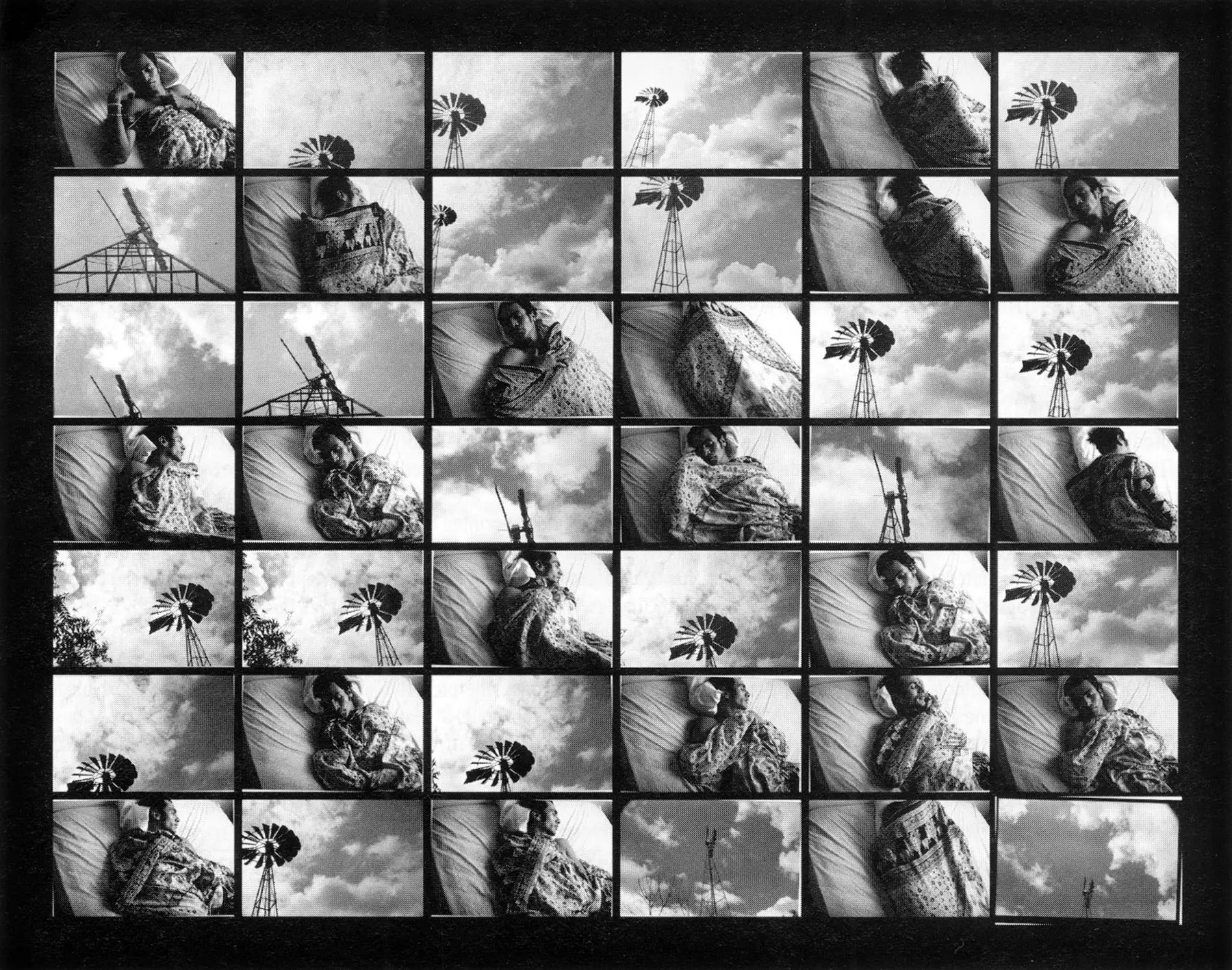
Nevertheless, it is important to mention that while the biennial is strictly limited to painting, it is patently clear that the technique is subordinate to the artists’ intentions and their expression is the priority. As we have mentioned, this is obvious in the prize-winning pieces. In the piece awarded first prize, Gustavo Araújo (Panama) speaks of his experience in photography and advertising. Steering clear of any bias, his work moves between laconic black-and-white images and the strident full color of digital media. His piece, Untitled (Windmill), consists of a canvas in which, more than the virtuosity of the brushstroke and use of color, the machine replaces manual effort. Paradoxically, the metaphor in Araújo’s piece could be taken as a lesson for intransigence. His work picks up a narrative that alludes to the passage of time. A series of sequential images reminiscent of comics narrates the story of a windmill. Interspersed with these are self-portraits of the artist sleeping in various positions on his bed. The juxtaposition of these images and the relationship between the two figures and their activities trigger the sense of memory and our passage through life. Heraclitus’ maxim comes to mind, you cannot step into the same river twice. In other words, upon a second visit to the river, neither the individual nor the river is the same, reminding us of the processes of change that every individual and her actions and ideas are subject to.
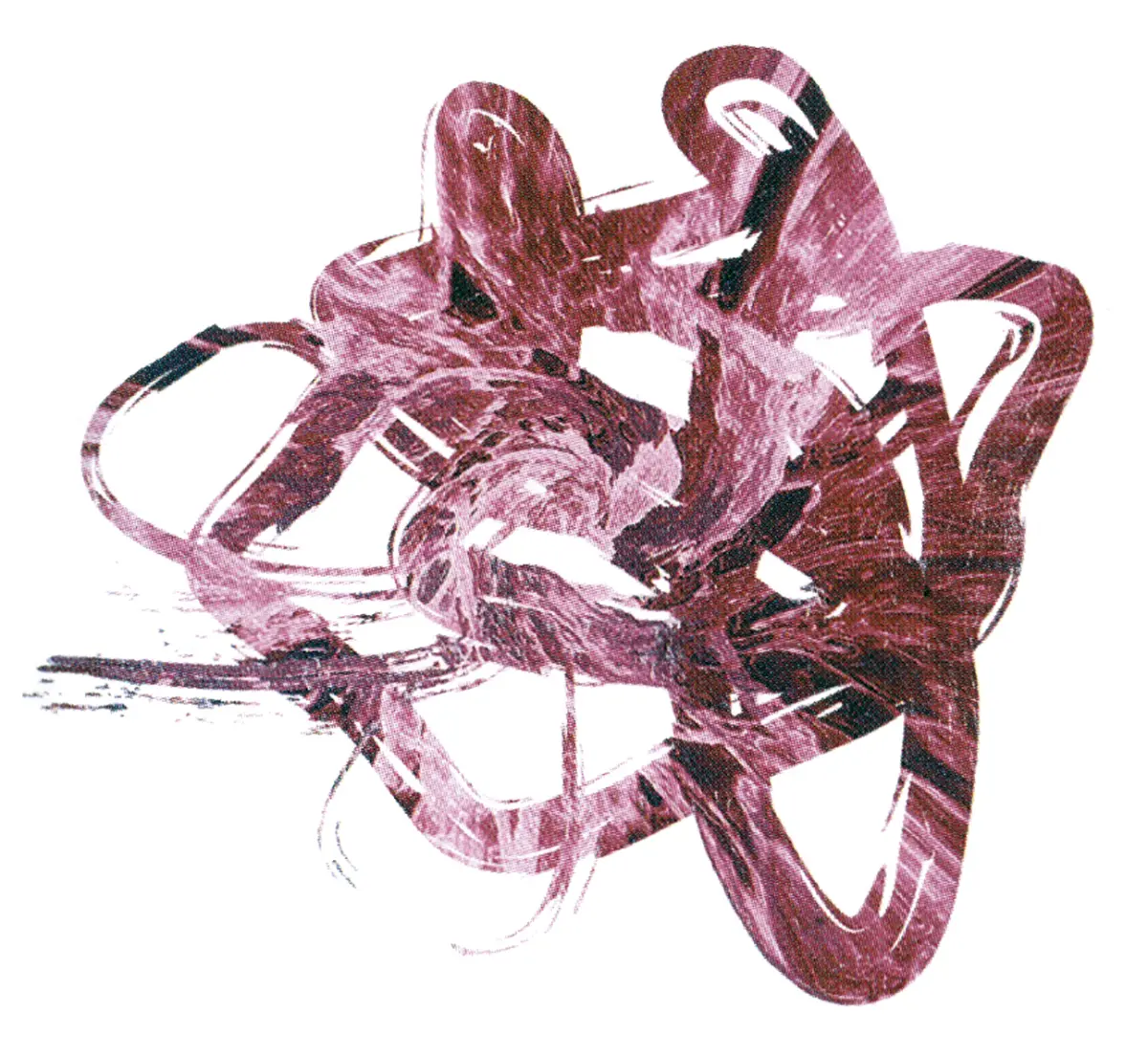
The work of the second-place winner, Andrés Carranza (Costa Rica), delivers a much more precise view of the break with traditional painting, particularly given the formal solution he found. From the start, this artist has dealt with the issues surrounding an illness that has been plaguing humanity of late, AIDS. His piece, called Genetic Painting of HIV, consists of a macroscopic image of the virus, digitalized and enlarged to an unusually large size. The image was then printed on vinyl cut out into a silhouette and outlined with a wide brushstroke. The object was mounted onto the wall using a thick coat of silicone, suggesting the use of the virus as paint. By blowing up the image and turning it into a work of art, Carranza proposes the existence of a moral duality that contradicts itself and hovers between desire and the prejudiced phobia AIDS has triggered in society, a phobia which is turned on those who suffer from the disease, making any understanding of their physical and emotional suffering difficult. Carranza’s irony is far from Susan Sontag’s profound reflections in Aids and its Metaphors, but it offers a generational perspective on a problem that humanity has to live with and which is usually hidden between hypocrisy and the closet.
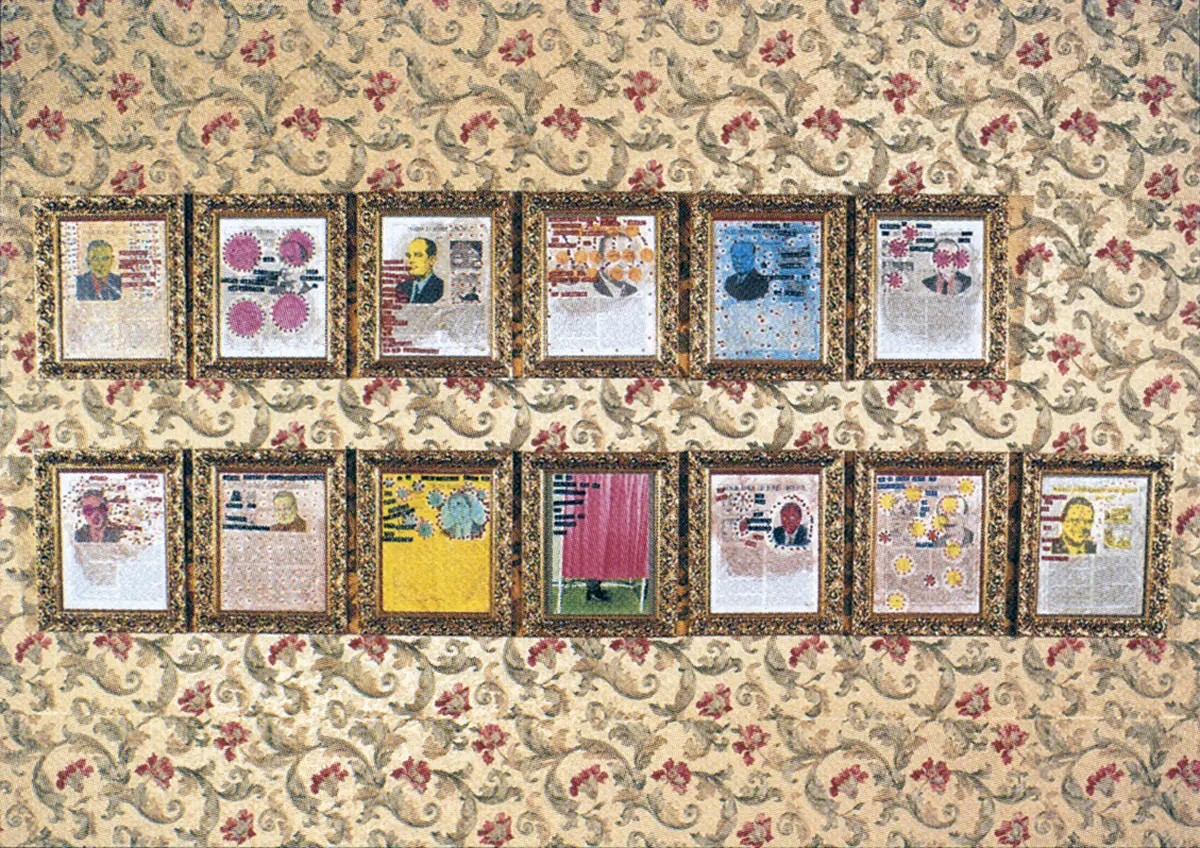
The work of Nadia Mendoza (Costa Rica), 12 + 1, comes the closest to using pictorial qualities. Nevertheless, discourse is the protagonist again. Mendoza only resorts to painting to recreate drawings, paintings, and craft techniques used by children in primary school. These works are incorporated into a series of small paintings, gilded frames, and overcharged designs, which have been executed on printed pages removed from classic Costa Rican school texts. On the cover are similar works made with didactic material from Cuban schools. The artist, whose childhood education took place in Cuba, finds the same tone and intentions in the educational material of both countries. She uses this similarity to support her argument that the texts from both countries contain coinciding political messages, despite their conflicting ideologies. She decodes hymns, and presidents as bastions, and uses of national symbols, showing that our histories seem to be constant. Behind every national image, there is an effort—or a collective need—to maintain hegemony through highly subtle mechanisms that deeply affect minds and identities.
The pre-eminence in the biennial of solutions like the one just described does not negate the presence of outstanding artists who opted for the pictorial tradition and of relevant results achieved with the medium, as is the case of Emilia Villegas and her piece, The Sailors. This is a defining characteristic that says there are those who do not feel anxiety at finding themselves outdated. Instead, they feel completely at ease with the purity of painting and appreciate its self-sufficiency in conveying ideas. In fact, we find interesting discourses moving in step with the times and with important critical attitudes as demonstrated by Costa Rica Light, by Florencia Urbina. Two enormous acrylics on canvas reveal stereotypical images that might be found in the tourist industry to sell a country marketed as a paradise for retirees or a refuge for the pleasure of ecological organizations.
The II Central American Isthmus Biennial has faced its great challenge, the jurors have proclaimed their decisions, and it bears remembering that they agreed substantially with the previous year’s jurors, who focused on the discussion about the limits of painting and its validity as the single parameter. Now, it is precisely at the start of this discussion between the traditional and the current that we see a principle of breadth, which speaks well of an event of this magnitude. If the organizers of the biennial are willing to reconsider their own precepts—not in defeat, but as a sign of growth—this discussion will have been worthwhile. If it is possible to consider, for a moment, the importance of being up to date and engaging the necessary critical faculties to acknowledge the biennial’s weak points, the time spent will have been worthwhile.
In closing, if changes are made in subsequent biennials, they should not be made merely to relieve consciences. It is not as easy as that. The problems of art are not easy for Central America, and any decision should be accompanied by a more profound decision. Right now, any biennial that prides itself on being a point of reference cannot content itself with being an entertaining event. There are plenty of precedents and experiences of biennials in other latitudes that can supply information about the importance of considering the intellectual approach and theoretical structures for delving into the ‘why’ of art and arguing its timelessness. It might be interesting to do some research and try to answer questions that have been asked until we are blue in the face, like “What about the Belize Biennial?” For general information, contemporary art in Belize is thriving, thanks to collectives like The Image Factory and the work of artists like Michael Gordon, Yasser Musa, Gilvano Swasey, and Tim Davis, among others.
Everyone concerned with the subject of art is aware that it is hard to keep up with changes at the same rate as artists do, not to mention at the same rate as art from outside. But the future success of the biennial depends on such an effort, and on the ability to see the obstacles and recognize them as such. This will lead to the shaping of a more interesting space that will do justice to the art being made today in the isthmus known as Central America.
NOTES
1. Tamara Díaz Bringas, La Nación, Costa Rica. Rosina Cazali Independent curator resident in Guatemala. Founder of the project, La Curandería.
ROSINA CAZALI
Independent curator resident in Guatemala. Founder of the project, La Curandería.