
The 58th Arturo Michelena Visual Arts Salon opened last October 25th in the Ateneo de Valencia, Carabobo. Juan Astorga, Nadia Colasante Materán, Gustav Jiménez, Miguel Miguel, and Zuleiva Vivas were in charge of the rigorous selection process, which resulted in 63 works presented to the public.
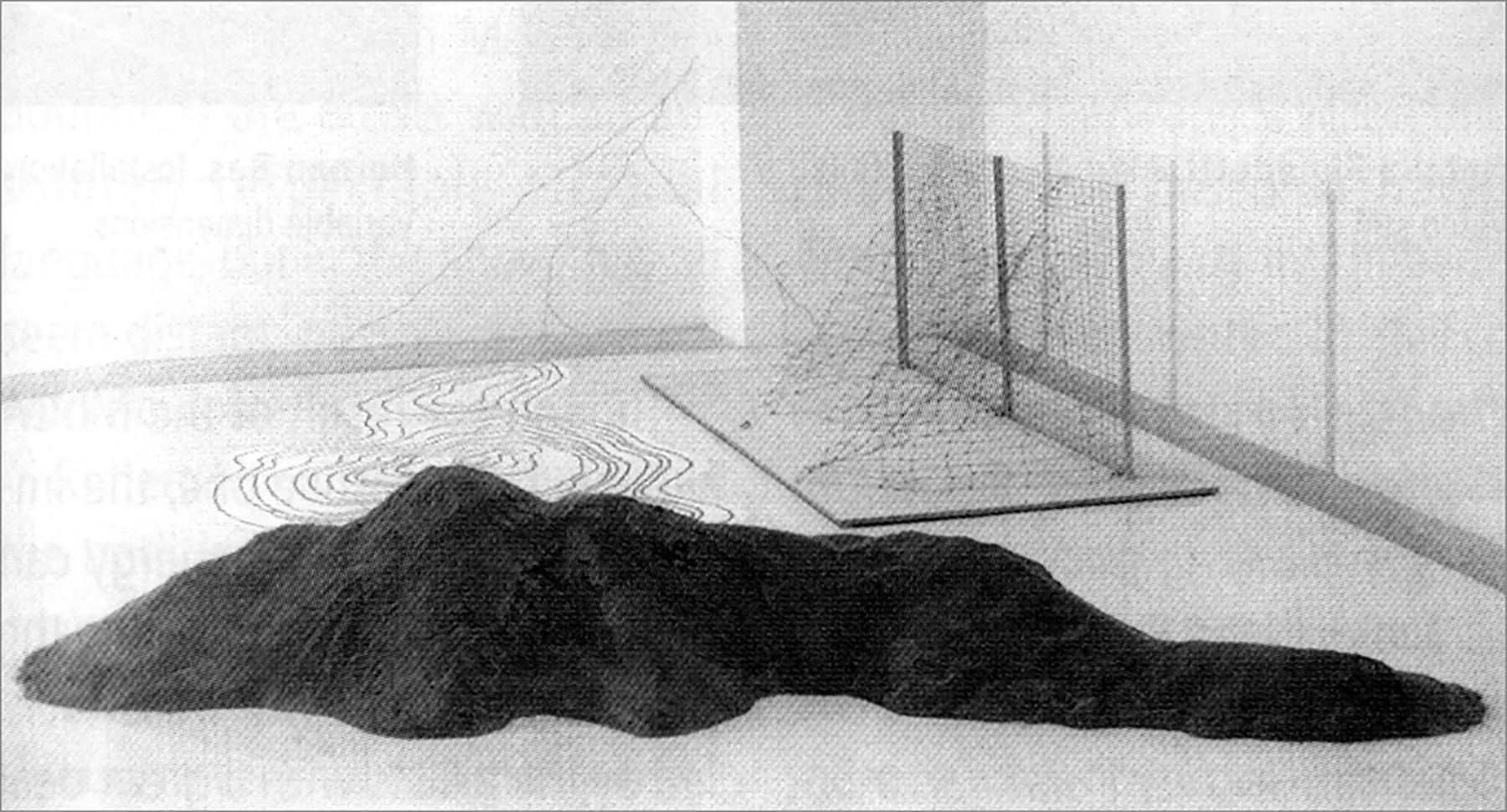
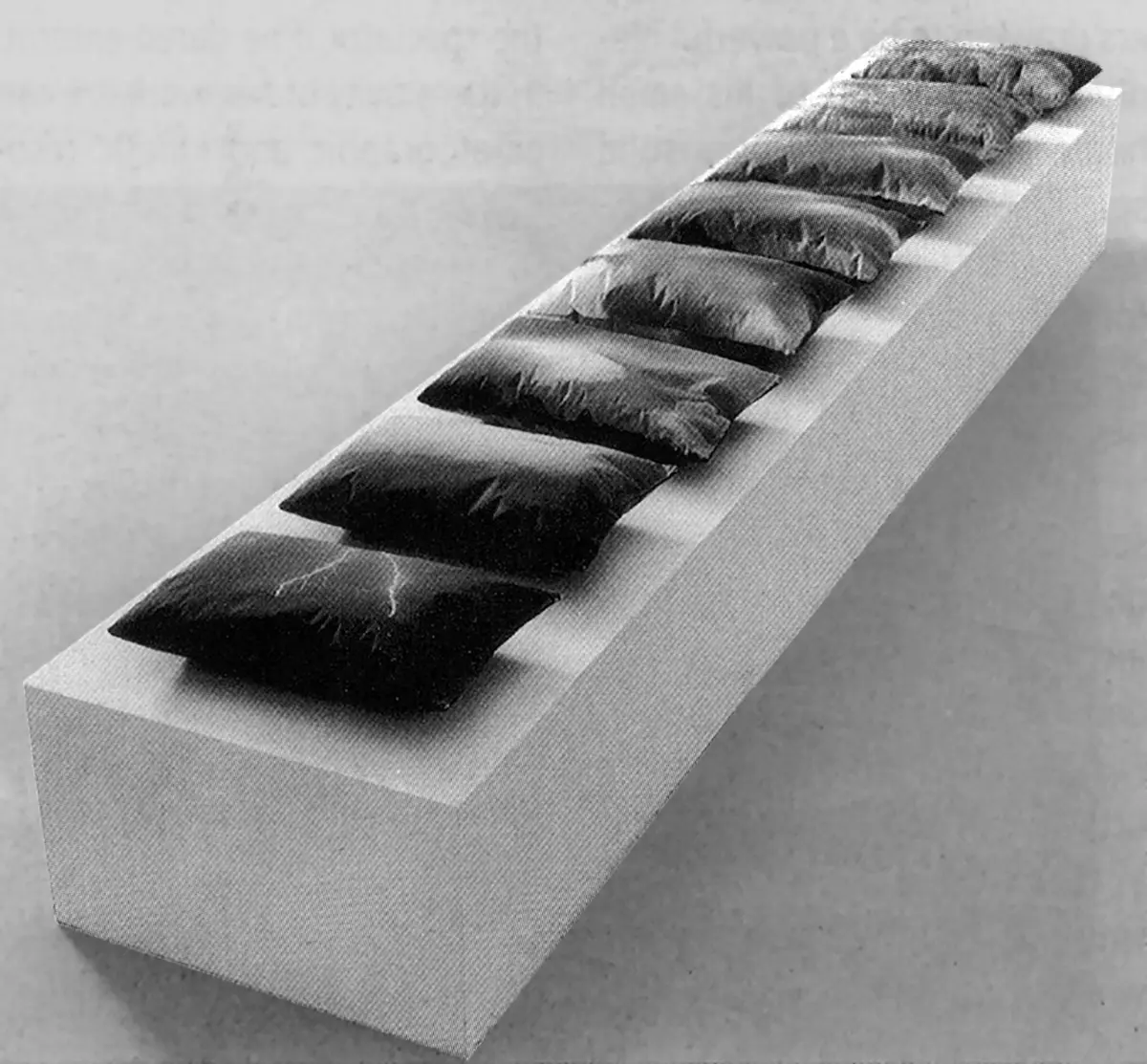
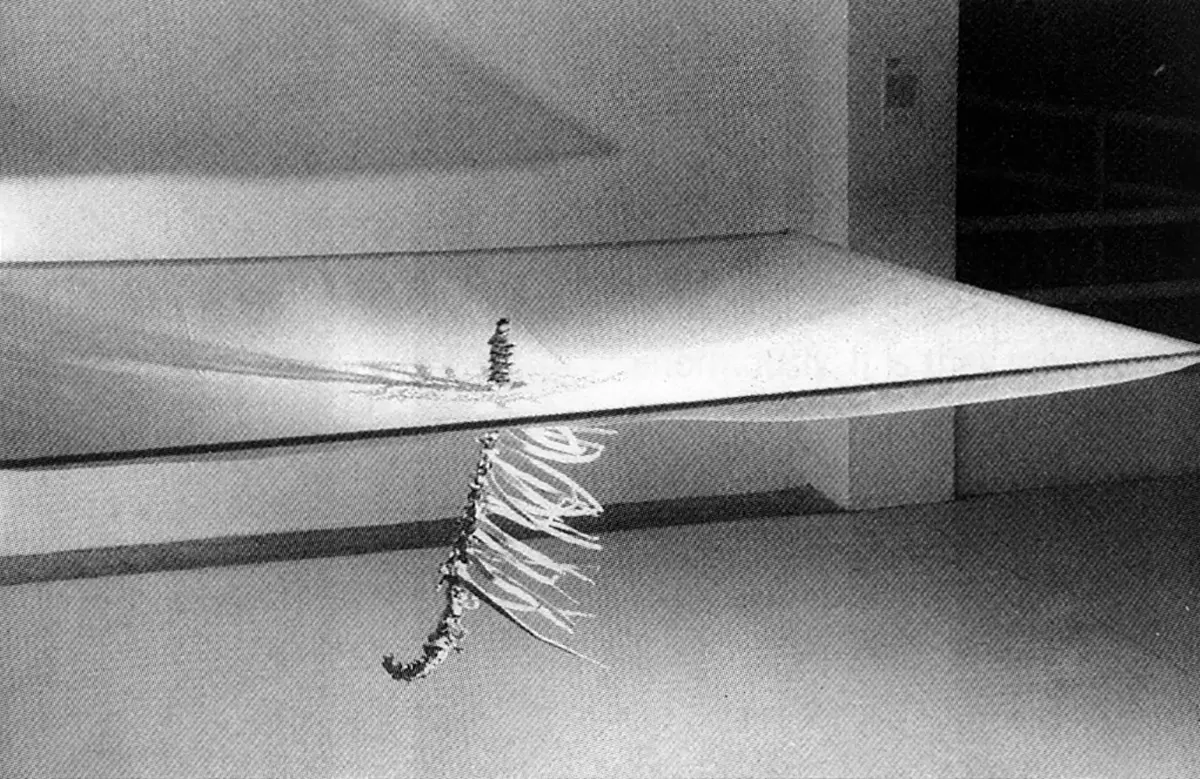
This edition of the Salon did not offer any big surprises. The general tone was one of tranquility but younger artists working in more experimental veins, in the grammar of contemporary art, undoubtedly gained a space here. This is why we applaud the selection of the talented Conny Viera for the Armando Reverón Prize, for her piece Fade Out, a series of photographic images transferred to pillows. Viera works with images of a stormy sky, which, printed on the pillow’s padded-out volume, open the door to sensually abrupt contrasts. Doménica Aglialoro’s installation Ex abundantia cordis os loquiter, made with fabric, silver twine, and potter’s clay, received the Francisco Narváez Prize—well-deserved recognition for an artist whose exquisite plastic voice refers us to a sense of the feminine as a foundational element of the soul. Jaime Castro, winner of the Juan Lovera Prize, presented a well-resolved exploration of the landscape, more specifically of the cityscape, with a conceptual bent.
Among the younger artists, the works of Dulce Gómez, Antonio Briceño, Luis Lovera, and Luis Romero deserve special notice. Gómez surprises us with her versatility, working in different modes to achieve her expressive goals, linked to an ironic vision of the feminine. Briceño, working with photography, actualizes disquieting associations of meaning. Lovera attempts an innovative approach to abstract geometry, within a personal trajectory invigorated in recent years by research and by the loosening of the parameters imposed by geometry itself. Romero continues to advance his proposal to renew the syntax of drawing.
Of the different spaces conforming this show, perhaps the most salient, thanks to the high quality of the works in it, was Hall 3 which exhibited pieces in the minimalist tradition. Magdalena Fernandez’s 1em2000, for instance, develops a complex spatial concept with extreme austerity. In the same tone were works by artists with longer resumes, such as J. J. Moros [Cinco coordenadas curvilíneas (Five Curvilinear Coordinates)] and Pedro Fermín [Relación continua (Continuos Relationship)], who presented sculptural pieces linked to abstract geometry. The works were inscribed in a (conceptual) line of perceptual disarticulation through a minimalist exploration of the basic elements of perception.
The Michelena Salon presented twelve prizes. In addition to the artists already mentioned, the roster of winners included Luis Molina Pantin (Antonio Edmundo Monsanto Prize), Marylee Coll (Harinjs Liepins Prize), Adham Dalloul (Andrés Pérez Mujica Prize), Franklin Cordido (Bolsa del Trabajo Braulio Salazar Prize), Yucef Merhi (Eladio Alemán Sucre Prize), José Luis Chacón (Antonio Herrera Toro Prize), and Rafael Salvatore (Iván Petrovszky Prize).
Special mention should be made of Des... lavando pecados (Un... Washing Sins), by José Manuel Da Silva, Raúl Da Silva, and Yordín Herrera. This work received the Arturo Michelena Prize.
It is an installation of sculptural pieces in metal, placed on walls like fragments falling into empty space. This work is reminiscent of Marina Nuñez del Prado’s Formas del fuego (Shapes of Fire), part of the Museo de Bellas Artes de Caracas’ permanent collection. But here the emphasis is placed, more than on form, on the conceptual operation—as Ricardo Bello points out in the accompanying text—through which the experience of bodies in free fall is reduced to its essential elements and thus sees its universe of meanings, concatenations, transfers, and relations multiplied.
KATHERINE CHACÓN