
Along with Arnaldo Roche-Rabell, Mari Mater O’Neill, Rafael Trelles, and Carlos Collazo, Jorge Zeno (born in Washington, D.C., in 1956) is recognized as one of the salient figures in what’s known as the “80s Generation” within Puerto Rican art. His original style —a Caribbean surrealism combining social critique and a magic-realism rooted in Puerto Rican post-modernity—charms art lovers locally and internationally, offering them with works full of color, energy, and, above all, magic.
Influenced by surrealism as a whole, and in particular the works of Carrington, Varo, and Colunga (plus the masters from the first half of the 20th century), Zeno creates an attractive universe where characters like Merlin the Magician, princesses, giraffe/cats, erotic flowers, rooster/moons, and ships of penguins play at innocence and forgetting. Zeno’s honest and intelligent discourse invites several readings. On the one hand, it’s a magical game transporting us back to childhood; on the other, it can be seen as a profound critique of one of the most materialistic and consumerist societies in the Americas.
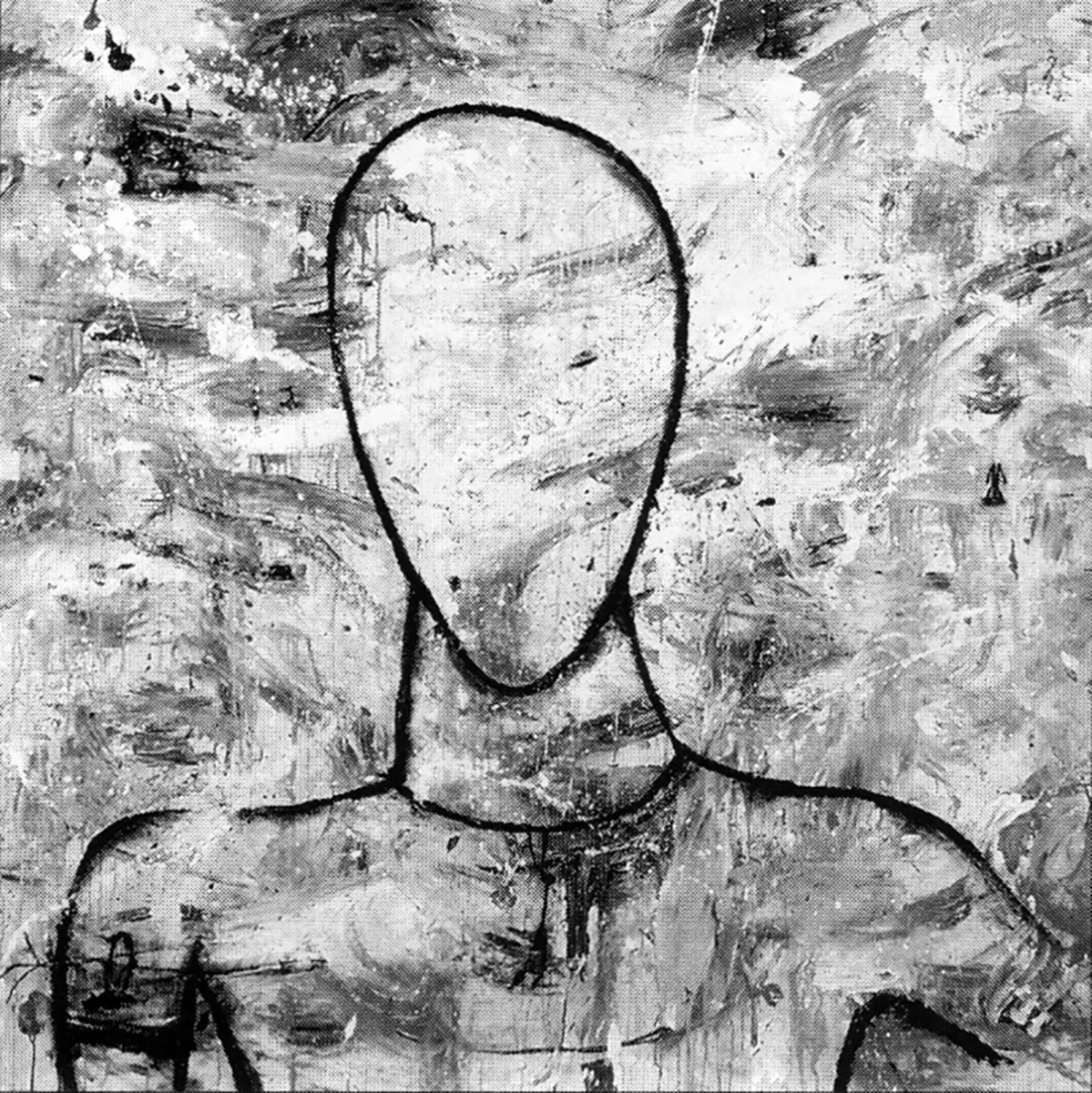
But recently the course of Zeno’s life was altered. In the face of tragedy and as if looking in a mirror, he renounced his Miró-inspired rumbones (big parties) and his iconographic puzzles (full of ship’s bows pointing to different “ports”) and took up introspection and self-portraiture in an attempt to capture in his painting the terrible fall of the soul.
The result of this internal searching, of this reencounter with whom we’ve always been, are the eleven extraordinary paintings shown at the Ponce Museum of Art, under the suggestive title of Semilla Abierta (Open Seed). Although the influence of artists such as Brancusi, De Chirico, De Kooning, Twombly, Rothenberg, Paladino, Dahn, and, of course, Clemente, cannot be disputed, Zeno’s canvasses achieve a convincing combination of fin-de-siécle postmodern existentialism, elements of a new figurativism, and a well-assimilated influence of zen.
The characters in Zeno’s new paintings faceless men who nonetheless see and understand everything—can be seen as fallen archangels waiting for love to give them back their wings. Superimposed on energetic and rhythmic abstractions, these self-portraits of Zeno’s (why not call them self-portraits, if they are just that?) remind us of Icarus and Adam, of Joyce’s Leopold Bloom and the Buddha, of John Lennon’s Fool on the Hill and Gustav from Thomas Mann’s Death in Venice.
Zeno has courageously changed his “style” well into a very successful career. For those accustomed to his charming surrealism, this change has been tragic but I understand that in an artist there are different voices trying to express themselves in different ways. Zeno’s current work, honest and wounding, invites us to uncover ourselves and contemplate our vulnerabilities. His empty faces are an invitation to begin building that map that, to a certain degree, is our definition. Zeno brings us closer to both our pettiness and our greatness. His compass and he knows where he’s going points to peace and to happiness. The paintings in Semilla Abierta are just that: seeds that will become fruit, passion, peace, and, ultimately, happiness. These paintings, which could be described as “cold” or even “empty,” are the key to understanding that we’re made of eagerness and that immortality can be summarized by a kiss.
MANUEL ÁLVAREZ LEZAMA