
Making Art in Miami: Journeys through Hyperreality was presented at the North Miami Museum of Contemporary Art (MOCA) from December 15, 2000 through January 28, 2001. In celebration of the fifth anniversary of its opening, it gathered works by 22 artists from the city, for an exhibit curated by Bonnie Clearwater, the museum’s director.
As shown in the title, this exhibit does not only represent the creations of twenty-two contemporary artists who live and work in Miami but also the works of the same artists whose works reflect, directly or indirectly, the obvious and the imperceptible aspects that make up the city. But at the same time, it’s about tackling the superfluous symbols of identity.
As it is easy to imagine, the artists invade the space of the museum with all the resources and formal basis with which contemporary art is identified, such as photography, video, and various objects conforming installations, films, drawings, and finally, paintings.
It’s natural to think that the artists’ attitudes are what shape the formality or informality with which the audience approaches the media. These young men and women were shaped, as one of them said, by watching art for the first time through Christo’s projects in the city. This could explain their interest in producing works that aren’t expressions of their inner selves but rather were made for the spectator’s enjoyment.
Many of them grew up absorbing Walt Disney’s monumental fantasies. Others, born in other continents like Latin America, contribute an “illegal” vision in order to understand the new cultural environment that has become their territory.
It is interesting to note that immediate references aren’t only the product of other artists’ weight, but also the contact with the culture of comic-strip heroes, Calvin Klein, the urban landscape, huge highways, inconceivable golf courses, and malls, those new temples of entertainment. To this, we must add another presence: the aerial spaces and the innumerable technical resources of the film industry.
The artists of Making Art in Miami are Hernan Bas, Natalia Benedetti, Robert Chambers, Westen Charles, Cooper, William Córdova, John Espinosa, Naomi Fisher, Robert Flynn, Dara Friedman, Luis Gispert, Adler Guerrier, Mark Handforth, Jason Hedges, Beatriz Monteavaro, Gean Moreno, Jorge Pantoja, Norberto Rodríguez, David Rohn, Eugenia Vargas, Annie Wharton, and Elizabeth Withstandley.
Painting seems to play the role of host in Marking Art in Miami. It welcomes the spectator, introduces him or her to the center of action, and once there, it disappears. David Rohn, Robert Flynn, Annie Wharton, and Gean Moreno undoubtedly are artists with absolutely respectable pictorial language, but in this show, they all seem distant, passive, and almost with no voice.
Robert Flynn happily renovates the traditional use of painting, recovering its “lost sense.” It’s a small song to nature, justified through a very musical mannerism. His small birds simulate the surface of the painting that Jackson Pollock or Larry Poon at one time agitated.
Gean Moreno seems to think too much about his audience —how to reach it or how to respond to it. Perhaps a little more of his inner self could complete the intentions of his abstract paintings. Nevertheless, his installation of color balloons inside a private space was quite interesting to the children, and they enjoyed themselves enormously. It is they who constitute the true audience of the recreation centers. Undoubtedly, Annie Wharton is able to reveal the hidden subtleties of painting. Her work is the result of a well-directed and systematic innocence. Her confectionery gives spectators what they’re looking for. David Rohn maintains a strange distance from the public. His paintings require special attention. His language, although symbolic, feels mysterious and nostalgic.
Bonnie Clearwater’s vision and curatorship was based on Travels Through Hyperreality by Umberto Eco, the Italian writer. In it, Eco explains that Disney “doesn’t only produce illusion, but it also stimulates a yearning, a desire for it.” Eco fears that in North America, artificial nature corresponds much more to what our dreams demand, and that after experiencing this apex of perfection, reality will always seem imperfect.
In her text, Clearwater states that "For the majority of the artists included in this show, South Florida’s hyperrealistic constructions constitute the region’s authentic environment; Disney World, Vizcaya, and the neighbors’ swimming pool are as real as the ancient Roman ruins. The true focus here is not to criticize American society’s simulacra but something more delicate—how deeply the region’s fantasies have influenced them and their behavior in regard to art."
The artists selected by Clearwater have a remarkably optimistic vision of reality, perhaps the same kind of optimism projected by the city. But this optimism can be relative. I recently visited Celebration, a new urbanist town perfectly designed for dwellers of Disney World. There I was able to confirm that its residents and visitors are surrounded by the most exaggerated assortment of simulacra and comforts, such as century-old Victorian houses recently built, artificial snow, peaceful lagoons, avenues with musical environments, etc. Its inhabitants seem to be in a current state of inexpressiveness; no one seemed particularly sad or happy. They were simply marked by a new mental state: bored contentness.
Though the result of the MOCA show is not a festive one, the impact of its stimulating energy can be felt. It would appear that the problems of creativity were tackled by the artists with a great deal of detachment.
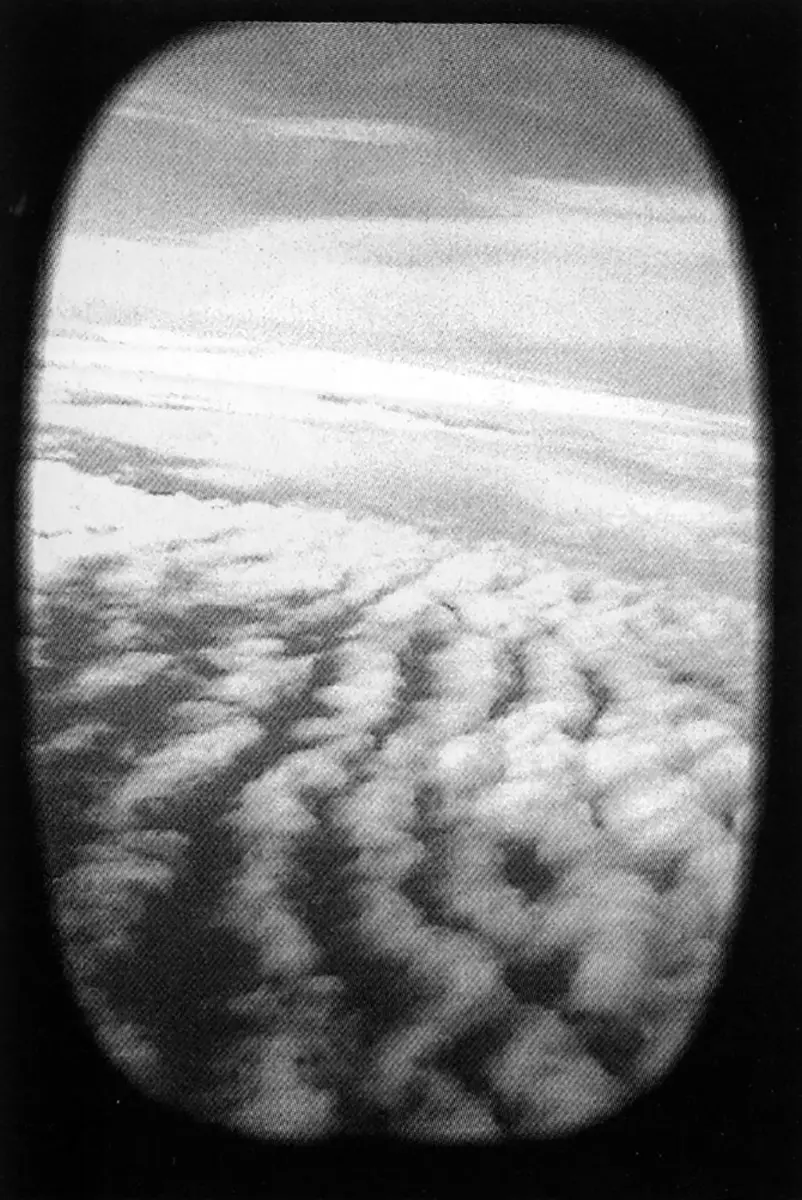
In Natalia Benedetti’s surprisingly poetic vision, for example, the aerial landscape is turned into an object of contemplation through an airplane window. An imperceptible readymade. Emptiness’ ultimate consequence— that space invented by Yves Klein. Benedetti’s video-window registers the clouds we see every time we fly by plane in this case, while descending to Miami. The changes of perception in the story are amazing. What once were the small openings in Duchamp’s work allowing us to see, with subtle morbidity and charm, a woman nude, are now windows taking us for a ride through the infinite or space from one country to another.
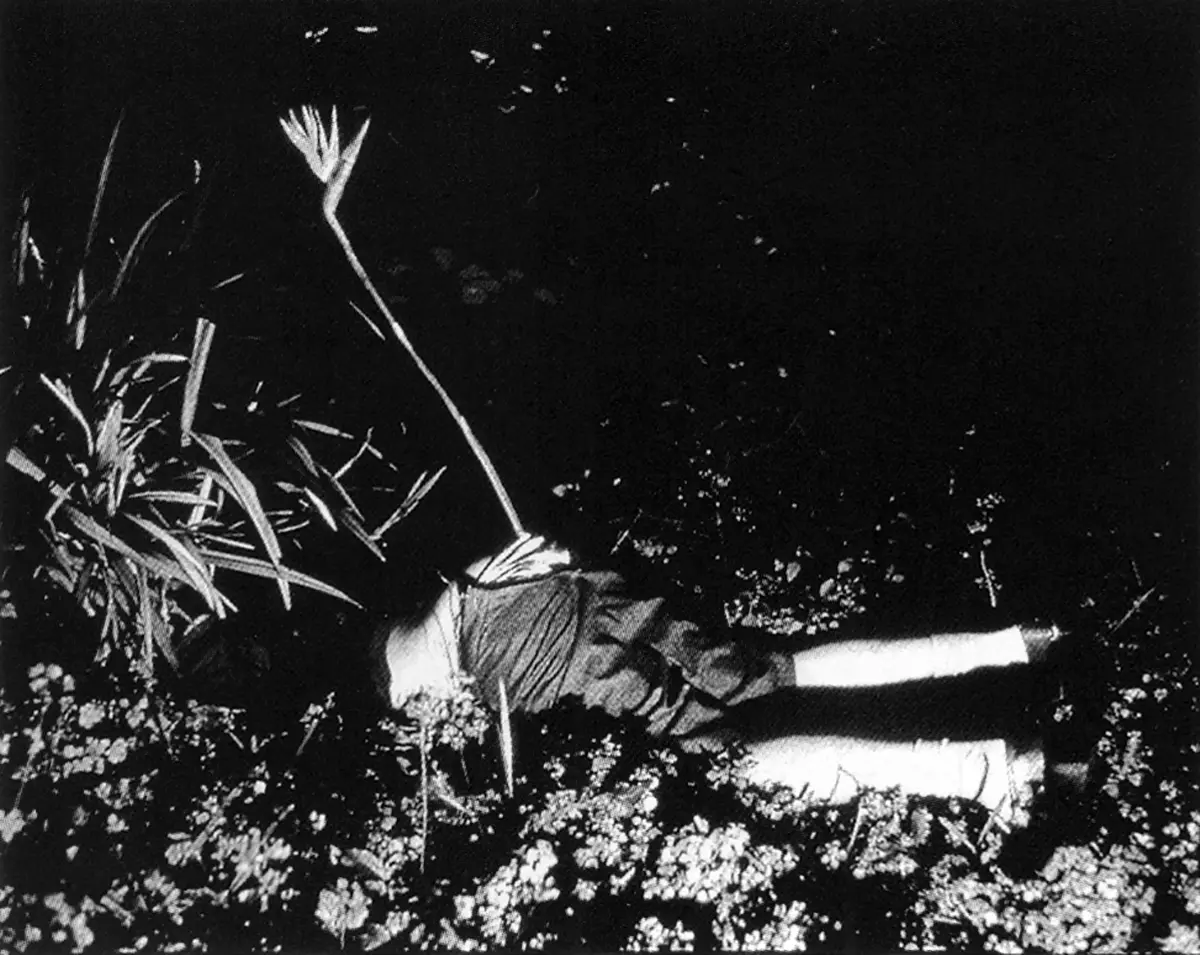
Through sophisticated photographs, Naomi Fisher presents the liberation of an eroticism repressed of daring insinuations that need the complicity or protection of the tropical jungle. A lawless world for a better fantasy.
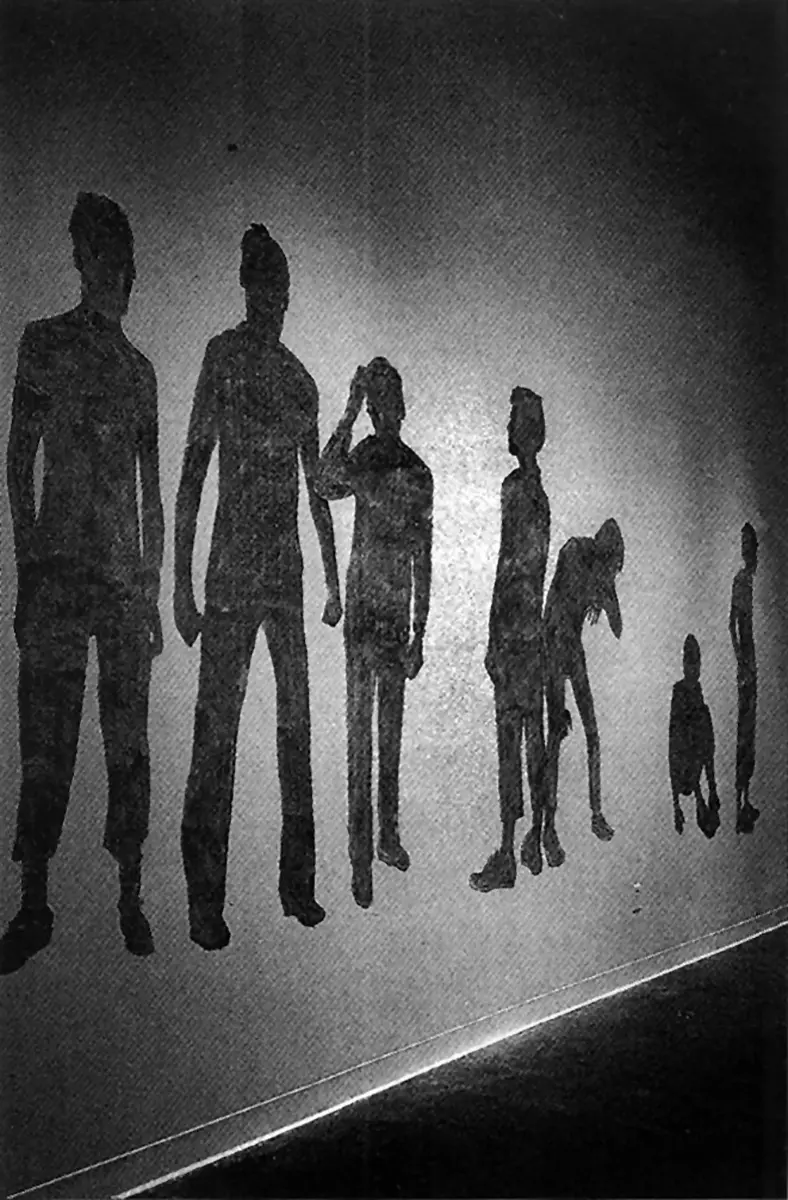
The effort to explain the universe and its components in the function of man is something that characterizes Latin American artists. Jorge Pantoja’s works go in that direction. His drawings are small notations registering a new anthropology. This sort of graphic diary seems to be the apex of his language and his social environment.
William Córdova also considers drawing to be a powerful medium. The horizon of his small home appliances states a solid space, the by-product of existential minimalism, the matrix for a new mannerism based on the inventory of a personal journey.
Hernan Bas, perhaps the least successful painter of the group, gives another sense to the elemental problems of form, texture, and color. Through the use of Slim-Fast, the weight-loss elixir that acts as the color of flesh, is sandy in texture, and its smell convinces us of its healthy artificiality and even makes us remember antiquity frescoes.
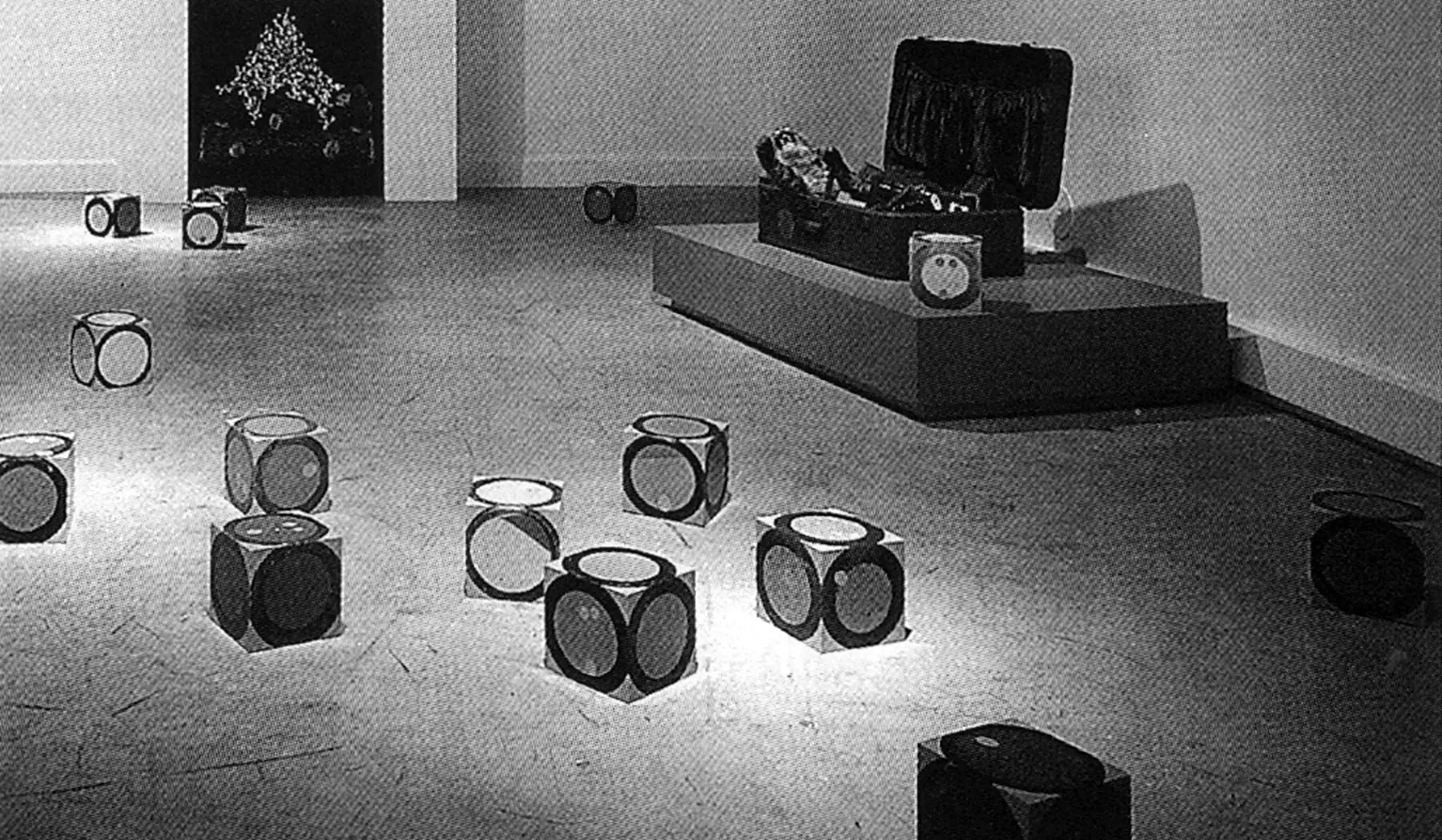
Westen Charles recovers the Anglo-Saxon tradition of carpentry or the repair of old objects. His interest in turning old bowling balls into cubes and destroying their spheric shape makes him appear as a new vernacular minimalist.
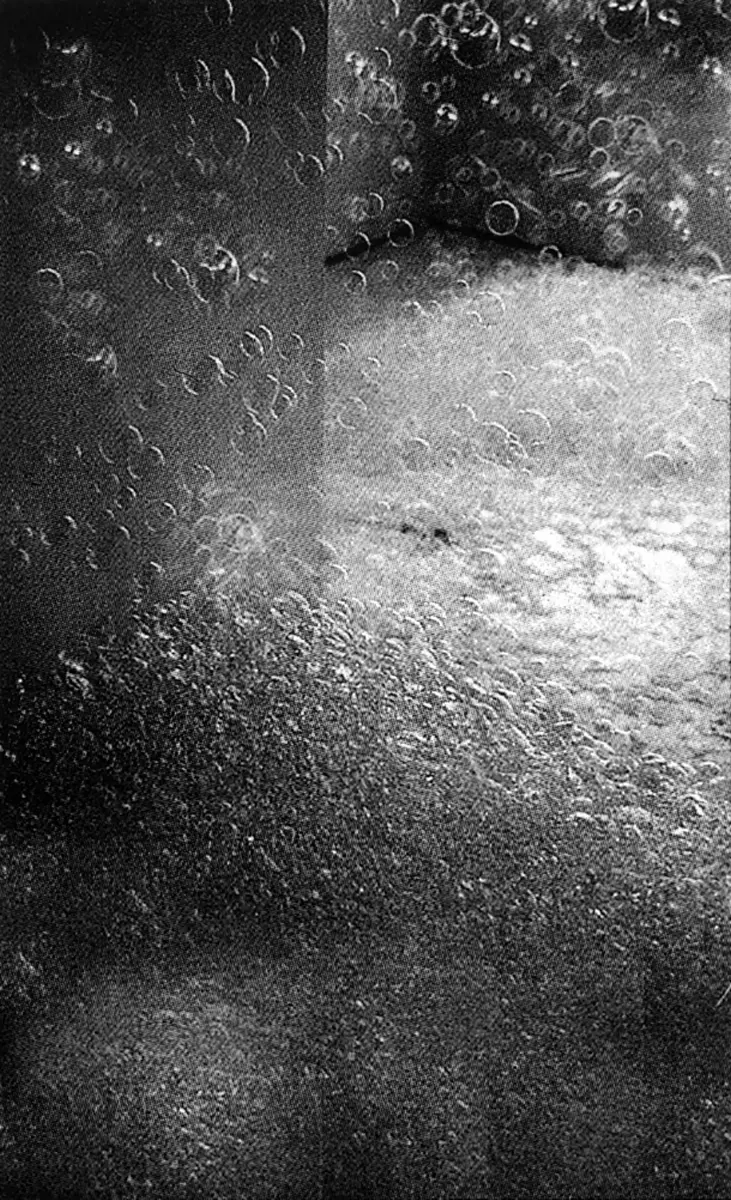
Eugenia Vargas installs a monument to entertainment that at the same time could be considered a trap to reconcile with death. A machine making bubbles of life and joy in a space that could hurt the spectator if he dared enter it. In the gravity of her work are cinematographic and kinetic resonances.
Elizabeth Withstandley’s photographs contain a good dose of humor. They allude to the silent films in which pies flew from one face to another. Nevertheless, the faces of the models used withstand the same pathetic humiliation that human existence inflicts daily upon us.
Making Art in Miami is an exhibition that shows us a well-liked and cozy Miami. As shown by Dara Friedman’s work, it’s also equally sordid.
EUGENIO ESPINOZA