
As an assembled body of works, Ultrabaroque, Aspects of Post-Latin American Art is a powerful exhibition that profiles an array of strong and provocative works. Strewn throughout nine rooms in a modern museum nestled in a seaside resort community, the exhibit features over seventy works by sixteen artists from throughout the Americas. While many of the young artists are well known in their own countries, only a few have previously shown in the United States, making the potential impact of the exhibit significant. Because of this, the show’s conceptual framing as manifest in its title and accompanying catalogue is of critical importance. The engaging though polemical catalog that profiles essays by co-curators Elizabeth Armstrong and Víctor Zamudio-Taylor, French cultural historian Serge Gruzinski, and art historian Paulo Herkenhoff, celebrates contemporary Latin artwork as one of the most complex and advanced manifestations of global postmodern art.
Defining the growing international art scene as one that is ultra baroque, Zamudio-Taylor argues that, "The baroque, —the very term that previously operated as a cliché to undervalue and marginalize artistic expressions from Latin America— now, in the age of globalization, provides the key to the interpretation of hybridity in visual culture." Historically, the show thus extends interpretations stemming from such modernists as the Cuban critic Alejo Carpentier, rather than the Spanish philosopher Eugenio d’Ors, suggesting that the ultra baroque is a sign of artistic culmination and climax, rather than of artistic exhaustion and decadence. But, while these concepts certainly ignite sparks of insight into the evolving discussions of what constitutes a globalized aesthetic, numerous profiled works seem to conceptually question the championing of such a world while nonetheless manifesting a culturally pluralistic vernacular.
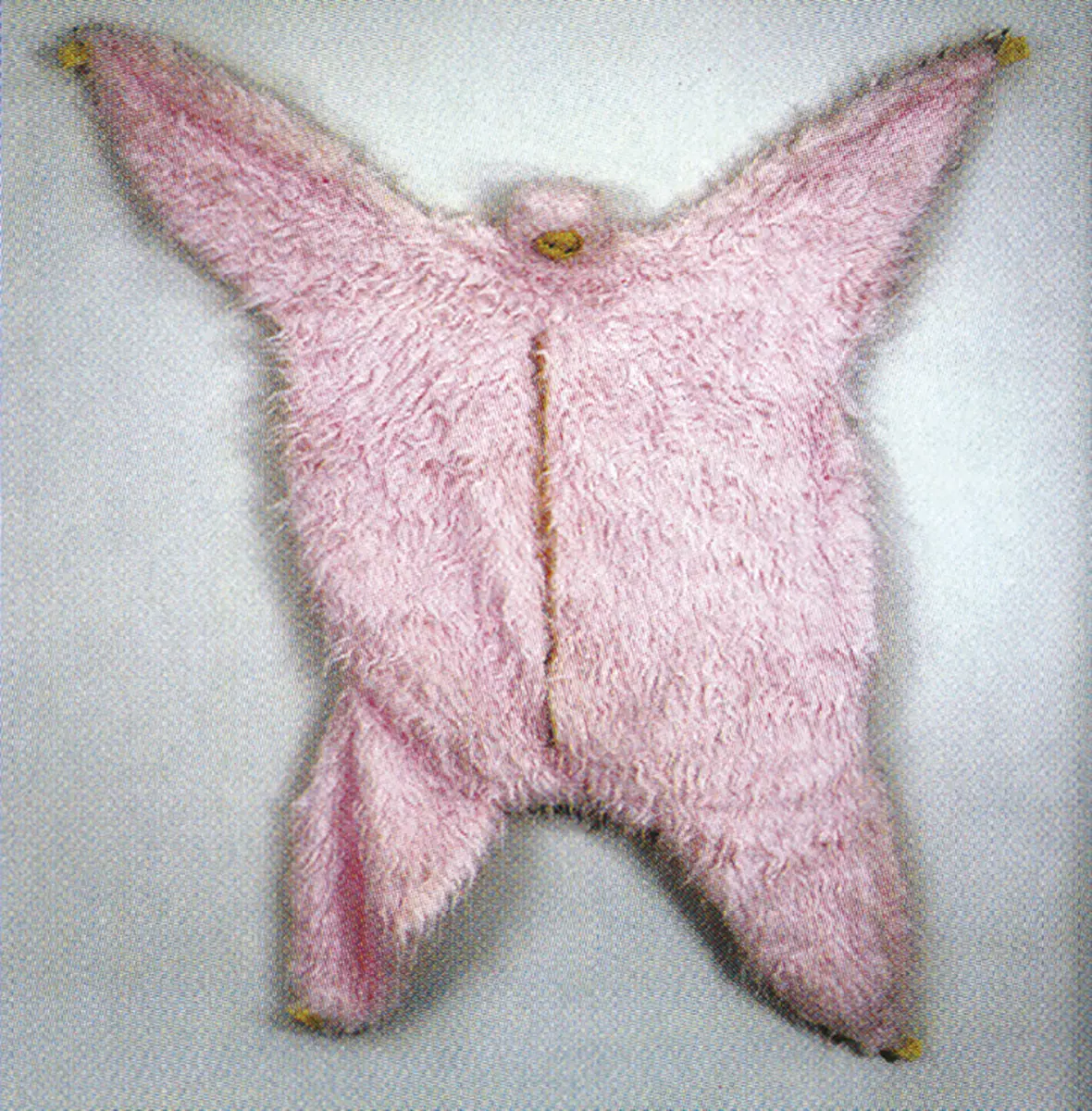
Featured in the opening foyer, for example, is Lia Menna-Barreto’s Sleeping Doll. It presents an oversized, soft-bodied doll, dressed in a pink synthetic fur pajama and graced with a miniature head, hands, and feet. Somniferous, female, and childlike, the work seems to parody the emerging globalized marketplace as simultaneously attractive and repulsive, melding overtones of comfort and ease with those of naïveté and stupidity.
Similar conceptual anachronisms make Nuno Ramos’ Untitled assemblage installation memorable. As in Menna-Barreto’s work, Ramos explores lethargy in his work which is a complex aggregate of found objects of diverse materials and colors. Underscoring the physical essence of existence as inherently material and visceral, Ramos’ work tellingly does not equate mass with strength, as Minimalist works once did, but rather slows mass down to a halt, where its inertia threatens to unleash processes of randomness and chaos. While this work too can be easily defined as ultra baroque, its fractured mirrors and cacophony of forms spoofs, more than celebrates, emerging globalized tendencies.
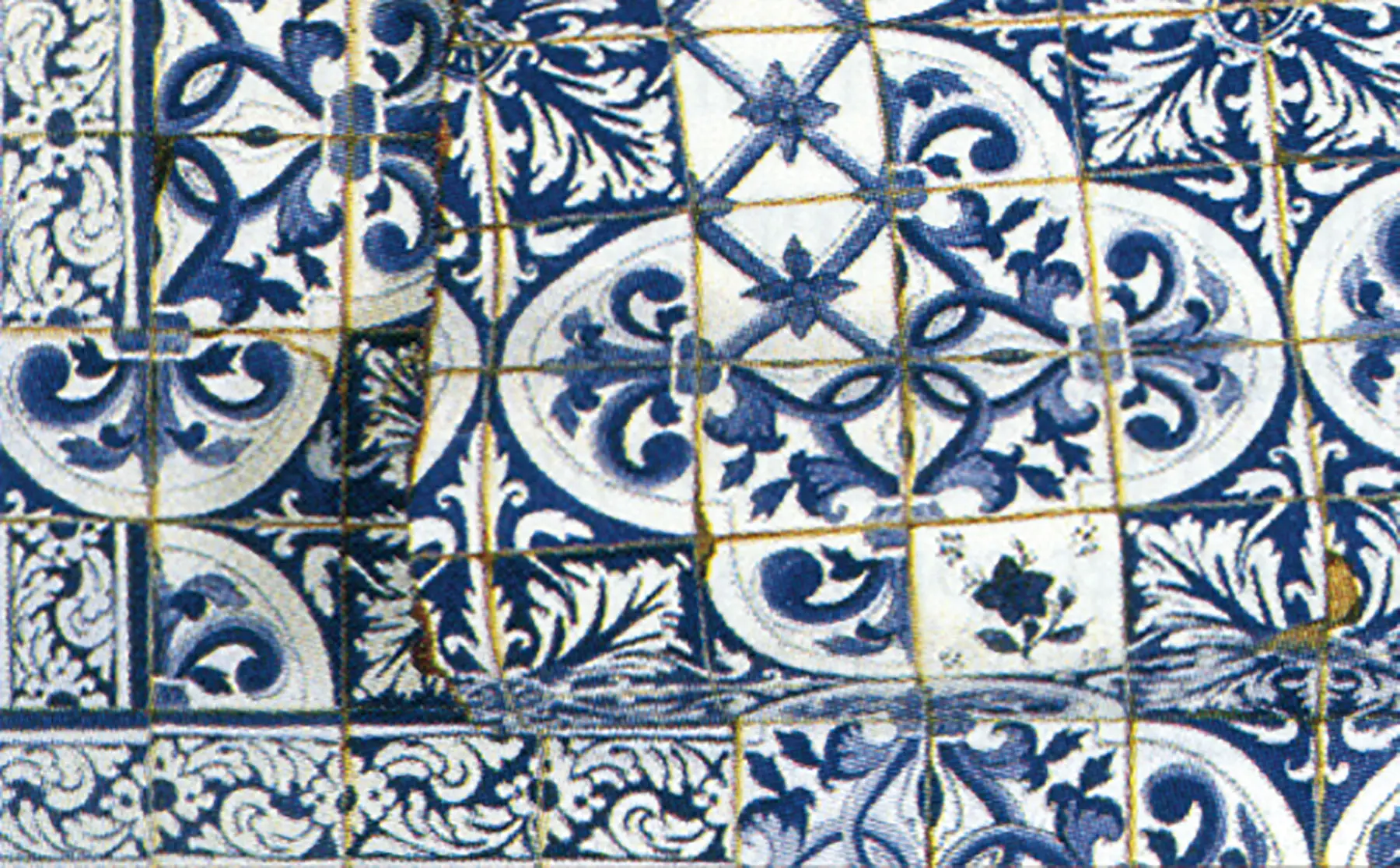
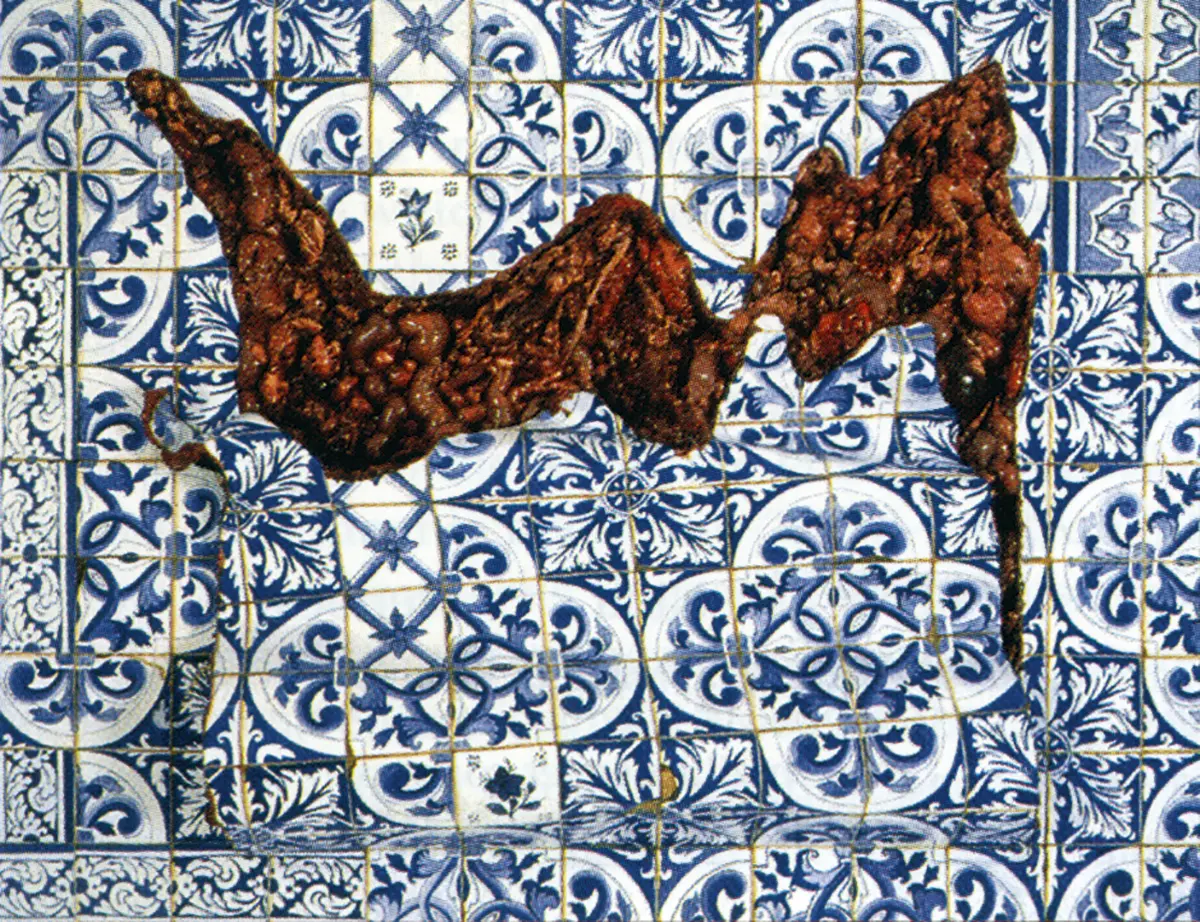
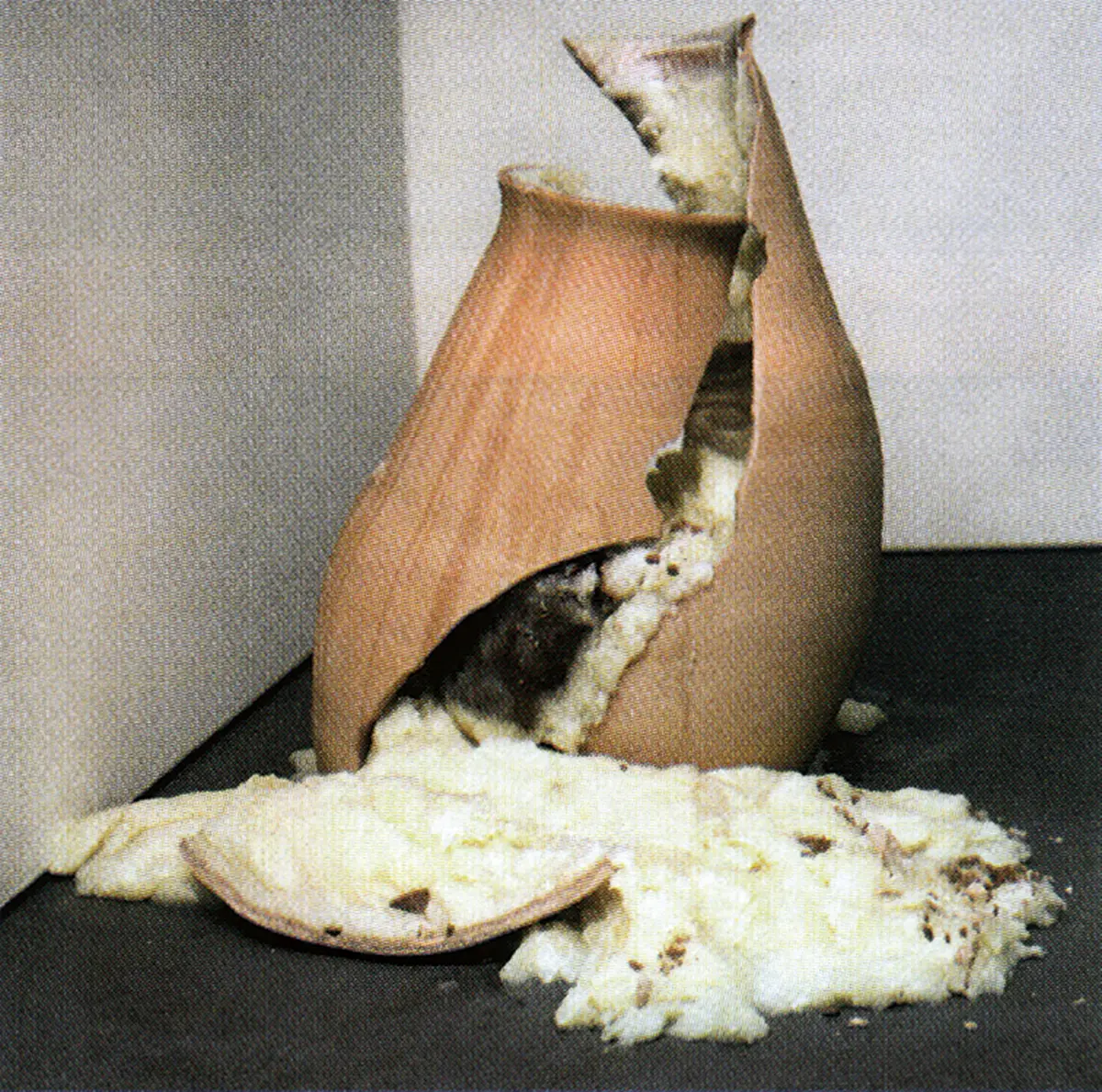
Adriana Varejão’s works likewise conflate the beautiful and the abject. Her three-dimensional painting Carpet-Style Tilework in Live Flesh profiles an earthquake-like eruption that has split open a blue and white tile floor to reveal a brown mass that suggests simultaneously human flesh, intestines, and dirt. Alluding to the tyranny of colonialism, that accumulated wealth through human exploitation and racism, Varejão’s work rips the mask off historical accounts of alleged colonial sophistication revealing its implicit injustices and greed.
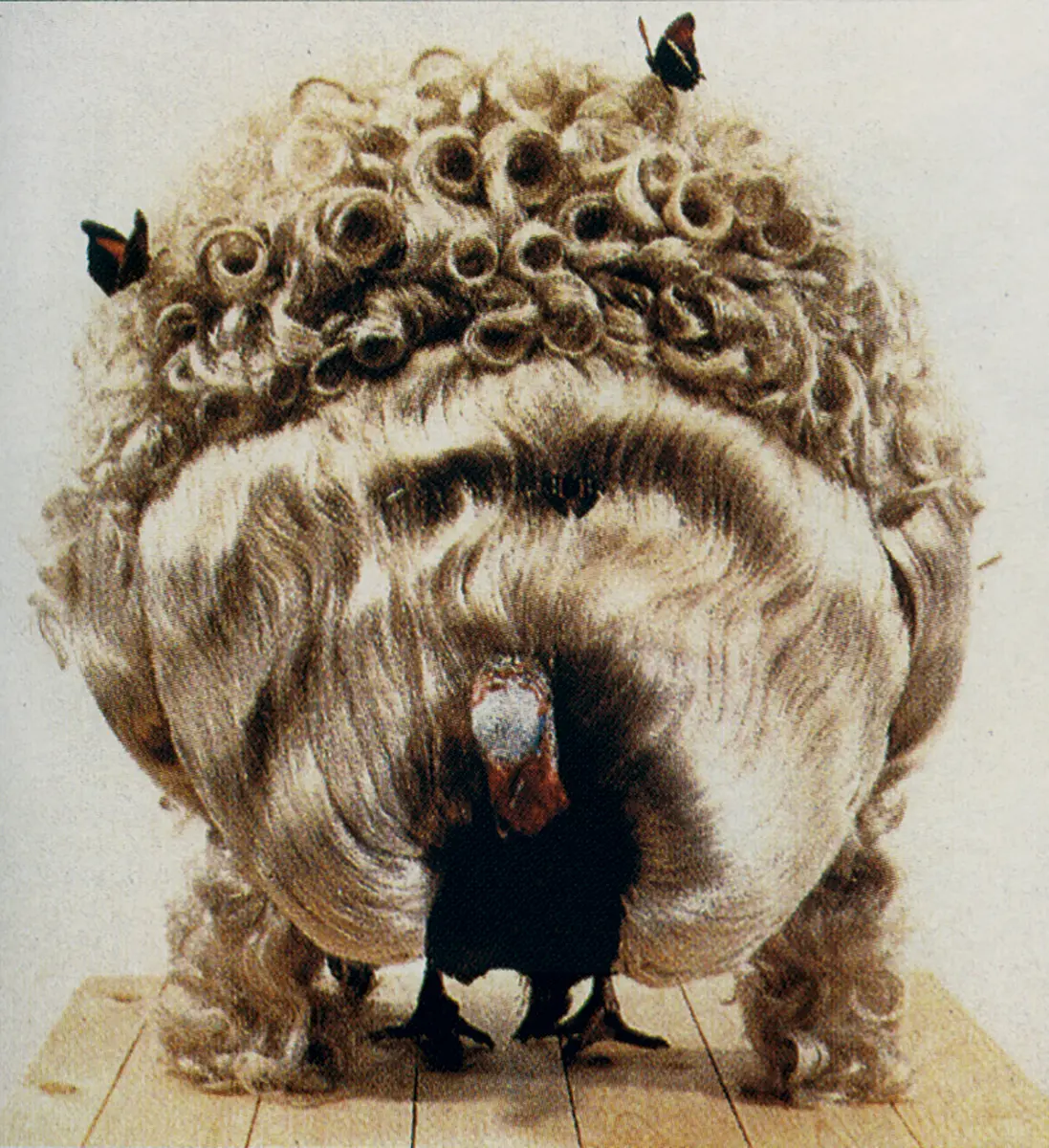
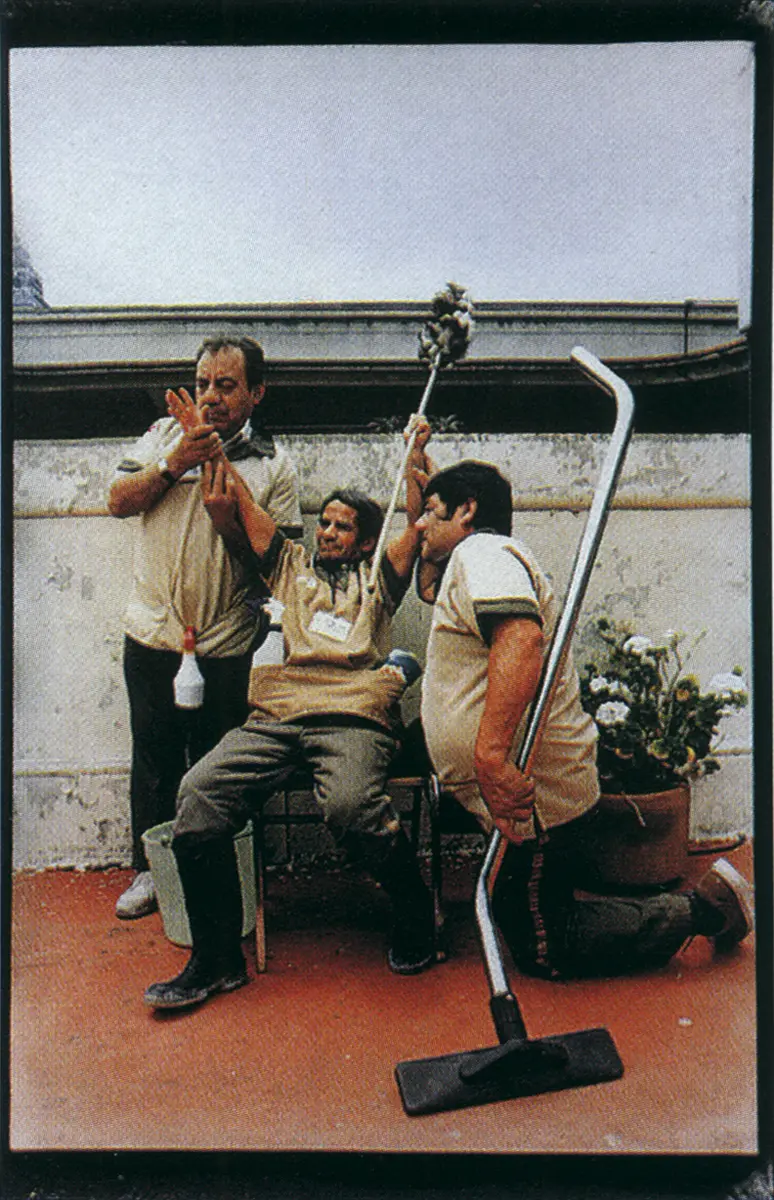
In a subsequent room, Miguel Calderon’s four wall-sized color photographs, each titled Employee of the Month, explore the treachery between images and reality. Staged in a theatrical manner after renowned works by Caravaggio and Velazquez, these photographs nonetheless undermine their traditional prototypes by profiling retarded museum guards and custodians, rather than prominent religious or historical figures. At the same time, the works also appear to allude to the continued marginalization of Latin American art from canonical circles, as though it were somehow inferior to its European cousins. Similar themes take on a different appearance in Meyer Vaisman’s Untitled Turkey works, which features in various guises a bird indigenous to the Americas. Inventive and wry, his taxidermic hens are coiffured and dressed to resemble aspects of the mestizo universe. Codifying colonial and postcolonial Latin America as an androgynous female-male sign symbol these works parody the stereotypes that continue to define and delimit the broader reception of Latin art, artists, and culture in North America and Europe.
Presenting an impressive array of artists whose works wrestle with the complexities of contemporary identity, this exhibit profiles not so much contemporary Latin art, as contemporary Post-Latin art whose cultural identity partakes in the global phenomena of mestizaje, to paraphrase curator Zamudio-Taylor. Whether such trends are positive as the curators seem to suggest, or problematic as a number of the artists imply, remains to be seen. Certainly, in its imaginative fervor and theatrical elan, the exhibition is vital, resilient, and engaging.
The exhibition was on view through January 7, 2001. The artists in the exhibition are Miguel Calderón, María Fernanda Cardoso, Rochelle Costi, Einar and Jamex de la Torre, Arturo Duclos, José Antonio Hernández-Diez, Yishai Jusidman, Iñigo Manglano-Ovalle, Lia Menna Barreto, Franco Mondini Ruiz, Rubén Ortiz, Nuno Ramos, Valeska Soares, Meyer Vaisman, and Adriana Varejão.
COLLETTE CHATTOPADHYAY
Historian and lecturer based in Los Angeles. Member of the National Association of Art Critics (U.S. Section); frequent contributor for Artweek, ArtNexus, Art Asia Pacific, and Sculpture magazines.