
The 40 x 40-inch color photographs that comprise the series Pictures For Rome depict dilapidated buildings on the outskirts of Rome that were abandoned during construction. They represent a new body of work by noted Los Angeles photographer Anthony Hernández. During a residency at the American Academy in Rome, Hernández chose to examine the unexpected. Rather than photograph icons of Rome such as the Vatican or the Coliseum, he focused on its modern ruins. The resulting photographs could have been taken anywhere, but it is significant that they show an aspect of the eternal city that is not usually seen and that most don’t know exists.
In a previous series of photographs, Landscapes for the Homeless, Hernández documented dwellings and encampments where the homeless lived. His photographs illuminated and found beauty in a known but often ignored aspect of city life in Los Angeles. Similarly, Hernández finds beauty in these abandoned structures. Shot from various points of view, using a square format camera, Hernández’s images focus on the details and the formal quality of what is in front of the camera. The images present the shapes and geometric patterns the camera records as it flattens receding space. Rome #25 is a photograph of a tiled floor and a flicker of sunlight on an unpainted wall. Posters and pictures once tacked on the wall are now gone. All that remains is their outlines. These traces echo square shapes on the floor. The image is quiet and peaceful. Its terracotta hues give it a somber tone. The light, coming in from a window beyond the frame gives the image its life.
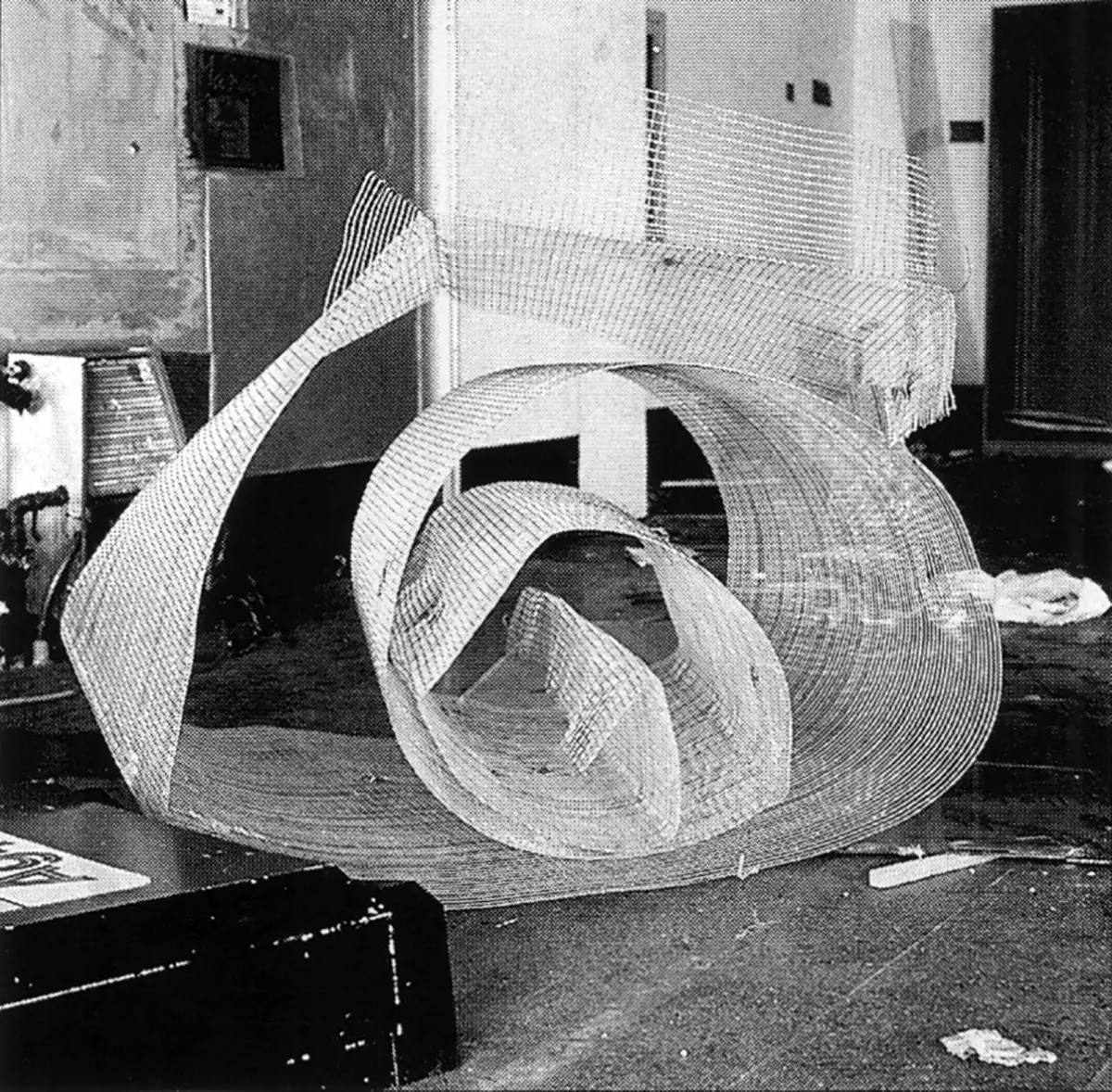
Structural columns in unfinished office spaces appear grandiose and heroic in images like Rome #29 and Rome #31. Although the foreground space may be littered with construction-site detritus, the images transcend the fact that they are depictions of leftover and useless places. The colors in Hernández’s images are true to their subjects and the usually off-putting colors of bare drywall or institutional primer come alive within the compositions. In Rome #1, a beam of light peaks through closed doors. These double doors, once painted a deep cobalt blue are now covered with random graffiti markings by passersby. The image becomes an abstract composition depicting three planes of gray (walls) and one plane of blue (door). In many images, the focus is on a single-form overturned metal table Rome #2 or a roll of metal screening Rome #3 centered in the space. These objects become monumental in stature, not for what they represent but for what they have become- graceful gestures, and minimalist sculptures forever captured in Hernández’s frame.
Hernández’s Pictures for Rome are not pictures of Rome: They are something he has created for the city. He has elevated the discarded and the abandoned into something significant and beautiful to look at. He depicts places without history; ruins before their time. Looking in, looking through, and looking at textures, walls, columns, and trash, Anthony Hernández has created an elegant body of work. Each photograph portrays its subject without passing judgment. There is no contempt or pity. Hernández is not suggesting that it is a tragedy that these buildings are unfinished and abandoned. Rather these are evocative photographs of emotionless places. They are colorful, and formally precise works that will hopefully inspire us to look again at what usually passes right by.
JODY ZELLEN