
The history of the Boca Raton Museum of Art began in 1950 when a group of individuals took the first steps that led to the development of the Art Guild of Boca Raton. In the 1960s, the guild acquired a 2.5-acre property on Palmetto Park Road and built the museum, an institution that since then has played an important role in supporting the arts in South Florida.
By the end of the 1990s, programs and collections began to outgrow the space. Led by the museum's executive director George S. Bolge, and the president of the board Joseph S. Borrow, the museum raised more than thirteen million dollars for the construction of a new building and the renovation of the existing facility on Palmetto Park Road, which will be used as the headquarters of the museum's art school.
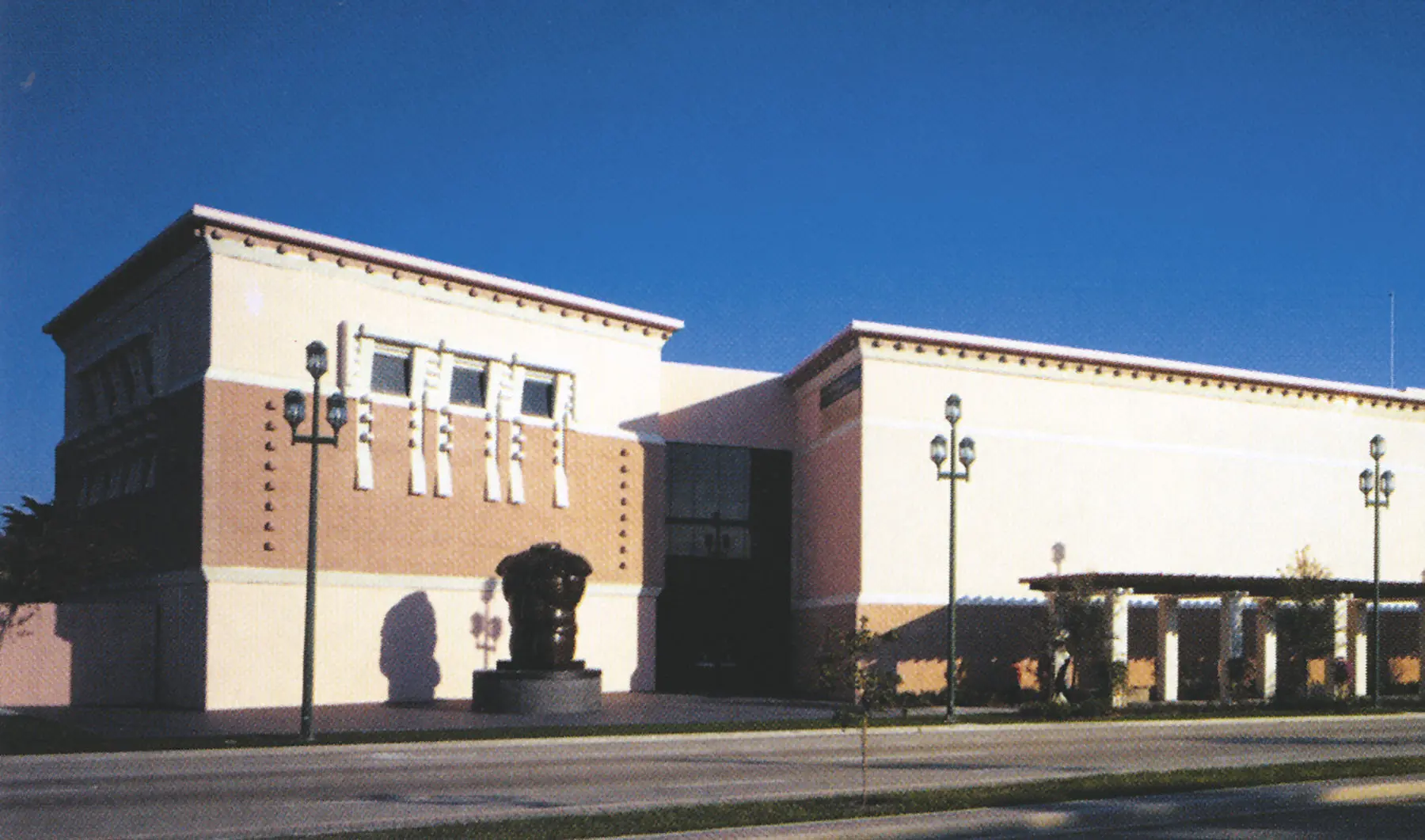
On January 24th, 2001, the new building of the Boca Raton Museum of Art opened its doors to the public. Located at Mizner Park, an up-scale commercial street located in downtown Boca Raton, the museum's two-story building is the first project to be completed as part of the new Center for the Arts, an ambitious cultural complex to be developed in the next few years at the north end of the commercial site.
Singer Architects of Fort Lauderdale and Kaufman Lynn General Contractors of Boca Raton were responsible for its construction. The 44,000 square feet structure, which includes 22,500 square feet of galleries, more than five times the space available in the Palmetto Park Road facility, will be used to display world-class exhibitions and thousands of works from the museum's permanent collections, many of which have never been shown before.
According to director George S. Bolge: "The museum was envisioned as a partly-cloistered, inward-looking complex of spaces and, at the same time, the center of a larger domain, reaching out to the world and inviting it to take part, forming an entrance piazza to welcome the community. Over the years since the 18th century, the role of museums has evolved and expanded to include educational as well as collection and display functions. The new building is in this tradition. It not only acknowledges its function of housing art in its circulation, lighting, installations, and spatial qualities but it contributes also to the educational role of the Museum in the broadest sense."
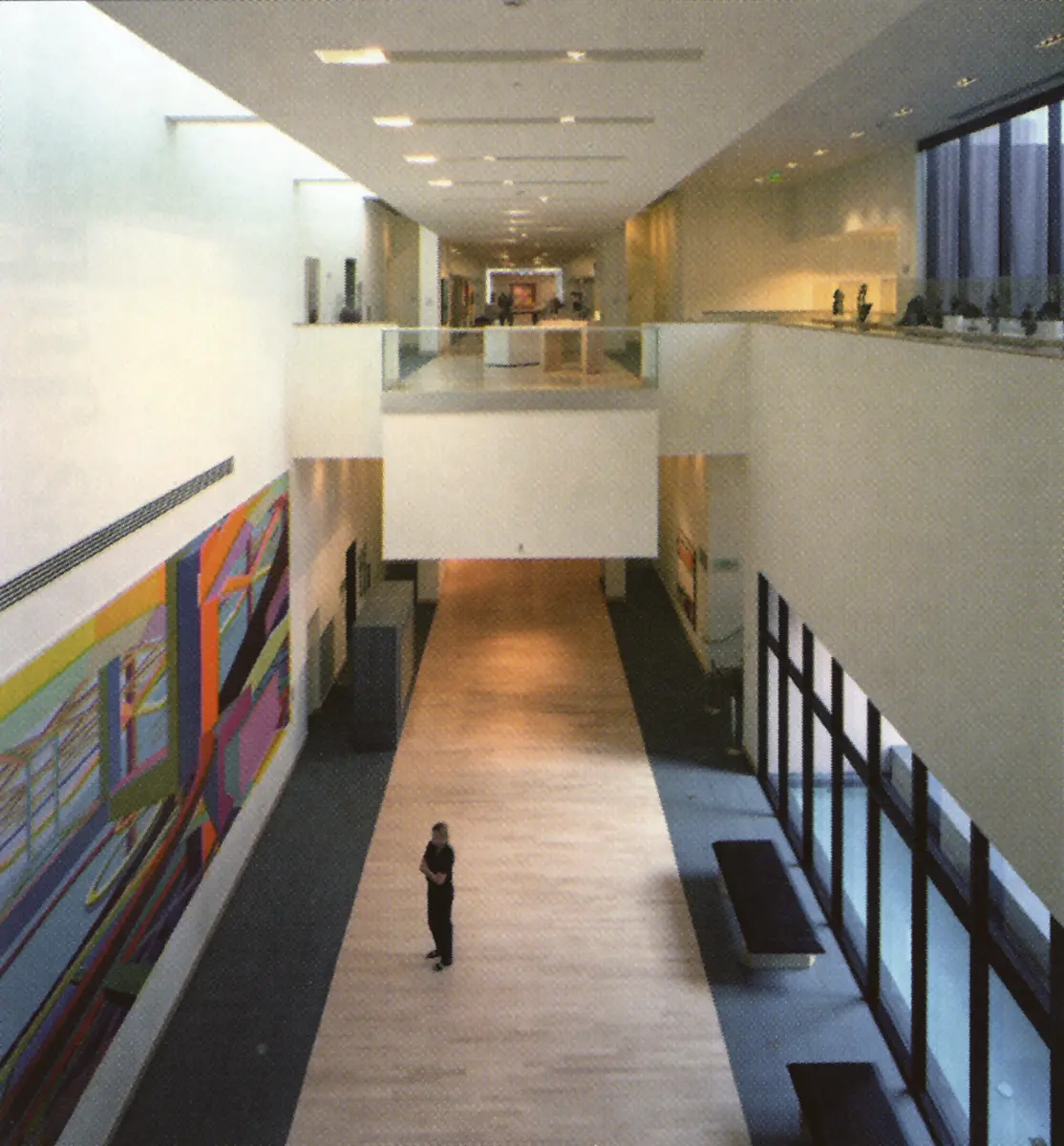
A visit to the museum starts at the Grand Hall, a two-story open space that extends towards the exhibition areas that display Al Held's monumental painting, Mantegna's Edge. The spaciousness of the hall, brightened by natural light and contemporary maple-wood floors, re-enacts the experience of the outdoor mall visitor. The openness, flowing along the path of the wood, continues through the galleries of the first floor designed to house temporary exhibits.
The second floor was designed to exhibit important selections from the museum's permanent collection including the Jean and David Colker Collection of Pre-Columbian Art, an impressive selection of more than 100 works of Pre-Columbian art; a wonderful selection of African tribal art; the Dr. and Mrs. John J. Mayers Collection of Modern Masters, which features more than fifty works of 19th and early 20th-century masters including Braque, de Chirico, Degas, Picasso, Klee, Leger, Matisse, Modigliani, Odilon Redon, Rouault, and Seurat, among others; and a selection of European and American modern and contemporary art, including an important selection of prints and photographs.
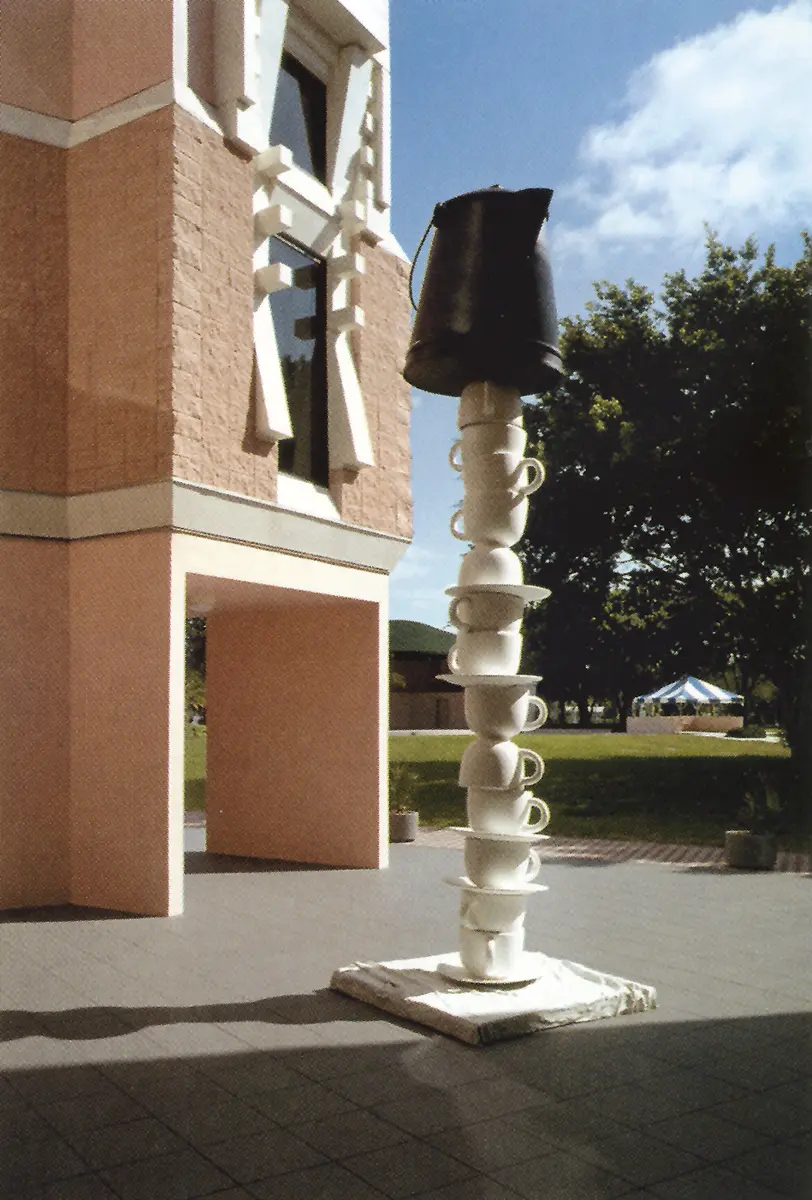
An enclosed garden court and a sculpture garden feature an important group of large-scale sculptures by international artists including Sandro Chia, Sophia Vari, Lynn Chadwick, Arman, Jorge Jimenez Dereda, Igor Mitoraj, and Rabarama. Two of these artists, Arman and Sophia Vari, will be exhibiting in the museum during the inaugural year. Three more monumental sculptures enhance the building's exterior: Red Grooms' Hot Dog Vendor located at the entrance plaza, Julio Larraz's Space Station featured at the entrance courtyard, and Fernando Botero's Male Torso (1992), located at the west plaza facing Federal Highway.
Such an ambitious project could only feature an equally ambitious exhibit for its opening. The inaugural exhibition, Picasso: Passion and Creation. The Last Thirty Years, organized by the Museum for its grand opening at Mizner Park, presented more than 200 works dating from the mid-1940s to the early 1970s. Co-curated by Ofir Scheps, past director of the Petit Palais, Musee d'Art Moderne, Geneva, and Bolge, it focused on Picasso's later years. The works in the exhibition were drawn from private and public collections including the Ludwig Foundation, Cologne; The Petit Palais in Geneva; the Picasso Museum in Antibes, the Picasso Museum in Barcelona; and the Museo de Arte Contemporáneo Sofía Ímber in Caracas. Many of the works were on view in this country for the first time. It included all the mediums in which Picasso worked (painting, drawing sculpture, ceramics, and printmaking), and was complemented by a series of photographs of the artist's life documented by Robert Otero and Lucien Clerque.
Most of the works on display in the museum's inaugural display clearly reflect the artistic taste of the Boca Raton community. As the director suggests, they have envisioned the new museum "not as a physical space but rather as a social instrument part of a series of intersection communities, each of which is not merely the museum's audience, but is in fact the museum itself."
The New Museum of Boca Raton is located at 501 Plaza Real, Mizner Park, Boca Raton, Florida, 33432. www.BOCAMUSEUM.ORG
* Photo: Edward Zealy.
FRANCINE BIRBRAGHER
Candidate to the doctorate in Latin American History at the University of Miami. Historian and art critic.