
From Anthropophagy to Brasilia: Brazil 1920-1950 was the title of an extraordinary exhibition dedicated to Brazil’s historical avant-gardes that took place between October 2000 and January 2001 at the Instituto Valenciano de Arte Moderno (IVAM) in Valencia, Spain. Curated by Jorge Schwartz, a professor at the University of São Paulo, the show included over 700 works by 141 painters, sculptors, poets, writers, musicians, architects, photographers, and graphic designers of the period.
Due to a truly symptomatic historical recurrence, Anthropophagy (cannibalism) has become a cliché and a leitmotif in Brazil that has mobilized around, and continues to do so, some of the decisive questions raised by the irruption and formation of its current artistic and visual culture.1 As we know, the term “anthropophagy” was initially recovered and reinterpreted by the poet Oswald de Andrade in a famous manifesto published in 1928 and titled, precisely, Manifiesto antropófago. Its explicit intention was to become a sort of manifesto of cultural independence, able to complete the political independence that Brazil had achieved around that time. It was a period in which there were still manifestos, a period opened by the Communist Manifesto and intensified in the first two decades of the century in Europe by those of futurism, suprematism, dadaism, and surrealism, and in America, singularly by Mexican muralism. That is probably why it did not seem strange that a new manifesto was launched, though there were surely those who were surprised by the provocative and perverse motifs and depictions that Oswald de Andrade used in his zeal to resolve the apparently unsolvable dilemma of simultaneously being modern and Brazilian. Because, at that time, being Brazilian also meant not only belonging to a State with political independence, but also to a people, to a nation united and even homogenized by a culture that, in order to be Brazilian exactly in the sense demanded by the foundation and preservation of the State, had to be articulated and structured by a national history. In other words, by a hegemonic meta-narrative whose heading powerfully portrays a need for a myth of origins, a foundational myth that allows the understanding and explanation of the emergence of the national State as the natural consequence of the historical evolution of a people who already existed in illo tempore.2
But how can the problem of how to be Brazilian in the Brazil of the twenties be resolved when the rejection of Lusitanian origin myths appeared as the irreversible corollary of political independence from Portugal, and when the criollo, or directly European, nature of the country’s political, intellectual, and artistic elite forcefully opposed with their own racial evidence objections to any attempt to adopt as a foundational myth one of the many tribes and aboriginal peoples that the Portuguese conquistadors had encountered in Brazil when they took possession of it? Origin myths were still exclusive myths of a race,3 whose 76 ArtNexus maximum concession to the effective diversity of human types was reduced to conceiving the people themselves as the result of the fusion of tribes which, like those of Israel or Ancient Rome, in spite of their mutual differences, had always belonged to one single race. In the conditions of Brazil at that time, it was difficult for the elite “whites” to adopt as their own the foundational myth of the other race. Especially if that race, that of the Indians, besides being scorned, were really not ab initio, as I mentioned, anything more than a heterogeneous group of tribes that, if they had come to form something comparable to a people and a race, it had been on account of Portuguese colonization which had subjected them to a common political structure, imposing upon them a language and a religion, and developing the social and cultural conditions that allowed the interbreeding of those suppressed aboriginals with the European colonizers and, especially, with the African slaves.
In the twenties, Mexico offered two types of solutions to an aporia that was comparable, to a certain extent, to that of Brazil. The first was that of José Ingenieros, with his celebration of the “cosmic race,” the American race, the race of the future, a result of the interbreeding of the races that had come from the rest of the world in order to inhabit the Americas. And the other, the indigenous muralism that, also promoted by Vasconcelos himself, repeatedly insisted on the idealization and mythification of the Indian, aboriginal, past, assuming and proposing it as the genuine face of Mexico, as its true origin and the foundation of its originality.
The solution proposed by de Andrade, on the other hand, was Anthropophagy, but not the ritual actually practiced by certain tribes in Brazil and the rest of Latin America, but a displaced Antropophagy that had gone beyond itself, able to become the allegory of the emancipatory model of appropriation of European culture, which in breaking with the habits of scholastic, subordinate, and mimetic reception imposed by the colonial regime, and especially by the Catholic Church, adopted as a method a bloodless variant of cannibalism of the Tupi tribe, which in 1554 killed a missionary, Bishop Sardinha.. And they probably ate him believing, like all primitive cannibals, that the ingestion of certain internal organs of the vanquished enemy increases one’s own virtues and powers with those of the enemy. But the truth is that this effective cannibalism is only mentioned in passing in de Andrade’s Manifiesto antropófago, which is a text that, instead of reasoning, prefers to flirt with dadaist nonsense and with psychic-surrealist automatism, but in which it is still possible to notice, as in Hamlet’s madness, a certain “method,” a certain mechanism of related ideas and images that in their delirious unfolding particularly celebrate the magic, the originality, and the vitality of Brazil, an “undated, unsigned world. Without Napoleon. Without Caesar,” a world opposed to “Goethe, the mother of the Gracchi, and the Court of Dom João IV.” Which, in addition, has openly practiced cannibalism, the “only law in the world,” which elsewhere has been a “masked expression of all individualisms, of all collectivisms. Of all religions. Of all peace treaties.” And in what does that law consist? Andrade’s answer is decisive: "I am on interested in what is not mine. The law of man. The law of the cannibal."
Therefore, cannibalism is a highly reputable universal virtue that transforms the Tupi, its first and most resolute practitioners in Brazil, into one of those “pure elites” who were able to carry out carnal cannibalism, which brings with it the highest feeling of life, and which avoids all of the evils identified by Freud, the evils of the catechist. Subjected to that metamorphosis, the Tupi acquire a symbolic condition in which contradictory attributes of universalism and establishment are joined, thereby allowing them to assume, if not the role, at least candidacy for the role of mythic ancestors of the Brazilian people, in whose foundation Oswald de Andrade is so interested.4 There are no people without mythical ancestors, and the Tupi could well be those of the Brazilian people if the criollos, the mestizos, the blacks, and even the European immigrants in Brazil stopped considering them as their predecessors on Brazilian soil in the practice of cannibalism that they could likewise practice, not literally eating their fellow beings, but rather exerting those bloodless, sublimated forms of cannibalism cataloged by Andrade in his manifesto. Brazil, then, is a group of cannibals that can be proud of that fact, since cannibalism, more than war (“hygiene of the world,” as Marinetti had proclaimed), is the “only law in the world.” And it would be the Brazilians themselves, both those of yesteryear and those of today, who have assumed and assumed it with the clearest consequences.
For better or for worse, this program of Brazil’s mythical (re)forming never became the cultural program of the Brazilian State. It was too radical, too shocking,5 and it went too much against the cultural traditions that dominated at that time in the decisive spheres of Power, which were united in their condemnation of cannibalism as an inadmissible practice, something of savages and barbarians located on the lowest step of the human ladder, who had horribly sunk their teeth into missionaries and, eventually, into the bodies of other civilizing agents during the conquest of Brazil. Therefore, it was never systematically taught or preached en masse. But it was not on account of this that Oswald de Andrade’s proposals fell completely on deaf ears, as was also the case in those years with the equally radical proposals of the Dadaists, the futurists, and the surrealists. On the contrary, the Manifesto antropófago, seen from the distance of History, appears as the first formulation of a strategy that successfully and enduringly mixed Brazilian culture with the adoption and defense at all costs of the artistic avant-garde and of modernity, thus stamping a distinctive feature onto that culture with respect to the cultures of the rest of the main countries of Latin America. And especially with respect to Mexico. Oswald de Andrade’s vigorous call to practice cultural cannibalism as a form of confidently taking possession of that which, although current, is nonetheless foreign, was interpreted by the youngest and most outstanding painters, writers, musicians, architects, and photographers of his generation as an invitation, and at the same time a license, to appropriate what interested them most, precisely because it was foreign: the theories, the lessons, the works of the European avant-gardes of the period. In them they discovered, or thought they discovered, the methods and ways to turn that mythical and cannibalistic Brazil imagined by Andrade, which was primitive and at the same time modern, furiously modern, into an effective reality.
Because of this, it is fully justified that the present show at the IVAM includes, beginning with the title itself, quotes and evocations of cannibalism, a key concept for the deciphering of the intentions, options, and stakes of the artists who, initially grouped together by the “Week of Modern Art” in São Paulo in 1922, unfurled in later years, both in that city and in Rio de Janeiro, an exceptional creative activity under the omnipresent signs of the avant-garde. And of many of those who came later, including the concretists and neoconcretists of the fifties and sixties.
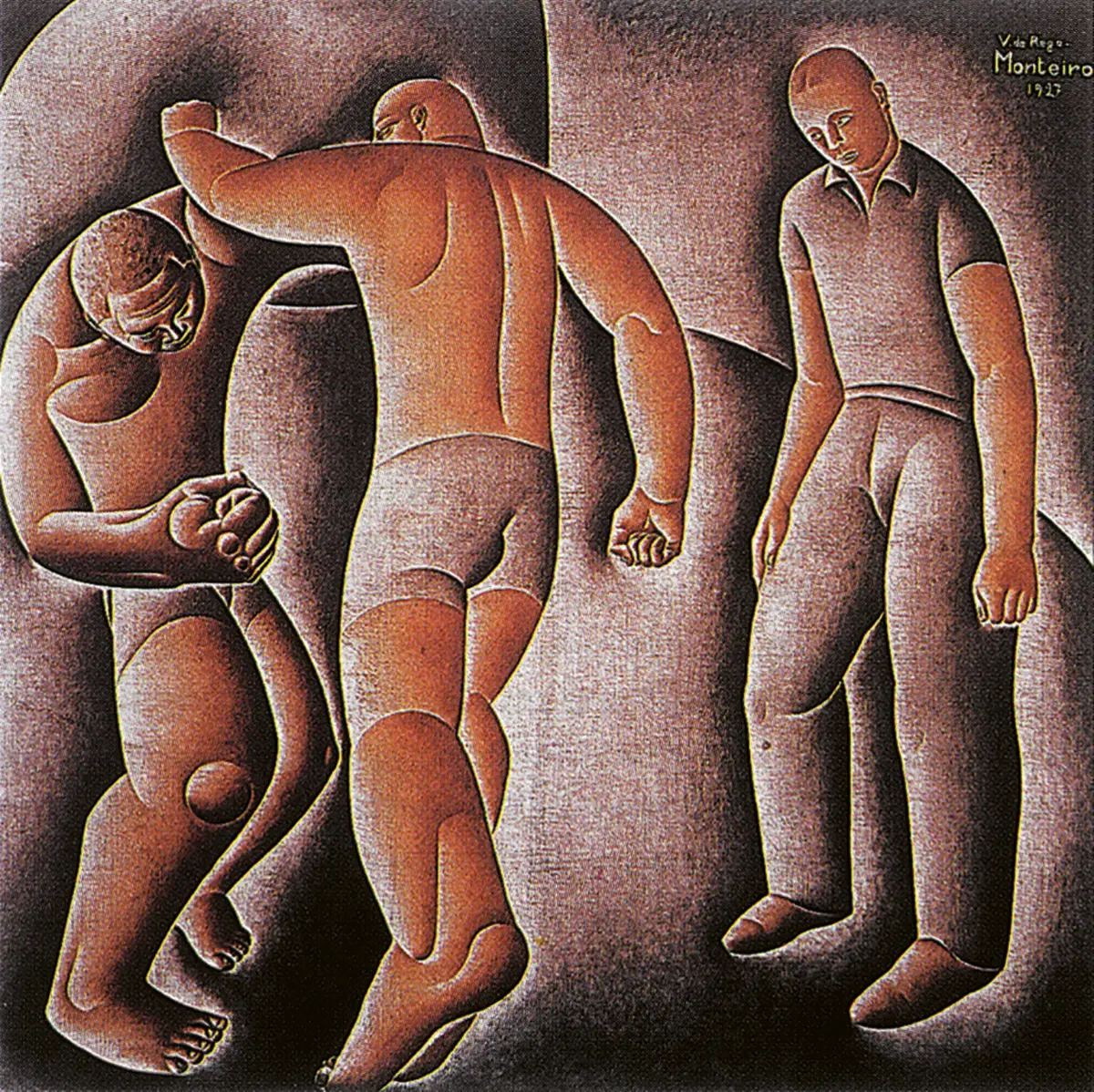
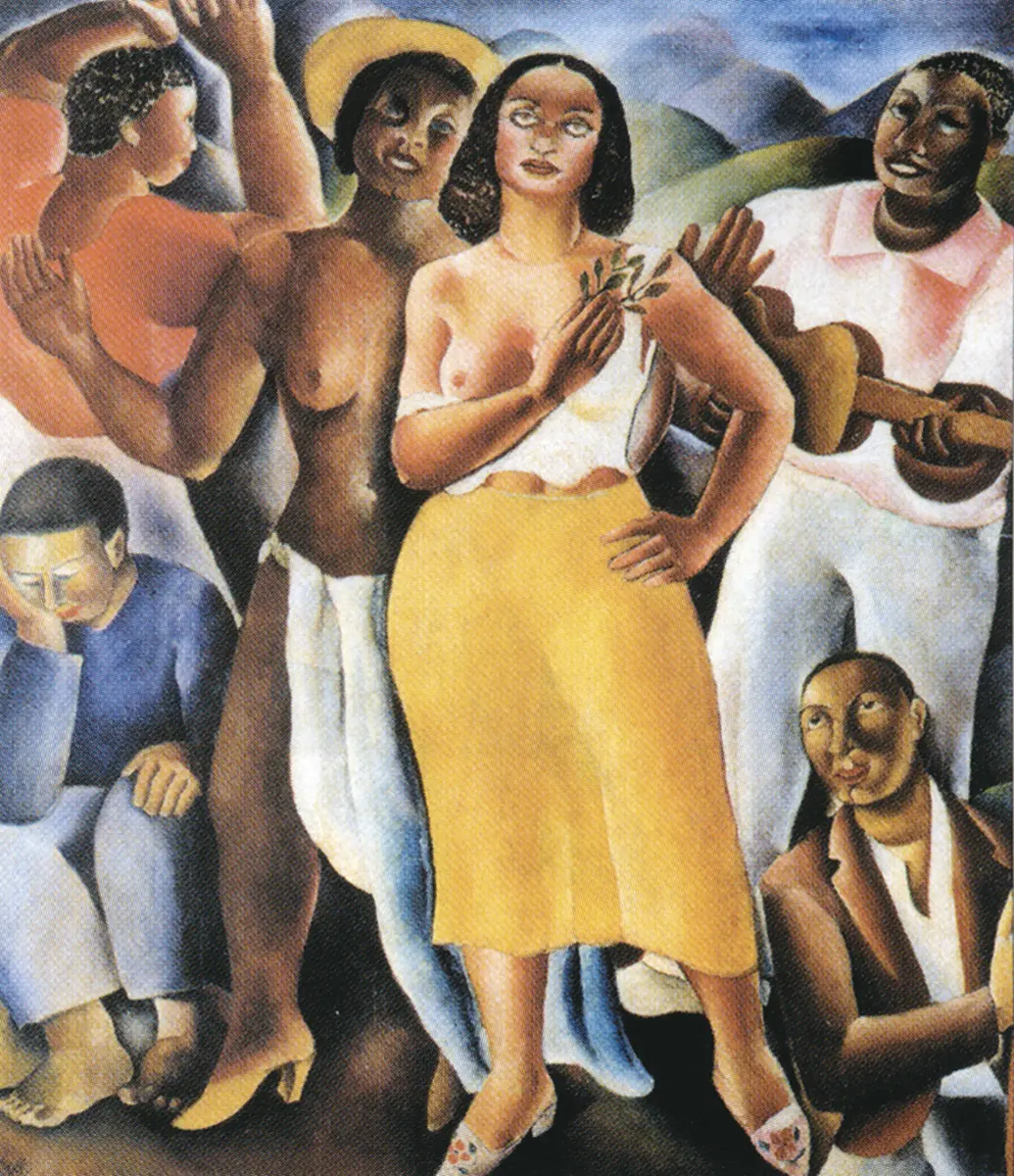
To be sure, the abundant material collected by this show also allows us to analyze that unfolding, to notice their differences, their nuances and inconsistencies, and their radical heterogeneity. Because, in spite of the efforts made by certain thinkers and historians, both modern and postmodern, the period of the so-called historical avant-garde was characterized by anything except homogeneity. In fact, the numerous and important group of works that were shown during the fall of 2000 under the title, From Antropofagia to Brasilia: Brazil 1920-1950 at Valencia’s IVAM was an obvious demonstration of the fact that the first Brazilian artistic avant-gardes were not the exception to that rule of heterogeneity. To begin with, if, as Eduardo de Subirats has underscored, Andrade’s Manifesto found its main source of inspiration in surrealism,6 expressionism was in fact the poetics chosen by many of the most outstanding painters and sculptors of the avant-garde of the period. Without the reference to expressionism and its Cezannian and fauvist implications, we cannot understand the painting of Anita Malfatti or certain periods of Rego Monteiro, first, or of Livio Abramo, Carlos Scliar, or Marcelo Grassman, later. In particular, we cannot understand the oeuvre of Lasar Segall, that extraordinary painter born in Lithuania and trained in the expressionist Berlin of before and after World War I, who emigrated to Brazil and there carried out some of the masterpieces of that tendency, figuring prominently among which is Progrom, a bloodcurdling denunciation of the genocide caused by anti-Semitism, a work included in the present show. But it is very probable that it was not paintings of this type, but rather pictures by Segall, like Menino con lagartijas (Boy with small lizards, 1924), which have so stimulated Mario de Andrade—poet, novelist, untimely photographer, and art critic and theoretician that led him in 1924 to write, to prescribe, that expressionism was the most adequate aesthetic instrument to represent that chaotic and vibrant Brazil that emerged impetuously out of so many centuries of self-forgetfulness.
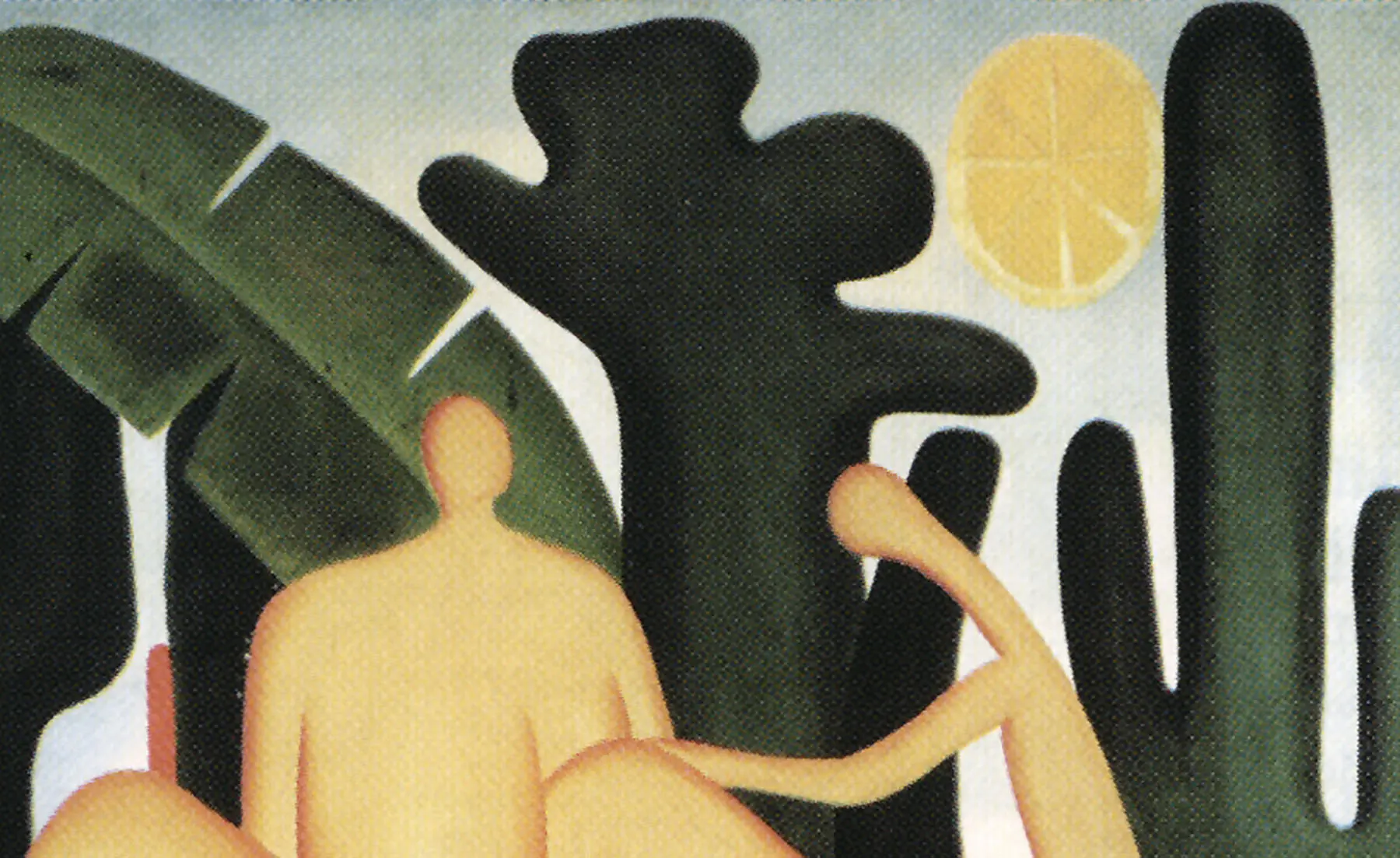
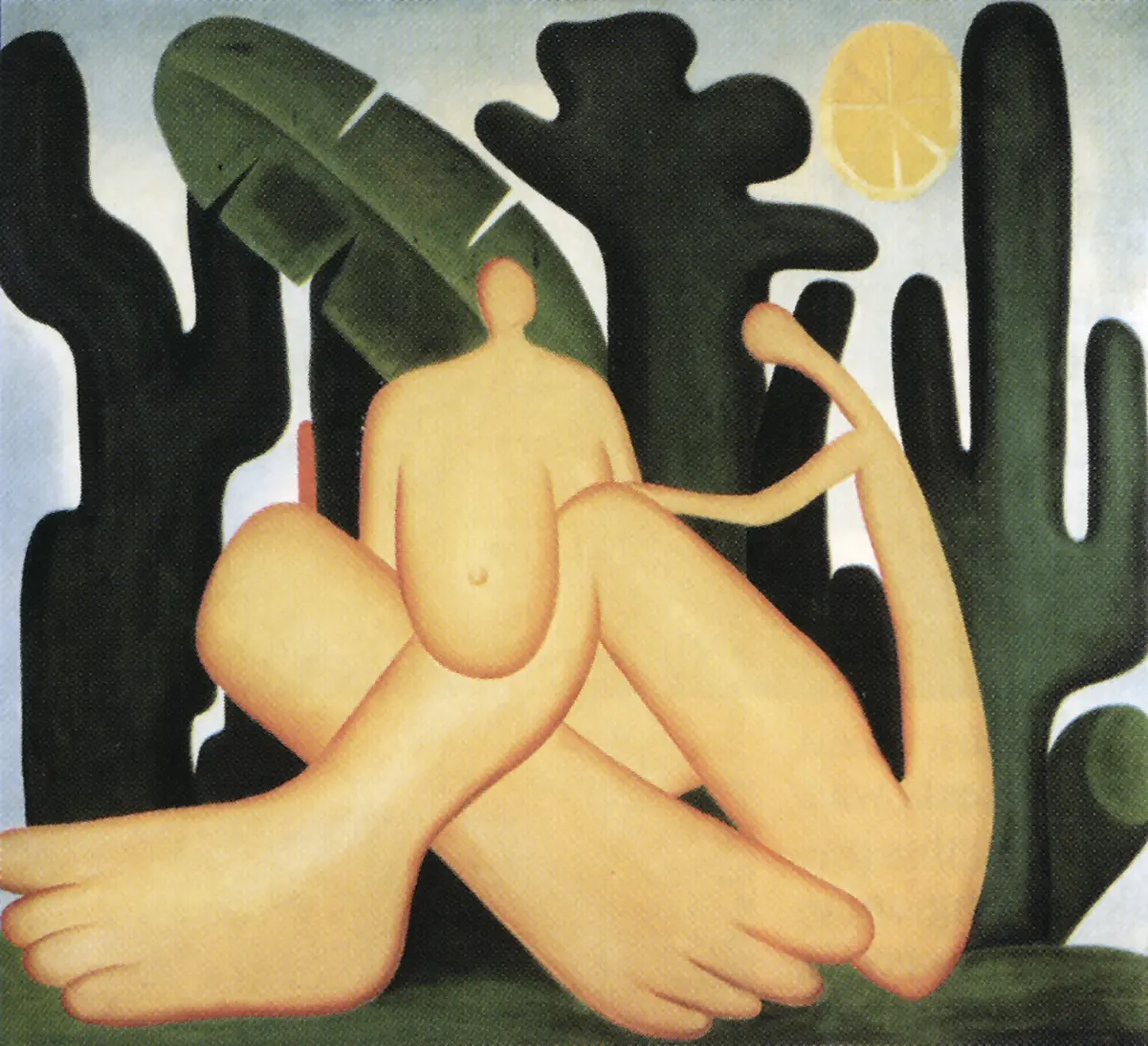
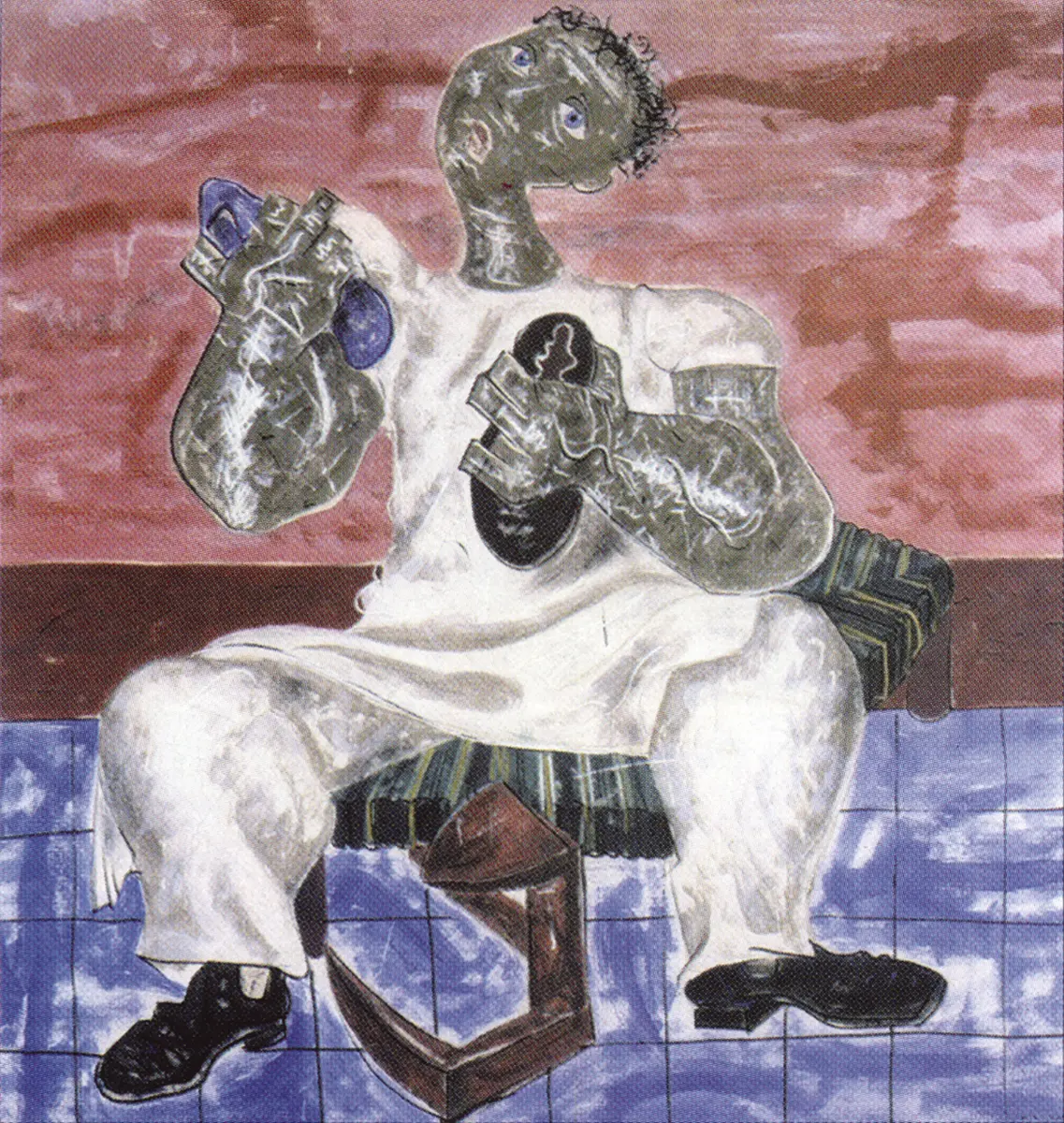
The heterogeneity of this period is likewise shown in this exhibition in much less programmatic works, which are therefore more lyrical and personal, like those by painters Ismael Nery and Antonio Gomide, or in the piece by sculptor Victor Brecheret. Above all, in the change of political and aesthetic attitude that the key figures of cannibalism experienced in the thirties and forties, beginning with the most emblematic: Oswald de Andrade himself and his wife of that time, painter Tarsila do Amaral. In the show at the IVAM, we could see some of the best pictures of her “cannibal” phase, Abaporu (Cannibal), Sol Ponente (Sunset), Sono (Dream), but also a picture like Operários (Workers), painted in 1935 when both she and Andrade had moved toward the Brazilian Communist Party and, consequently, they reorient their art according to their new political engagement and to the demands of social realism. The decade of the thirties, the years of capitalism’s general crisis, of the apparently irresistible rise of fascism, of the Spanish Civil War, and of the establishment in Brazil of the regime of Getulio Vargas, a classic Latin American populist leader interested in strengthening the State by having the new urban masses adhere to an openly nationalistic economic, political, and cultural program that would achieve some of its most notable visual realizations in the work of a painter like Cándido Portinari.
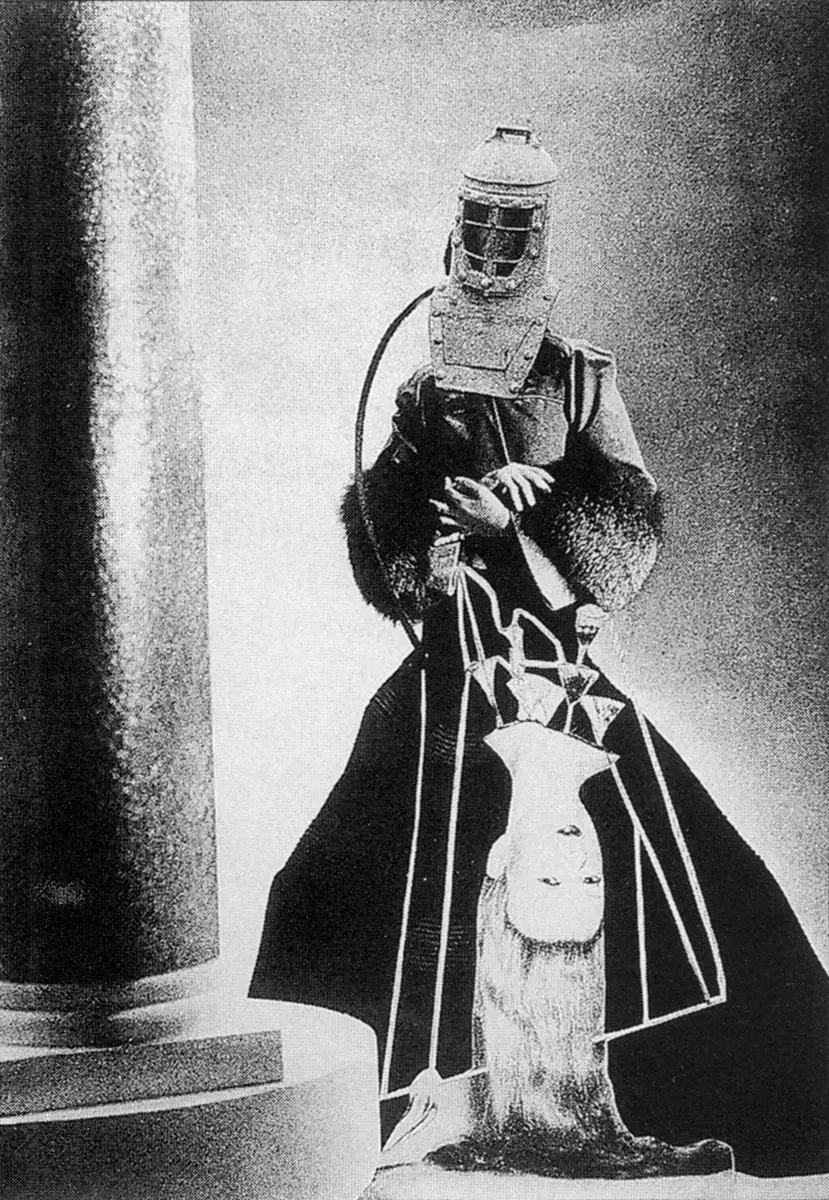
However, the incitements to cannibalism do not fall completely on deaf ears. For example, the project of recognizing or (re)discovering the magical Brazil, the remote Brazil, the hidden Brazil that inspired Mario de Andrade’s journey to the northeast in 1928, which he documented with a remarkable collection of photos included in the present show, would be prolonged in the following decades by two great photographers, both French: Pierre Verger and Marcel Gautherot. To both, we owe an extraordinary repertoire of photographic images of an ethnographic nature on the life, rites, and habits of the Afro-Brazilian majorities of Bahia and the San Francisco River basin. Even someone as supposedly foreign to Brazil as Orson Welles made an unexpected contribution to this project. In 1941, immediately after the debut of his film Citizen Kane, and through the express wishes of David Rockefeller, Welles accepted to travel to Brazil as a goodwill ambassador of the State Department, with the assignment of filming a documentary on the carnival of Rio de Janeiro. He arrived in that city in 1942, where, after many ups and downs that included a breakup with RKO Studios for those who were then working, he completed his assignment with the documentary It’s All True, which did not leave him satisfied, but whose realization nonetheless granted him the opportunity to film in Fortaleza, with his own media, a short film on the life of a poor fishing community, titled Quatro homens numa jangada (Four men on a raft). Carlos Augusto Machado Calil wrote the following words on that film: “The version of this episode, which we owe to the dedication of Richard Wilson, Welles’s assistant, shows us a script by Flaherty filmed by Eisenstein.”7
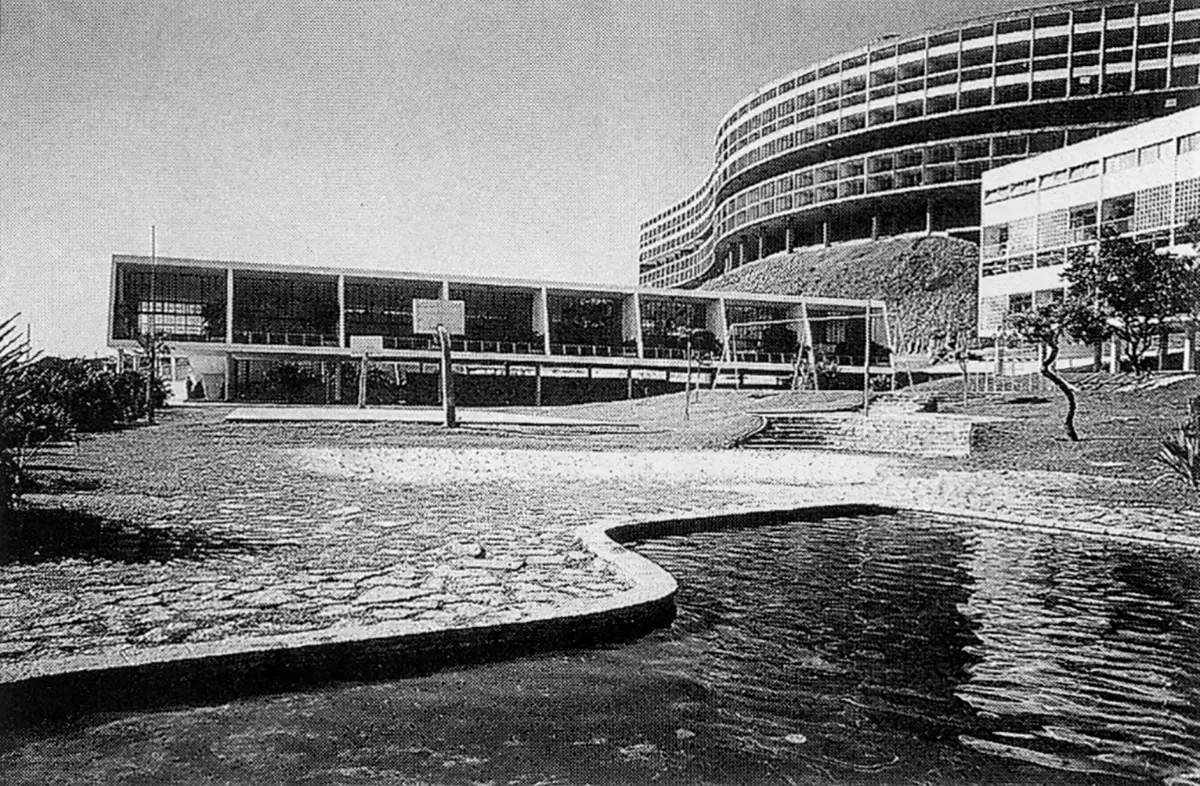
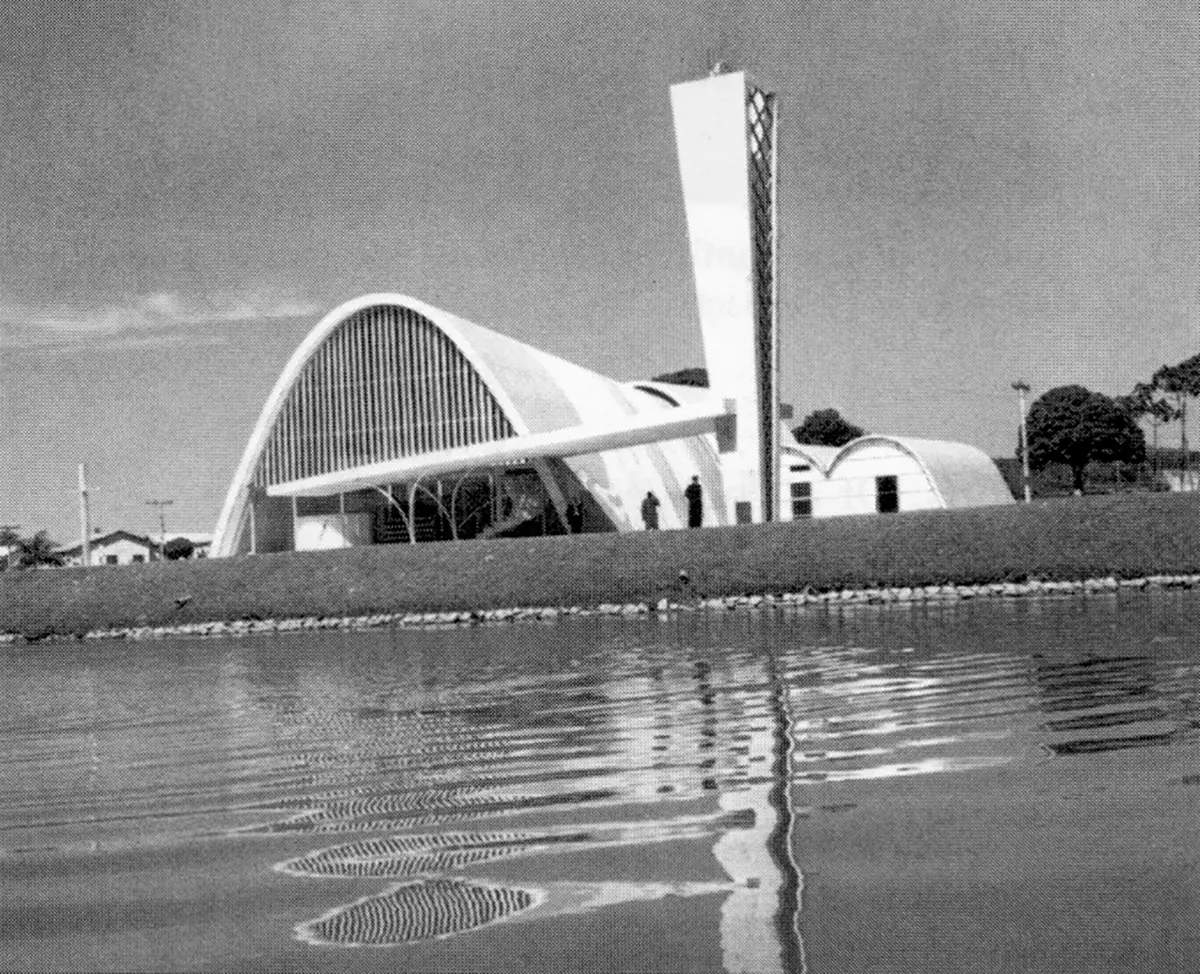
All in all, it was in architecture where the greatest continuity was produced between the twenties, the New State of Getulio Vargas, and the decades of the fifties and sixties. Between the two extremes of that period, between Anthropophagy and Brasilia, to use the expression in the show’s title, architecture maintained a fidelity that was so fertile to conceptual and stylistic options, that it winded up being recognized as a crucial component of the image of Brazil. It was obviously a modern image, for not in vain since the ‘20s had architecture’s main figures—Gregori Warchavchik, Lucio Costa, Oscar Niemeyer—opted with no ambiguity whatsoever for the Modern Movement, represented for them emblematically by Bauhaus and Le Corbusier. But equally a cannibal image since, just like the cannibalism dreamed by Oswald de Andrade, they appropriated what in principle was not theirs, and they incorporated it so exactly into their own life and work, that they came to surpass, or at least to equal, their teachers, creating like them, but creating something different. It was they, and the rest of the architects who during these decades were like them, who most notably demonstrated that one could be at once Brazilian and modern. And what is more: that being Brazilian was being modern.
NOTES
1. After its irruption in the ‘20s with Oswald de Andrade’s Manifesto antropófago and Mario de Andrade’s Revista de Antropofagia, the controversial concept of cannibalism was recovered in the ‘60s, both by neoconcretists, especially Hélio Oiticica, and by director Joaquim Pedro de Andrade, who in 1969 created a film based on Mario de Andrade’s novel Macunaíma. In the ‘90s it was revisited both by Paulo Herkenhoff, who used it as a leitmotif at the 1996 São Paulo Biennial which he directed, and by Jorge Schwartz, who gave it a crucial role in the discourse of the exhibition at hand.
2. Jon Juaristi presents a rather outstanding analysis and discussion of foundational myths in his book El bosque imaginario (Madrid: Taurus, 1997).
3. On racism in foundational myths, see Michael Mann, “La cara oculta de la democracia: limpieza étnica y política como tradición moderna,” New Left Review , 1 (2000).
4. In his Manifesto antropófago, Oswald de Andrade included the following paragraph: “Our independence has still not been proclaimed. A typical sentence of Dom João VI: ¡My son! Place that crown on your head before some adventurer does! We are driving out the dynasty. It is necessary to expel the bragantino spirit, the ordinations, and the snuff of María de la Fuente.”
5. In his 1942 conference titled “The Modernist Movement,” Mario de Andrade thus described the extended hostility with which the irruption of the movement that he calls “modernist” was received by the public: “Isolated from the environment of the world, scoffed at, avoided, ridiculed, cursed, no one can imagine the naïve delusion of grandeur and personal conviction with which we reacted. The state of exaltation in which we lived was uncontrollable.”
6. Eduardo de Subirats, “Del surrealismo a la antropofagia,” in the catalog De la antropofagia a Brasilia. Brasil 1920-1950 (Valencia: IVAM, 2000) pp. 23 ff.
7. Carlos Augusto Machado Calil, “Traductores del Brasil,” in the catalog De la antropofagia a Brasilia. Brasil 1920-1950, pp. 342.
CARLOS JIMÉNEZ
Writer and art critic. Professor at the Universidad del Valle.