
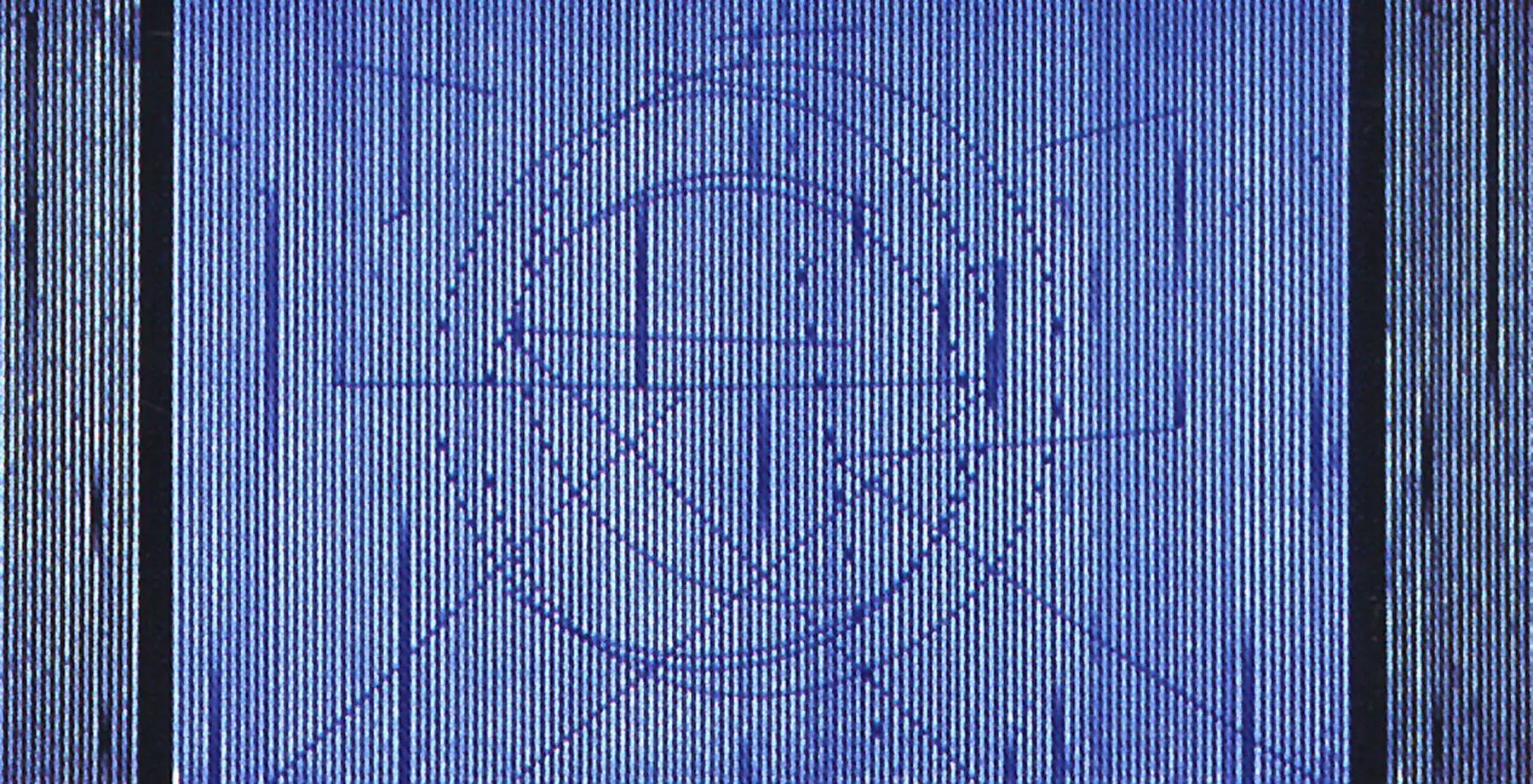
Everyone is familiar with the figure of Jesus Soto (Venezuela, 1923), a key player in one of the most extraordinary adventures of Western art in the middle of the 20th century: kineticism, the art of movement. With his special sensibility and talent, Soto, from a very early age, began his research and reflections on the creative act and its consequences. At the end of the '40s he made the great leap to Paris and, from that moment on, he began a voyage that continues today.
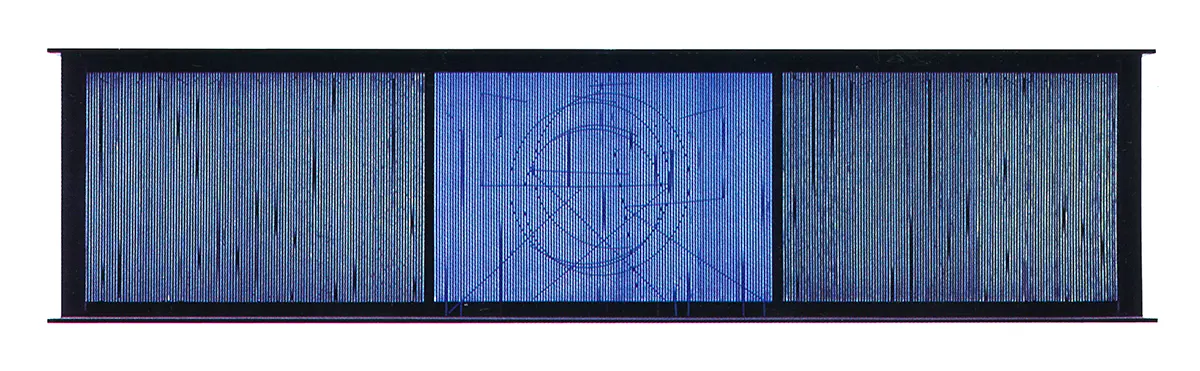
Bélgica Rodriguez: Rather than beginning with what we all know. I'd like to ask how, from a very early age, you were able to integrate life and art. You have a special sensitivity, almost as if touched by a divine hand or by some genetic causes since it was not through a cultural or social influence. You are an extraordinary case, born in the remote provincial city of Ciudad Bolivar, and with very few resources.
Jesus Soto: I don't know. But I do know that I've had a passion for painting since I was a little boy. My mother told me the history of the world, which I would paint on the walls and, since we always lived in rented houses, they would get lost. As the years went by, she would say, "if I could find those walls and scrape off the little animals that he painted." At the age of three or four, I already demonstrated that passion and it's curious—I believe that I've only said this once—but at this moment, returning to my childhood, I recall that it was a strong passion until I was around thirteen or fourteen. I lived like a madman painting, and inventing things. There was no paint so I bought industrial paint and mixed it, trying to make something. I enjoyed it a lot, it gave me immense pleasure. But at some moment during puberty, I got stuck, and I went for about two years without any interest, without wanting to do anything. At fifteen my interest returned again and hasn't stopped since. It was the only time that I've gone through that situation. I imagine that at that time I was discovering another world, the one I didn't have. Now, analyzing it, I think that I was discovering the meaning of love, the meaning and awareness of beauty, things that I hadn't seen before. Perhaps I was seeing the beauty of the landscape, the beauty of the people moving around me. Feeling that beings have something else, something more than a body, was what restrained me. I realized this very late, going back over my life here in Paris. After more than a year without constantly painting, I fell once more into the temptation. I asked someone, before going to Caracas, about painting techniques because I wasn't familiar with them, and he showed me stump drawing, a sort of papier-mache pencil made without lead, which is currently out of use. But for me, discovering that scraping the pencil and rubbing the dust on the stump could achieve all the nuances of chiaroscuro in the figure, was crazy since, technically, I had something new in my hands. Afterward, I felt the anguish of having to leave Ciudad Bolivar because there was no master, there was no school, and I wanted to learn.
B.R.: In that period in Ciudad Bolivar, with an innate ability for drawing, did you devote yourself to painting the human figure?
J.S.: Oh, yes, I painted portraits any way I could, in black and white. I incessantly copied the images of picture cards that existed in Ciudad Bolivar, some of Murillo's virgins, and also some saints from the almanac. That's when I definitely felt that I had to leave, that I had to go and seek out someone who could train me. I concluded that I couldn't go on in that way, trying to resolve my problem alone.
B.R.: By then, the decision to devote yourself to art was already final...
J.S.: Absolutely. When I was sixteen I was lucky enough to get the only salaried position there was in the city for a person like myself: painting the billboards for the five local cinemas. That was another passion and another marvelous moment because I had all the colors at my disposal. Yes, 200 kilo containers of colors; there was a lot of cobalt blue, white, I loved olive green, for example, colors I have generally used all my life. I painted the billboards with them. Without realizing it, that was the palette that I always used, until recently. I really enjoyed painting those billboards, fifty a day, imagine that! I spent all my time there. Later, I began to invent larger billboards, which enraged the cinema owner, because he said: "Why, if I already have the posters, why are you doing the work? You're using more paint than is necessary." But at the same time, he had the feeling that I was enjoying it. It was very rough when I got the grant. I remember telling him: "Boss, I have to go because I got a little grant to go to Caracas; he responded in a playful, and somewhat shy, way: "Why did you apply for a grant, why didn't you apply for a grunt?" That's when he began to change with me. I felt that the fact that I could go to Caracas to study made him very happy, and when I returned to see my family I always visited him.
B.R.: When you painted those billboards, were you studying anything?
J.S.: No. I had left school because I had to work. I was the oldest brother and I had to help my mom; well, all those things that you already know. I worked day and night because at times I had to wait until twelve at night, the time when the boss decided what film he was going to show the next day. So I painted my billboards until the early morning. But I lived all of that with great pleasure, especially because I had all those extremely beautiful colors, being able to see pure colors that I could mix in those containers, sometimes I mixed them with a flour and water paste, that homemade paste used to stick papers to the walls. And even today I can't live without mixing and inventing things, because I feel that work produces emotions in me and reveals things to me. Every piece that is made, even if people don't realize its variants, the artist does perceive and enjoys it enormously. There are works that emerge immediately and others that need a lot of time, while others need years to resolve themselves. But you're waiting for the moment to find the solution and that solution immediately shows you other openings, other roads. That fascinating life is the life that all of us plastic artists live. A life that, to date, I have been fortunate enough to enjoy fully.
B.R.: When you speak of works that can open roads, what is the phenomenon that is brought about? When you speak of works that can wait for some time to be resolved, what action leads them to their end? How does that work wait in your head, in your thoughts, in your notes?
J.S.: First, you deal with the history of art that contains works that have opened roads. Second, it remains latent in your head, in your brain, I don't know in what part, but it's there and it has to be resolved one day, but it mustn't become a worry. Solutions arrive at a given moment. Perhaps a painting, a work that one is doing at the same time gives you light to solve what's been waiting, and you finish it without distress.
B.R.: For you, art has been a passion and every passion has a certain degree of madness, but if it is turned into anguish it stops being a passion, right?
J.S.: Yes. Fortunately, I've never suffered from the anguish of not being able to work. I know of artists who have. I can even tell you an anecdote that I recently told Cruz Diez. In my third year at the School of Plastic Arts of Caracas, many artists began to suffer from the inability to paint I then said to myself: "if these people, the most important artists of the School, live this crisis, I must be doing it wrong because I don't have it, I think I should change my behavior." Consequently, I forced myself not to paint, I forced myself quite a lot and I went for about six months denying myself, thinking that what I was doing, must be something of little significance, very easy, because the others who knew more than I, who had spent more years in the school, entered that crisis in the third year. In the fourth year, I said to myself:
"No. This can't be. I understand how I should resolve my paintings. Therefore, I should not lose another half year seeking solutions that don't concern me in the least. My spirit is not asking me for any other type of solution. I consummate my things, and they emerge with great spontaneity. And that's enough!" This was the only time that I've had doubts that my ability to work might be something abnormal for becoming a serious artist, and until now I've done nothing but enjoy this marvelous world that I've entered. Of course, one would always like to have more time to do everything he thinks of. Through the process of realization, the work begins to educate you, and open roads for you. That's why it's very important to be well-informed. I don't know, at times there are so many manifestations of art which are even contradictory. Permanent contact with the studio is extremely important to my behavior. However, one day on vacation I learned not to have it in order to take care of my kids, and I kept that habit. I can't work outside the studio. When I'm on vacation I can create things, but since I don't have all the material that I need at a given moment, a color, a texture, a different material, what comes to mind is to make bricolage for my house. For me, August means reflecting, reading, and evaluating what I've done during the year.
But all with great freedom and with the sense of saying to myself that "This year I made this and that".
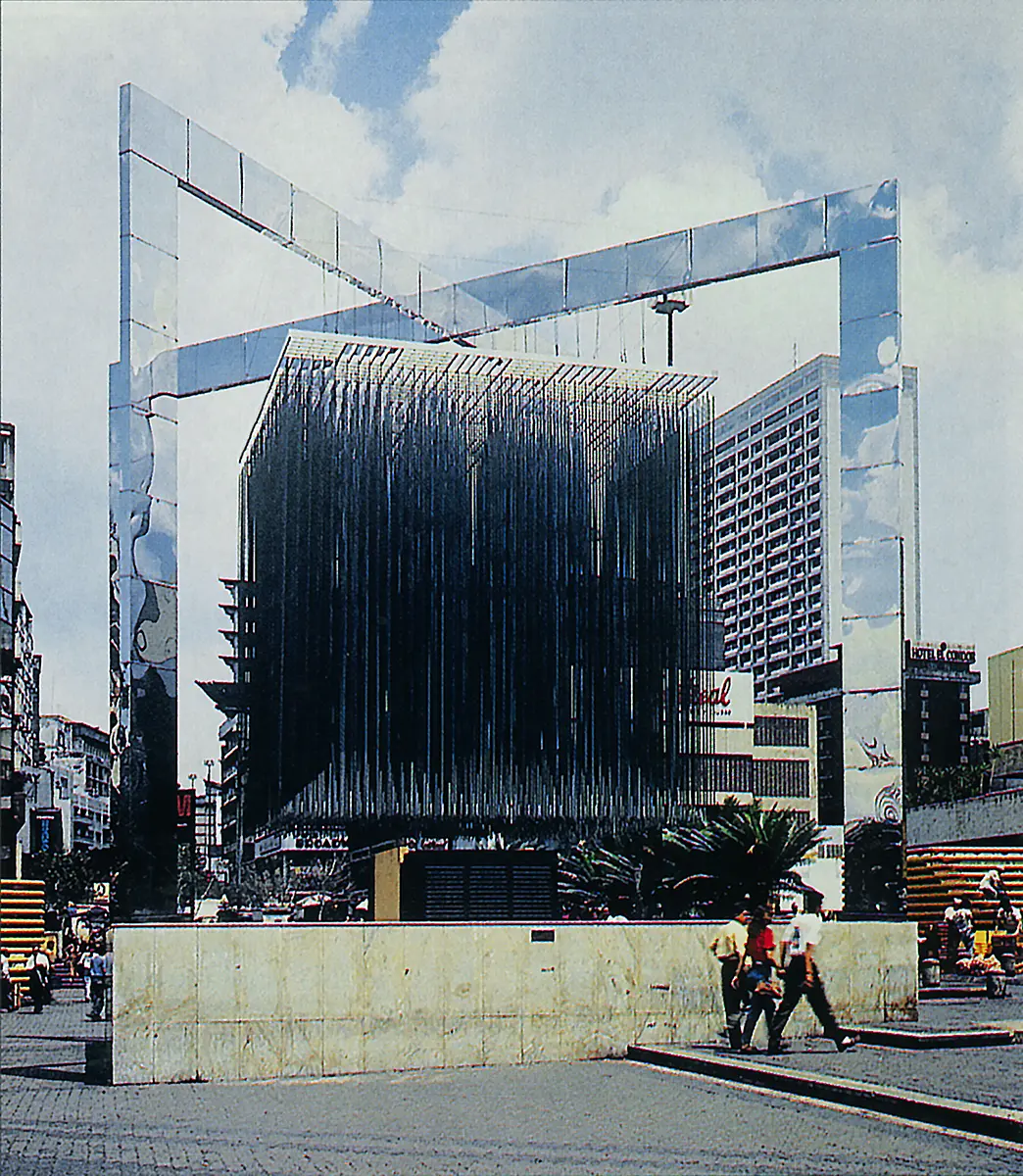
B.R.: When you were at school was there something specific that interested you, like drawing, the treatment of material, or art history...?
J.S.: I'm very fond of and very attached to art history. I'm not erudite, that's not my interest, but every time I'm working or thinking about my work. I'm thinking about what humanity has made, about what man has made through art, and I'm fascinated by seeing how each artist has given it a type of solution. For example, I believe that nothing can be better than the Caves of Altamira. There is no artist today who can surpass that mastery, achieved in spite of having lived in the physical conditions of the period. That painting fascinates me and, at the same time, produces in me a sense of responsibility because the history of humanity is counted through those achievements. We know that there have been great musicians, and great poets, we have testimony of it, and one must realize that all that exists by respecting that literal savoir-faire, that creativity of man to be able to continue, and to add something to that process. I've always thought that the artist should contribute with his grain of sand, albeit imperceptible, but that he has to add something to that sort of wall that is being constructed, and I'm very conscious of that regarding myself. My passage as an artist in this world is to summarize and understand art history and to be able to give a small solution to some problems that—who knows?—may allow someone to use it as I've used it from the artists who have come before me.
B.R.: You point out something very important, which is the fact that creators must work with a sense of transcendence, for history, for other creators. It's a question of being honest and making aware that possible contribution which opens the way to others who come after...
J.S.: Precisely. That's what makes art begin to create its evolutionary history. I believe in the evolution of art. There are moments in which art stagnates, and becomes academic, and then we have to break the plans. But the fact that art has come to be academic doesn't mean that we have to destroy its values. On the contrary, we must analyze them in order to go further, assuming a break that can justify an adverse position that may awaken new creative feelings. If any century has been marvelously rich in this type of activity, it is the 20th century. Art's values are positive values, they have allowed the construction of a process that must not be stopped. Instead, each day must have a greater dynamic due to the mass media. You can know what's happening everywhere simultaneously. The material that the young people of the 21st century are going to have is marvelous. We can't imagine what they're going to do with it, both intellectually and physically. My case is different. I'll be eighty soon, I have to consider that my future passage in artistic life doesn't have another forty years. It's normal to think like this. However, I'm always watching everything that may facilitate advancing my work a little more, with the idea of being able to serve, as I said before, the future of art, even if in a small way.
B.R.: As the plan for a life without end, it's important that you say that. The years that have passed, the years that you've lived, the awareness of what remains, you declare your age!
J.S.: We artists must constantly declare our birthdate. We have no reason to be afraid...
B.R.: To your project to live an absolutely coherent life you've added an equally coherent art project. You've created a vast work that, with the changes and variations, has not deviated from its central core, a fundamental position in the creative behavior of an artist, don't you think? This is an attitude that is perceptible in the artist, like being sensitive to art and life.
J.S.: All of my works draw on what was done before. I believe that, in general, it's a position very typical of painters.
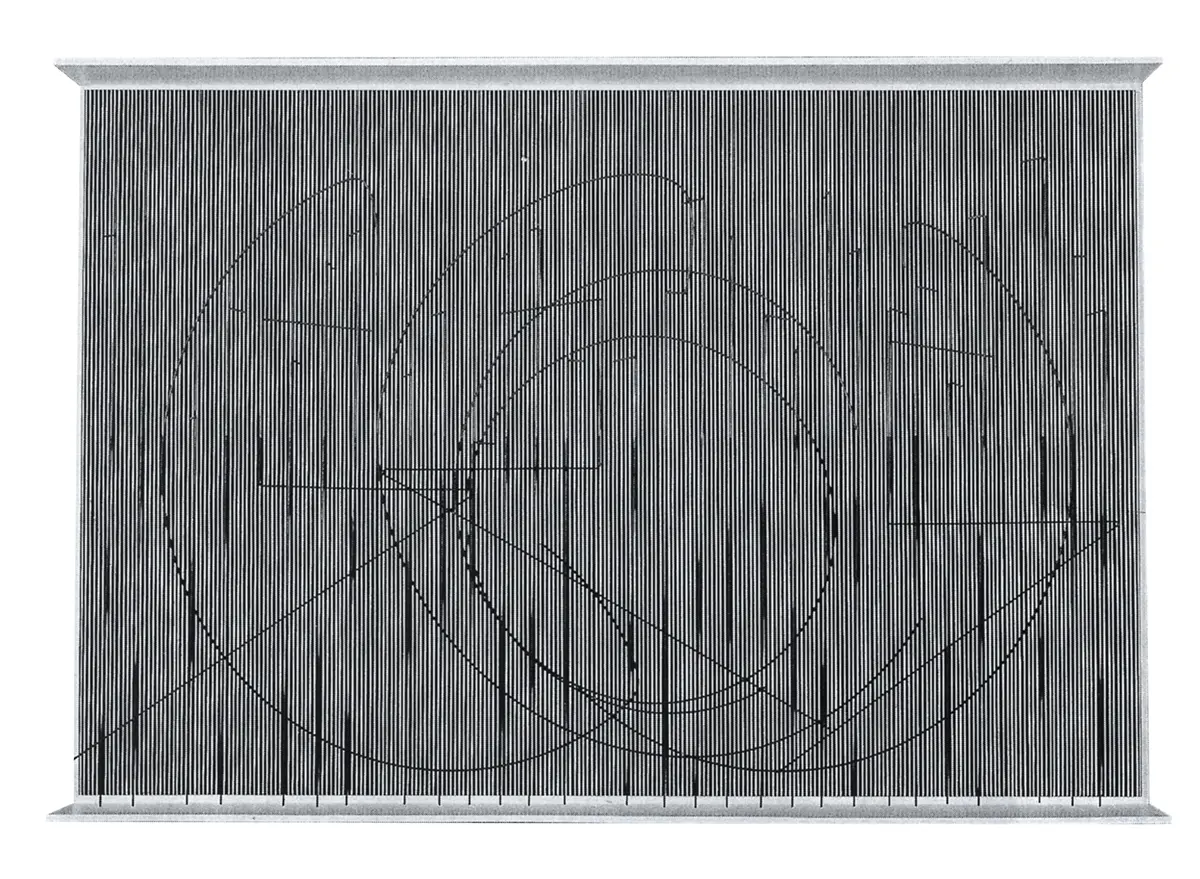
B.R.: What you've done...that is, each one is a synthesis and opening at the same time for another...
J.S.: I think that that's the attitude that makes sense. For me, plastic arts, and visual arts, reach their great moments when they concern pure structure. The structure is not an element of drawing but a philosophy. In the sixties, a good friend of mine, the great Filipino painter David Medalla, who is also a physicist-mathematician, gave me a book by Bachelard, Le nouvel esprit scientifique, and told me "You're going to find a lot of your concerns here." I was so interested in the book that I continued to research the philosophical thoughts of other great scientists of the 20th century. Particularly Heisenberg and his principle of uncertainty, finding one of the questions that obsessed me in the early fifties: STRUCTURE. Heisenberg's conclusion can't be more concise and determining: structure is the conceptual content of a phenomenon.
B.R.: When I speak of coherence I refer to the concept that guides the work of the artist. When I hear you, I agree that it's more logical to speak of structure. It's then a matter of a complex notion since it's a structure of thought that leads to an action.
J.S.: Thank you! What you say helps me to clarify the aforementioned.
B.R.: We could conclude that a structure of thought is achieved through study, work, exterior discipline, and sel/-discipline. It's a shame that, sometimes, many artists don't understand that. I'm not referring to work discipline in the studio with a schedule, but rather that discipline that has to do with the human being, with the total creator. What do you think?
J.S.: No. It makes no sense to work with a schedule. That then becomes a job and that's not what art is. However, one mustn't stop inventing tasks in order to conceive, carry out, and explain what he's thinking. One invents things, as in my case the use of Plexiglas. Everyone told me that it was going to break because they thought it was mica. But I needed, wanted, and had to draw in space. So I used Plexiglas. By doing it, I was able to find that sensation of movement, of space-time, of superimpositions, etc. A lot of things occurred to me at the same time.
B.R.: And how did you look for movement?
J.S.: Movement exists. People would never be ready to paint it, only to fix it, which is impossible. Actually, nothing is fixed, everything is in constant motion. Photography, even when it appears contradictory, contributes to a large extent to the different observations of reality: misalignments, superimpositions, and the constant intervention of chance definitely lead to cinema. The great detonators of the movement were the impressionists with the obsession of showing that the stimulus of light, which is their essential element, although it seemed static, was never at rest. And the scientists showed new dimensions to which Cezanne and cubism are deeply tied.
B.R.: So the function of art is to show something?
J.S.: No. It doesn't have to, and for us, it's very difficult to explain it. That's not in the artistic code. One presents things that are happening, that he's intuiting, and he tries to find solutions that are still a writing that can't be transcribed in words, but only in forms.
B.R.: I'm unable to overcome a certain romantic and idealistic notion in considering the artist a superior being, endowed with spiritual values that haven't been given to all mortals.
J.S.: Of course. They live an adventure that isn't normal. What you call "romantic" is their ridding themselves of the need to build a secure life, don't you think? We never think about the fact that being an artist was a solution for living as people should live. In my time, it was sad for the family to follow that path. But there's such a large emotional charge that it's impossible to avoid it, where the only interesting thing is how to understand art and the life that revolves around it. I'm no special being in that sense, this should be normal in the world of the artist. That's why when you say that you see him as superior it's because there is a risk that the artist is always running, a risk that should nourish him, that should be very nutritious.
BÉLGICA RODRÍGUEZ
Ph.D. in Fine Arts, Sorbonne University, Paris. MA of the Courtland Institute of Art, London University. Art critic specialized in Latin American Art. Honorary President for AICA International.