
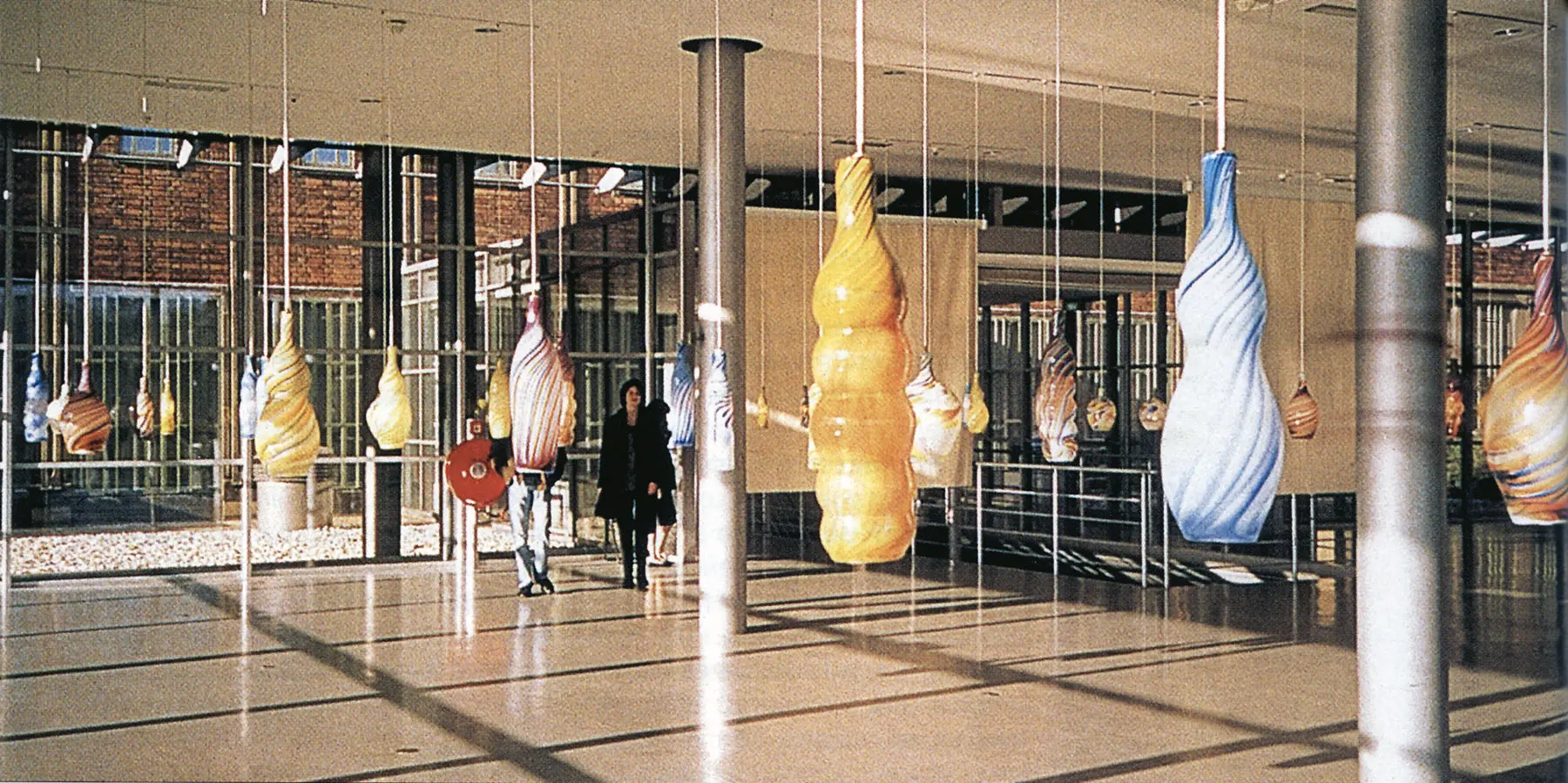
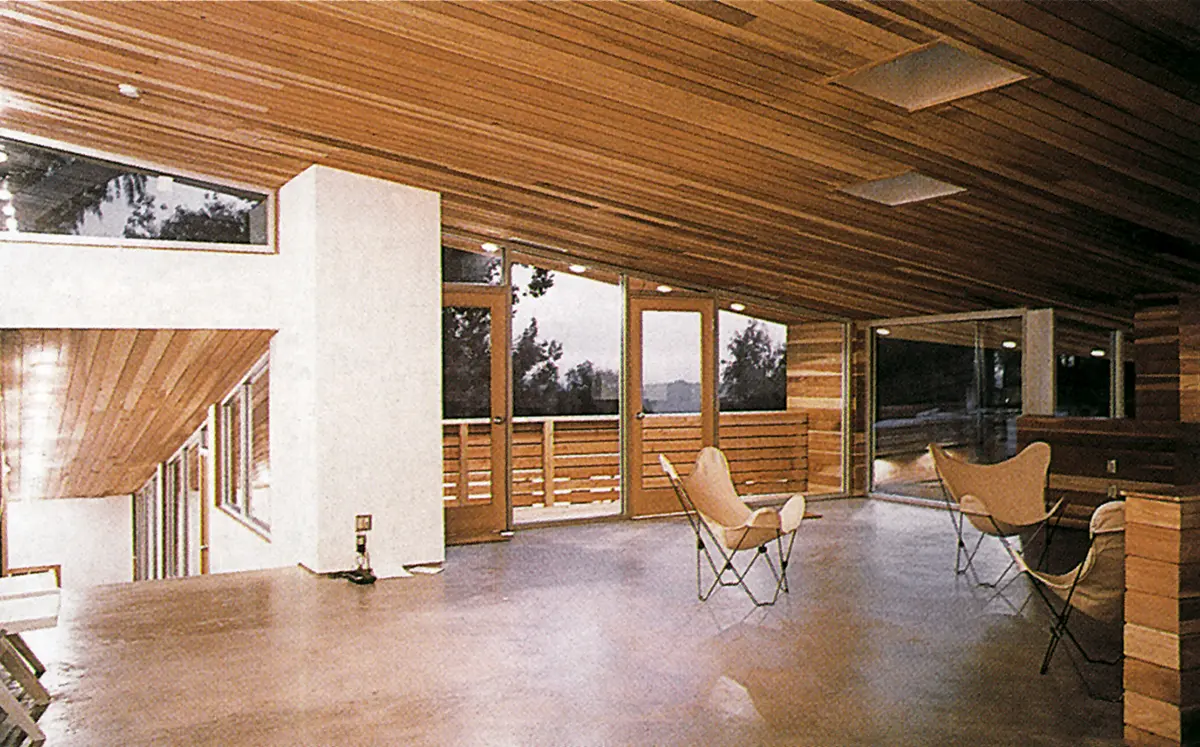
Over the past decade, the Cuban-born, Los Angeles-based artist Jorge Pardo has manufactured all sorts of apparently luxurious things: bedroom suites, hand-blown Murano glass lamps, patio chairs and tables, a sailboat, and a pier viewing deck jutting into the Aasee River in Munster, Germany. Most dramatically, in 1998 Pardo designed and built himself a house, commissioned and partly financed by The Museum of Contemporary Art in Los Angeles, which he both put on display as an off-site museum installation and subsequently lived in as his personal residence. In the summer of 2000, the DIA Foundation in New York unveiled Pardo’s latest project: a renovation and redesign of the museum’s bookstore, gift shop, and lobby galleries, done floor-to-ceiling in gridded, pastel-colored ceramic tiles imported from Mexico.
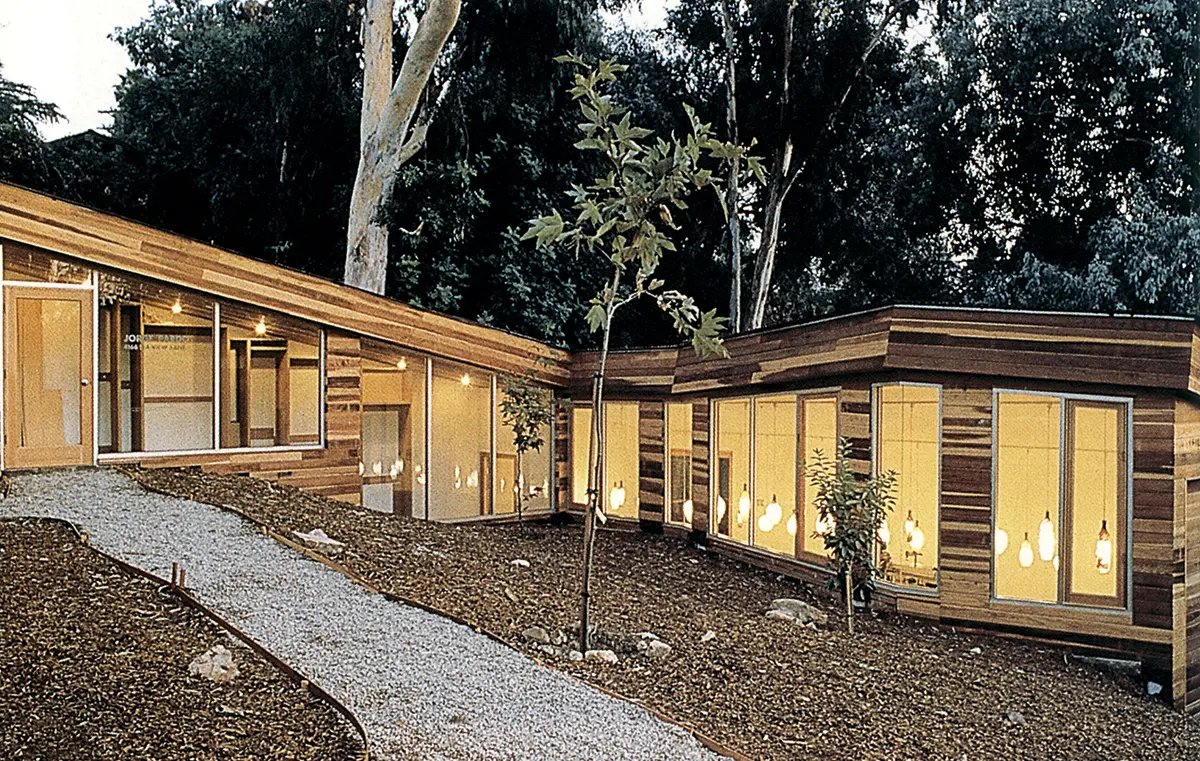
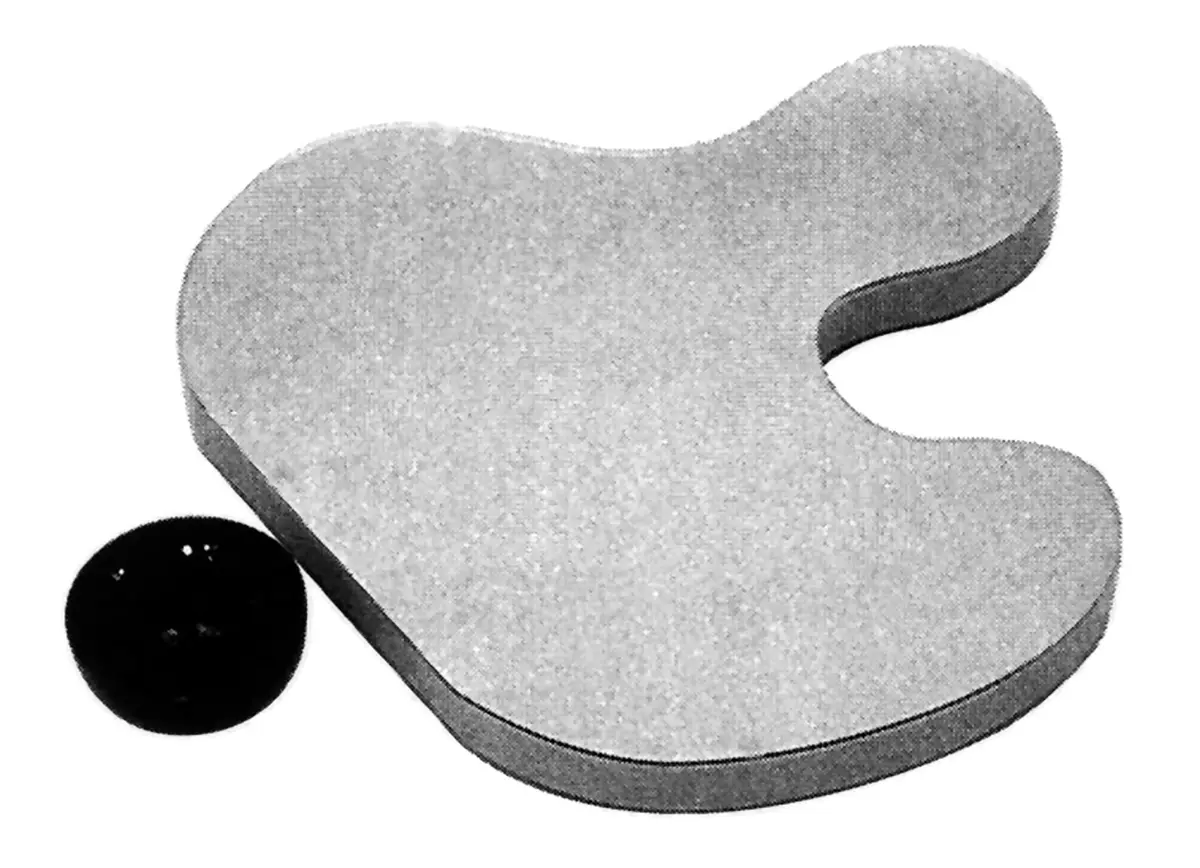
In every instance, Pardo’s objects and installations teeter on the edge of easily betraying what they might or might not be—so much so that an ontological uncertainty has become one of the trademarks of Pardo’s practice. The furniture is certainly functional, weight-bearing, and designed to invoke the classic mid-century Modernism of Neutra and Eames. The house, as Pardo-the-dweller can attest to, is certainly fit to live in. The lamps are oddly beautiful and light up, as lamps ought to do. We might easily call Pardo a designer or an architect, a maker of useful things meant to solve real-world problems with a bit of style —where to sit, what to live in, how to have light. If it were this easy, however, Pardo would have no career as an artist— and art, that social and cultural category the flaunting of which has never generated such real and fast capital as it does now, is exactly what Pardo means to examine.

How does Pardo examine art? Why is Pardo an artist? What is his art? These are questions nobody has really answered sufficiently, though the amount of energy put into them by critics, by curators, and even, in his own elliptical way, by Pardo himself, is staggering. The discursive contortions are, as well, symptomatic of art in the 90s generally —especially that of quintessential figures like Rikrit Tiravanija, Vanessa Beecroft, and Maurizio Cattelan, not to mention Pardo himself. In many ways, 90s art was about parsing, and then exploiting, the differences and similarities between art and other kinds of production like design, fashion, partying, architecture, and mass media. Within this babble of interaction, it might ostensibly be said that Pardo’s practice creates a space where art and life meet, where the functionalism of design and architecture is put into contact with the critical faculty of art to make distinctions about culture from a distance. In this way, Pardo could —ostensibly, again— operate in that lineage of quasi-utopian artistic practice that includes Donald Judd’s minimalist furniture, Situationism’s “detournement” or critical reloading of popular media, and Constructivism’s application of avantgardism to functional design.
And yet, where these earlier precedents were underscored by a belief in art’s ability to modify or critique everyday life, there is something distinctly “no-brow” or critically deflated about Pardo’s work in design and architecture. Jan Tumlir has written that Pardo’s art evidences “IKEA’s sourcing of art history rather than art history proper."2 Pardo is keen to push our buttons. He himself has said that he’s interested in exploring the minimum or lowest common denominator conditions necessary to make aesthetic distinctions. He makes things he knows —or supposes he knows— we want to buy in the styles he knows will make us happy: a sailboat, a bedroom set, a dock from which to watch a sunset, a beautiful house in the hills. In sociological terms, Pardo is playing with “symbolic capital,” the values we apply to things in order to differentiate our tastes from those of other consumers or participants in culture. The things we buy, the styles we bring back from the dead, and the experiences we crave say as much about our educations, our class backgrounds, and our professional aspirations as they do about the inherent usefulness or innovation of a given product. Pardo understands this well. Even if the rampant and convoluted commercial culture of the 90s seemed to flatten everything out, to confuse the pat sociology of “we are what we buy,” Pardo is smart enough to know that the signifying power of styles —especially the “high art” styles of design— haven’t completely faded away. They’ve simply wound up in catalogs and outlet stores, the ruses of democratic taste.
What does it mean when a work of art reminds us of shopping? When distinctions about modernist design (which were always meant to be aesthetic and ethical distinctions) remind us of price-point comparisons, mass taste, and factory knock-offs of the high and crafted? Pardo’s work in design including the mod pastel facelift he gave the DIA Foundation —reeks of the 90s’ commercial insistence on “lifestyle” everything, usually with some nod to retro mid-century aesthetics, usually cheapened and then made expensive again. Of course, because Pardo is an artist, we have to assume that this is a purposeful gesture. Is such a gesture cynical? Why invoke modernist rigor only to undercut it with vacated similitude? Why make your audience think “different” and then offer them the make-believe of mall junk? Is Pardo simply showing us a dynamic we’ve already grown accustomed to as consumers? It does indeed seem cynical to think that people are best able to make aesthetic distinctions when they are offered high art pretending toward mass production pretending again toward high art.

Perhaps it is time to say that we’ve been asking the wrong questions about Pardo’s work. That the ontological bluster surrounding Jorge Pardo’s output over the last ten years —Is it art or design? Is it really furniture? Is it really architecture?— is misleading in the extreme. Such questions, at this point in our evolution as connoisseurs and consumers of culture, seem, well, just not enough. Perhaps it’s now time to start winnowing down the expansiveness of the category art. In doing so we might begin to be able to make better, more commonsensical judgments about how art functions, how it’s received and consumed, and how it operates as a vastly diffused sphere within commercial and high culture. In other words, just because we’ve come to a place where we can consider anything art (after much Duchampian hand-wringing) doesn’t mean we should consider anything art. Perhaps it’s time to create a new category for things like Pardo’s objects and installations, a category that is certainly a part of art, but is peripheral and supportive of it —and more symptomatic of culture at large than of art history or critical distinction.
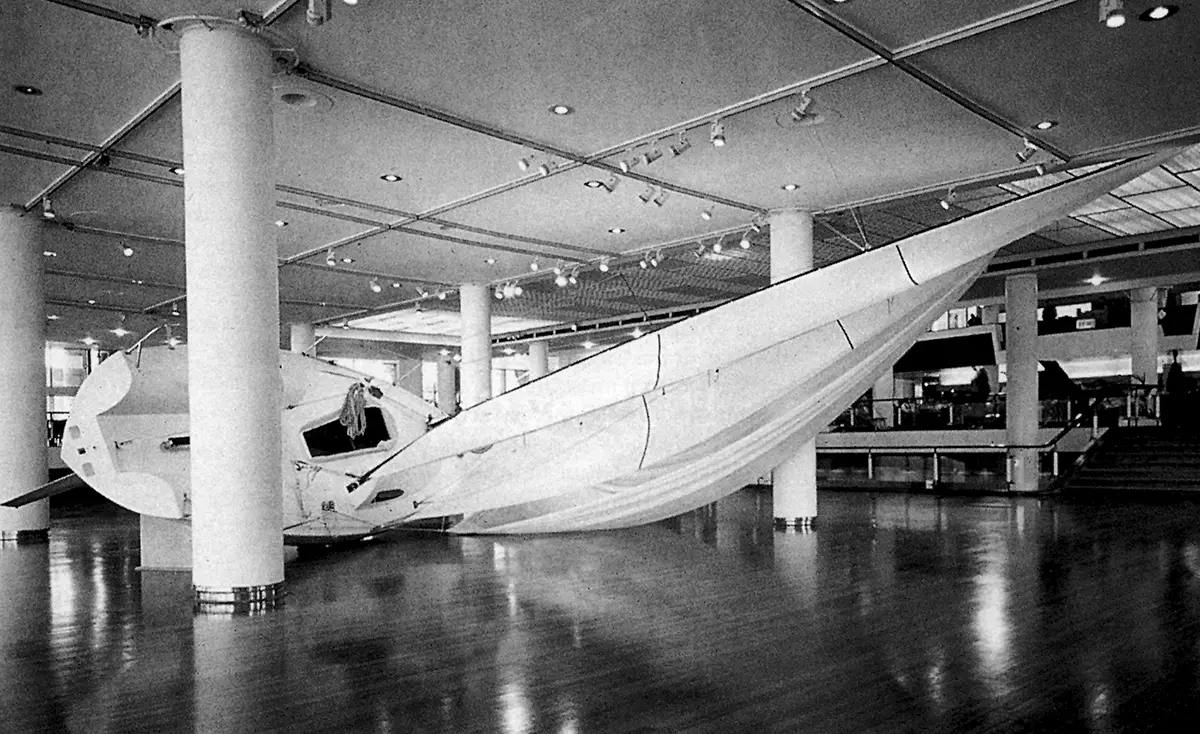
Such proposals shouldn’t really be that hard to fathom. At no time in the history of art have museums and galleries shown as much willingness to be subsumed into general commercial culture. At no time have artists been as deft at confounding the limitations of what we call art and what we call commercial objects —Pardo’s chairs, lamps, his beautiful home, his sailboat, his interior design at the DIA Foundation, for instance. And at no time have art audiences been as scrupulous in their discernment of the commercial or mass-produced qualities that artists are building into their objects and images. We’re all specialists now. We’re all connoisseurs. We have a store of cultural values, significances, and symbolic capital or tastes wired into the ways we consume and apprehend the world. We’ve become “sociologist-consumers,” close readers of the things we desire. Pardo, for his part, insists on reminding us of our relationship to the ways we think we fit into culture —and in this way, he’s a “sociologist-producer.”
Nineties artists turned increasingly towards the fabrication of cultural experience and specifically away from the theorization or analysis of such experience, which had been a hallmark of earlier institutional critique and identity politics modes of art. Where earlier art —that of, say, Hans Haacke or Adrian Piper— attempted to reflect upon the ideological underpinnings of cultural experience, the communalism of Tiravanija’s cooking performances and the taste-game modernism contrived by Pardo presented itself not as second-order commentary, but as a manufactured primary experience of the spectacle of culture itself. To use the literary metaphor: earlier art read culture, and 90s art sought to write it. It seems facile to suggest that Pardo’s art is perhaps better described as marketing, but maybe that’s exactly what it is: an exploration of the limits of the category taste, not the category art. The attention to style, attitude, and the consumer or participant-specific detail that such a producer mentality necessitates brings art into the same realm as product design, retail architecture, and advertising. What is being sold, simply put, is the idea of art or culture as a user-tailored, personalized, and democratic sphere.
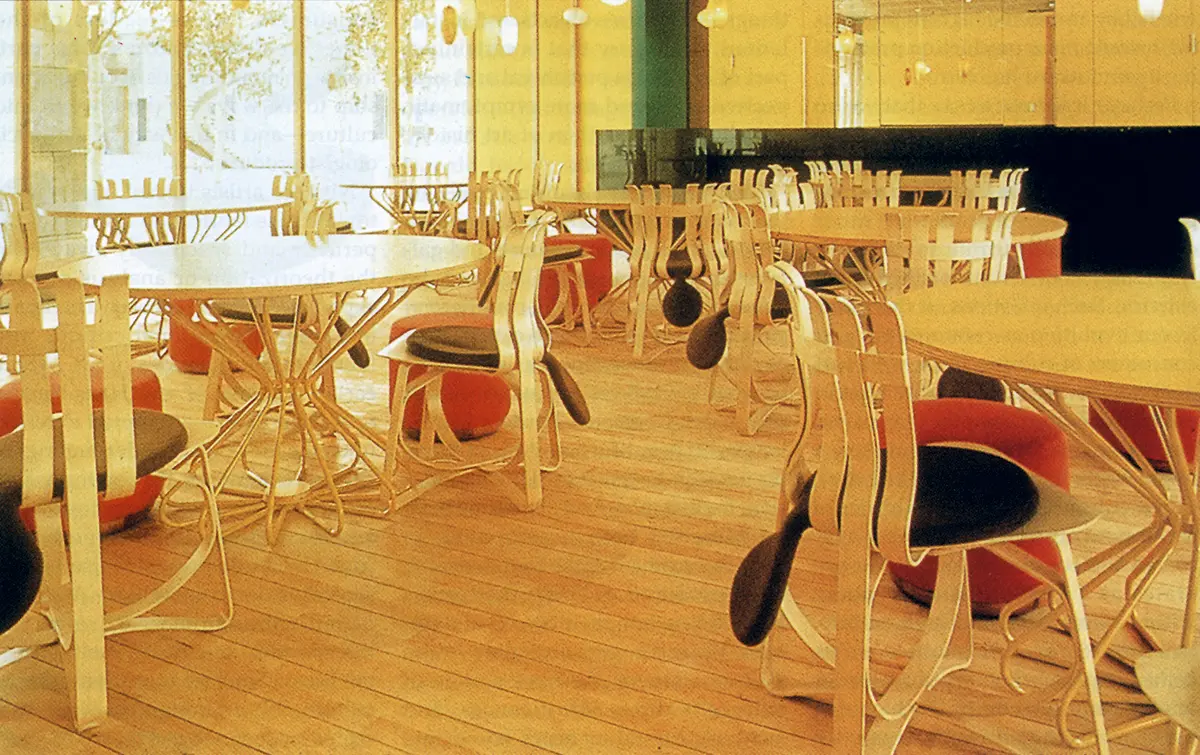
Are we all individuals? Are our tastes unique? Pardo’s work with design would seem to suggest yes. But, again, his is the marketer’s affirmation. Pardo shows us what our taste for culture looks like when it’s watered-down and made accessible: this is what you want, this is what you’re buying. The rub is that this is what everybody’s buying. Marketing, no matter how much it pretends to differentiate consumer taste, no matter how much it pretends it sells to the distinguished desires of individual consumers, is always about exactly the opposite. Marketing mystifies and generalizes the audience. Like the user and the participant, the audience is made of numbers and data, probabilities and trends. This is the dirty little secret of late capitalism as much as 90s art. We certainly have tastes, preferences, and personal experiences of culture and products —with which art might earnestly try to engage us— but they are less of our own private, intimate creation than we like to think. Especially when most of us shop at “no-brow” focus-grouped outlet stores like IKEA, the Gap, or the Guggenheim3.
What would it mean, then, to accept that much of contemporary art, Pardo’s included, has been subsumed by the marketing mode of address? Can’t we just get on with things, love the cool stuff we buy, but look for art in less expected places? Mightn’t we hold Pardo’s work up to the same standards we hold TV ads or window displays —very high standards at this point— but look for some way out of our sociological conundrums? Art should certainly be able to incorporate anything, but this doesn’t negate the fact that some of the things it incorporates are better found elsewhere, in a boutique or on a screen for instance. Pardo likes to say that his art is “reflexive” (also a truism of information age marketing), that it puts the audience in a position of relating to the “possible” within the culture. These are high and ostensibly noble ambitions for art to take. Would that art could take them a little less easily.
* Courtesy: Museum of Contemporary Art, Los Angeles.
** Courtesy: Friedrich Petzel Gallery.
NOTES
1. Quoted from the introduction of Pierre Bourdieu, Distinction: a social Critique of the Judgement of Taste, Harvard UP: Cambridge, MA, 1984.
2. Jan Tumlir, “Jorge Pardo," Art/Text 64, 1999. 3. My reading like Pardo’s work, operates best in relation to a specifically American commercial culture. It’s uncertain how Pardo’s work functions in societies less inundated by the sociological diffusion of taste and style.
BENNET SIMPSON
Writer and curator, living in New York.