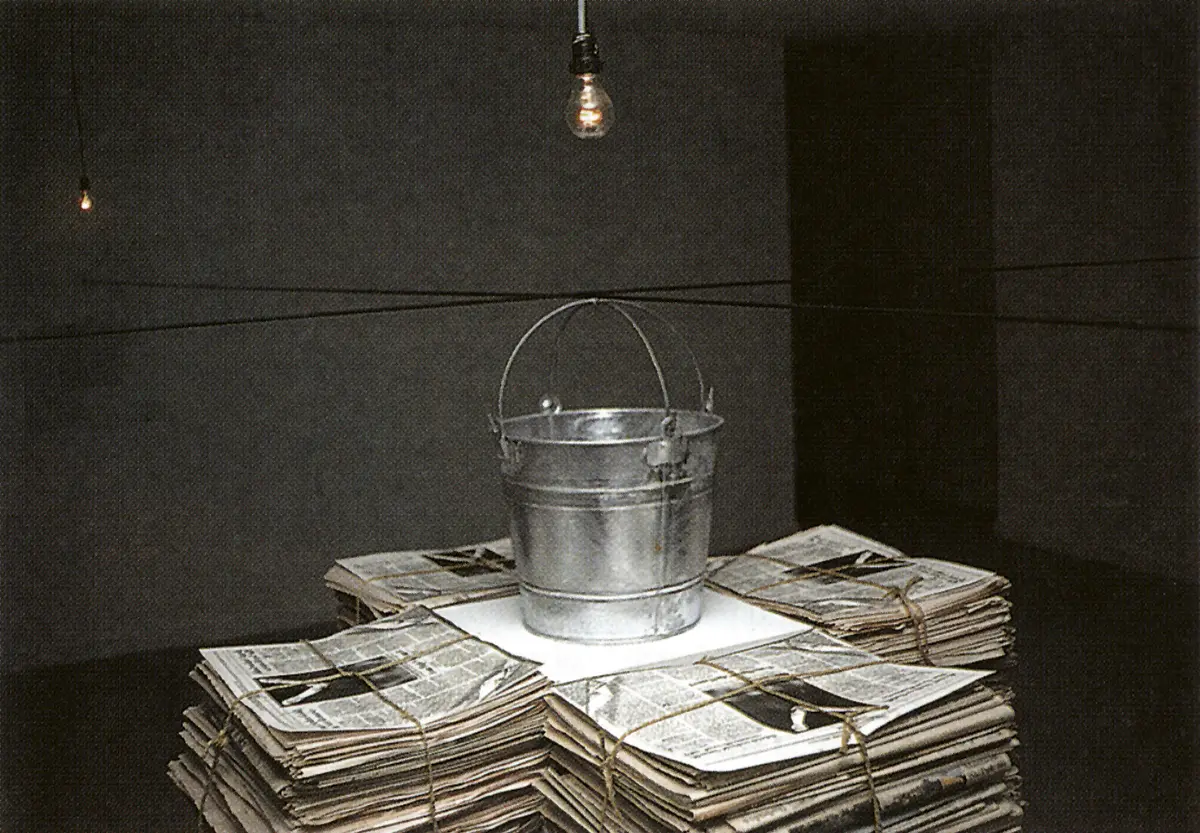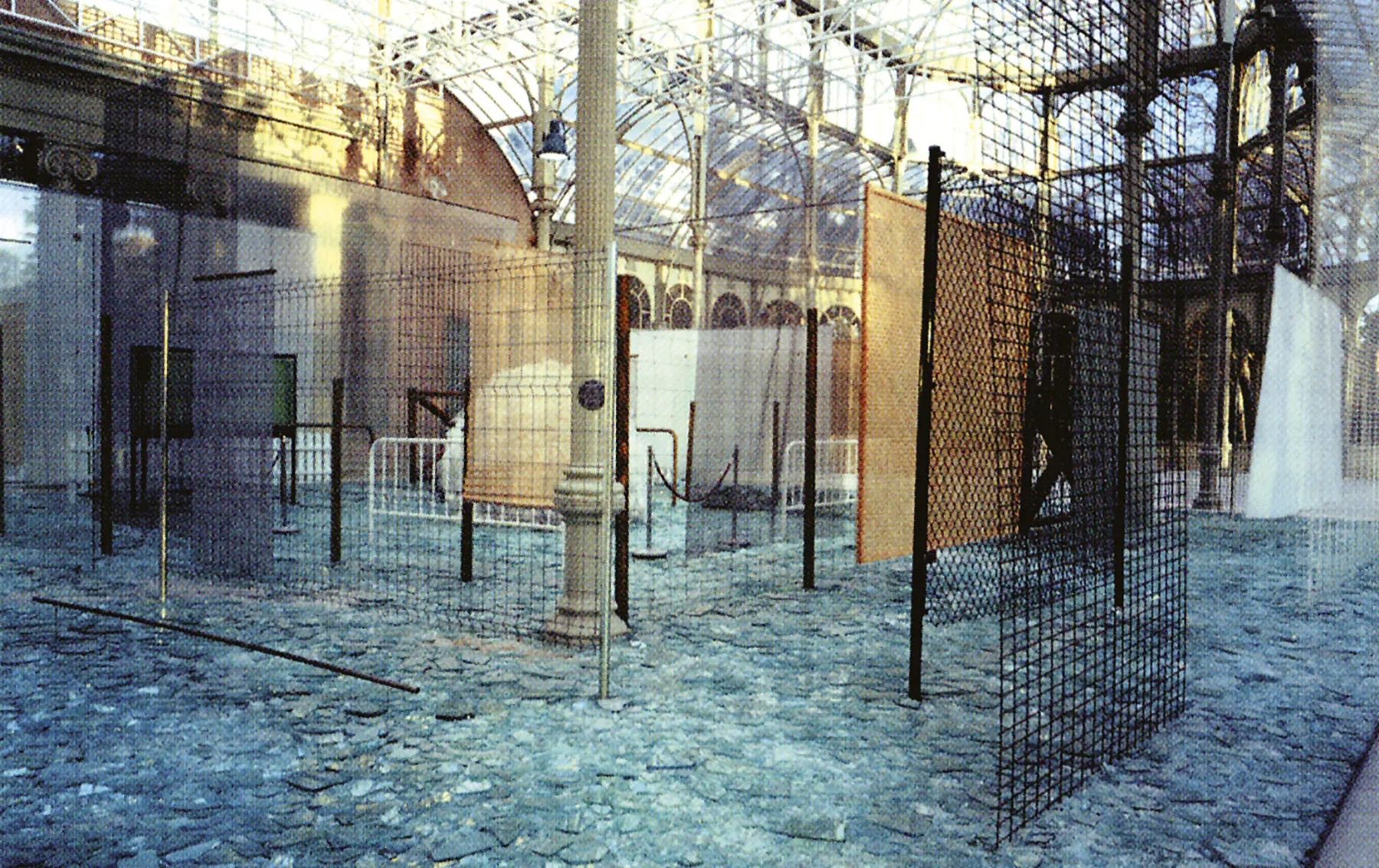
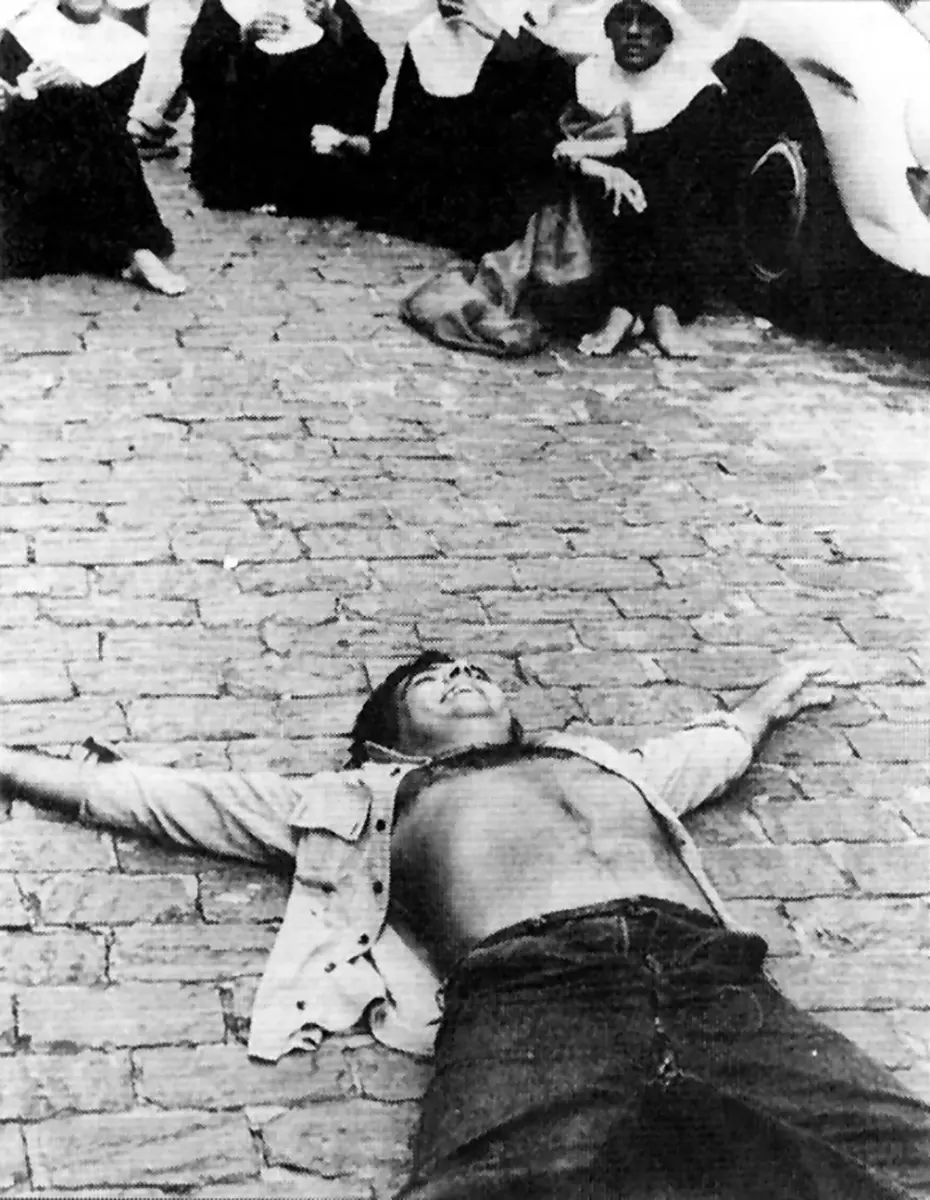
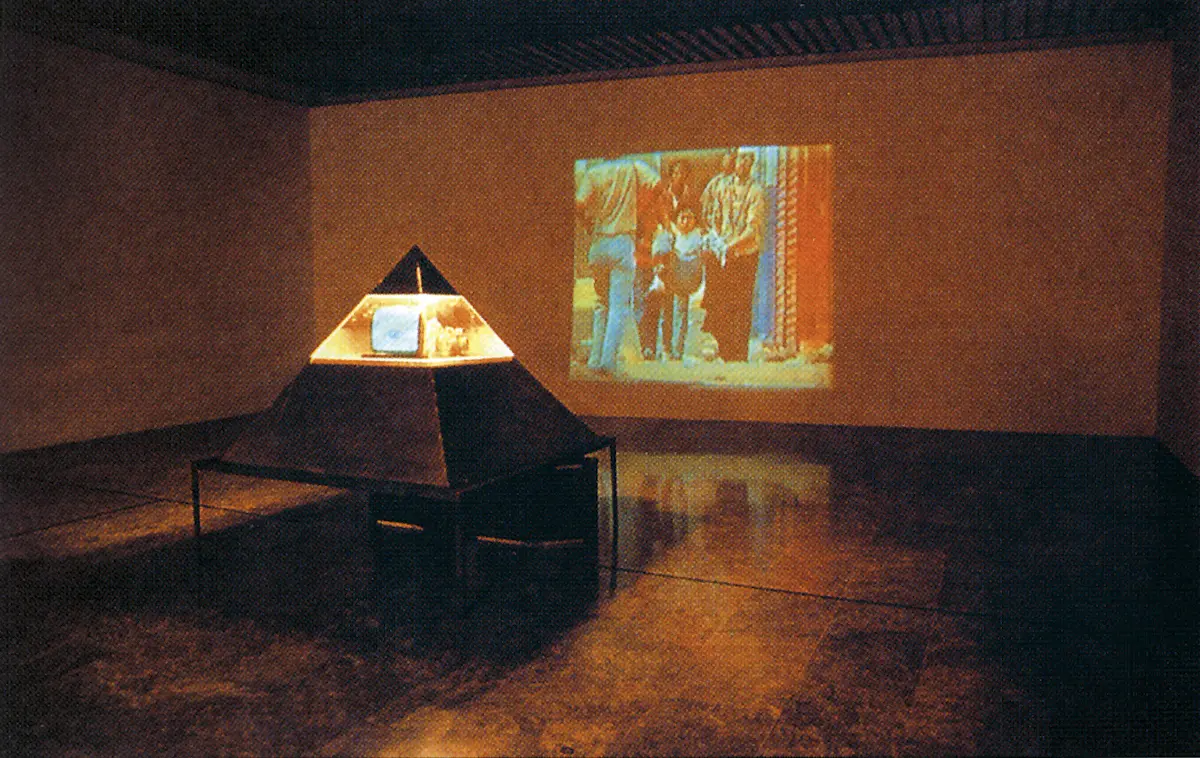
Beyond the importance that the work and the artists always have, the crucial thing about a group or thematic show is its pertinence and the rigor of discourse, its repercussion in the context, and, above all, the clarification that it offers with respect to the knowledge about the topics dealt with. The cycle of exhibitions Visions of the South has been a polemic project in Madrid, and that has been its major contribution. It has introduced a debate on Latin America and its problems (artistic or otherwise) into a context very familiar with its questions and sensitive to the plurality of its discourses. In that sense, Madrid is a good arena for debate for talking about Latin American art, because it is located in an intermediate territory. It is not an entirely neutral context, but rather one that is implicated in the break from (some of) the hegemonic discourses. It is not North America (USA), where categories determine the discourses and evaluations, nor Europe, where Latin America is a synonym for exoticism. Madrid, and by extension, Spain, is a relatively well-informed context with respect to what is currently going on and to its historical antecedents. For years, Spanish museums and institutions have been sensitive to Latin American artistic phenomena, and the galleries have shown artists individually with a normalcy that excludes trends (the market may be another issue). Put briefly, the information that Spain has had regarding Latin America does not comprise any sort of disinformation. The debate is permanently open from the very guarantee of origin: Ibero-America, Spanish America, and Latin America are synonyms for one same referent used in Spain with extreme ease and interchangeability, like a linguistic resource of discursive plurality and contextual nuancing between the ideological and the practical. Visions of the South, in its entirety, has stressed a peculiar questioning of the idea of identity by proposing precisely a (very plural) re-situation of the ideas that have monopolized the artistic and theoretical debate of the last decade. The cycle of shows establishes the discursive reproduction of its own labyrinth in which North American academic visions also participate, before which some of the implied curatorial voices have reacted at times losing the perspective of Madrid. The confusion is accentuated when Latin America is defined (as is done in North America) as a “non-Western” culture. If there is a diffuse and unclear term that is abused by its own people as well as others, worn-out and hackneyed, it is that of “Western.” Latin America (to choose a term that is accepted, relatively neutral yet simultaneously diffuse, and, above all, generic) seems to offer solutions to the contradictions of what is “Western.” It historically and frequently gets ahead of the problems of a society and culture that is globalized with its own tools. If it is possible to think of a “West” at once evolved and wasted, it is under the formulation of Latin America. Its history is a succession of error and solution, of failure and synthesis, of inventiveness and skill. This is something evident in the show F(r)ictions, but especially in Eztetyka del sueño (Aezthetyks of Dream). To reconstruct an identity: That seems to be the goal of recent decades; perhaps because identities were demanded from other parameters? Maybe identity for Latin America was not to have identities, or at least to have several diffuse identities, so diffuse that they formed a labyrinth of solitudes that were shared and, at the same time, individually irreducible, to paraphrase Octavio Paz. A complex labyrinth of elective and interchangeable affinities that circulate from Ché to Faulkner, from Bolívar to Zapata, from Paradiso to Martín Fierro, from santería to the baroque, from emigration to immigration, passing through the servitude of the peasants, the slavery and exploitation of the proletariat. An entire world of unresolved problems (that’s how problems have to be) that cannot be synthesized or summed up for the academies, wherever they may be. Visions of the South attempts to explore the conditions of identity from the plurality of versions and perspectives: here we find echoes of definitions and indefinitions, of academies and their transgressions. However, the Madrid context, in spite of its deficiencies in many aspects, is quite “vicious” (informed and seasoned) with respect to Latin America. Important and extensive shows by Torres García (in museums and galleries), the Escuela del Sur, and Madí have been seen in Madrid, while Cuban, Brazilian, and Mexican artists (to name a few national examples) exhibit with a certain regularity in the city’s galleries. La Casa de América functions while the Museo de América very frequently gathers the tides driven by the diplomatic operations of diverse countries. From Madrid, it is possible to become informed and disinformed. Visions of the South may have been more effective, keeping in mind the characteristics of the context, if a cycle had been planned that embraced an entire year, like solo shows whose nexus should be read at a distance. The normalization of Latin America in Madrid cannot respond to a festival that attempts to exhaust the possibilities, but rather to a progressive thematic analysis that broadens the perceptive channels. Too many expectations for a “vicious” territory, but even so, an intense experience: the lesson on Latin America that is conceived for and deserving of New York becomes light or déjà vu when presented in Madrid. What remains is the sense of formulation of a debate that has yet to be realized in Latin America as well as in New York. Perhaps Madrid is the most adequate place to initiate it since it is a territory of diffuse identity, and this seems to have been an initial rehearsal for the pending debates. Aezthetyks of Dream was the last show to open in the Visions of the South cycle, and it was presented in the Palacio de Velázquez and in the Palacio de Cristal in Retiro Park. It was thus distanced both temporally and spatially from the others, and on account of its characteristics (installations in very versatile spaces far from a standard notion of a museum) and theoretical formulation, it produced a critical effect of rupture. The show curated by Octavio Zaya and Carlos Basualdo has the great virtue of moving or disarranging any concept of identity toward an allegory of the reencounter with the interior, which is at the same time the social, and by extension, the political. Read in perspective, and in isolation, the five shows that make up the fresco of Visions of the South represent five ways of understanding identity based on its rereading and its negation. But its formulation is not exactly a question of problematizing identity, but rather the self-affirmation of the discourses and diverse curatorial methods: creative-historicist in F(r)ictions, historic-academic in Heterotopies, internationalization and dissolution of identity in It’s Not Just What You See: Perverting Minimalism, deconstruction and reinterpretation in Beyond the Document and Aezthetyks of Dream. If from an entirely subjective perspective I fully identify with the creative formulations of Ivo Mesquita and Adriano Pedrosa in F(r)ictions, and with the rebellion of Gerardo Mosquera in his process of dissolving the idea of identity, since he is the only show that includes artists that also belong to other contexts, I am fascinated by the expression of Aezthetyks of Dream on account of its boldness to shift the intensity from forms to intentions and their political, visionary, utopian, and transforming correlates from a point of departure that assumes shortage, poverty, and inequality as a problem of identity. This is precisely the greatness of Latin America: to assume shortage as an identity and therefore its wealth seems really universal—without being less, it is more. The unrealized utopia is more utopia than that which feels itself realized without perceiving its shortages. The thread that runs through Aezthetyks of Dream is the discourse of images and manifestos of Glauber Rocha, director of Brazilian cinema who integrated into the cinema novo movement as founder but assumed a permanent statute of being marginal. It is inevitable to establish analogies between Glauber Rocha and the irreconcilable Luis Buñuel, with whom he shares not only a sensibility, but also a gaze toward the have-nots and a rough, critical style of making cinema. What is more, we must not forget that Buñuel developed his cinema in Mexico and from there constructed a vision that was ever engaged with the social, in a formulation that establishes a cross (felicitous although dramatic) between the best of Spanish culture and the best of America. Cinema and the theology of liberation are situated in the exhibition like axes of awareness and identity (the catalog includes an interview with Enrique Dussel, thinker and promoter of liberation theology). Both are understood as tools of utopian thought, as a perspective capable of constructing an identity outlined as an alternative to the multiple identities based on shortage, hunger, and delirium. Violence is thus a mode of utopian radicality, with its popular roots and its frenzied ravings that are situated between the messianic, injustice, and lucidity of madness. What Valle-Inclán thematized in his theater as esperpento and grotesque farce, based on popular culture, in order to tackle critically the Spanish reality of his time, is reflected in the cinema of Buñuel and also in that of Rocha, who states: “the Latin American political avant-garde always seems unleashed by the intellectuals and here, quite frequently, poems precede the rifles. Popular opera, music, and revolution go hand in hand, and this legacy comes from Spain.”1 There are no identities to assume other than those offered by the dream in contact with the crudest reality. Rocha is a pretext for organizing the disorder of identities into a productive chaos where all aesthetic and plastic impulses of recent decades (very fruitful, between the narrative and the conceptual), may flow together in the most radical abandonment. Rocha’s filmography is exhibited (unfortunately, in very lamentable conditions of sound and light, and that is something dramatic when the globalization of video prevents visualizing what is historical and non-commercial, like Rocha’s own filmography) in the Palacio de Velázquez as the key piece for comprehending a type of sensibility that runs parallel to the formulations of liberation theology or to a conceptual and/or actionistic (performance) art that is politically and socially engaged, otherwise valued very little and not well known within the dramaticity of real contexts. Today, we try to avoid the term “political” unless it precedes “correct.” Political correctness does not exist and if it is assumed it is a manifest hypocrisy. If we try to substitute the political with the social, both terms refer to complementary and essential experiences for each other. Neither one substitutes the other, nor does one exist independently of the other, and that is what Latin American reality shows as a lesson through an artistic action directly engaged both with the subject and with society, with the political (reality) and with dreams (utopia—revolution), with the forms of sensibility and with the discourses of concepts. Aezthetyks of Dream sums up in a certain way an American (especially Latin American) sensibility of working based on a lack of prejudices, laboriously constructed from the need to dream freedom and all its possibilities freely: from those that liberate the identity by assuming it to those that tie us to the thirst for justice of failed revolutions. Identity is therefore not resolved either in the national or in the cultural, but rather it develops the consciousness of shortage as a sensibility of dissatisfaction and, therefore, of dream and utopia. Glauber Rocha’s films develop a dramatic, vast, and desperate temporality without resolution or hope, exposed to failure, but they contain the seed of what could occur in another, even more tragic, way. The works chosen for this show document the failure of dreams from the power of desires and action. What is extraordinary in shows like F(r)ictions and Aezthetyks of Dream is that they are not looking either to teach or to convince, but rather to show new ways of looking in order to know and to penetrate what seems obvious. What is really important in these exhibitions is not the works on display as much as the way in which they are shown, and the context in which they should be read. It is a way of intensifying their meanings, underscoring their multiple readings, highlighting the fact that art and its discourses are something more than a formal question. In this way, works that could go unnoticed in trendy museum exhibitions when treated like sacred objects of art that respect museographical criteria, acquire the renown of the intentions that produced them when shown, as in Madrid’s Palacio de Velázquez, in their initial rawness. The intensity of the awareness of failure thus flourishes, and they are proposed as documents that transmit experiential contexts beyond merely formal problems. Nevertheless, great paradoxes between the real aims of the work and its dimension with respect to the context have been produced in Aezthetyks of Dream. For example, Doris Salcedo’s work, which formulates a physical tension between two walls through lead beams, highlighted its most realistic side by requiring an extraordinary effort, both constructive and economical, when it would have been enough to establish a fictional simulation of that same tension. The same thing occurs with the otherwise magnificent work by Cildo Meireles, A través (Through, 1983-2001) in the Palacio de Cristal del Retiro, whose production cost in Spain would have financed more than one Latin American museum during more than a year. However, in spite of such criticisms, I believe that it has been worthwhile to re-create a metaphor of identity that labyrinth of grandiose fragmentation made of glass. The space of the Palacio de Cristal, a nineteenth-century building constructed for a colonial exhibition in the shape of a covered greenhouse made of glass, houses a piece in which a labyrinth of glass of different qualities and thicknesses hangs over a base of broken glass. There can be no better allegory of the present historical situation of Latin America. Immoderation and certainty are perhaps the poles that comprise the destiny of Latin America. In addition to historical pieces of the ‘70s, like those of Victor Grippo which deal with the precariousness of hunger and the ironic difficulty of the nourishment of each day, focusing on bread as an object of play and irony, the most recent pieces by José Antonio Hernández-Diez are presented, which recover the historical dimension of a violent present that passes through the media languages of its globalization. In a precise and certainly critical fashion, in In God We Trust (1991), the triangular, omnipresent eye of God in the baroque painting becomes, in our day, the live reality of the television that emits the daily violence produced by hunger and a lack of oppression. If Rocha’s manifestos are inscribed in the rebellion against the sensitivity of the humanist and paternalist European left,2 which takes on Latin American drama as a pose of formal engagement, the works selected for this exhibition sum up the sensitivity of several generations of Latin American artists regarding the idea of engagement and its various and diverse ways of making art a political platform in which the social remains are included as a corollary and never as an excuse for disengagement. Obviously, not everyone is here who has made history. An exhibition is a way of excluding, but the metaphoric formulation, although it may owe much to a New York perspective, has attempted to be as plural as possible, integrating the most radical proposals of the historical with some actualizations that are exemplary in a broader scope. To be sure, some artists are missing, but in a certain way, those who are here represent the absent ones: Luis Camnitzer and Gonzalo Díaz (along with Cildo Meireles) represent the most radical lines of a Latin American conceptual movement closely linked to the political, which has turned the concept into a form of burning rebellion, and that is the hot conceptual movement that is specifically Latin American. Tunga, Meyer Vaisman, and Artur Barrio are clear-headed historical (and frenzied) examples of an action based on the revulsive. José Antonio Hernández Diez, Juan Fernando Herrán, Doris Salcedo, and María Teresa Hincapié, on the other hand, represent a heterogeneous sensibility that needs to mix languages and techniques between the visual and the experiential; their formulations do not conform to outlines, and they propose violent burdens. Aezthetyks of Dream compels an effort of trance and delirium, a break from the conventions of identity, and, finally, a shift of meanings that turns shortage into wealth, as if through alchemy. Perhaps in all of this there is a homage to the imagination and to a discourse in which free association unleashes other meanings that recover poverty, hunger, and shortage in order to generate spaces of utopia.
NOTE
1. Glauber Rocha, “Tricontinental,” in La revolución del Cine Nuevo (cited by Ivona Bentes in "Apocalipsis estético: ameryka del hambre, del sueño y del trance," in the catalog for the show Eztetyka del sueño).
2. See text by Ivona Bentes, op. cit.
SANTIAGO B. OLMO