Each cultural center must stand out from among others by the activities it holds. In Santo Domingo, the Casa de Francia, which shares with the Embassy Chancellery the colonial mansion called “Hernán Cortés’” in Las Damas Street, presents six shows each year, motivated by the topic and the level required. The invited artists do not necessarily need to be French, but the exhibitors or the content exhibited must show some connection to France.
A current collective show groups five painters from the Dominican Republic: Jorge Pineda, Inés Tolentino, Danilo González, Raúl Recio, and Luz Severino. It presents a selection of a few pieces by each artist, in which we can appreciate their most recent production. The exhibit is Afinidades/Vínculos (Affinities/Links) because all five artists belong to the same generation, the 1980s.
These five artists have been or still are closely linked to France. French and Dominican bi-nationals have all lived and studied in Paris. They currently live in that city or in one of its branches overseas or they exhibit permanently or sporadically in French territory. Moreover, they’re known the world around as figures of the present journeying into the future, each with an average of 15 years of artistic production under their belts. All are standouts in drawing, and they enjoy the quality of paper as the support for their work.
On the other hand, there’s nothing in the city comparable to this succession of well-it galleries equipped with systems of panels for intelligent and flexible montages. Cesira Armitano, the curator for this and other exhibits, chose wisely the artists and the museographic criteria for this montage.
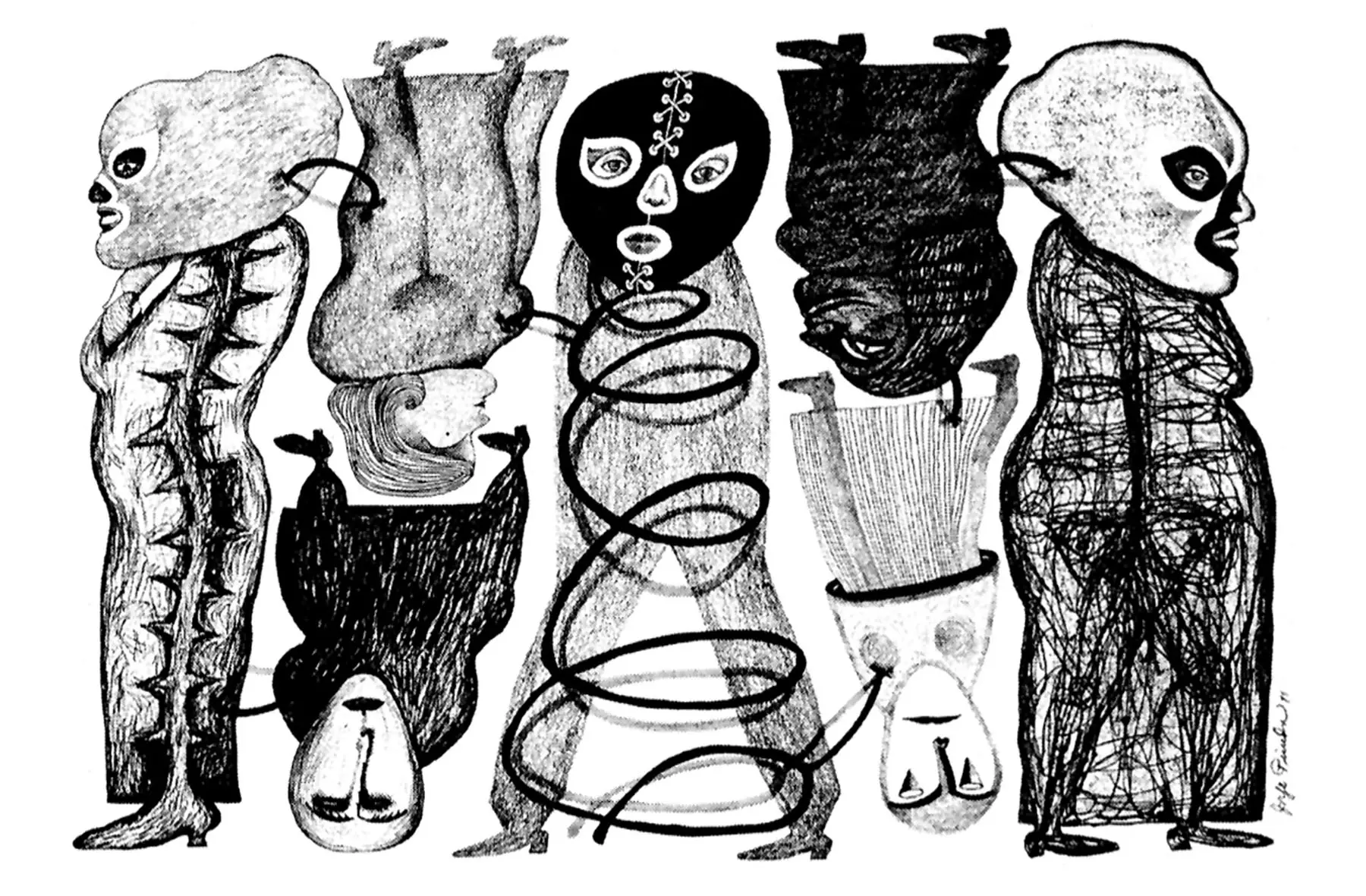
Jorge Pineda is one of the most brilliant artists of his generation. An intellectual and polyvalent creator rooted in the Caribbean, he has become the proprietor of a universal culture in constant renewal. Here we find him in his facet as a draftsman, in his virtuosity in black and white, his commitment to the genealogy of a whole continent. In Árbol de las Américas (Tree of the Americas), Bolívar cohabits with colonizers, Indians, and virgins. Jorge handles his themes so well that the flowers in this homage to absolute beauty—far from being kitsch—turn into the harmony of an incredible mestizaje. Neruda’s “The Captain’s Verses” inspire a brief, perturbing sequence of laying bodies. Dogs, another theme, propitiate a drawing; playful in appearance, it’s the source of tensions, real or imagined. This artist shows us the amount of strength there can be behind a tool as simple as a pencil.
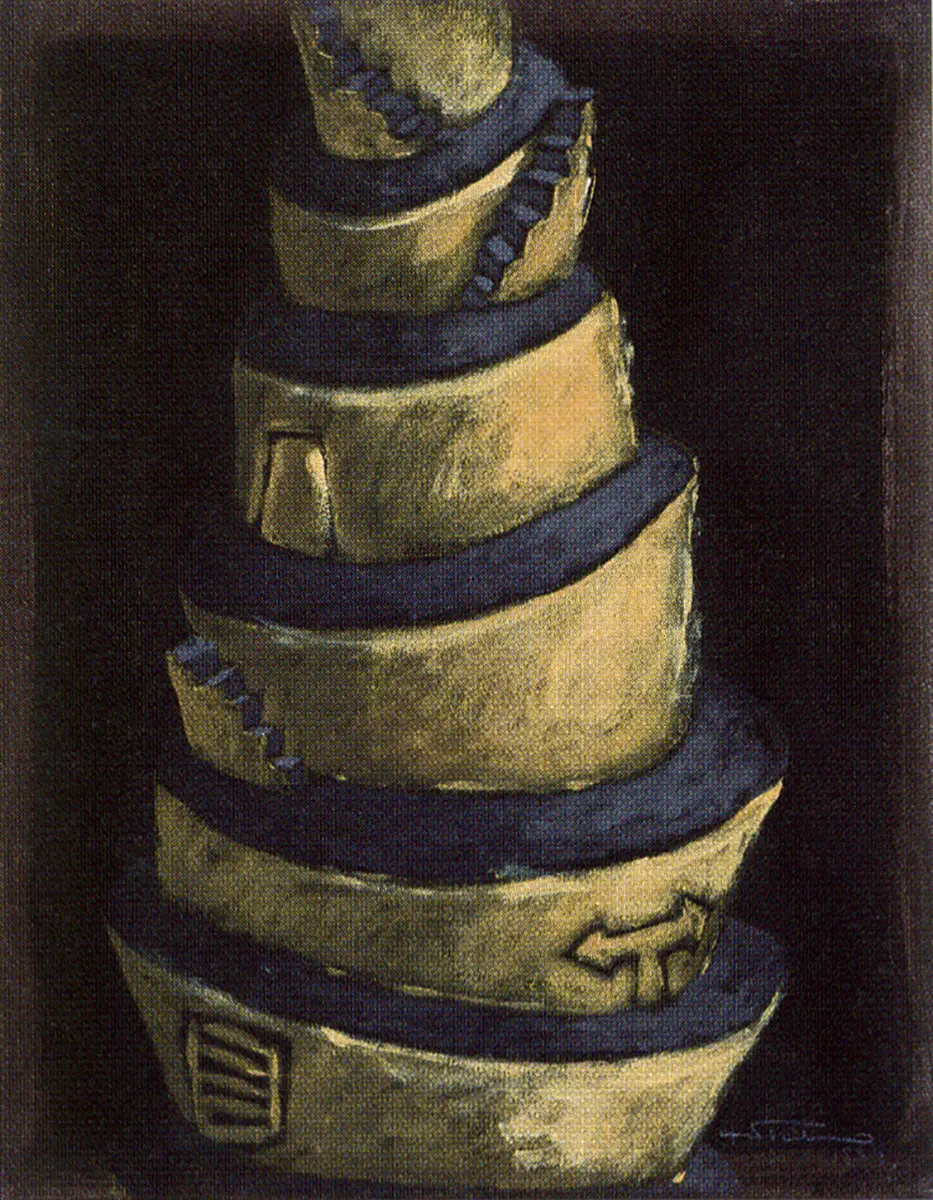
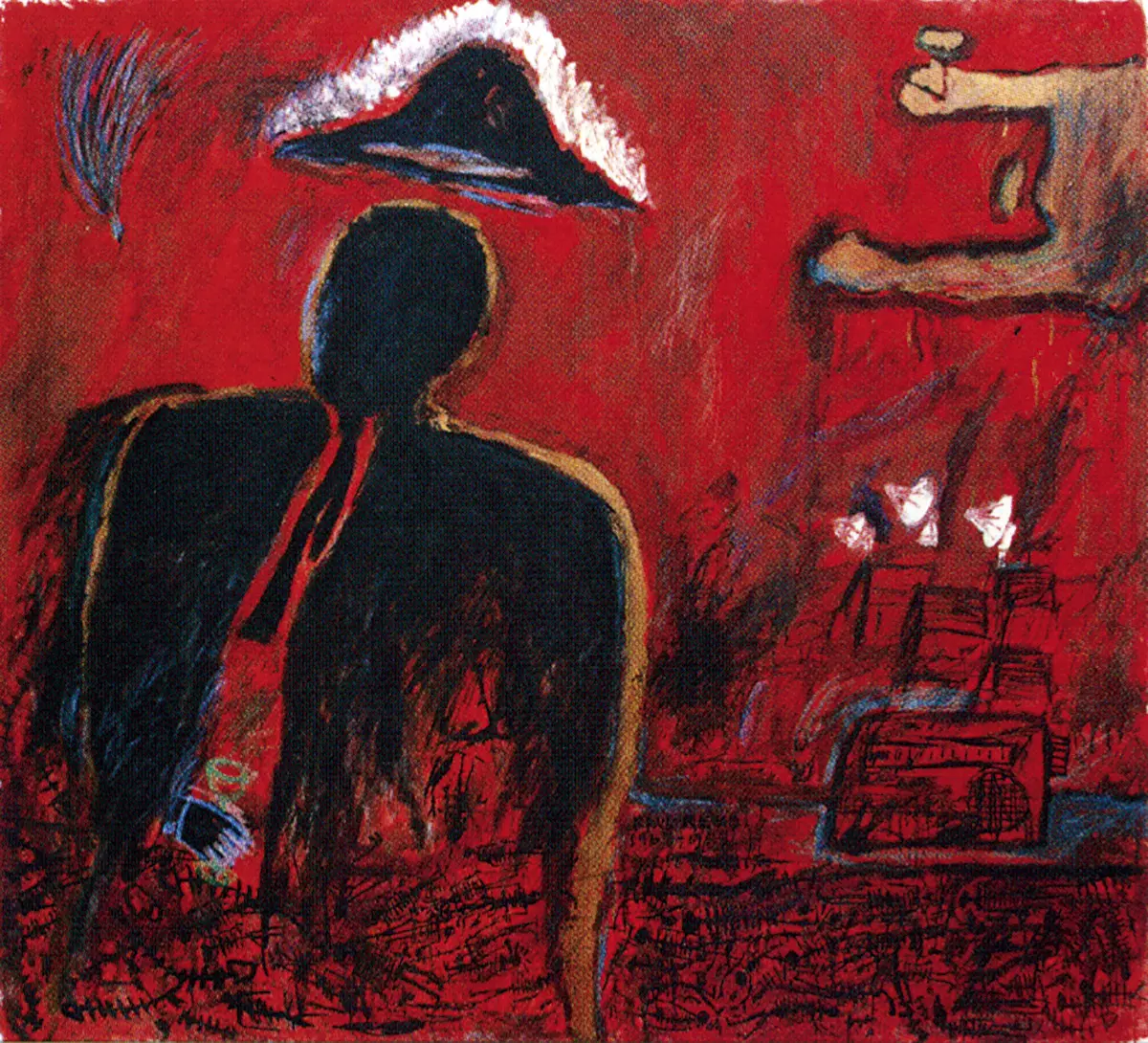
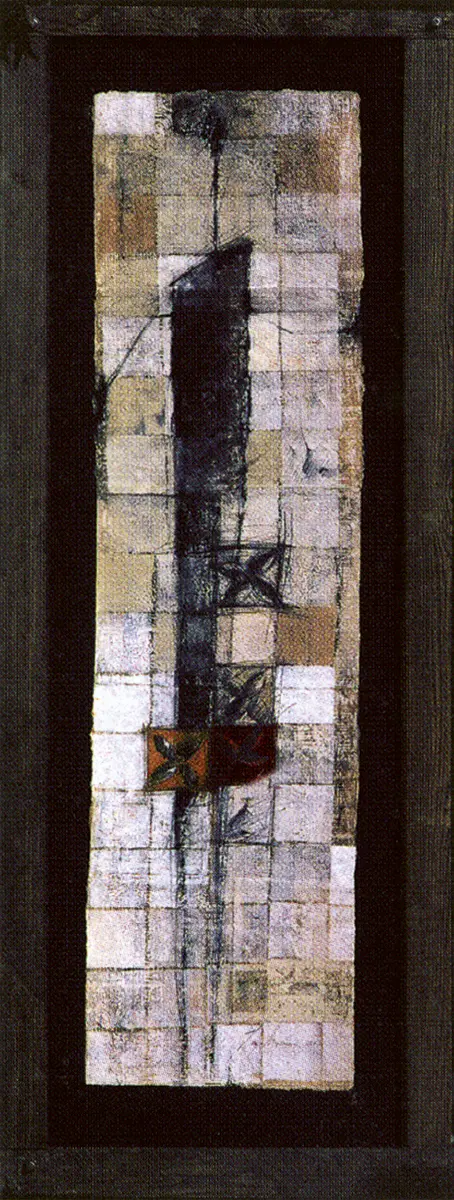
The dog resurfaces in Inés Tolentino’s work, who has from the beginning integrated it—in both paintings and drawings—into her experiences, questions, and memories. A beautiful group of work, well placed and of a particular balance, it manifests permanent research that nurtures itself from the ancestral root and cultural references, ideological interpolations, and prior signs. Thus, the Árbol del ahorcado (The Tree of the Hanged Man), a fragment of the Tarot sequenced in two vertical polyptychs, resurfaces as an almost imperceptible graphism in one of the “rooms” in the triptych La casa de la dueña (The Owner’s House). The Tower of Babel, which could symbolize the increasingly manipulated chaos of our times, has allowed Inés to produce one of her best series of drawings; by the way, it would be improper here to dissociate the pictorial from the graphic. A banner imposes her collages and colossal format: from the soffit hangs a testimonial manifesto of the history of the Dominican Republic, a recurring individual and collective work-memory.
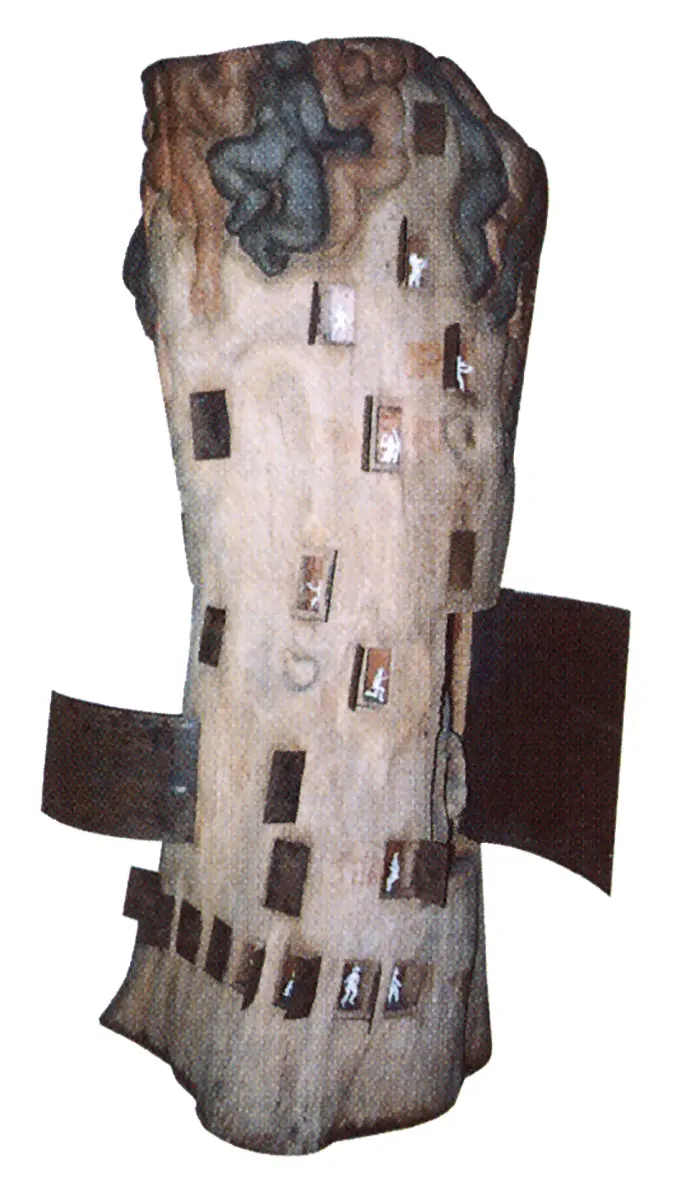
Active not only creatively but also in promoting group movements, Danilo González went to París to organize a nucleus of artists, but the inclement times frustrated his valuable venture. González has returned to us; as an experimental gallery owner, he has shown a true organizational talent toward his “capital” space. A polyvalent artist, draftsman, painter, and sculptor, he masters the third dimension on any support, to the extreme of reaching the trompe l’oeil. An admirer of Duchamp, here he takes surrealism to the hemisphere’s frontiers, plotting a map of the Americas alongside a swimming pool or a ladder—a repeated sign that unsettles and doesn’t necessarily lead to the best destiny. An ingenious installation and sculptural block, the hollow trunk invites us to open the door to the little soldiers (the lead has turned into plastic) that inhabit it ironically.
Recio is a serious talent that appears to be derisive. And he always starts by poking fun at himself. Piscinas del placer (Pools of Pleasure), which he continues to fill and empty, has multiplied figures and objects, and one of the pleasures is to examine them one by one. There are even cat faces (which remind us of Alain Séchas) adding their enigmas to these (under)worlds overflowing with charm. Recio invites us to enjoy his spunk, the fluidity of his drawings, and his control of the transparent. He finally decides to amuse us while warning us. It’s interesting to note that he’s never lost a certain social commitment, he never quit being a sort of safeguard for morality and human rights. Neither tragedy nor tremendismo, but an incisive humor, probably more effective than those sad pamphlets. Huge, quickly-drawn drafts done on paper and strips of wood, landscapes that seem curiously French, and tropical.
Before settling in Martinica with her husband, Luz Severino had already conquered the Martinican artistic scene. A mixture of sensitive constructions and organic vitality orchestrate the artist’s cultural and mythical preferences. She fuses characters and musical instruments into images of great chromatic harmony, giving rhythm to tonalities with mosaics, carving easily and carefully on the surface. Severino loves texture, and matter: she’s one of the best makers of handmade paper. As with the other exhibitors in Afinidades/Vínculos, the pictorial variations signify —sign and sense—a deep search into transmitting concepts, beliefs, and metamorphoses. There’s an investigation of essence through the depuration of the central motif, and that’s not easy. Let’s remember that myth and history are part of today’s artistic world.
MARIANNE DE TOLENTINO