There are around 800 galleries in Paris. The art market has seen many failures in the capital city during the last 20 years, and for most galleries, the situation continues to be precarious. Among them, a mere 50 are booming and enjoy international prestige. Only these galleries have the funds to exhibit artists who are little known in France or those who have an international reputation and participate in important art fairs.
The dematerialization of the artistic creation, the huge installations, the works commissioned by museums, the generalization of great artistic projects, and the giant formats represent the parameters that have progressively displaced the function of the galleries, forcing them to reconvene and revise their promotion and sales policies. More and more artists look toward those institutions that might, at least in France, commission them to create works that later could be integrated into the national patrimony. Commissions also allow an enormous freedom of creation as there’s no limit to space. The public’s taste is not a factor nor is the product’s marketability. A whole new generation of artists living in France is subjected to these new conditions of creation.
These changes have not been made without hurting the craft of painting. It is a fact that the State’s Ministry of Culture, in alliance with the most notorious critics, has notions so preconceived that they have ultimately relegated painting to a second tier. French artists such as Valérie Belin (in Berlin) or Isabelle Champion-Métadier (in New York) have chosen to work abroad, where painting is still appreciated in its own right.
Under such difficult conditions, we must salute the courage of a gallery that opened its doors this past November in Paris in celebration of Photography Month. Operated by the Colombian curator and art critic Tatiana Villegas and the Venezuelan Liliane Zafrani, and located in the heart of the Marais neighborhood, the Espacio Meyer Zafra seeks to reinforce the old links with Latin American art and its promotion in Europe. Even if the gallery’s project is aimed at contemporary art, it also wants to promote international photography. In its midst, we can find the first gallery devoted to photography (Agathe Gaillard) and the new and prestigious European Museum of Photography.
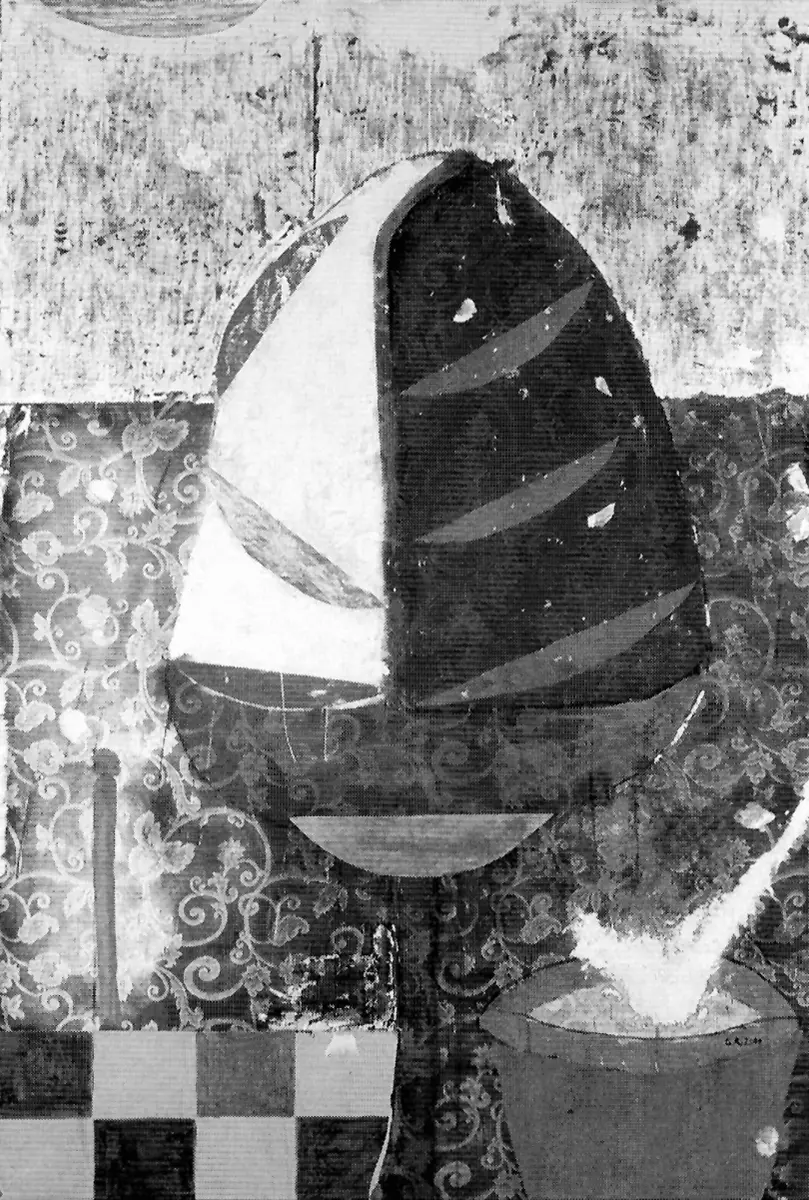
For its third show, the gallery owners opted to highlight the work of Mexican painter Alberto Ramírez. Ramírez’s work has changed considerably since his arrival in France in 1983. A solitary artist, inheritor of the resplendent trajectories of Rufino Tamayo and Francisco Toledo, he’s been able to free himself from traditions and break with the zoological and descriptive imagery so in style in Oaxaca. Far from adopting urban iconography, Ramírez has tried for several years to create a language of his own, having reached a relatively pictorial independence. The frequent reference to Parisian urban life and the sky’s permanent grayness, added to the difficulty of having a painting exhibit, have had little impact on the artist, and they haven’t spoiled the passionate virtuosity with which he continues to mix drawing, materials, and color. After years of intense creation (including exhibits at the Casa Lam in Mexico) he’s been able to maintain the physical, carnal, and sensual relationship he has with the material, his pleasure at defying the canvas’ space, his sense of color and his interest in the form, as well as his curious narrative, confirming his determination to paint in order to express his life between two affective and cultural waters—a situation that defines his condition since he settled in France.
The show presents several small-format paintings in the almost “classical” vein of those formal exercises he masters so well. But above all, two huge canvases open and close the exhibit. These two paintings reflect Ramírez’s most recent preoccupations and the direction he’s adopted while making new esthetic and spatial proposals. The piece entitled Sin título (Untitled, mixed media, 195 x 130 cm, 2000) introduces the collage and other materials such as weaves, painted paper, and painting. The texture no longer has the velvety seduction of sand, shining pigments, or tinfoil capturing the light. We find ourselves inside a different image of space, less dense, in lightness and transparency of color controlled by gluing diverse materials onto the support. The emphasis is less on the color than on the composition’s formal scheme or internal structure. Alberto is in the middle of a conceptual transition, and the new artistic perspectives presented undoubtedly will lead him to other horizons. This should allow him to distance himself definitely from “magical realism” as practiced by Oaxacan artists—currently, a bit denaturalized due to its excessive marketability.
CHRISTINE FRÉROT