Together with Rafael Ferrer, Pepón Osorio, Dhara Rivera, Aarón Salabarrías, Carlos Rivera Villfañe, Chemi Rosado Seijo, Igancio Lang y Antonio Martorell, Anaida Hernández has become one of the most important Puerto Rican installation artists. Her dramatic work Hasta que la muerte nos separe (Until Death Do Us Apart), consisting of 100 niches remembering 100 women killed in crimes of passion on the island, has been seen throughout the world, making her one of the most important feminist voices in Latin American art.
Her installation Juegos ilegales (Illegal Games), shown at the New Museum of Contemporary Art in New York, and later at the Grand Central Arts Center in Santa Ana, California, was well received by the critics. Prior to becoming an installation artist, Hernández was a graphic artist and a painter. Her work in those fields was always strong and invited us to become accomplices in mythologies or love stories.
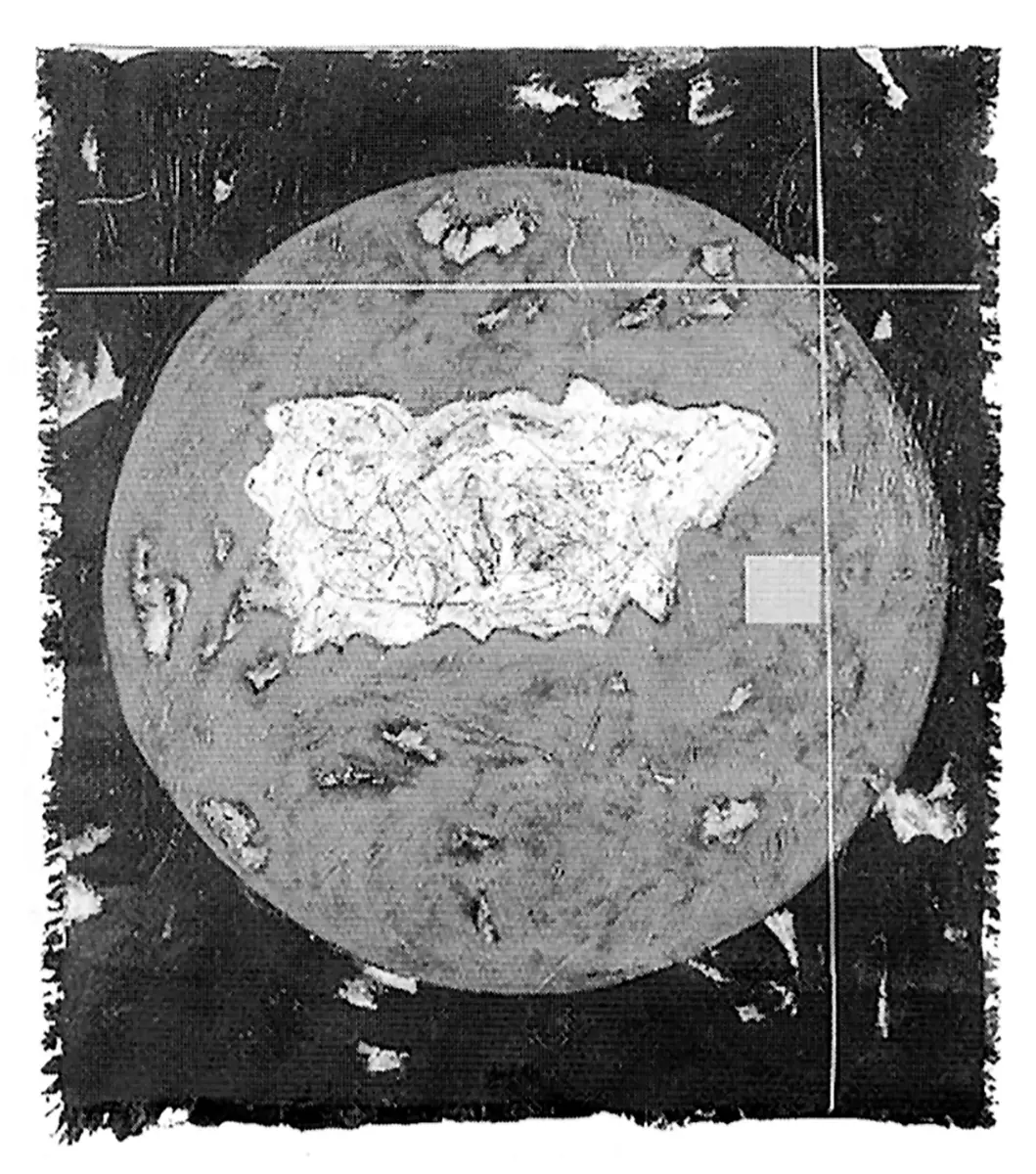
In her recent show Adivina adivinador: colindancias (Tell Me, Tell Me: Contiguities) at the Galería Petrus in San Juan, Hernández presented a group of unframed acrylic paintings. With these she again experiments with the concept of the game; not the child’s game but the sociopolitical game of surviving in a world where injustices multiply each day. Using a style that combines primitivism, expressionism, Pop Art, and thought-provoking postfeminism, this versatile artist again makes us co-authors of her travels and frontiers.
Some of her titles are: Encrucijada (Crossroads), Round Trip, El cruce (The Crossing), Línea Divisoria (Dividing Line), Convergencia (Convergence), Traspaso (Trespass), Calle sin salida (Cul de sac), Intersección (Intersection). They reflect a system of prejudices and exclusions happening not only in the U.S. but anywhere in the world. In the catalog essay, Mercedes Trelles Hernández observes “that the element definitely defying all notion of pictorial illusion is the mirror placing the viewer inside the work of art without allowing him to reflect dispassionately about the meaning, in Puerto Rican culture, of the journey and the implication it holds for those who have moved to cities up North.” And the mirrors that Hernández places on her works (or at the base or them) force the viewer to see himself inside the painting. Sometimes we don’t recognize ourselves, but other times we become the protagonist in the painting. We then realize that life’s an odyssey (Homer and Joyce), and that the diaspora has long been part of the Caribbean’s reality.
There’s hope in her works—both paintings and installations—of this courageous Puerto Rican. Anaida Hernández believes in a better future, in the dignity of women and men, and in justice. Her works are provocative stories that invite us to guess our future as well as the future of others.
MANUEL ÁLVAREZ LEZAMA