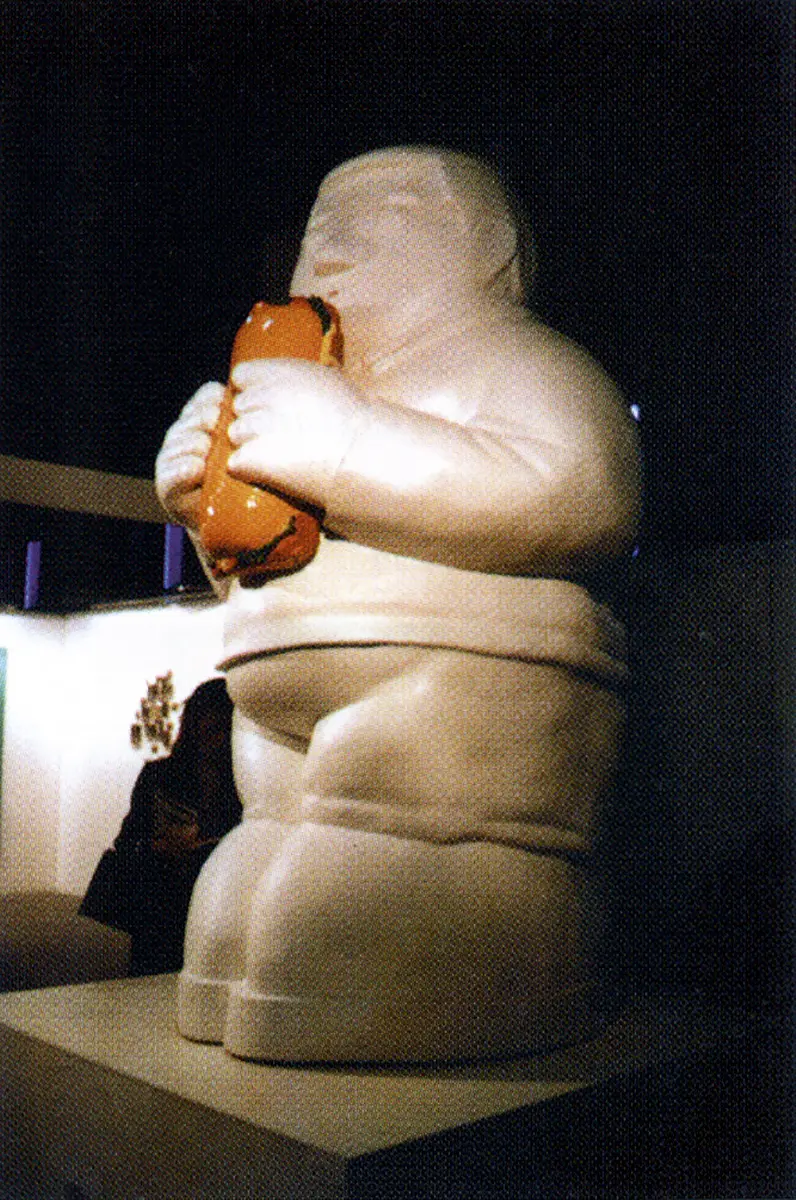
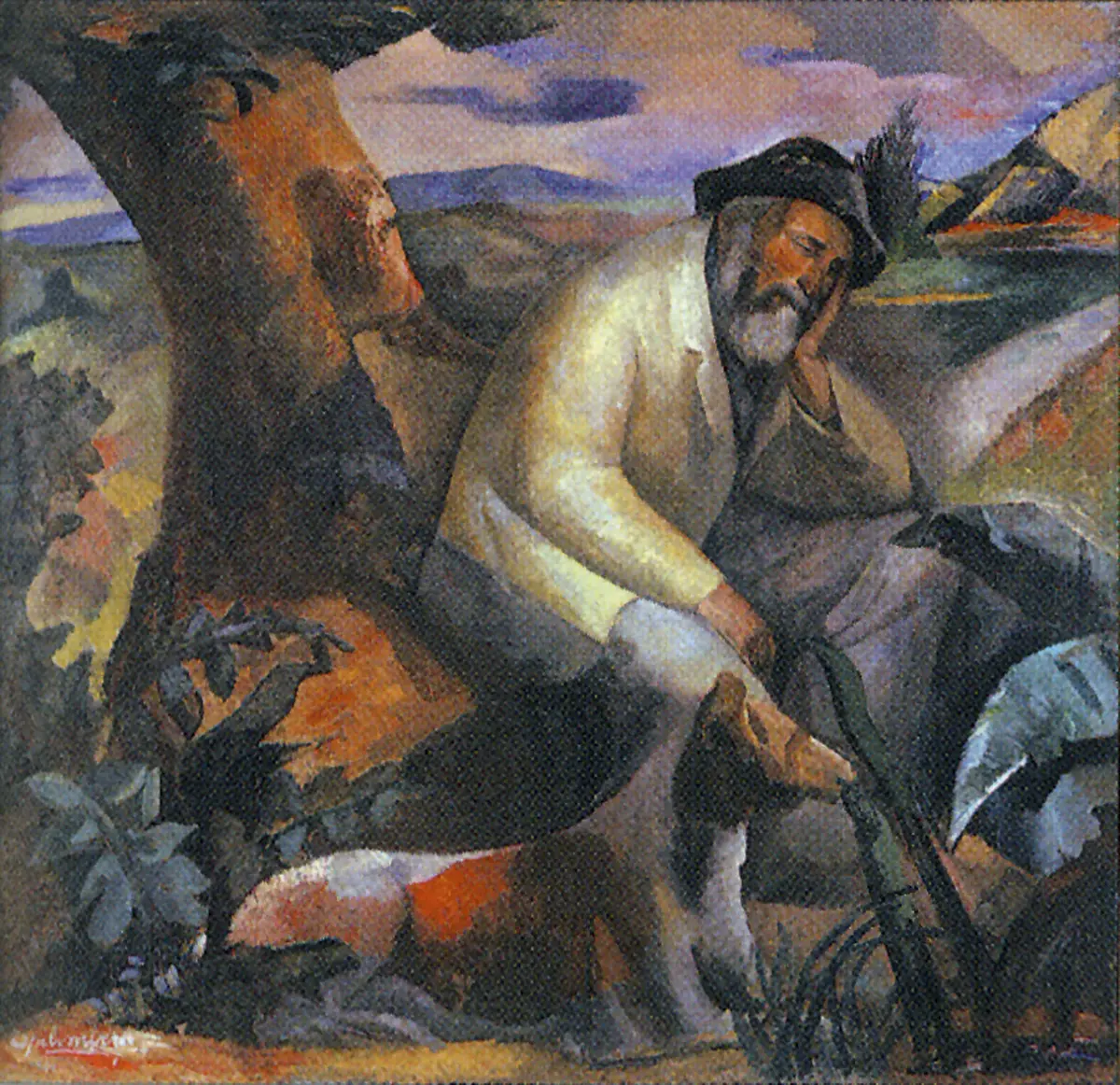
With over three years of recession under its belt and three successive ministers this year, the Argentine economy did not present the best picture for the success of the tenth edition of Arte BA. However, the results obtained by the Buenos Aires fair did not seem to reflect that situation. What strange phenomenon does Arte BA construct, making it able to evade the extremely complex political, social, and economic scene that Argentina has been enduring for over three years? And did it really assume the symptoms of an unavoidable crisis at the moment of its realization? For some curious reason, which we would have to investigate deeply, the Argentines, and above all the residents of Buenos Aires, are capable of renouncing anything except their quota of cultural consumption. In spite of the crisis, Buenos Aires is one of the cities in Latin America that generates the greatest activity in that regard. And, when analyzing the particular case of the fair, perhaps we should consider the fact that the transformations brought about in recent years in the country, although they excluded an important part of the population in the area of consumption, have increased the possibilities of the other sector. So it goes. During the week of 18-24 May, Arte BA was visited by nearly 100,000 people who paid an entrance fee equivalent to six dollars. On closing night, the organizers were able to calculate sales of three million dollars. Those results recorded sales for all pockets and all aesthetic orientations. Surely none of this was foreign to the incentive policies proposed by the Fundación Arte BA, following the example of ARCO. They basically consisted of inviting a large group of European and North American collectors who arrived in Buenos Aires in the hands of Rosina Gómez Baeza, the Director of ARCO, and Pat Whittman, of the MoMA’s Program of Contemporary Collecting. In fact, it was a North American collector who paid the highest price of the fair—for a painting by Pettoruti that was exhibited in the Daniel Maman stand. Not far off, in numerical terms, was Spilimbergo’s Viejo con perro (Old man with dog), 1926. But what is interesting is that beyond these top numbers, the sales were distributed very equally at an average that I estimate to be around $2,000-$3,000, and which dropped to numbers that were still much more modest. In the end, beyond aesthetic considerations, a fair is a space for commercial transactions and this is what counts at the moment of results and consideration of its continuity. In this sense, the ten years of Arte BA have served to strengthen its position, both inside and outside of the country. The fair began to purify itself, improving operating strategies, and installation spaces, and incorporating new aesthetics that during the early years remained foreign to its scope. One of the important novelties of this latest edition was the incorporation of Espacio Abierto Arte BA, a sector whose curatorship was entrusted to critic Jorge López Anaya, who invited several alternative galleries from Buenos Aires as well as the Bis Gallery of Rosario. The majority of these galleries emerged in the neighborhoods of Palermo Viejo and Abasto, galleries like Belleza y Felicidad, Duplus, Gara (which was invited to ARCO last year), Florencia Braga Menéndez, and Sonoridad Amarilla. These galleries, which in many cases are led by artists, have commercialized and received in their spaces the most attractive aspects of the new experiences of Argentine art of the last five years. On this occasion, Duplus, run by artists Lucio Dorr and Santiago García Aramburu, took one of the most celebrated works of that sector: the Monumento al Sánguche de Milanesa by the young Tucuman artist Sandro Pereira. The work, which was acquired on opening day by Juan Cambiasso, member of the Fundación Arte BA, is at once an irony about the notion of a monument and a homage to a classic of local gastronomy. Outstanding within the experimental tone that characterized the Espacio Abierto Arte BA were Valeria Maculan’s complex boxes, inside of which were materials of diverse origins, Ivan Calmet’s amusing digital constructions, and the paintings of Juan Tessi, one of the artists who stirred the most interest among local and foreign collectors. For its part, on a precarious exhibition table, Belleza y Felicidad gathered the intimate production of the group Suscripción, which works an interesting articulation between poetry and photography in a small format. Through a question that surely associated the interest in the new languages with reasonable prices, the young artists became the stars of the fair. In the stand of the gallery Del Infinito, Analía Zalazar was tremendously well received. The young artist, who a few years ago began to work fragments that recalled Klimt, has taken her work through a seductive terrain articulated around pictorial abstractions in enamel on the support of gauze over the stretcher. But perhaps one of the most impressive contributions of the fair was the last work by Mónica Van Asperen, which was seen in the stand of Luisa Pedrouzo, which generally puts some of the greatest care into the selection and montage of what it presents. Van Asperen debuted the last stage of the experimentation that she has been creating with steel pins and balloons mounted over a vertical support. This time created with colored glass, her wall acquired an unknown force and refinement. These pieces are basically the result of exploration into the body, seen from the fluids and circulatory systems, turned into subtle visual metaphors. Several galleries, which emerged in the last two years directed by young professionals, made their appearance on this occasion with diverse proposals similar to experimentation but stated in already purified languages. This is the case of the selection presented by Dabbah-Torrejón, made up of pictorial work by Manuel Esnoz and Fabián Burgos, two artists who address the interesting point of conceptual investigation to which Argentine painting has come. It also included a photo of the last series by Dino Bruzzone, who formed part of the Argentine commission to Venice in 1999, and a video sculpture by Juan Mathé that was simple, although complex in its mechanisms. A similar record was that offered by the space of Crom Carbajal, which brought together Argentine and North American artists along the political lines that it has maintained since opening its doors a year ago. The point of tension and coexistence among the recognized young artists and great masters expressed by the fair is interesting, and it could be seen inside Ruth Benzacar’s stand, among others. Here, large collages by Berni were brought together with recent works by Marcelo Pombo, Pablo Siquier, Ernesto Ballesteros, and Fabio Kacero, for many years the young guard of the gallery, now quite mature in many senses. Among the great masters was Líbero Badii, who recently passed away, one of the great attractions on this occasion. He was present in various stands with sculptures of large and small format. A formidable large-format piece, Autorretrato siniestro (Sinister self-portrait, 1978), is what Laura Haber presented along with all her preparatory sketches. Outstanding among the foreign galleries was Cecilia Torres, who as we know works with Torres García, and this opportunity showed José Gurvich, Francisco Matto, and Manolo Valdés; the Uruguayan gallery Sur, which presented a magnificent piece by Barradas, and the irreverent Mexican gallery Kurimanzutto, which was the closest thing to the young space that came from abroad. Noteworthy in Thomas Cohn were two excellent Kuitcas, the piece by the painter Rodrigo Cunha, and the work of Walter Goldfarb, also present in Gary Nader. Luisa Strina came, as in previous years, with one of the most austere and powerful presentations of the fair, with names like Artur Barrios, Cildo Meireles, and Tunga. Cecilia Caballero highlighted a Map by Kuitca and Enrique Guerrero highlighted a Julio Galán from the ‘80s. From Chile, the Gallery Isabel Aninat presented paintings and sculptures by Roberto Matta. Furthermore, the Venezuelan gallery Juan Ruiz participated for the first time with the impressive works of Miguel Meza and Elvis Rosendo. La Acacia from Cuba showed some works by José Franco, Rubén Alpízar, and Arturo Montoto. We should also mention the Yvonamor Palix gallery, with head offices in Mexico City and Paris, which shone with monochromatic pieces by Víctor Rodríguez and paintings by Alicia Paz. Everyone took great pains to take the very best and, in some cases, there was no skimping on audacity, which in other times would not have been the business of the fair. However, it was all incredibly welcome. The work shown in the stand shared by Gráfica Contemporánea, Raiña Lupa, and Ives Riviére was well received, repeating the experience of the previous edition. Exhibited and sold here were engravings by Seguí, Mexican artist José Luis Cuevas, Antonio Saura, and Alechinsky, and three books by Luis Seone realized by the multifaceted Matilde Marín. From the magazines, which increasingly aim at Latin American readers, to the debates and round tables that were presented daily, the response to each one of the offers of the fair only reflected the curious and active interest of the Argentine public in cultural manifestations, beyond the crisis and the ups-and-downs of the economy.
ANA MARÍA BATTISTOZZI