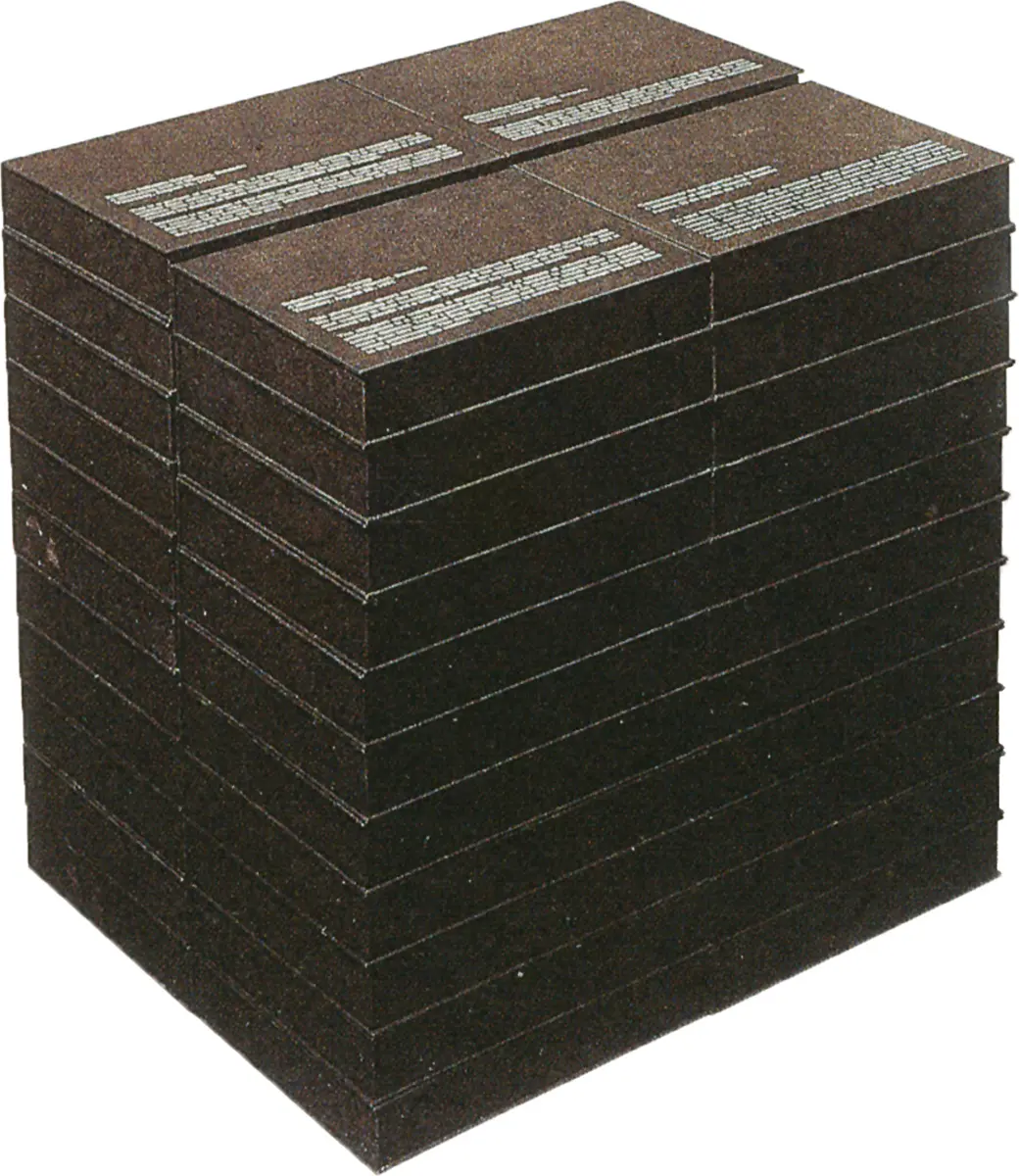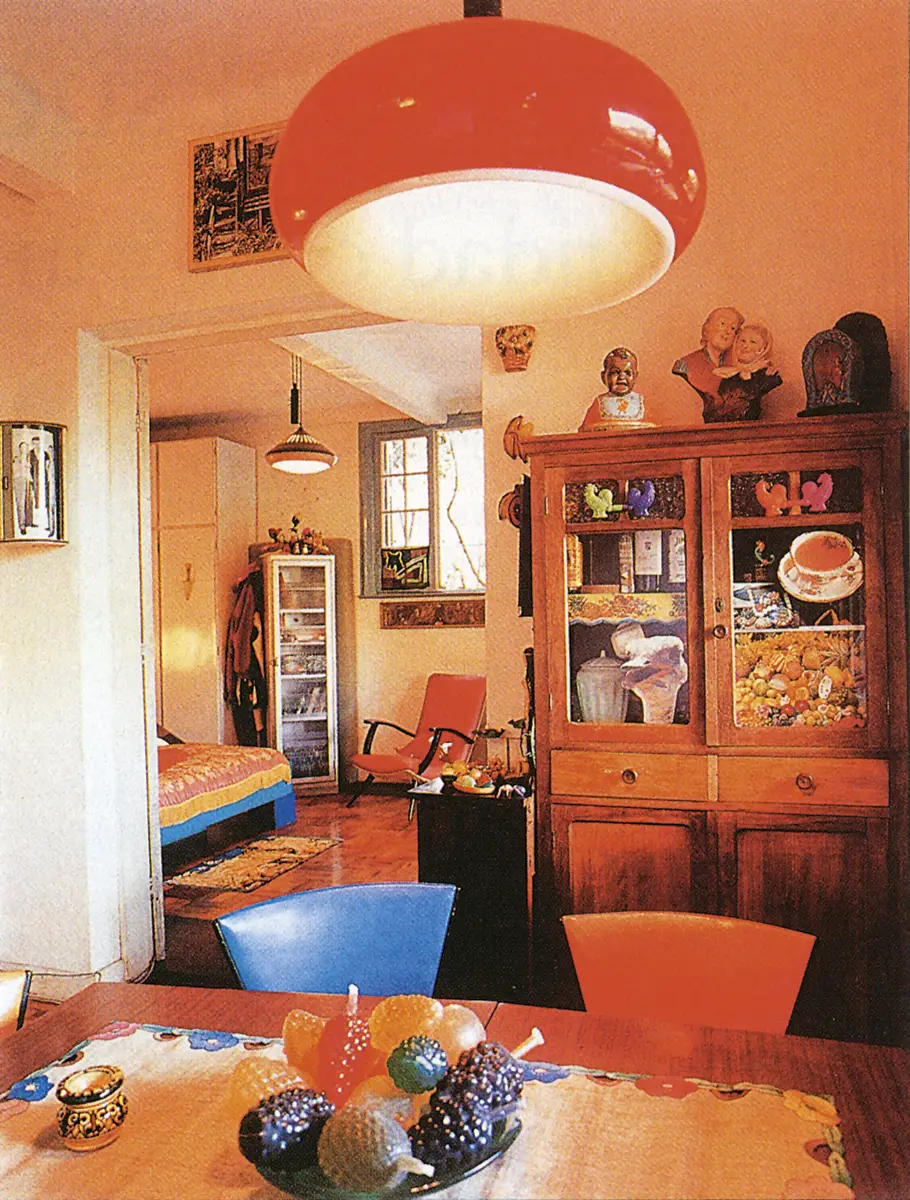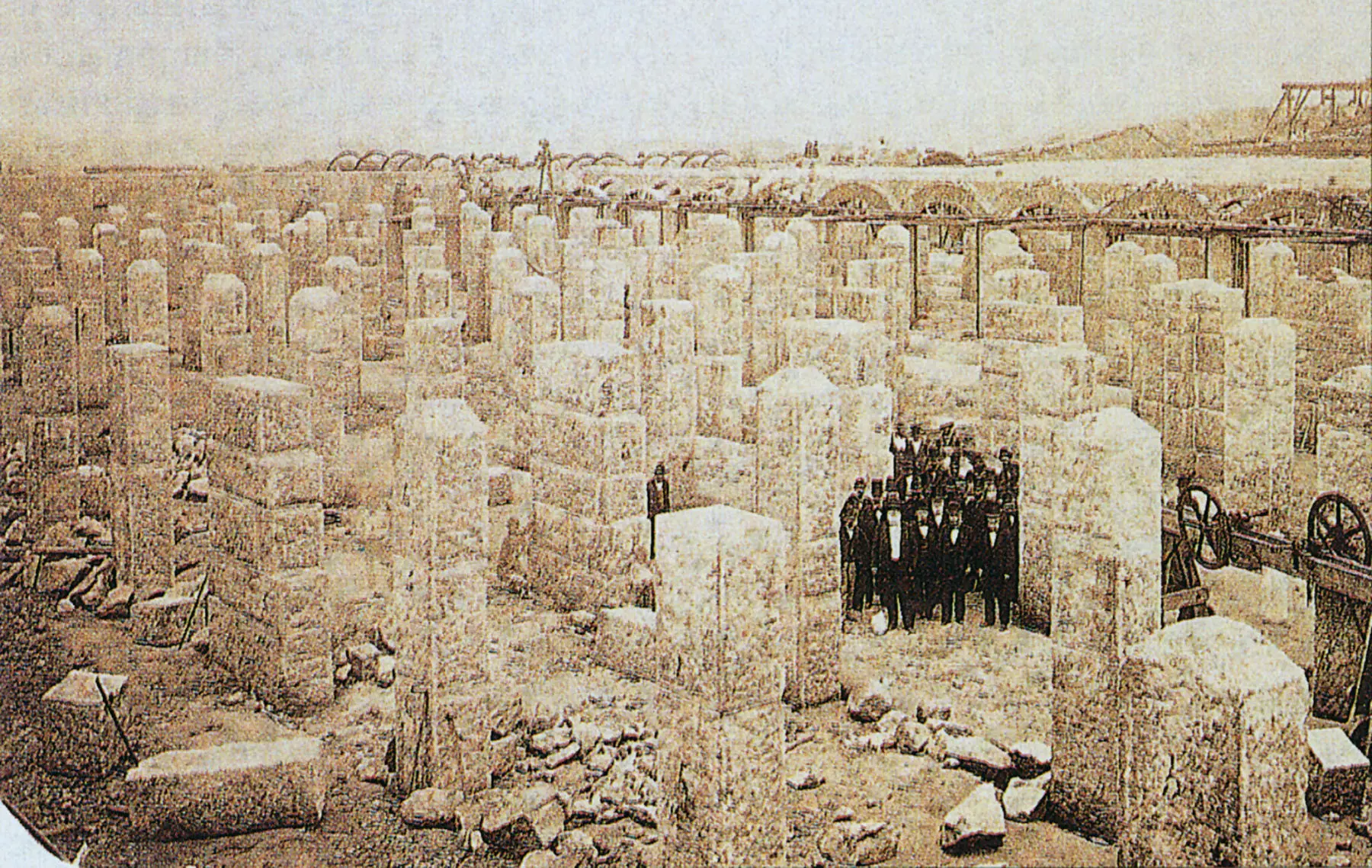
Judging by the results, I think that Mónica Amor and Octavio Zaya, were, as curators for the show Más allá del documento (Beyond the Document), particularly exposed to the contradictory demands formulated in these cases by opulence and difficulty, and to the risks inherent to the effort to balance them. The opulence to which I refer is that of current art which, with the limits that channeled its growth from the Renaissance to Romanticism broken, proliferates uncontrollably, cancerously, exponentially, invading the most unexpected terrain and resorting to the most unlikely media and resources. The difficulty lies precisely in finding and elaborating on the criteria and the arguments that allow us, in the face of that overflowing aestheticism, to establish what art is and what it is not, and—what is even more unavoidable—to decide which works to include and which to exclude from a specific show. In order to elude these difficulties, the resource of savoir voir, knowing how to see, is still standing, the art educated by the knowledge of art history and the extensive frequenting of museums, galleries, and studios of living and working artists, which offers the possibility of resolving questions previously formulated by just seeing the works that are, in principle, arranged in order to create an exhibition. The experienced gaze knows where art is and where it is not. But this method, at once wise and intuitive, the one in which the connoisseurs of the eighteenth century put so much trust, was not the method chosen by Amor and Zaya on this occasion. Judging from both their introductory text as well as by the important role that they assigned in the catalog to the texts of critics Charles Merewether, Margaret Sundell, and Fernando Azevedo, they have tried, on the contrary, to go beyond intuition, forcing themselves from the very beginning to ground theoretically the taking of sides and the selections demanded by the organization and the staging of the show of which they took charge. Though I applaud the fact that they chose this path, I should add that their theories did not succeed in completely validating their decisions. But, as I mentioned above, these are the risks of the task of the curator, who only with great difficulty can reconcile the contradictory demands of his duty these days. The key to all this theoretical effort is doubtless contained in that “beyond the document” which gives this show its title. Beyond the document because the works of the artists included in the show, according to the essays by Merewether and Sundell, openly or surreptitiously subvert the attributes of clarity, definition, evidence, and informative capacity that (or was) demanded of photographers in order to satisfy with precision their documentary function. And many of the photographs of this show prove them right. Especially those of Brazilian Paula Trope, who exhibited a group of color diptychs in diverse formats, in which some blurred human figures could just barely be distinguished amid domestic or street scenes belonging to who knows what city, not to mention what neighborhood. The artist achieved the blotting and dramatic poverty of her images with a pinhole camera that she used first to capture her model, and then she used her model to capture the most evident object of her own desires. In addition, the superimposition of the two images added ambiguity and confusion to the final result. She almost entirely suppressed the documentary quality because, although we know through the artist’s own statements that she took these photos in the city of Rio de Janeiro and that her models were street children, what is certain is that none of these photos, which are practically illegible, retain enough visual information to confirm or ratify in themselves the artist's statements. Something similar, although in a different way, occurred with the works of Brazilian artist Miguel Río Branco. They were four color diptychs gathered in a small room, two loose color pieces, and two others equally loose in black and white, and all were in large format. For their part, the diptychs were of two types: those that joined an image of nature, so to speak, with the image of some baroque painting; and those that exclusively gathered and contrasted images of nature. Here too clarity and definition in the images were missing; however, those deficiencies were not really deficiencies but simply consequences of Río Branco’s decision to imprint on his photographs a light, an intonation, and even a pictorial “finish.” And an openly allegorical meaning. But if, with the works of Trope and Río Branco, the thesis of “beyond the document” works without too many problems, this is not the case with the works of other artists who are also included in this show. The most flagrant case is that of Marc Ferrez, a historical character of Latin American photography who, during the nineteenth century, was key in the introduction and, above all, in the diffusion of this new technique and this new art. Ferrez, who was even the favorite photographer of Emperor Peter II, was represented by a group of fourteen photos whose documentary condition is really difficult to deny. Because, how is that clear and distinct photograph in which we see, just as its title retains, Depósito de Río del Oro, which formed part of the “Water supply works of Rio de Janeiro, num. 5” on the exact date on which it was taken, not a document? Or the two dedicated to the bay of Rio de Janeiro (both of them magnificent)? Or the three or four dedicated train viaducts that were constructed in Brazil around that time? Of course, Fernando Azevedo, in his essay for the catalog, carries out an analysis, admirable for its meticulousness and refinement, of some of these photos in which he shows that a will of style or an aesthetic intention subtly undermines its obvious documentary structure. But, what photographic document has not also been, with greater or lesser fortune, an aesthetic event? And if the photo that Ferrez dedicated to the visit of his protector, Peter II, and the works of the Rio aqueduct are of an unusual compositional audacity, no less so is the fact that that photo is simultaneously an invaluable historical document, although it now rests in a private New York collection and not in the Historical Archive of Brazil. In fact, the photographs taken by different photographers in the camps of refugees who fled from the horrors of the war in Rwanda and used by Alfredo Jaar in his work Real Pictures (1995) are also historical documents. To corroborate this, Jaar has printed on the cover of the black cardboard boxes that contain silver-colored texts that explain the what, who, when, why, and how of the theme of each of them, strictly following the most orthodox models of documentation and archiving. Only now, that same archiving technique is subverted, not by the method underscored by Merewether in his text from the catalog (that is, by the introduction of the blotting and/or the ambiguity of the referent in the supposed photographic document), but rather through the conversion of the physical form of this unique archive into a work of art. And, more precisely, into a minimalist installation that, in the style of Carl Andre, for example, is made up of simple and free volumes, composed of identical pieces, just like Jaar’s boxes of photos. Otherwise, this aestheticization of the archive is not complacent or self-satisfied; on the contrary, it is critical and contestable, as proved by the fact that its beauty depends on boxes remaining closed, with their images of the atrocious consequences of war inaccessible to the gaze of the viewer. As Walter Benjamin wrote: “every document of culture is simultaneously a document of barbarity” and—as Jaar makes clear—of the deliberate concealment of barbarity. But the limitations of the dialectic between the subversion of the archive through the deconstruction of the documentary structure of photography, proposed by Amor/Zaya and argued by Merewether in order to explain and, at the same time, to justify the inclusion of the artists of this show, do not stop here. Quite the contrary, for we may say that the majority of those whom I have yet to mention tend to realize their work of disturbing the document under the sign of archiving. The confusion at this point is the result of the fact that the three have overlooked that the form of the dominant archive is not currently that of the historical, nineteenth-century archive, an heir both to Renaissance humanism and to the visual orthodoxy of the taxonomic sciences of the eighteenth century, but rather to the series and, if I may say so, to the data bank. Which at the same time are heirs, just as Benjamin Buchloh has suggested in his own way, to the absurd dadaist inventories and compilations (of codices?) which, in short, are surrealist, like Aby Warburg’s Mnemosyne Atlas or Walter Benjamin’s Passagenwerk. In the post-avant-garde series the canonical documents naturally have room, but so too—and above all—do those that are not canonical, on account of the ambiguity of their images and the uncertainty of their referents. Their ruling principle is not translated into rational or taxonomic criteria that allow for the gathering, ordering, preserving, and displaying of documents that comprise them, but rather into criteria like the new, the unusual, the hidden, the shocking, the accidental, and not the necessary, the banal, and not the heroic. If the key concepts of the canonical archive are category and pertinence, those of the series are theme and impertinence. With the logic of the series, academic-editorial businesses as formidable as Taschen, which this morning is offering a book on the images of eroticism in the world and this afternoon another on gadgets and home appliances in the GDR, currently act in the realm of art. Rada, as the Cubans said before the dismantling of the Berlin Wall. Everything is valid, especially the insignificant, and everything that is valid in this way can be compiled. Acting with that same logic of the series are artists like Argentine Julio Grinblatt, who in Beyond the Document exhibited ten images of the series Los pasillos (The Corridors), made up of ten truly minuscule copies of another ten photos taken in corridors of who knows what space or what buildings. Or Argentine artist Óscar Pinto, who showed nine photographs of other common spaces that only have in common the fact that one of their walls is painted with a landscape of the most conventional type. Or Brazilian artist Rochelle Costi, who showed some large-format Cibachromes that document (yes, document) the transformations suffered by the absolutely tacky—or kitsch, as the Germans have been saying for some time—home interiors. And this is not to speak of the show itself, Beyond the Document, which joins the orthodox and the heterodox, ignoring, however, that the essence of the archive is not one form or another of its organization, but rather its (traumatic) break with memory.
CARLOS JIMÉNEZ