Identidad (Identity) is the name given to this show, and it is also the intangible possession that many Argentines born in the 1970s are lacking. It’s also the goal in the search for the truth that many artists, professionals, and activists undertake individually and collectively. These are the ones who believe that any amount of effort and time spent will never be enough to know what really happened, and they will never be enough to investigate the whereabouts of the children and adults who disappeared during the last military dictatorship.
With the intent of going beyond the “nevermore” indictment of state terrorism and institutional bankruptcy, this past March the Centro Cultural Recoleta presented a great multimedia show that included Identidad and similar exhibits in film, theater, video—all events surrounding the 25th anniversary of the coup d’etat of March 24, 1976. “To remember is to build the future,” was the rallying cry to introspection, and to try to understand how events of the recent past have impacted the corruption, economic voracity, educational deterioration, and general insecurity plaguing today’s society.
It is necessary to note that the Centro is a popular spot that draws at least one thousand visitors during the weekend. It is located at the heart of the Recoleta, beside the cemetery bearing the same name that holds Eva Perón’s remains. The show’s importance is double if we take into account the fact that the institution which lent several halls for Identidad and other similar shows belongs to the government of Buenos Aires. The shows proposed the marriage between art and politics. This involves a risk that very few can take on successfully, but the works shown here are the minority and are aesthetically valuable.
Among the other shows, we must highlight Otras voces (Other Voices), the silent and powerful installation by Carlos Boccardo and Juan Carlos Romero. In it, spoken testimonies of people who had personal experiences before, during, and after the dictatorship could be heard through earphones. This installation was beside a testimonial space called Las marcas de la memoria (The Marks of Memory), built from the artistic interventions during resistance marches and reproduced in giant photographs, to include siluetazos (the painting of silhouettes of the disappeared) and the mothers’ kerchiefs painted on the floor. The Argentine Team of Forensic Anthropology exhibited its impressive photographic documents. The Forensic Team is a non-profit scientific NGO that in 1984 began to search for people who had disappeared in Argentina and the rest of the world. It rescued anonymous bodies in Congo, Argentina, El Salvador, and Bolivia—where they also identified the body of Che Guevara.
It’s necessary to highlight the painful and marvelous Identidad. Since the artists that worked on it believe in art’s capacity for provocation, they set themselves to collaborate in the search for children born in prison or the ones who were kidnapped with their parents —those children that today would have the same age as their parents when they disappeared.
When first shown in 1998, Identidad was considered the year’s national exhibit —for all its pain and absence and for the promise it held for the future. Called by the Abuelas de Plaza de Mayo association, it was done by Daniel Ontiveros, Luis Felipe Noé, Diana Dowek, León Ferrari, Rosana Fuertes, Carlos Alonso, Carlos Gorriarena, Adolfo Nigro, Marcia Schvartz, Nora Aslan, Remo Bianchedi, Juan Carlos Romeros, Mireya Baglietto, and the Centro Cultural Recoleta. In an unusual gesture, the 13 artists reached a rare consensus in order to exhibit this beautiful and moving group installation, for a moment setting aside their well-known artistic differences. The show is unsigned and the participants’ names are not displayed.
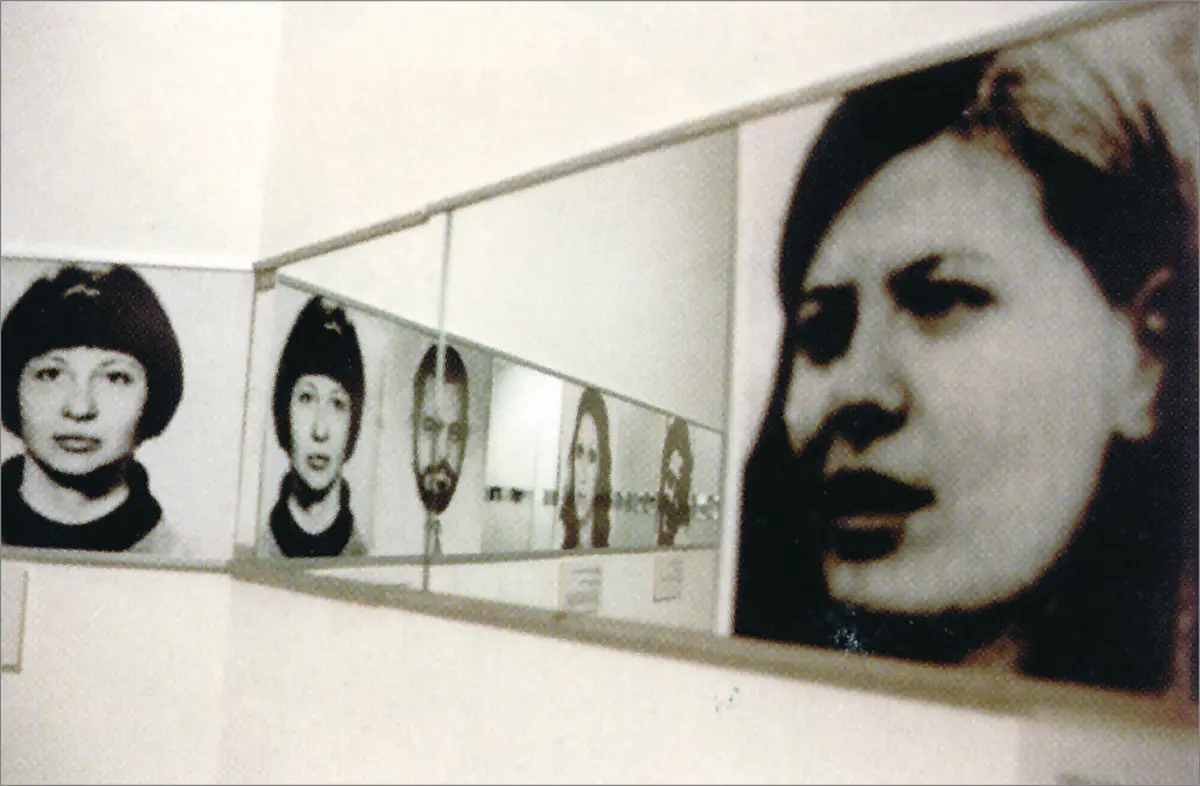
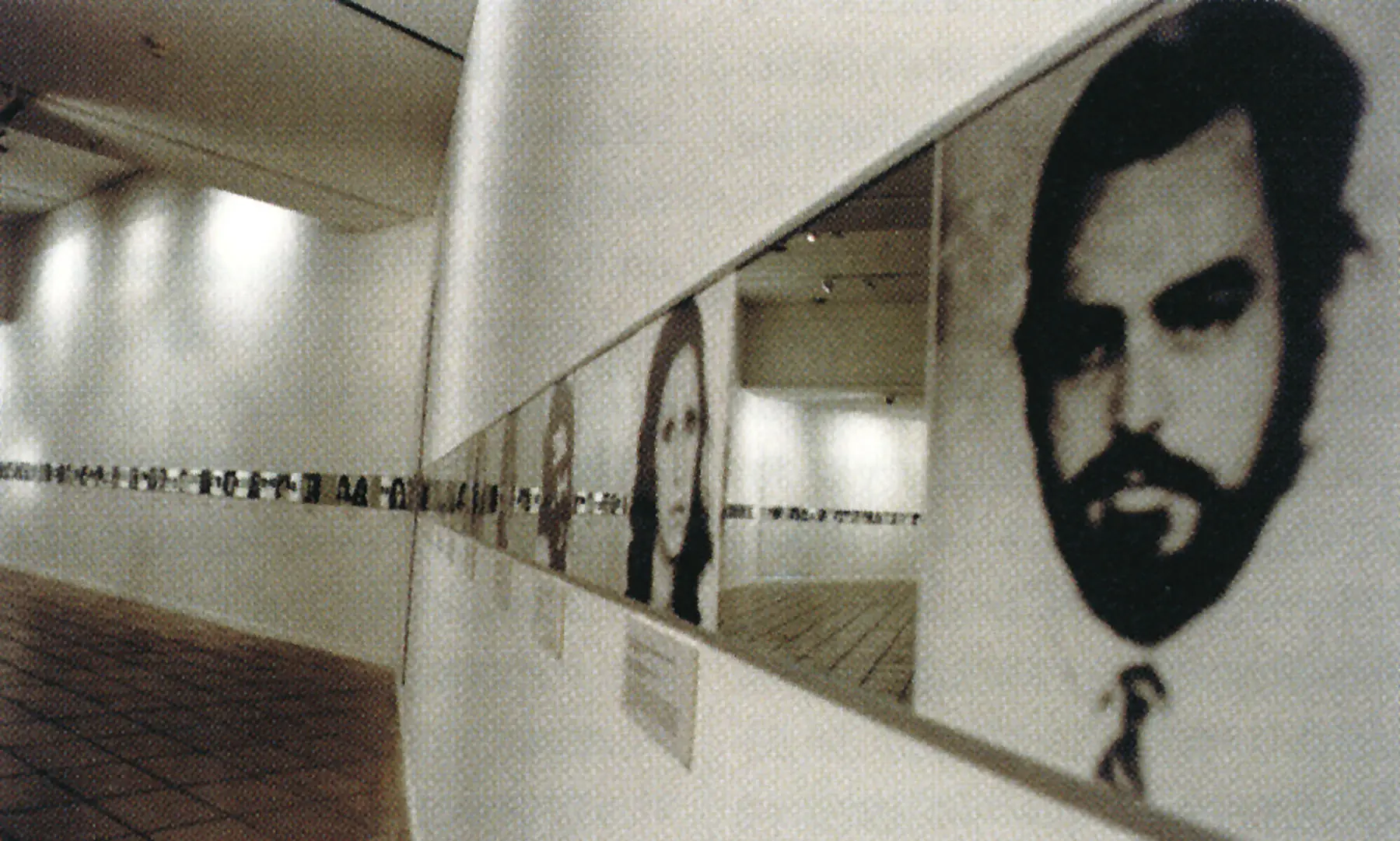
The installation shows, at eye level spanning over a 100-meter long x 30 cm high frieze, more than 200 photographs of the couples and pregnant women whose children are missing and still searched for by their grandmothers. Today, these children are young adults. The photos, each with a vignette explaining the history of the couple, are intercalated with mirrors, with the hope that a spectator, any spectator older than twenty years, recognizes himself in the images of his elders. Visitors of all ages see themselves in the mirrors. Are we searching for ourselves? Could any of us have been those staring back at us? How much did we lose? Are our friends included? Time recedes while the questions multiply. Nevermore?
All the photos shown are of painfully young people. They are the same that their relatives take to the plazas or the tribunals when they demand their loved ones’ whereabouts. This ethical and creative proposal underlines the material that gave birth to it while at the same time transcending it, falling into art’s spiritual terrain.
The show is complemented by a series of panels with the graphic history of the abuelas and a video with the stories of some children who were recovered. There was, as it was in the Buenos Aires version, an urn for comments and information from the public so that those who knew something about the missing children no longer remained quiet.
The installation is easily reproducible. It has traveled to different cities in Argentina and Uruguay. This coming October and November, it will be shown in Norway; and then, in December and January 2002, in Lithuania. How can it be arranged at your institution? By contacting the Centro Cultural Recoleta in Buenos Aires, or at prensaccr@ yahoo.co.ar.
VICTORIA VERLICHAK