
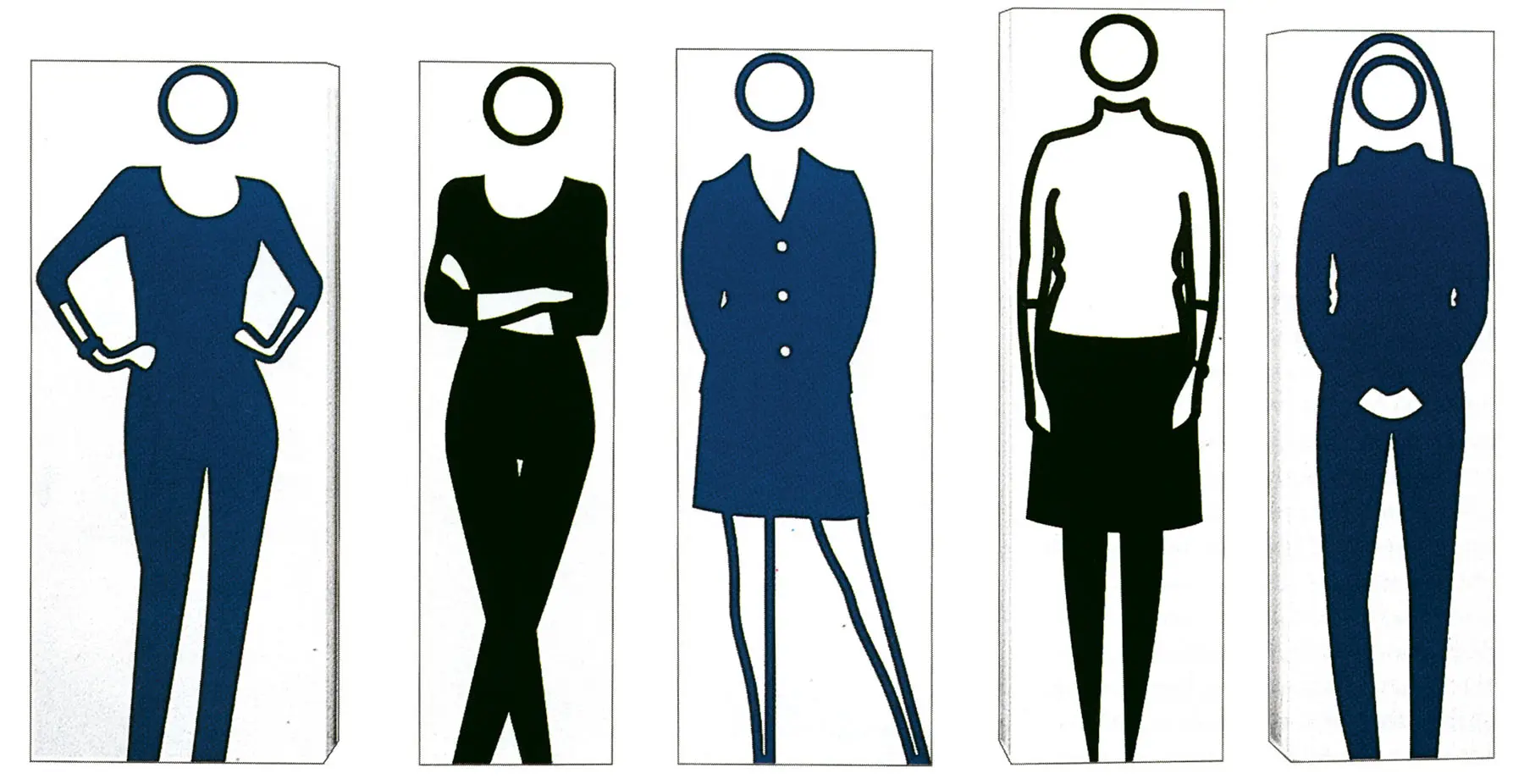
Celia Sredni de Birbragher: How did the Microsoft collection start?
Michael Klein: The collection started in 1987 at an employee meeting with the chief financial officer at the time, Jon Shirley, who is also a collector in his own right.
There was a desire to buy some art to fill the walls and to make a more creative workplace. There were six buildings and 1800 employees then. If you are working with a computer or several computers, it's nice to step out and look at something else during the course of the day. So a committee was formed in order to look for works; works that people provoked people to think about, to look at, and talk about. The committee then went out and hired a consultant to help them and so they searched and made a big exhibition of everything they brought in. They would then vote, and whichever piece won the vote, then that piece would enter the collection. This went on for a couple of years.
After a few years, the cost of bringing works from all over became prohibitive, and the company was also very involved in growing and developing, so a consultant was brought in to really analyze what they were doing, where they might go, and what should be happening in the future because every year two or three hundred works were being added to the collection. Talking to colleagues about the collection, they agreed that when a collection starts it is an accumulation of work because at first you really don't have a plan. The plan takes place maybe three or five years after you pull together a whole group of works. You bought this, you like that, but what does it all mean? How does it all fit together? The consultant recommended that they hire a full-time curator—which was cause for a lot of discussion—but in 1999, I was hired and began working with the collection.

C. S. de B.: Can you tell us a little bit about your background?
M. K.: I was trained as an art historian and also as a curator. I have several degrees in art history. I worked at the Whitney and also at the Walker Art Center. I've spent some thirty years devoted to contemporary art.
I've worked with lots of different artists. I worked in a gallery in New York in the mid-70s I was going to go back to finish my Ph.D. and I needed an income.
I got to run this gallery for someone else for a couple of years and thought it would be interesting just to work on my own for a while. So I had a small space on Broadway and then a space in Soho where I represented American and European artists: Beverly Semmes, James Casebere, and Matthew McCaslin. But then I closed it in 1996 because I wanted to flip back to something that is very dear to me which is writing. I've been writing about art for 20 years now.
I spent the last three years writing for several magazines and then I got a call one day. Toby Lewis, the Curator for Progressive Corp, told me that Microsoft was looking for a curator, and I said: "Well, it sounds interesting, why not?" I had been to Seattle and knew of the company, so I applied and three months later I was hired.

C. S. de B.: You have people from all over the world working for Microsoft in Seattle.
M. K.: That's what is great about the place. You sit in the dining room and there is a group of people speaking all different languages. There is a group of people having a meeting in German or a Spanish contingent; engineers from China and Japan or a batch of New Yorkers reading. It's very diverse and it needs to be. We translate our products into many different languages and as a result, we need those people. They bring different attitudes and different ideas to the company's environment. It's interesting to learn and understand what they find appealing in the art, and what their backgrounds are.
C. S. de B.: When you are buying for the company, are you thinking that the piece should be an investment or are you thinking just that it should be pleasant for the workers.
What are the factors that you consider before buying?
M. K.: I don't think that someone likes to buy something that is not valuable later on. It's not a primary concern, but again I consider the cost of a work when I consider its acquisition. It's not my money, but it's a responsibility that I have. We want to make sure of putting the money into things that are going to last and have some quality we just hope that we make the right choices and decisions.
In terms of down the line with the value of the collection, I don't think anyone really thinks about that at this point because we are focused on a merging of mid-career artists. Some will be successful, others may not be, and a hundred years later they all may be different, so concepts change and there is no absolute.
You also mentioned the term "pleasant to the workers." I think one of the things that is very appreciated about the collection is that it is not necessarily pleasant, but it does evoke multiple reactions and sensations. In other words, it does cause you to put a stop and pay attention. We are not trying to just decorate the walls. We really are trying to find things that have some meaning and provoke the mind. Why is this art? Why is this here? What is the artist saying or experiencing that I can learn about?
The other concept of the collection that I think is important—and why there is a full-time curator now—is that one needs to think about the collection in its entirety, even if it is spread out in many different locations. I think the problem with a committee that changes from year to year is that there is no continuity. What did we buy last year? Will this new work fit in some way? When you want to talk about the collection and focus on what is on paperwork, if you have a representation of works on paper from different parts of the world, there are a lot of questions and methodology that have to be answered as you develop the collection. I tend to think that most of the employees are responsive and they just love the fact that there is real art on the walls. Not posters or reproductions but something that has been committed to.
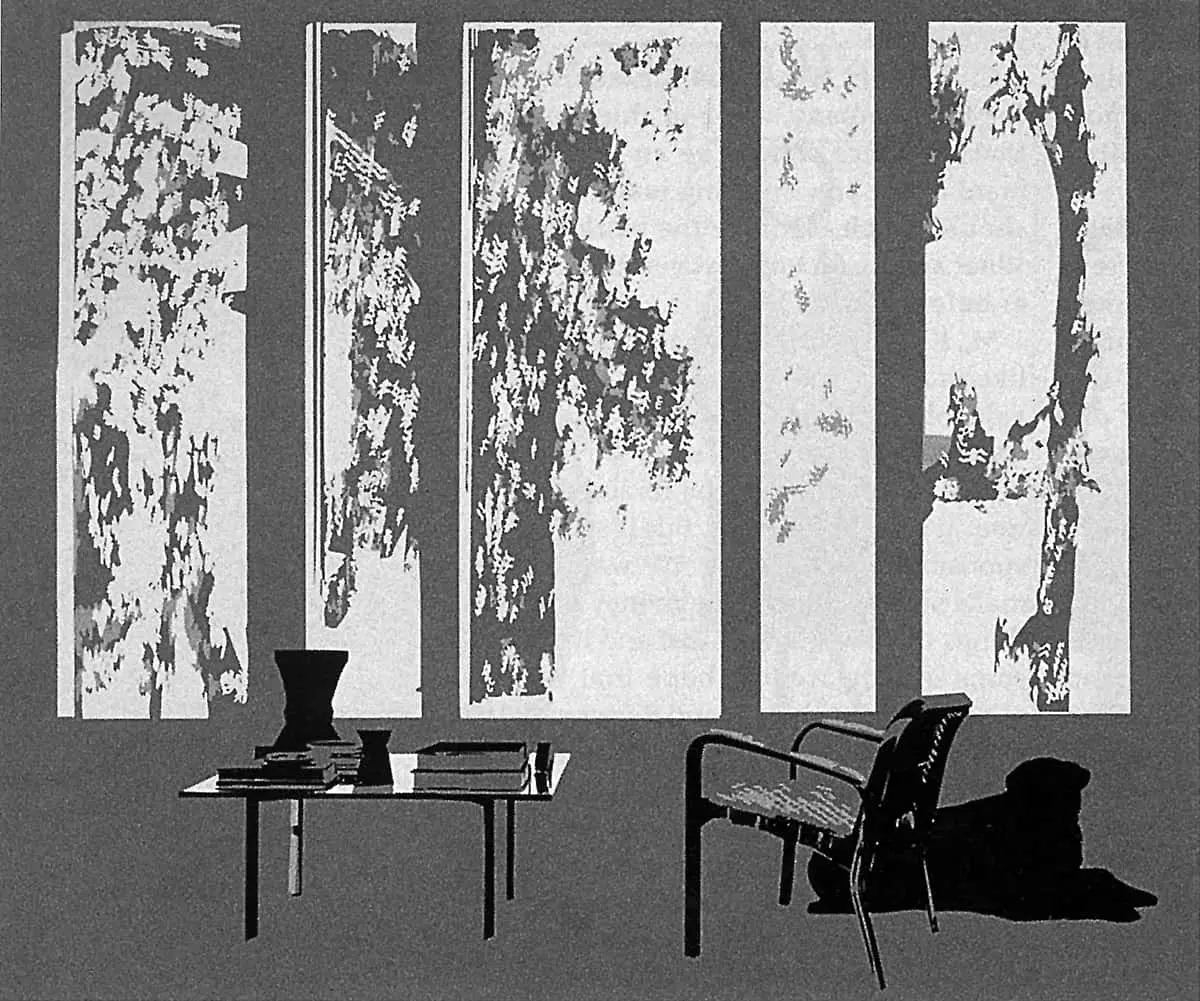
C. S. de B.: Do the workers have a choice of what they want on the walls? Do you ask them their opinion?
M. K.: In the past, everything just sort of got hung. What I try to do now is actually create installations with the various pieces. Generally, we create installations as we go along and then they change from time to time. Sometimes workers in one building say: "When you move this, keep us in mind because we would like to have that piece here."
In the new Microsoft working spaces that are being built, employees are also saying: Hey! We are part of the family, share with us! We have what they call the Sound Area which is around Seattle.
We have about 74 buildings and we also have five new buildings at a campus in Mountain View, California. There is the operating division where the lawyers, the managers, and the salesman are, and there is another division for all the employees on the product side where all the software design is, so there are two different groups that need to function in those arenas. Installing works in those spaces is not a problem.
Issues come up when something falls off the wall or there is a change in the design of the building so maybe in a working space there are things that are changing all the time so we have to figure out how to operate.
For example, in one of the buildings that opened last spring, the designer used colors to make it into sort of a Bauhaus building. So the walls are painted bright red, bright yellow, and bright blue. I decided that the best thing to do with that would be to work with art pieces in black and white. Every piece in the whole building is black and white and the people loved it. They just really responded to it. So we try to take the opportunity of the building with a kind of installation space.
We are beginning to do exterior installations also. We've done one major outer sculpture piece of Ursula von Rydingsvard and we are now going to do a wall installation of Sol LeWitt That's new for the company. We have not done anything like that before.
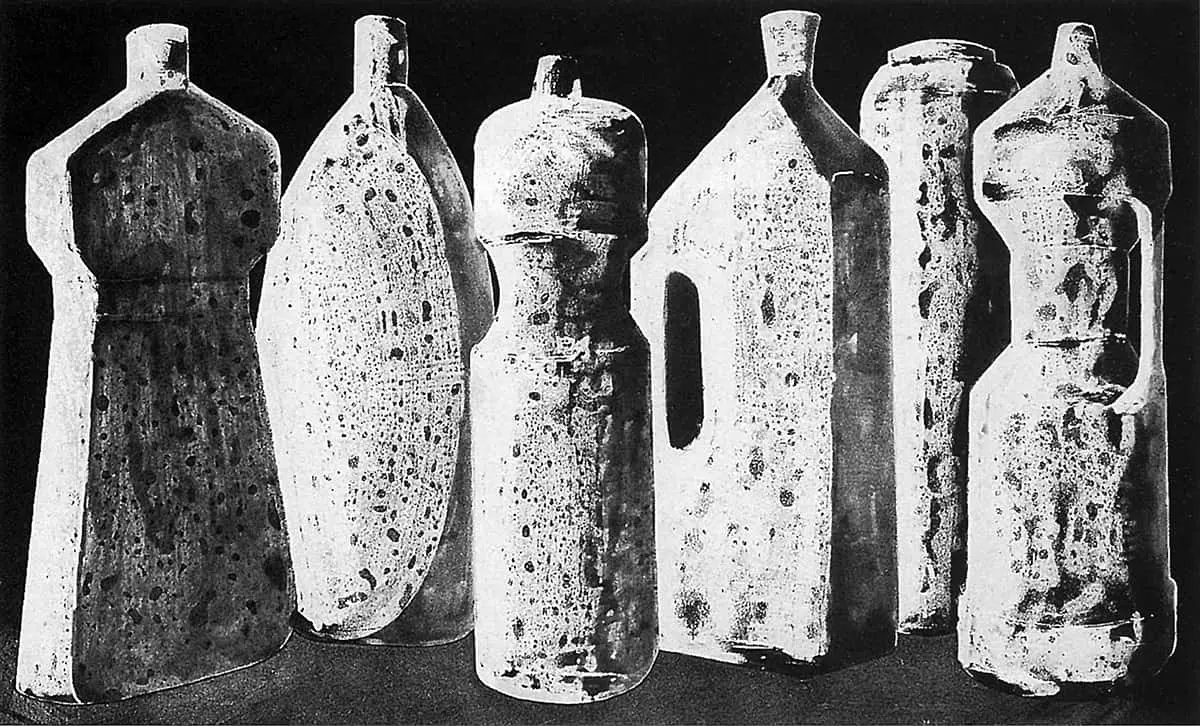
C. S. de B.: Microsoft collects a lot of work on paper. Is there a particular reason for this?
M. K.: Well, paper can be protected under a frame and since we have lots of buildings and a lot of needs it's the best way of creating a collection that you can somehow protect and control.
Paintings tend to go into bigger spaces. We've had a number of accidents with paintings: when they are in tight hallways there is a problem because it's not a museum, it's an active workspace. Not everybody is used to working around art so catering tables get pushed up against paintings, etc. We had a situation where somebody pushed a couch right against a hanging painting.
As a result, it was damaged because someone sat on the couch and hit it. So we try to look at works that are innovative but on paper.
Another issue is cost. We have a lot of space and we have a fixed budget every year, so we try to do the best that we can with the budget that we have. There is something wonderful about that touch of something like drawing, watercolor or painting on paper.
I don't really have a particular area of interest since I'm into such diverse media as painting, sculpture, ceramics, photography, and printmaking. But I've discovered that I've had to learn a lot about printmaking in the last few years. I didn't collect prints in the past but now they are a substantial part of the collection.
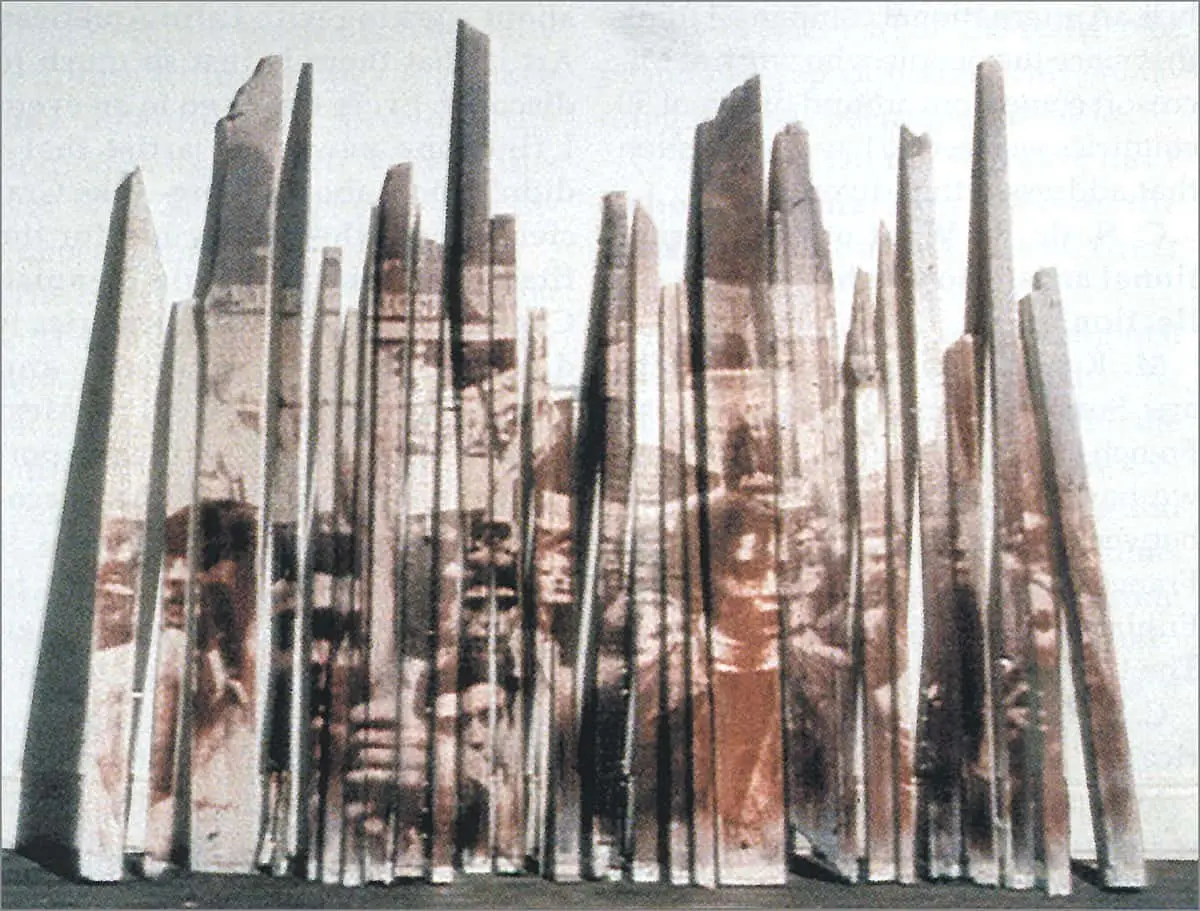
C. S. de B.: The other aspect that I find very interesting is that Microsoft originally collected works by regional artists and now the collection is open to other areas.
M. K.: Seattle had a number of galleries mostly devoted to artists of the region, contemporary artists, also Native American artists, and a lot of others who were working in Seattle, so these became the first steps. It wasn't until 1995, when the Seattle Art Fair happened, that there was an opportunity to meet dealers from other parts of the country and other parts of the world. Three light boxes by Japanese artist Sato entered the collection; a very great Chuck Close print entered also. That opened another door.
Now that those doors have been opened and the company is no longer just devoted to the region but really is an international company, I think that since the people who work at Microsoft come from around different 50 countries, we need to have a collection that addresses that diversity.
C. S. de B.: What other international artists do you have in the collection?
M. K.: The artists we just bought are: Susana Solano, Julian Opie, and the French artist Guy Limon. Right now we have artists representing maybe between 16 and 18 countries: Israel, France, Germany, Italy, Switzerland, England, Canada, Holland, Japan, The United States, Australia...
C. S. de B.: How about Latin America?
M. K.: My education in art history is limited by what is available and Latin America was of course not part of the general course of studies until very recently. There was no understanding of the history of Latin American art. So far, the first two Latin American acquisitions we've made are works by Marcelo Pombo and Graciela Sacco. I have on reserve right now a beautiful work on paper by Tunga who is from Brazil, and a painting by Trini from Mexico.
C.S. de B..: What I find fascinating about working with Latin American Art is that there is just so much to discover. Every time I go to an event I find one new good artist that I didn't know about before—like Graciela Sacco when I saw her for the first time in the São Paulo Biennial. Communication in Latin America is difficult, between countries and even between cities. Except for Mexico and Brazil, there is little support from the government—I mean economic support—so it makes it much more difficult for the art to move and if the arts don't move, then it's very difficult for people to find out about them.
M. K.: Part of my job is to teach myself, to learn, to go out and find out what's happening. As you said there is a lot happening in Latin America, so I'm coming to learn about it. My job is teaching myself all the time, instead of learning as I go. I think these 18 months are just the beginning of a very exciting project.
To wonder and search for things is definitely interesting because it's never what it appears to be. You see something like a Polish name and then you find out that he grew up in Paris, that he now lives in Mexico City, and that he worked in terra cotta. All those cultural elements start to feed into the work, so it's quite interesting to see how that shapes somebody.
C.S. de B.: The understanding of that concept was important in order to define what is Latin American. Is it by birth? Is it by residency? What about a Latin American artist who lives in Paris?
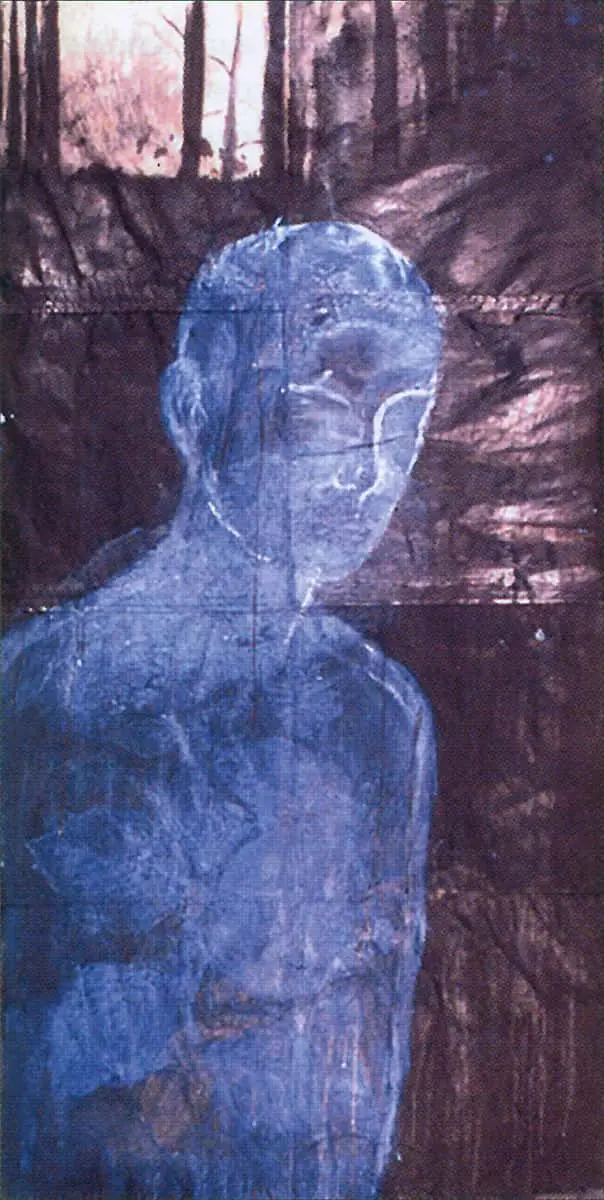
M. K.: You can't separate the soul from the place. An example of that is Enrique Martinez Celaya. We just bought a wonderful piece of his. He is Cuban by birth but lives in Los Angeles. He doesn't make art the way an artist born in Los Angeles would. There's a different criteria, a different level of judgment, and a different sense of the world and of himself in the world. It is interesting to see how those two cultures come together and where the difficulties and commonalities are.
On the other hand, it is important to understand that there are experiences that are universal and not just Latin American, like those coming out of a common interest in photography and how artists are exploiting it. I thought about this in the 80s or 70s when I discovered Cindy Sherman's work. She wasn't really championed at first but what I saw in her work was that there was a complete difference in the notion of what the photograph was meant to be for the viewer. So maybe if there is a language barrier, there are also other barriers that are just not there.
I've been standing with a group of people watching a fire in New York and it's something that happened in the street. Everyone just gathered around for the demonstration and it was truly a universal experience. I had never seen anything like this before. Suddenly you turn the corner and then you see this crowd, almost like an apparition. I understand that crowd.
C. S. de B.: Tell me about the educational programs at Microsoft.
M. K.: These are really important. There are a lot of training programs at Microsoft and I don't know anybody who doesn't take advisory support in something, whether it's negotiating or some aspect of technology or managing. The educational program is truly important because a lot of people are not used to living with art or may not have been exposed necessarily to contemporary art, so we have several things going on at once.
We have a monthly artist's talk. Artists whose works are in the collection get invited to come and speak in the company. That happens on the first Friday of every month. Maybe there are 150 people who come by for that.
I also give a tour on the last Thursday of the month—we surely have 30 people for that—and we do the conference which is also a showcase for the collection. We have collecting panels, too. We had one in the fall on collecting photography, and these are cosponsored by the Seattle Art Museum and Sotheby's. We did one again in the spring on collecting prints. We published brochures about the collection with essays by Sheryl Conkelton and Nancy Princenthal Next year we will do one on collecting painting and another one on collecting ceramics. So we go through all the visual arts that we collect.
We are now talking with Christie's, who will co-sponsor a speaker's series at the beginning of next year on scholars and experts in the visual arts, actually in visual perception. We talk about several issues: great artists, graphic design, perception, critical theories, and also how theories relate to what actually happens on the computer screen and why webs look the way they do. Can they look better? Or will they always look the same? There is a great history to graphic design, how will it apply to the web, which is going to be here forever.
We are trying to encourage a dialogue around visual arts and analyze whether it's going to be based on a little drawing, or maybe on the lobby of the building you're working in or if it has to do with the series that you're dealing with. Those are important aspects.
C. S. de B.: Some of the executives are collectors themselves. Do you encourage them to become collectors?
M. K.: I think I encourage everybody to become a collector. Someone will be working in an office in a new building and they see something and maybe a month or two, or three months go by and it won't leave them alone. So they sent us an e-mail saying: “I work here and there is this photograph by so and so. Can you tell me where you got it? Is it available? Where would I find one?" Two or three times a week we get questions like that. And so, I think that we are laying seeds but we don't even know what is happening with that.
I've had some friends over the last few years that have developed the habit of going during the first Thursdays of every month —galleries all have openings on the same night each month—and go and look, and talk about the works. Some buy, some don't, and some are just interested to learn. One friend was taking a big step, I went with her to New York and we walked into a gallery and she said: "I want that" and I said: "Go!. Go for it!" She just bought it.
I think people are interested in the process and what it will mean later on down the road for the life of the city because there is an enormous amount of activity in terms of exhibitions and museums and cultural potential. These people are all supporters of the institutions that are there.
C. S. de B.: And you say this is something that has recently changed in Seattle.
M. K.: Yes. The Henry Art Gallery which is part of the University of Washington, opened an extended space five years ago, and they are devoted to contemporary art. The Seattle Art Museum is really a more general museum, mostly focused on modern art. Now there is a new museum that just opened—the museum itself isn't new but it was not in a very exciting location, it is called the Bellevue Art Museum and it was in the Bellevue mall— and now it has a new 36.000 square foot building designed by Steven Holl that opened on New Year's Eve. It's different since it's devoted to exhibitions and artists in residency. So there is an enormous desire to educate and to bring artists to work there. So with three institutions plus Tacoma, which is 40 minutes to the south, (they are also building a new museum there), there is a lot going on in this region. A lot of money is devoted to doing that and I think it is great for the culture, the life, and for the education of the city. There is a real belief that this is part of life! We move to other stages in life. New generations are coming into their own and are able to participate in all of this activity.
C.S. de B..: Do you collect? I sometimes compare collecting with gambling. You get the same thrill.
M. K.: It's the same rush. I've always had it. I just finished paying off another painting. At an exhibition the temptation is enormous. You are looking and looking and nothing is happening, until suddenly you say: "Oh my God! I just found it." It's very much like gambling. And then you have to pay off the debt.
CELIA SREDNI DE BIRBRAGHER
Editor and Publisher Arte en Colombia / ArtNexus.