
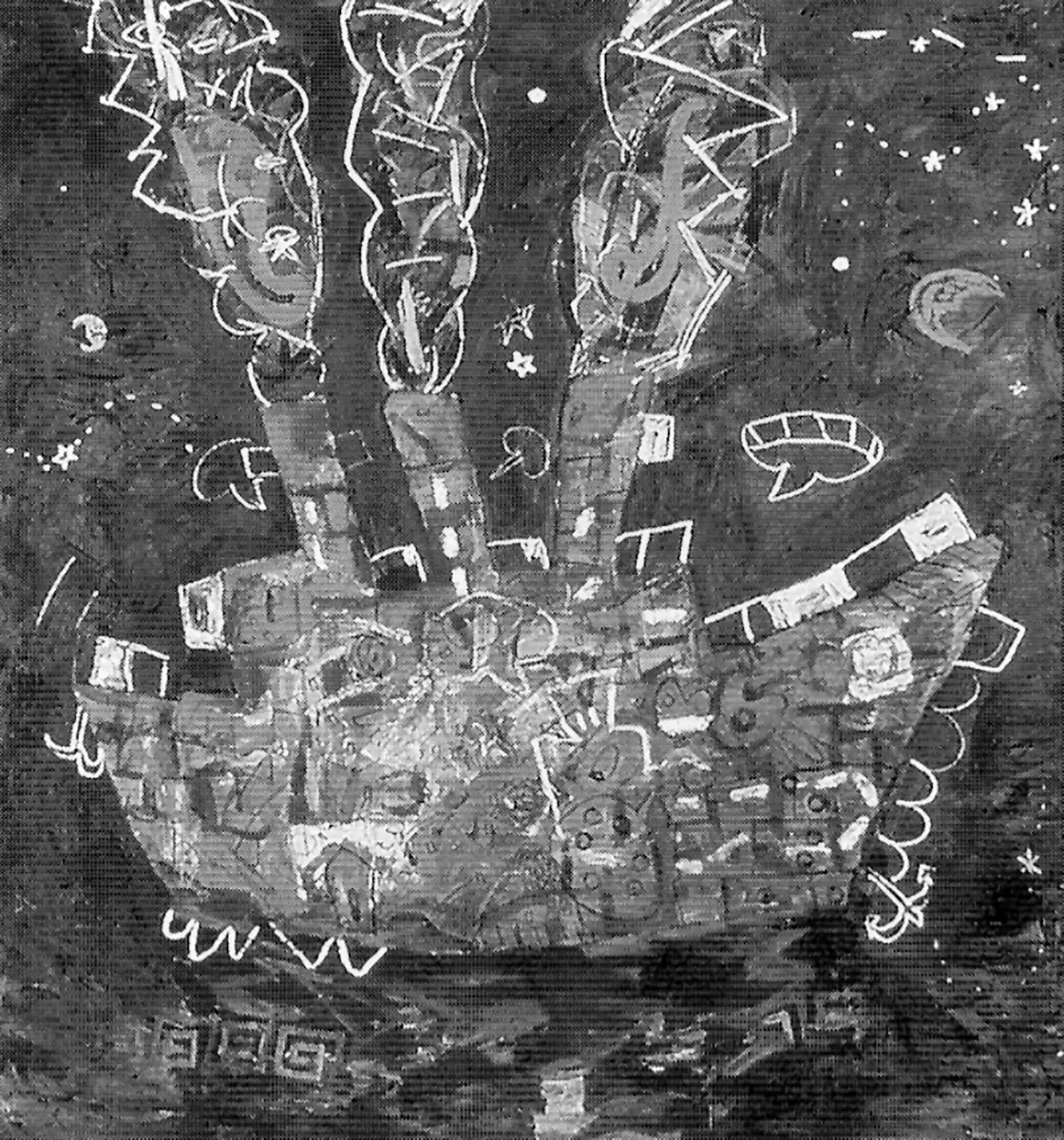
We can describe Pedro Vizcaíno’s latest show as a fantastic journey through a colorful and articulated world of animated objects. As the artist explains, it had been a long time since he last worked on a series, and this one has resulted in a true explosion of caricaturesque characters threading a plot using the title of a movie.1 Based on previous drawings, these new paintings on canvas and paper reproduce imaginary characters, planes, cars, scissors, boats, coffee pots, and tanks that transmit humorously a caricaturesque version of the environment, society, and history. Even if there’s no specific references, it’s clear that each of the paintings represents a motive, a criticism, and a discontent. At first glance, the objects appear as inert toys, decorative and even funny. But when we take a closer look, it’s possible to see expressions that turn them into sensitive beings subjected to anger, disgust, nostalgia. Each of the pieces presents a different sensibility—difficult to guess while at the same time easy to appropriate. What the artist thinks is not necessarily visible. In El tanque (The Tank), for example, the vehicle’s angry face represents the “war” that the artist believes is going on between art and art collectors. If it weren’t for the explanation given by Vizcaíno, the show’s visitors would have never guessed at such an interpretation. There is, of course, a reference to violence, and other readings would surely relate this piece to war, the arms race, or even violence to children but the artist’s art world-related intent is his own. The important thing is that he considers that all interpretations are equally valid. The public is free to interpret the characters’ sensibility and read their histories according to each individual experience. At the aesthetic level, simple compositions and monochromatic backgrounds favor and enrich Vizcaíno’s visual language. Cobalt and marine tonalities, starry nights, and coastal landscapes (in some cases with a clear reference to Miami) serve as background to the characters. The simple elements drawn in white are clear references to the comic strips the artist has enjoyed since his childhood (stars, points, lines, spirals), and they complement the fantastic language used to paint the dream-like worlds (many of them nocturnal, loaded with nightmares). The red-orange hue of the character objects contrasts with the background blues, and perhaps they symbolize the artist’s anger and discontent with the destruction that technology and violence carry along. In the series, there’s a clear influence of the Figuration Libre group from the 1980s, particularly Combas. We can also find elements of Di Rosa, Haring, and Basquiat in both the form and mode of social criticism. As a rebellious child, Vizcaíno expresses his dissatisfaction through a simple language, developed by using graphic arts, caricature, and color. His is a world that retains the lightness of childhood despite the weight of negative forces.
NOTE
1. La cité des enfants perdus, a French movie in which a group of children are kidnapped by a man who’s unable to dream.
FRANCINE BIRBRAGHER