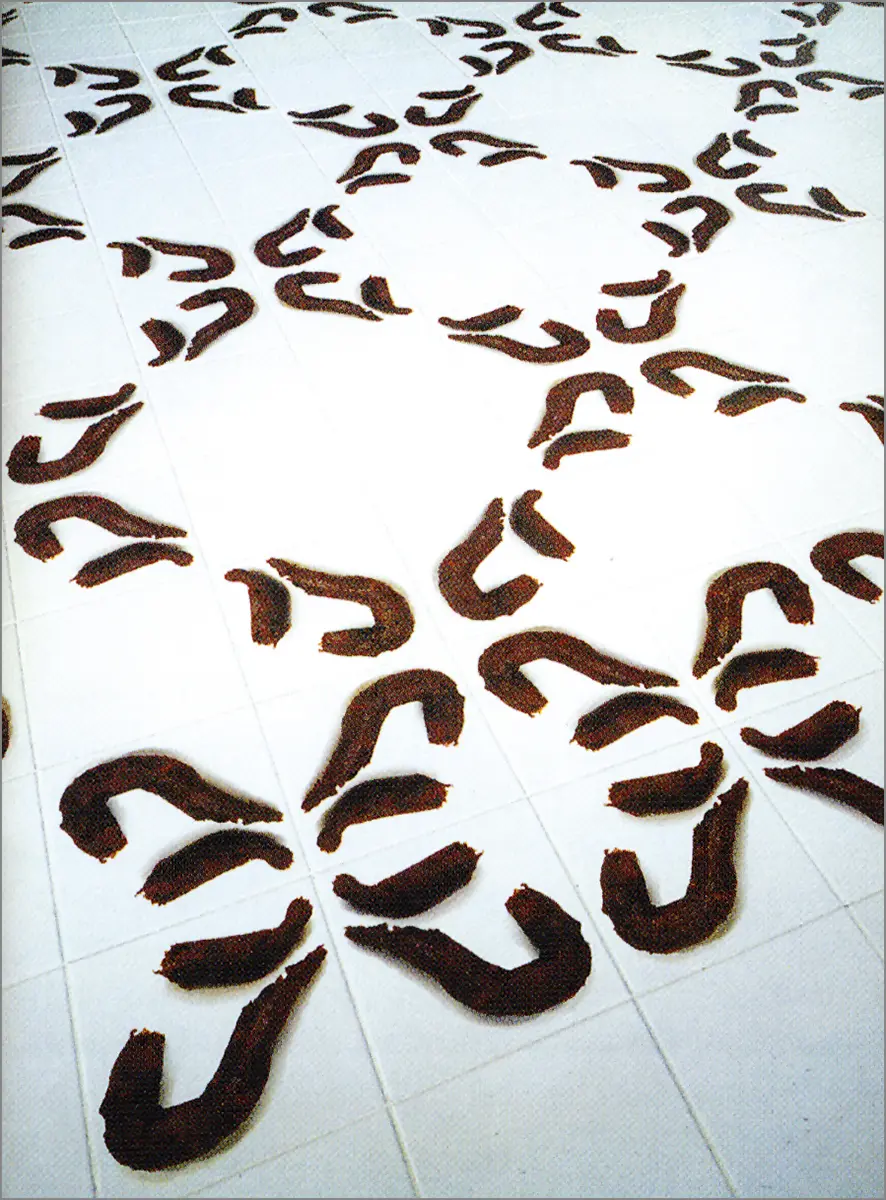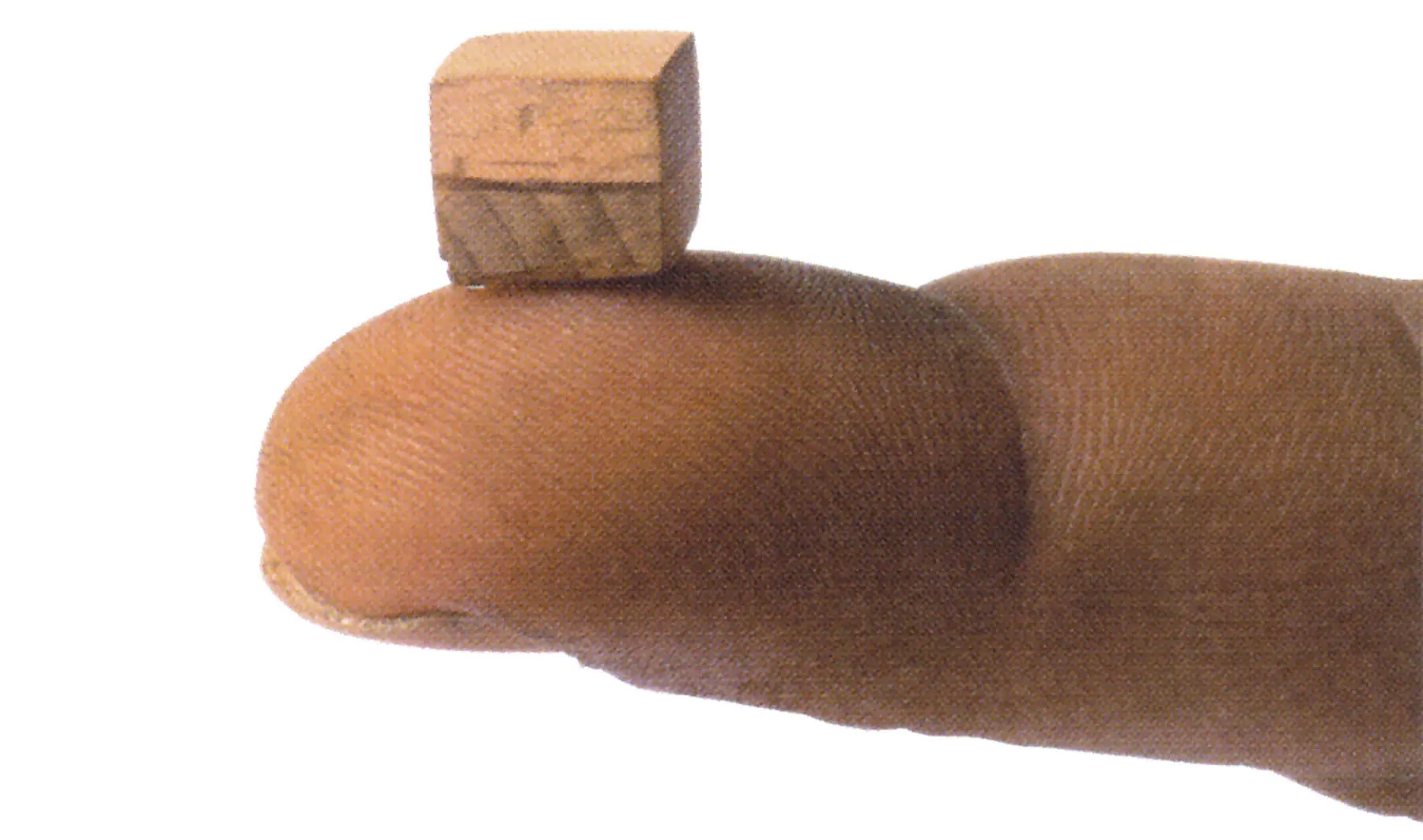
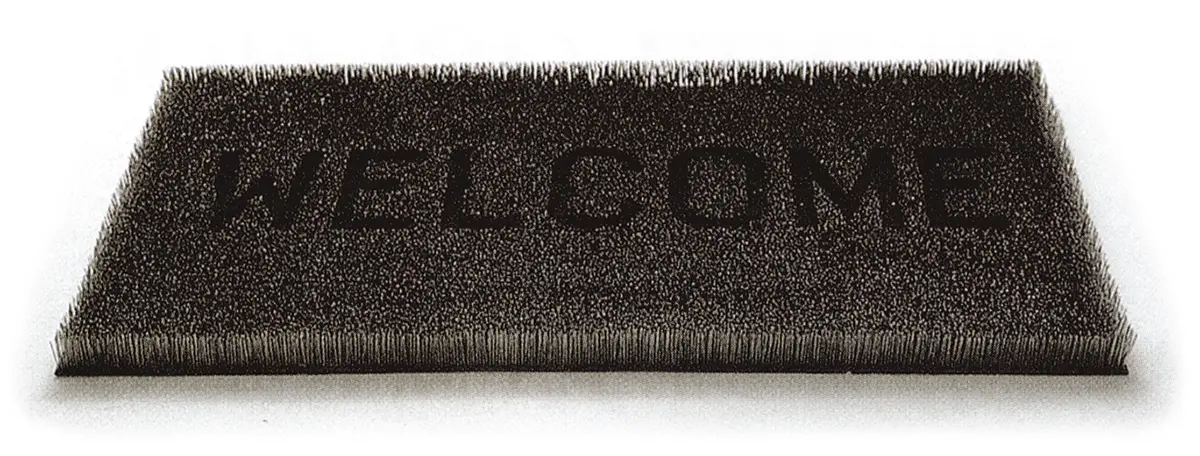
Included among the five Versions of the South presented at Madrid’s Reina Sofía Museum between December and March of this year was the exhibition No es sólo lo que ves: perviritiendo el minimalismo (It’s not just what you see: perverting minimalism), curated by Gerardo Mosquera. As I have already mentioned regarding another of these shows indeed, it was a matter of new versions, other forms of telling. Besides the fact that the macro show was no more than a footnote in the Spanish artistic panorama, it is worth noting that the exhibition that caused the greatest stir—both among Europeans and Latin Americans—was the present one. And it was for the following reason: it included more than one non-Latin American artist. It was as if on an upside-down stage of the world Mosquera had had to cover the quota of Americans and Europeans. In addition to Félix González-Torres, Cildo Meireles, Maria Fernanda Cardoso, Santiago Sierra (who, by the way, was born in Madrid), Priscilla Monge, and Irán do Espírito Santo, among others, Mosquera included the South African artist Willem Boshoff, the Belgian artist Wim Delvoye, Mona Hatoum from Lebanon, Byron Kim from the United States, and the Finnish artist Kaisu Koivisto. The reticence with which the public—who turned out to be surprisingly purist—approached the exhibition demonstrates how ill-prepared we are to delve into apocryphal readings. In spite of that, the show was clear and effective in its proposal: it was a matter of making a theoretical formulation, a curatorial proposal, at the same time as geographic categories were flagrantly and felicitously ignored in order to plunge into the territories —probably no less muddled— of artistic categories. The fundamental core of the show, already explicit in its title, was the worn-out topic of minimalism. Using Frank Stella’s maxim "what you see is what you get" as a point of departure, Mosquera proposes a perversion of his premises— the passage of time and the assimilation of the avant-garde languages of those years by subsequent generations, what persists is the minimalist form or aesthetic, but now charged with meanings, to the point that it is no longer just a question (as the show’s title indicates) of what you see. This perversion is even more significant if we recall the orthodoxy that characterized the historical movement of the ‘60s. Thus, the pieces selected for the show are understood as catalysts that invite the viewer to go beyond what they offer at first sight. In a fundamental text within the historiography of contemporary art, Hal Foster1 suggested that minimalism, far from dealing with something as simple as just “what you see,” is instead proposed as the trigger of a perception that is, from the outset, reflexive.1 What is more, as a historical movement, minimalism is far from being a dead-end. Instead, it is a key moment that marks a paradigmatic shift toward a series of postmodern practices that are being carried out even today. Mosquera’s selection proves it. One part of the proposal mixes the economy of formal media with the text from a clearly conceptualist perspective. Willem Boshoff presents The Writing That Fell Off the Wall (1997) and Garden of Words (1997). Both pieces spring toward a lyrical aspect rich in suggestions: the words that fell from the wall are significant (purity, identity, perfection), and the garden is created by hundreds of labels forming lines with the scientific names of diverse plants. Both pieces overwhelmingly occupy the space, at the same time as they are inserted into the investigations on the representational ability of language, without leaving their physical presence behind. Priscilla Monge’s boomerangs inscribed with insults, Karma invertido (Inverted karma, 1996), and even Félix González-Torres’s most subtle drawings in graphite and gouache on grid paper (Untitled/T-cell count, 1990), give a surprising sense of humanity to an aesthetic traditionally related to abstract thought and to mathematic or scientific investigation. Mona Hatoum is more ironic—but also more evident—in her Felpudo (Doormat, 1996), made of pins, or in her Alfombra de entrañas (Rug of entrails, 1995). These last examples are related to another aspect proposed in the exhibition which can be described as the attempt to “clean” or purify a series of elements that have traditionally been used in art just as they are, exploiting precisely their ability to provoke. Thus, to Hatoum’s rug, we may add the mosaics and marbles of Wim Delvoye: a series of symmetrical and decorative constructions made out of decorated tiles with the artist’s own feces and with diverse animal inlays that create surprisingly decorative and varied patterns. Byron Kim’s monochrome paintings: Mother (2000), Emmet at twelve months (1994), and Synecdoche (1992) are far from the coldness of Reinhardt or the artistic mysticism of Klein. They deal with colors that make reference to the pigmentation of the skin of different people. Even María Fernanda Cardoso’s pieces, made with cow bones and insects enter into this “play of errors.” The sculptural part of the show includes other pieces by Hatoum (The Light at the End, 1989, and Quarters,1996), Kaisu Koivisto (Atlas, 1995), González-Torres (Untitled/March 5th, 1991 and Untitled, 1994-1995, two enormous tanks of water posthumously recreated in the museum’s central patio), Fatima Martini (Hamacas [Hammocks, 1996]), and Iran do Espíritu Santo (different versions of Restless, 1998). All this is closed by the smallest minimalist work in the world, Cildo Meireles’s Cruzeiro do Sul (1969-1970). At the center of the last room, with all the lights pointing toward it as if toward a star on stage, we find—with some difficulty—the cube of oak and pine (9mm x 9 mm). In effect, we see that it is not the size that counts, nor what you see, but rather everything that is not there. And never better said than in that provocative, evocative, and suggestive final room that proposes another version of a paradigmatic movement within the recent history of Western art.
NOTE
1. Hal Foster, The Return of the Real (Cambridge: MIT, 1996).
ISSA MARÍA BENÍTEZ DUEÑAS