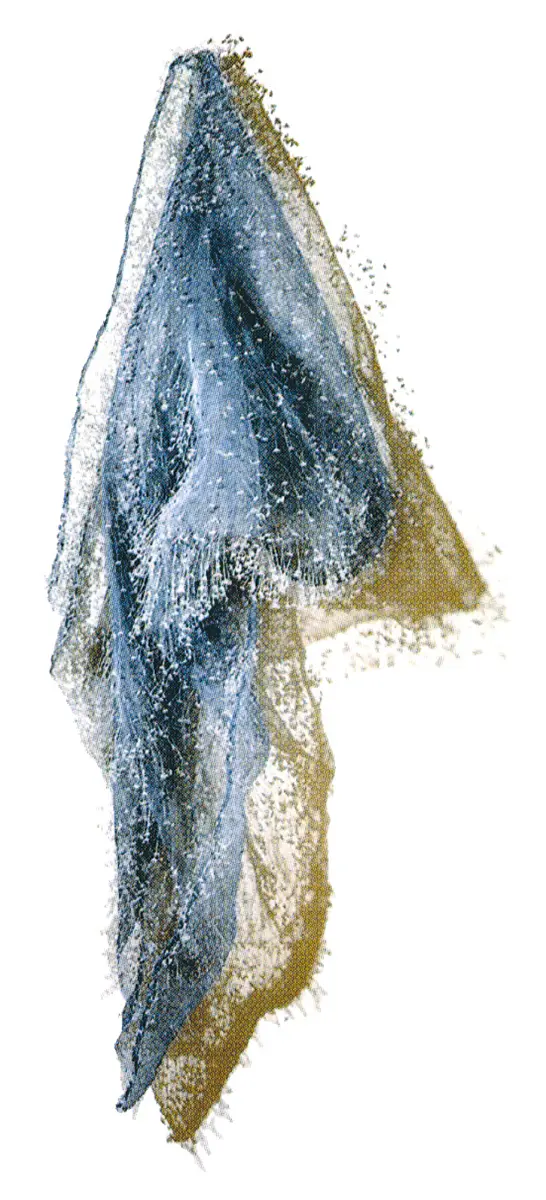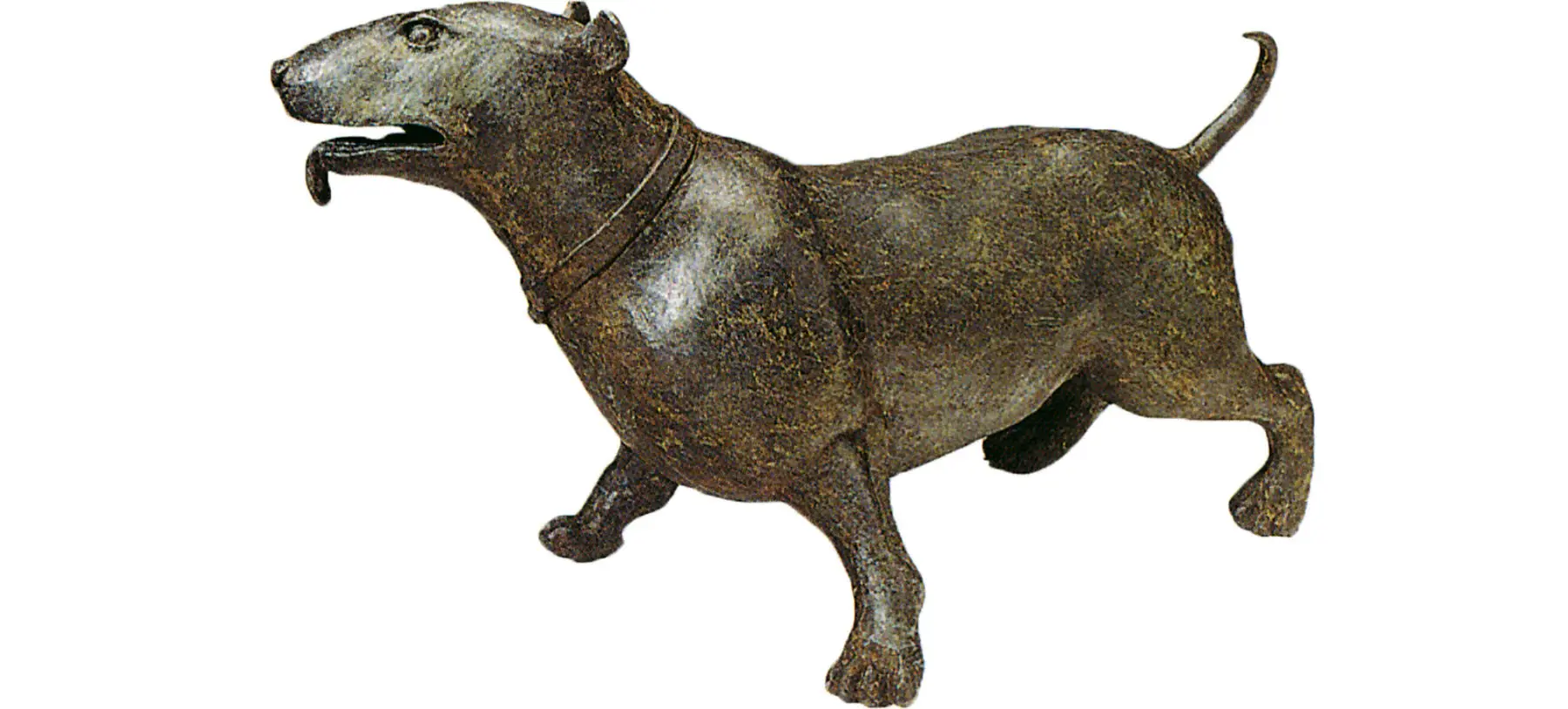
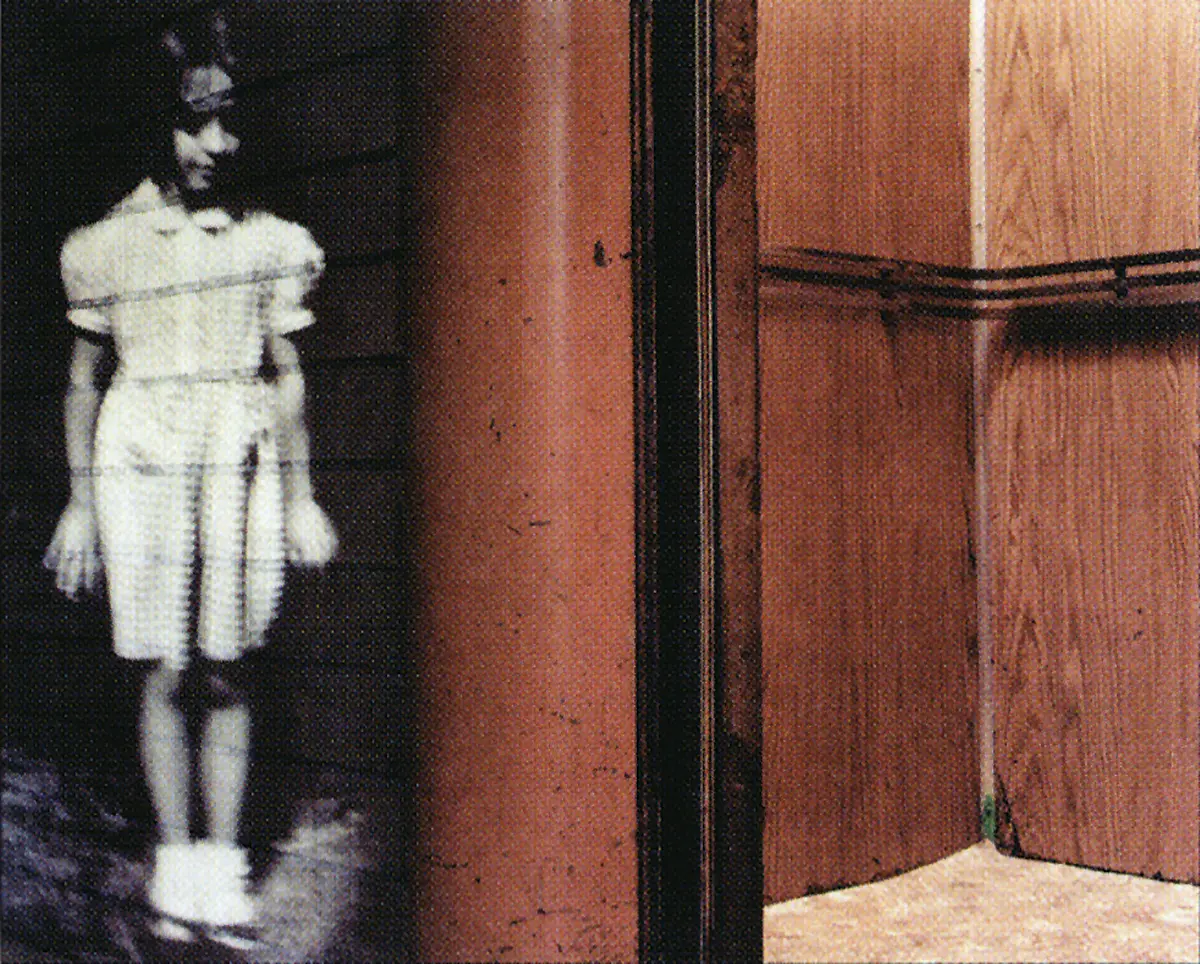
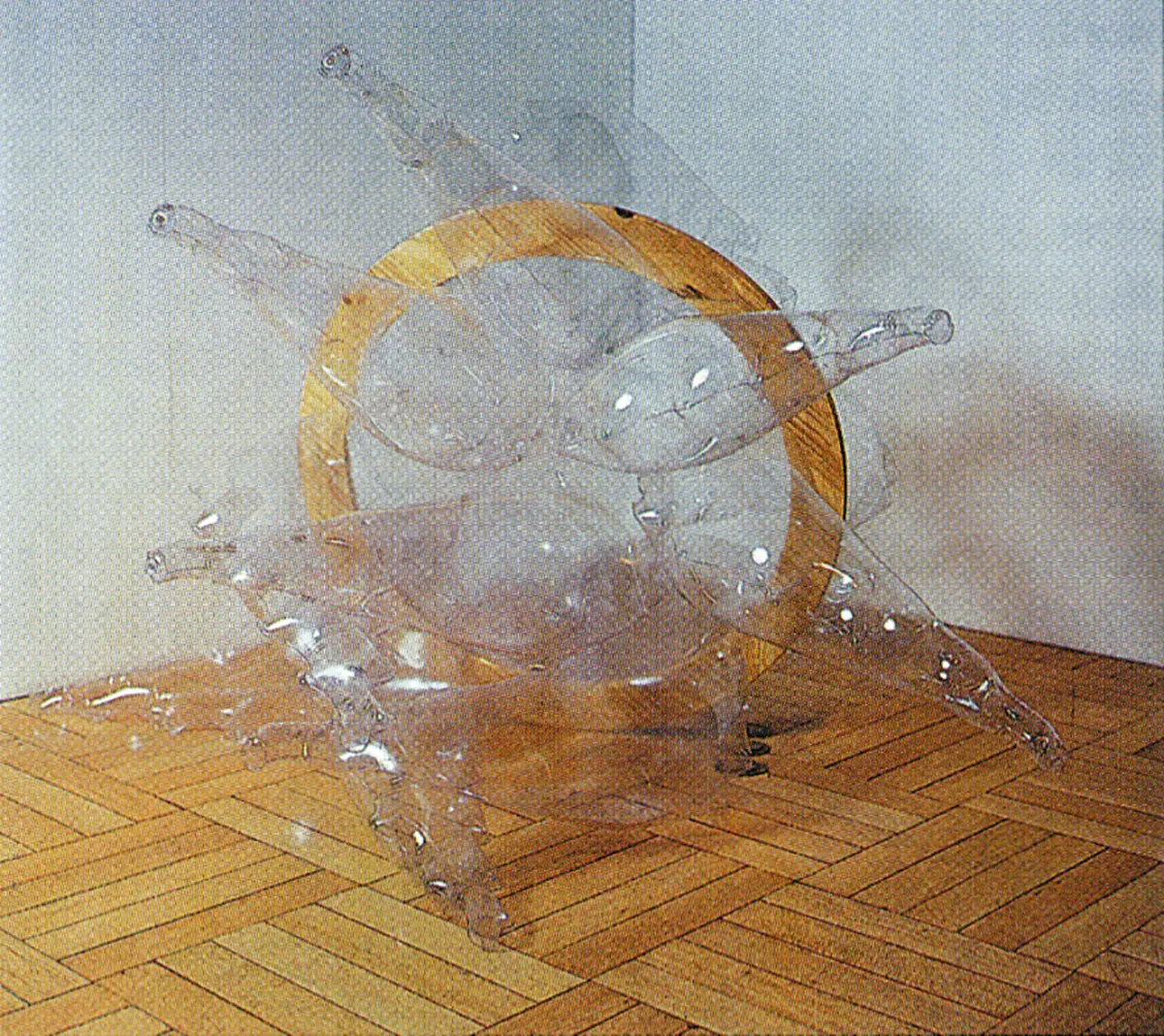
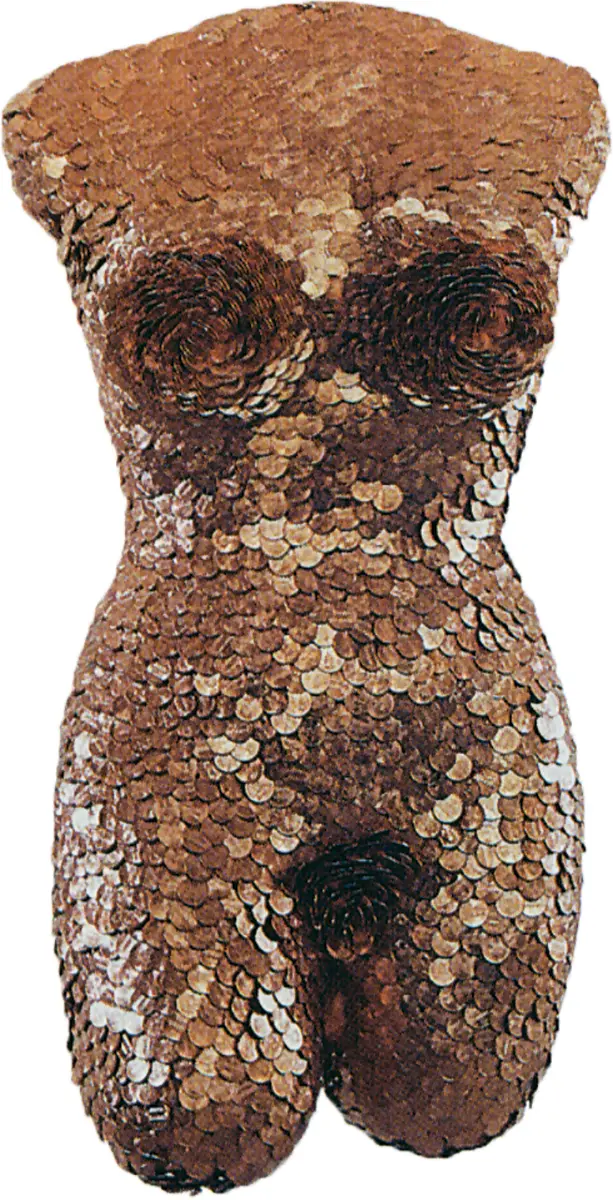
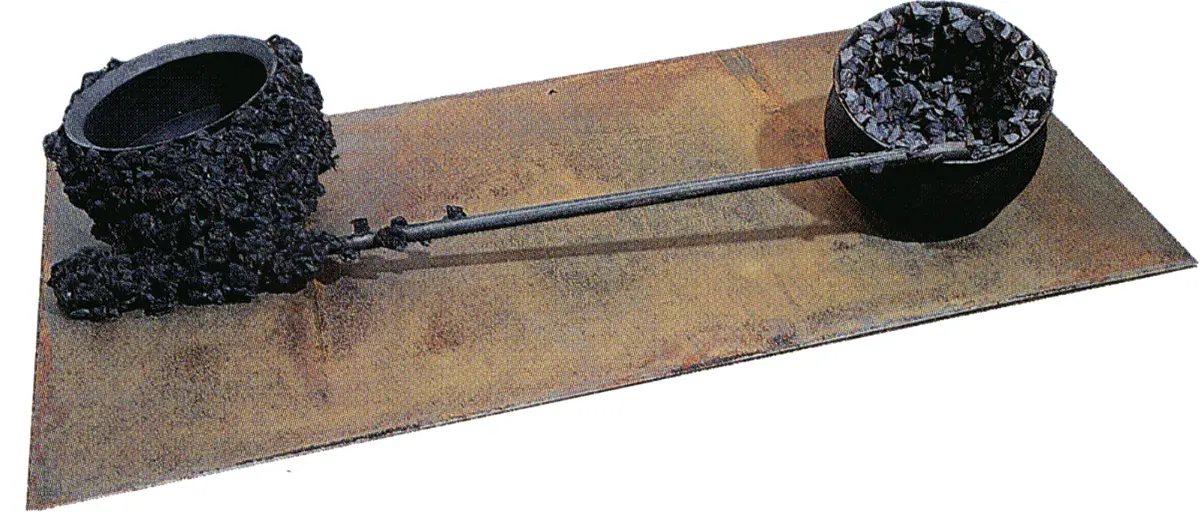
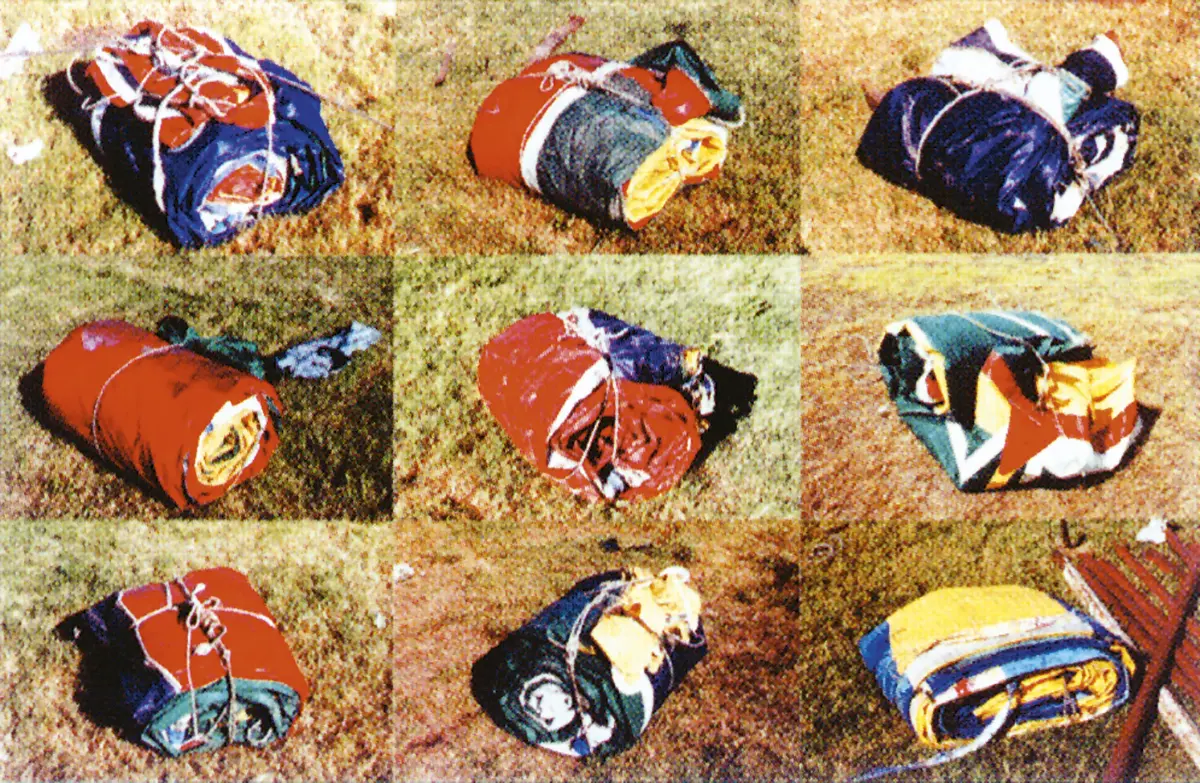
Nearing its tenth anniversary, Art Chicago 2001 mixed conservative offerings by traditional galleries with a strong dose of riskier new work. This is a big fair, daunting in its breadth and scope, and this year a new floor plan scattered the booths to make for a more congenial, roaming experience for the avid art viewer. A new section of twenty “International Invitational” galleries brought in work from such hot pockets as Glasgow, Berlin, and Copenhagen, together with a healthy contingent of Chicago galleries creating a local/global atmosphere that hopefully bodes well for the future of the fair. The organizers also provided room for a dozen or so single-artist installations (like Basel’s Statements) that helped focus attention away from overwhelming commercialism towards a more balanced appreciation of artistic ambition. Latin American gallery representation has been historically strong in Chicago. The stars this year were Ernesto Neto and Vik Muniz, fueled by recent international attention for their work evidenced by myriad museum shows and lots of global representation. Neto’s weirdly sensuous sculptures made of pantyhose and Muniz’s photographs of quirkily assembled pictures referencing art history perhaps suggest a Latin sensibility that is crassly sensuous while pointedly wry and ironic. This self-conscious use of Surrealism—juxtaposing odd materials with psychologically compelling content—is now firmly entrenched in the contemporary art-world compendium. Latin America is no longer an “other” (though perhaps still exploited as such) but rather an integral part of the mix. On the more conservative side, two galleries from Santiago, Chile each presented one-person shows in their booths by esteemed male artists with long histories of exhibition. Galeria Tomas Andreu showed paintings and sculptures by Gonzalo Cienfuegos who does figurative work in the tradition of Magic Realism. (My favorite work was a squat bronze of an energetic dog.) Galeria A.M.S. Marlborough dedicated their booth to work by Benjamin Lira, a venerable painter of figures in an urban landscape reminiscent of Eduoard Vuillard (the French artist whose work was simultaneously on view at a post-Impressionist show at the Art Institute of Chicago). At Galeria El Museo sculptures by Jim Amaral presented the human figure bound by the physicality of the body, strapped and sewn into its own mortality. Throughout the fair were Latin American galleries that presented nicely awkward work that cut through regional stereotypes while assuming geographical, and political concerns. Galeria Camargo Vilaca from São Paulo featured a new photograph by Muniz which was composed of carefully placed screws, and some sculpture by Los Carpinteros. On the floor of their booth was a carpet of flayed fake frogs, a compelling piece by Lia Menna Barreto that uncomfortably referenced ecological issues. Yvonamor Palix of Mexico City presented photographs of Orlan’s project to make herself—through plastic surgery and Photoshop—into “Third World” archeological icons, and paintings by Alicia Paz of porcelain figurines that were used to represent cultural identities of class and gender. Photographs by Eduardo Munoz were presented at Galeria Nina Menocal. In these multi-layered and beautiful prints, the artist projected old photographs taken during his youth onto surfaces inside his contemporary apartment. The resulting composites are memories kept alive, made hauntingly present. From São Paolo, Galeria Nara Roesler represented Brazilian filmmaker Arthur Omar with a sumptuous black-and-white photograph of a three-eyed female visage, an entry into his series titled “Anthropology of a Glorious Face.” A sculpture of inflated clear-plastic organic forms contained by a wood frame by Ricardo Ribenboim filled out their booth, like a contaminating virus, contained, but incessantly replicating itself to occupy a space. Similarly, Alfredo Gavaldón accumulates those little nylon plastic tags used to attach prices to consumer items into minimalist white fields of textures and implied motion. His works were on view at Galeria de Arte Mexicano from Chapultepec along with a banner by Edgar Orlaineta which pictured Objects of Desire like a new Leica camera and Dolce & Gabbana faux-leopard-skin sandals. Miami’s Diana Lowenstein Fine Arts presented a varied selection of work by Argentinean artists. Raul La Cava’s brightly colored photographs of circus tents, rolled up and laying on the grass ready to be packed up for traveling, seemed to reference both the portability of culture—circus culture standing in for high art—and the insatiable craving we have for entertainment. The George Adams Gallery had strung up a Jose Bedia work on paper that was a crucifixion-cum-Day of the Dead skeleton. Lisa Sette from New Mexico displayed a pungent piece by José Toirac, Gray Series (Che), a Gerhard Richter-like blur of our most revered and troubled Latin American hero. Brent Sikkema represented Arturo Herrera with a cut-up black felt wall hanging that updates Robert Morris’s groaning minimalism with a light-hearted Disney-esque representation of AbEx's heartfelt gesture. And in an exaggerated spectacular presentation, Annina Nosei presented a line-up of busts by Federico Uribe—headless torsos formed by rows of endlessly repeated small mundane things like copper pennies and steel screws accumulated over shaped armatures, bristling objects of physical prowess that reference the humanism of Greek statues as readily as the crassness of capitalist consumption. Christopher Grimes Gallery from Los Angeles featured a floor sculpture by Tunga which encompassed many of this artist’s alchemical concerns: magnetized iron filings and cauldrons become male and female sexual partners conjoining to create new aesthetic universes. Paintings by Marcelo Pombo from Argentina, also at Grimes, mix a deadpan landscape tradition with near hallucinatory pattern painting that shares a pleasing visceral sensibility with Pop art.
Jacob Karpio of Costa Rica presented Priscilla Monge, whose photographs of a soccer ball made of female sanitary napkins and black leather pungently confuse male and female stereotypes. Monge’s photographs of her performance wearing an outfit made of female hygienic products—some bearing the red mark of menstrual blood—succinctly describe the shame female-ness inscribes on women’s bodies. Elba Benítez from Madrid featured a very erotic Ernesto Neto sculpture replete with a very large sculptural dildo, a Vik Muniz send-up of Abstract Expressionism, and big spoons by Jose Antonio Hernandez-Diez which conflate the camaraderie of the dinner table with the cocaine trade. Galeria Enrique Guerrero of Mexico City showed the very problematic work of Santiago Sierra. The artist had hired drug addicts and prostitutes to be tattooed in the series on view, each with a horizontal line across his or her back, so that lined up, the subjects/employees would form an aesthetically coherent piece, like a landscape. This work is about manipulation by the artist of his or her subject while mirroring societal forces that insist on conformity of behavior, appearance, and thinking. Sierra’s project, as in the masturbation series seen at last year’s Art Miami, isolates the privileges of voyeurism of the art viewer who then witnesses both the artist and his or her subject perform. It is just like sex. Guerrero also showed cartoon paintings by Fabian Ugalde that confuse the direct simplistic nature of graphic illustration by pumping up the underlying sexual content to make heartily ambiguous social commentaries. Art Chicago, in the end, is a delicious place for ambiguity and manipulation, a healthy place for the art market to be.
KATHRYN HIXSON