The second edition of the Caracas Graphic Arts Biennial, held at the Carlos Cruz-Diez Museum of Print and Design from November 2000 to this past May, presented two particularities: first, it opened the possibility for more international participation; and secondly, it considered, through the selected works, the different modalities within graphic arts, in order to problematize its concept, its reason for being. This intention has been observed since the Juan de Guruceaga Graphic Arts Biennial, the first edition.
Aside from these considerations, this time there was a coinciding thematic arrangement —works that one way or another refer us to the topic of memory. As Juan Carlos López Quintero points out in the catalog, this preoccupation is consonant with the medium’s own nature: any trace or mark are graphic manifestations —gestualities— surpassing the traditional concept of the graphic as a simple “multiplier of images.”
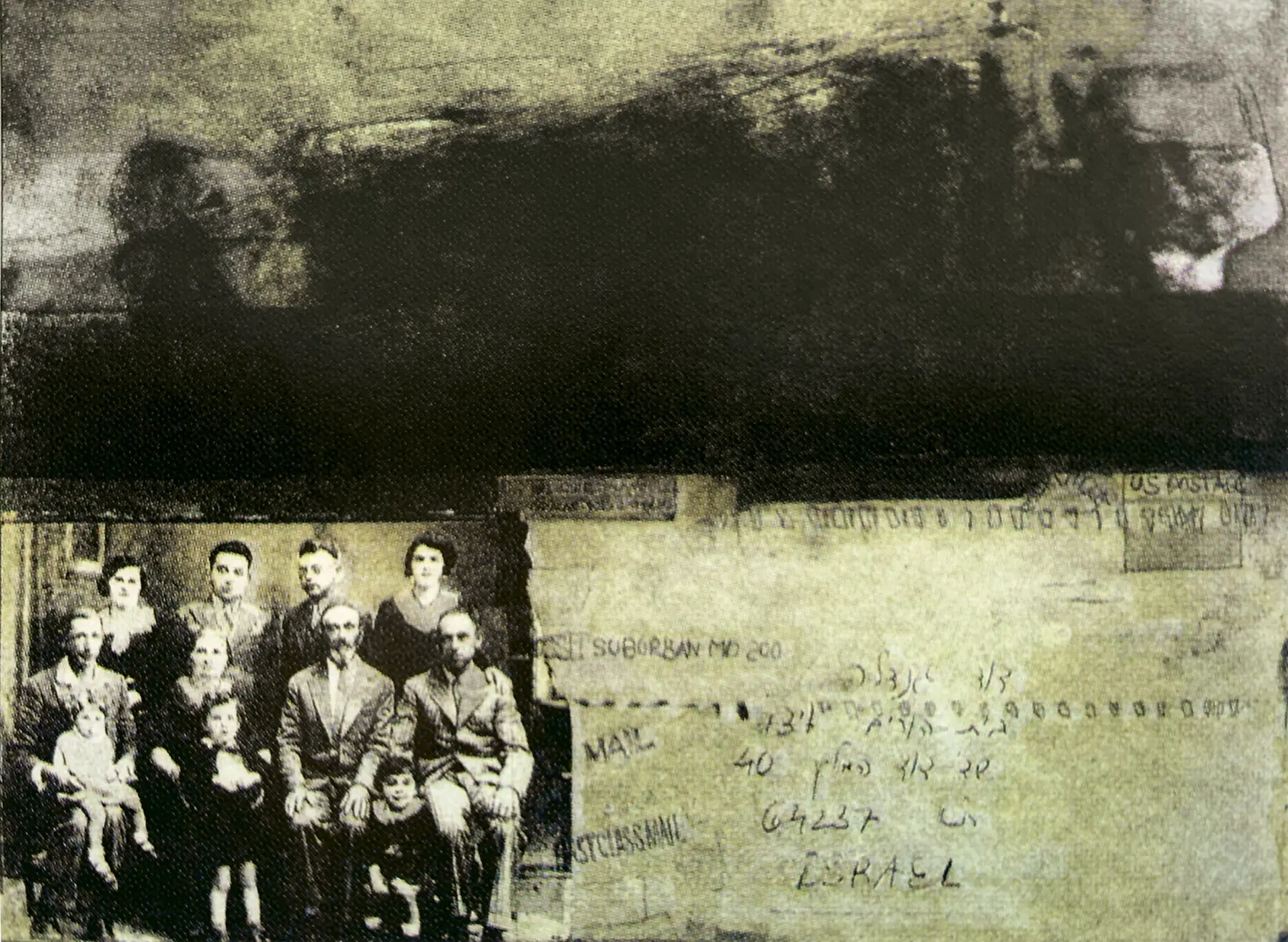
For this reason, an evaluation of the development of the graphic fact was one of the curatorial concepts applied. Consequently, three types of awards were determined: the Traditional Modality award, granted to Circuitos impresos (Printed Circuitry), by Lihie Talmor. This piece has nine visions —nine engravings— referring to the process of migration, of moving from one country to another. The separation from a place and a family, as well as the reconstruction of a new life in an unknown space, is suggested through the sequence of these images. The journey is highlighted by means of images of suitcases seen from the perspective of X-ray machines at airports. The piece culminates with an image that has a double reading: an envelope, whose sender is in the United States and the recipient family, in Israel. Undoubtedly, the piece is one of the biennial’s best since it conjugates technical excellence and density in the topic.
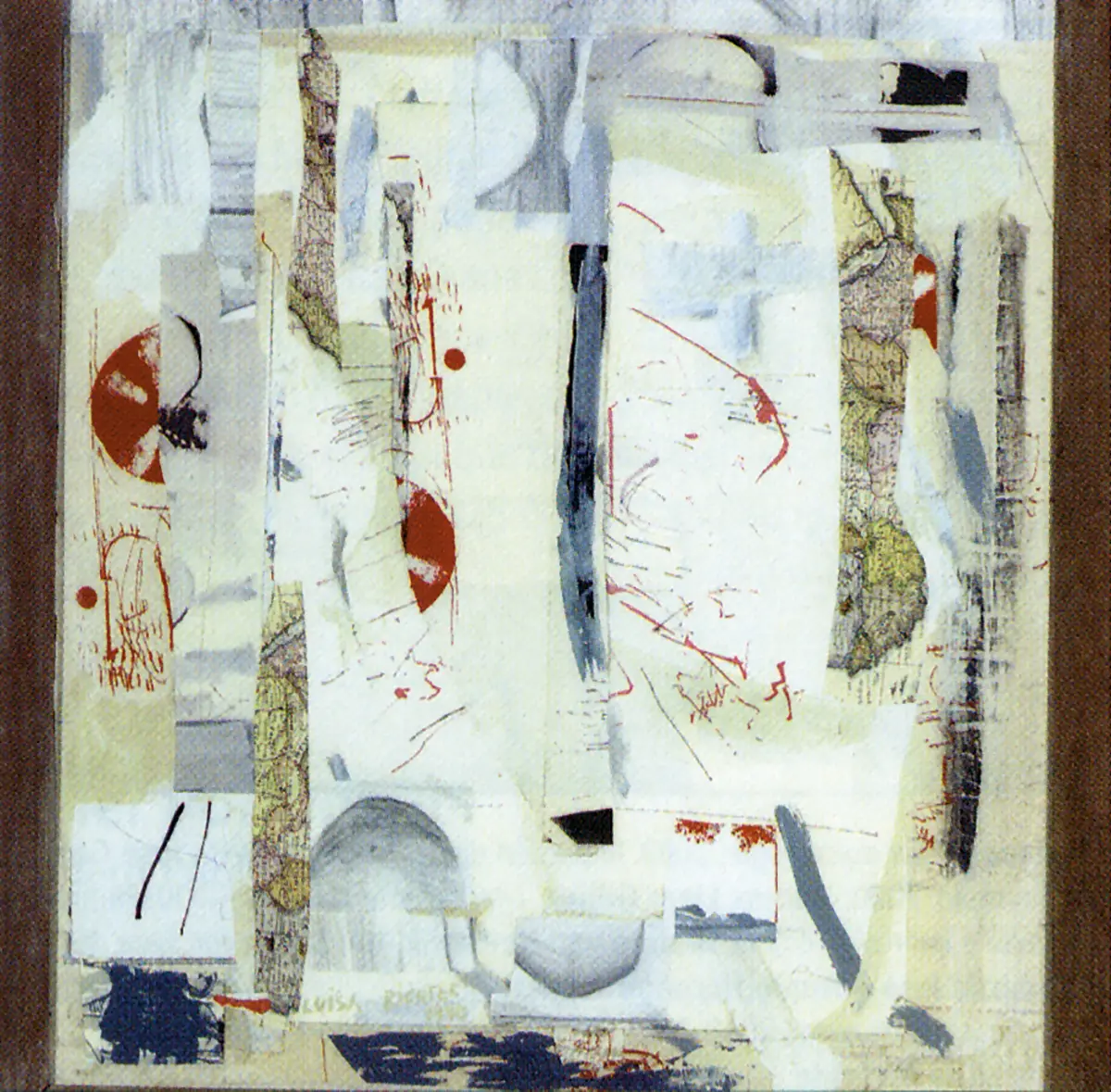
Luisa Richter received the Experimental Modality Award. Known as an artist with ample and known experience, Richter exhibited a piece that once more demonstrates her skill and depth in the handling of the image over paper. Her collages are defining in their production, and there’s no doubt that here we have a whole artist. For this occasion, she presented a collage [El tiempo y sus combinaciones (Time and its Combinations)] made with several previous engravings that were cut and glued on a canvas. Part of this visual mosaic —to use Juan Carlos López’s term— is completed by lithographic images taken from anonymous reproductions such as old book illustrations, maps, etc.
The Work by a New Artist award was granted to Eleonora Gómez Bas. This artist conceived a “book” (Border Book) in which a “stain,” an enigmograph, as the artist calls it, is presented in different sizes and from different angles, suggesting the multiplicity of visions —readings— that a single image contains. It’s quite an interesting way of working the concept of multiplicity, each image being different than the other.
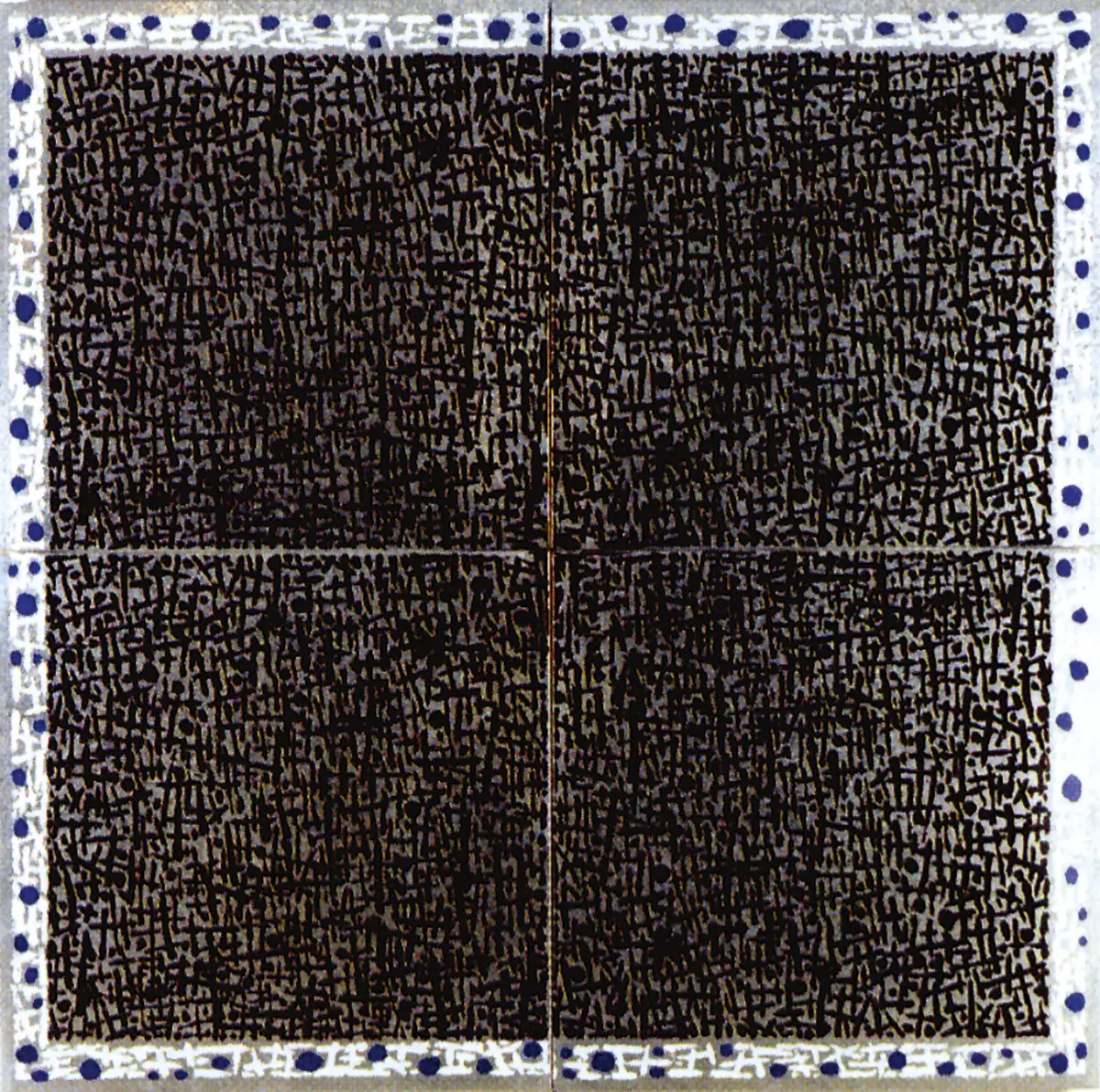
The mixture of graphic resources is made patent in the biennial: appropriations through intervened photogravures, collages, traditional graphic techniques such as aquatint, etching, dry point, xylography, serigraphy, lithography, etc., as well as installations and computer-manipulated digital images. They all form the body of this biennial and they attest to the state of today’s graphic arts. All this is treated under diverse themes: history and the primitive or ancient world, geography (Abilio Padrón, Irene Furlán, Esther Perozo, Janette Brossard Duharte [from Cuba], Ara Djetjian Romero); and images of the mountain, based on the tragedy that occurred in Venezuela in 1999 (Carolina Campos, Carúpano). The reference to graphic arts as language and the origin of technical resources is seen differently in such works by Hernán Suárez, Gisela Romero, and Enrique Doza Romero. And personal biography, in Mari Carmen Carrillo and Gaby Trejo.
Humor also stands out. Artists such as Margot Römer, Benjamín Vaisman, Carlos Quintana, Valentina Álvarez, and Nancy Urosa Salazar, go to the extreme in technical resources to work with images in different and impossible contexts. Mythology (Yamilani Morales), and the oniric or surreal (Jorge Martínez, Dania Fleites Díaz [Cuba], Marco Antonio Cárdenas, Abelardo Brandão, and Adenauer Spíndola [these last two from Brazil]). As a counterpart, the abstract image continues to be a pretext for esthetic exploration. Anella Armas, Héctor Romero, Irene Szabadics, Solange Salazar, and Neslo Pérez Rodríguez stand out in this regard; and in ambiguous, lyrical images, Agustín Villasana, Susy Dembo, and Eva Rodríguez. Luis García’s work is brilliant in its serigraphic purity, and Beatriz Salazar González is more “experimental” in regard to its visual effects.
Air as a resource is worked under three different perspectives: Mary Carmen Escurra twists the image until it becomes unrecognizable, alluding to the movement of the wind. With pieces of collages from other times and several printing techniques, Toña Vega creates a piece with “stitches,” which we can see from either side [Memoria del aire (Memory of the Wind)]. Mariela Arévalo Colmenares makes a subtle “penetrable” with pieces of lithographs tied to stainless steel threads. The overall effect is total airiness and fragility, two aspects definitely enrich the work.
Word and image are the essence of the graphic medium. Nevertheless, its objectives become completely esthetic, as in the case of Susy Iglicki, whose art continues to feed itself from self-reference. At another level, both resources conjugate in the works by Joaquín Rojas, Zacarías García, and Miriam Rangel, as well as in pieces by Solange Salazar and Nancy Urosa Salazar, whom we already mentioned. The engraving and graphic design are seen under the perspective of publicity in the works presented by Lourdes Peñaranda. Lastly, the mixture of words and images becomes extreme on Guillermo Torres’ web page, which is in a continuous experimental process.
The Graphic Arts Biennial is important since it’s the country’s only event dedicated to the medium. Due to the number of resources and techniques currently mixing with one another, the event presupposes a continuous enrichment, allowing for a constant revision of its concepts. By the same token, its intention is wide since the tendency has been not only to show the most graphic variables but also to open its doors to international production. The next edition will be held next year.
SUSANA BENKO