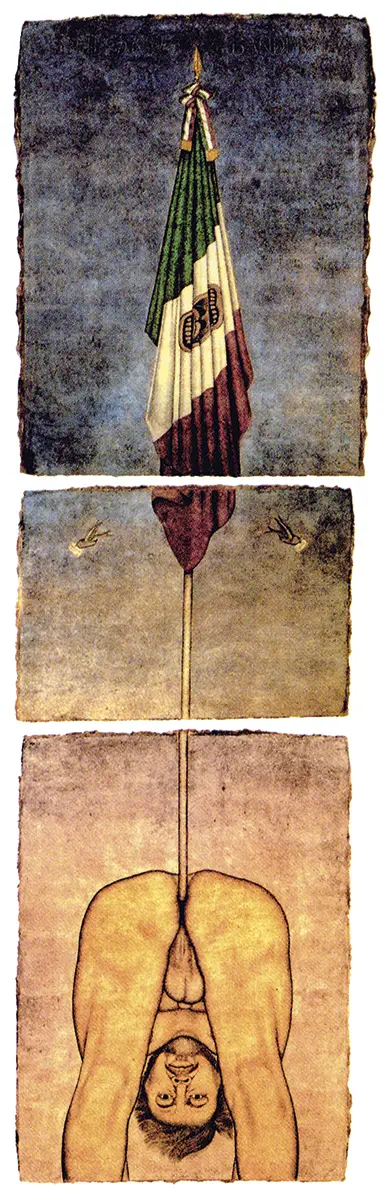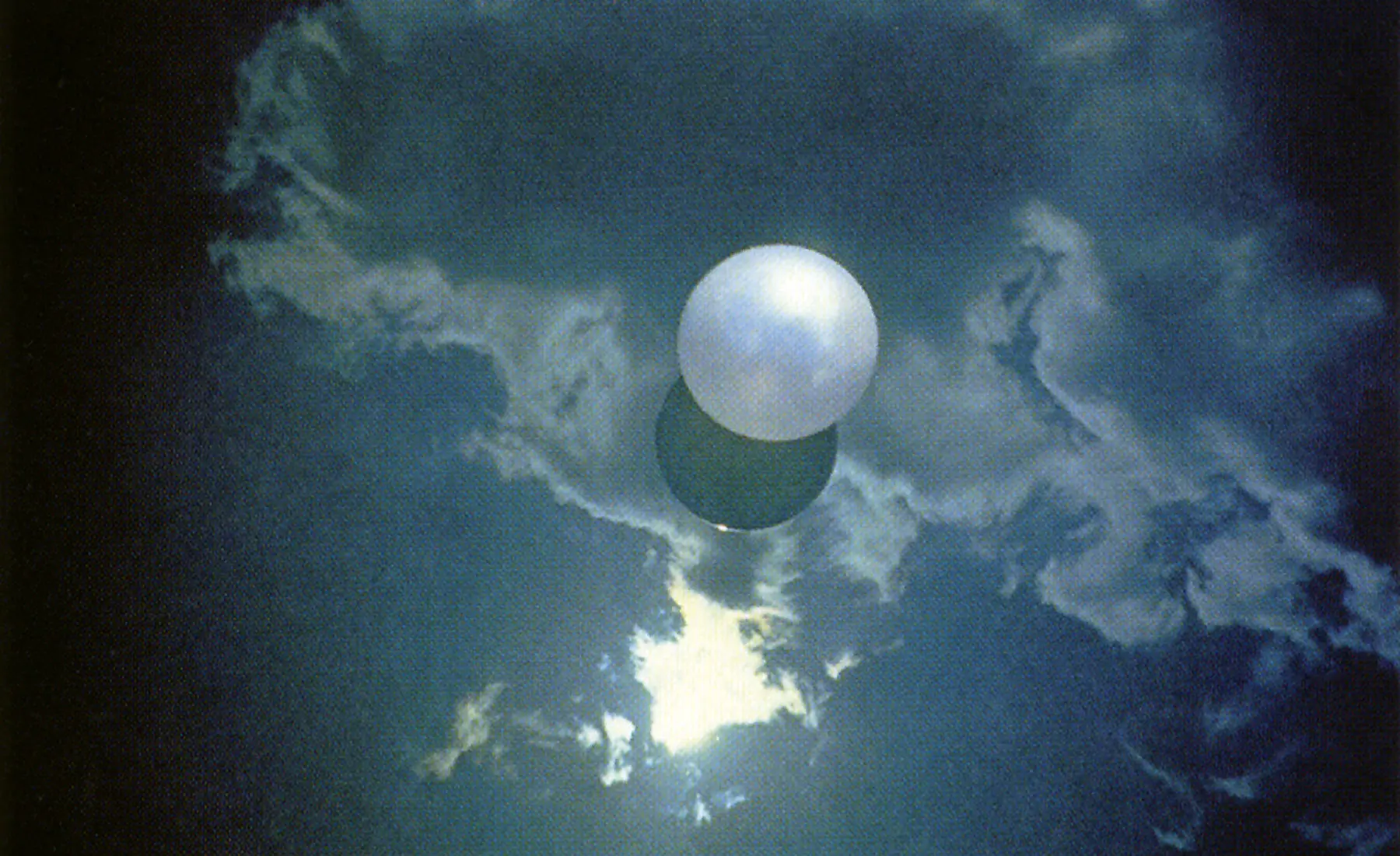
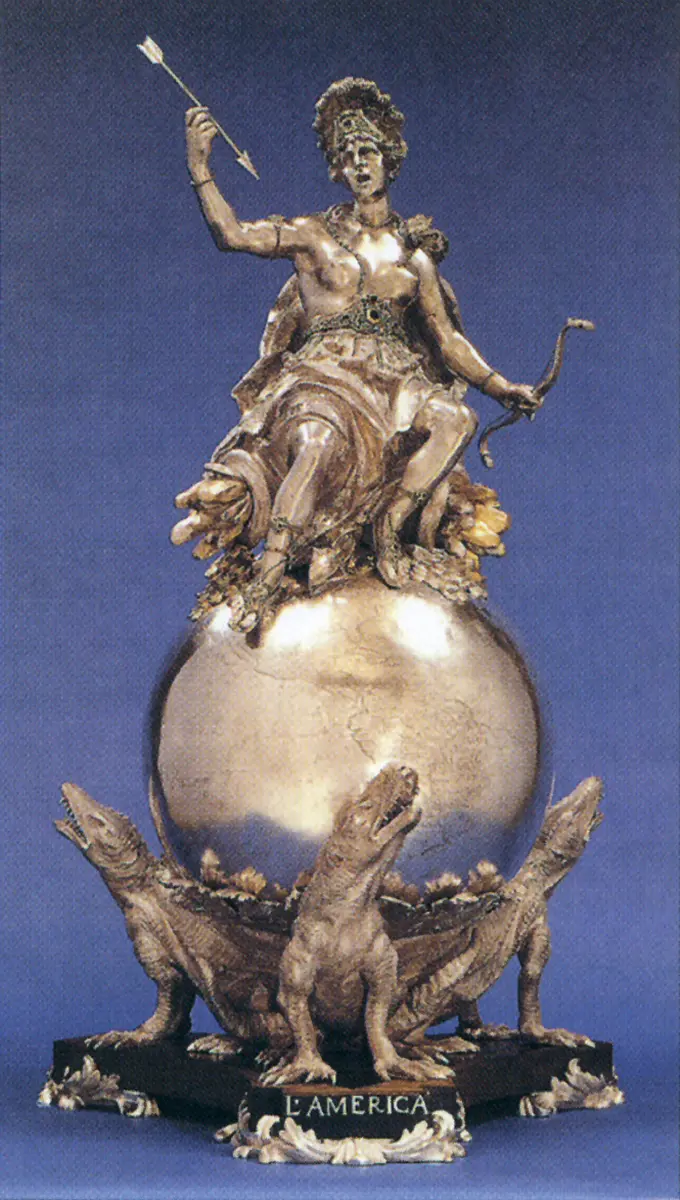
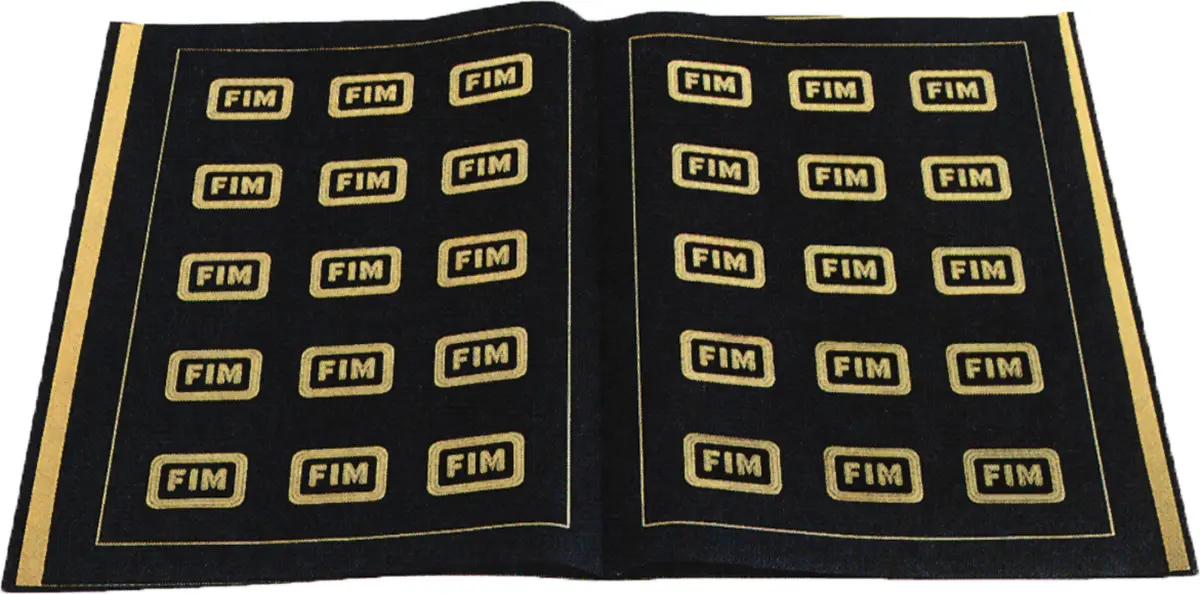
According to what was announced in our last edition, in this issue we are completing the coverage of the exhibitions which under the general title of Versions of the South took place in Madrid from December 2000, through March 2001.The four shows reviewed below, comment on the diverse forms in which their curators proposed to analyze several aspects of Latin American art. Art Nexus The year 2000 ended with the opening at the Reina Sofía of what may be the best show of contemporary Latin American art on Spanish soil to date: Versiones del Sur. It consisted of five large-format exhibitions that did not attempt to show the totality of the plastic production of America that exists south of the United States as much as offer different “versions” of what has been considered the history of art in these places. Much has been written about the way in which the Western, Eurocentric gaze has constructed the idea of a Latin American art that can be contained and unified under its own criteria of difference, otherness, and, in the worst cases, exoticism. In this sense, the simultaneous show of five versions of art in America is not only necessary but also enlightening. Seems that the confrontation most consistent with the historiographical and museographical stereotypes that the project attempts to question is that of the exhibition F(r)icciones curated by Adriano Pedrosa and Ivo Mesquita. The long curatorial experience and the profound knowledge that both curators have of art in Latin America, together with a vision that is not only critical but also highly propositional, make this show a real lesson that is in no way insignificant for the “independent curators” from every country, who in recent years have been popping up from fair to fair and biennial to biennial. The idea around which the entire exhibition turns can already be intuited in its title, which has obviously been appropriated from Borges: it is a question of revealing the fiction of notions such as History, Art, and Latin America, but also of the friction that is conceptually established between them, and which is materially established between works of diverse formats, supports, origins, and periods. The most interesting thing about this subject, which has been proposed on multiple occasions on paper, is that, in this case, it is effectively resolved in the show without seeming confusing, baroque, or gratuitously postmodern. An attentive visit shall suffice to capture the central lines that the exhibition proposes, at the same time as it allows sufficient blank spaces so that each person may construct his or her own path. We arrive at the fourth floor of the Reina Sofía, which normally houses the permanent collection, by two elevators that lead to two different entrances. In this case, both entrances have been totally covered by mirrors and both present the same photograph by Gabriel Orozco: a white sphere over a background of blue water (Ball on Water, 1994) that reminds us more of a view of the Earth in space. In addition to this image, one of the entrances is taken up by a magnificent allegory of America by Lorenzo Vaccaro (America, 1692) made of silver and precious stones in which the opulent, generous figure, seated on the terrestrial sphere, distributes her riches to the point of self-sacrifice. The other access hall is taken up by an extremely small drawing in Indian ink by Leonilson (Favourite Games, n.d.) in which the unadorned figure of a man stands over the words truth/fiction, while at the center, inside of a display cabinet, we find a book by Waltercio Caldas (The Collector, 1974) opened to two pages that repeat the same word: FIM. This notwithstanding, it does not strictly direct the sense of sight, which in fact is not explicit on either side; and with a clearly Borgesian touch, it is perfectly possible to begin with THE END and finish at the beginning. Both corridors of mirrors lead to a long hallway that serves as a central thoroughfare of the show which is finished off on both ends by a fake wall on which the curators’ introduction is written (the same on both sides). It is thus a question of entering a show that may be physically approached from any direction. Toward one side of the main area, a series of rooms begins to open up in which more concrete themes are proposed, but which are always tied to themes proposed by the central core. It is thus the most faithful construction possible of a labyrinth. In effect, the labyrinth is one of the central themes of the exhibition, which nonetheless presents a series of works that, like Ariadne’s threads, remind us where we are: all along the central hallway and even inside some rooms we find ourselves with the piece titled Ghost (1991-2000) by Jac Leirner, a sort of gigantic necklace made of millions of papers the size of a bill, all linked by a nylon thread. Halfway down the hall, Francis Alÿs’ Leak points out with a string of blue paint a path that in fact extends beyond the exhibition, leaving its mark throughout the whole museum in order to go out to the street and surround the grounds before returning to the fourth floor. Furthermore, the déjà vu recurrent within the show is the piece in modules titled Banco (Bench, 2000) by Leonilson which, dispersed throughout all the rooms, is often used by the worn-out viewers. Another element that is also found throughout the visit are the pages marked by Courtney Smith which, titled Laberinto, scarcely allow us to lean over a fragment of a text that we can only imagine. In addition to these pieces, which I consider central, we may discover other versions of the maze: from Xul Solar’s imaginary landscapes [Cavernas Troncos (Caves logs), 1944] to Hélio Oiticica’s scale models for underground projects, passing through the geometric labyrinths of Torres-García [Estructura—Composición Abstracta], (Structure—Abstract composition), 1935] and the abstract work of Pablo Siquier (9712, 1972), among others. In this main area, a large number of pieces are shown which begin to unfold the rest of the themes that are detailed in the small rooms: maps, travels, roads, landscapes, genealogies, and biographies. One example of the visit could be constructed thus: a labyrinth dreamed by Julio Galán in a large-format painting (Roma, 1990), an installation of beds with maps by Guillermo Kuitca, a series of photographs of the “dysfunctional details” of Mexico City by Jonathan Hernández [Conozca México (Get to know Mexico), 1996-2000], a landscape by José María Velasco [Paisaje mexicano con lago Chalco (Mexican landscape with Lake Chalco), 1885], the autobiography of Félix González-Torres, and a untitled photograph of Adriana Varejao (from 2000) in which a red line with the word “equator” crosses the center of a hand. The visit could also be read inversely, going backward from the micro to the macro. Continuing this idea, the concrete themes unfold with the same friction in the small rooms. In the room in which the genealogies are developed, for example, we can see several nineteenth-century lineage paintings brought face to face with Íñigo Manglano-Ovalle’s piece Paternity Test (Self-portrait with parents) (1999)—a triptych of three impressions of DNA analysis enlarged to the point of looking like a neo-psychedelic digital video experiment—as well as the small pencil drawing by Frida Kahlo titled Mis abuelos, mis padres y yo (My grandparents, my parents, and I, 1936). In another room dedicated to the fiction of the construction of Latin American history, we find a photograph of Che cooked up by Vik Muniz (Che Guevara, n.d.), a blanket by Oiticica in which he invites us to “be marginal, to be heroes” (Seja marginal, seja herói, n.d.), and a creative proposal by Nahum Zenil on the places where one may place the national flag [Oh Santa Bandera. Homenaje a Enrique Guzmán (Oh holy flag. Homage to Enrique Guzmán), 1996]. The show also includes a colorful maze by Gabriel Orozco inside of which a series of his pieces has been mounted which include airplane and train tickets, as well as tickets from different countries that the artist himself has used. The piece has a sort of shortcut through several kitchen doors of the type with a glass window above. The viewer can go through the doors in a straight line, cutting right through the art that is hung inside. The subtle lesson of the piece which resounds throughout the entire exhibition is that, by taking the short road, one loses a good deal of all there is to see. An attitude that also legitimizes our venturing to follow the blue detour proposed by Alÿs. It is difficult to speak in detail of the entire show, but this is its main virtue. Of all the possible paths, only one or two have been chosen. Fortunately, we find ourselves with an exhibition that must be lived in order to be understood. At the moment of writing these lines, there is no catalog for the show, and in this case that is almost a virtue. In fact, scattered throughout the exhibition there must have been some forty pages in the halls that reproduced texts from diverse sources (although Borges dominates) that allude or make reference to the themes touched upon in the works, and which the public may take home.1 Significantly, on one of the two walls that finish off the show in its horizontal core, and behind which we find the curators’ introductory text, we can see the minute piece Sin título (Buraco de fechadura) (1999) by Iran do Espírito Santo. This is a sculpture about seven centimeters high placed right at the center of the wall at eye level. The piece has, in effect, the shape of a sizeable keyhole—and the idea of looking out onto a world is already contained within. If we approach closely enough, we can see reflected therein the exhibition’s entire core: a sort of Aleph that contains everything and at the same time is contained by everything. The center of the labyrinth, the place where all roads converge, the works, the histories, and the drifts that the show proposes. Merely the point of departure.
NOTE
1. In fact, on my second visit, there were no pages left, just as there were no more copies of the posters of heaven that make up Félix González-Torres’s piece Aparición (this is equivalent to taking away a piece of the show). The two pieces that required some minimal technical infrastructure—Tunga’s installation with film Âo (1981) and the projection of two slides Juego de Romance II by Waltercio Caldas—did not work, at least on the day of the opening and the two later occasions on which I visited the exhibition.
ISSA MARÍA BENÍTEZ DUEÑAS