
The fifth 2001 Absolut L.A. International Biennial got off to a sizzling start in mid-July with receptions staged over four consecutive evenings in the city’s various gallery districts. Since its inception in 1993, when the Santa Monica/Venice Art Dealers Association under the leadership of Sandra Starr, Christopher Grimes, and others initiated the event, the Biennial has sought to foster international dialogues among artists, galleries, and their publics. This year’s edition, under the leadership of co-chairmen William Turner and Robert Berman, successfully enlisted the participation of over seventy local galleries and art institutions.
While some murmured about slow sales and others fretted about the lack of an overall curatorial focus, for the most part, the extravaganza appeared to be a strategic success. For starters, this year’s event presented close to 200 artists from thirty countries. As a caveat, many of L.A.’s leading gallerists and past participants including Christopher Grimes, William Turner, Robert Berman, Jose Tasende, Darrel Couturier, and the Iturralde sisters, were joined this season by a bevy of new dealers including Coagula Projects, Gallery 2211, INMO, and Lord Mori, whose energies gave the event a dimension of youthful vigor.
While the invited artists, as in years past, came predominately from Europe, ten gallerists exhibited contemporary art from Cuba, Mexico, Columbia, Peru, Argentina, and Brazil. Concentrating on post-1960s art, the Biennial presented artists ranging from the aspiring to the established. Younger artists such as Gustavo Artigas, Betsabeé Romero, Carlos Blanco and Carlos Estévez, were showcased alongside emerging artists such as Waltercio Caldas and Tunga, whose reputations have been steadily growing in recent years. By coincidence, the established doyens Andres Nagel and the late Joseph Beuys, who were showcased at the Tasende and Griffin galleries, respectively, provided a historical context for the extravaganza. While the Biennial for the most part showcased work within conventional gallery spaces, a few artists staged public intervention pieces.
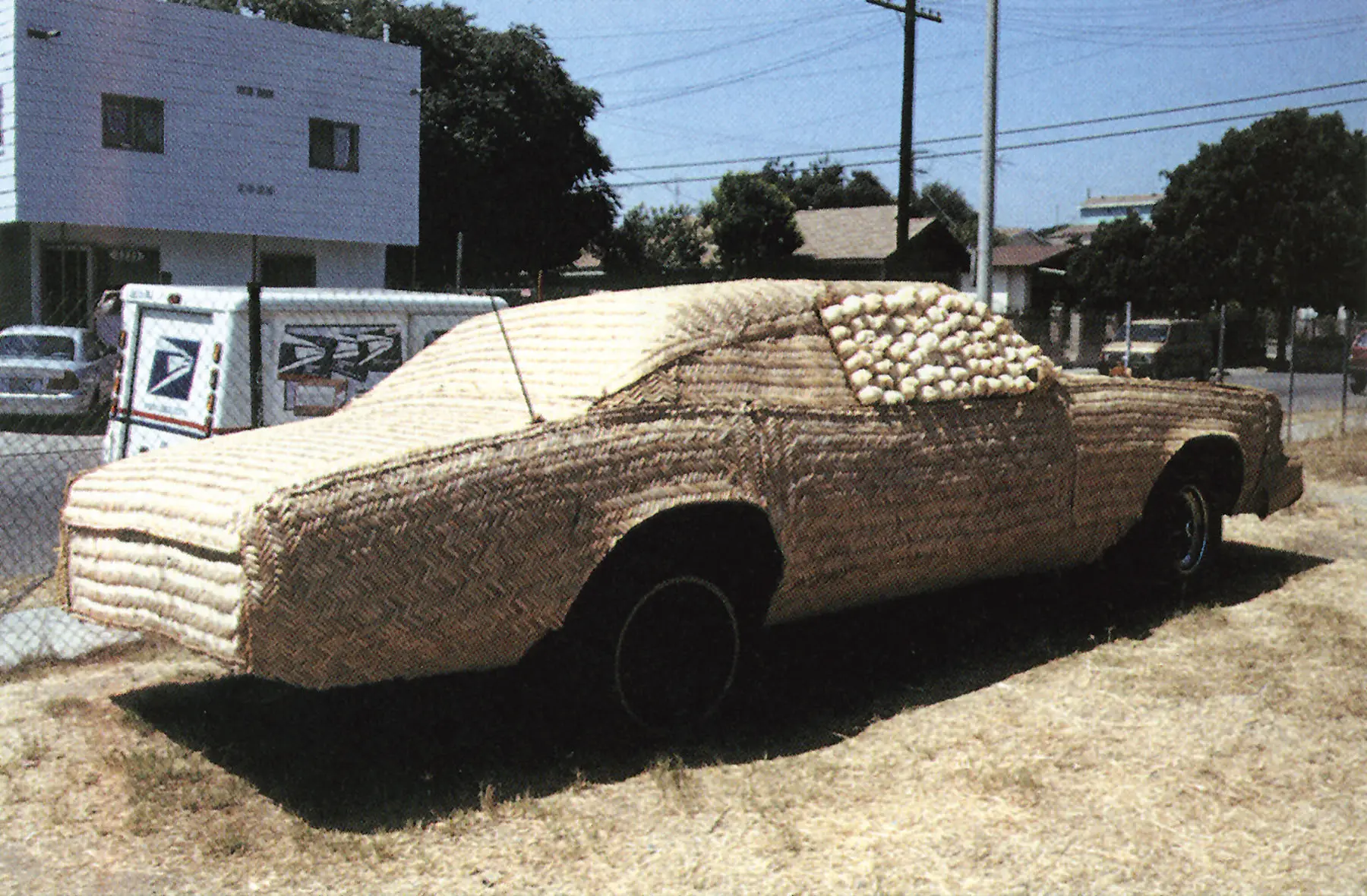
The most distinctive of these was an installation of five sculpture cars, created by Betsabeé Romero, and exhibited along César Chávez Avenue in East Los Angeles, under the aegis of Iturralde Gallery. Transforming junk cars into comic-tragic sculptures, these works critique one of industrial society’s most prized status symbols. Exposing the follies of the consumer world Talavera Car and Petate Car humorously manifest the social disjunctions and absurdities of the post-industrial era.
Across town, the automobile theme reappeared. With Duchampian elan, Jonathan Hernandez decides to rent and park a white stretch limousine outside the upscale Chac-Mool Gallery as a wry metaphor for Los Angeles and its fabled Hollywood millionaires. But unfortunately, Hernández’s installation plays more with, than against, media-constructed notions of people and places, projecting the aura of an outsider’s cliched perception of the city.
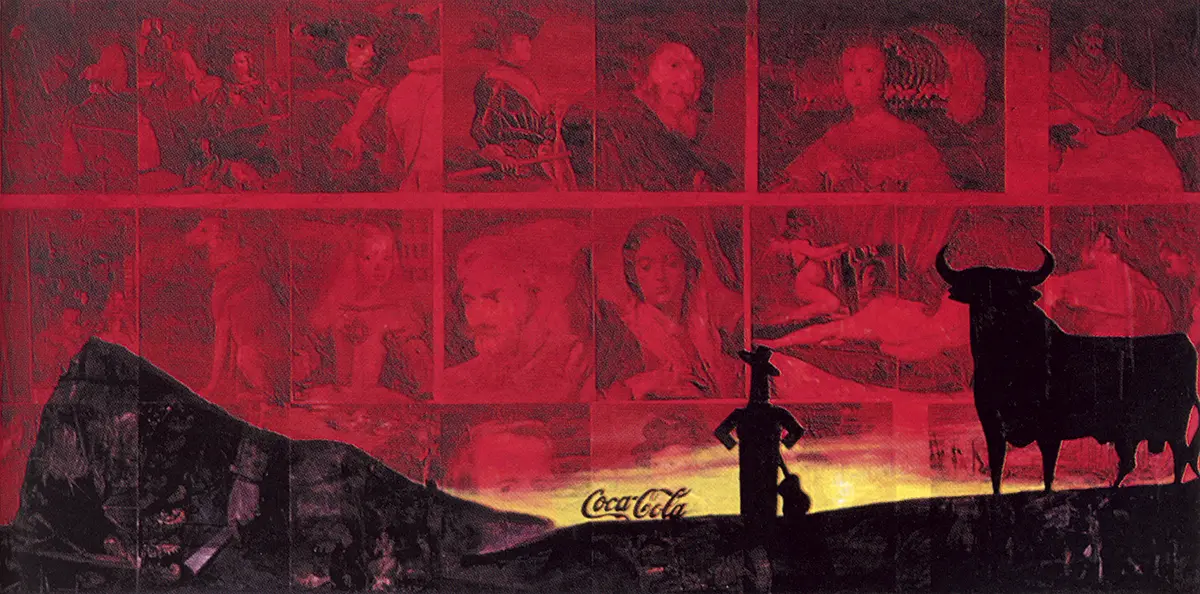
By contrast, in the Track 16 Gallery space at Bergamot station, Cuban artist Pedro Álvarez underscored the layered complexity of advertising imagery. Like Hernández, Álvarez takes on the subject of California but focuses on its identity of glamour and roughness that continues to be propagated in media, television, and movie imagery. Believing it isn’t possible to just paint what one sees, Álvarez’s paintings usually overtly acknowledge their conceptual sources in extant art historical and media imagery repertoires. His California painting based on Ed Ruscha’s painting of Hollywood, includes for example advertising leitmotifs such as a Coca-Cola sign, a Tío Pepe fino brand bottle, and a Osborne bull, suggesting the landscape’s relation to the modern world. But he also wryly characterizes the region by setting the consumer motifs against a Romantic, color-saturated sunset that functions as a scenic backdrop and then adds the finishing touches by profiling faintly visible mini-replications of Velazquez paintings as a reminder of California’s early conquest by Spain. Suggesting that a layered array of historical and conceptual paradigms structure contemporary thought, culture, and art, his works raised critical issues that appear elsewhere in the Biennial.
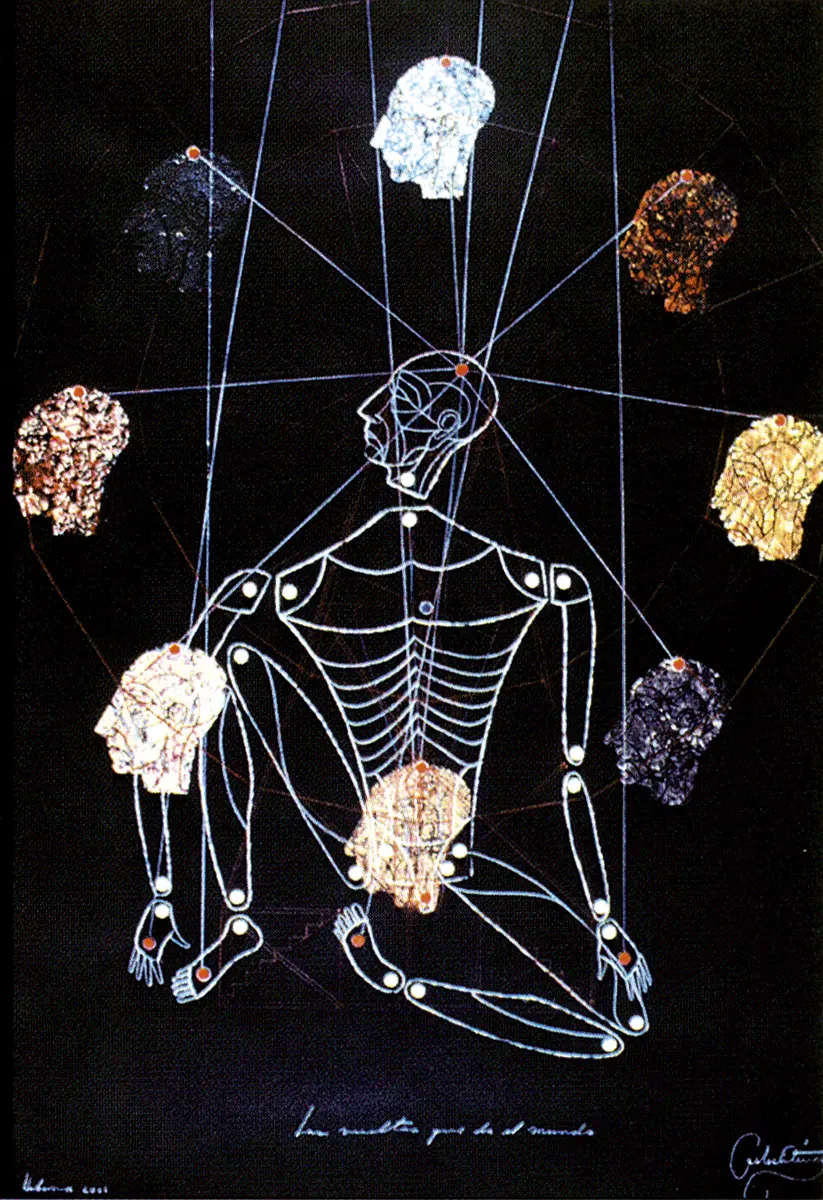
Across town on La Brea Avenue, a fellow Cuban artist Carlos Estévez creates drawings that allude to the paradigmatic nature of artistic, conceptual, and social constructs. His delicate and exacting images at the Couturier Gallery present a nocturnal world peopled by marionettes. In image after image his linear figures, defined by white watercolor on black paper, parlay the limitations of available physical and conceptual innovations and movements.
While some might be tempted to dismiss his perspective as overly cynical, the works of Peruvian artist Milagros de la Torre suggest their relevance. Presented at Track 16 Gallery along with works by Álvarez, Saidel Brito, and Fernando Bryce, De la Torre’s suite of color photos entitled Censurados hauntingly document books she found in Spain that had been censored during the Spanish Inquisition. Underscoring how erasure is as potent a gesture as penned calligraphy, her works are infused with a postmodern respect for the inverse of what art history has predominately championed. Exploring the face of censorship as a nexus of cultural, social, and artistic violence, her images detail close to a dozen forms of erasure. These included the obliteration of textual passages with wildly abstract gestured obstructions, simple linear deletions, cut pages, water-soaked pages that bleed original ink lettering, decorative patterning that obliterates text, to passages pasted over with paper that bears “corrected” interpretations.
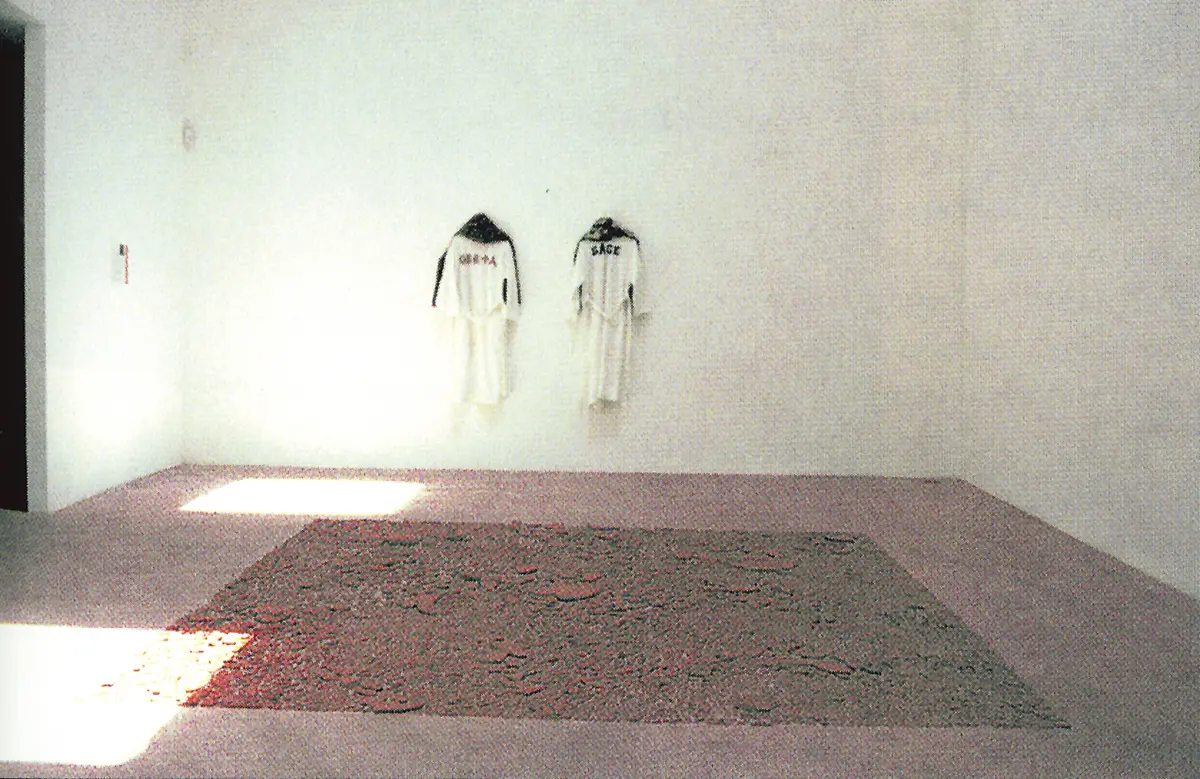
While there is a swift descent in terms of traditional class distinctions from the allegedly elevated textual worlds of De la Torre’s photos, to the debased bar rooms of Gustavo Artigas’ mud wrestlers, the theme of social and cultural violence ironically unites these seemingly polar works. Defining those relations in terms of sexual metaphors of dominance, Artigas’ Geeta vs. Sage (2001) video and related installation transcribe the usually highbrowed dialogues of cultural politics into laymen’s terms.
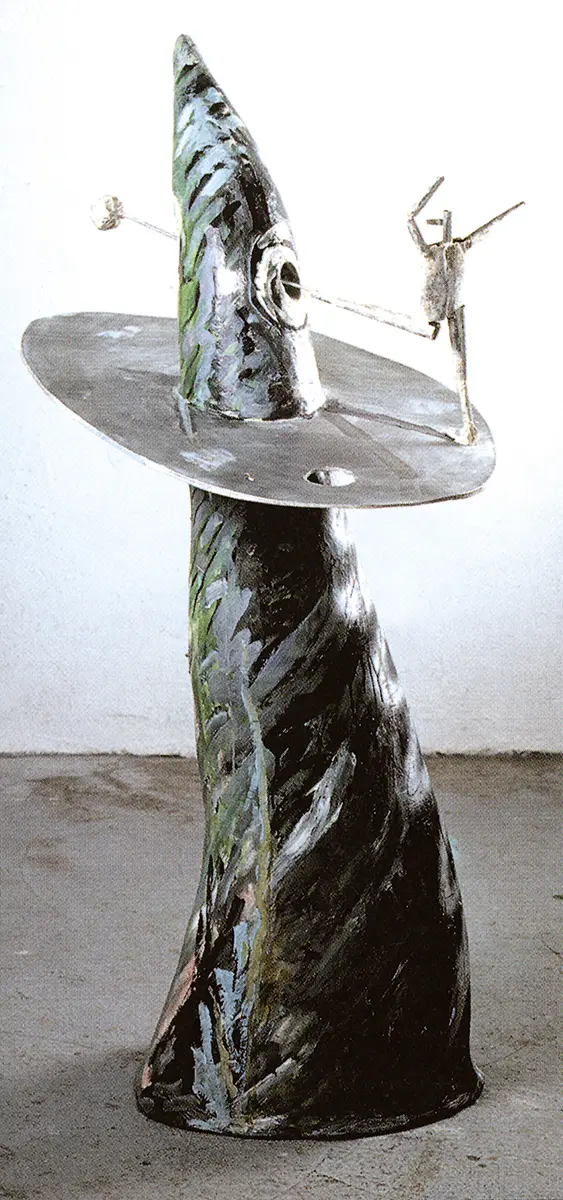
The Brazilian artist Tunga, by contrast, featured an installation composed of two rough-hewn cauldrons that projected the aura of ancient-rather than modern rituals, objects, and symbols. Profiled at the Christopher Grimes gallery, his Untitled (2001) installation manifests the subtle disequilibrium of related but dissimilar component parts. While using material essence to assert an irrefutable sense of presence, his work hinted of the complexities of social reality, spinning the contemporary moment back through time. Acknowledging the loss of utopian visions, this work which extended narratives implicit to Tunga’s earlier La Belle et la Bête (2000) manifests a sense of unsettling disjuncture.
On the walls surrounding Tunga’s sculpture were paintings by the Argentinean artist Marcelo Pombo. Visually sounding familiar chords, Pombo’s decorative landscapes converse silently with the works of such North American artists as Sarah Ellis, Fred Tomaselli, and Lari Pittman. At the same time, like Tunga’s work, Pombo’s paintings transport the viewer into the unknown.
But while Tunga’s works conjure antiquity, in part because of their iron, steel, and magnet materials, Pombo’s paintings converse with pop culture. Featuring a chemically based color palette, he sets bright chartreuse edged forms against inky cobalt and lavender blue skies and seas. With a nod to the legacy of Surrealism, these postmodern landscapes blend the real and the ima- ginary, paradoxically presenting an alluring distopia. In southern California, that is home not only to Hollywood but also Disneyland, works by artists like Pombo as well as the young and relatively unknown Gustavo Abaroa seemed right at home.
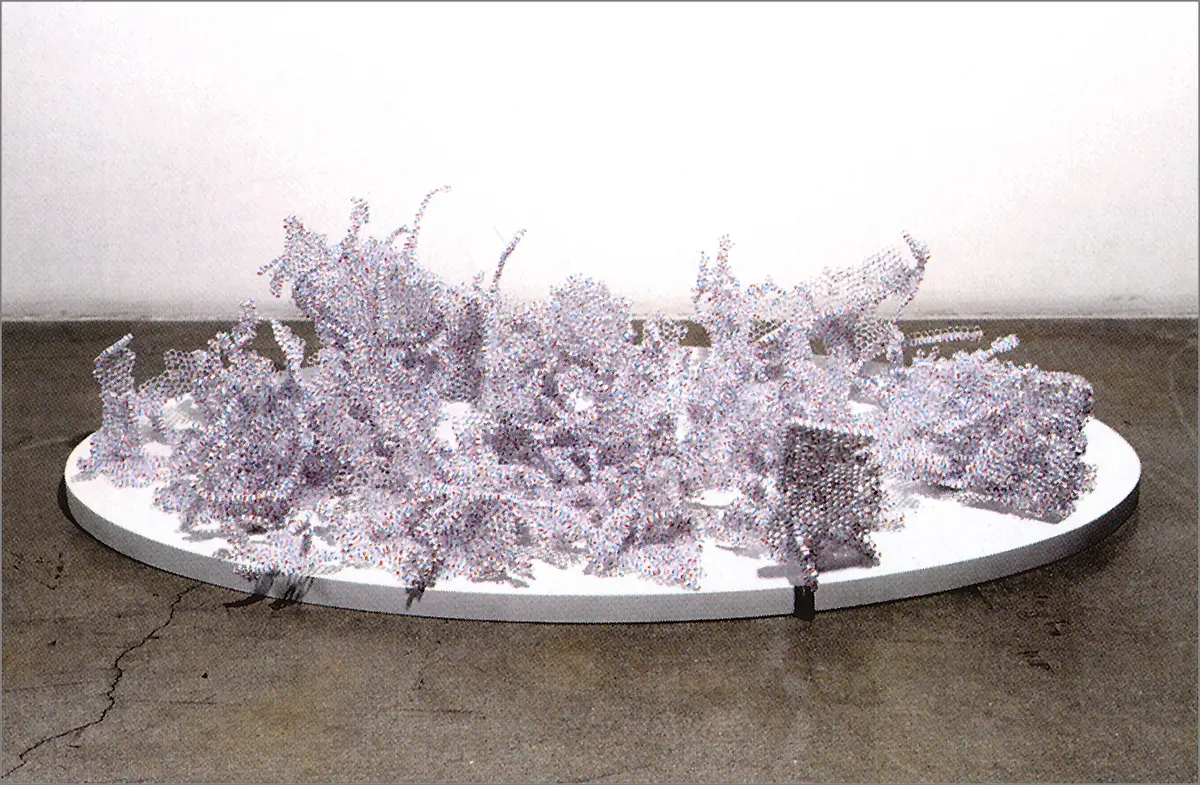
Abaroa, who profiled two sculptures and a video at Chac Mool as part of the Kurimanzutto group show, explores consumer society’s obsessions with leisure as the ultimate utopian ideal. His meticulously handcrafted sculptures, built of small, cut plastic-straw pieces, evidenced a dry and satirical humor. Loosely related to a Jean Baudrillard’s text that muses about America, Abaroa’s Amusement Park parodies the mindless frivolity of a city, a nation, indeed a world dedicated to pursuing mass entertainment. Erudite and condescending, Abaroa’s unassuming Amusement Park features a large Ferris wheel in the center of an imagined park whose other entertaining rides seemed in the process of imploding.
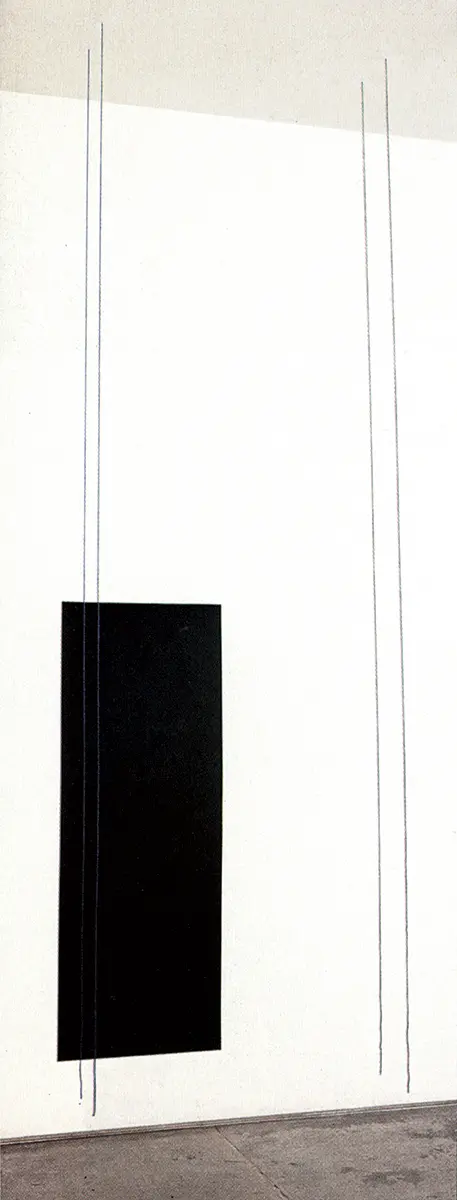
As if countering such conceptual implosions, Brazil’s Waltercio Caldas crafts exacting works. His installation and drawings at the Grimes Gallery accentuate perception’s shifting frames of reference. While ostensibly removed from the artistic discourses of social issues, his works nonetheless offered poignant considerations regarding the interpretation of what is seen. Underscoring the significance of viewer positioning in relation to the art object, his works probe perception as the basis of knowledge and the definition of the “other.” Transcending the formalism that his neo-minimalist imagery invokes, Caldas’ works explore visuality’s relation to constructions of reality. In doing so they study the fundamental premises inherent to any construction of international dialogue.
With its diversity of imagery, conceptual approaches, and social viewpoints this year’s L.A. International offered an informative glimpse of global artistic activities. While the commercial objectives of the event may only have been modestly achieved, its significance in terms of encouraging and building international artistic dialogues remains significant. Despite a weaker-than-usual roster of scheduled lectures and symposia, the works themselves cogently presented some of the most seminal artistic dialogues of our times, making this year’s event artistically vital and memorable.
COLLETTE CHATTOPADHYAY