
Photographer and installation artist Ambra Polidori recently exhibited her work in two important spaces in Mexico City —the Galería Metropolitana and the Galería Nina Menocal. When we finally realize what Polidori is proposing, it is because she has gone back and forth several times down that trail we have just begun to thread. Her work is the restructured representation of a space in which disassociation rules permanently. That union of (many times opposing) elements is done with the authority who expresses her disagreement with the powerful governments around the world by restating them as a conceptually and structurally sound work of art.
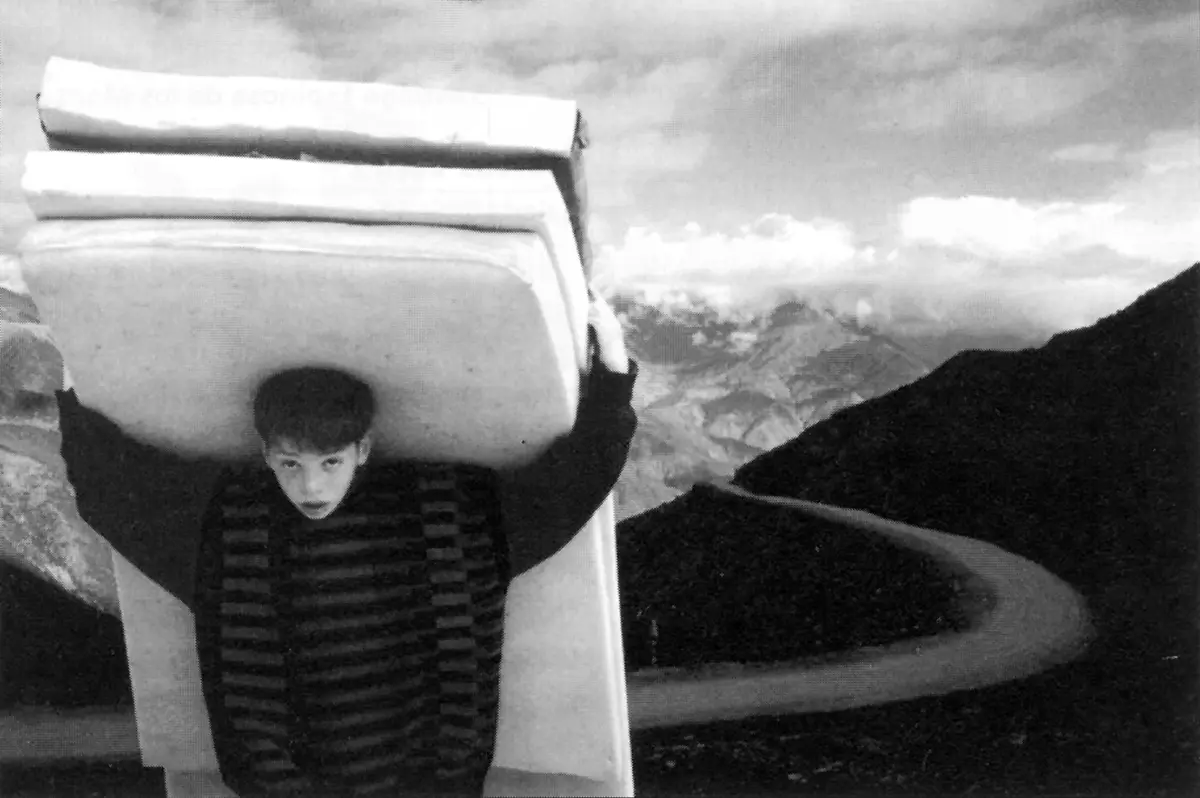
The media inform us not by specialists’ dissertations or sociopolitical analysis, but by images whose force must sell millions of copies. Polidori uses those images, but she chooses the works of both those who hold the scepter of power to disseminate the official story and those who assume themselves as the eternal victims. On the one side, presumed henchmen, on the other, professional martyrs; the image drawing them prototypically wouldn’t appear to have the same effect when this photographer’s gaze touches it and gives it a new order, new rules of artistic coexistence that are reflected in the work we are seeing.
Dreams became nightmares. Their world, with their strange assemblage and very particular grammar and esthetics, is there. Not always what is dreamed of is yearned for. In order to discover that, sometimes it’s necessary to pull those images, and once they’re outside our heads (and no matter how implacable and imposing they may seem to our eyes), they have quit being something belonging to our insides and have distanced themselves and have become a possible dialogue, a conjuration of the pains caused by the most terrible side of the human condition.
In the video Grado Cero (Zero Degree) we find that a man’s melancholic chants coexist with the news of shootings between Serbs nationalists and Croats and Slovenians. From the holes they left in the walls and window, one could hardly tell where the bullets came from. Another impacting video is the one with the woman crocheting at the right-hand side of a rectangular projection. On the left-hand side, someone is picking up a spatula of blood that has been spilled on the floor. It is to draw and “undraw” the mosaic after a massacre — still rhombus-shaped, despite everything that’s terribly beautiful in their color and shape.
Polidori shows openly her annoyance toward the events and lifestyles of her times. Through her work, she demands that a new political culture be in place to apply and dignify all that has to do with human rights. From her singular position as an author/editor, she frequently has placed in her works not her own words but those of philosophers such as Ludwig Wittgenstein, E.M. Ciorán, and others.
In the video Punto y aparte (Period) we can see, on the left side of the screen, a pair of hands washing themselves under a stream of water. On the right-hand side, we see the images that a journalist picked up somewhere in Africa, where he witnessed a summary execution of a peasant who apparently had been confused as belonging to another tribe. The interviewer several times asks the captor whether he is going to kill his hostage. Off-screen, the journalist tells the prisoner that he will not be killed —perhaps a last, futile attempt to lessen his pain before the final showdown. On the other side of the screen, the pair of hands wash themselves insistently, tirelessly.
We are before events that contain within themselves terrible truths and irritable nonsense. When Ambra Polidori places before our eyes an assemblage of images —her own or belonging to a news agency— it is obvious that the terrible thing we watch does not accept an explanation of itself, although the causes that took the author to propose diverse subjects with a determinate language, those at least deserve to be described.
When in Ambra Polidori’s works we see the texts and photos she’s selected, or the installations’ strength and expressiveness, we have the sensation that this artist has an intense internal turmoil that has generated an oeuvre of great visual potency and multiplicity of readings. Why this struggle? Because within her work we can simultaneously find the most vigorous images attesting to human cruelty as well as generosity, or to enraged brutality and the delicacy of life.
It would seem that this internal contradiction is like an ancient bifid figure: the face of good and evil in a single being. This being in itself is not good or bad: it simply is. That is where its existential fascination lies —in its authenticity. In Polidori, loyalty to an image is an obligation, a mandate requiring an indefatigable analysis performed with utmost honesty.
She researches mercilessly the foundations of reality without delegating her work or leaving it without a sense of criticism and letting be a mere visual fact. She places the accent precisely on the strength resulting from her semantic inquiries, in the images she has selected, giving a new, highly-expressive voice to that which she has processed.
Now we know that whatever Polidori presents does not require a certification of “false” or “true.” Even though everything we have seen has its origins in real events, and regardless of whether all the images before us have been borne out of what’s real, it is also true that they tell us less about the racial or political conflicts in Serbia, Chiapas or Rwanda and much, much more about the men, those disturbing and outrageous protagonists behind the stories.
SANTIAGO ESPINOSA DE LOS MONTEROS