It seems that at this point in the history of art, we have not only assumed but also accepted with great pleasure, the fundamental role that the market plays in the development of art. And when I speak of pleasure, I am referring to the fact that many of us who actively participate in this game have left behind the romantic notion that we cannot—or should not—speak of art and money at the same time. Independent of the fact that some works of art still, quite frequently, command prices beyond all logic in international auctions, and the fact that we are not exempt from fraud and exaggerations in this sense, it seems that we are more or less reconciled with the idea that all of that is part of a more complex system, which also functions as an important stimulus for the promotion and diffusion of art in other senses. Even so, we hardly see ourselves in the situation of facing this aspect of contemporary art in its, let us say, “pure state.”
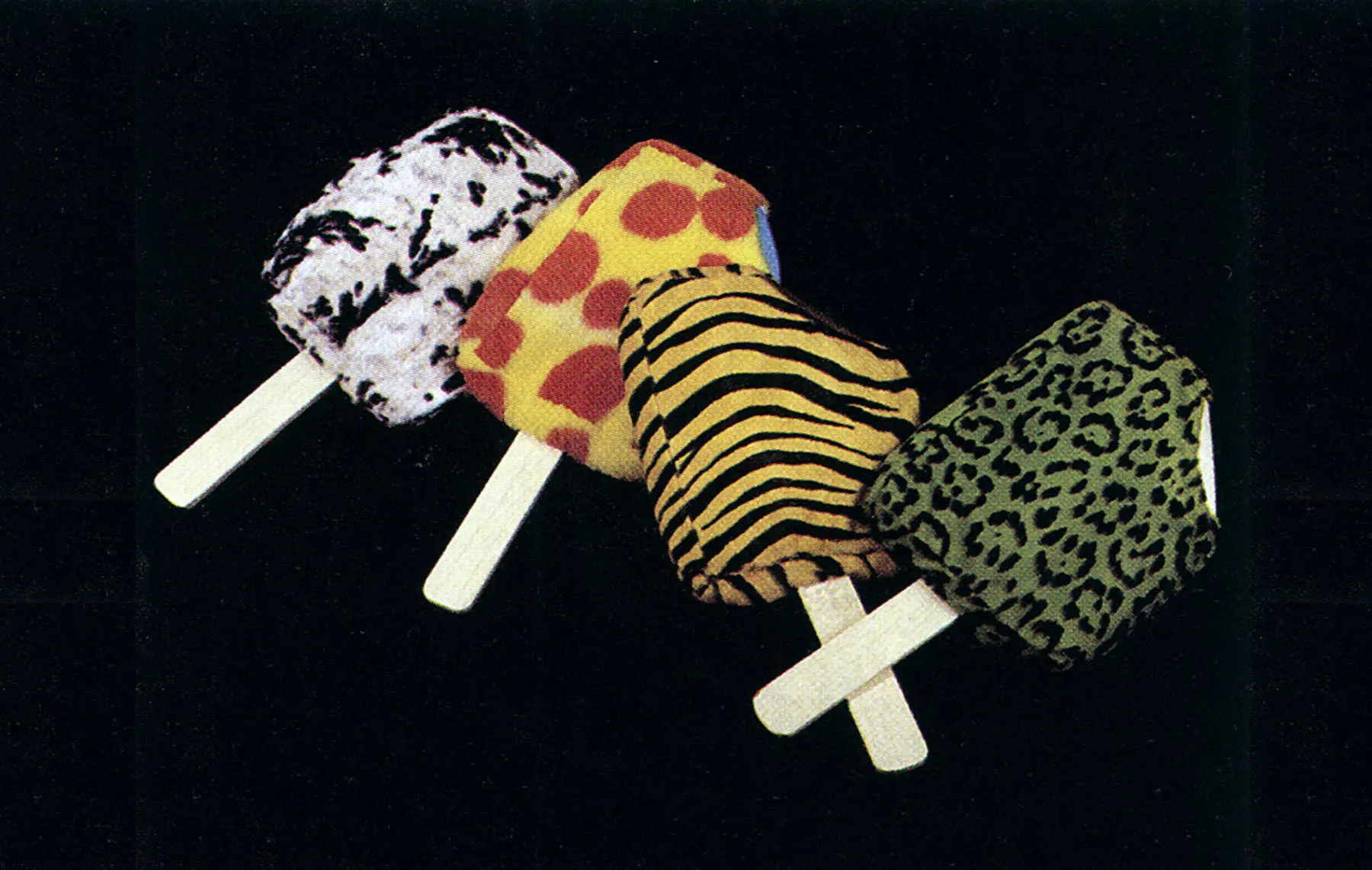
Within the world of art fairs, we could consider two basic categories. On one hand, there are those middle- to lower-middle-level fairs in which the demand of local taste is served without further ado, and in which there is not much risk either in the works or in the artists. These fairs obviously work well in commercial terms, but they naturally do not participate in the shape of the contemporary artistic imagination. On the other hand, there are fairs that somehow assume a significant cultural role, and in this sense, they are prepared to take a risk proposing, through their selection of galleries, a particular form of understanding art. These fairs have an important echo within the artistic system on all levels and they attract practically all participants within the sector: critics, institutions, collectors, students, and local fans. And then there is Art Basel.

The Basel fair may be the more important international one, not only because of the representation of galleries from Europe, America, Asia, and Australia, but also because it gathers—without having to call them—curators, critics, collectors, artists, and amateurs from all over the world. The halls and meeting points of the fair are a sort of Tower of Babel of art that exudes activity—and of course money—on all sides. Curiously, and this is what more than one purist finds surprising, it does not threaten, not even for a second, the level of quality of the exhibition pieces.
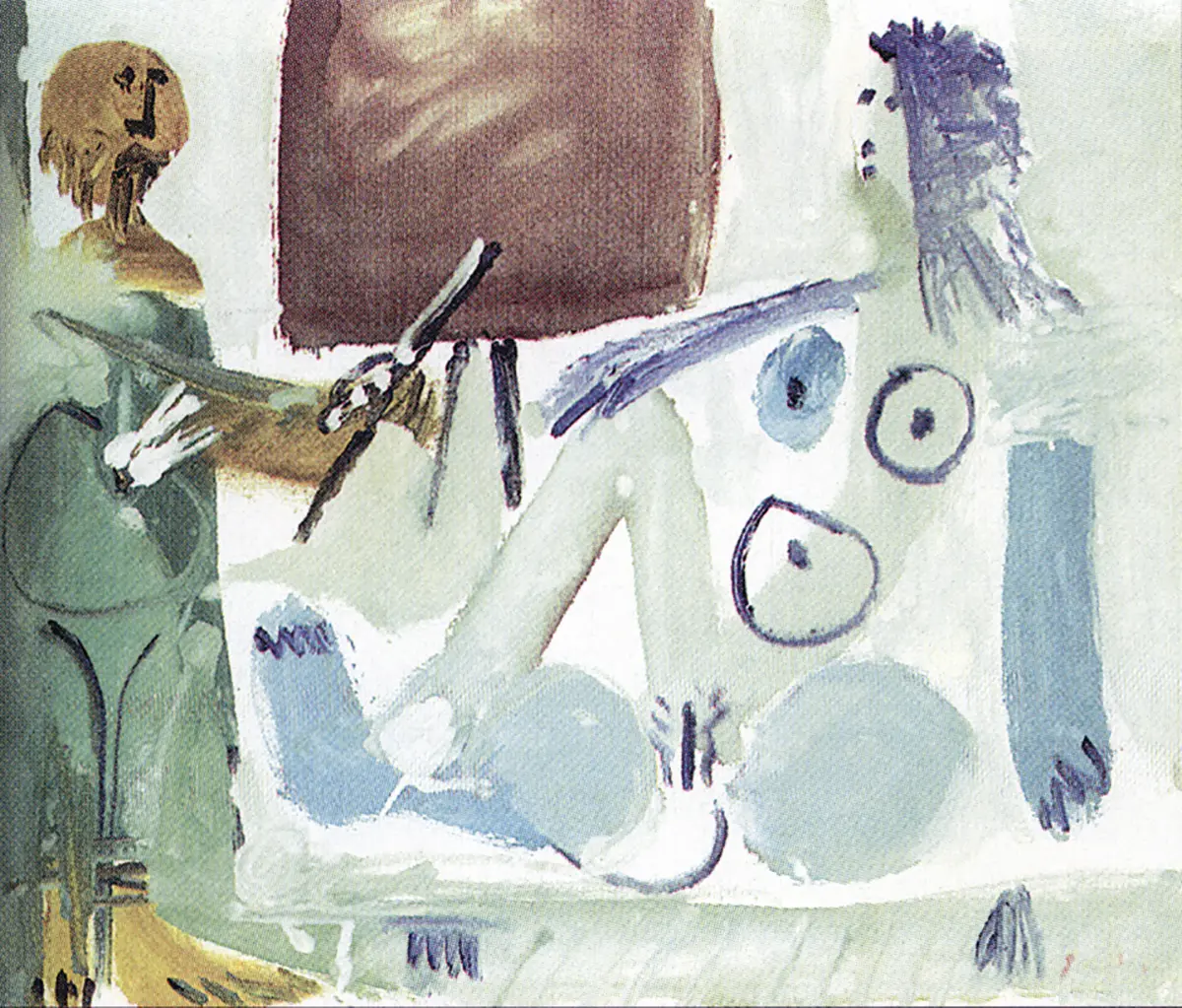
Basel is right in the middle as far as size and the public of Art Basel is predominantly professional or tied in some way or other to the art world. Thus the fair, in spite of its size and steadiness, continues to be framed as an event directed toward a very specific and considerably well-informed public. This assumes that the level of the works that can be seen there is equally high. Basel is thus the closest thing to a museum with prices and it is, in effect, surprising to see that with enough money everything is for sale: a wax pyramid four meters tall by Wolfgang Laib, or an Acromo by Piero Manzoni from 1960, not to mention the proliferation—almost saturation—of important pieces by Louise Bourgeois, Alexander Calder, Cy Twombly, Tony Cragg, Carl Andre, Giacometti, Andreas Gursky, and Richard Serra. A small lesson on twentieth-century art concentrated on two floors of a functionalist building whose center is felicitously occupied by a sort of food court in which the most elegant collectors and art dealers taste a veal sausage while donning the strictest black attire.
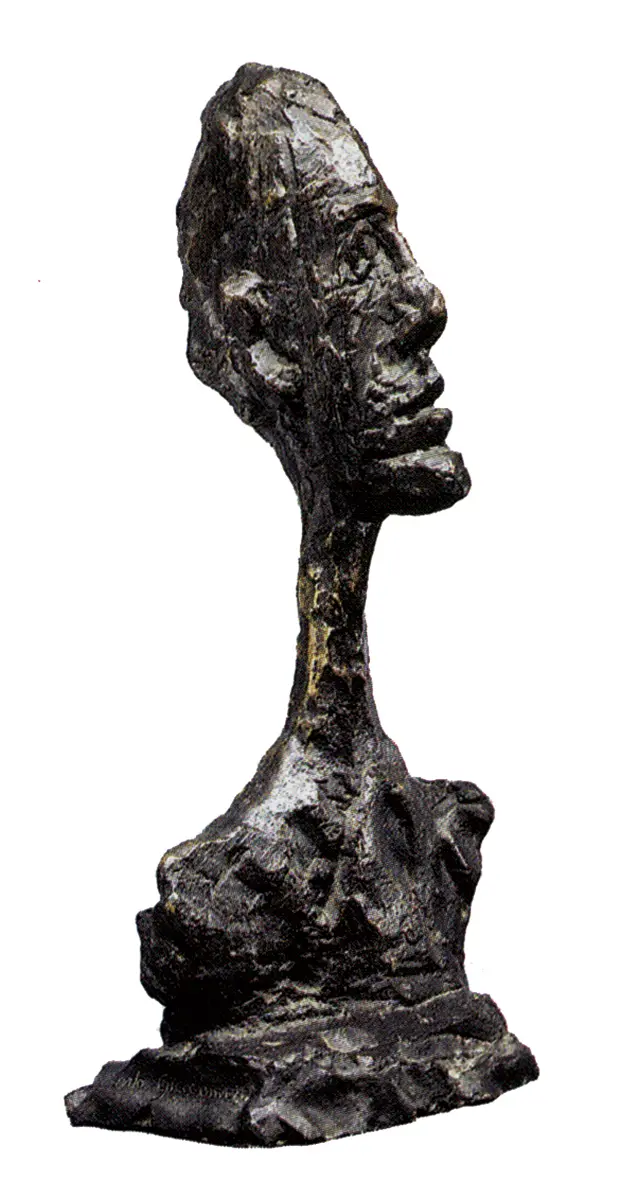
Traditionally, the first floor is dedicated to twentieth-century artists who are already considered historic; and among the stagnation of works by Picasso, Albers, Bacon, Chillida, Braque, de Kooning, Feininger, Miró, Kandinsky, Klee, and Dubuffet, it is possible to find pieces by more contemporary important artists like Serra himself, Warhol, Morris Louis, Basquiat, Clemente, Claes Oldenburg and Beuys. It seems evident that this selection hardly lends itself to errors, and one thus enters the second floor, where the most current art is exhibited, with greater distrust.
Sculpture and video proliferated in this section, although we also found very good paintings by emblematic contemporary artists like Alex Katz, Helmut Federle, and Gerhard Richter. But it was the color photography in enormous formats and brilliant finishes that seemed to be formulated as triumphal language and therefore made clear the need that still exists to purify these proposals: Jeff Wall, Andreas Gursky, Roland Fischer, Axel Hutte, and Walter Niedermayer packed the stands and halls among a large number of imitators of lesser renown, though just as colorful. Photography “as such” was concentrated in Art Photography, the section dedicated exclusively to that medium, where the historical small format in black and white was favored. However, the same thing did not occur in Art Edition, the section specialized in graphic work, which we could assume lends itself better to anachronisms. Here we found editions of fully contemporary artists: Bruce Nauman, Ed Ruscha, Robert Graham, Anish Kapoor, Tony Cragg, Vija Celmins, Shirin Neshat, Jake & Dinos Chapman, and Damien Hirst demonstrated the up-to-dateness of the works produced in limited editions.
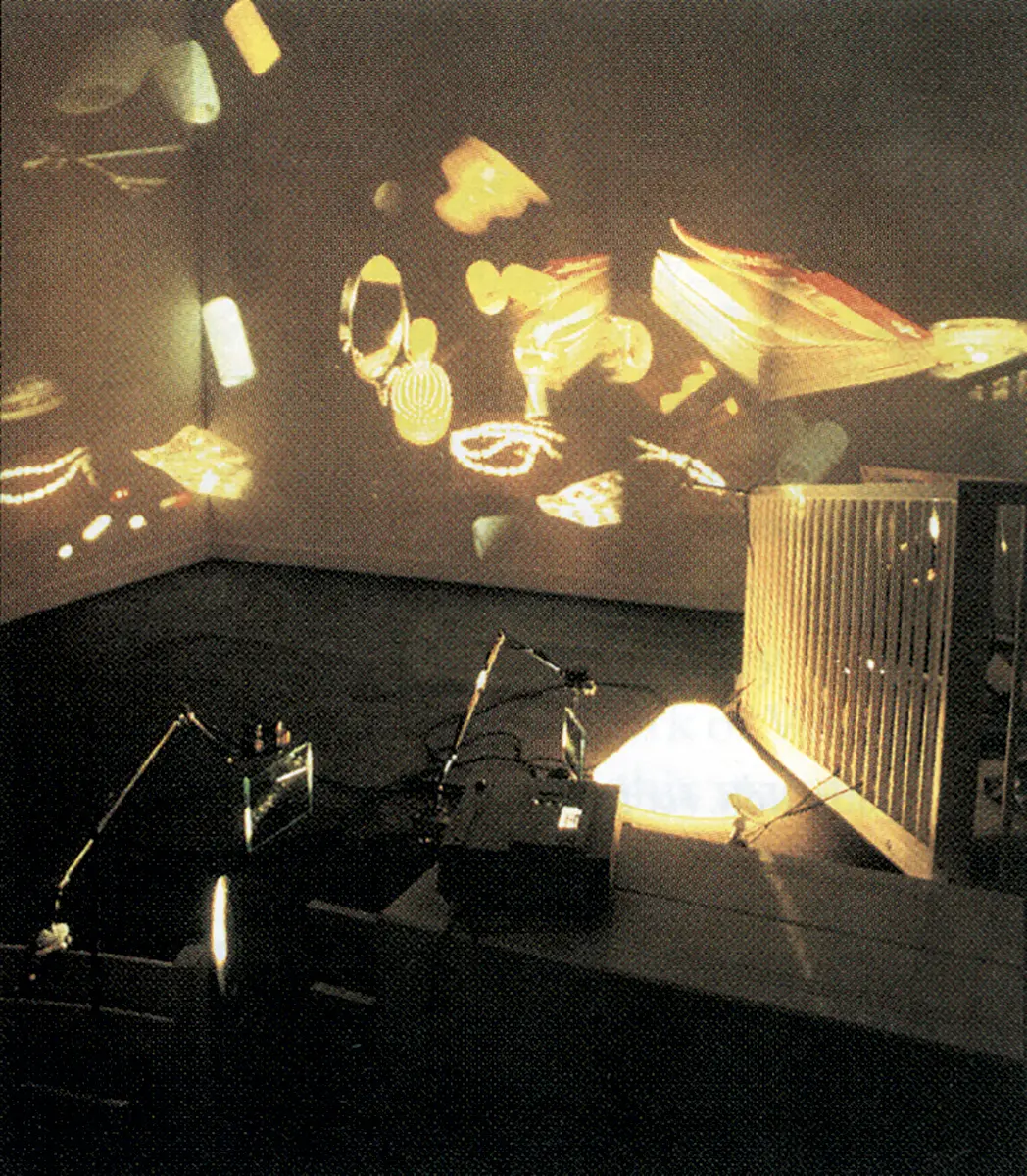
In any case, this is merely a superficial description of the event, and since each person speaks of the fair according to his or her own experiences, I prefer to speak of a group of works that were memorable for me: Francis Alÿs’s video animation presented by the Lisson Gallery in which, before the unstoppable and artificial laughter of one of the absent spectators, a man constantly trips, only to resume a trek that seems infinite. Joan Prats presented a video projection by Eulàlia Valldosera in which a man and a woman ran toward one another on the baseboard of the stand in order to pass through one another like ghosts destined never to meet. One of the most suggestive pieces was the video installation that Bill Viola presented in the Anthony D’Offay Gallery, in which the best intimism à la Vermeer was mixed with the leading technology and the poetics of the human, where Viola became increasingly expert.
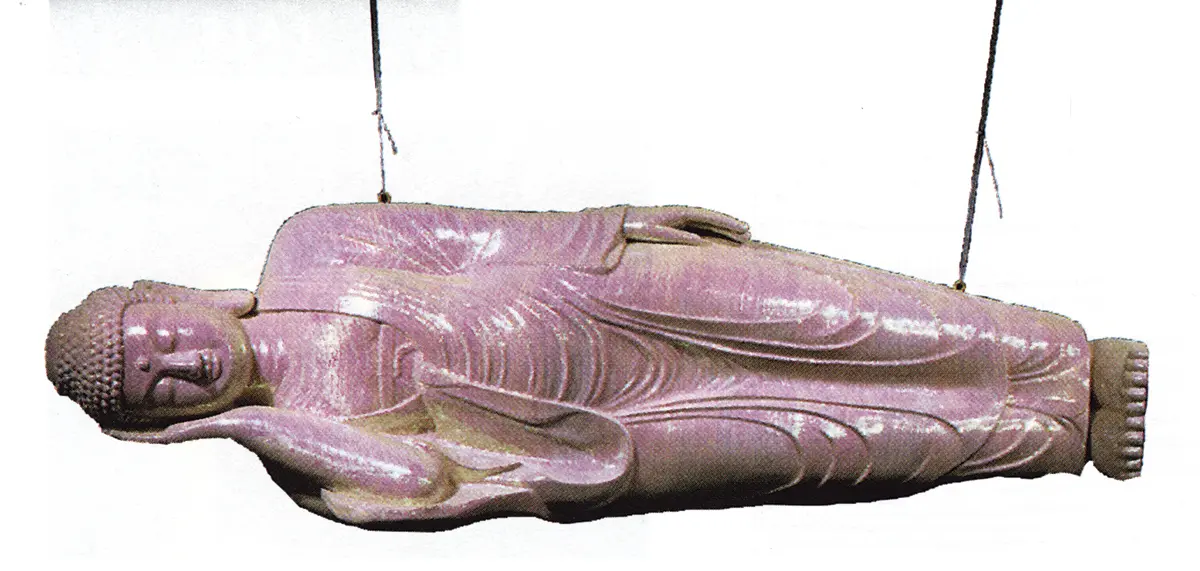
In this part of the fair, we could also see good examples of art in video elaborated with intelligence, thus taking advantage of the resources of the medium. Slater Bradley presented Statements: a young woman with a melancholic gaze is captured by a camera while she leans over a bridge on the Seine. A visibly disturbed woman sits on the cornice of a building and seems unable to look away from what terribly awaits her below, a collection of suspended moments that, through the musicalization and temporalization of the images, are able to pull us into the distressing and barely suggested universe of the subjects spied on by the camera. Swedish artist Annika Larsson generates a similar moment of tension, but which alludes to a more cinematographic aesthetics: in Dog, we see how a smartly dressed character barely holds a large gray dog with an extremely thin chain. The camera makes the rounds of the gaze of this character who does not blink at another man, who is equally cold and who constantly challenges him to make the dog attack. With less humor than we normally find in him, Scottish artist Ross Sinclair imagines in Real Life a fictitious story for the English island of St. Kilda that had to be abandoned by its inhabitants when it was unable to become self-sufficient. Through the re-creation of cinematographic images full of nostalgia and poetry, Sinclair alludes to themes that interest him most: identity, displacement, and the relation to territory in the context of dailiness. However, we must recognize the fact that some of the most impressive works were found in the building adjacent to the fair, where Art Unlimited was presented: a selection of large-format installations proposed by some of the galleries participating in the fair which, naturally, were also for sale. Outstanding in this section was Peter Kogler’s Op floor, which did not stop spinning to the rhythm of the most up-to-date deep house; For the worshipers (2000), an attractive and smiling Buddha three meters tall, covered with rose-colored glasses that Sang-Kyoon Noh hung from the ceiling of the loft; Cinquante-Fifty, four melodic video projections to be installed in a public parking lot by the ever-surprising and amusing Pippilotti Rist; and the macro-installation 1:7, 777... (2001) in which Karin Sander proposed that the public did their own body scan right there in 3D, and thus become one of her sculptures.
As for the Latin American presence at a fair where “everyone who is someone is there, and everyone who is there is someone,” we should not be surprised that only the Brazilian galleries had a significant presence through three of their most emblematic representatives: the Brito Cimino, Camargo Vilaça, and Luisa Strina galleries. In addition, we found the presence of the Diana Lowenstein and OMR galleries to be more than deserving. This may serve to prove that, first, Art Basel is a fair in which there is no waste. But also that, although Latin American art significantly participates within a certain part of the sector, that does not substantially affect its still scant presence within the real market of international contemporary art, with the exception, of course, of certain individuals who have been able to situate themselves and to be in demand within it: Alÿs, Gabriel Orozco, Alfredo Jaar, and Vik Muniz, for example, who have also entered, first and foremost, on account of their representation in non-Latin American galleries.
A fair like Art Basel must serve above all to learn, in a direct way and lacking false discretion, how the economic mechanisms of artwork, but also to prove that the marriage between resources and quality is possible as long as professionalism survives. The experience is recommendable for anyone interested in any facet of contemporary art since, in the end, this extremely broad and random show of artworks from all genres and origins turns out to be as edifying and entertaining (if not more so) than some pretentious contemporary art exhibits through which politicians, stellar curators, and institutions pursue their fifteen minutes.
ISSA MARÍA BENÍTEZ DUEÑAS
Art historian, a specialist in contemporary art and art theory. She is currently a doctoral candidate at the Universidad Carlos III in Madrid.