
Every May, the Fundación Banco Industrial de Venezuela considers a far-reaching show in its yearly exhibit program, both in terms of quality and size. There is no lack of space, but these shows constitute a challenge for any curatorial or museographic design.
This year, Juan Carlos Palenzuela, a habitual contributor to this magazine, had the responsibility of curating an ambitious show of Venezuelan art spanning from the beginnings of the Republic —with the works of Juan Lovera, in 1830— to Alejandro Otero, one of the founding artists of Venezuelan modernity.
The show originates with the title catalog accompanying the show. A research period lasting several years gave room to the essay in which the curator sums up his considerations towards Venezuelan art; the Fundación took advantage and organized the first part of this project based on that essay. We’re still waiting for the second stage, which should be a review of the Venezuelan art from 1960 until today.
Several elements can be highlighted from the research on this ample period. Firstly, there’s a will to register not only the process of Venezuelan art as history but also its art and its transformations according to the country’s cultural changes. Palenzuela seeks to find artistic trends we can call our own with, on the one hand, the thought they generated among critics and the press, and, on the other, the ideal of art and its processes as synchronized with the construction of a nation.
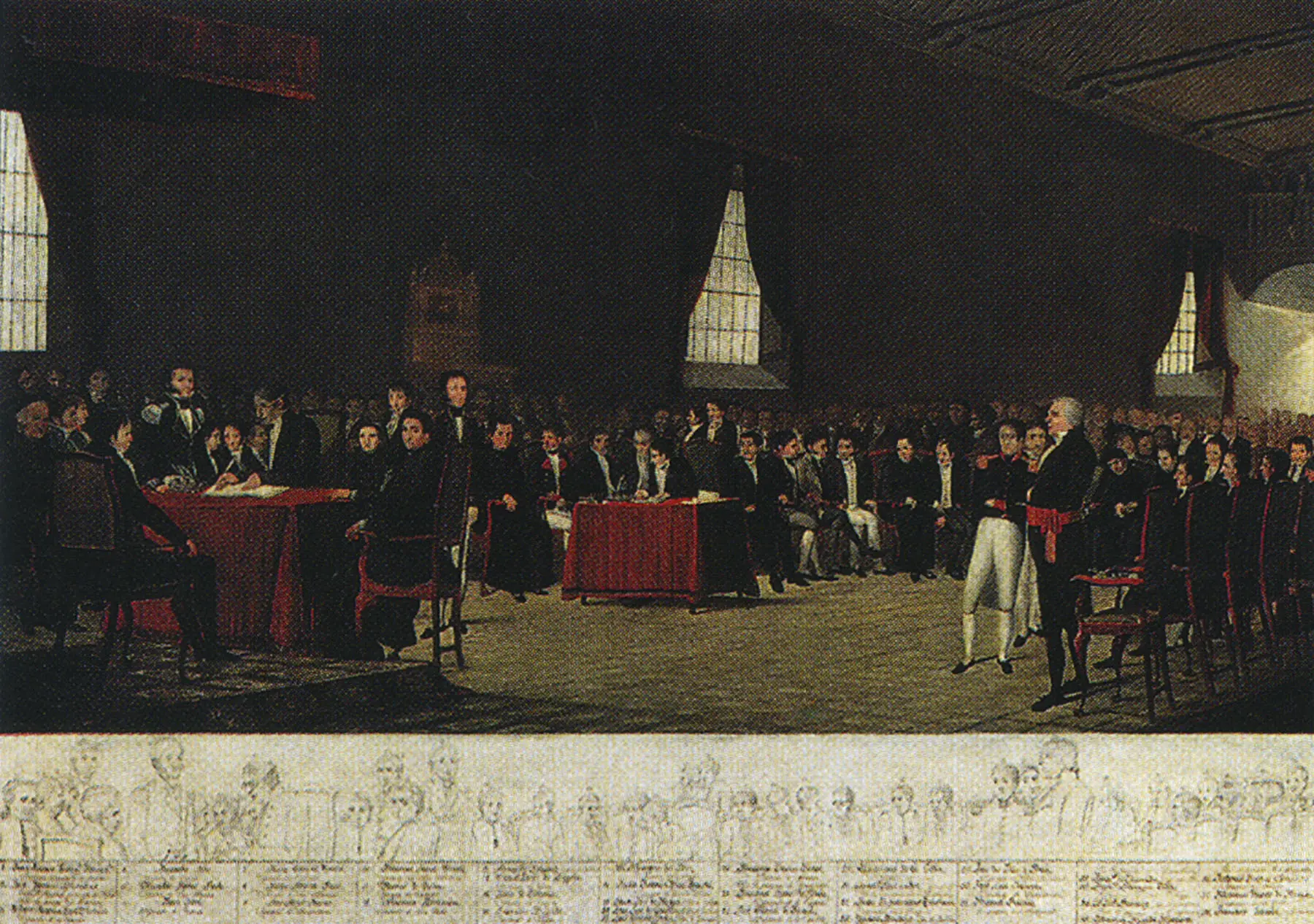
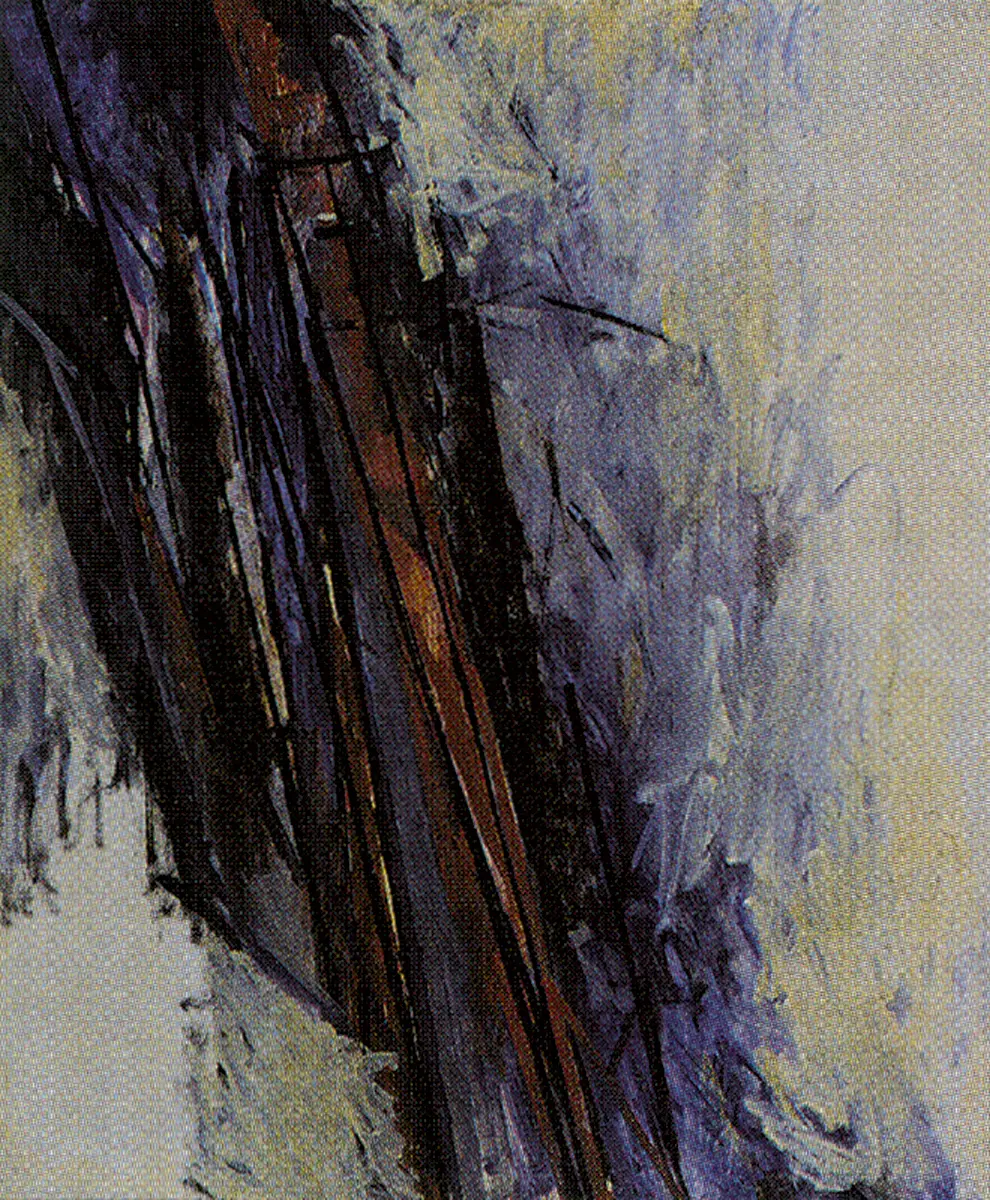
If we approach the exhibit in this light, we’ll understand the curatorial reading as being non-chronological (having all the elements to do it as such), and then opting to confront constant works from distant periods, such as, for example, La firma del Acta de Independecia (The Signing of the Independence) by Juan Lovera, alongside Coloritmo, by Alejandro Otero. The spectator will see “jumps” and similar contrasts throughout the show, although some sequences have time-period links (the landscape in the School of Caracas, for example) or perhaps a stylistic relationship (ways of seeing abstract art or the different figurative interpretations of a single topic). But all this happens silently, with the images themselves —without texts to guide the spectator around the hall.
The show lacked this sort of guidance that would provide information in situ so the spectator would know something about the works, trends, and key artists that veered the course of Venezuelan art. The show’s attention is centered around painting, which is the predominant medium during the 19th and 20th centuries. There’s a will to contextualize the country’s processes of cultural transformation by means of additional images exhibited in some halls, hallways, and common areas. These are documentary and graphic images complementing the show itself: Posters depicting several moments in our political history; references to humorous period magazines transferred onto certain walls; sequences of postcards and photographs attesting to our urban past —which we recognize as our immediate surroundings despite the fact that today they are nonexistent; map and planes of old Caracas; first editions of books by writers and researchers of the time. All of this, plus the gallery of portraits that Alfredo Boulton took of the country’s intellectual elite, in order to provide a composite picture of our cultural evolution.
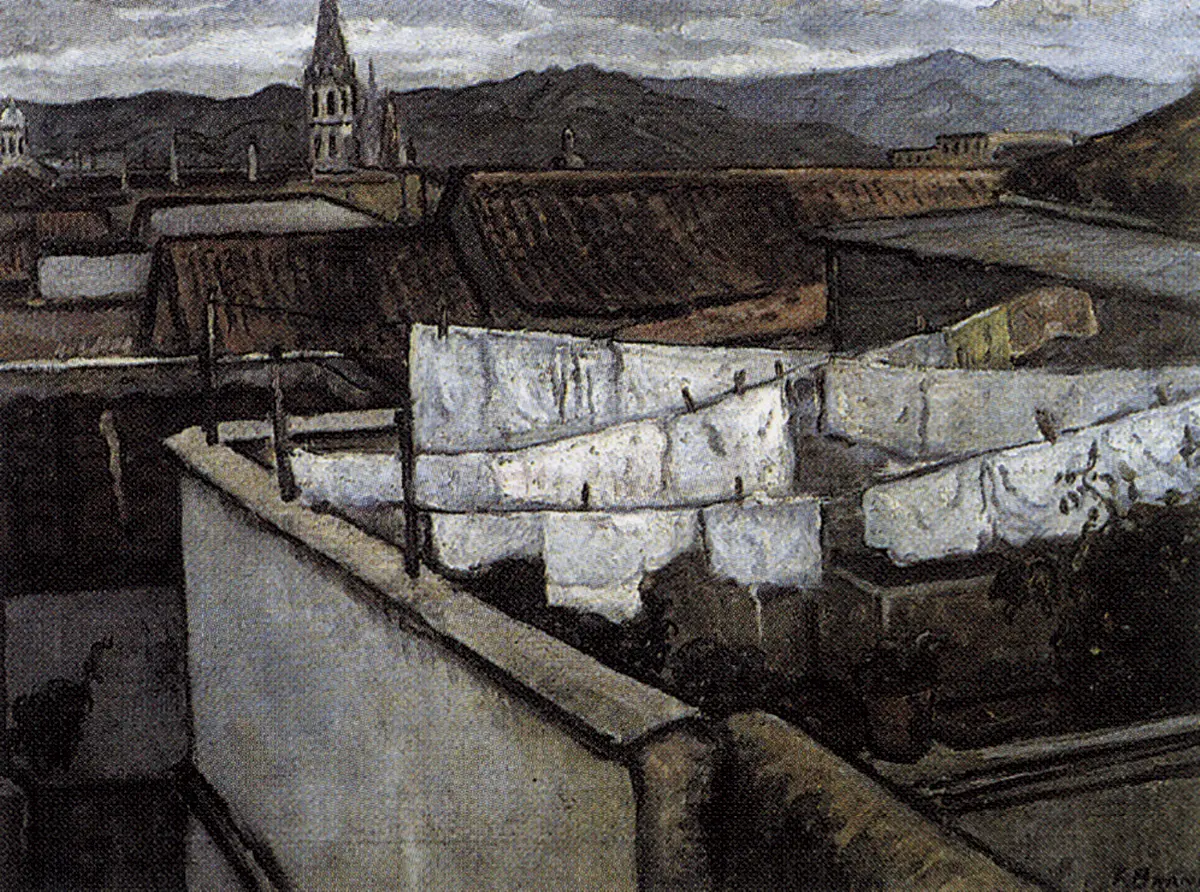
In Venezuela, there have been brilliant and audacious moments amidst austere cultural contexts —sometimes in terms of resources, other times in terms of appreciation (and some others, due to sheer lack of conscience). However, these situations have been overcome by key authors and artists that have changed the outcomes. There were important personalities besides the two mentioned above: Martín Tovar y Tovar and the masters of 19th-century academia, or the artists belonging to the Círculo de Bellas Artes (Circle of Fine Arts), a group formed in 1912 that valued landscape as a topic and genre; or their successors from the Escuela de Caracas (School of Caracas); or Armando Reverón, alone while at the same time universal; or the multiple interpretations of reality by those belonging to criollismo, social realism, magical realism, and finally by those who defended abstraction starting from the actions of Los Disidentes (The Dissidents) and the artists from the Taller Libre de Arte (Free Art Workshop).
For more than one hundred years Venezuelan art debated between ideology and its forms of representation. Against 19th-century academicism, there was a first dissidence at the beginning of the 20th century, with the Círculo de Bellas Artes. Freedom of creation was promoted, both in terms of theme and style. The artist defended his craft as being above ideology and political art. Landscape quit being a mere complement and turned into a genre in itself until it reached the point of saturation when artists from the 1940s rejected it while urgently searching for a renovating force. Between the ’40s and the ’50s, Venezuela woke up from its lethargy and began a dynamic modernization. In this sense, the country also had a change of face. Caracas, for example, —a small town crisscrossed with donkey trails— put on republican attire, and the modernization process was led by Antonio Guzmán Blanco during the last 30 years of the 19th century. Slowly but relentlessly, the city became a cosmopolitan center with the renovation carried out by Carlos Raúl Villanueva during Marcos Pérez Jiménez’s dictatorship (mid-20th century).
The period between the 40s and the 50s was fruitful in terms of the development of a way of thought and the urgency of taking political sides. Art questioned itself in terms of its reason for being in a developing nation such as Venezuela. Even though it existed from its beginnings, the controversy of abstract art developed in 1957 when Alejandro Otero and Miguel Otero Silva discussed it openly in the press. Today, these ideas, compiled in later editions, are a necessary bibliography for the study of the country’s art. The spirit of transformation can be clearly felt in the show Arte en Venezuela. 1830-1950.
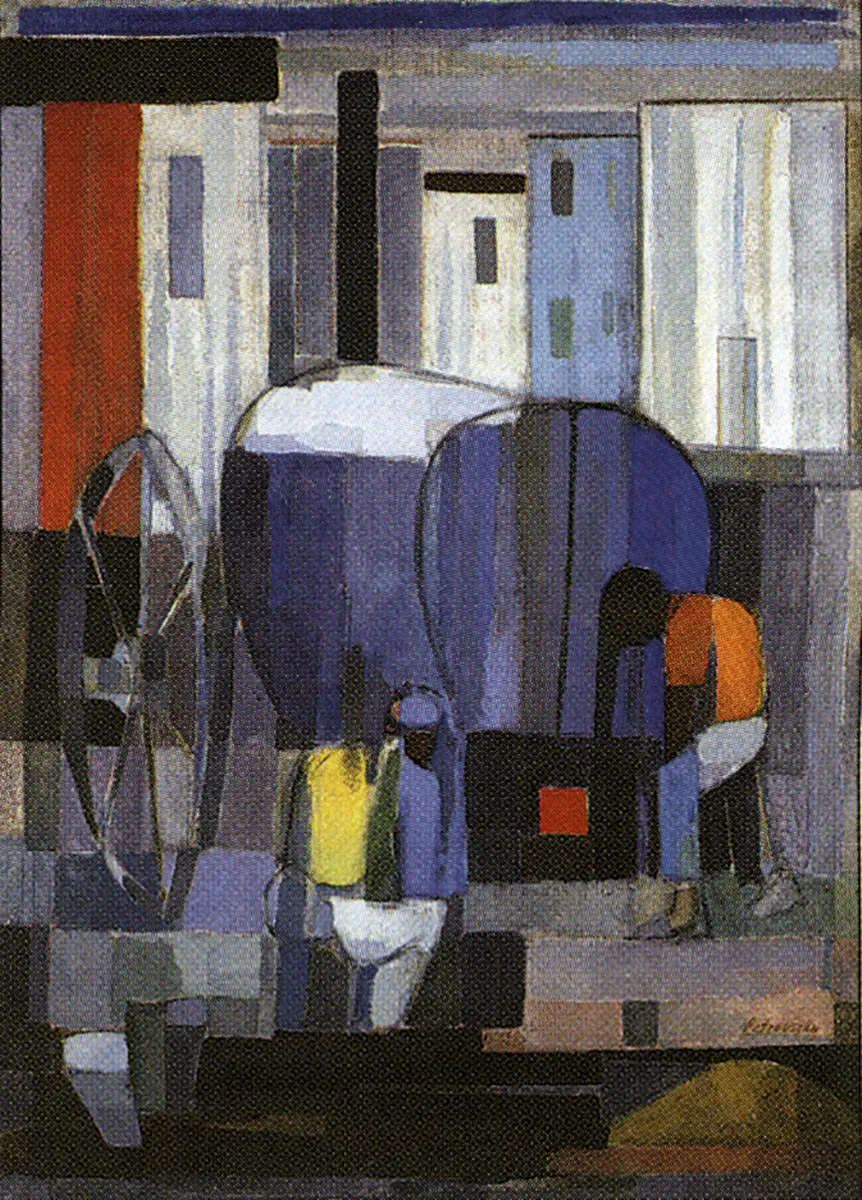
The selection of works is one of the aspects to be highlighted in this show. Many belong to private collections, hardly exhibited before. Pieces such as Lovera’s La Firma del Acta de la Independencia, for example, were known until now only through art books, although it’s an obligatory reference work. On the other hand, little-known artists were highlighted with virtually unknown though excellent pieces: Bernardo Monsanto, Pedro León Castro, Próspero Martínez, Rafael Ramón González, and Hugo Batista. Well-known artists such as Marcos Castillo, Héctor Poleo, Francisco Narváez, Luisa Palacios, Mario Abreu, and Jesús Soto, among many others, were highlighted with little-seen albeit equally revealing pieces. Included also are works awarded in the Salones Oficiales de Arte Venezolano and in different editions of the Salón Arturo Michelena —organizations that in their time were important for the transformation of Venezuelan art.
All efforts in the global review of a country’s art and culture are important. On this sense, Arte en Venezuela. 1830-1950, both the exhibit and the catalog, undoubtedly enriches the vision and perception we have of Venezuelan art.
SUSANA BENKO