
Motivated by an urge to break from time-honored conventions of figuration and academicism and prompted by Uruguayan artist Joaquín Torres-García’s plea for a distinctive art melding European modernism with rationalist pre-Columbian mythic expression, several South American artists initiated an exchange of ideas with Europe that spawned an inquiry into nonobjective geometric abstraction between 1930 and 1980. A survey of key Latin American abstract movements and artists, curated by James Cuno and Mary Schneider Enríquez, is on view at Harvard University’s Fogg Art Museum through November 4, 2001. On loan from the distinguished collection of Patricia Phelps de Cisneros are sixty-five paintings, drawings, and sculptures by twenty-six artists, representing just five percent of the collection’s holdings. Though neither challenging nor confrontational, the exhibit illustrates the varied ways in which modernism was absorbed and expressed, and exposes a North American audience to a notable and underrepresented segment of one of the twentieth century's salient artistic phenomenons, subsequently providing a global picture of abstract art.
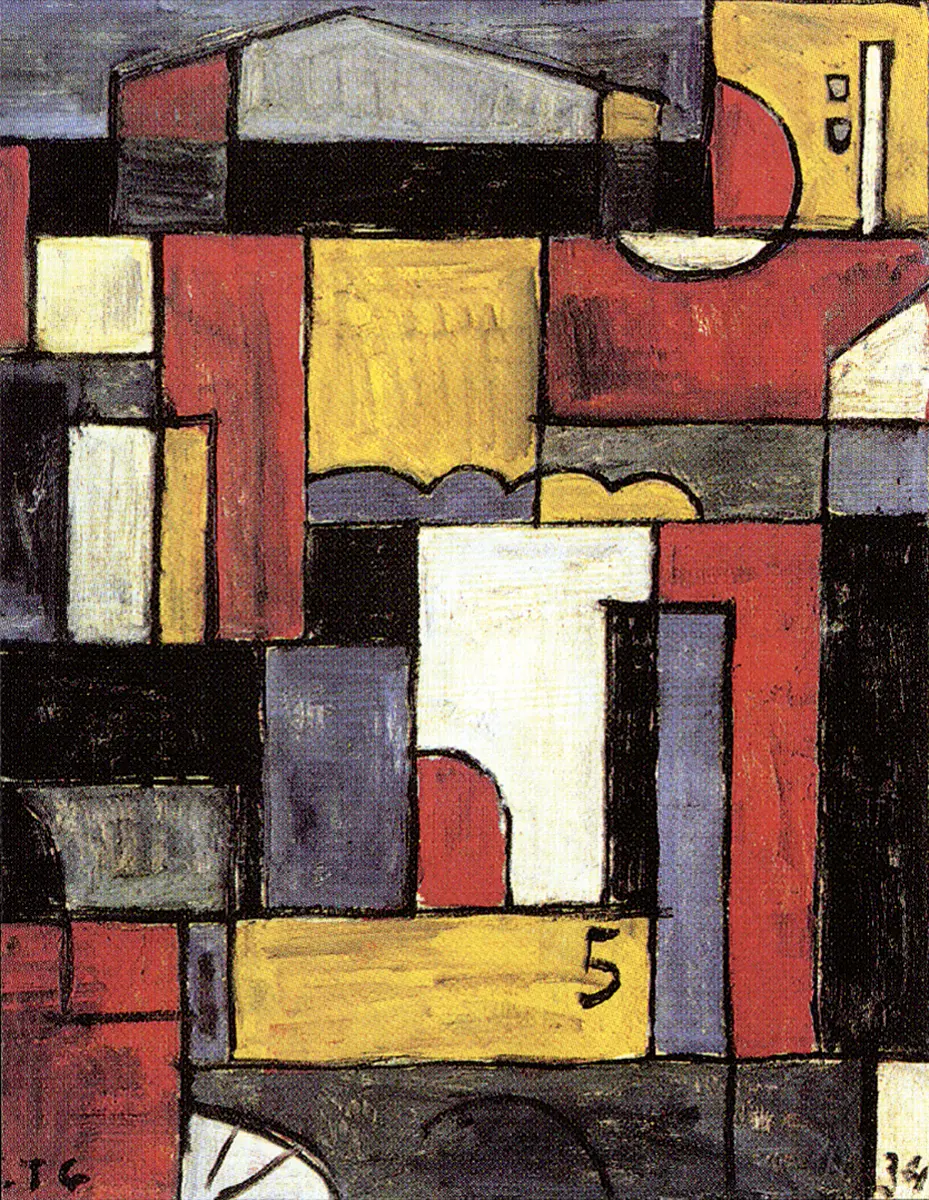
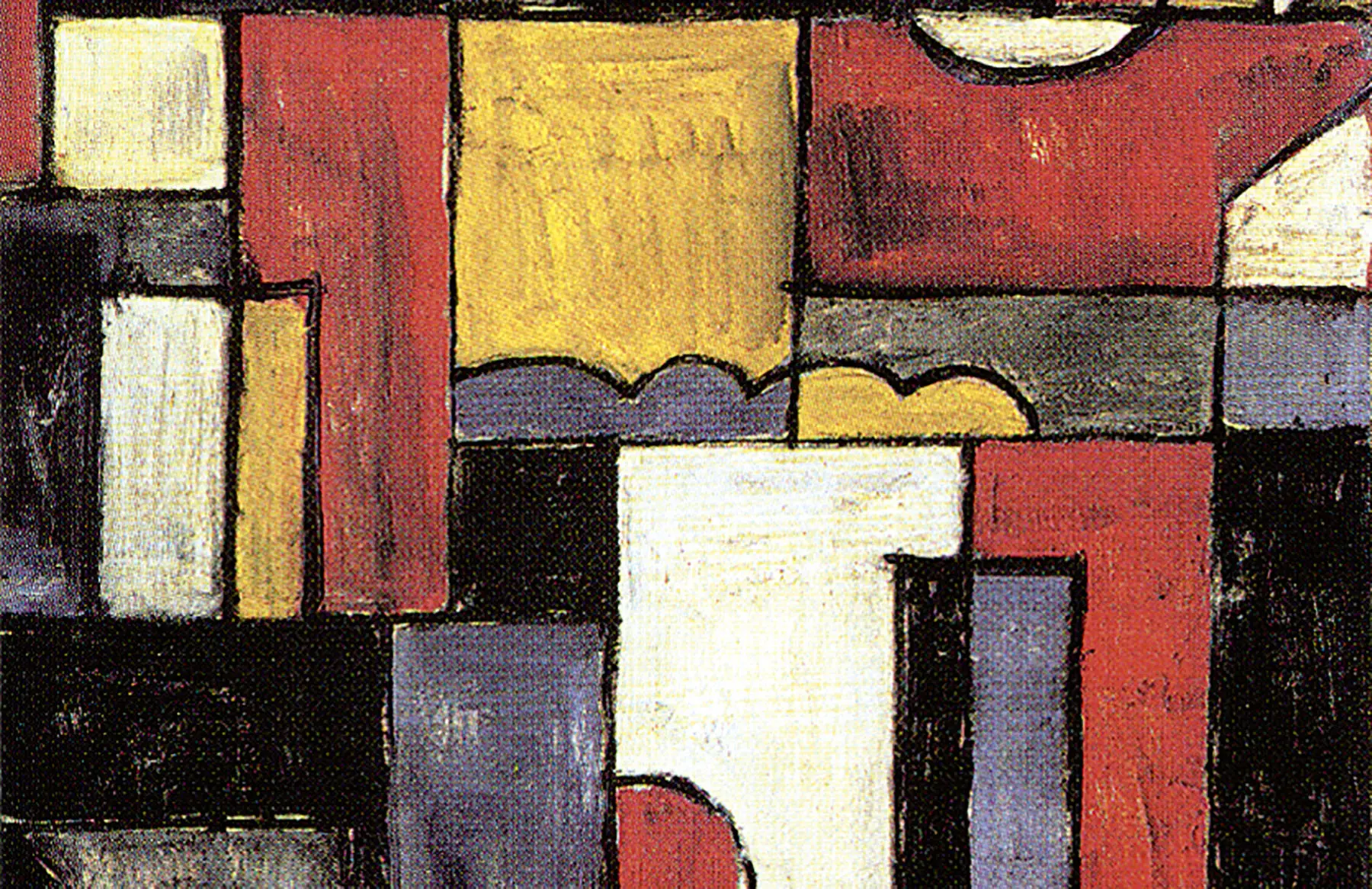
Filling three galleries as well as the museum’s hallways surrounding them, the show is installed chronologically, conceptually, and geographically, beginning with Torres-García’s Locomotive with Constructive House (1934), one of the earliest attempts at abstraction, rendered with broad swathes of color fracturing the surface into a series of planes. Despite the modernist strategy of integrating figure and background, representational elements appear in this and several other works, such as Brazilian artists Lygia Clark’s Staircase (1948) and Mira Schendel’s Still Life (c. 1950). Cubist fragmentation and disintegration inhabit these canvases, where out-of-context objects hover over solid areas of color.
By 1938, in Construction in Black and White, Torres-García’s labyrinthine grid emphasizes the flat surface plane and the volume and space within the picture. The ensuing shadows are the only hint of the physical world. Torres-Garcia’s “universal constructivism” affirmed the visual properties of art itself and sought the union of art and objectivity. Based on the formal principles of Dutch artists Piet Mondrian and Theo van Doesburg, as well as theories by artists such as Fernand Leger, Victor Vasarely, and Swiss sculptor Max Bill, the urge to emancipate art from nature spawned assorted movements and manifestos as discussed in the scholarly bilingual exhibition catalog. Though divergent approaches to abstraction—intimating the universal or the local, the dispassionate or the subjective, the interpretive or the sensorial—were pursued, a nonobjective, democratic aesthetic, intended to unearth the elemental in art and evoke technological and social achievement, was universally advocated.
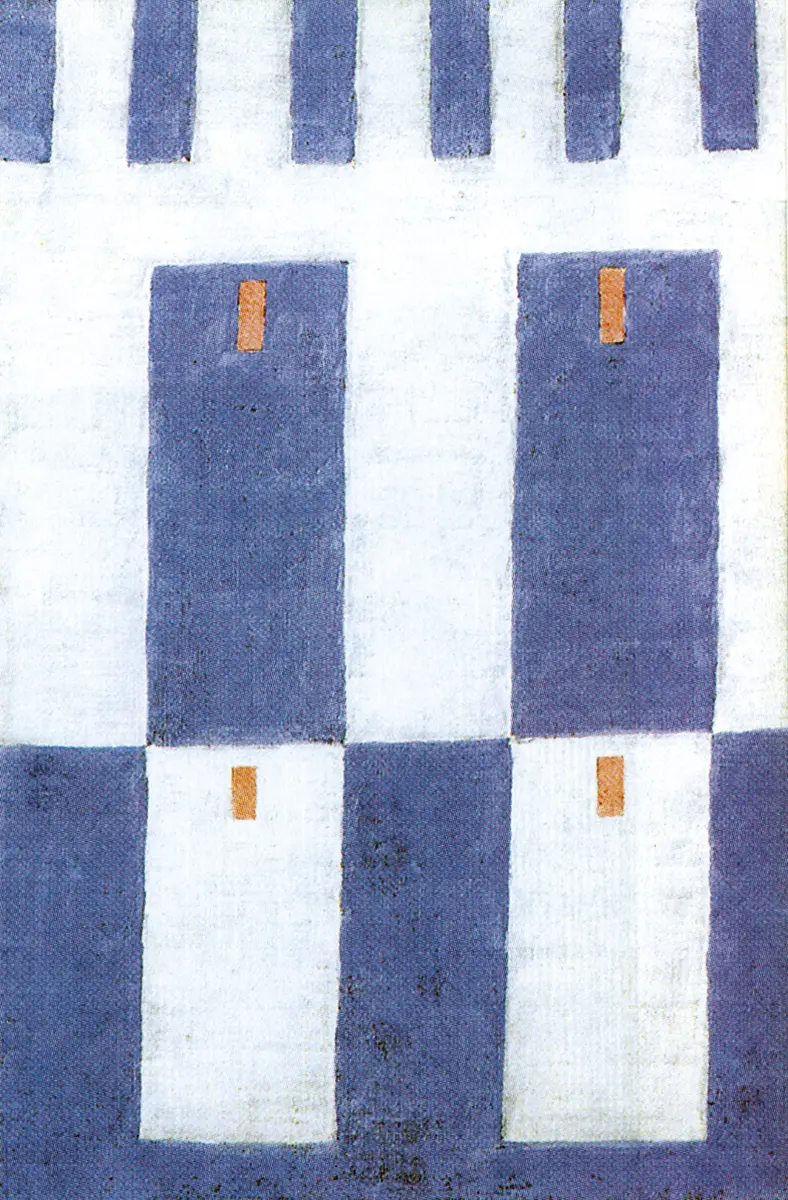
Argentine painters, the first to heed Torres-García’s call, emphasized rigid geometric relationships of line, plane, space, and color–what is classified as pure abstraction or concrete art. In Tomás Maldonado’s Development of the Triangle (1951), schematic lines dissect the two-dimensional picture plane with rational precision. Avant-garde artists also altered the conventional canvas shape, fashioning irregular, frameless canvases with blocks of color, as in Carmelo Arden Quin’s Trio 2 (1951) and Raúl Lozza’s Relief (1945), where four distorted solid-colored canvases atop an oval metal support would fit together like a puzzle if they were united, and exploited industrial materials, as in Enio Iommi’s Interrupted Continuity (1946), a rhythmic, serpentine steel line that appears to emanate from, and revert back into, a solid block of steel. Resulting from Venezuelan artists Alejandro Otero and Jesus Rafael Soto’s inquiry into Mondrian’s neo-plastic geometry was an awareness of two-dimensional ground, materiality, the nature of pigment, and shifting perspective. Rejecting his earlier attempts at mimetic art, still vaguely apparent in Large Blue Coffee Pot (1948), with its swirling masses of blended color expressionistically slithering up and down the surface, Otero delved into pure abstraction by 1950. In Colored Lines on White Background, the paint texture is palpable, and thin lines dart across and rupture the solid white ground. Otero often shattered formality with muddled patches of color intruding on methodical patterns, as in Colorhythm 38 & 39 (1958 and 1959), large-scale lacquer paintings. Soto is represented by several works—from his early semi-abstract chairs in Untitled (1948) to the kineticism he originated in the late 1950s. While sound and moveable parts powered by hand or motor are characteristic of kinetic art, exemplified by artists like Alexander Calder and Jean Tinguely, Soto and fellow countryman Carlos Cruz-Diez’s passive kineticism was rooted in Constructivism and sought to convey energy and movement through the optical vibration of light on static forms.
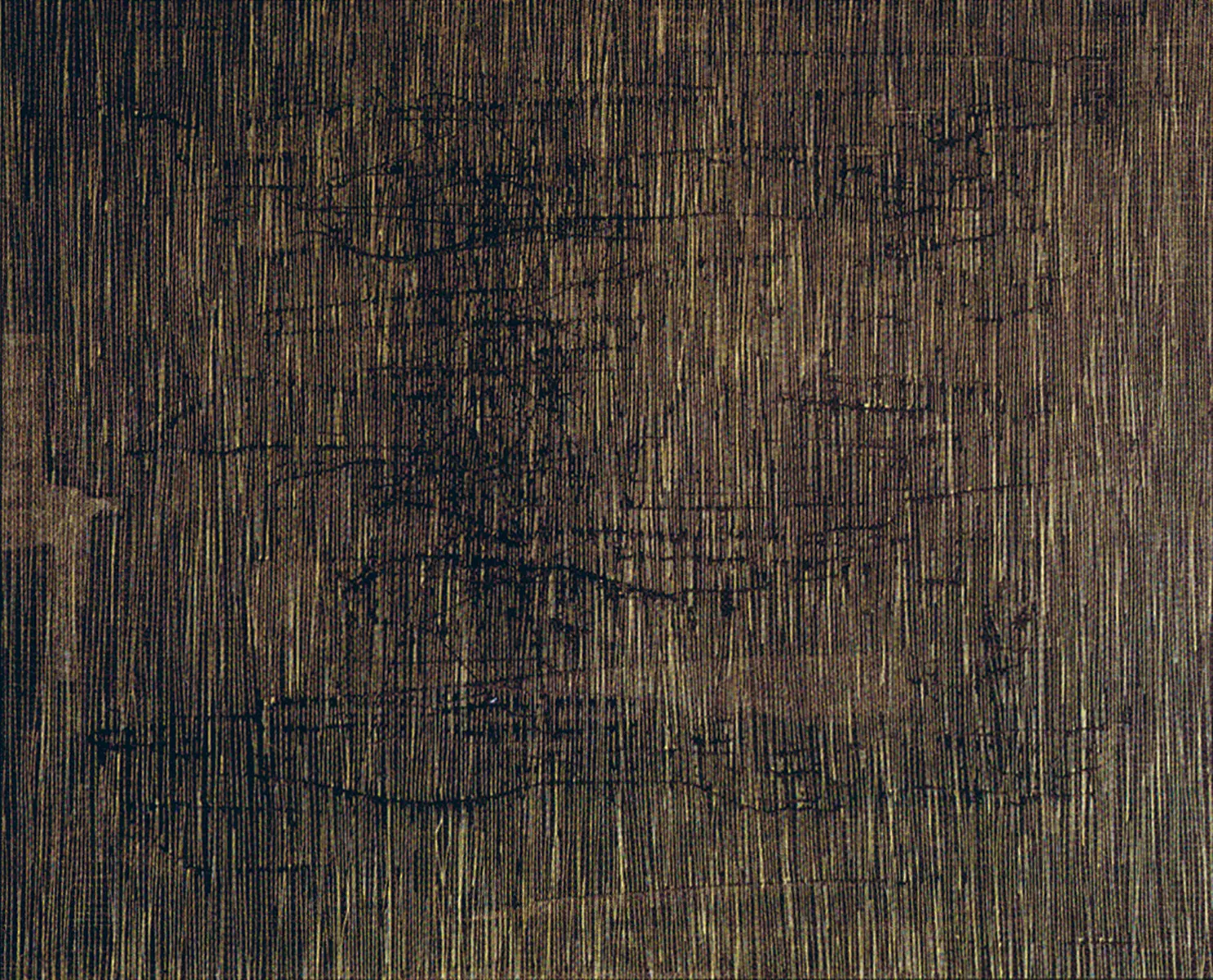
In a small gallery, examples of Latin America’s kinetic movement, which projected modernity and industrial triumph and was widely accepted by the government, are on display. In Soto’s Untitled (1962), a wire above the patterned ground generates movement. With overlaid objects, repetitive arrangements, and crossed planes of parallel metal lines in Untitled (1958), and Paint in Vibration (1960), visual tension and resonance materialize. In Cruz-Diez’s Fisicromía Series (1960 and 1969), shifting colors and lines emerge, recede, and mutate as the viewer weaves back and forth in front of the built-up canvases. Creating a moiré pattern by juxtaposing dissonant colors and altering the position and character of light, angle, and the spectator reveals the kinetic properties of color and form.
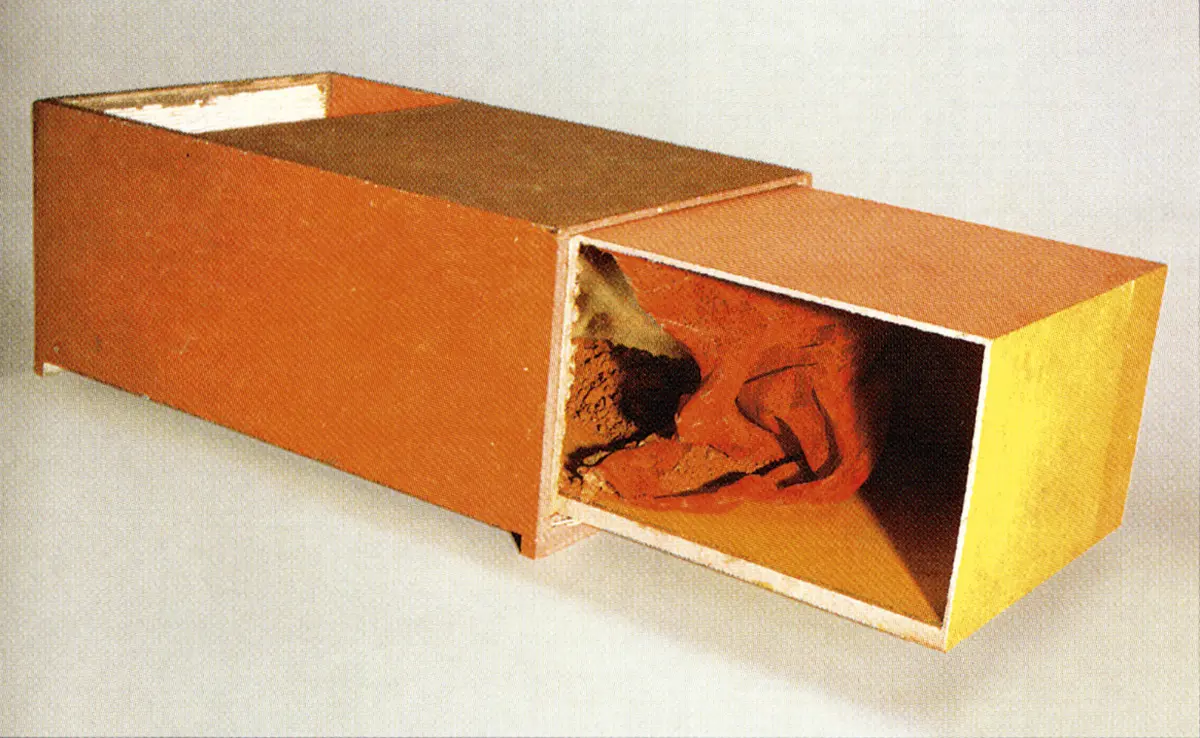
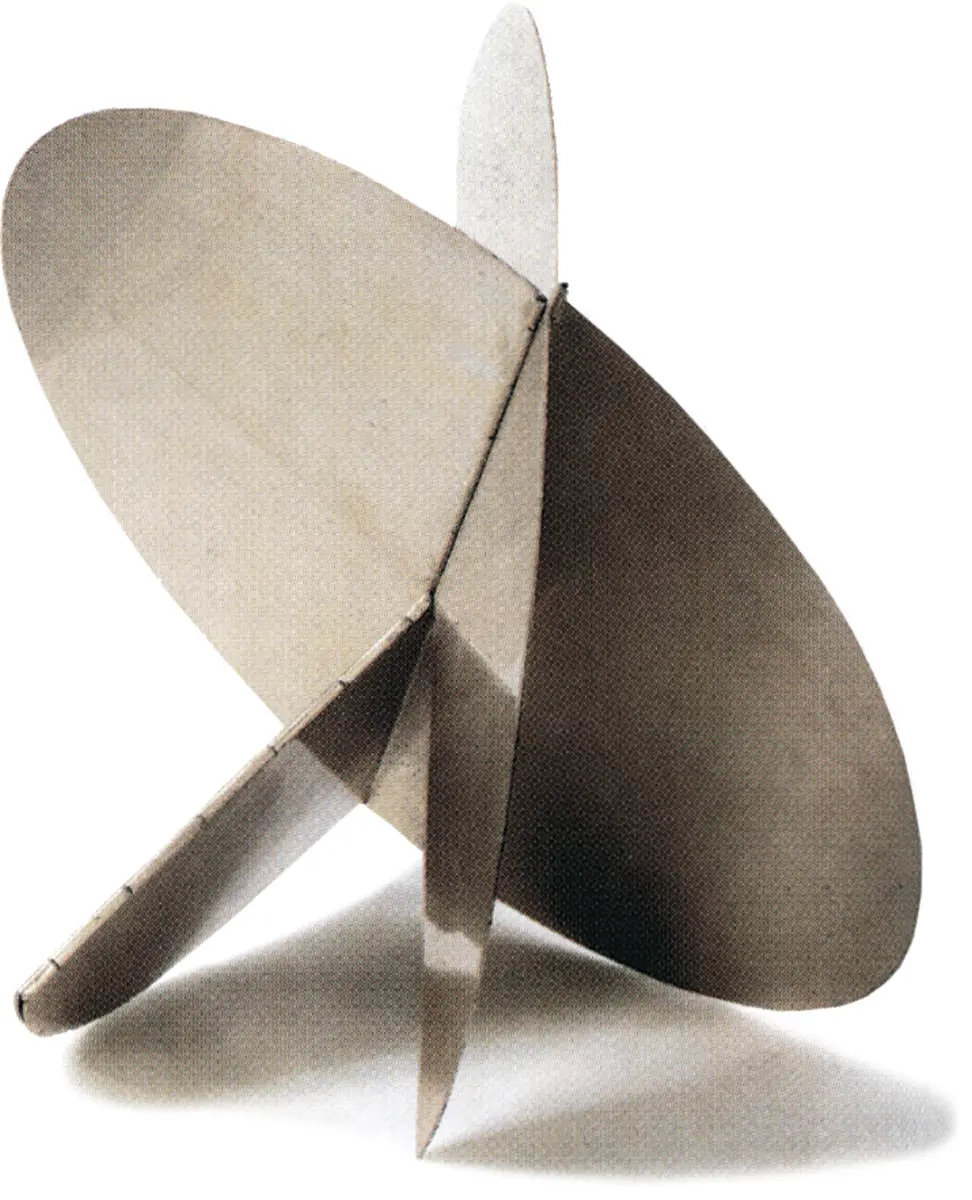
In the final gallery, materialist questions of Brazilian artists are expressed by the rigid geometric schemes of São Paulo’s Concretist artists Willy de Castro and Waldemar Cordeiro, who explore space-time and movement with a mathematical precision that negates the hand of the artist, and by objects that have sensory and psychological value, emblematic of Rio’s Neo-concretist movement (1959) that rejected the cold rationalism of concrete art. This subjective, organic approach to abstraction, with its rich color and diverse materials, was equated with the body rather than machines. Lygia Clark speculates on the interiority and exteriority of the body in space in her stainless steel Bichos series (1960) that she called “animals,” and the curving plastic forms of the volumes hinged to permit the spectator to manipulate and alter them, redefined the distinction between object and audience. Neo-concretism encouraged interactivity, and in Hélio Oiticica’s assemblage Box Bolide 12 “Archeologic” (1964-65), the coffin-shaped box, painted with earth-toned pigment, and the items within—gauze, rocks, and dust—are meant to be handled, offering a phenomenological experience.
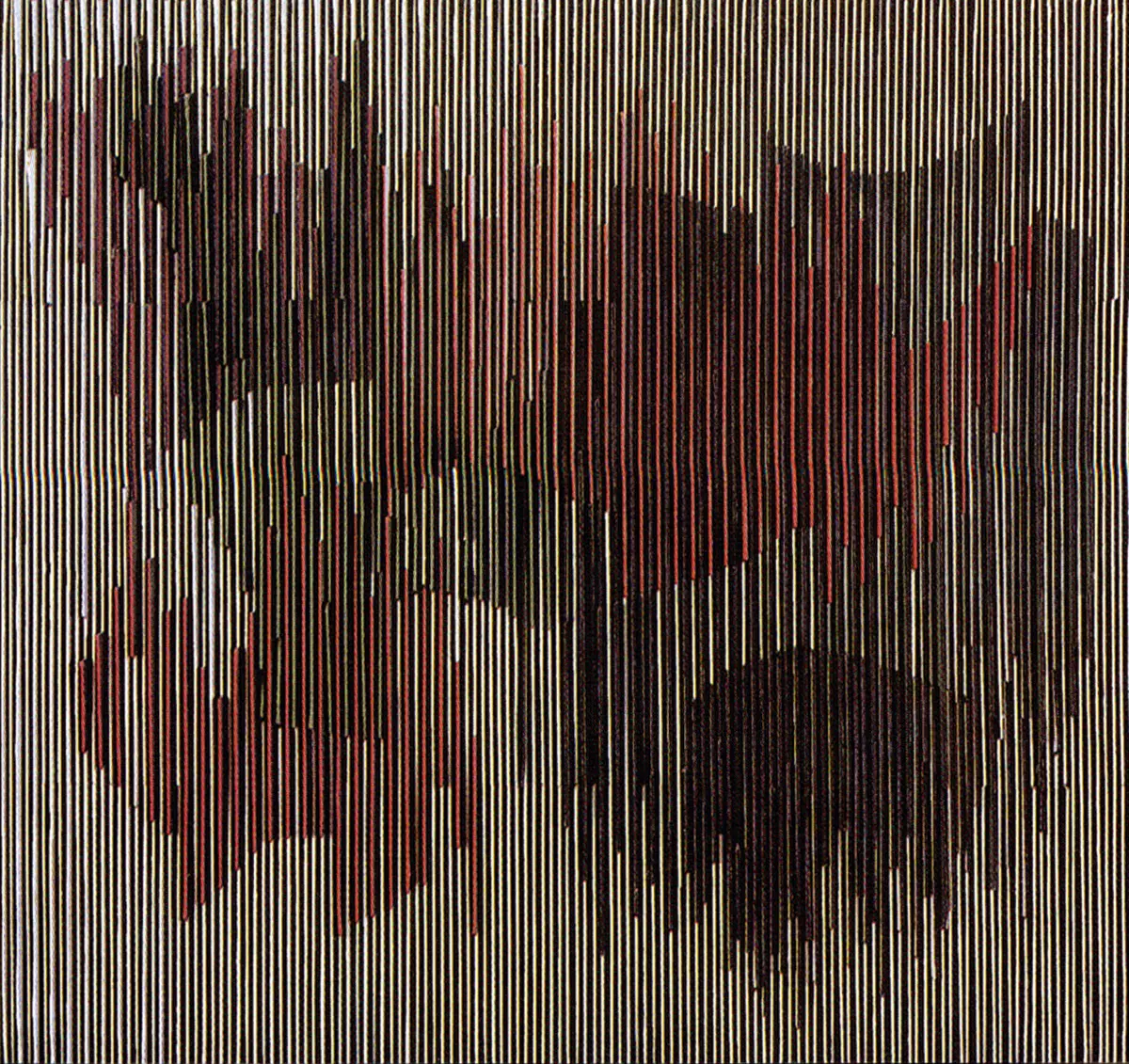
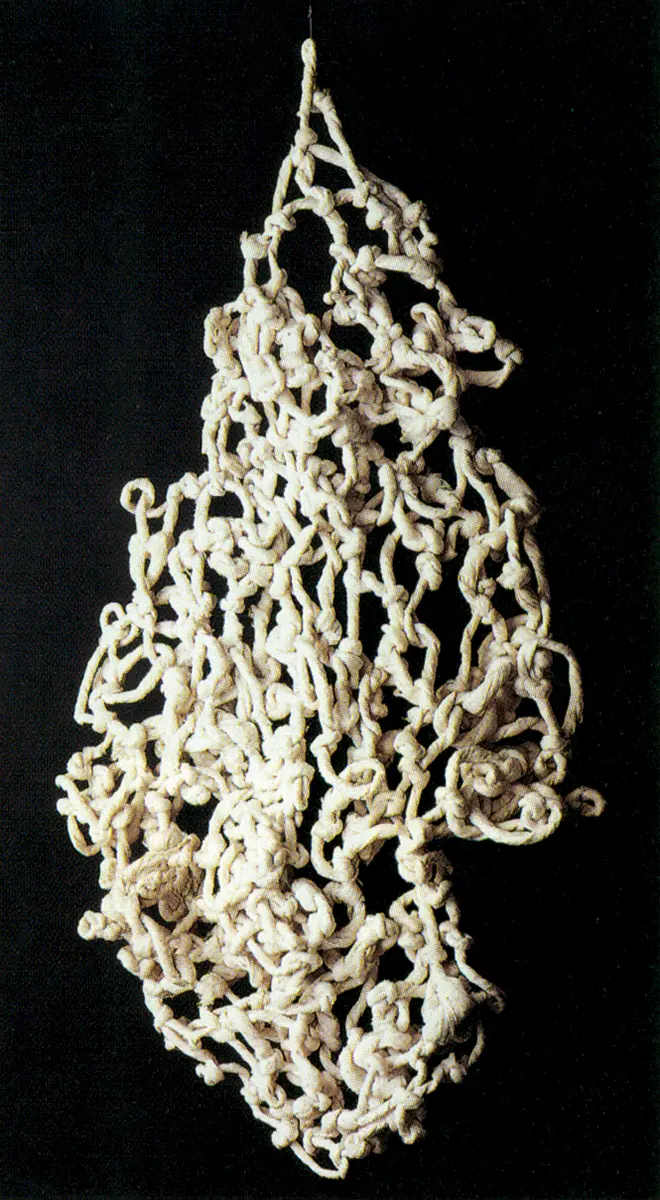
Also on display in this gallery is work by Gego, a Venezuelan immigrant with a singular approach. In the 1960s, her bundles of aluminum wire webs evocative of biological structures filled entire spaces. In her small-scale suspended sculptures, like Sphere (1976), a delicate construction of intricately united repetitive geometric elements, and Untitled, from the series Drawings without Paper (1984), with its chaotic twisted iron and copper wires hanging in, out, and through a larger metal frame, the improvisational gestures fittingly reflect the experimental spirit and compelling, authoritative production of Latin America’s abstract artists throughout the previous fifty years.
ANDREA FOGGLE PLOTKIN
Contributor to Arte en Colombia/ArtNexus.