
The two-person exhibition of Geraldo de Barros and Lygia Pape at the Americas Society helped reaffirm the historical role that Brazil had artistically spearheaded in the 1940s and ’50s. Those decades saw the reworking of Modernism’s sacred cows such as the monochrome and geometric abstraction into wholly different registers. This shift concerned the reduction of form and palette away from a neo-Kantian aesthetic of transcendence to one that was more phenomenological and social. Thus, for example, purely formal experimentation championed by Clement Greenberg that condoned the severing of the artwork from its referent had a different mode of articulation in Brazil. While the figureheads of this rethinking of form as content-driven is recognized in the work of Lygia Clarke and Hélio Oiticica, there were other artists whose oeuvres also need to be reassessed within the backdrop of this crucial Brazilian artistic milieu as well as internationally. Thus the Americas Society exhibition on de Barros and Pape was a show that was well anticipated.
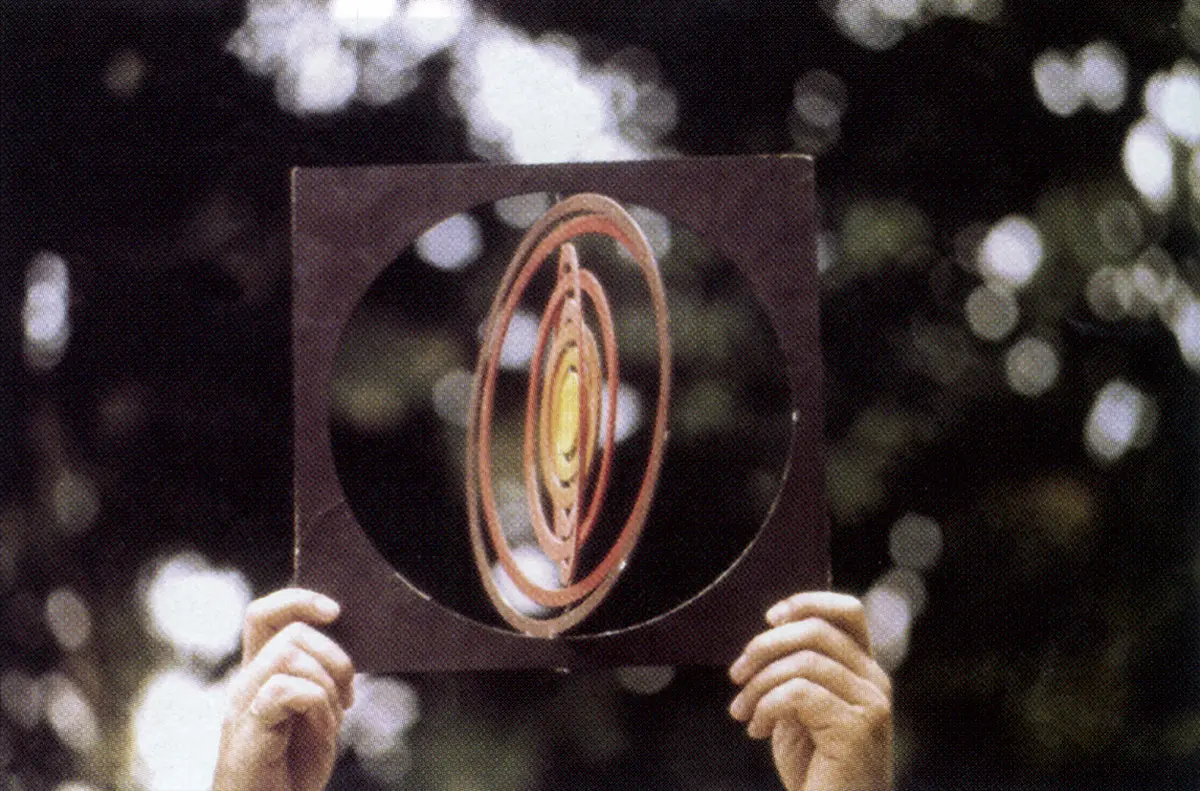
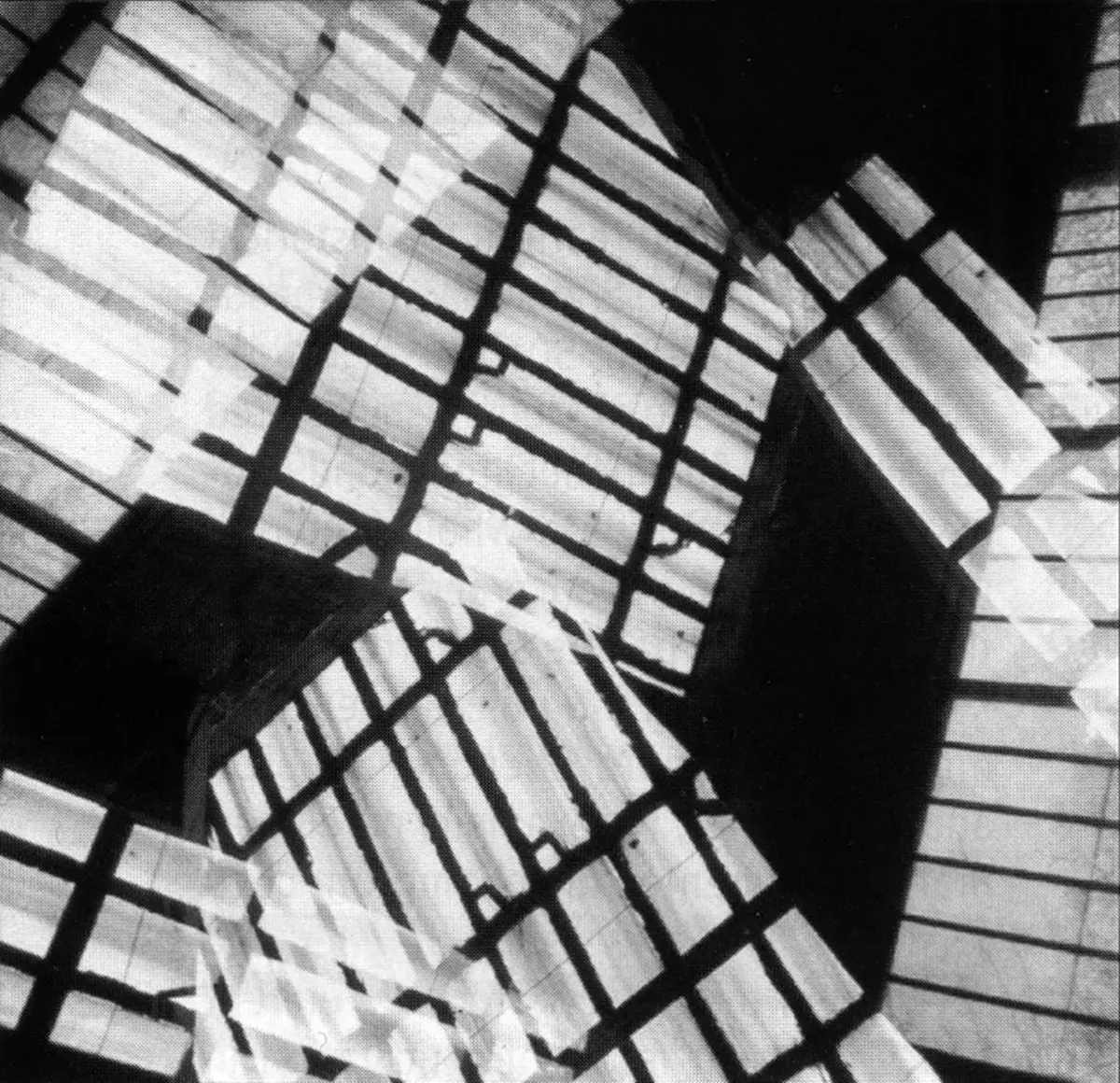
The exhibition focused on a small sampling of both de Barros and Pape, yet this limited selection contained key works in the individual corpus of each artist. The pivotal pieces displayed were de Barros’ Fotoformas (1947-1950), Pape’s Book of Creation (1960-191), Neo-Concrete Ballet no. 1 (1958), and Neo-Concrete Ballet no. 2 (1958).
Geraldo de Barros and Lygia Pape were both adamant formal and conceptual experimenters whose works in various media were nonetheless woven from particular artistic sensibilities. Both created art that contained a variety of aesthetic impulses that were radically extended into different directions. Pape’s Book of Creation is contingent on viewer interaction and the Neo-Concrete ballets meshed sculpture, painting, and cinema; de Barros Fotoformas were reminiscent of mechanically-oriented drawing, Man Ray’s rayograms, and as the cinematic photography of the avatar of the Russian historical avant-garde, Rodchenko. The historical importance of de Barros can not be understated. As a member of Grupo Ruptura, which was a precursor to Neo-Concretism, de Barros contributed to the development of Brazilian post-constructivist art with a slight deviation from those of his heirs. Though Oiticica would rework the monochrome and geometric forms into the social field proper as was the case with his Bolides and Clarke would likewise reconfigure Neo-Concretism into a psychotherapeutic paradigm, de Barros folded photography into itself through the negation of photography’s raison d’être: mimetic representation. His photographs contain elements of what would be considered recognizable imagery: a chair is discerned and yet dissolved by way of multiple shots and exposures to appear like a geometric web, and arrows from a street sign are superimposed on the street itself to become a sort of kaleidoscopic configuration. What also characterizes de Barros’ pictures is that there is an emphasis on flatness, on the collapsing of figure/ground dynamics that have been historically important to painting and photography. But while deBarros’s planar concerns can be construed as an aesthetic maneuver through its strong visual poetics, it is also about disrupting the field of vision in order to disorient the viewer, consequently engendering a somatic element to the experience of the work of art. This emphasis on viewer interaction via the body by way of sight is also crucial to Lygia Pape’s Book of Creation.”
The Book of Creation is exemplary of the fusion of Neo-Concretist formal modes with an almost ironic twist through its anachronistic format: the book. And like a book, its experience only attains resolution with its interaction with the viewer/receiver. Since the subjectivity of the viewer who physically interacts with the Book of Creation is already constituted from varied social and cultural histories, the work ideally negates narrative closure. One can think as parallel, for instance, Felix González-Torres’ stacks that are repeatedly inserted into different social contexts by way of the individual viewer/receiver, or Cildo Meireles’ Coca-Cola bottles that ideally would perpetually circulate and be consumed both literally and metaphorically by a broad social spectrum. It is in this notion of the work as dependent on reception and continuously in an endless cycle of contextual renewal, that one can understand the artistic dynamics of the Book of Creation. In order to realize what Pape was trying to accomplish, the exhibition included a museum copy of the Book of Creation which the viewer could handle. In hindsight, this was interesting considering that the “book” is not about the work as an end in itself or of the singularity of the art object, but as a catalyst that could motivate some other human activity or experience outside of what was the traditional province of art.
In essence, this was the most successful component of the show. That is to say, the work reflexively called itself and the institutional context that exhibited it into question. This was achieved either directly through the interactive quality of the Book of Creation that erased the distinction between the work and its visual/physical experience, or in de Barros’ undermining of the optical structures of reception on which the Western history of art viewing so emphatically rests.
RAÚL ZAMUDIO