
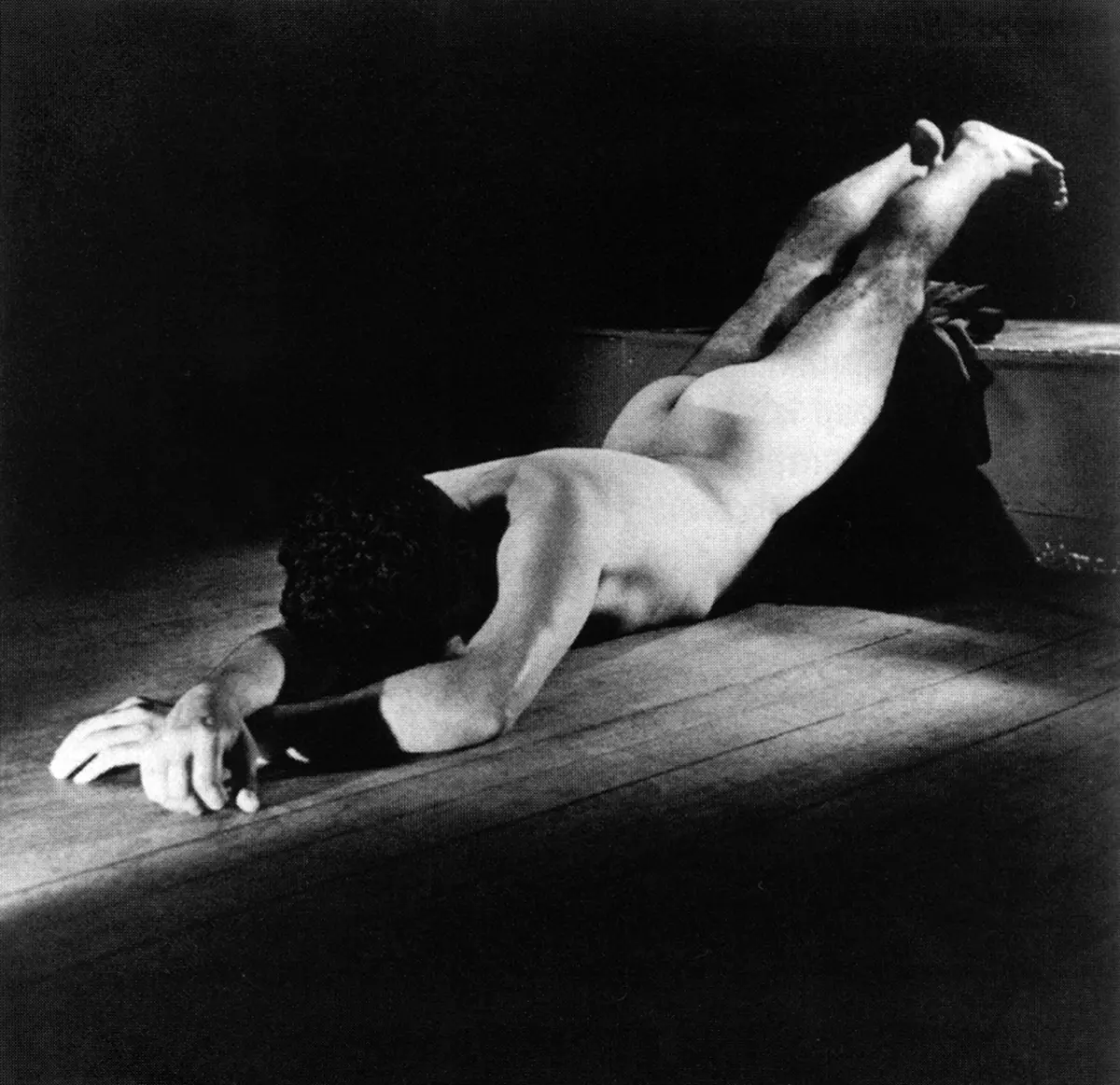
For the second time in Paris, this time with a solo show (the previous group exhibit took place at the Paris Espace Photographique, in 1995), Colombian photographer Leo Matiz (1919-1998) is represented by a thematic series of black-and-white photographs (69 plates). Under the title of A cada pintor un fotógrafo (To Each Painter a Photographer), the show chronicles the working relationship that Matiz and the famous muralist David Alfaro Siqueiros developed between 1945 and 1948. The excuse for this collaboration between the two creators was the preparation of Siqueiros’ mural Cuauhtemoc contra el mito (Cuauhtemoc Against the Myth), housed today in Mexico City’s Palacio de Bellas Artes. With this in mind, Matiz traveled through Mexico and took more than 500 photographs of deserts, ceremonies, peasants, and animals. Siqueiros himself also posed for him, as well as other anonymous models that served as nudes.
This show’s interest is that it presents, for the first time, a selection of plates largely unpublished. Why it took so much time to show the material can probably be explained in the manner in which Siqueiros and Matiz broke their relationship and the latter had to literally escape from Mexico. The quarrel between them arose precisely from the relationship between photography and painting, and the boundaries separating them. We know that Siqueiros valued the use of photography for his murals, and it should not be considered strange that he also used Matiz’s photos for smaller paintings. Taking this as an act of abusive and illegitimate appropriation, the Colombian photographer denounced Siqueiros without fully understanding the strength of the muralist’s movement, and how highly he was regarded in the country. Siqueiros did not tolerate the attacks against him made in the press. The city press retaliated by insulting Matiz, he received threats that his studio would be set on fire and finally had to flee the country. He was able to return only two years before his death.
The Paris show is inscribed in this story, and it makes sense within this context. It also points toward several questions, among them the relationship between photography and painting at the time, the role the artist plays as a model of his later work (without projecting it as a self-portrait), and the way in which the nude is treated during the 1940s. In this common work on the human body —the photos were taken outdoors as well as indoors— it is interesting to notice how the painter and photographer knew how to express ideas of strength, space, and universality, giving the photographic purpose an autonomous dimension which, nevertheless, foreshadows the same qualities that the pictorial work would later gain. Here, the esthetic and dramatic power of the black and white places Matiz’s work in such an autonomous dimension. The visual relationship between the photographic work and the pictorial work holds an interest that is mostly historical, while the cleansed and intense richness of the focus, the highly synthetic vision of the subject, and the mystical dramatization of the nude (probably cued in by Siqueiros) authorize these plates to draw closer to the great lying or standing Christs of the Renaissance Baroque.
To the photographer, the excuse —the future mural painting— probably served as a motivating force, as probably was Siqueiros’ fiery spirit. But in these photos, there is another creative strength, a defined personality, a technical mastery, and a different sense of the world’s amplitude. With such qualities, Leo Matiz could have placed in check Siqueiros’ eloquence, both artistically and iconographically speaking. Perhaps here there was another reason for their break-up. A new reason for “rivalry” between painters and photographers that today no longer has the same importance.
CHRISTINE FRÉROT