
During the last European summer, the Spanish city of Valencia jumped for the first time into the arena of international art biennials, which has become increasingly more overloaded and competitive. As we know, the list is increasingly longer. Where once only Venice and São Paulo appeared—accompanied by that rara avis that once was Kassel’s Documenta, though no longer—we now see Sydney, Havana, Istanbul, Johannesburg, Lyon, Kwangju, Berlin, and naturally, Valencia. The only thing is that Valencia, as Kwangju did, has wanted to join this contingency through rapid growth and expansion, discounting the advantage enjoyed by the more seasoned biennials, by making use of a team of international and highly experienced directors whose two key figures are the Italians Luigi Settembrini and Achille Bonito Oliva.
Of course, they are not the only ones responsible for thinking of and staging this new biennial. Settembrini, director of this biennial, conjured up a team comprised of indisputable international art stars that includes Robert Wilson, Peter Greenaway, and Emir Kusturica, along with lesser known figures like Scanner and Tatakami, and a relatively young local talent, the art critic David Pérez, responsible for the Líneas de fuga (Lines of flight) project. But even so, even with Settembrini having precisely fulfilled his role as director, what is certain is that the shadow of Bonito Oliva has been strongly projected onto this biennial. And this is not only because of his unquestionable charisma or the importance of his magnified professional track, in which his successful promotion of the Italian transvanguardia stands out, but rather because of his ideas and arguments that have relied heavily on the definition of the image of the same. In fact, the group show The Body in Art, which he curated in collaboration with the British film director Peter Greenaway, has been the strongest, and at the same time most controversial, point of the biennial. His flag, his derision, his stigma. And the code, the condensate from his specific aesthetic keys.
I say “specific” because the keys that Bonito Oliva himself has taken charge of summing up in various public speeches in terms of trans-nationality and multiculturalism, of multimedia and deliberate contamination and transgression of borders among the arts, may explain why such a relevant role has been given in this biennial to previously mentioned figures, like stage director Robert Wilson and film directors Greenaway and Kusturica. But they are not enough to observe the limits of a biennial at this juncture, when none of its managers seems to consider topics different from those that otherwise echo the greatest topic of all throughout the art world: glob-al-i-za-tion.
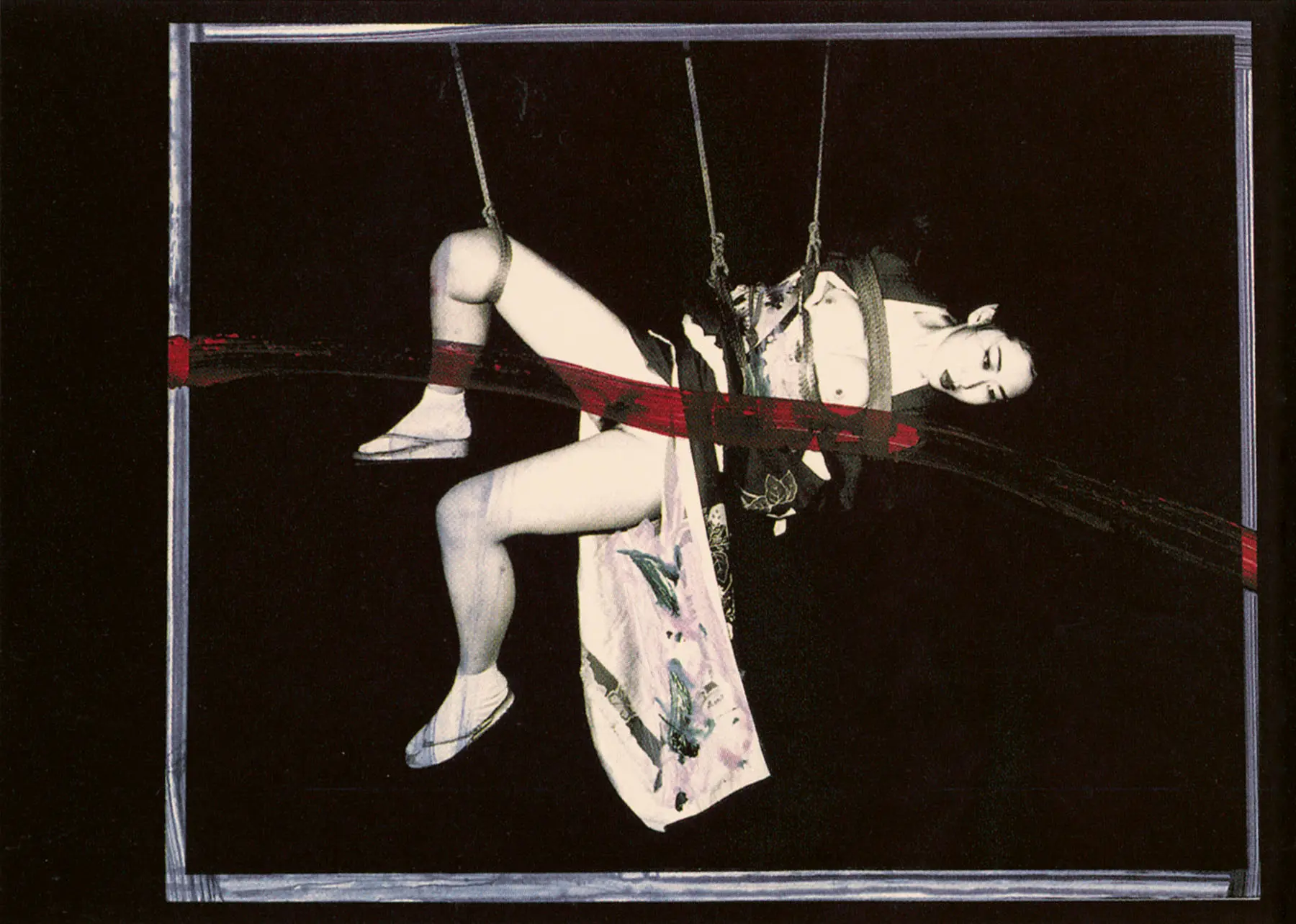
The Body in Art, or more precisely, its discourse, its “expository writing,”1 as Bonito Oliva would say, instead proposes a certain uniqueness because it attempts to grant the figure of the human body to the multimedia and multicultural proliferations, and that commitment is already, in and of itself, unique. Although unfortunately failed, or at least insufficient, because even inside the biennial that concerns us those proliferations efficaciously resist that type of reduction. In fact, in light of the results, it could be thought that the true emblem of this biennial was offered, though certainly without proposing it, by Japanese artist Nobuyoshi Araki with his work Shijiko (2001). This is a full-color, large format photograph manipulated by the artist, in which a Japanese woman appears seminude, suspended in the air in a horizontal position by harnesses, cables, and belts. And although the gesture of her face transmits indifference instead of pain, the truth is that the forced position and the constraint to which she is subjected form an overwhelming image of what happens to art when we try to enclose it within the confines of the human body.
Bonito Oliva justifies this by affirming that this body is not the organic, harmonic, and integral body praised by humanism, but rather an ever “materialized and dematerialized […] fragmentary body […] in all its dimensions, from the perspective of both warmth and coldness.” Adding, in a keen desire for precision, when “I have spoken of bulimia, anorexia, and androgyny, it is because they are dimensions of the complexity, ambiguity, and ostracism of art.”2 But, be that as it may, whatever this ambiguous and continuous permutation of the human body in the body of art (and vice versa3) may mean, what is certain is that, at least for me, this type of allegorical operation of figuration or formalization responds to the imperious need to orient oneself and to give meaning to the experiences that current art biennials offer, which, as we know, are largely diffuse and impossible to contain. Obviously, we must thank Oliva for his offer of the allegory or figure of the human body as a code or key to interpretation of the huge agglomerate of works of art that he himself gathered in The Body in Art. But we must likewise warn him that his offer is radically insufficient and that it is unable to free the show’s from the sentence or destiny of the flâneur: wandering aimlessly through an incomprehensible world where, from time to time, and by chance, he stumbles upon something, a work, a fascinating and perhaps memorable event.
Highlights
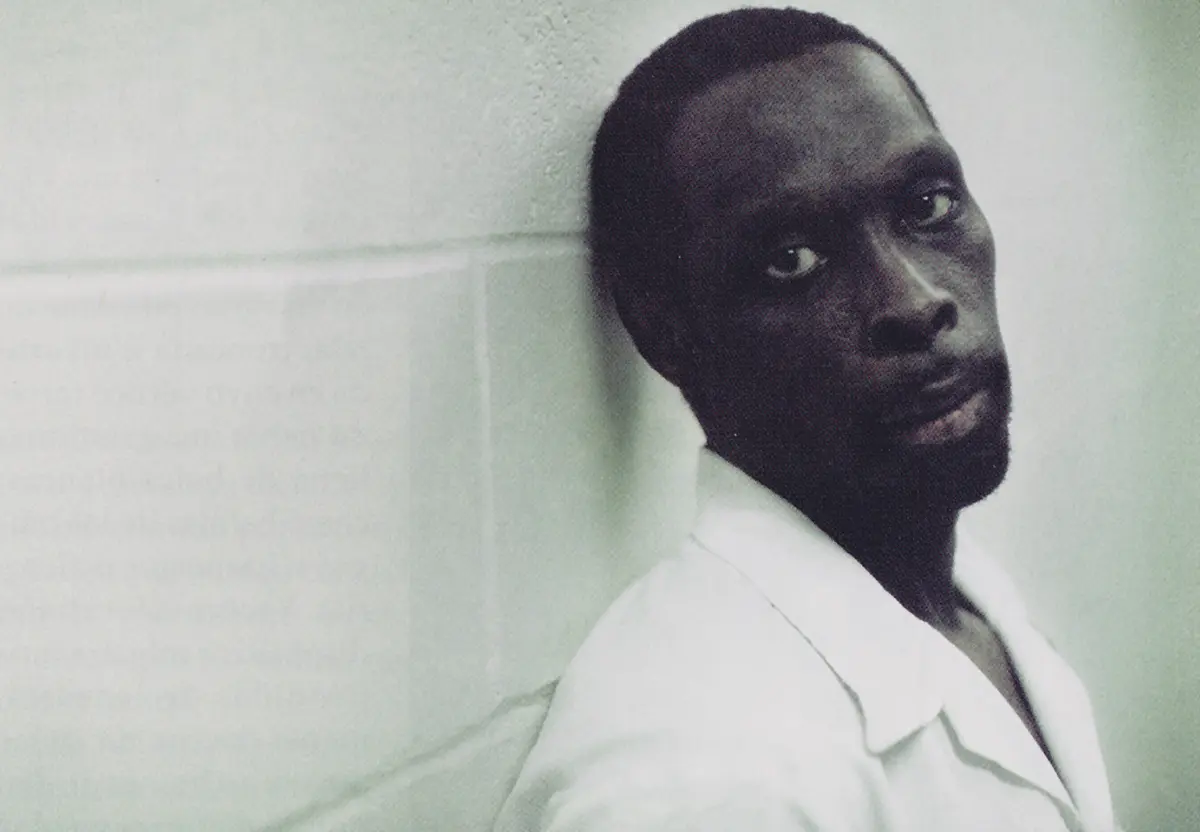
That’s how it is. I have made my own list of fascinating and memorable events, my own list of highlights of this biennial. I begin with the show curated by Oliva and Greenaway, located in the old Convento del Carmen in the historic center of Valencia. In it is an enormous, full-color copy of a photograph of Jerome Mallet, an African-American on “the green mile,” on “death row,” who was sentenced to death for the assassination of a police officer in 1986. In July of this year, right in the middle of the biennial, all judicial resources were finally exhausted and he was executed. The piece is by Oliviero Toscani, who was the creative director for Benetton. In his unadorned simplicity he was able to condense the drama of so many African-Americans sentenced to death by a judicial and penitentiary system that tends to be more drastic with them and very permissive, or at least more tolerant, of similar crimes by whites.
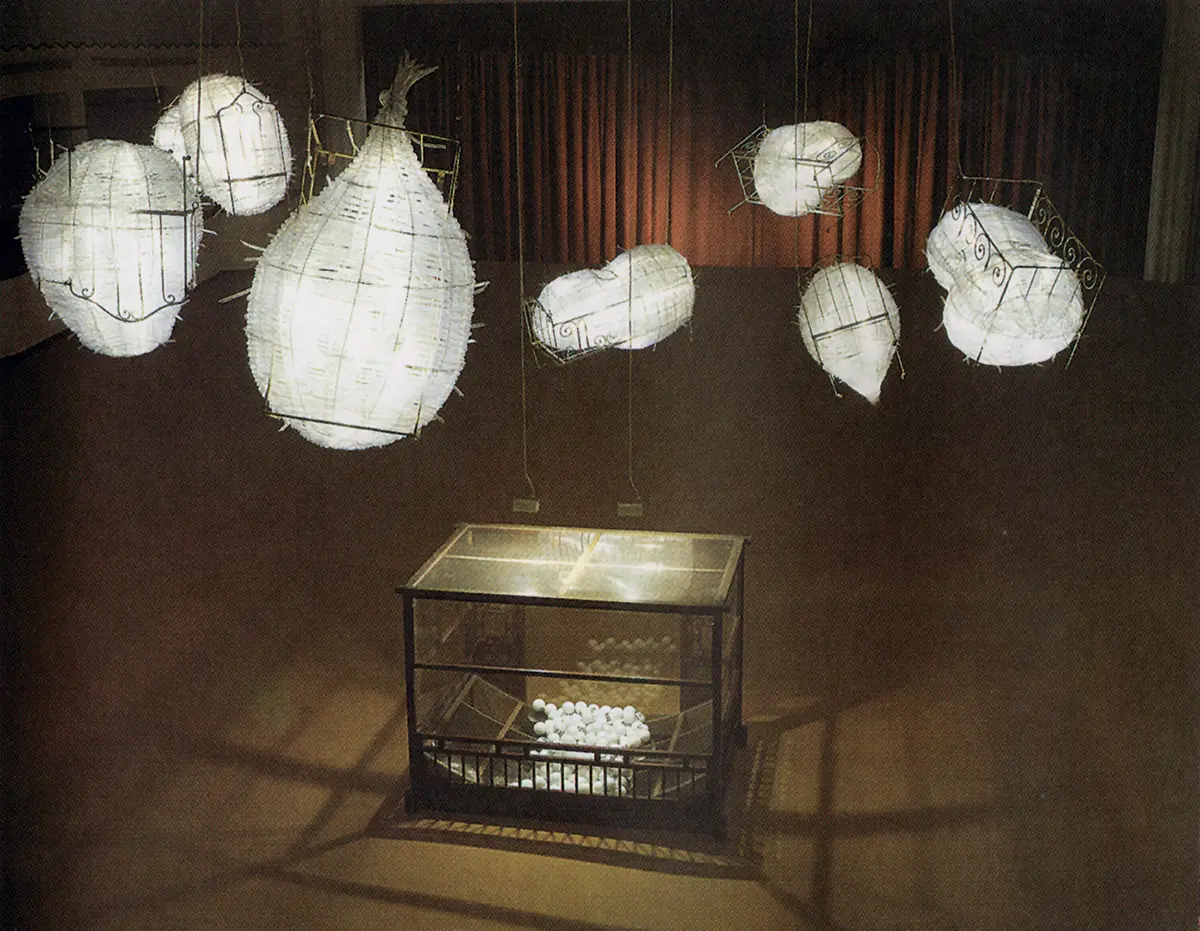
I was equally impres-sed with the installation Field of Synergy by Chen Zhen, Chinese artist, a piece that took up an entire room of the Centro del Carmen and consisted of a large canvas pyramid that was truncated and inverted, and on whose cut vertex there was a large urn full of white balls, like bingo or lottery balls. Over this strange mechanism hung, suspended from turnbuckles, half a dozen copper or bronze cribs of different sizes, overflowing with white inflated balloons. In all, an enigmatic and fascinating group, and even more so if we consider that it was included in the section dedicated to genitalia.
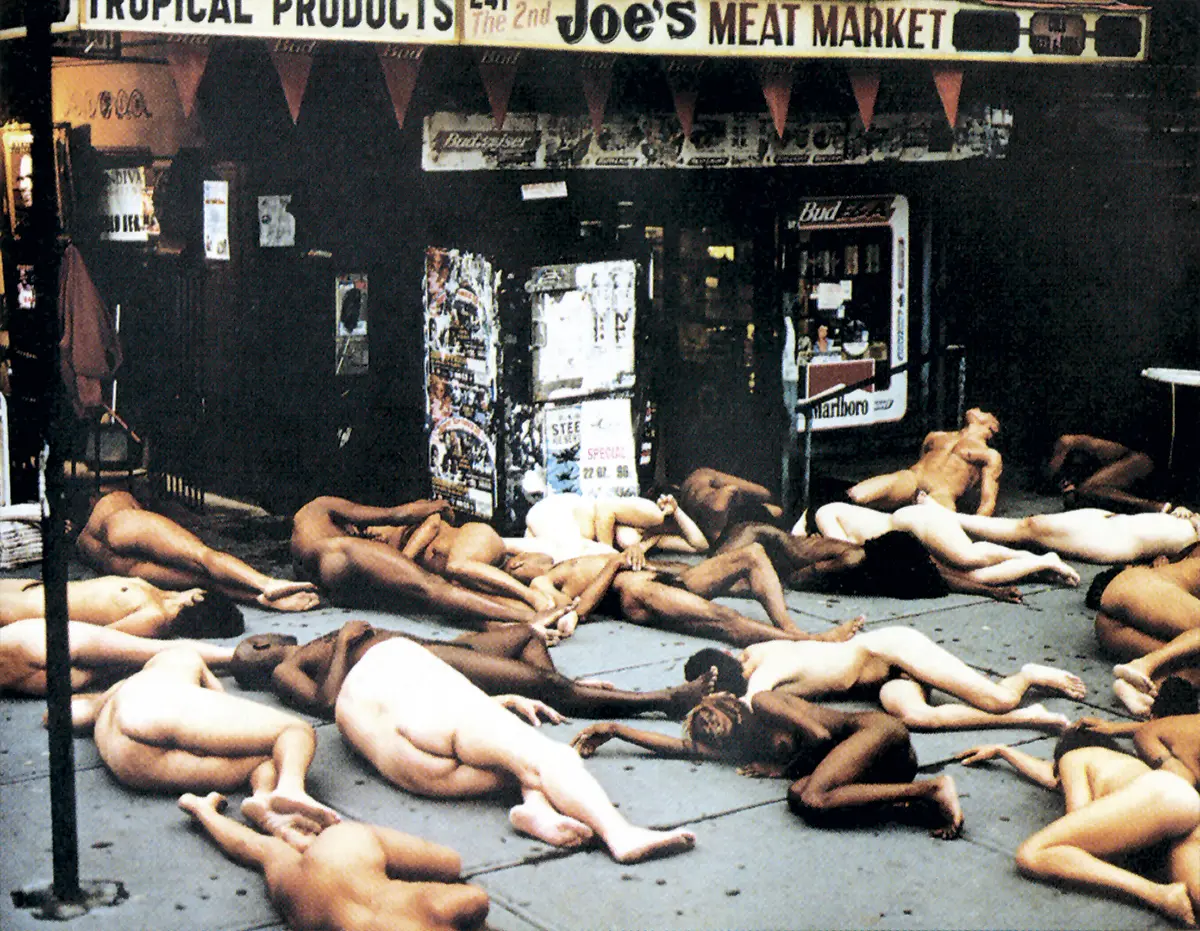
Less enigmatic, though equally fascinating, were works by Shirin Neshat, Kcho, María Teresa Hincapié, Liliana Moro, and Spencer Tunick, as well as the photos by the aforementioned Nobuyoshi Araki, and those of his contemporaries, Morimura (confidently cross-dressed like Frida Kahlo), and Hiroshi Sugimoto (who exhibited Last Supper, a photo realist version of the last supper, which was both polemic and transgressive). Also intriguing were Tracey Moffat’s series of snapshots of the most commonplace daily life, titled Pig Bags. The work of Iranian artist Shirin Neshat called Pulse was a video installation in which a solitary woman evoked, through a long monologue, the prohibitive existence of women under fundamentalist Islamic regimes. For his part, Cuban artist Kcho distanced himself from intimism, showing another of those pieces in which he cultivates historical irony, formed by the contraposition of a sputnik; that is, a Soviet space satellite whose body was really a rickety old ship, and the Monumento a la Tercera Internacional (Monument for the Third Communist International), designed by Tatlin, made with thin branches of shrubs. Both were suspended from the ceiling at great heights, hanging over the empty space that used to be an apse of the old convent. Its title: Estructuras similares a los ojos de la historia (Structures similar to the eyes of history).
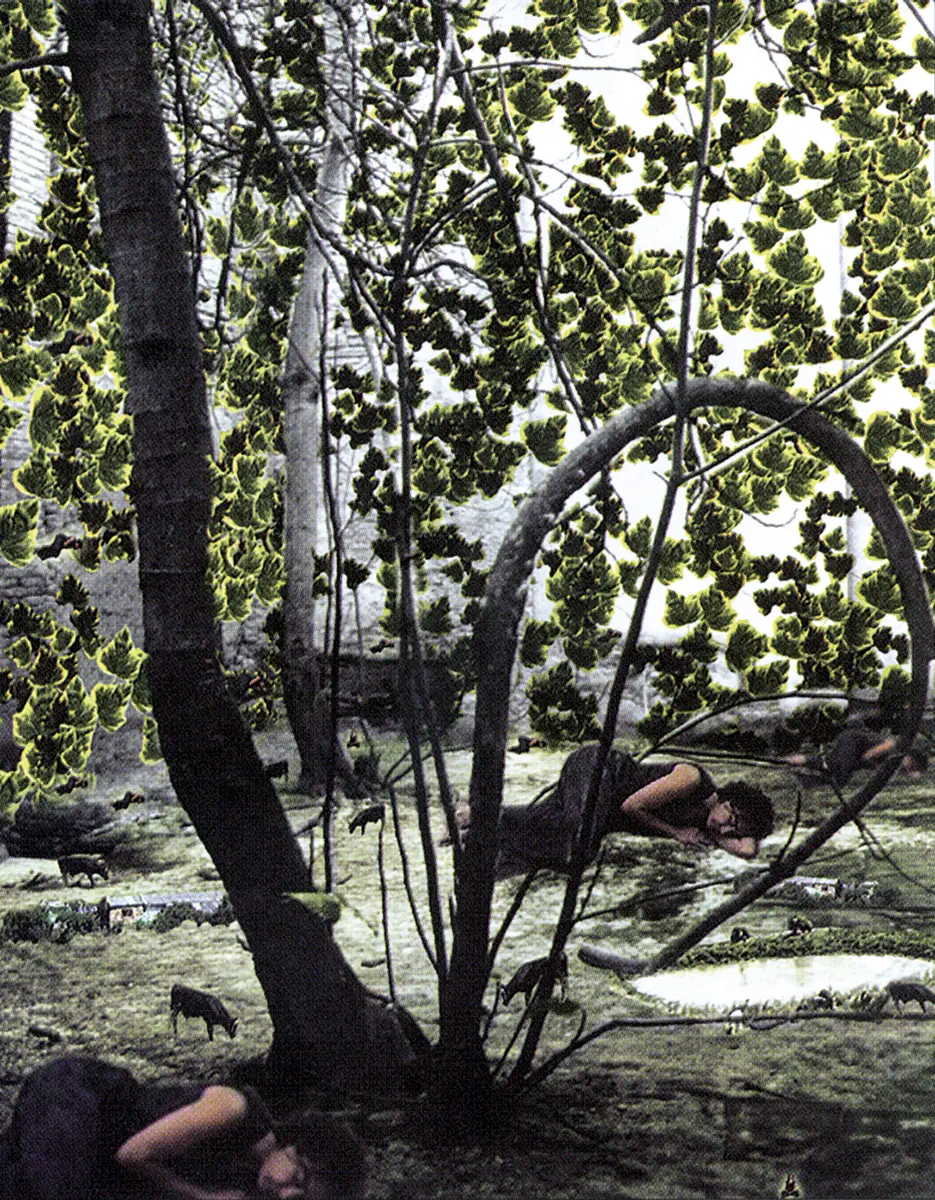
The installation by Colombian artist María Teresa Hincapié titled El espacio inexistente (Non-existent space) consisted of her presence in a small and isolated patio of the old convent, where she planted grass and strategically distributed small figures of animals and insects in the branches of the fig trees that grow there. On the official opening day, she executed a performance: she extended herself over the recently planted grass in a fetal position and, by means of a sign, invited those present to take off their shoes and enter the small garden in order to devote themselves to silence and contemplation.
With her installation Asesinas (Female assassins), Italian artist Liliana Moro offered quite the opposite. This is a group of five or six prints, each one painted with a different color, which completely blocked another five or six blind openings of the convent’s main cloister, within each of which a speaker allowed us to listen to the story that a female voice told about some of the crimes committed (supposedly) by a famous female assassin. And finally, the equally remarkable work by the North American artist Spencer Tunick, with his now renowned series of photographs of hundreds of nude humans, sleeping in the streets, squares, and other public places. I was especially impacted—on account of its disquieting nature, its evocation of a terrible collective disaster—by that photo in which the sidewalks of the Brooklyn Bridge appear full of nude and inert humans, like corpses.
We should also add, apropos of The Body in Art, that the worst thing in the exhibition was probably the work by Peter Greenaway, who unfurled throughout the entire Convento del Carmen dozens of urns full of objects from daily life: condoms, cigarettes, glasses, combs, cups, piano keys, etc. The problem is that this work, aside from its lack of vigor and interest, turned many of the pieces by other artists into something like commentaries or footnote clarifications. What an abuse!
The Rest
Another artist who obviously failed in his participation in the Valencia Biennial was Kusturica who, along with Mladen Materic, created in El Almudín an installation titled Los cuatro jinetes (The four horsemen), which attempted to evoke the horrors and the damned mess of the Balkan war through an artificial islet covered with dirt and barbed wire fences, and with a burrow where a poor live rabbit could hardly hide; and to make it worse, it slowly slipped across the great hall where it was exhibited. Another sad contribution was that of Shiro Takami, who in the Tinglado del Puerto of Valencia tried to erect a multimedia project titled The Nights of Good and Evil, which mixed massive amounts of sea-water fog with the projection of computer-generated images. Since opening day it had technical problems, and it was finally shut down by the authorities who had previously conceded that same space to other events that had nothing to do with the biennial.
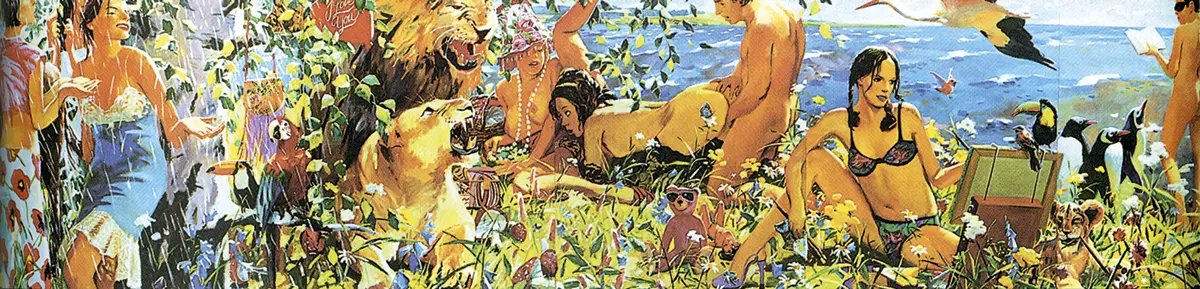
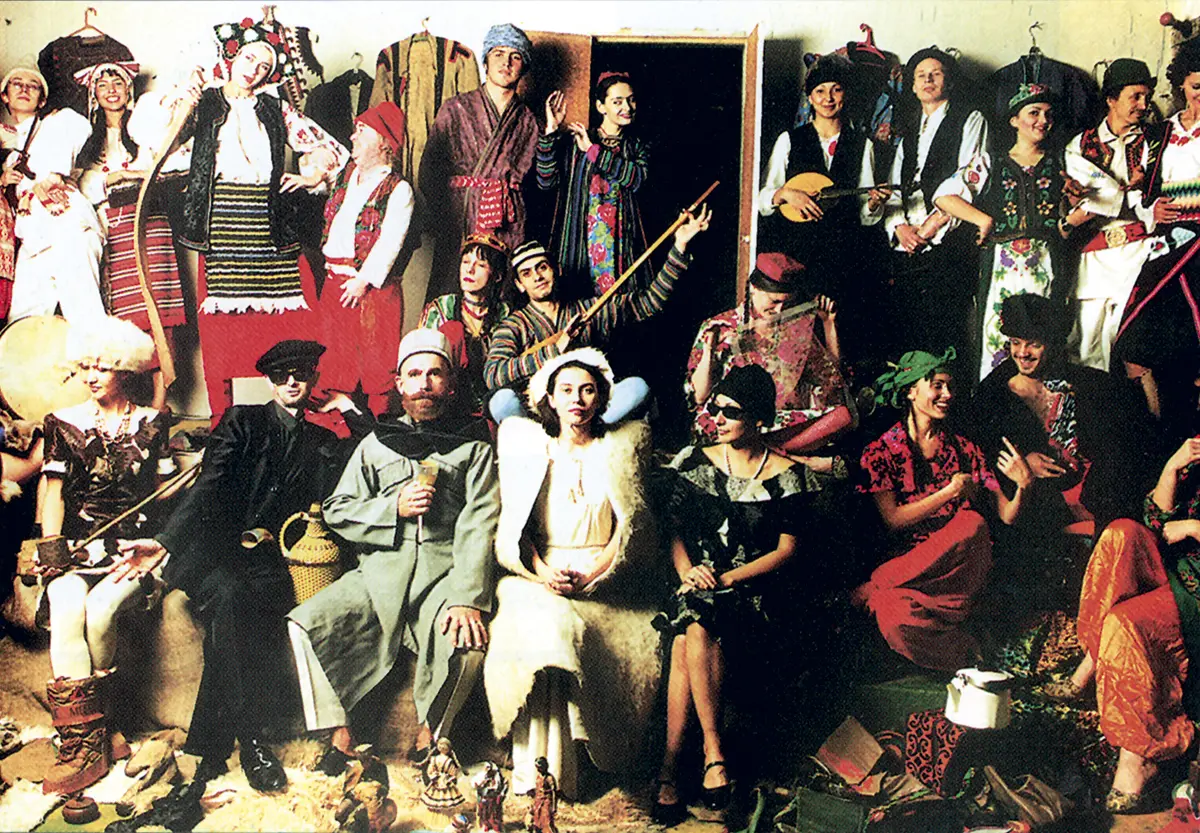
On the other hand, Bob Wilson was successful at the Reales Atarazanas with his staging of Russian Madness, a group show of twelve Russian artists that included the collaboration of art critic Viktor Misiano. The neo-pop paintings by Vladimir Dubossarsky and Alexander Vinogradov and the unusual collections of everyday clothing by Aleksandr Petlura were remarkable, and Dmitri Prigov’s performance The Ascension of the Russian Buddhist Spirit was unforgettable.
Finally, we should mention the presence of Scanner and the Valencian composer and artist José-Antonio Orts in the beautiful space of an old coop for fighting cocks, which neither added to nor took anything away from the biennial. Also, the group show Líneas de Fuga, organized, as previously mentioned, by David Pérez. This was comprised of sixteen local artists, the majority of them young repeats. Noteworthy are the paintings by Sergio Barrera and María Cremades, and Mira Bernabeu’s videotaped performances.
NOTES
1.Because the art critic has three levels of writing: artistic writing, with the words in books; expository writing, with the works in social spaces; and behavioral writing which gives a leading role to the critic’s idea, which always used to be a lateral figure.” Interview with Achille Bonito Olivo, Lápiz 175 (2001): 61.
2.Ibid., 60
3.In fact, Bonito Oliva classified the works gathered in The Body in Art into five categories, each one corresponding to another five parts of the human body: the brain, the heart, the spinal cord, the genitals, and the feet. And, to make this classification visible, he marked each piece with the color that he himself assigned to each one of them.
CARLOS JIMÉNEZ
Writer and art critic. Professor at the Universidad del Valle.