The new edition of the Barro de América (Clay from the Americas) Biennial occupies three Caracas museums (Museum of Fine Arts, Alejandro Otero Museum, and MACCSI). For this article’s purposes, we will focus on the works exhibited in the Sofía Ímber Museum of Contemporary Art (MACCSI).
The criterion for this exhibition is that of “clay rituals” expressed through metaphors for a primary, constructive, earthen, spiritual element. It’s the clay that surrounds us, clay presented as an offering, the mark of human action. This proposition is resolved equally in figurative and non-representational intentions and with all kinds of materials as its basis.
Víctor Hugo Irazábal created a drawing/installation named after the Native word Yokikini and related to the cultural linkages between the peoples of Venezuela’s Amazon Basin. Here, geometrical drawing —point, and line— names or alludes to a complete cosmography. The writing in petroglyphs, basket designs, and body painting are some of those elements. Also, the element of contemporary aesthetics can be observed in Irazábal’s large (11 x 20 ft.) wall drawing, based on vinyl and paper points. Crowded or dispersed points form figures, or rather ideas of figures —of forests, of Earth, of life.
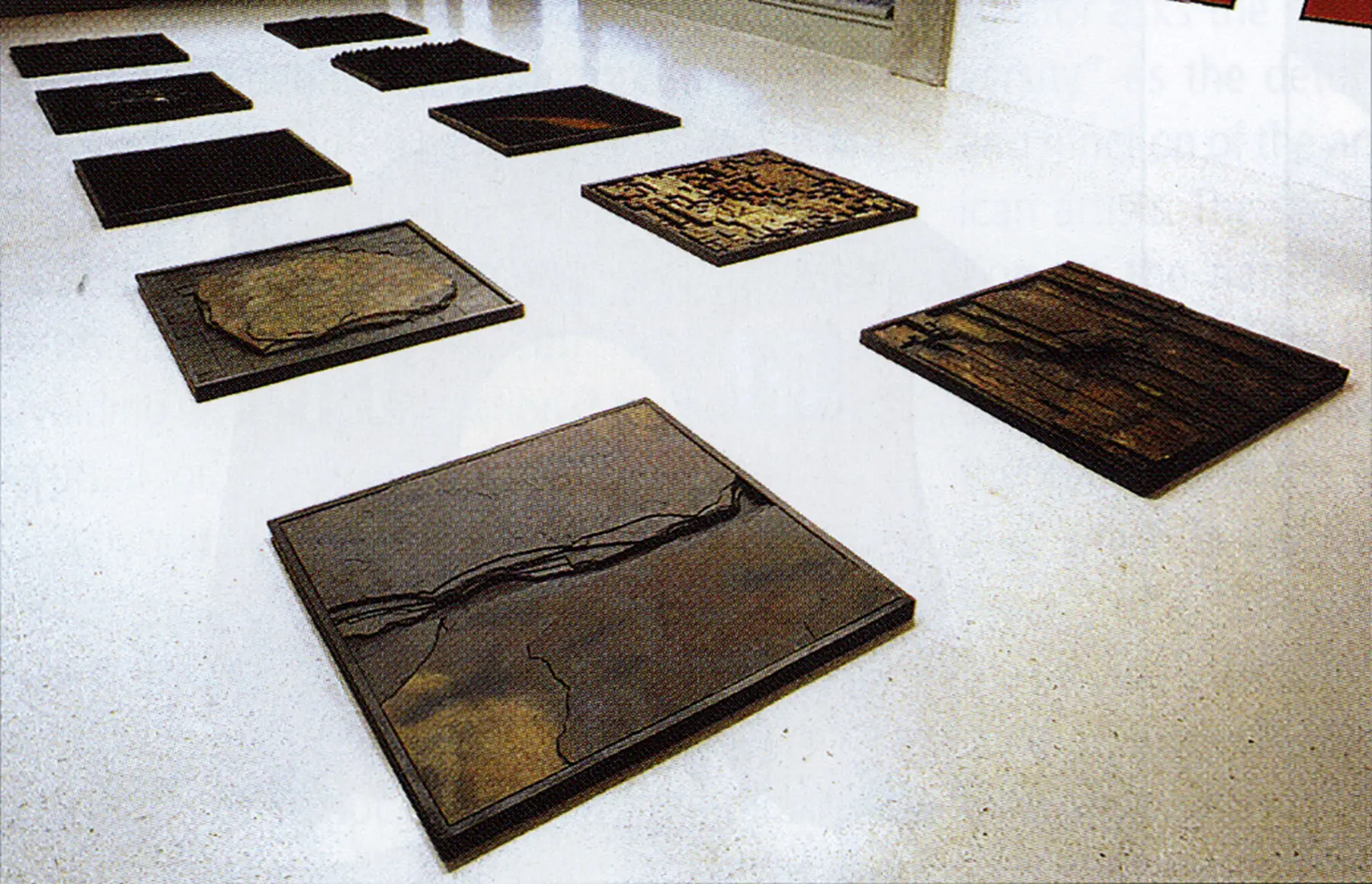
In Mantos de Tierra (Mantles of Soil), Colombian artist Hugo Zapata uses different natural materials, materials that emerged from the Earth and were minimally transformed by him, in correspondence with geological strata. Had his work been better placed, it would have been possible to justly appreciate it, as it would have functioned as an aerial vista of the Earth. Canyons, valleys, rocky mountains, plains, and riverbeds —these are some of the images created by grouping slate stones with black quartz, oil, iron, carbon, black sand, and water.
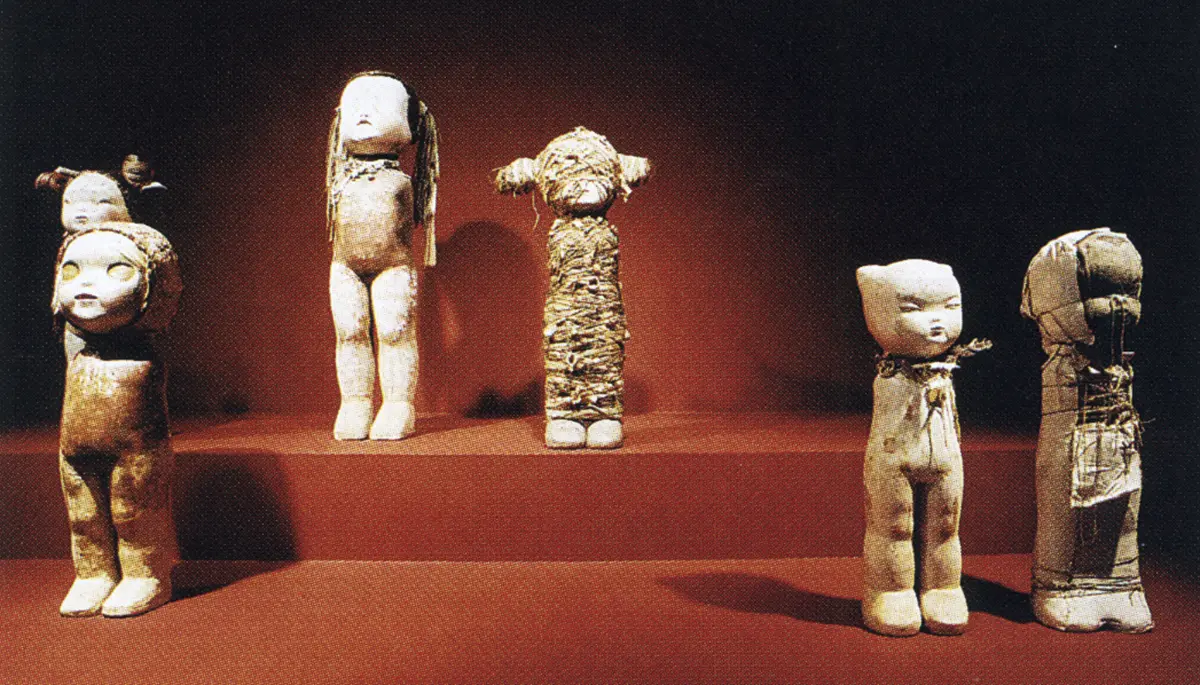
Mariana Monteagudo is a young Venezuelan artist who explores clay’s mythologies and expressive capability. Niñas (Girls) is a group of six pieces in modeled ceramic, natural fibers, weavings, hair, feathers, and necklaces. Her work tends toward sculpture and here she shows life-sized figures. Two of these figures are covered, one with rope, cloth strips, and good-luck charms, the other with a linen sheet. Thus, they resemble resting bodies, and through them, Monteagudo explores the rituals of sacrifice, the sacramental conservation of the body, and the scene of human offerings to the gods.
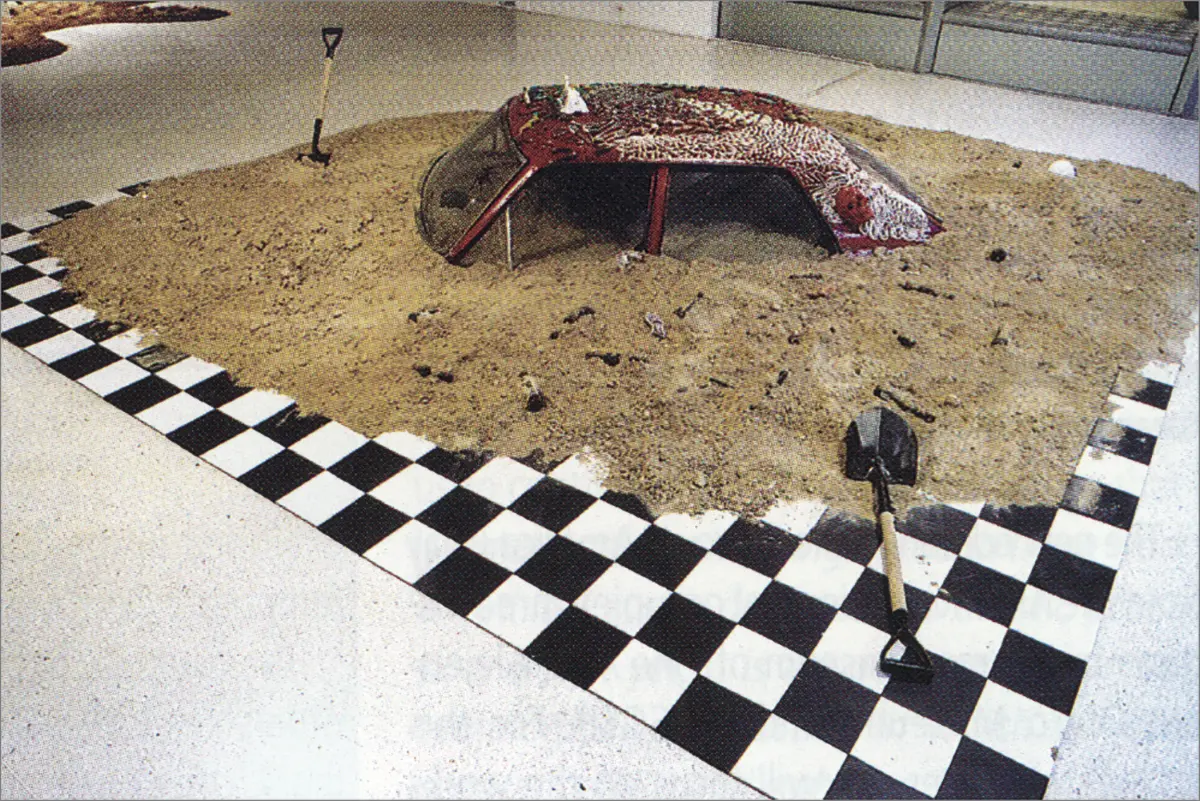
Carlos Zerpa (Venezuela) creates an installation that for a Venezuelan spectator would prove to be highly emotional since the natural disaster of 1999 is still fresh in the nation’s memory —especially given that the Venezuelan government seems incapable of solving the problems it has caused (reconstruction, displacements, psychological damage). Día líquido (Liquid Day) presents a half-buried car (a taxi, in fact). The vehicle’s roof contains skeletons, yesqueros, domino pieces, dice, spoons, lizards, spiders, snakes, and a small Dr. Hernández stamp. The car’s radio is on, like a metaphor for life. Strewn through the plot where the car is revealed, among the dirt and the excavation equipment, there are more skeletons, beer bottles, and keys. In this way, Zerpa refers to the tragedy that desolated the community of Vargas, and to the individual process of rescuing and digging out what rain and mud took so violently.
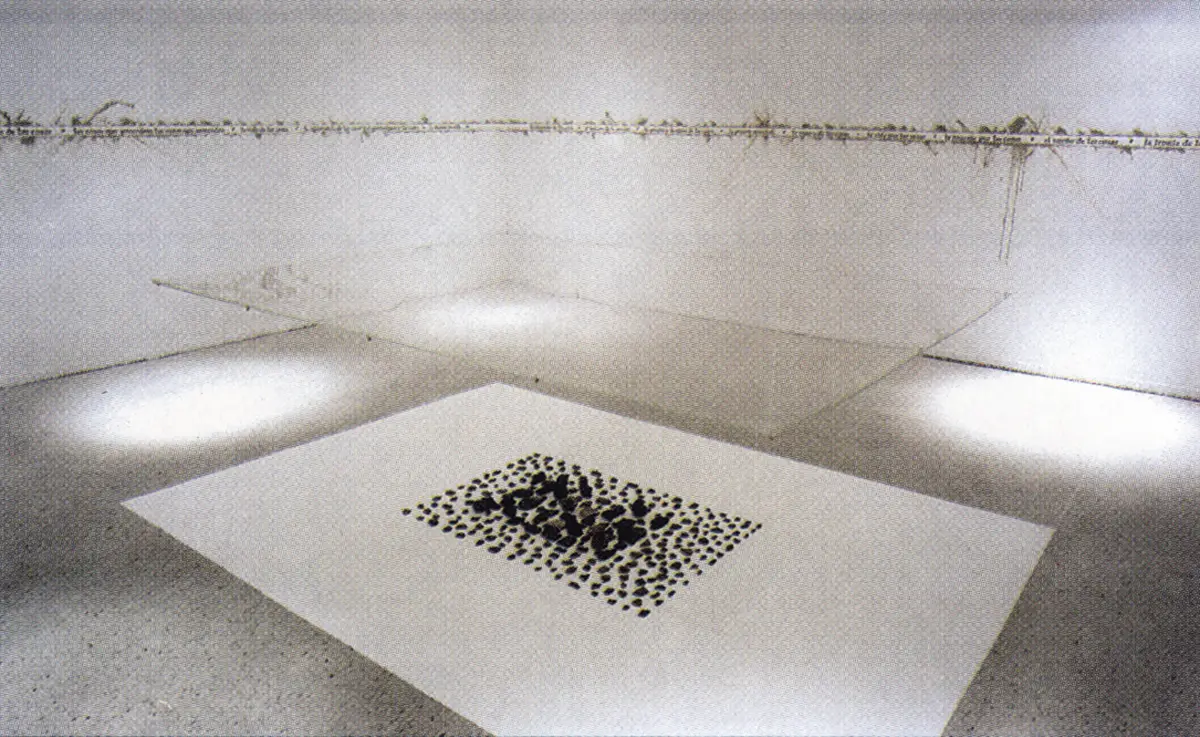
Pedro Terán (Venezuela) has installed his work in an empty white room, under a quiet light. In the center of the room, forming a white rectangle, he has placed fragments of pre-Columbian pottery. The piece is very sober. Everything is said with the minimum of language. On the wall, a golden clay ribbon quotes a series of short phrases —similar to popular sayings— about life and death. Everything is like a revealing whisper.
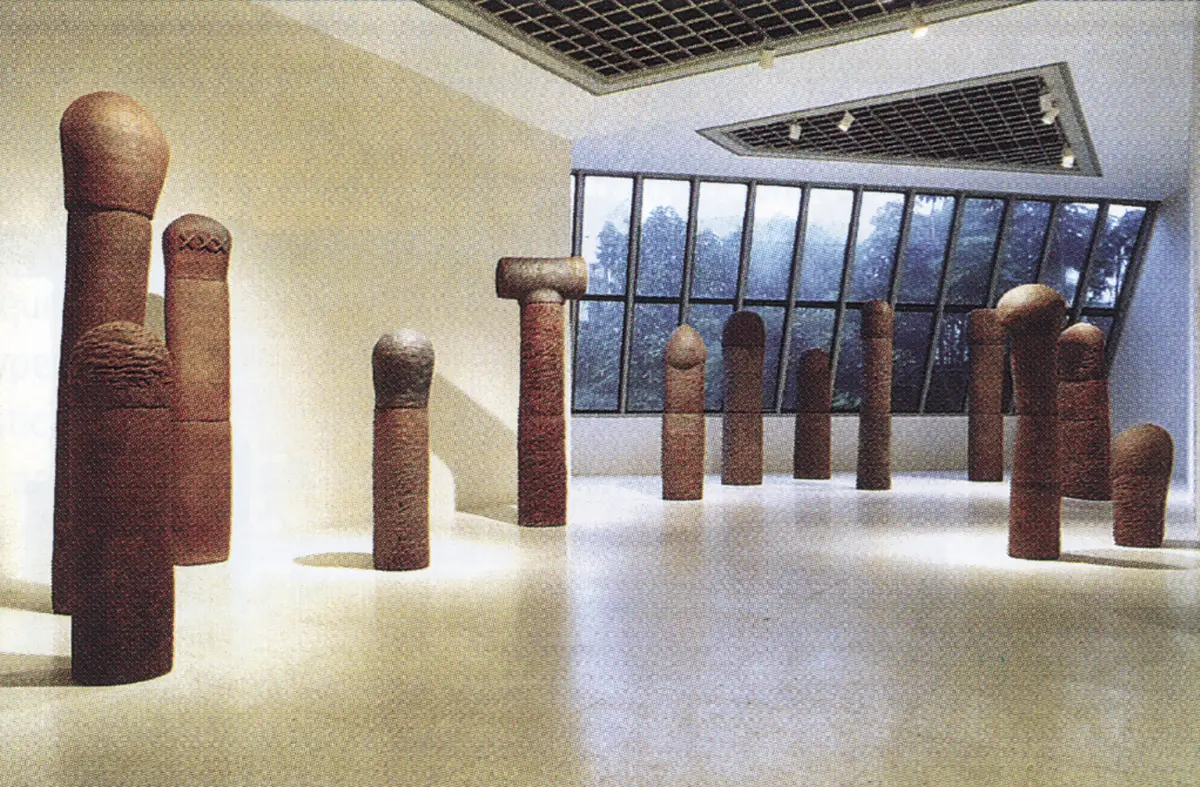
Noemí Márquez (Venezuela) presented Tributo a los dioses (Tribute to the Gods), 12 sculptures in stoneware and oxides of up to 120 inches in height by 24 inches in diameter, placed in the hall-like columns for spiritual contrition. Of this piece the sculptor Víctor Valera has said that “they are vertical traces erasing the horizon’s persistent horizontality.” Such columns are composed of one, two, or three bodies, and they are marked with prints and cosmic signs.
This group of very significant works condenses the spirit of the critic Roberto Guevara, the biennial’s founder: the ritual, the monumental, the ancestral, the sacred, the permanent, the contemporary; the region, the land —the Earth—, and clay as an element of art from American visual thoughts.
JUAN CARLOS PALENZUELA