
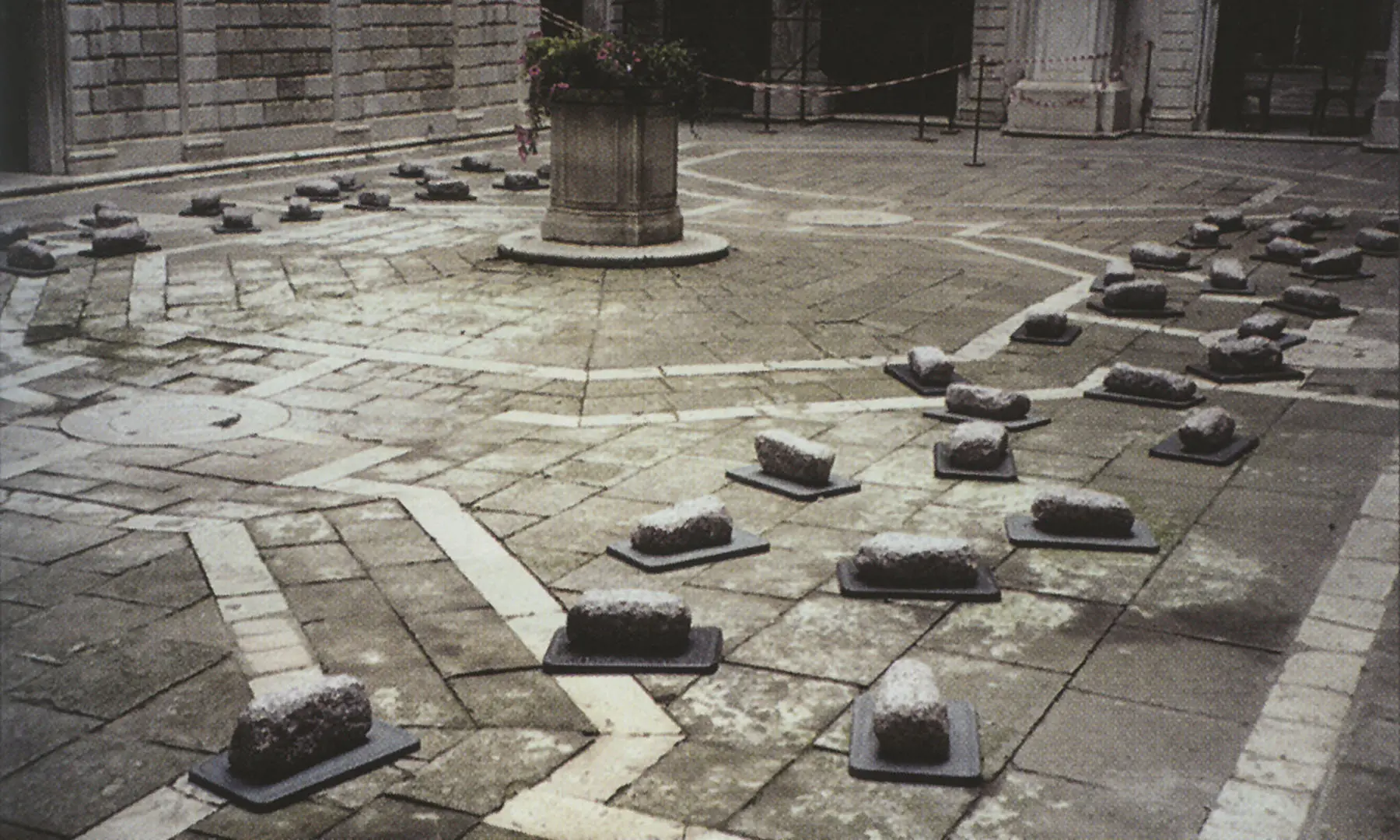
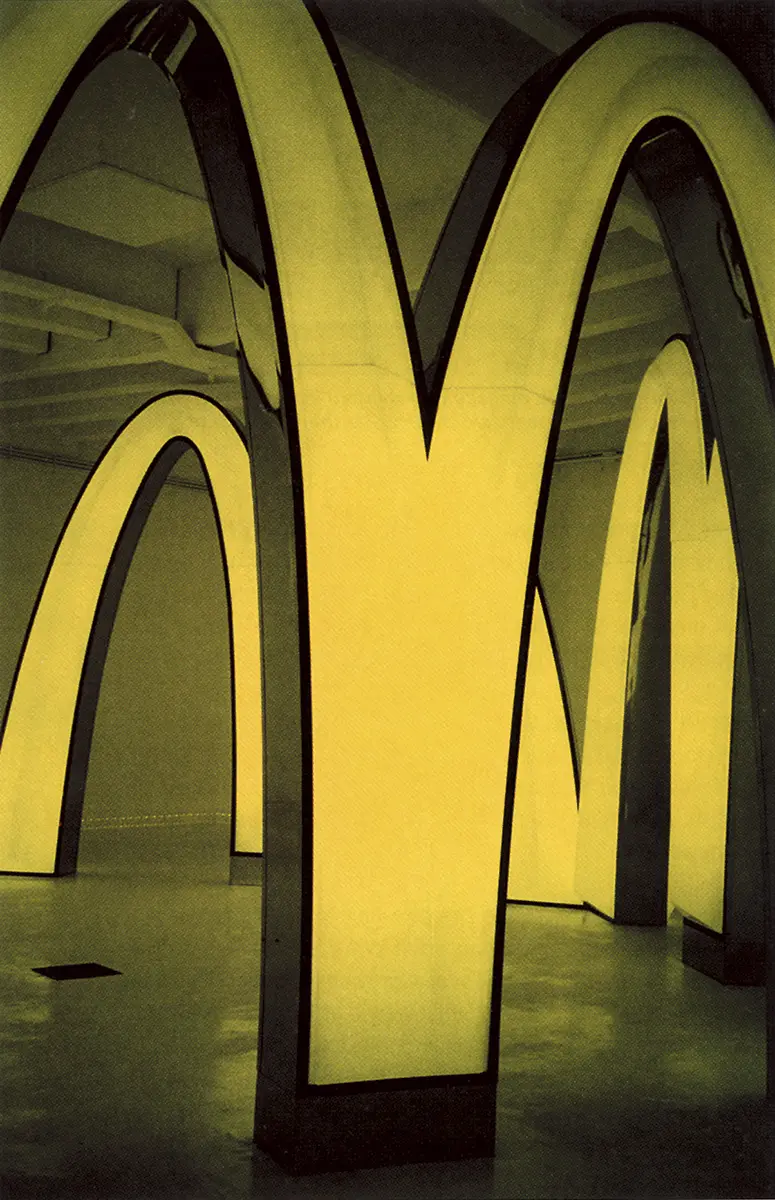
The vaporetto ticket bears a discount coupon for a McChicken (sic) in one of Venice’s three McDonald’s. The poster of the Biennale announces its main exhibition, The Plateau of Humankind, in Italian, English, German, and French. Among the main sponsors there is Microsoft. With heavy weapons, Genova is prepared to receive 150,000 militant protesters against the G8 meeting and ends with one dead on July 21st, and in ruins after the discussions were declared as having been to “benefit the poor.” In this tense atmosphere of mcdonaldization, violence, and attrition of languages, it is not coincidental that the Biennale was clouded in skepticism. By pure chance, South African artist Willem Boshoff created an installation about language. In 28 African and 28 European languages, he quoted the Gospel according to Mathew (“Or what man is there of you, whom his son ask for bread, will he give him a stone?”). The bread is sculpted in granite and placed on a stone platform with the text inscribed and the number of speakers of the corresponding language. Through this, we find that, of the languages on the poster, the Italian language has 60 million speakers, English 350, French 70, and German 120. Of the absent languages, Arabic has 165 and Spanish 225. As far as McDonald’s goes, the Japanese Pavillion shows an environment by Masato Nakamura with the famous arches in yellow acrylic and fluorescent light. The gothic-plastic piece surely tried to be a critique, but it looks like a monument.
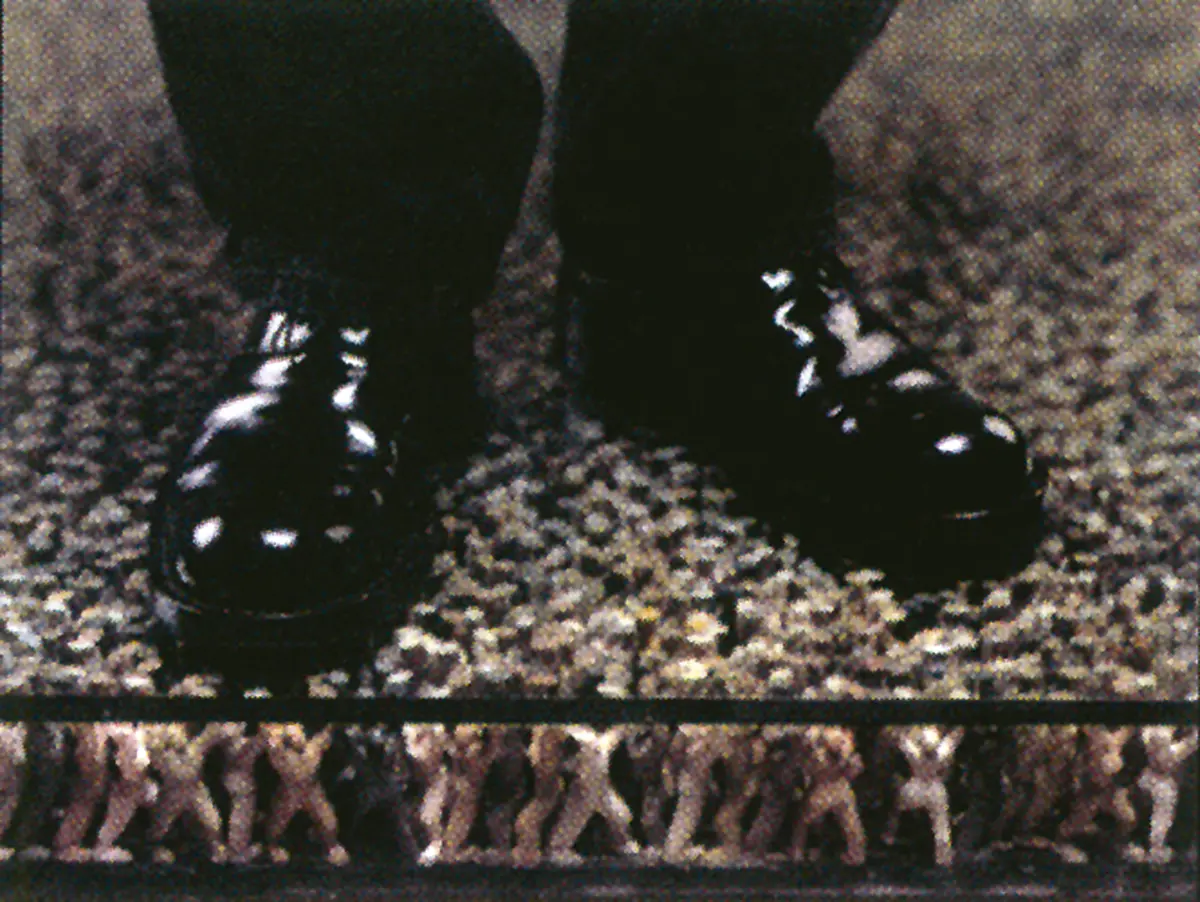
This Biennale, like the past one, has been organized by Harald Szeemann. It seems that when the organization of the previous one was offered to him within the absurd time frame of four months, he accepted under the condition of having total freedom in the organization of this one. This is how Szeemann became the first curator who, in Venice, organized two consecutive Biennales, with the added honor of doing the last of one millennium and the first of the next one. Last Biennale, with the excuse of the hurry and the comparison to the disasters that had preceded it, turned out to be a relatively satisfying experience. The present one, without alibis available, is disappointing, partly because it seems confusing. Returning to language issues, in what language does Szeemann think? If it is in Italian, we would be in the presence of a theatre orchestra, a place where the public may (or not) appreciate the production of humanity (both as an accumulation of people and as a show of generosity and understanding). If Szeemann thinks in English, we are in the presence of an extended and flat elevation containing everything, products, and people, without the consideration of an audience. If we follow his own interpretation, as stated in the catalog, the “plateau” is neither a physical place nor a subject matter. It is, instead, a dimension where both the public and artists meet. As such it is supposed to be a premonition of the globalized world.. But Szeemann´s premonition is not very clear. During the past Biennale, the affirmation of globalization was based on the disproportionate presence of Chinese artists. Practically absent in this one, their place was taken by his new discoveries: Finnish and Central American artists. More clarity about the possible sense of the Biennale is given through a piece by Korean artist Do-Ho Suh. The floor of his space is made out of thick glass, and the public walks on it. Upon closer inspection one sees that the glass is supported by thousands of little men with their hands stretched up.
One of the most remarkable features of the Biennale, in Szeemanns’ part as much as in the national entries, is the presence of video. The video seems to be the passport that allows for the self-definition of a “contemporary artist.” There are, of course, good videos and failed ones, and the technical preference, like painting might have been during the nineteenth century, is not intrinsically wrong. But while with painting the viewer had, after a first glimpse, certain freedom to decide if to continue looking, that decision is more problematic with video. The first glimpse does not necessarily provide a clue about what is happening and, unlike with movies, there is no previous review one might read to decide if a prolonged plunge is merited. The necessary investment for a comprehensive evaluation would take an incalculable amount of time, and time—as Franklin established a long time ago— is worth money. And particularly in Venice, which he didn’t know, a lot of money. One often tries then to capture pieces in fragmentary visions. A first quick look at a video by Estonian artist Ene-Liis Semper shows her with a shorn head and reading a book. On a second look, later, the book was closed and she was approaching a rope. While leaving, I turned my head again and saw her feet dangling. Instead of being moved, I felt even more intensely the threat of the video spaces trying to imprison me to the exclusion of the adjacent ones. Fortunately many didn´t work due to technical problems or had too long waiting lines. In self-contradiction, many works try to administer big chunks of the viewer´s time while communicating one-liners far from any possible complexity. One often keeps staring without anything happening. A sleeping couple projected on the floor continued sleeping through all subsequent peeks. Meanwhile, Semper, during a fourth visit, was shooting herself into one temple. The measure of success seems to be given by the length of time that can be extracted from the viewer.
In some cases, imprisonment is also physical. Janet Cardiff and George Bures Miller transformed the Canadian pavilion into a mini-theatre for 17 people. The spectacle takes 12 minutes and from the “upper balcony,” one sees a fragmentary movie with suggestive images. Not only is the screen to be seen but also empty orchestra seats, all carefully proportioned to give the credible illusion of a big cinema. The soundtrack (in English, forgetting that in Italy all foreign movies are dubbed) comes through earphones, mixing (with exquisite realism and technical quality) the dialogues from the movie with hypothetical neighbors chewing on popcorn and making silly comments. One lady repeatedly expresses her fear about having left her stove on, while on the screen one can see a house burning down and thinks that she deserves it. Sort of cute and not much more, the piece earned one of the special prizes of the Biennial thanks to converging “in multiple and mutant travels through space and time.”
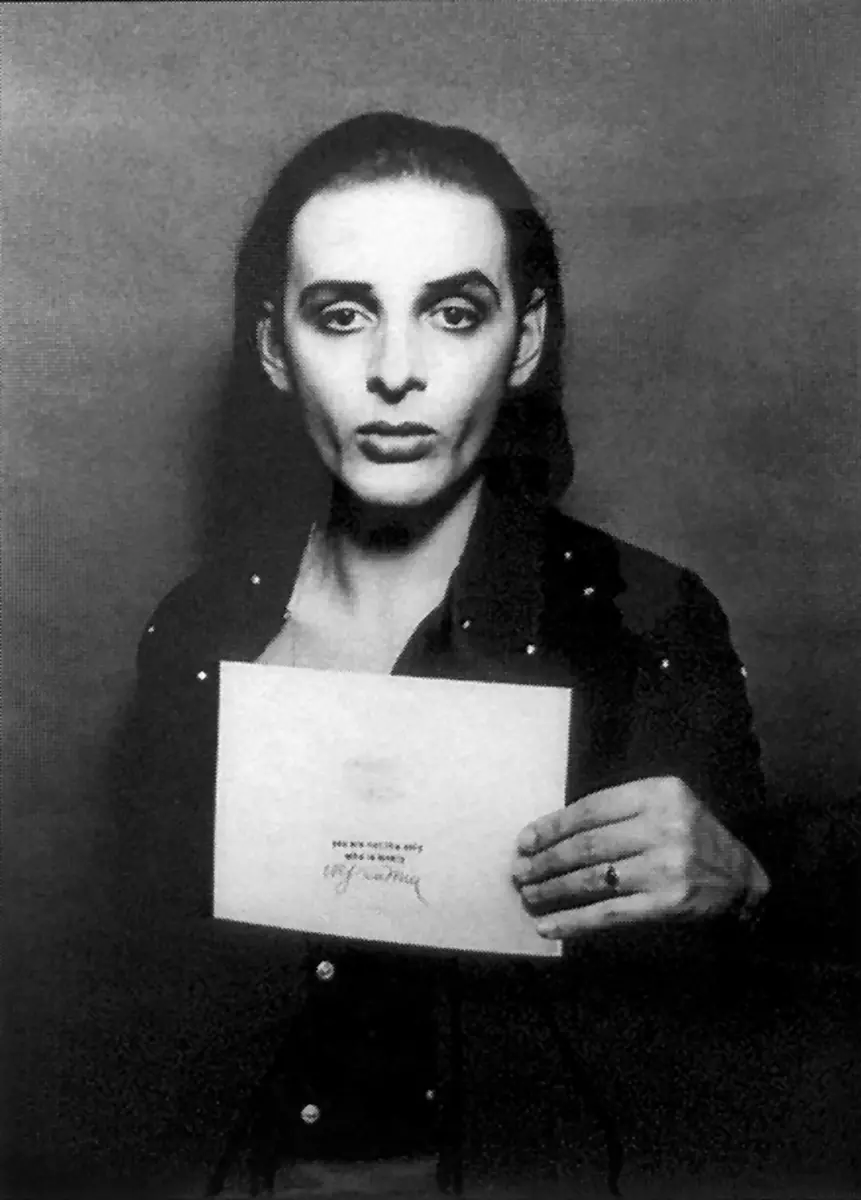
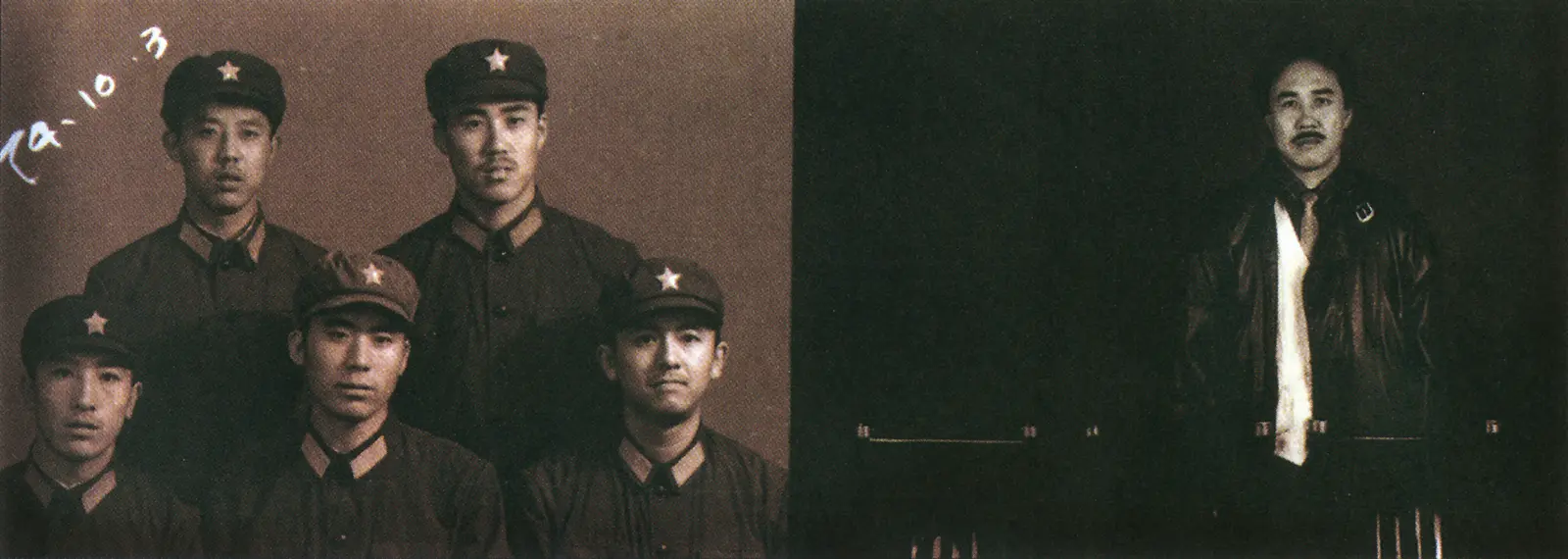
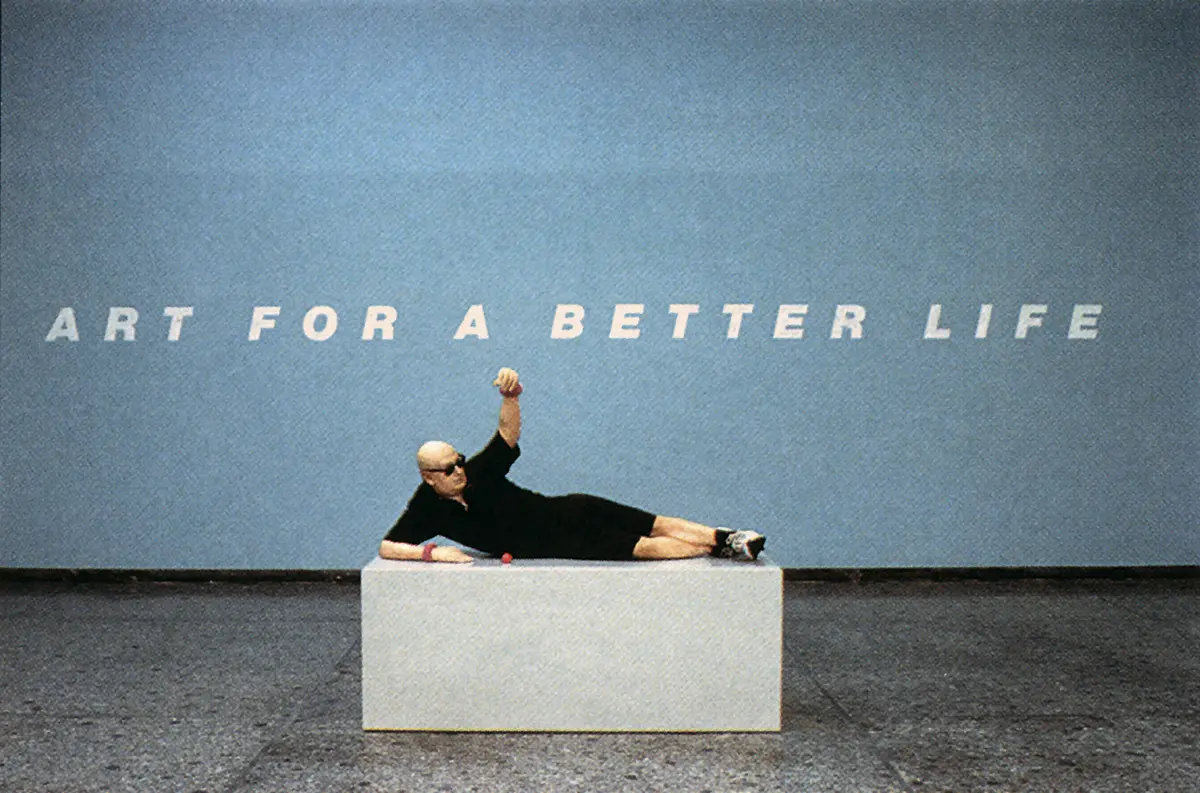
Paradoxically, those same issues were solved more directly, efficiently, and dramatically through simple photographs by Hai Bo, from China. Bo finds photographs dating to the Cultural Revolution, with groups of schoolmates, battle chums, etc. He then finds the people in the photographs and re-stages the image today, with everybody in the same place and position. With vacant positions signaling death, the coupling of old and new photographs provokes an immediate impact on history, aging, and death, a much stronger one than any video in the Biennale, regardless of the amount of time employed. In a more autobiographic and lighter vein, Urs Lüthi (in the Swiss pavilion, awarded the Fundación Panathlon Domenico Chiesa prize) presents a similar problem. During the early seventies, Lüthi was one of the first artists to explore crossdressing. Androgenously handsome, he would make photographic self-portraits adopting the role of different artists. Today he is bald and generous in pounds, forced to do exercise, an image which he exploits with humor. Meanwhile, Semper, who also represents Estonia in the national exhibition, cleans (in another video) the space in which the observer watches the monitor. She does it by systematically licking the walls and floor of the room, showing an excellent sense of masochist humor and proving that time does not necessarily pass (the cleaning is continuous and without any climax).
Besides video supremacy, the other remarkable point of the Biennale is the integration of national representations with the Biennale’s main exhibit. A majority of the artists could be in one or the other without making a great difference. In part, this means that the Biennale exhibit is not very rigidly curated. But it also means that a greater quantity of national representations has been organized according to international aesthetic canons. Some might say a “better level”, but things are not that simple. In one of the introductions to the catalog of Singapore, Paolo de Grandis, who appears as vice-commissioner, declares (meaning it as a compliment): “During our visit to Singapore we have noticed the evident globalization of culture and the great professionalism of the directors of cultural institutions and government officials.” Globalization is an “adjective” that denotes success.
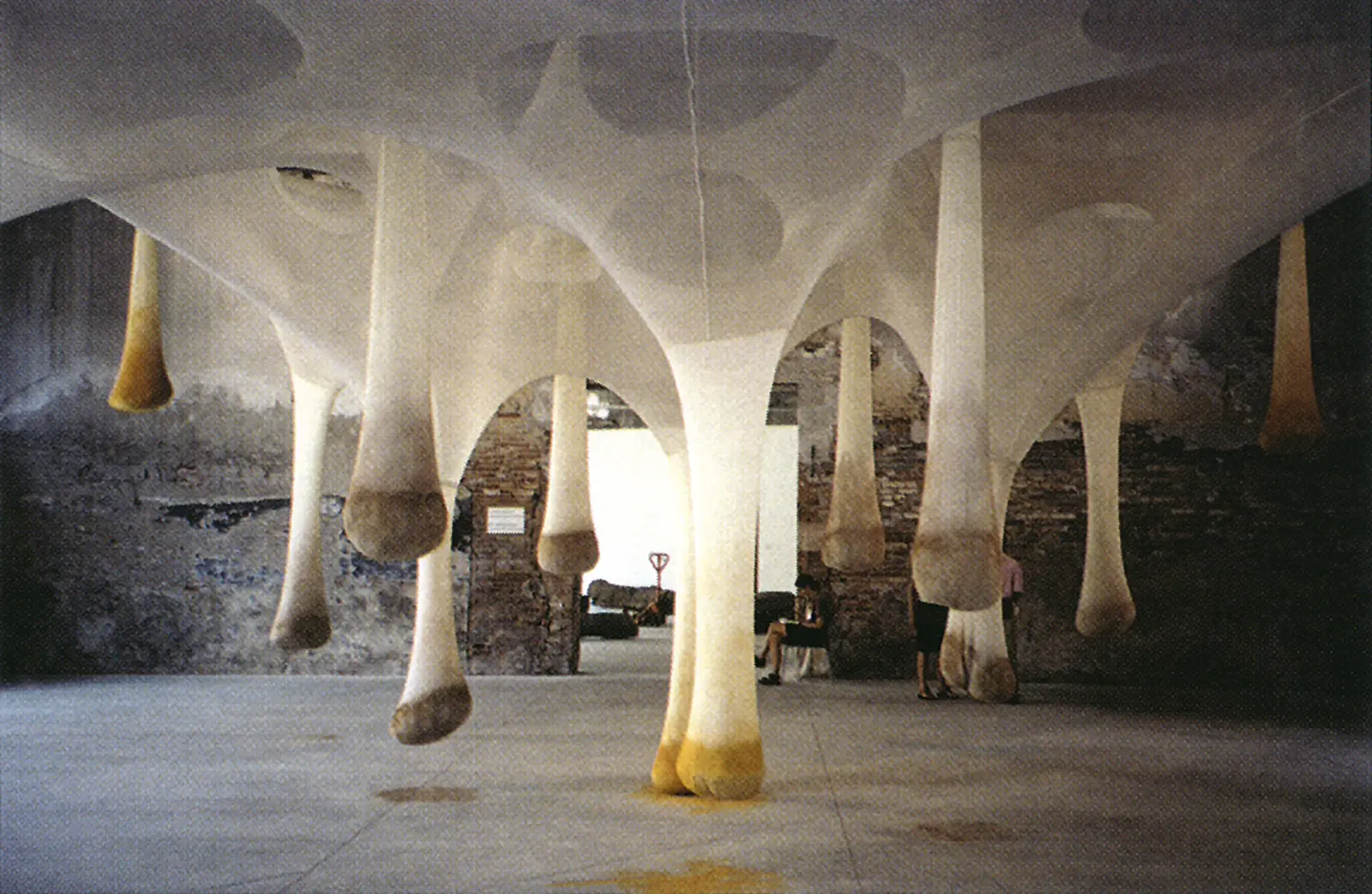
In some cases (Korea, Estonia, Brazil, to mention some) countries (and artists) capitalize their presence in Szeemann´s show by expanding their exhibition with a show in the national setting. Brazil in particular did even more than that. With Ernesto Neto in both shows and Vic Muniz in the national pavilion, there were also exhibitions of Tunga and Miguel Río Branco in the Peggy Guggenheim Foundation, Carmen Miranda and the Schools of Samba in the Fortuny palace, and Black Images in the Brazilian Baroque in San Giacomo dall’Orio. The show-off was complemented by both an enormous book catalog and the use of Germano Celant as a curator. Thus Celant, famous for his invention of the term Arte Povera, now enriches our team of erudites in Latin American art.
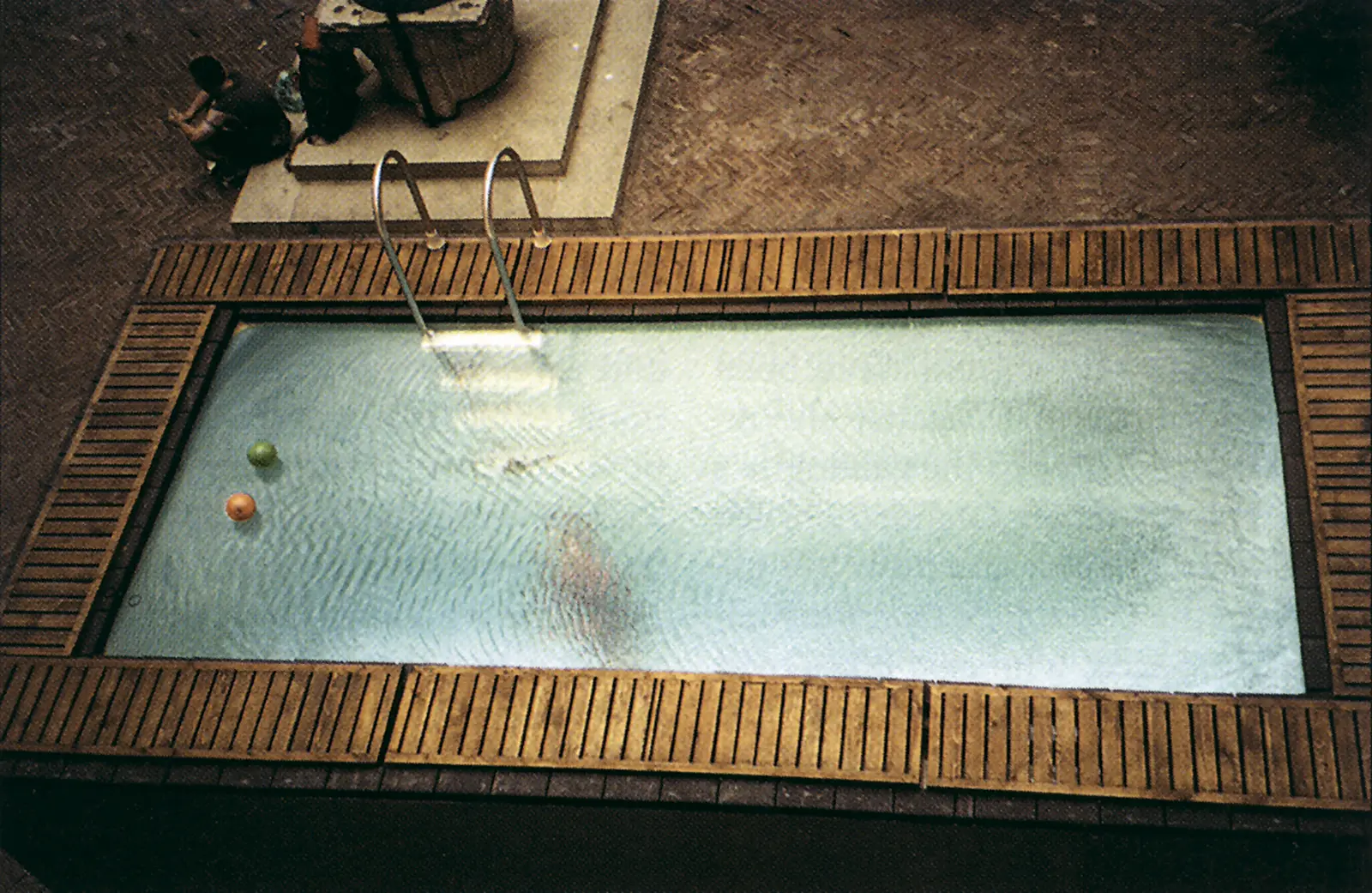
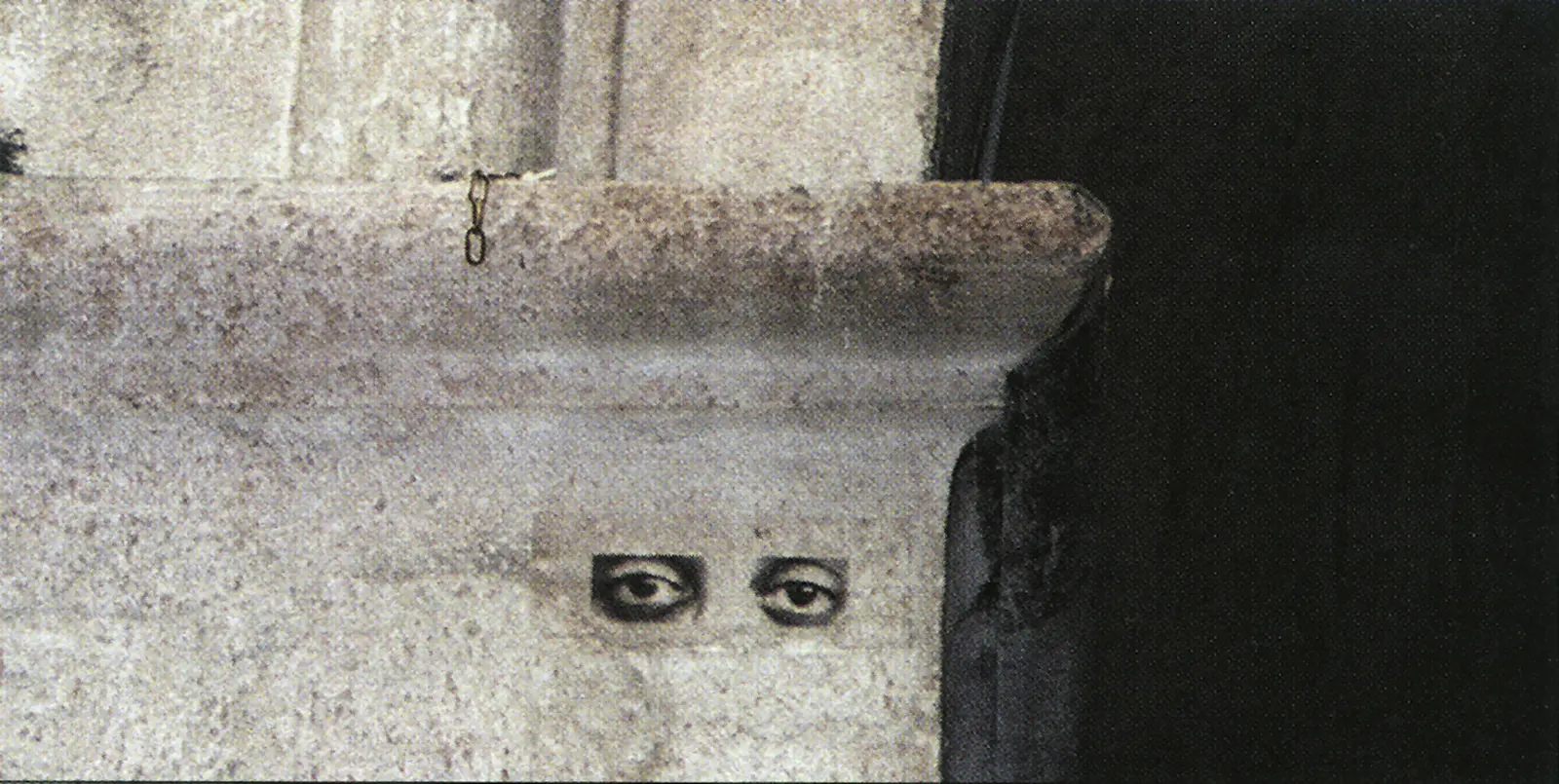
Argentina, instead, this time stands out for its modesty: no banners marking the building (a minus) and, surprisingly, breaking its long-standing curious tradition of publicizing the name of the curator through oversized signage. This year the curator is Irma Arestizábal, who should have been awarded a prize just because she reduced her presence to the catalogue’s essay. The artists are Leandro Ehrlich and Graciela Sacco, and both use the atrium of the Post Office near the Rialto bridge. Sacco, who also takes over the rest of Venice, affixed adhesive transparent sheets with printed pairs of eyes in a way that tiles and bricks start returning our gaze. Ehrlich, in his habitual exercise of magic ingenuity, makes us believe that in a full swimming pool, there are people walking on the bottom. The interesting thing is that the piece works with something that could be an obvious and simple idea, and where one sees the trick first and the magic later. The viewer can enter the construction and, looking up, can see a glass ceiling holding a relatively small thickness of water. Going to the second-floor balcony and looking into the pool, one has the illusion that the water actually goes all the way to the bottom and submerges the other visitors.
In the same vein of trompe l’oeil Robert Gober transmutes materials to suggest sordid and (particularly outside the U.S. confine) unexplainable dramas. Pieces of styrofoam and wooden planks are really cast in bronze and repainted. Newspaper clippings are careful reproductions done in etching. Unexpectedly for the U.S. pavilion´s tradition, Gober evades spectacularity, creates a meditational environment, and gives room for the viewer to administer his/her own time. The “artistic” component of the piece is, partially, a secret shared between the artist and those viewers who are willing to communicate with him. Gregor Schneider works in that same spirit. But his work, in the German pavilion (Prize to the best Pavillion), allows the visitor to get lost in a maze of desolate rooms, with doors that don´t open, stairs and ducts in a crumbling state, windows that don´t look into anything and nooks fit for hiding refugees. The viewer is again imprisoned, this time to the point of claustrophobia, but administered in careful doses by the artist. A gigantic opus on which Schneider has been working for the last fifteen years (one can calculate that he started at age 16) is simultaneously violent and controlled. Schneider manages to achieve, in a credible way, the same things that Ilya Kabakov has been trying to do bombastically during that same period. Kabakov (together with his wife Emilia) has one of those unsatisfactory installations in the general exhibition.
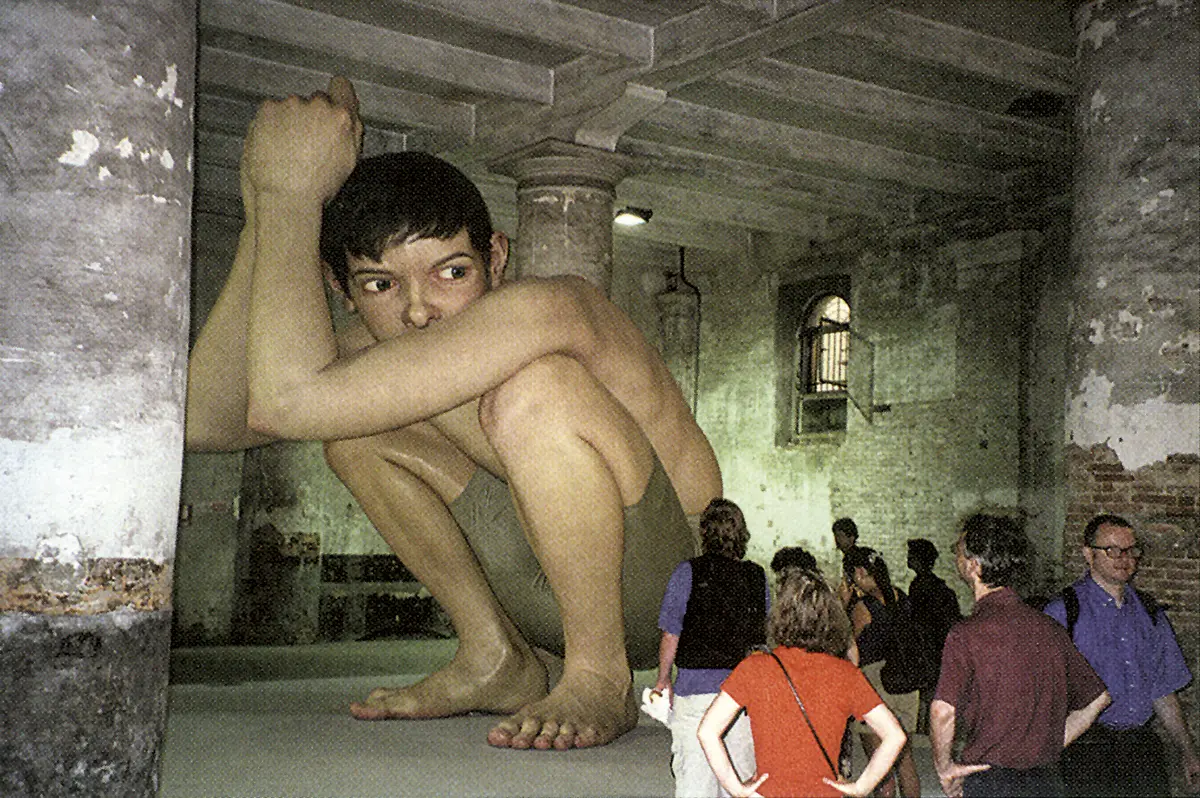
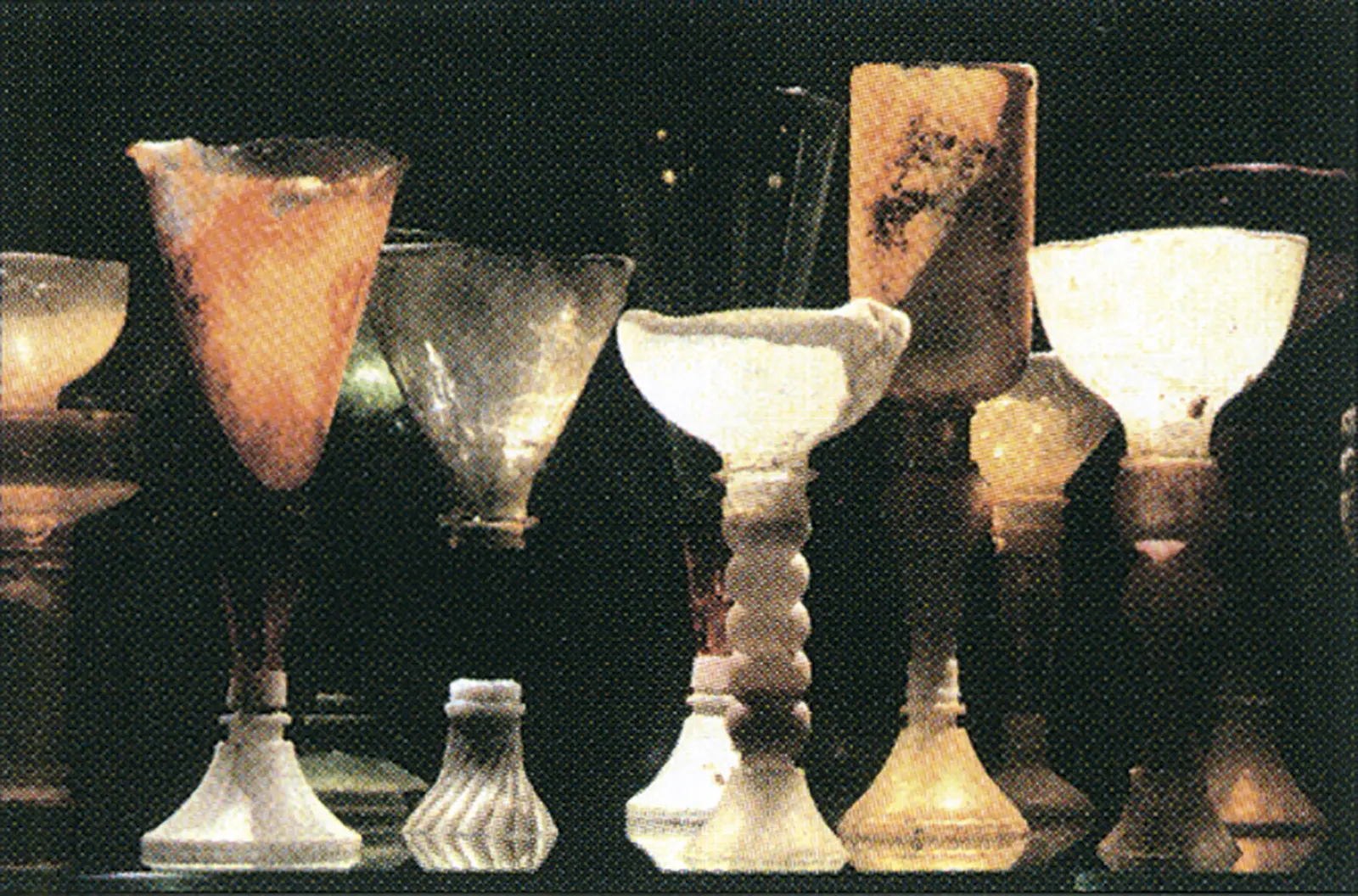
One could generalize that an enormous amount of work tries to simultaneously be spectacular and simplistic. Two typical works here are Hyperrealist, the squatting boy by the Australian Ronald Mueck, and the meteor-struck Pope by Italian Maurizio Cattelan, both in the general exhibition. Mueck’s work is surely the most photographed piece of the Biennale. It is made in an extreme realism, one that makes sculptors like Duane Hanson, John D’Andrea and their colleagues of the decade of the seventies look like all-thumbs. No more than an innocent child that looks at us sideways, in its monstrous size of 15 feet squatting, it quickly loses its feeling of innocence. Cattelan, instead, explores irreverence. Pope Wojtila lies on the floor, punished by a divine stone throw, surrounded by broken glass, and bearing an expression of disbelief and lack of understanding. The piece already had lived through a minor scandal in London. Here it is in a lost area of the Arsenale, far from any detailed inspection and leaving the suspicion that it might be fit for a possible Wax Museum of Humor. With the same levity and less pomposity, Hungary shows the work of Antal Lakner. The space looks like a showroom for the sale of exercise equipment. The machines work and have an excellent industrial finish. There is the fixed wheelbarrow, an apparatus that permits all the muscle movements required to carry soil, but without the dirt and the distances obligatory in a real garden. There is also the roller-painting machine with which one can work without messing anything up and saving paint expenditures and a free-hand drawing exerciser that forces the movements corresponding to that activity. An installation in Szeemann´s show by Bulgarian artist Nedko Solakov seems to complement these pieces. Solakov during the last Biennale had a sticker piece announcing that Bulgaria would be formally represented as a country in the present one (it turned out to be a patent lie). His work now (Life, Black, and White) has a painter rolling on black paint on the walls of his room, followed by a second painter who then paints everything white (or vice versa). It is a continuous process for the duration of the exhibition. Meanwhile, German artist Gerd Rohling combines hypothetical realism with humor and denunciation. He uses worn fragments of plastic vessels found on beaches and garbage dumps to create “crystal” leftovers attributable to historical periods with museum dignity. The trick only becomes apparent when one discovers the windings for the bottle caps. Apart from that, Murano may sink in envy.
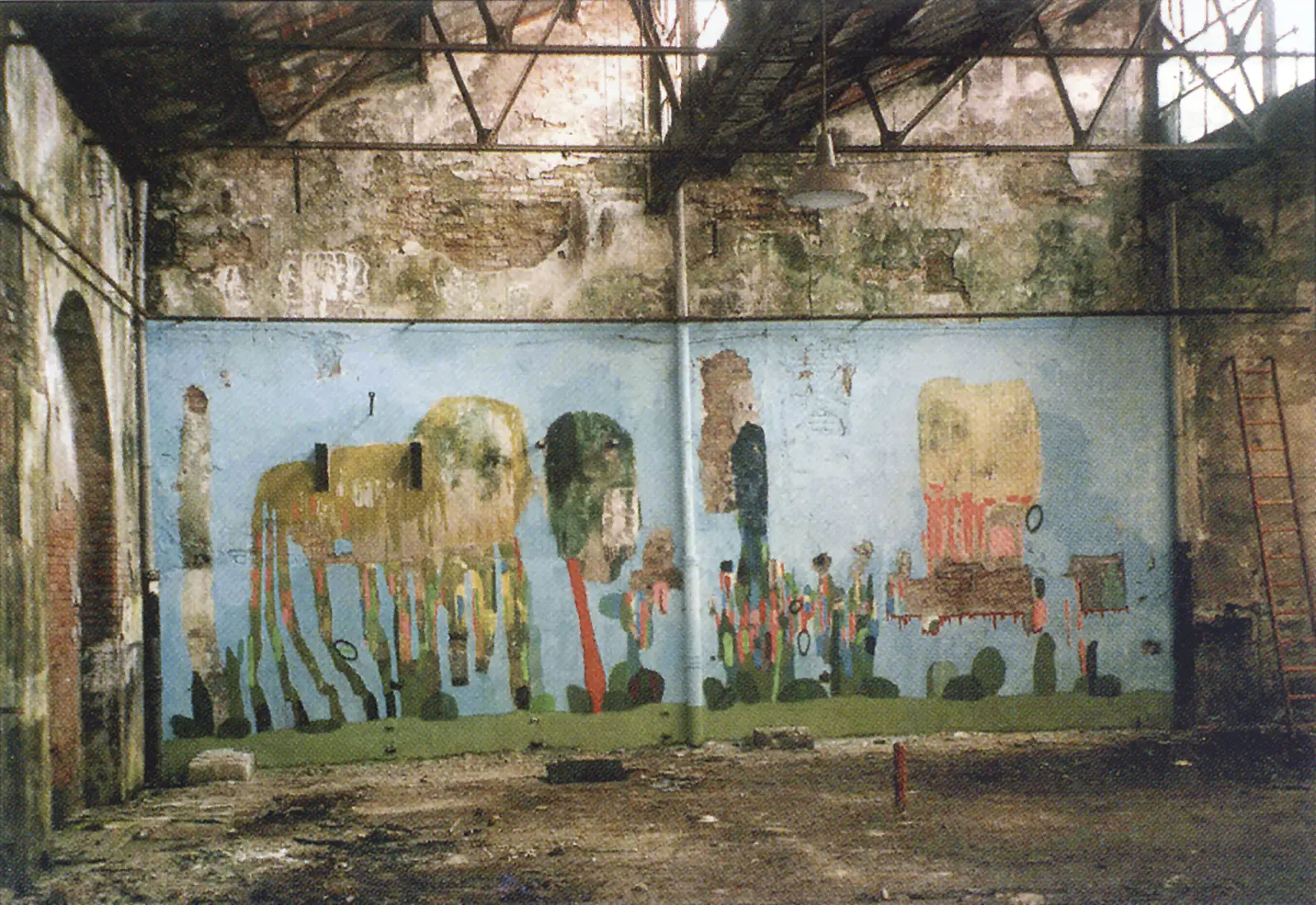
At this point, it is only fair to ask what else happened with Latin America. In Szeemann´s show, the South doesn't exist at all. It seems both urgent and imperative that some country, or maybe Mercosur, organize a study trip for him. There are artists from Mexico (an excellent piece about money´s power to generate humiliation, by Santiago Sierra) and from Guatemala (Luis González Palma being the most interesting), many from Costa Rica (Federico Herrero with a Special Prize for Young Artists), Venezuela (Javier Téllez) and Cuba (Tania Bruguera with work one couldn´t see for safety reasons of the building). The famous IILA (Italo Latin American Institute) this time was exiled to Treviso, a city about 25 miles from Venice. It is not known how many people went to see the exhibition (I wasn´t one of them) but it is unlikely that there were big crowds. Maybe this experience will help countries that still believe that by participating through IILA they are satisfying the national ego, to realize that they are betraying the good faith of their artists. Given its tradition of lack of professionalism, this invisibility may have been a favor (I am sure somebody will let me know if the tradition has been broken). In any case, it is a pity that artists of the stature of Colombian Nadín Ospina, Bolivian Gastón Ugalde, and Cuban Ibrahim Miranda (and other possible talents) remain unseen after what was a series of enormous personal sacrifices to set up their work. If this disaster is the last one and forces Latin American countries to assume their responsibility, the artists may feel rewarded by their martyrdom. This year IILA includes Bolivia, Colombia, Costa Rica, Cuba, Ecuador, El Salvador and Guatemala.
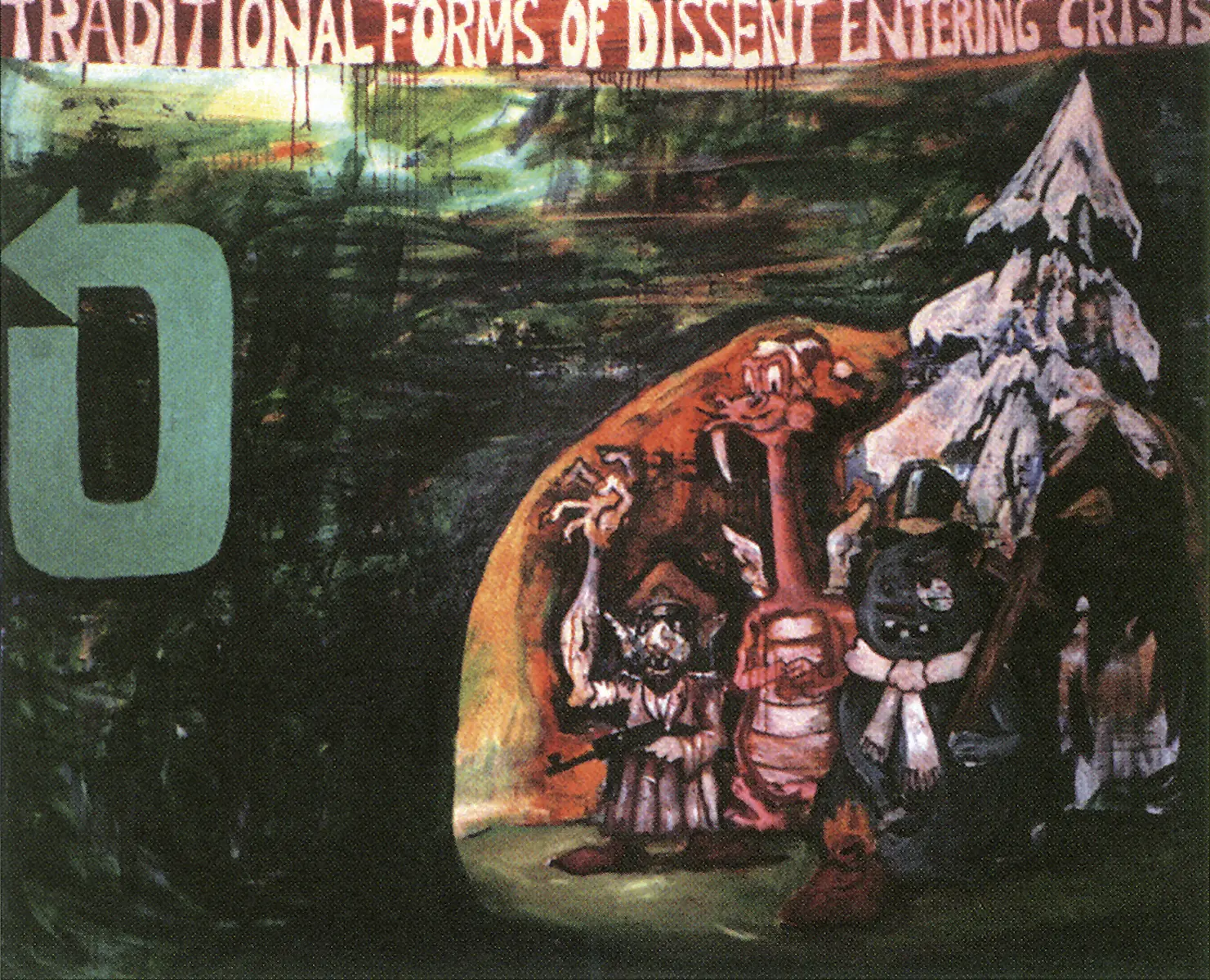
Uruguay and Venezuela, with their own pavillions, opted for localism. Rimer Cardillo, as much as Víctor Hugo Irrazábal is nourished by flora and fauna and tries to iconograph ancestralism. Within the general panorama of the Biennale, this attitude stands as a valiant and futile gesture, the opposite of the example offered by Singapore. In the general exhibition, Philippine artist Miguel Ocampo has a painting titled: Traditional Forms of Dissent Entering Crisis. It offers a comment on this and other art problems in the Biennale.
Chile used the occasion for an overdue homage to Juan Downey (Mention of the Jury) with the reconstruction of About Cages (1987). A cage with canaries, also contains a monitor showing a video of a Chirihue, an autochthonous Chilean bird, trying to escape. On both sides of the cage are speakers, one with a voice reading fragments of texts by Ana Frank, the other speaker with texts by a Chilean torturer describing his crimes during the Pinochet regime. Though Pinochet seems to keep evading any legal prosecution, both the ambassador of Chile and the representative of the Ministry of Foreign Affairs, endorse and validate Downey’s piece. At the same time, Belgium exhibits paintings by Luc Tuymans, in which he tries to confront his country with the guilt and responsibility for the assassination of Lumumba. The paintings are shy and understated, further diluted by the context of a mini-retrospective. In his preface, the Flemish Minister of Culture, unknowingly, describes the weaknesses of the work. He expresses his initial fear that through this show Belgium might appear as “a country of colonizers, oppressors and rulers.” Luckily for the Minister, Tuymans focuses “our attention on dealing with these issues as such, issues that can be colored by all kinds of emotional states or ideological views, topics that are always ambiguous, an ambiguity which hits people in the face in different ways.”
The answer to all of this, at least in its intention, is given by a satellite show: Authentic-Ex-centric, organized by Salah Hassan and Olu Oguibe. It is the exhibition that includes the earlier-mentioned Boshoff piece, and also work by Cuban artist Magdalena Campos. The show is remarkable because, though limited to seven artists, it goes through black and white, Islamic and Christian, North and South, inside and outside the continent, local and Diaspora, and proves the possibility of consistency within diversity. But, beyond this, the introduction to the catalog denounces with great clarity the tradition of eurocentricity of the Biennale. The general exhibitions organized by Jean Clair and Germano Celant seemed to have been shockingly unable to identify any African artists with sufficient merit to qualify for an international exhibition. Last Szeemann´s show only had three African artists, this one has managed to grow to four. Seeing Authentic…, however, none of the artists would have weakened his exhibition had they been included.
Szeemann finishes the catalog text for his exhibition in a playful and optimistic tone: “Welcome onto, into, under, next to the Plateau! Discover the wonders s you walk from surprise to surprise.”
A few hours before the killing of Carlo Giuliani in Genova, but with the city under siege, the Prime Minister of Italy, Silvio Berlusconi, declared that those who are opposed to the G-8 “are fighting the western world” and Bush said: “Genova is a very nice place and it is a pleasure to be here.” His commentary had been preceded by an ambiguous one to Berlusconi: “Only here could I get such a welcome like this,” and followed by his enlightened insight that “Rome is a very romantic city.” Next year the G-8 will meet in a small lost village in the North of Canada. One day after I finished this article, Italy in full will be rallying against police violence in Genova. In two years it will be time for the celebration of the 50th Biennale, a new occasion for happiness and enjoyment for some.
Discussing the Biennale in these contexts with Chilean artist Alfredo Jaar, he told me that he was considering the creation of a “Club of Pessimists.” It won't work, I said. “You are accepted,” he replied.
NOTES
1. The 49th Biennale of Venice is open from June 10 to November 4, 2001. The prizes, awarded by Ery Camara (Senegal, Mexico City), Carolyn Christov-Bakargiev (New York, Rome), Manray Hsu (Taipei), Hans Ulrich Obrist (Zurich-Paris) and Virginia Pérez-Ratton (San José, Costa Rica) were: Special Prize Biennale of Venice, Janet Cardiff and George Bures Miller, Canada; Marisa Merz, Italy, Pierre Huyghe, France; Special Prize for Young Artists, Federico Herrero, Costa Rica; Anri Sala, Albania/France; John Pilson, USA; A1-53167, Guatemala; Golden Lion for Best National Participation, German pavilion with Gregor Schneider; Golden Lions for Two Contemporary Masters, Richard Serra and Cy Twombly, USA; Non-Official Prize Panathlon Domenico Chiesa, Urs Lüthi, Switzerland; Mentions, Yinka Shonibare, England/Nigeria; Samuel Beckett-Martin Karmitz, France; Juan Downey, Chile.
LUIS CAMNITZER
Uruguayan artist, emeritus professor at the Visual Arts Department in the University of the State of New York, College at Old Westbury.