
The undifferentiated flurry of information and false narratives radiated by TV has emptied the image of its symbolic content, destroying the internal meanings of narrative tempos and obliterating any possibility of reasoning. McLuhan’s question and distinction between cold and hot media are still pertinent.
In what way does television affect societies that are not highly industrialized? How is a strange, cold machine received by interlocutors from different cultures? Nam June Paik has not established this difference. Odenbach’s and Bill Viola’s messages are specific to their own societies, and they illustrate their concrete situations.
The old aesthetic phenomenon of mimetism is reproduced then through the teachings of the new art colleges and academies, to the point of déjà vu. But in the same way, video has reached a level of aesthetic autonomy by means of differentiating its grammatical forms, which allowed it to formalize the time and the space of new narratives, so has it been able to transform the TV box into an element in a new type of composition, one in which, as done by Gary Hill, the monitor turns into sculptoric material, emphasizing the environment through unarticulated images, visceral sounds, and so on. What I mean is that even if, as in this case, there already is a developing aesthetic with specific sets of contents—memory, the ego, immediacy—what is important in Ana Claudia Múnera’s work is her having filled the monitor’s screen with concrete content of a personal nature, turning it into the occasional but legitimate support of a critical-oppositional stance towards life as an intimate event, as the tracing of personal experiences made objective not as a remembrance but as a protest.
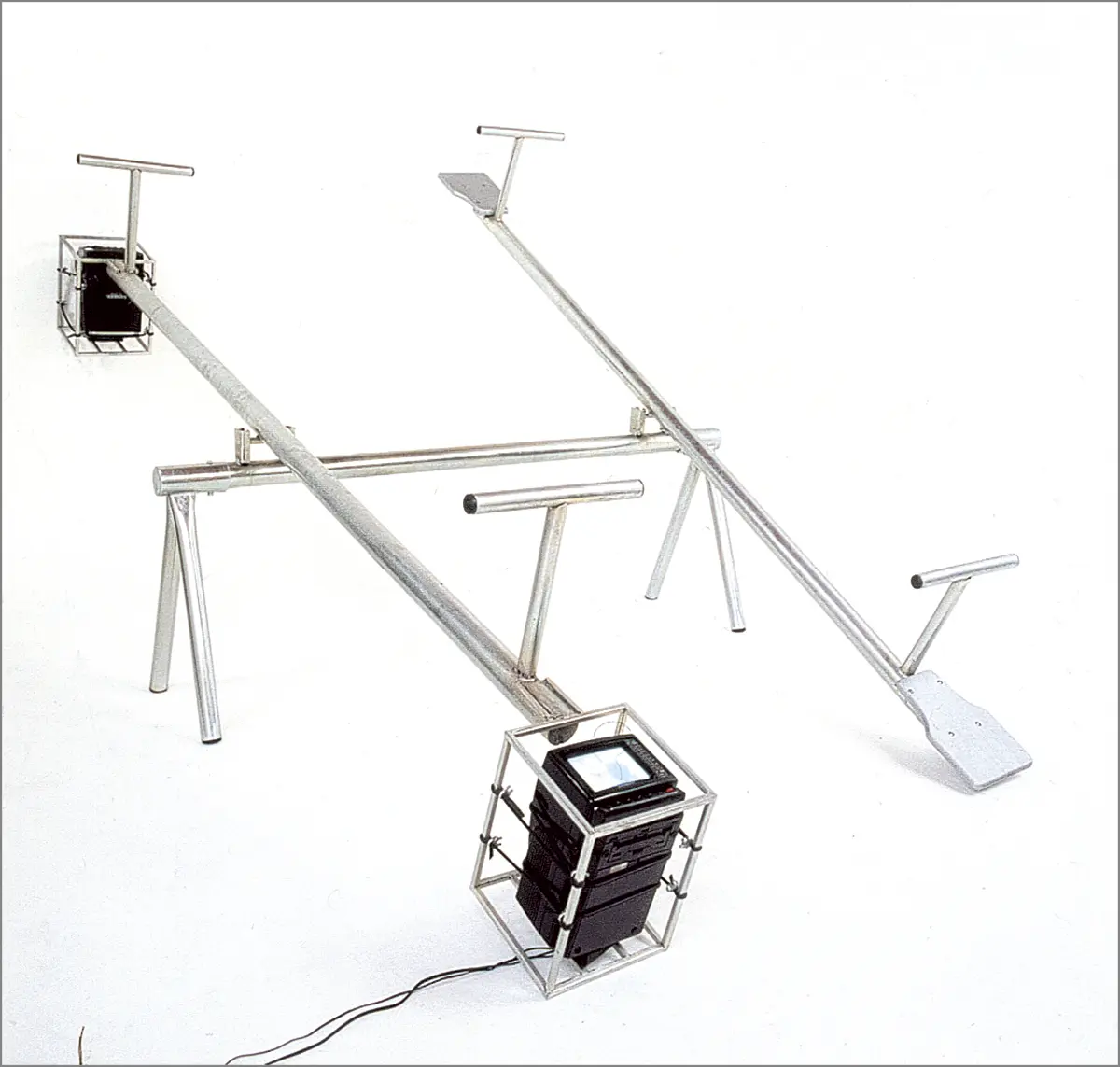
There is a secret Rimbaudian élan in such a proposal: not the whimpering or the outright scream provoked by the injustice of having been born, but the acidic questioning that ends up relativizing everything society had set up, first, as inalienable values, and second, as abstract institutions from where all forms of repression emanate. Múnera’s show two years ago at the Galería Suramericana dealt with the topic of childhood, and it did so without any complacency, posing the same questions to this stage of life so often deformed by facile rhetoric. Her cold analysis of the rituals of childhood was achieved through the unceasing repetition of those very acts, which then reached their true existential meaning. The type of babbling that is not an attempt to reach the level of language, but the possibility of stopping the life process when our eyes have already discovered the horrors of the world. Múnera’s monitor installation included objects characteristic of childhood play, creating a sense of anxiety through the use of children’s voices that repeated, radically emptying its meaning, a monotonous chorus.
The machine has been transmuted into an object without any defined profile, it has been “familiarized”. In the déjà vu, the machine turns into a fetish, and is congealed as an insurmountable barrier; here, however, it is appropriated and relocated as a vehicle for the message. In its analysis of certain rituals, the screen fixes on the photogram the interstices of the movement toward a certain kind of labor: hands sewing a bride’s dress, signaling the gestures of a sordid routine.
What could be nostalgia or happiness turns into an empty mental space that forces the receptor to wonder about the horror vacui of a life cluttered with instruments, a life in which creative labor has turned into alienating labor. Ana Claudia Múnera (Medellín, 1966) has had a rapid rise, as she early on legitimized the chosen supports for the concretion of her personal universe; this is to say, she has avoided the rookie mistakes of many young artists who seem to believe the medium itself automatically gives them an aesthetic and makes them contemporary.
This is confirmed by the important awards Múnera has received, as well as the aesthetic strength of her work, which deftly eludes clichés and articulates an inquiry into objects from the perspective of a life being experienced within the context of a specific culture and a specific economy.
DARÍO RUIZ GÓMEZ