Especially for
non-Venezuelans, the image of Armando Reverón is one of a painter, and author of
canvases that dissolve in a fog of un-finish. He is also known as an artist
with strange habits, an eccentric on the borderline of insanity, and, yet, a
character with sufficient power to signal the Venezuelan entrance into artistic
modernity.
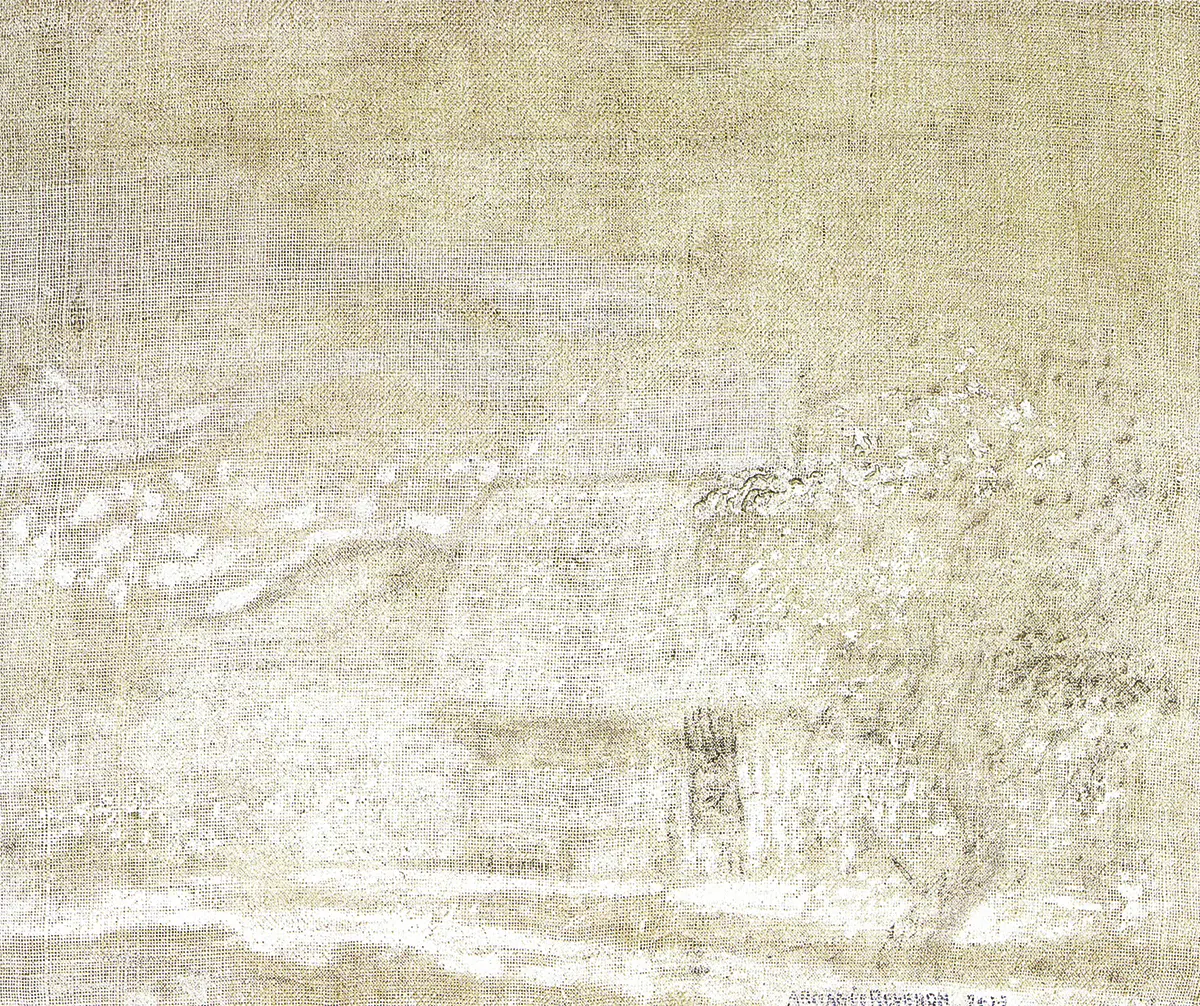
The show Armando Reverón: The Place of Objects, doesn’t question any of the ingredients of this perception but it radically reshuffles them. First, the exhibition raises doubts about how the artist was defined in history. Second, an individual emerges who is a much more interesting, complex, and formidable character than hitherto assumed. Reverón’s work was always cataloged as painting and, following Picasso’s example, grouped in a blue, white, and sepia period. Within these traditional considerations, he was seen as a post-impressionist who was concerned with light and who was, given the dates of his works (1918 onward are the ones with merit), a groundbreaker in Latin America. This rather conventional image is now being challenged in a stellar exhibition curated by Luis Pérez Oramas that opened at the Galería de Arte Nacional of Caracas. In an expanded version, the exhibition will travel to the Museum of Modern Art in New York, in 20031.
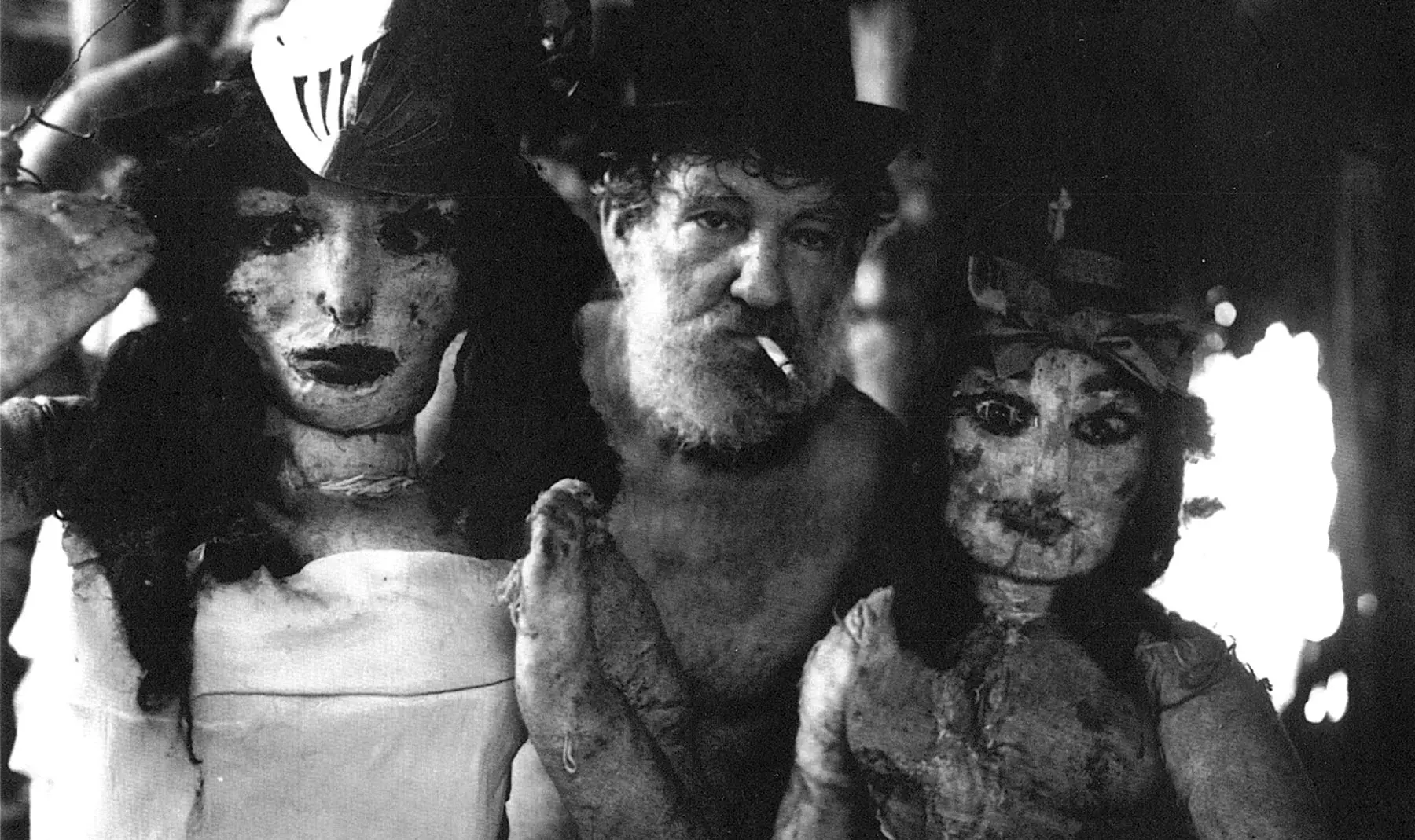
Oramas places an unusual stress on the non-painterly work of Reverón and brings to the fore his objects and dolls. The curator did not, however, fall into the temptation of “rescuing” Reverón’s non-painterly production. The sculptural body of work, often made out of cardboard and found materials, was always seen, with few exceptions, as a secondary and eccentric production that barely deserved the label “art.” Reverón manufactured these things to surround himself with them. They complemented his life and in that sense, they were as or more important than his paintings.
The history of art—especially that contemporaneous with Reverón—gave primacy to those techniques traditionally considered artistic. Thus it is not surprising that Reverón would be classified as a painter, and that the other production would be considered marginal. Monographs about Reverón, even the most complete and erudite, reproduce his paintings (including the monochromes) in full color while minimizing the reproduction of the objects. These are made to appear ostracized on a documentary level, justified as a curiosity only consecrated by contact with the artist’s hand. This prejudiced view of Reverón’s work leads to the idea of a rescue of the objects2, so even if this exhibition had been limited to a focus on them, it would have satisfied an important need.
But the exhibition organized by Oramas goes much further. The rescue function is generously overshot; the accepted historical view of Reverón is questioned and invalidated. The objects are exhibited, together and with the same respect, with carefully chosen paintings that establish a dialogue and reveal the consistency in his vision. Reverón here is no longer somebody whose eccentricity leads to the making of crazy things, but one who allows us to see an unexpected world.
Reverón was also himself a prisoner of history. Not only did he perceive and define himself as a painter: he carefully avoided getting involved in the modernist polemic that was trying to redefine the parameters of the profession. While his classmates rebelled against the academic system used in art school, Reverón remained faithful to his traditionalist teachers. The rebels, after losing a student strike, organized the Círculo de Bellas Artes (Fine Arts Circle) in 1912. It was an act of dissidence and a place to explore the ideas of Impressionism, Futurism, and the emerging Cubism. Meanwhile, Reverón received a scholarship that allowed him to go to Spain and study the Spanish masters. When he returned he joined the Circle, but it was for generational reasons and not for aesthetic affinities. Reverón’s role and placement in Venezuelan modernism therefore is not one contingent on European events. If he was instrumental here, it was in the development of a local version of modernism. It was not something willed, but only clear after the fact and the influences he left.
The product of Reverón’s conservative decisions was a prolific though not completely coherent set of figurative paintings. Some are based on an academic model; others explore the limits of his perception. The latter, considered his signature works, are mostly intuitive, sometimes overstepping the borders of sanity. It is unclear what role a lack of mental balance might have played in Reverón’s creative process. Officially diagnosed as schizophrenic and with the “unexplainable” quality of his objects as evidence, Reverón was vulnerable to a historical assessment that his paintings were those of an intelligent master, while the objects were the consequence of his play with madness.
It is undeniable that Reverón’s objects express a greater freedom than his paintings. As a painter, the artist saw himself as being accountable to a tradition. With the objects, Reverón was accountable only to his own needs. It is no coincidence that the paintings chosen for this exhibition are the freer ones, those in which he explored the limits of visibility. The paintings in this exhibition are essentially a-historical work. They are sufficiently idiosyncratic to be seen and admired as personal statements and survive without a reference to a chronology dictated by European modernism. One concludes that to initiate Venezuelan modernism, this must have been because of the particularities of the Venezuelan context and not because of any conscious project on his part.
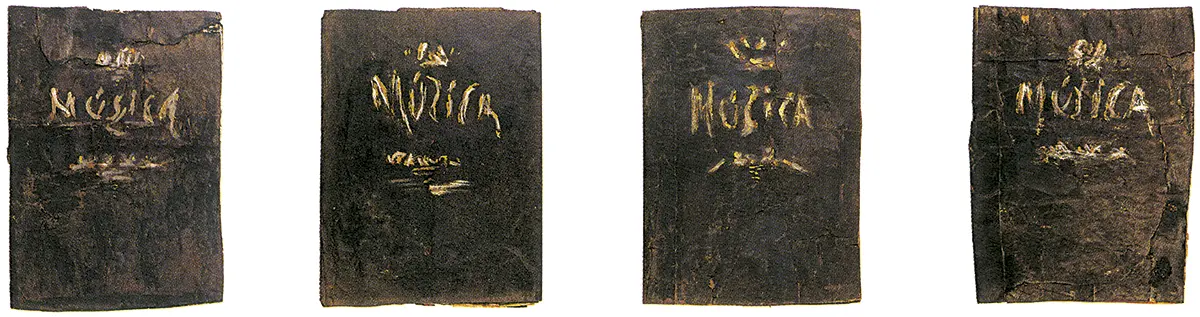
While monographs show Reverón as a somewhat erratic artist, often preoccupied with the need to prove he knows “how to paint,” the careful balance of paintings and objects shows us a precise creator who is faithful to himself, who functions outside of historical attributions. In this exhibition, Reverón seems to search for silence, for nothingness, for a lack of function that may allow things to acquire or express their own life and not the one lent by use. The dissolution in light, the recreation of the blindness created by emitted light, gives his paintings some of the feelings his objects have in their uselessness. The musical instruments he builds—solid maracas, guitars without a cavity—a mute telephone, music books with note-less scores, everything is designed for silence. Silence, like light (and in some of his paintings, darkness) eliminates the noises that interfere with the essence of things. Made during the decade of the forties, and with this emphasis on soundless music, Reverón’s objects fit into a tradition started by Alphonse Allais, continued by Giovanni Papini, and brought to an extreme by John Cage in his 4’33” in 1952. In 1884, Allais composed his Funeral March for the Deaf, a music sheet without notes. In Gog (published in 1931) Papini has a segment titled Musicians where he introduces a Bolivian composer who writes music based on silence: “Music tends to silence and its power is based on the pauses that exist between one sound and that following. Old composers still needed harmonic crutches to unravel the secrets of silence. I have found the way of eliminating the superfluous structure of notes and to offer silence in its genuine state of purity”3.
As Cage would do twenty-one years later, the Bolivian composer executed his concert without a sound. Gog, a patron of the arts, decides to finance the project and pays him with an unsigned check.
In both Allais and Papini’s work, silence is a tool to express sarcasm. In Cage, silence is a way of recycling sarcasm to redirect attention towards meditation. In Reverón, silence is an instrument designed to bring out the essence of things. While Cage preaches a certain passivity to enable knowledge to approach and enter the listener, for Reverón silence is a battle cry that empowers the listener/viewer to come closer to truth.
Reverón uses art, not as a stereotyped mechanism for expression, but as a way of interacting and communicating with reality. During a certain period of his life he would, before starting to paint, tie a rope around his waist and tighten it like a tourniquet. He tried to cut off blood circulation so as to separate the top and “noble” part of his body from the “ignoble” bottom. With cotton wool in his ears, to ensure exterior silence, Reverón then started to gesticulate before beginning what promised to be an attack on the canvas. But more than an aggression, what ensued would be an exchange of energies. The behavior described in testimonials by Julián Padrón and Alfredo Boulton, makes one think of the painting spectacles staged by informalist Georges Mathieu during the 1950s4. Discussions of Reverón’s preparations are often imbued with implicit references to ritual, magic, and madness. But these are words that distance rather than illustrate what in Reverón seemed to be a desperate attempt to mix being with understanding.
It is possible that in clinical terms Reverón may be classified as psychologically unbalanced. He was institutionalized twice (1933 and 1953) and the official diagnosis of schizophrenia certainly helps to authenticate a state of mental disturbance. In fact, however, Reverón only seems to have worked when in a state of lucidity. Thus there is the possibility that his work should be viewed as an expression, not of his alienation, but about an alienated society.
Reverón did not fit into the systems that functioned in his society, and in 1921 he started to create his own environment, literally. El Castillete, his dwelling during the second half of his life, is a “Gesamtkunstwerk” like the Merz installation was for Schwitters, only more ambitious. El Castillete is not only part or product of his art, it is the container of his everyday life. It is in that context, not in the context of his paintings, that his objects cease being the target for contemplation, as we see them today in the museum, and are revealed as things that are permanent “actors” in each of his days. The objects are not “readymades” as in Duchamp, but “re-mades” looking for greater precision than that given by random, good taste or a sociological critique of art. Like Duchamp, Reverón does not seem interested in discussing the banality of objects; he seems to accept this in the daily meaning of things. But, without any doubt about his right and power to interfere with reality, he lends things a hand to help them in their self-expression and to reveal them as carriers of some form of truth. The objects (as with Duchamp) do not rely on symbolic meanings. In fact, they occasionally show up in his paintings as accessory models, confirming their extra-artistic reality, a relatively anodyne presence, redeemed by his touch.
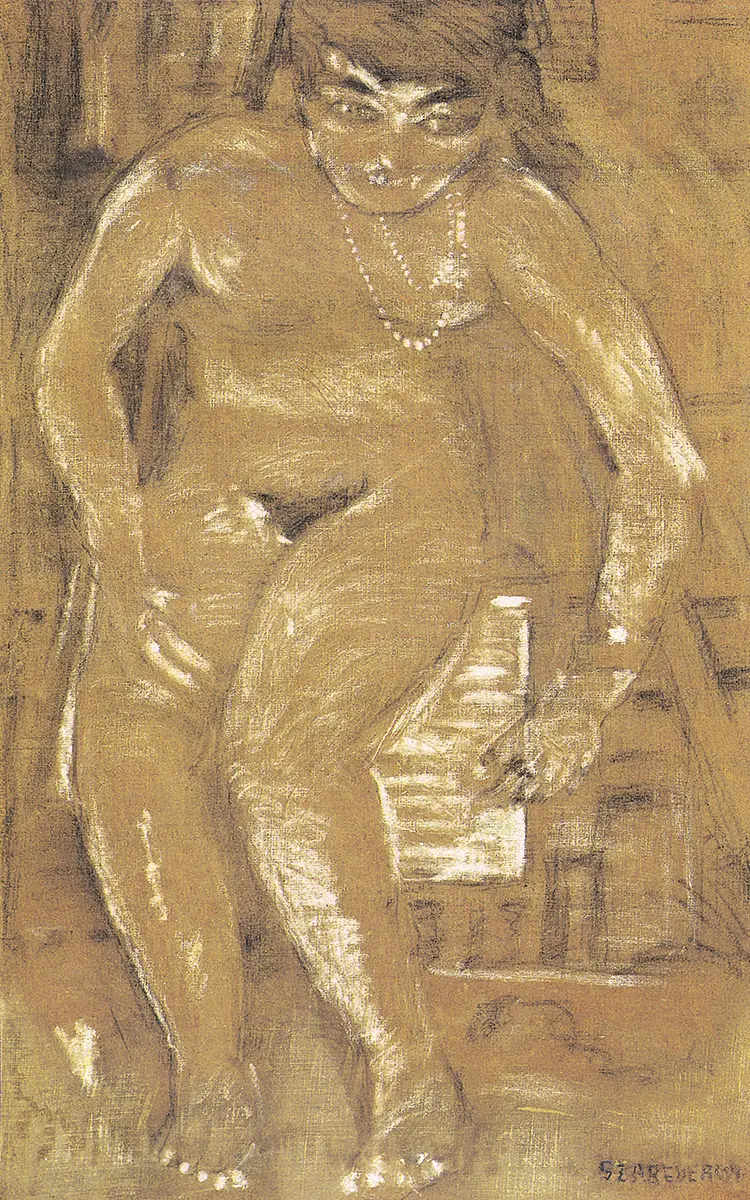
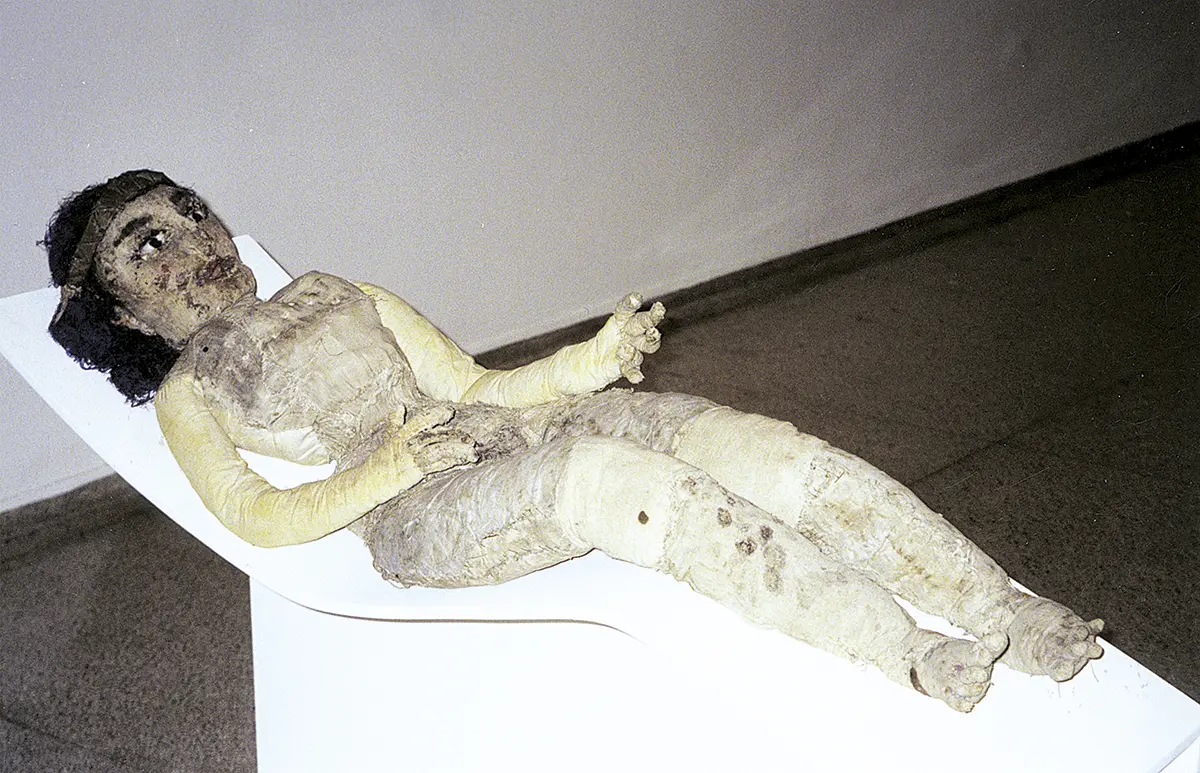
But Reverón does not limit himself to making things into objects. He also looks at human beings and makes dolls. Of nearly human size, they are different. They are terrifying in their ambiguity. They are objects, sexual images (companions?) mummifications of memories, projects for life, protection against solitude, and insurance to remain solitary. They raise doubt about where the clue is. Are the dolls anthropomorphic, or are the objects alive? Do the objects share the same violence, but are kept in latency? Are the dolls like the objects, but seemingly more violent because they resemble us? The violence would then be ours, projected.
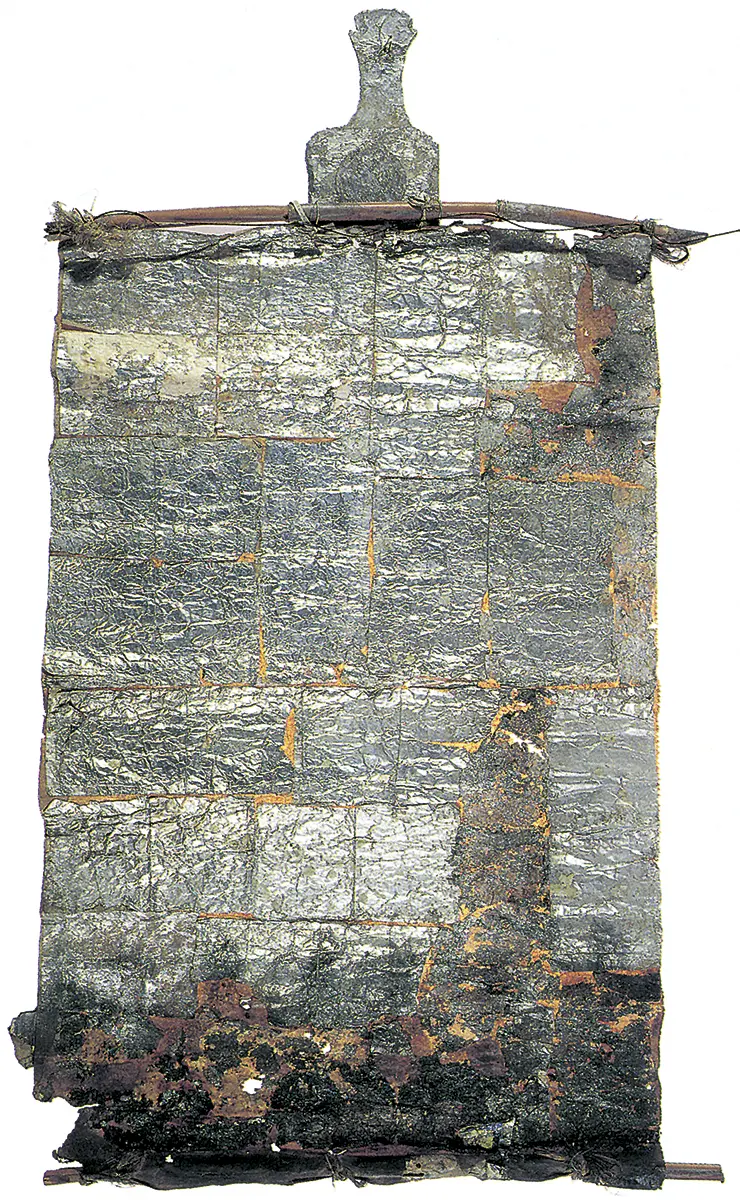
The feeling of this violence, augmented by the silence, is absent from the paintings. The violence expressed by (or attributed to) the dolls appears tamed in the canvases. The paintings are mirrors with muted reflections, and it is no coincidence that one of Reverón’s objects is a mirror made with aluminum paper, incapable of reflection. It is a silent mirror. Paintings and objects become an inseparable binomial. One exists for—thanks to—the other, and they cannot be grasped in isolation.
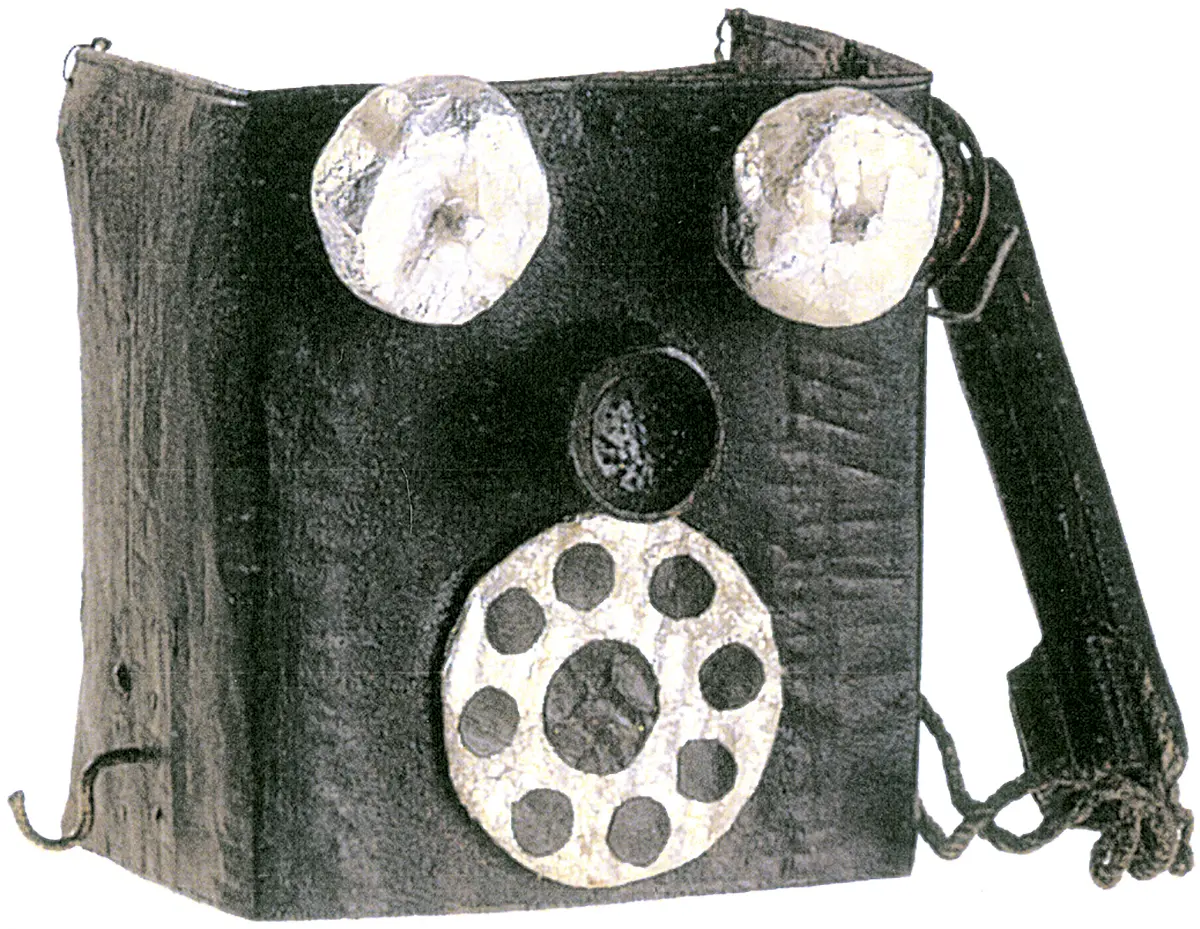
The exhibition at the Galería de Arte Nacional underlines this double and indissoluble existence and reveals Reverón in a dimension that the history of art threatened to obscure. The place that conserved Reverón’s secret seems to have been El Castillete, but that building was washed away in the mudslides of 1999. It was fortunate that the objects were no longer there. They had already been moved to the Galería de Arte Nacional, which is why we can still appreciate them in this exhibition.
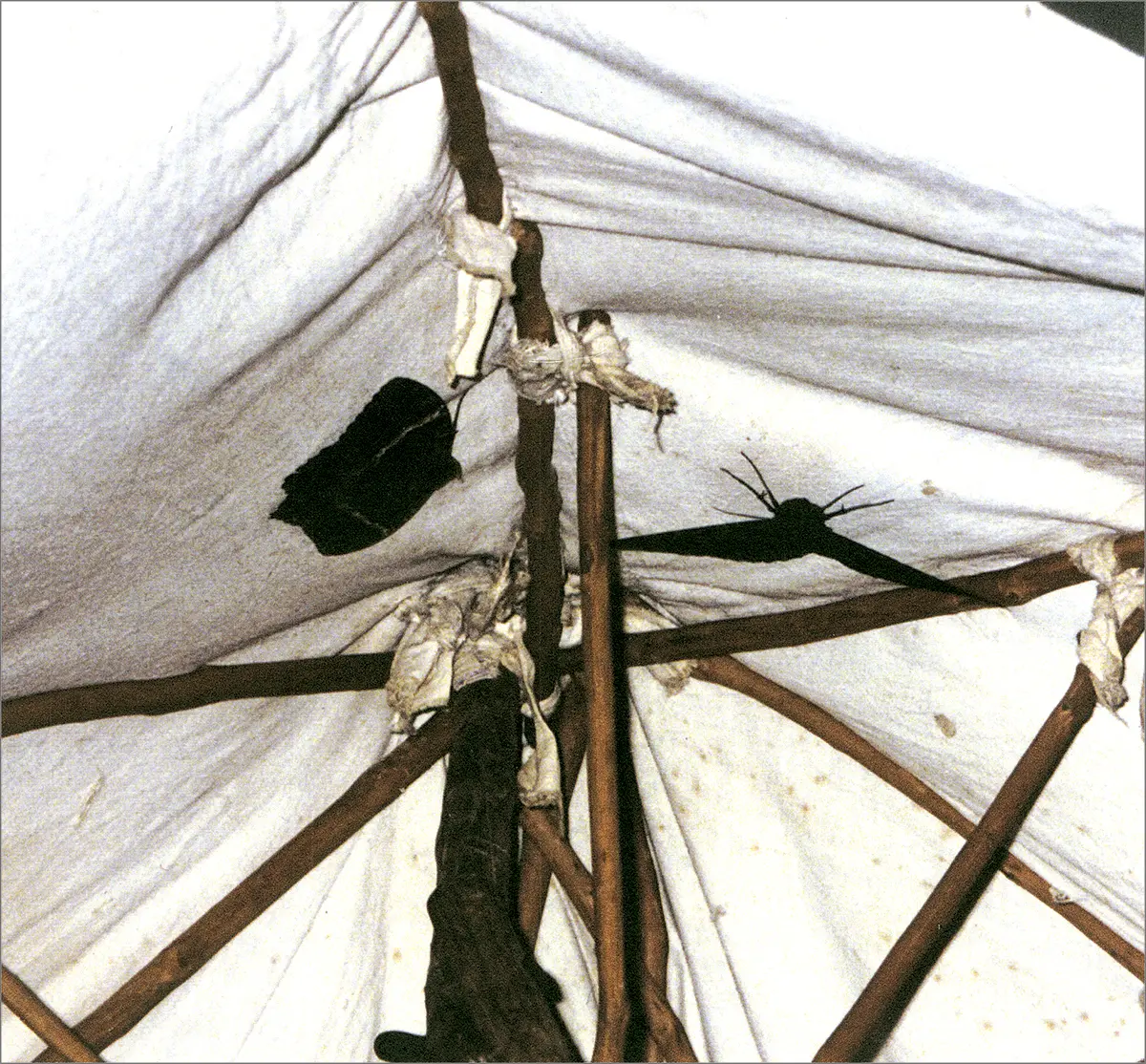
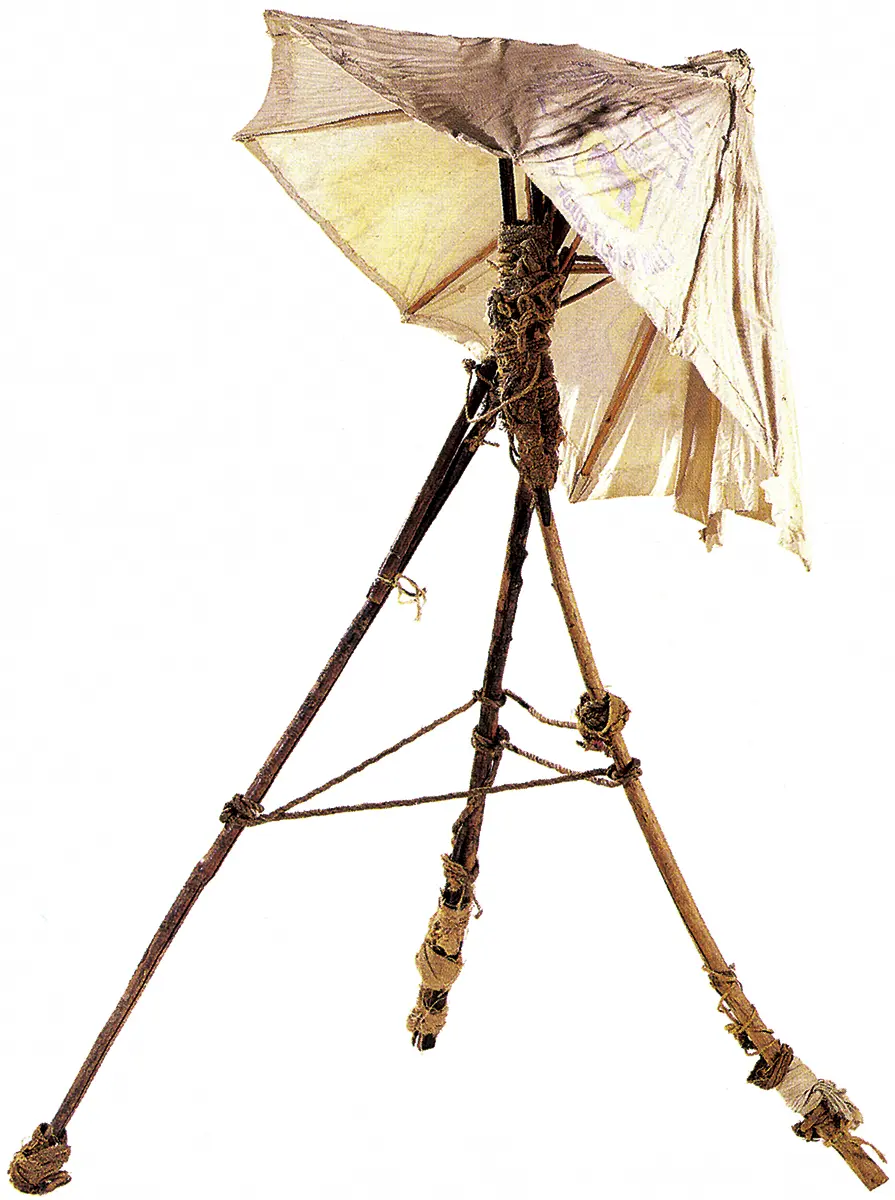
However, we will never be able to completely access Reverón. Any exhibition cools down whatever is exhibited, and that erosion of information becomes more obvious in this case. Reverón tried to live, a feeling that a museum cannot give back. One of the exhibits is an umbrella Reverón made to protect himself from the sun while painting on the beach. A tripod made with branches and a cord holds the white fabric. The construction is primitive and crude, but elegant; functional, yet with an obvious artistic halo. Here this dimension is underlined by the placement of the umbrella on a white platform—the touch with which museum-appropriate things in order to avoid misunderstandings. Unexpectedly, when I saw it, the umbrella had two enormous nocturnal butterflies resting on it.
Their presence was unsatisfactorily explained by functionaries who reported that a pest had infected the rooms of the museum. Their explanation was unsatisfactory because it was obvious the objects had triumphed and that El Castillete had come to the museum.
Within the parameters of what is possible for a museum, this exhibition of Reverón’s work is aesthetically stunning, and a milestone with respect to reorganizing the artist’s oeuvre. It gives a fresh and contemporary view of an artist who was in danger of being fossilized by a misplaced respect.
But there are limits to what is possible in a museum. The uninvited butterflies allow us to glimpse a part of Reverón that is nearly lost forever. They even make us question the degree of his claimed insanity. The butterflies, by now, have probably been eliminated by some pesticide, but then, that is how art history operates. Their presence and what that hinted will also be absent from the Museum of Modern Art in New York. One will be able to see there the artist. The person, however, will remain irremediably absent.
* Collection Museo Armando Reverón, Galería de Arte Nacional custody.
NOTES
1. July-October, 2001, Galería Nacional, Caracas.
2. The dolls had a special place in the recent exhibition Heterotopías organized by Mari Carmen Ramírez and Héctor Olea in the Museo Reina Sofía, Madrid, in December 2000, fulfilling the rescue mission.
3. Giovanni Papini, Gog, Valecchi Editore, Florence, 1931, pp.18-23. The book was published in New York that same year by Harcourt Brace and Co.
4. Juan Calzadilla, Reverón: Su universo como idioma in the catalog for the exhibition on the occasion of the centenary of his birth, Caracas, 1989.
LUIS CAMNITZER
Emeritus professor at the SUNY College, Old Westbury.