We have finally had the opportunity to see in Bogotá a retrospective show of Juan Cárdenas (1939), one of the most important Colombian artists in recent decades. There have been a total of nearly two hundred works of his entire production since the end of the '60s. Although a larger number had been planned and there were some lamentable absences, the collection was nonetheless outstanding. A banquet for the connoisseurs of great painting and the best drawing of all time, and an excellent lesson for the youth who are beginning to discover the indispensable legacy of art history.
Juan Cárdenas has basically been a figurative artist. In 1980, the artist wrote the following: "If I am a realist painter it is because this attitude allows me to have a sufficiently elastic vision of the phenomenon that operates in my comprehension of reality. Thus, I can better integrate abstract concepts into the idea that I have of objective and subjective phenomena. Specialization in the sciences does not authorize a global conception of reality; in the same way, extremist theories in the arts hinder any profound understanding of the nature of the universe." However, the artist has not ceased to admire abstract art and he is quite familiar with the productions of Mondrian and Albers. In many of his compositions, it is easy to discover, together with the characters, the organization of the picture in terms of geometry, structure, and orthogonality. We must immediately add to the constant elements of figuration—or realism—and abstraction the varied themes that he tackles and the diverse contents that he presents. Cárdenas is interested in philosophy, science—especially genetics—history in general (including the history of Colombia, and the history of culture), literature, music, and, obviously, the plastic arts.
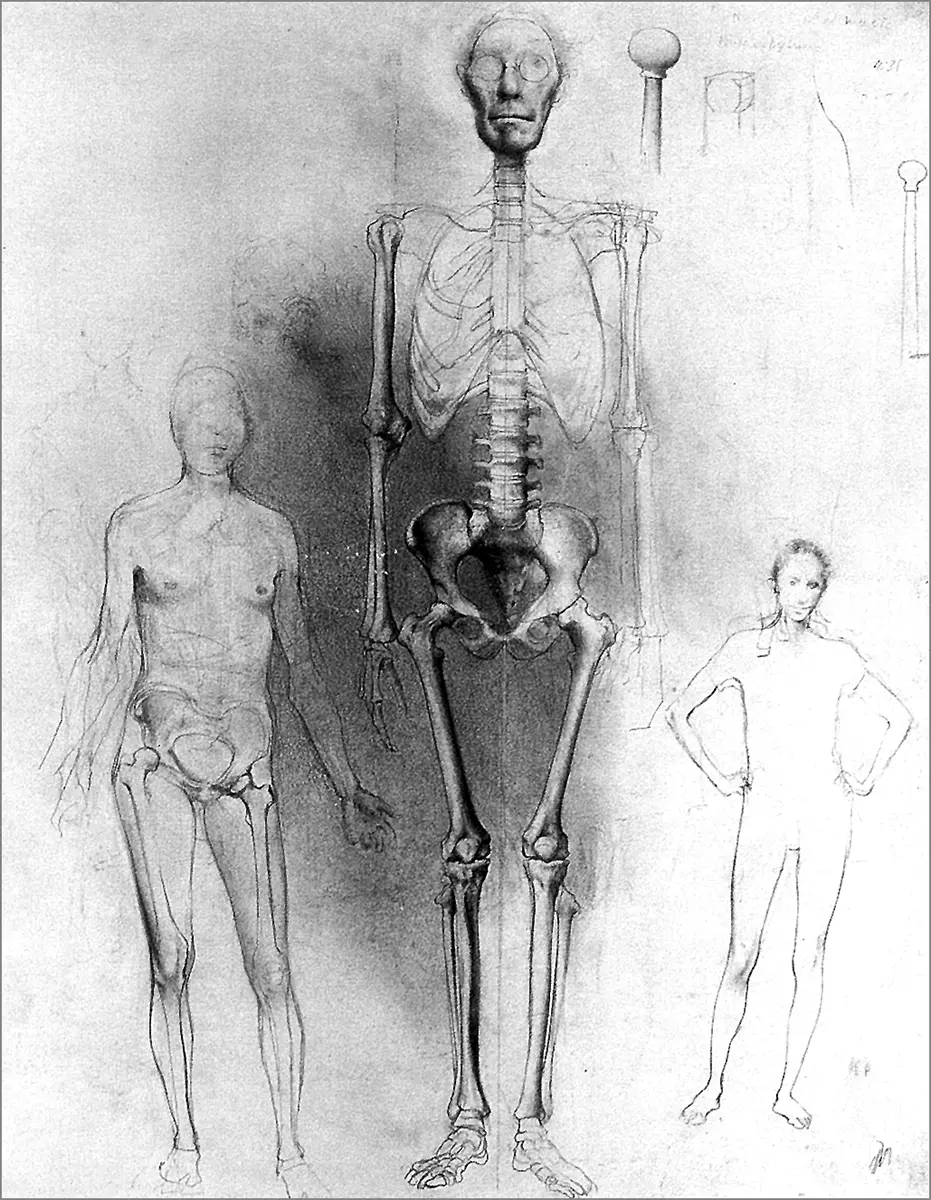
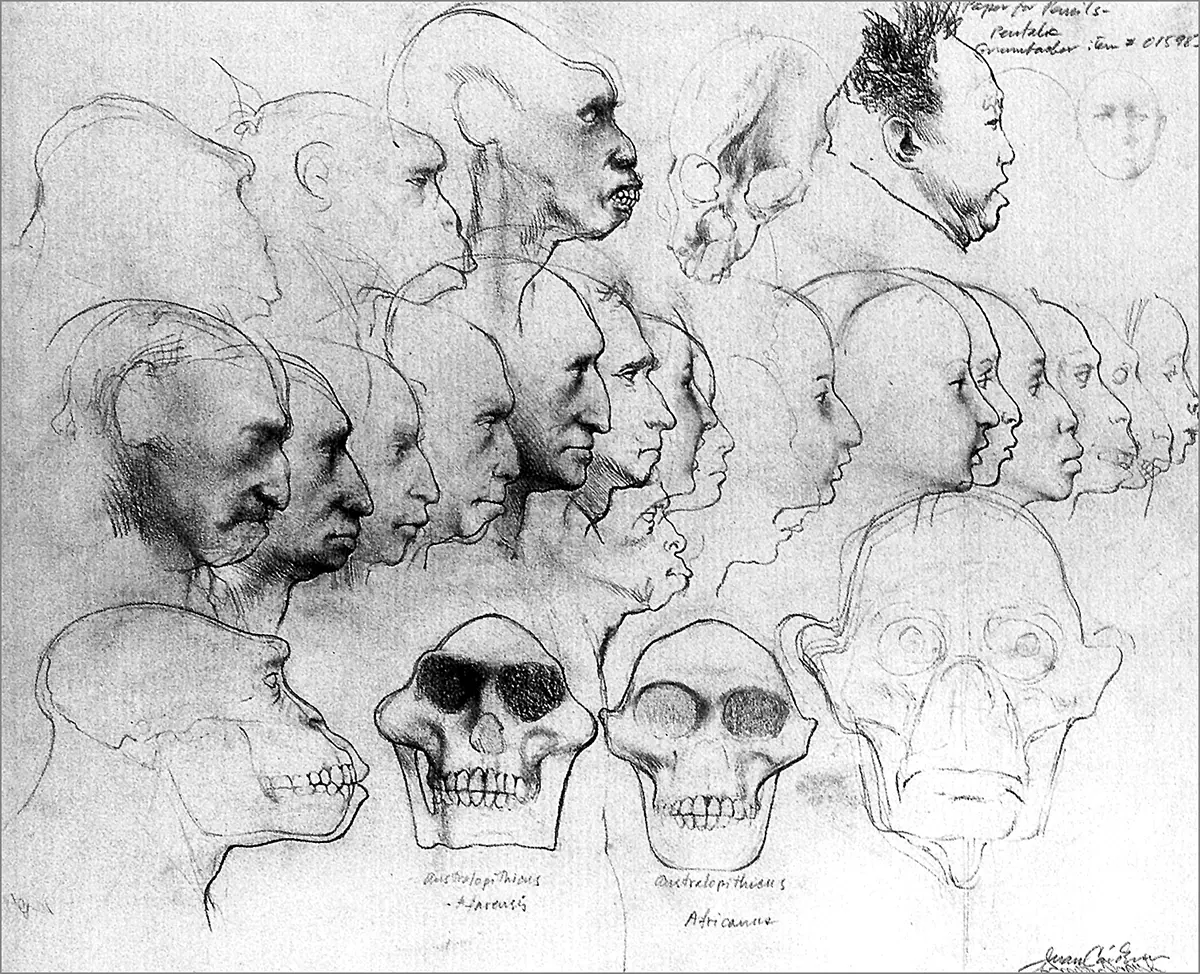
The show was exhibited by themes, at times subdivided in order to underscore different aspects of the same motif and areas of work. The sections were called: "Geometrical Motifs," "Geometrical Interiors," "Natural Landscape," "Self-portraits," "Groups of Characters," "Drawing (in two spaces)," "Urban Exteriors," "Caricature (also in two parts)," "To Paint Painting/The Painter in his Studio," "Violence," "Landscapes in sequence," "Portraits, Cubist studio," and "The historic." There were excellent pictures in each of these groups and, naturally, the abundance of works from recent years, including several from 1999-2001 attracted special attention, as well as the large number of caricatures after 1969—the year he stopped publishing them in the national newspapers—and, of course, nearly all were unknown. Cárdenas is a magnificent drawer and, therefore, an outstanding caricaturist. He belongs to the lineage of those great artists of the twentieth century connected to caricaturesque drawing: Orozco, Calder, Klee, Picasso, Dubuffet, and Hockney, among others. His production can be witty and playful or incisive and charged with black humor, even when it refers to his own figure. There are notable cases in which he erases the borders between anatomical drawings and caricature, as, for example, in Estudio de esqueleto (Study of a skeleton; graphite 1995). Several drawings, particularly those that have to do with evolution—Siete cabezas de perfil con Australopithecus (Seven profile heads with Australopithecus, 1990), Tres cráneos, dos caras y cuatro figuras (Three skulls, two faces, and four figures, 1999), etc.—may recall Leonardo. Cárdenas, like the Italian, is not only an effective drawer, but his interest in reality has no restrictions and it masterfully reaches the ugly and the grotesque.
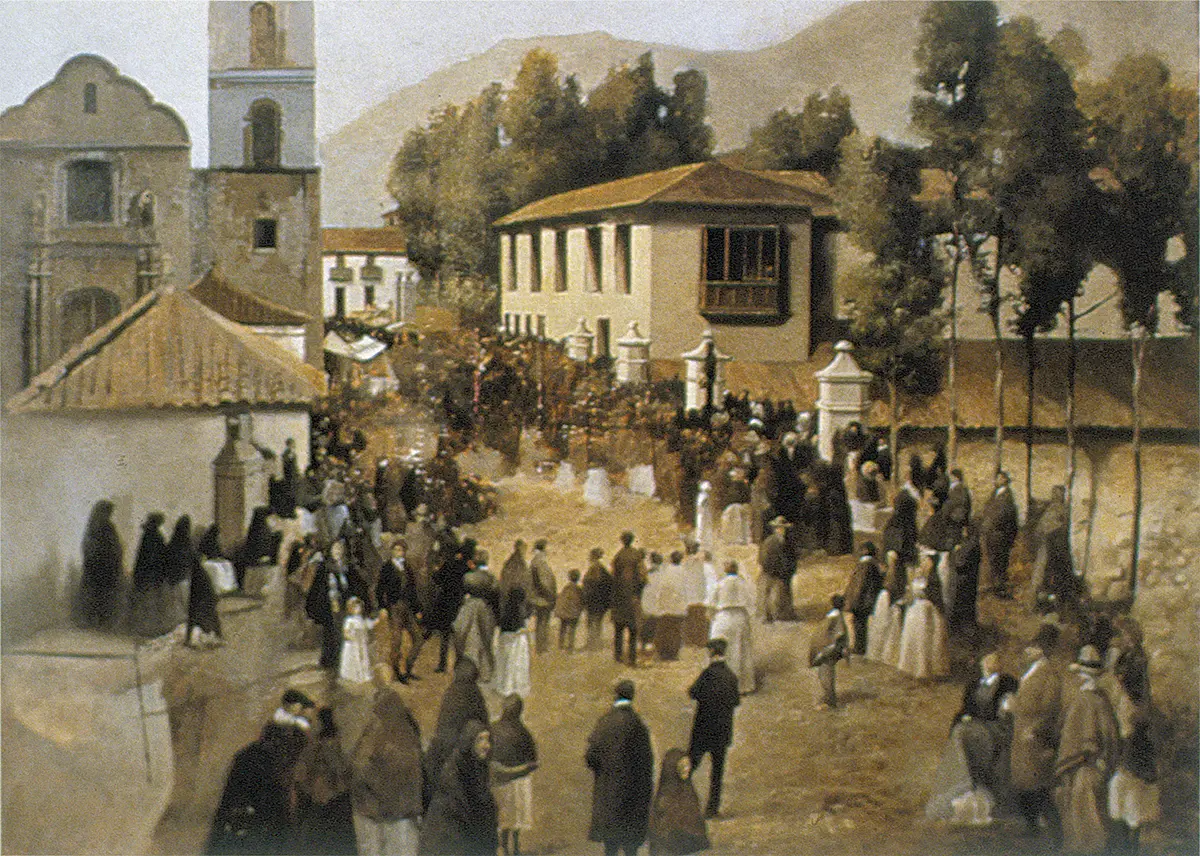
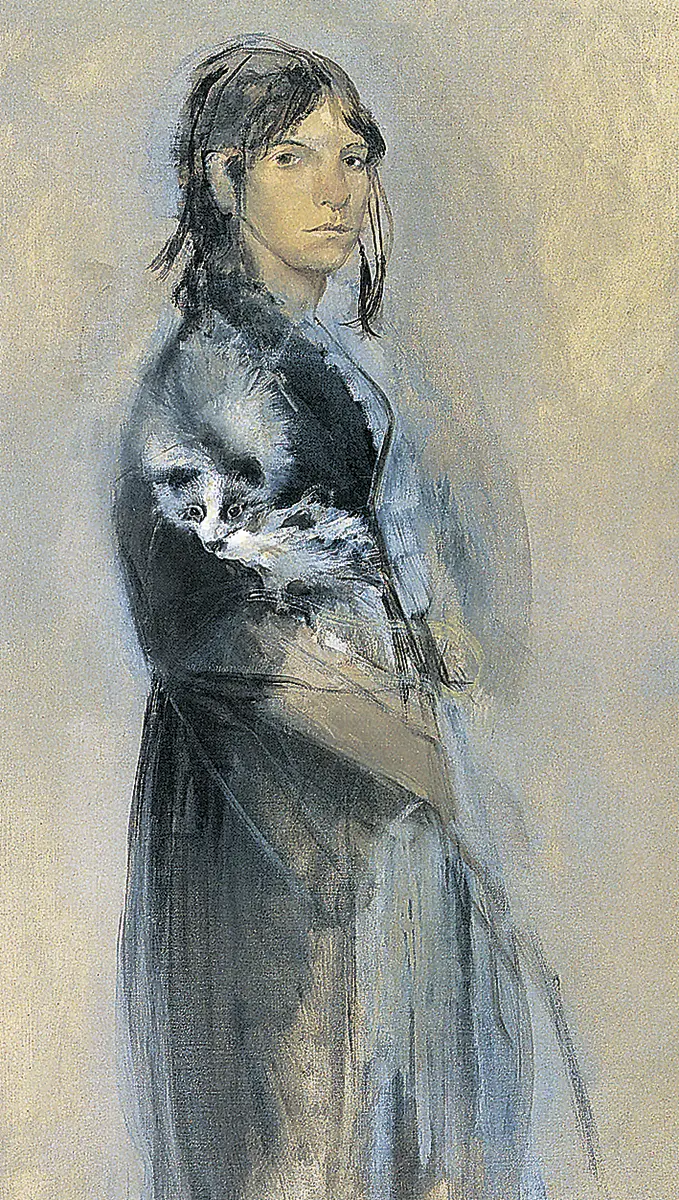
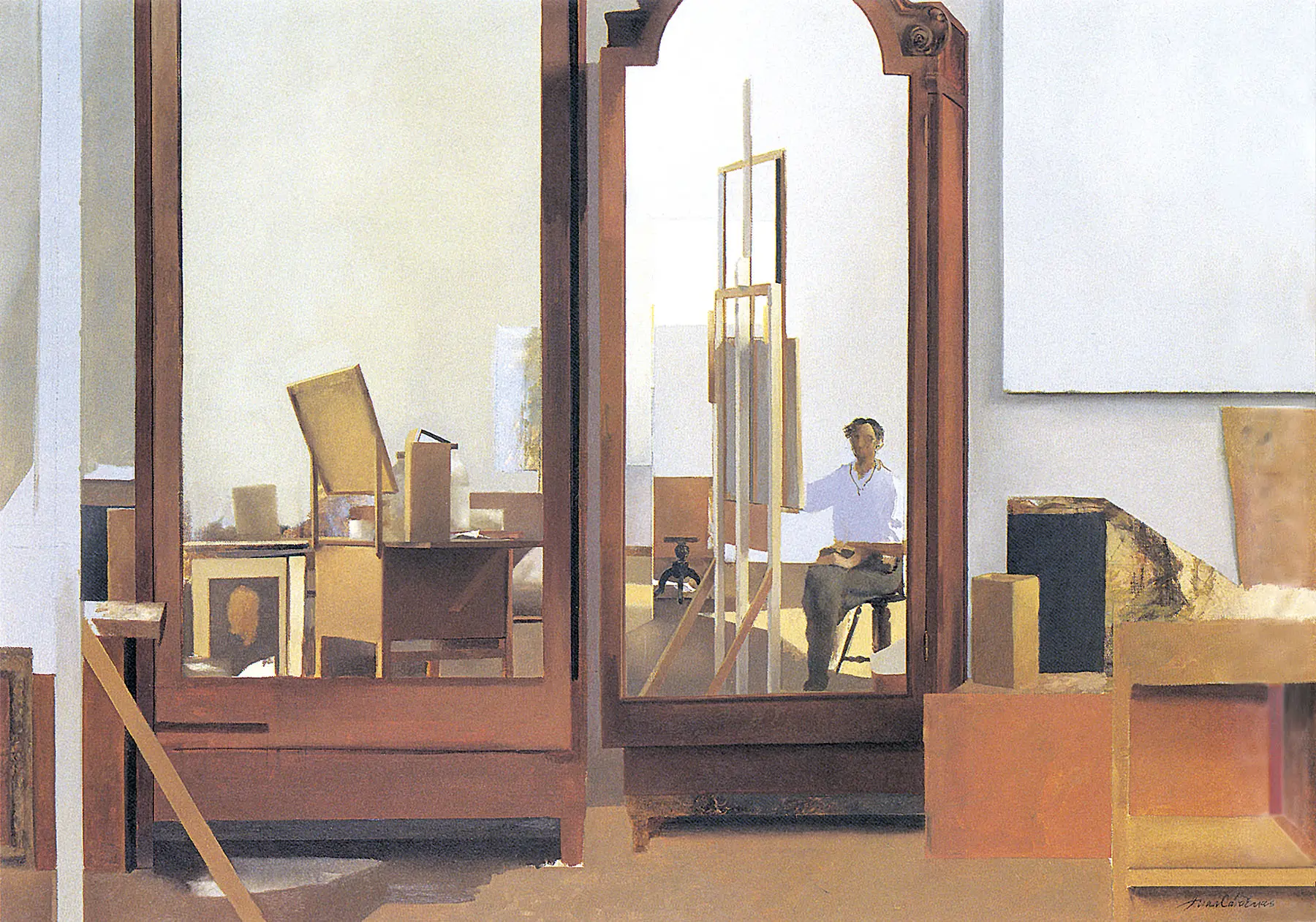
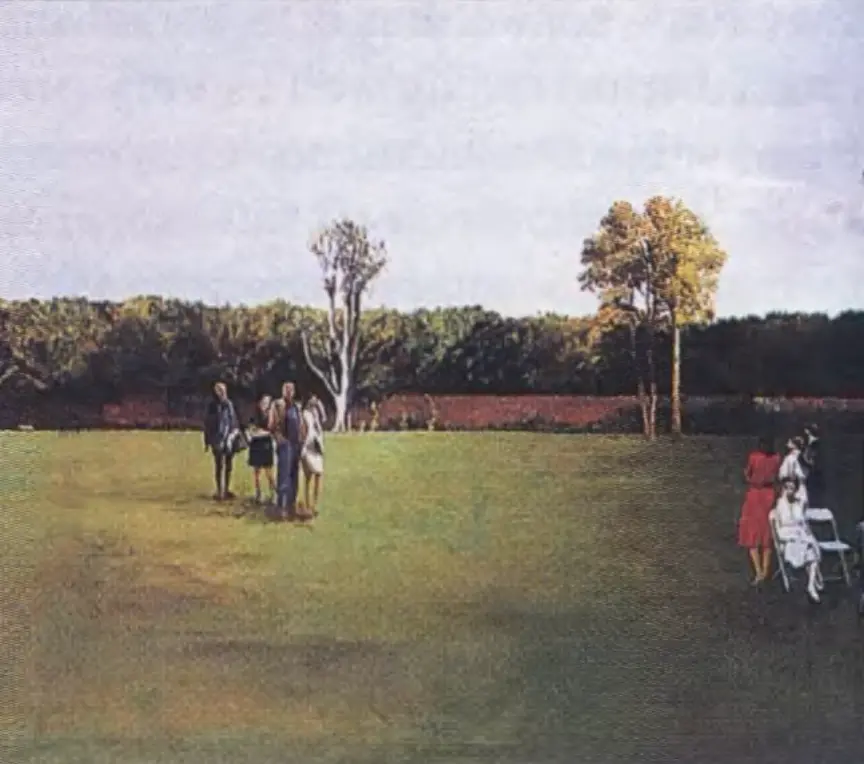
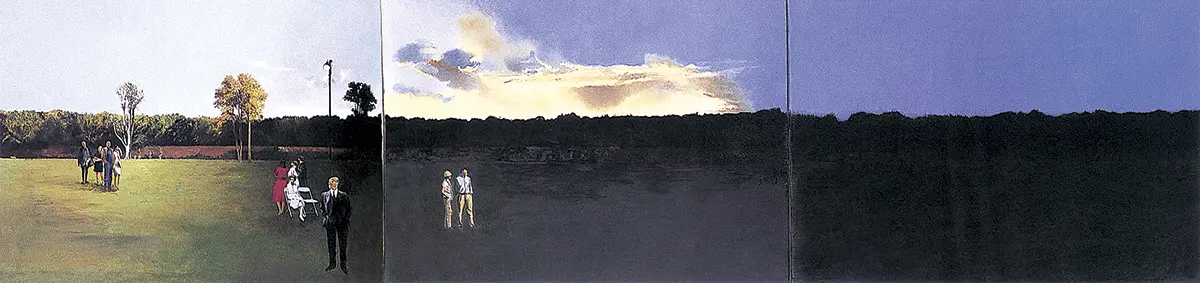
In Colombian art there are various painters and drawers who have been references for art history. Botero has gained prestige by quoting the great masters. However, Cárdenas is the most important case, both in quality and quantity, as well as for his surprising variety. We may find everything in his production: Renaissance art; seventeenth-century Dutch art; some eighteenth-century masters, such as Chardin; an abundance of nineteenth-century: Ingres, Manet, Degas, Whistler, Eakins, Sargent, and some nineteenth-century Colombians, such as Antonio Rodríguez—who came from Spain—Eustasio Barreto, Alberto Urdaneta, and Ramón Torres Méndez; in addition to Albers and Mondrian, as mentioned above. Based on the titles of some pictures, we may more precisely recall Luca Signorelli, Andrea del Sarto, Leonardo, etc. And the drawings called Studies are full of direct quotes from Rafael, Michelangelo, and Pisanello, among others. Visiting Cárdenas's show was a beautiful experience. It was seeing a contemporary show full of historical references. And, in addition, of extremely high quality, for, since it was always clear to him, the artist only desires to paint the best picture, work as if for the Louvre, and if not, he erases it and begins again, according to his own words. Among the themes treated by Cárdenas, the following especially stand out: landscapes; portraits—with many self-portraits—and those related to the artist's studio in which he is exceptionally absent, or in which there is one or several figures, at times apparently very concrete, and other times like apparitions, reflections, or imaginations. Regarding the landscapes, there are several with an impressionist influence, even working with spots and diffuse contours, although never with the intense and pure coloring of Monet and his group. There are several that show the light of day with exactness and others are cityscapes with walled backgrounds. One of the recent oils stands out among them: Nocturno (Nocturnal), a triptych from 2001—incomplete, according to the painter—but not because it is not finished, but rather because it can continue after the third panel which gives the landscape its title, and which has been darkened in three stages. It is not difficult to think that on this occasion the artist is making a reference to the flux and decline of existence, and it is also feasible to imagine that the "ghostly" characters of many of his works remind us of the fragility and expiry of human life. Violence also appears in desolate and phantasmagorical landscapes: Paisaje con animales (Landscape with animals, 1999) and Cadáver (Corpse, 2000), among others. Terrible oils that correspond to Cárdenas's constant reflection can even be seen in some self-portraits: on the truth about death, which he observes without pretexts. Special mention must be made of the portraits, mainly of unknown characters. They are highly diverse, but in all of them, there is a clear relation to the artist, not only in the gaze but also in the way in which he presents these individuals, at times with mannerist accents, as is the case with Mujer al piano (Woman at the piano, 1982) and Zoológico de cristal (Glass menagerie, 1990). One fine, evanescent portrait Mujer con zorros (Woman with Foxes, 1979), and another charged with solitude and very introspective is Retrato de mujer (Portrait of a Woman), a carbon pencil from 1983. Of Cárdenas's many self-portraits, we could point out many in which he appears individualized, either in his studio, surrounded by objects, or in the company of some figures. Outstanding among the former is Autorretratos (Self-portraits), a charcoal from 2000 with six portraits full of humor in which the reliability of all the graphic resources—lines and spots—reveals how much the artist enjoys poking fun at himself. Among the latter, Autorretrato sobre papel (Self-portrait on paper), an oil from 1971, created when the artist was thirty-two, is admirable for its quality, as is the midday clarity and impeccable composition of El artista entre los espejos (The artist among the mirrors), an oil from 1988. With this piece, we also arrive at the theme of the artist's studio, the most constant motif in Cárdenas's production. In this space that is as mysterious as it is magical, in which he spends the majority of his life, emerges the work of this painter and drawer who is certain that the world is pure illusion, and he is completely convinced, in spite of his knowledge and his long experience, that his artistic creation is only intuitive. According to Juan Cárdenas: "Perhaps I speak a lot about science, but when I stop next to the canvas and I smear the brush, everything remains behind. I have tried to be logical when I paint, but I cannot. And, besides, if it were not so, how boring it would be to paint! In my pictures everything is erased, concealed; there is an entire evolution, an entire process."
*Works from the artist's collection.
GERMÁN RUBIANO CABALLERO
Art historian and critic.