There were festivities in Palermo last September 21st, and not only because, as is typical, students' day was noisily celebrated along with that of spring, but because on that bright day, the MALBA-Costantini Collection (Museum of Latin American Art of Buenos Aires) opened its doors in Palermo, the neighborhood preferred by the youngest for celebrating the change of season.
The day before had been the official opening of the beautiful and functional building with the participation of national authorities and authorities of the city of Buenos Aires, headed by the President of Argentina, Dr. Fernando de la Rúa, who underscored the relevance of private investment in the cultural projects and highlighted the extraordinary gesture of Eduardo F. Costantini, who dedicated a museum for Latin American art with access to the public, and not just as a sanctuary for his collection.
That day, the founder of the institution was delighted as he expressed the following: "MALBA is, first and foremost, the house of over 200 works spread around the world [...] MALBA is where I pour out my greatest efforts and my energy behind an ideal of a more united and harmonic society [...] in order for a museum to make sense, that 'house' must be everyone's house; that is, it must be a public cultural center, both open and participatory."
Obviously, the opening of the splendid construction was an exceptional act in equally exceptional times, particularly because the happy occasion took place just ten days after the horrible event of 11 September, the date on which the terrorist attacks on New York and Washington occurred. In spite of the grave circumstances through which the world is going, many international guests were present, including curators, museum directors, and private collectors.
Moreover, the celebration took place at a highly difficult moment for the Argentine economy, which has been enduring a grave recession for at least three years. Therefore, there is a consensus that at times like these any transaction that is to the advantage of the city and its inhabitants is doubly welcome.
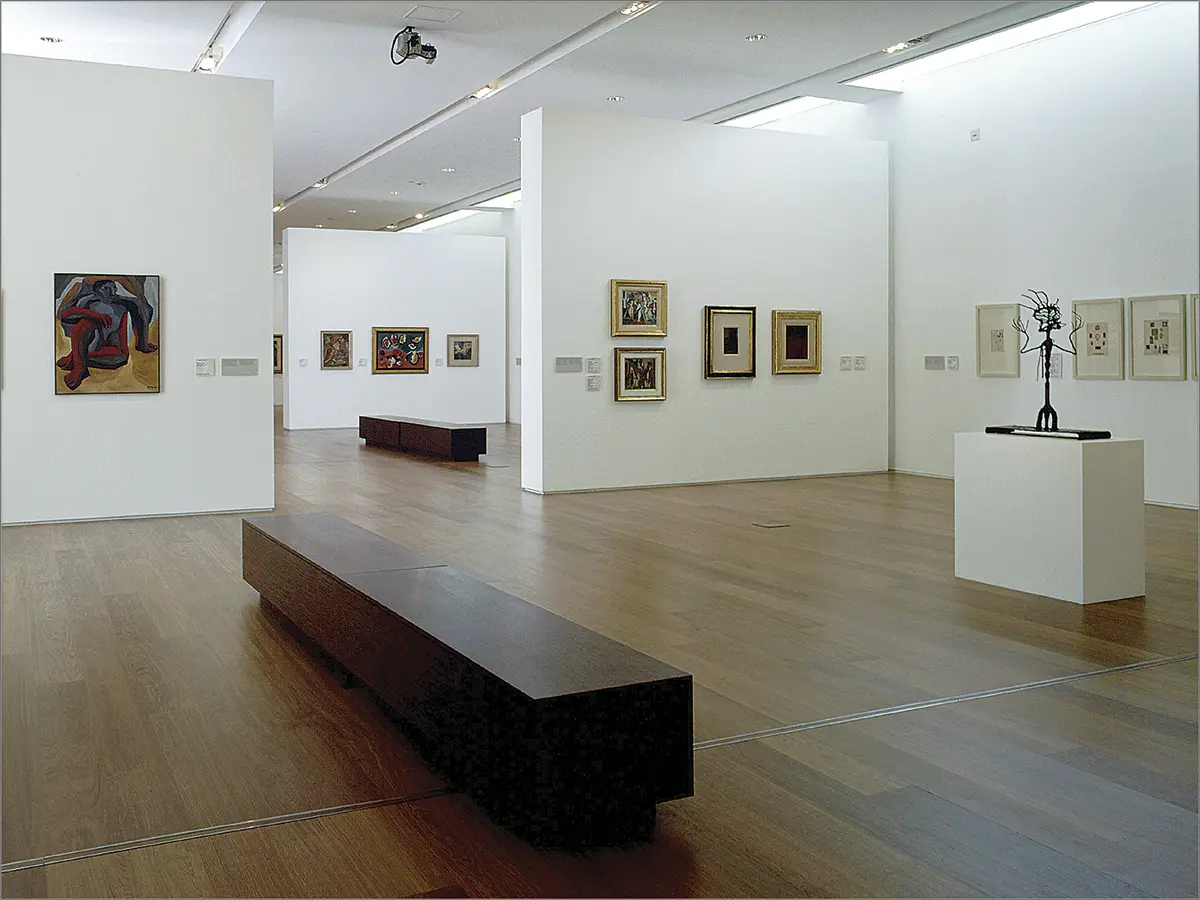
The elegant edification of carefully worked lines and exceptional natural light was presented in society with the ambitious show Art in Latin America, whose core was the cultural heritage of the museum: the Costantini Collection. It is a collection of paintings, drawings, sculptures, and objects that cover the art of the region from the end of the nineteenth century to works from the most recent decade articulated in fourteen modules.
Although he shines in business, Costantini is better known among the public at large for his profile as a collector and for being the organizer of the four editions of the prizes ($50,000 each year) that bear his name and that exhibited a contrast between the work of established and emerging artists. He is currently the president of Consultatio, a firm that manages investment funds in Latin America and is headquartered in a high tower built by his company that overlooks the Río de la Plata. But since the opening of the museum, Costantini has been seen very often in the office that was reserved for him, next to that of the Mexican director, Agustín Arteaga.
An architect and curator, with a Master's degree in art history, Arteaga until recently was the director of Mexico City's Museum of the Palace of Fine Arts. He is no newcomer; he has been in Buenos Aires in a permanent way for at least a year. He knows the local idiosyncrasies and art, and he works in this MALBA that wishes to be exemplary.
The Building
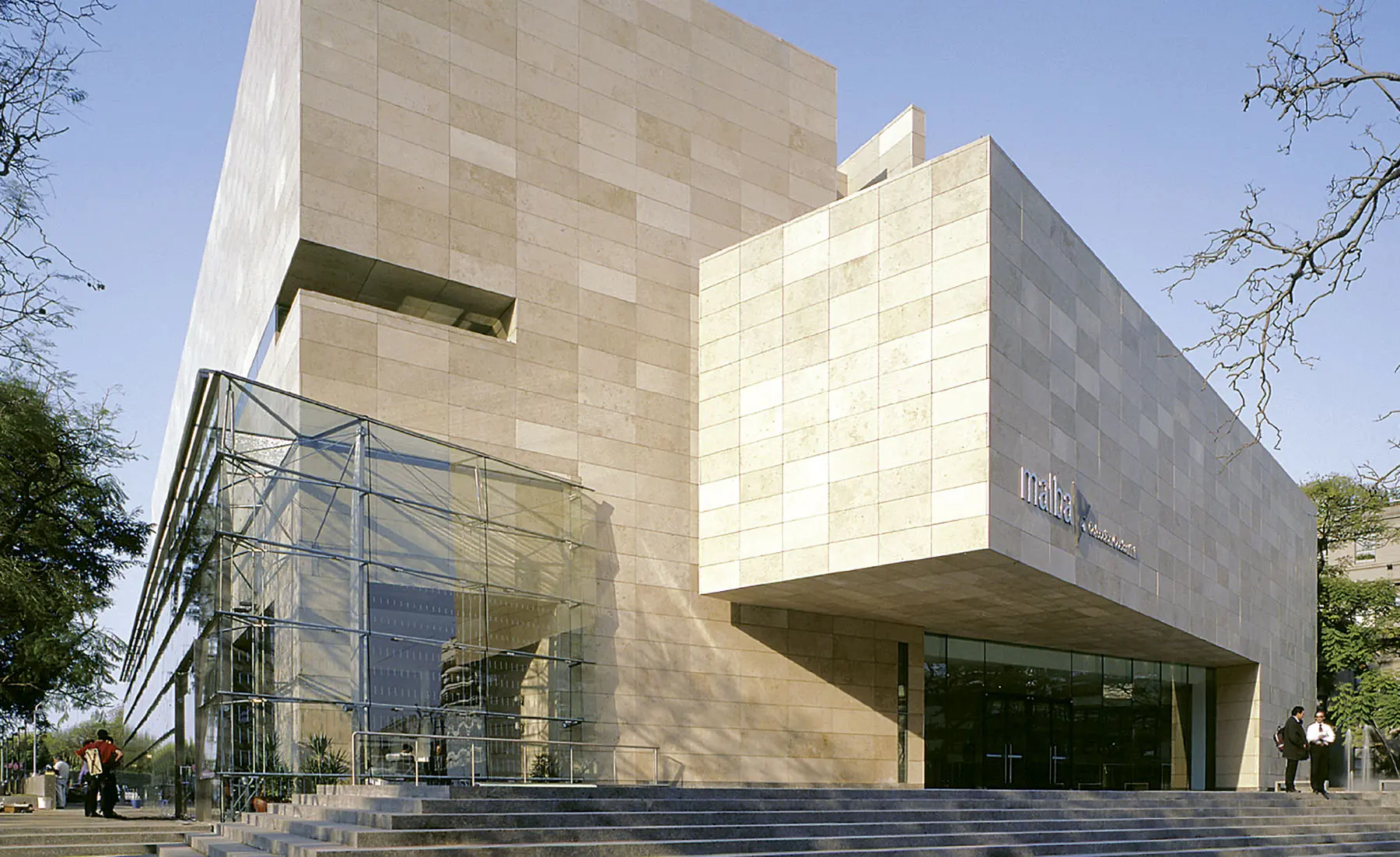
It seems easy to say, but the achievement of the museum itself cost the businessman financier Eduardo F. Costantini a little over the $25 million that he invested in this intelligent building, the first in the city erected specifically as a museum. During construction, the opposition of a small but noisy group of neighbors had to be overcome. As compensation, he received the support of thousands of individuals who gave their approval of the project.
Also, he had to request and obtain at least two building exemptions—voted on by the city legislature—in order to be able to modify some of the initial plans, since the museum was partially reformulated over the period of construction. When, for example, they decided on the roof of a terrace in order to pick up more exhibition space.
Clearly, the current authorities and the art world were in favor of the incorporation into the city of this company that began with an open contest for architects of any nationality, organized by the International Union of Architects in 1996. After examining 430 proposals hailing from 45 countries, the judges—made up of Mario Botta, Kenneth Frampton, Sir Norman Foster, César Pelli, Alejandro Dujovne, and others—gave the award in 1997 to the project presented by Gastón Atelman, Martín Fourcade, and Alfredo Tapia, young members of a studio in the province of Córdoba (Argentina).
Located at 3400 Avenida Figueroa Alcorta, where the square meter goes for at least $3,000, the building is made of concrete, stone, steel, glass, and wood and has a total surface of 8,000 square meters (86,080 square feet). The rather roomy and stately entrance hall—with its escalators—functions as a distributor toward the different exhibition spaces, service areas, and inner areas. The museum has two levels with around 53,800 square feet of exhibition in the rooms assigned to the permanent and temporal shows and in the sculpture terraces. Offices, studios for conservation and maintenance, deposits, and depots take up the rest of the space, along with an auditorium with Dolby Digital Sound that holds 265 people. There is also a café and restaurant that opens onto the green of an adjoining square, a store and bookshop, a multimedia library, and a children's studio for cultural activities with (preferably) school-age children from public institutions.
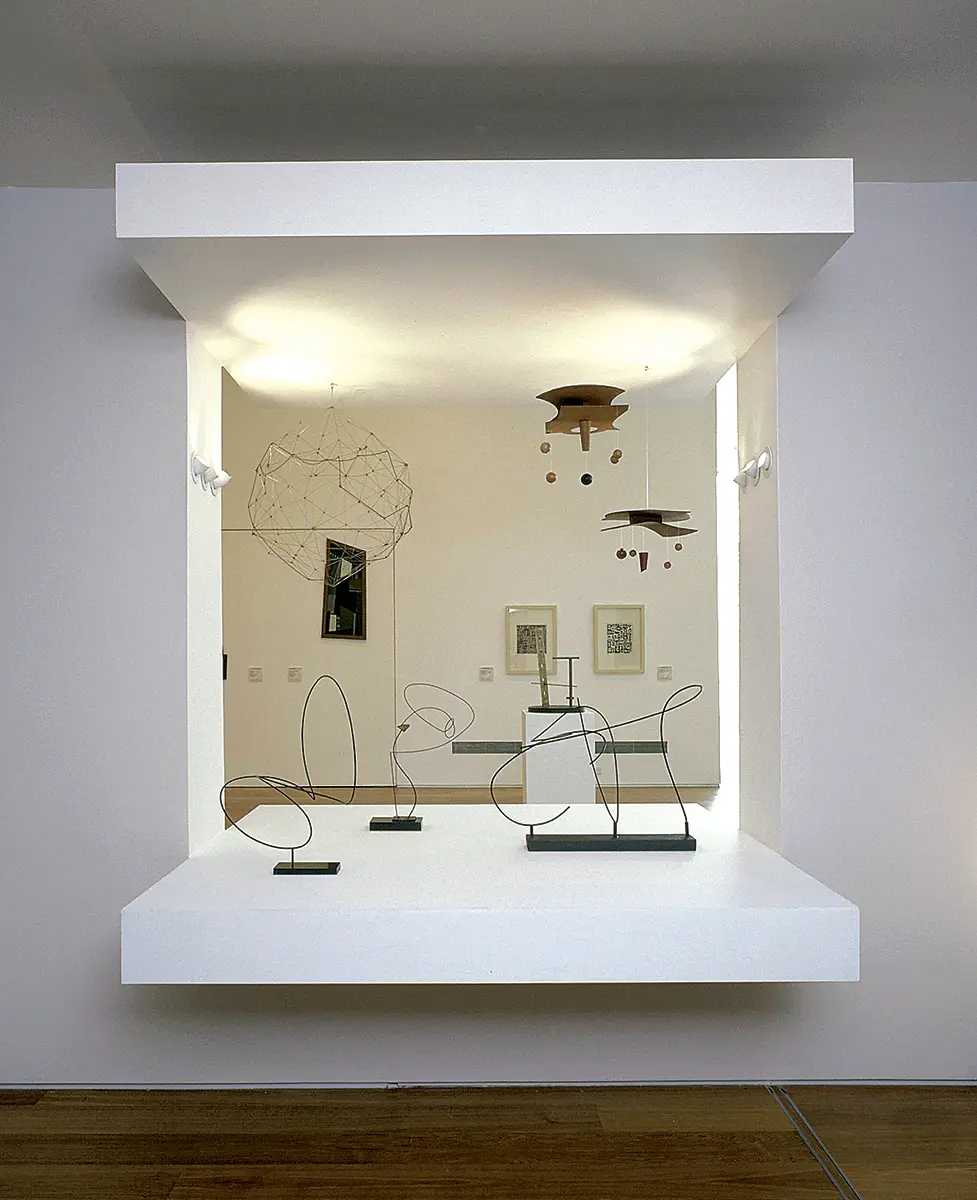
Unlike other museums, such as the Guggenheim in Bilbao or the Jewish Museum in Berlin, which are recognized first for the monumentality and significance of their constructions, the MALBA building does not compete with the works exhibited. It is neutral for the workers and friendly for the visitors. Its rooms—with outstanding light, especially those on the second floor—are projected as "white cubes," without distractions, and they do not interfere with the vision of the material on display. The majority of the unfurled works are paintings on canvas and, to a lesser degree, sculptures, on account of which they offer no great difficulty when it is time for them to be shown.
The MALBA, whose building by law must always be used as a museum, employs a little over one hundred people. Costantini calculates that the annual operating cost would be on the order of four million U.S. dollars, and he is confident that they will receive some 200,000 visitors during the first year.
The Collection
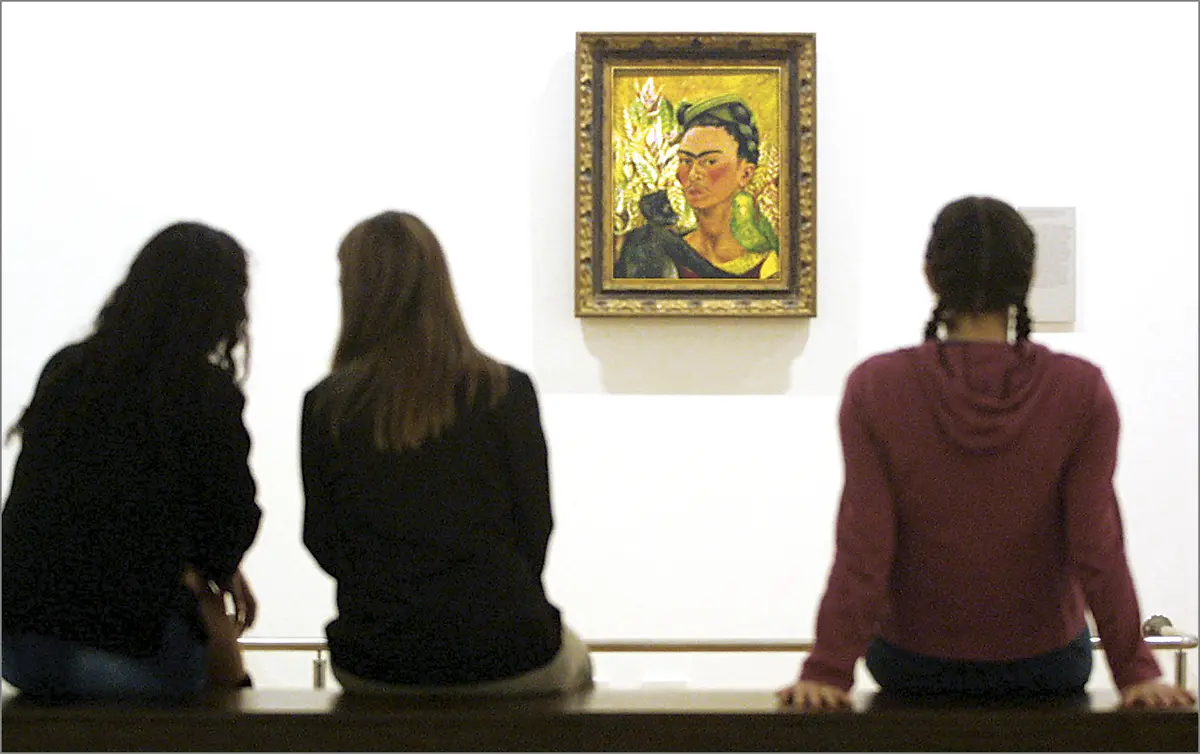
Even though the opening show exhibited 283 pieces, only 228 belong to the museum's collection. The rest of the works were on loan and were chosen—like the works from the María Luisa Bemberg Collection—by Arteaga in order to complete a curatorial vision. The star and cover of the thick catalog book of 480 pages (with two different editions, one in Spanish and another in English) is Frida Kahlo's Autorretrato con chango y loro (Self-portrait with Monkey and Parrot), an oil from 1942.
Many of the works in the Costantini Collection were news and they occupied the front page of Latin American dailies (and they were also given space in The New York Times) at the moment of their acquisition. Bought in New York auctions at top prices, the oils Composition symétrique universelle en blanc et noir (1931), by Uruguayan Joaquín Torres-García, and Abaporu (1928), by Brazilian Tarsila do Amaral, now form part of the collection. Among the forty-three works acquired abroad, we may note Susana y el viejo (Susana and the Old Man, 1931) by Argentine Antonio Berni, La mañana verde (The Green Apple, 1943) by Cuban Wifredo Lam, and Los desastres del misticismo (The disasters of mysticism, 1942) by Chilean Roberto Matta. The show includes one of the first pictures that the collector bought at a local auction: Canción del pueblo (Song of the people, 1927) by Emilio Pettoruti.
The fourteen modules in which the show has been organized have a coherence in time. Their titles are descriptive of the curatorship proposed by Art in Latin America. It attempts to go beyond the report about a generic "Latin American art," a designation that erases diversity: the real differences and distances, expressions, and dialogues among the different countries of the area. The sections present the following itinerary: "Between Tradition and change," "Sprouting from Modernity," "The Space of Torres-García: Constructive Universalism," "Toward a Regional Landscape," "The Concern about the Social," with Berni's Manifestación (1934), "Poetics of the surreal: dreams, landscapes, and inhabitants," with paradigmatic works by Xul Solar, "The flux of forms," "Concrete-neoconcrete," "Kinetic space," where we note the absence of Jesús Soto and Cruz-Díez, "Volume as language," "From the new figuration to pop art in Argentina and Brazil," "Beyond the '60s: between nature and the concept," "Recent decades," which also comprises the works distinguished at the Premio Costantini, such as those by Daniel García, León Ferrari, and Pablo Suárez. "In this show we are marking the beginnings that will have to govern our activity and that are defined in the mission that we have outlined: collecting, conserving, studying, and diffusing Latin American art from the twentieth century to today; educating the public by sparking their interest in and admiration for Latin American creators; fostering the recognition for the grandiose cultural and artistic diversity of the region; and sharing the responsibility of this effort with the national and international community," says Arteaga.
Passing through the exhibition, the visitor should keep in mind that the collection emerged from the vision of one single individual. It has an underscored regional accent: the pieces by artists from Uruguay, Brazil, and Argentina are dominant. Mexican art is no less present, while Colombian art is only present through Botero (Los viudos [The widowers], 1968). The series presents marked reductions and some notable absences, but—as Costantini himself explained it—there is a tremendous will to make it grow. "The collection will become rich in time. It is strong in constructive art [...] But the museum will become complete [...] This collection now belongs to everyone [...] The star of MALBA is the public."
In that sense, Arteaga underscored the fact that there exists for the collection a before and an after of the museum's opening. "The decision to begin our activities with the exhibition of a living collection, still forming, is a symbolic representation of the vision that we have of ourselves and that we now make yours. Just like our collection, we shall be in constant evolution, adding new works and understandings, exchanging experiences, discourses, and methodologies, and always open to incorporating the experience of others; our programs will be enriched in accord with our own needs and the demands of the public that joins us after today."
On account of its architectonic appeal and geographical location, the MALBA-Costantini Collection has been quickly integrated into the urban fabric and it already forms part of the so-called artistic corridor of the city of Buenos Aires, together with the National Museum of Fine Arts and the Decorative Museum, the Centro Cultural Recoleta, and the Palais de Glace.
Meanwhile, it is time to celebrate the opening of MALBA, a burst of joy in these turbulent times. Because, as Jay A. Levenson, director of the international program of New York's MoMA, rightfully said: "The opening of MALBA is an important event for the entire hemisphere [...] I am particularly impressed by Costantini's desire to share his important collection with the public. His is exactly the type of generosity that has led to founding and sustaining the great museums of the United States."
*Photographs by Alejandro Leveratto. Courtesy: Fundación Eduardo F. Costantini.
VICTORIA VERLICHAK
Art critic and journalist living in Buenos Aires. Member of the Argentine Association of Art Critics —AACA— and the International Association of Art Critics —AlCA—.