The New York Gallery of the Miami Art Museum is one of Miami's most successful spaces. Since 1993, MAM has commissioned specific projects to promote diverse facets of contemporary art. If the initial aim of MAM was to attract the best panorama of contemporary, national, and international art, the time has come to give recognition to local artists who have achieved recognition as avant-garde personalities.
The most recent project, known as New York/Miami, includes eight artists selected by Lorie Mertes, associate curator at MAM, and Amy Rosenblum, who once served as the assistant curator for the same institution. The chosen artists, Frank Benson, Consuelo Castañeda, Robert Chambers, Naomi Fisher, Dara Friedman, Adler Guerrier, Glexis Novoa, and Robert Thiel, represent the complex and versatile panorama of local art. Each one of them represents different generations, philosophies, cultures, and interests; and all, without exception, are doing serious work, which has attracted the critics' attention.
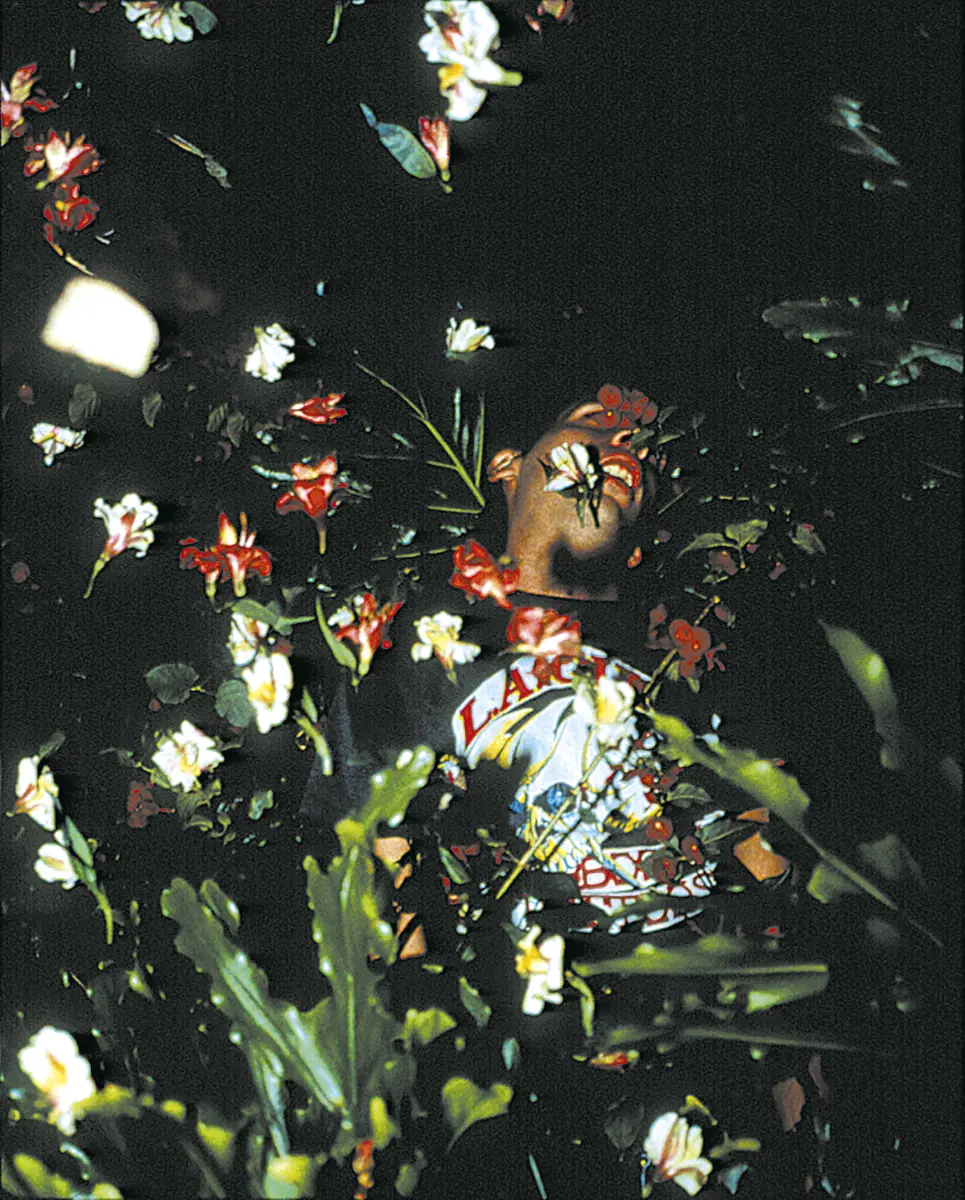
New York/Miami was inaugurated in February 2001 with the participation of Frank Benson and Robert Chambers, and it will end with Naomi Fisher and Glexis Novoa's show, which will remain open to the public until January 2002. For the final exhibit, the gallery has been divided into two spaces. One of them shows five photographs by Naomi Fisher, where the human figure blends in with tropical vegetation, creating strong and even violent images, due to the connotations it offers. The combination of the human figure and nature reminds us of Dante Gabriel Rosetti, except that in this case, the woman turns into the protagonist of a mystery or horror film. Dramatic elements, like the hand of a woman appearing out of the darkness, or the strident laughter of a woman whose face disappears in the shadows, create an uncertain and intriguing ambiance. The impact is even more effective because of the natural size of the photographs (50 x 40 in.) and the play of colors that Fisher achieves by contrasting the brilliant tones of plants, flowers, and clothing, with the darkness of dusk.
Each image is a perfect montage where every detail has been meticulously studied. In spite of finding improvisation with respect to the source of light, there is no doubt the artist is in control of all the elements employed to compose portraits or self-portraits. There also seems to be more freedom of body language, when the New York photographs are compared with the ones shown at the Museum of Contemporary Art (MOCA) in North Miami; but that does not mean that they're not as impressive. On the contrary, the effect of the recent photographs is quite more heart-rending. Fisher's language is alive and colorful because of the tropical flora, but at the same time tenebrous and surprising because of the way is handled. The baroque imagination of this artist's photography captivates and astounds the public in a very peculiar way.
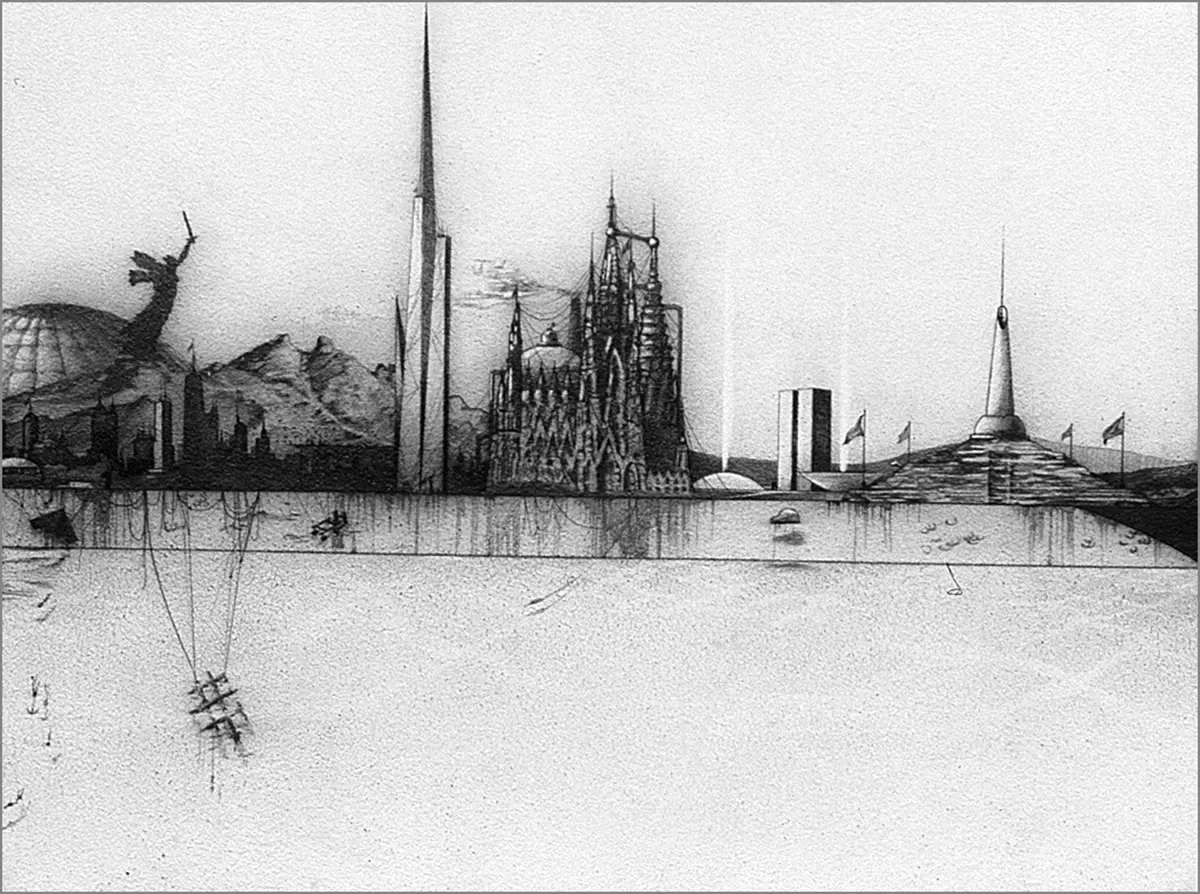
Glexis Novoa's work also plays games on the public's sensibilities. To get to the installation one must go through an entrance door that reads "EXIT." The original idea was to create a separate space in the museum, a sort of capsule where the visitor felt neither inside nor outside the museum. A continuous horizontal line serves as a link between the two extremes of the story, a sort of island drawn on the east wing and a public telephone, provided with free, long-distance calls, that's installed on the west wing of the hall.
The island is an apocalyptic world that Novoa constructs based on personal experience. The upper, or terrestrial sector, is occupied by constructions and monuments that play a significant role in the artist's memory. At first sight, the Morro and the Russian Embassy in Havana stand out. This is followed by: mountains that represent the Himalayas, the Sacred Family of Barcelona, Chicago, Brasilia, and Miami buildings; the Sun Pyramid of Teotihuacan (Mexico), and the Egyptian Pyramids. Two monuments play very important roles: Russia's Monument to the Motherland, and the Statue of Liberty, whose torch was replaced by a sword, making a direct allusion to the war the United States is involved in to fight terrorism, after the September 11 attack. The war elements, be they parachutes or cloud-camouflaged planes, can be appreciated at different levels. There is also a sense of chaos, and confusion, represented by the tangled-up and intertwined lines that give unity to the drawing.
The island becomes a sort of Noah's ark where all the remnants of civilization are saved. It's an organic form where small elements allusive to salvation are hanging. Minute life vests and ladders turn into hanging ornaments, which can do nothing about the chaotic reality of the surface. This is a fictitious reality that includes nonexistent buildings or constructions, like the development of a Frank Lloyd Wright mile "never constructed but it serves as a reminder of the World Trade Center's Twin Towers.
The island, impressive because of the mastery of its drawing technique and the minute details, contrasts with the opposing wall where the phone and a lot of graffiti — started by Novoa and continued by the public — dominate. In a way, the telephone numbers (a directory of collectivists, artists, critics, and personal friends) written by the artist as the installation was being set, give way to the public to start feeling less impressed by surprise and uncertainty, and for them to be able to communicate verbally by making a free call to a friend or family member (the cost is covered by the artist); also by scribbling on the wall that, after a couple of weeks, was full of names, catchphrases, and drawings that somehow reflect the chaos the island wants to escape from. In the confusion of all the graffiti, one can see the message written by Novoa stating that "mountains will become flat and everything will turn into a great plain...," a prophecy that reflects the state of mind in today's world, shows the emotional and psychological value of the work of art, and gives the work and life in general, considering the recent events, a whole sense of forlornness.
FRANCINE BIRBRAGHER