
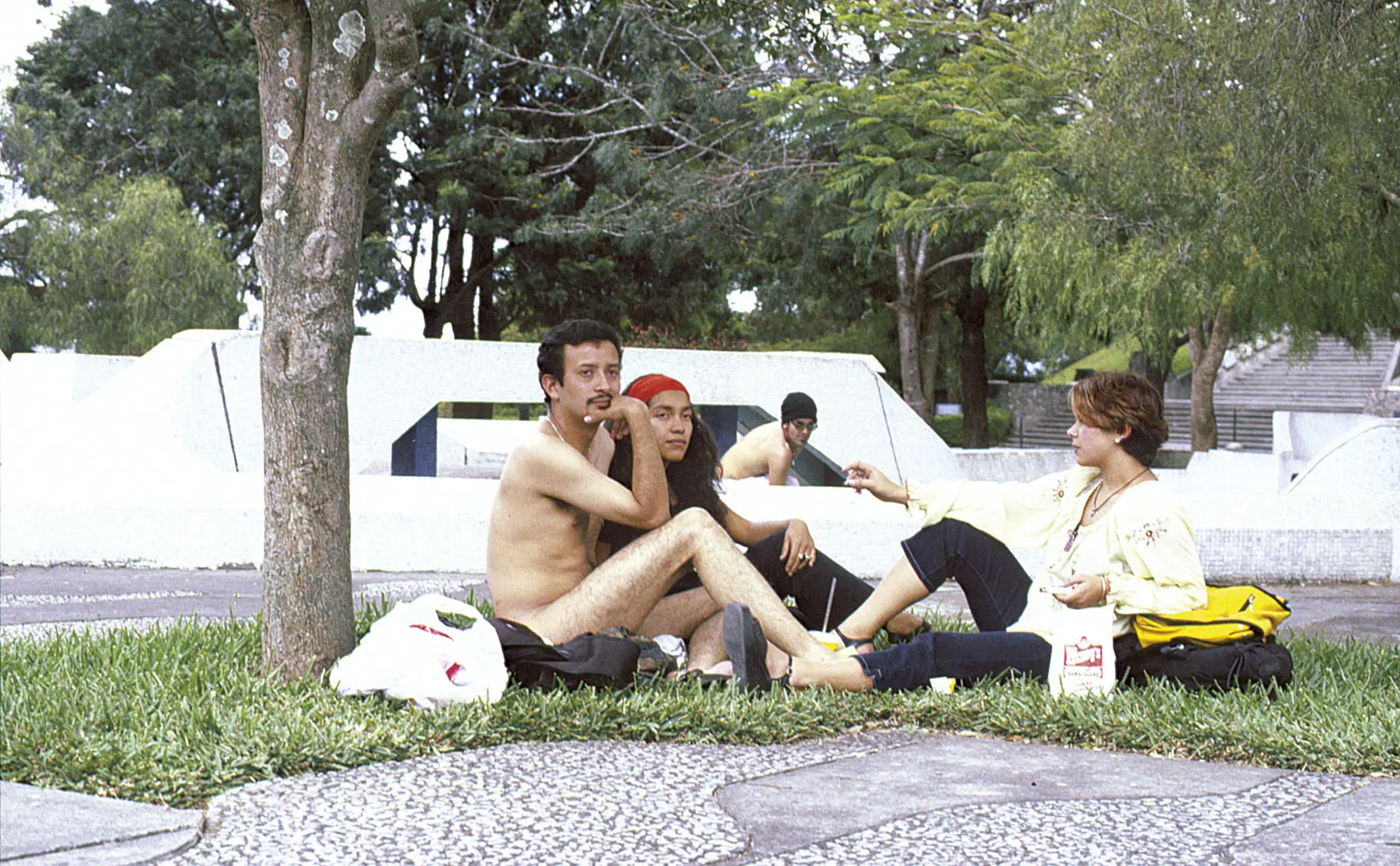
For some time now in Guatemala, we have been accompanied by doubt over the meaning of the word "postwar." More precisely, this theme, we could say, is something totally new for us. The subject of war occupied much of our time and, submerged in it, we have become used to certain forms of thought and to insisting on developing rituals and reflexes that have been put into practice in order to survive. Naturally, there are citizens who simply pretend not to notice the subject. They are the ones who propagate the word "postwar" and coin it comfortably and with apparent opportuneness. They encourage it in order to forget the past and, with a certain tone of frivolity as if nothing had happened, they smile toward the future. However, to their regret, there are others bent on discussing the meaning of this word, for its invitation to slash away at a period and its memories implies maintaining respect for the dead, the disappeared, and the effect of years of mortal remains.
Amid this paradox of apparent uselessness, neither the conservative right nor the old left is capable of formulating a response. Instead, any explanation appears as a play on words that tend toward the rhetoric of failure, and the word "postwar" appears like a hole in destiny. In the harshness of a grotesque reality, when a very just idea of what we believe signifies a state of postwar is emerging, we realize that the war, that violent disorder, does not seem to have entirely disappeared. And so on, ad infinitum.
The only thing that is clear is that the "post-" periods, with their brazen subjectivity, have established themselves in daily uses as well as in more sophisticated discourses, both here and everywhere. As a generic term, it begins to define a lifestyle and, especially in the case of emerging artists in Guatemala, a generation tied to an obviously deteriorated political, economic, and cultural legacy. In order to illustrate what postwar artists are, one critic identified them as the "junk generation."
In general terms, there is a phenomenon that occurs with this generation that goes beyond the play with clichés. In and of itself, it is an artistic awakening that is quite strange for the environment. On one hand, it reflects a fragment of the complex weft of realities that reinforce and project the cultural, psycho-political, social, and economic change that we are going through. On the other hand, they emerge with provocative proposals for a conventional environment more accustomed to traditional models than to being disturbed by art right in the middle of the street. I shall not mention here the extraordinary artistic contributions or consolidated experiences. The truth is that many of the artists who participate in this movement have only captured glimmers and traces of what elsewhere are already learned lessons, aesthetics that have been sufficiently digested and transformed into common languages. Nevertheless, their poetics have an undeniable charisma, they overlap with the urban landscape movement. They are able to produce images that move between suggestion and contradiction, between intuition and the hidden desire that something may happen where usually nothing happens.
One of the spaces that reveal this emerging movement is the Octubreazul (Blue October) festival which was celebrated in October of 2000. One year later, it survives as a referent of the fragile and precarious artistic environment; and it has doubtless become a term with its own emotional charge. To begin with, it is the result of previous, collective experiences that were embraced by spaces like the Casa Bizarra, where rockers came together with artists, writers, and poets, and the work of the Equipo de Arte Urbano, which participated in the first editions of the Festival del Centro Histórico, as an independent group that convokes the sector of young artists. As a whole, it was to a certain extent a marginal laboratory, characterized by its fascination with urban cultures which bear the meanings that deal with confusion and instability, and they have been gathered in works of poetry and narrative, in books and fanzines produced by alternative publishers with scant resources. But probably the most interesting thing was its adoption of performance, as a spontaneous act of an eclectic nature, that brought literary expressions together with scenographic productions that lived up to the name of Casa Bizarra.
This is how Octubreazul emerged split from institutionalized and bureaucratic structures. It introduced a very compact program of cultural activities and the strategy of forming an alliance with independent curators who wished to run the risk of working together with lesser-known artists in the world of local art. The theme was chosen in line with the strategy of the alternative, the remembrance of and homage to the Revolution of '44, which was one of the most important moments in the country's recent history. This dialogue, a monologue with history from the perspective of young people, at the same time carried with it the collective urgency of the reencounter with individuals who have become symbols of dignity. In the case of art, it sought to recover the spirit of investigation generated in the revolutionary period and, thus, the articulation or "purification" of art with the processes of reconstruction in a country that has very much lost its self-esteem. For its stage, the festival chose Guatemala City, an expressionist city, equivalent to what could be called the monstrous Gallery of public art, or the city of permanent performances.
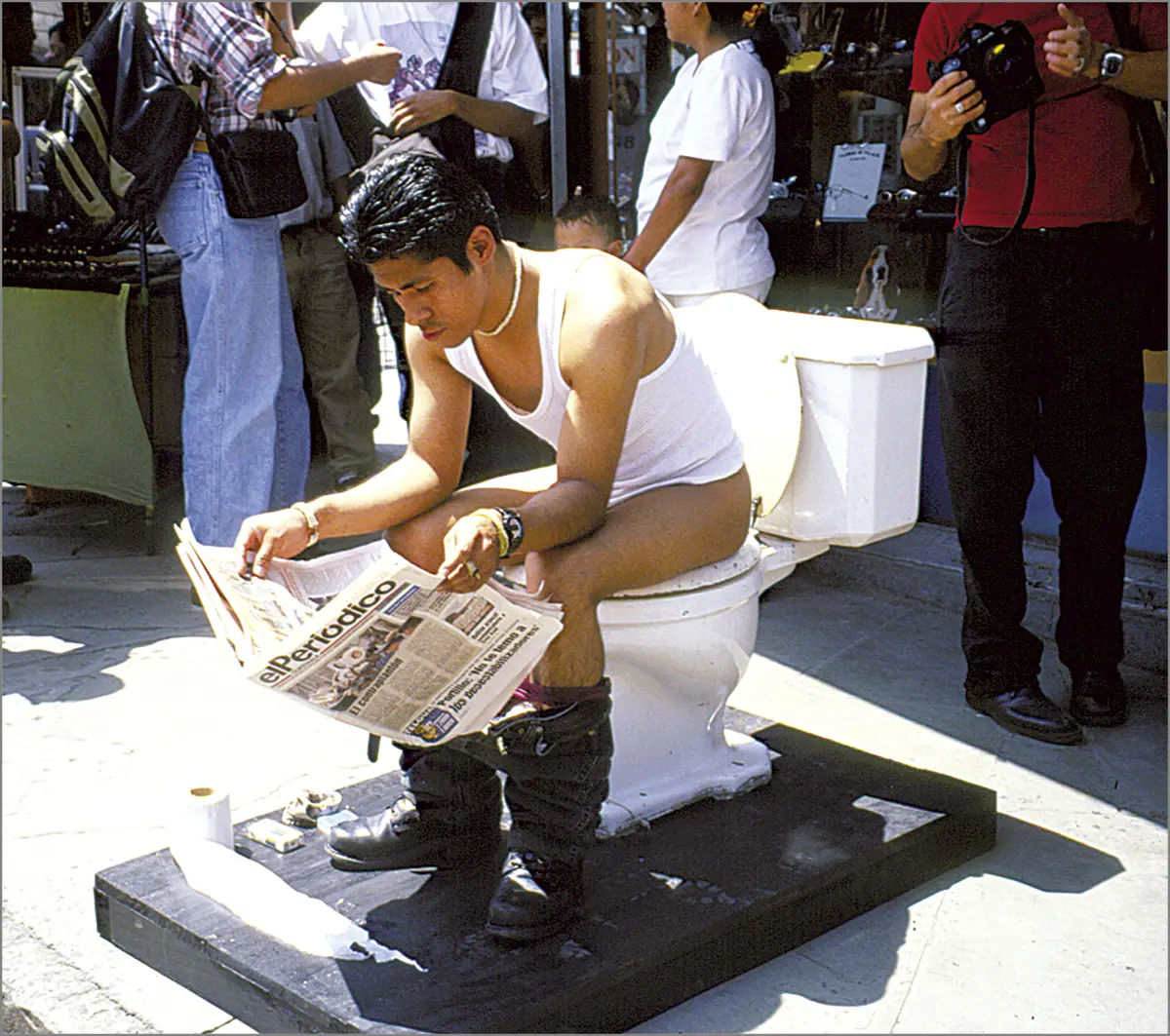
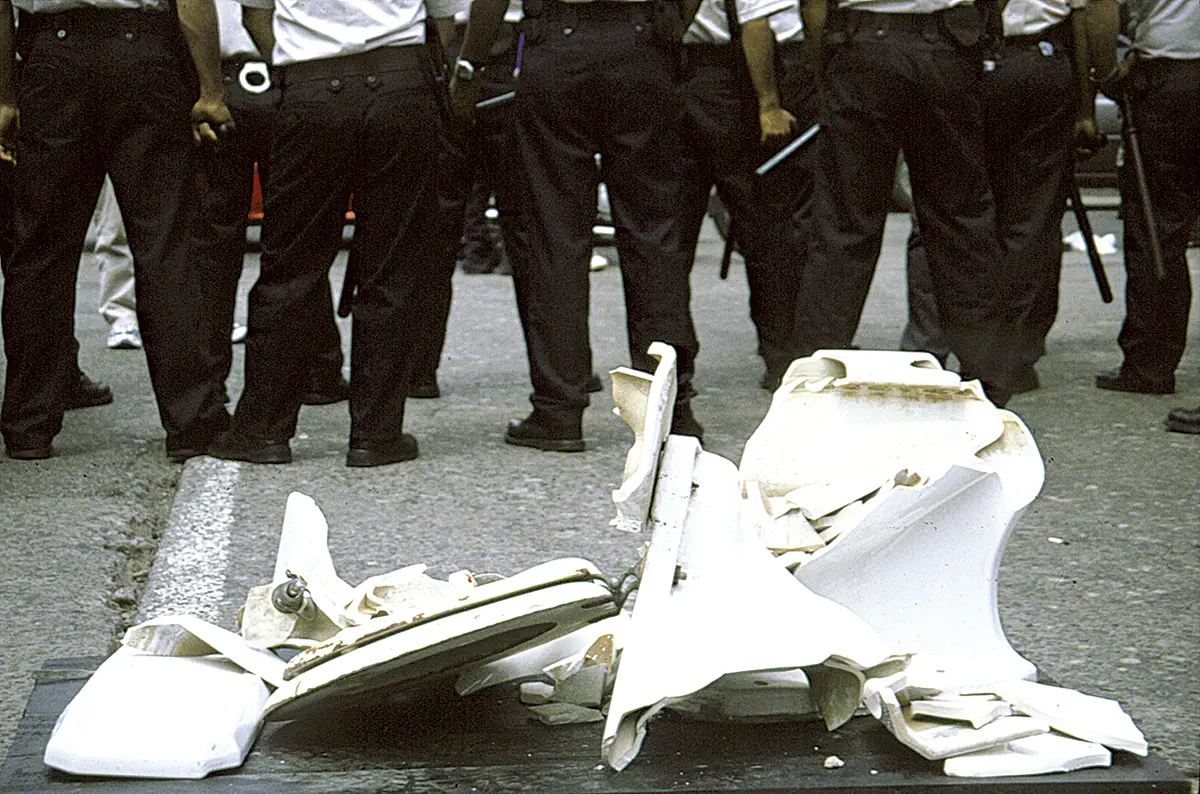
In spite of everything, including its growing population of migrants, its alternative economy, the pacas, and the 9991 warehouses, that is where artists are recognized, reclaim territory as their own, and organize a new identity based on public space. They add the euphoria of cybernetic culture, the artificial world of MTV video clips and comics, and the symbolic culture of rock music to their imagination. Advertising and the classic transnational companies—now multicultural—like Coca-Cola, McDonald's, or Pepsi, no longer represent the key signs of the American way of life or the icons of the triumph of capitalism. They are assumed with familiarity, and without guilt through TV. Like a purple god, Barney the Dinosaur is absorbed like a drug against misery and frustration. In spite of the airs of up-to-dateness suggested by "Octubreazul," many of the experiences were carried out in an intuitive manner, without theoretical bases or precise information with which to find proposals. On the theater that is the street, lacking sophisticated learning apparatuses, these artists exhibited forms that did not imply great investments, but rather a large dose of the ludic. From individual voices, they preferred the public space and the broad convocation, and they sought catharsis and to wound the statu quo. As a new language for the environment, performances were positioned as bridges that establish relationships between the public and the private. The challenge that they implied turned Octubreazul and the word "performance" into front-page news. Let it suffice to imagine the reaction of the readers of one of the most widely read dailies in the country when artist Tommy García appeared sitting on a toilet in the middle of the street. His work, titled El retrete (The toilet), kept awake the opinion columnists who generally write about political or social events, and provoked violent reactions when he tried to realize it again as part of the plantones which, at that time, were developing in front of the Congress of the Republic as a demonstration against the authoritarian actions of congressmen. The representative group of the official party, upon seeing the toilet of Octubreazul, rushed at the artifact and smashed it to bits. Or, unintentionally, an imposing symbol of repression and intolerance.
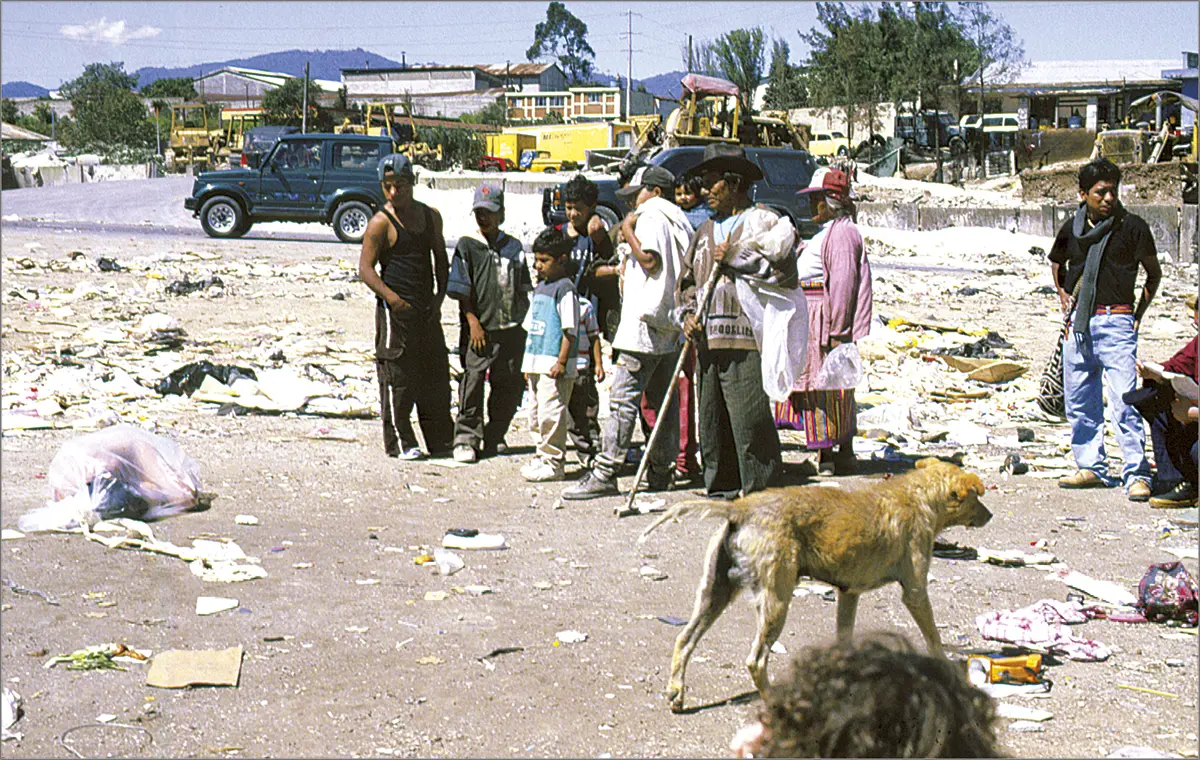
But if there is an indispensable reference in the use of urban space and performances that must be mentioned, it is doubtless the work of Regina Galindo. She has represented hyperawareness of the body and its surroundings, the union of tenderness and fear in existence. She was the first artist who blazed the trail into performance and exhibited it in the public space, and she was able to convert an artistic image into a sort of emblem of the festivals of the historic center when she dangled ten meters up in the air and read her own poetry. Through an aesthetics of precariousness, she has created static images that reveal human solitude in its most painful dimensions. In Octubreazul she realized the performance titled No perdemos nada con nacer (We don't lose anything by being born), which consisted of her remaining inside a plastic bag at the city dump for over an hour. The connotations of human remains found in these places do not imply a critique or moralist position toward abortive practices, as several journalists have suggested, but rather an incorporation of the biological, chemical, and emotional transformations of the body itself, which are integrated into the inhabited social landscape.
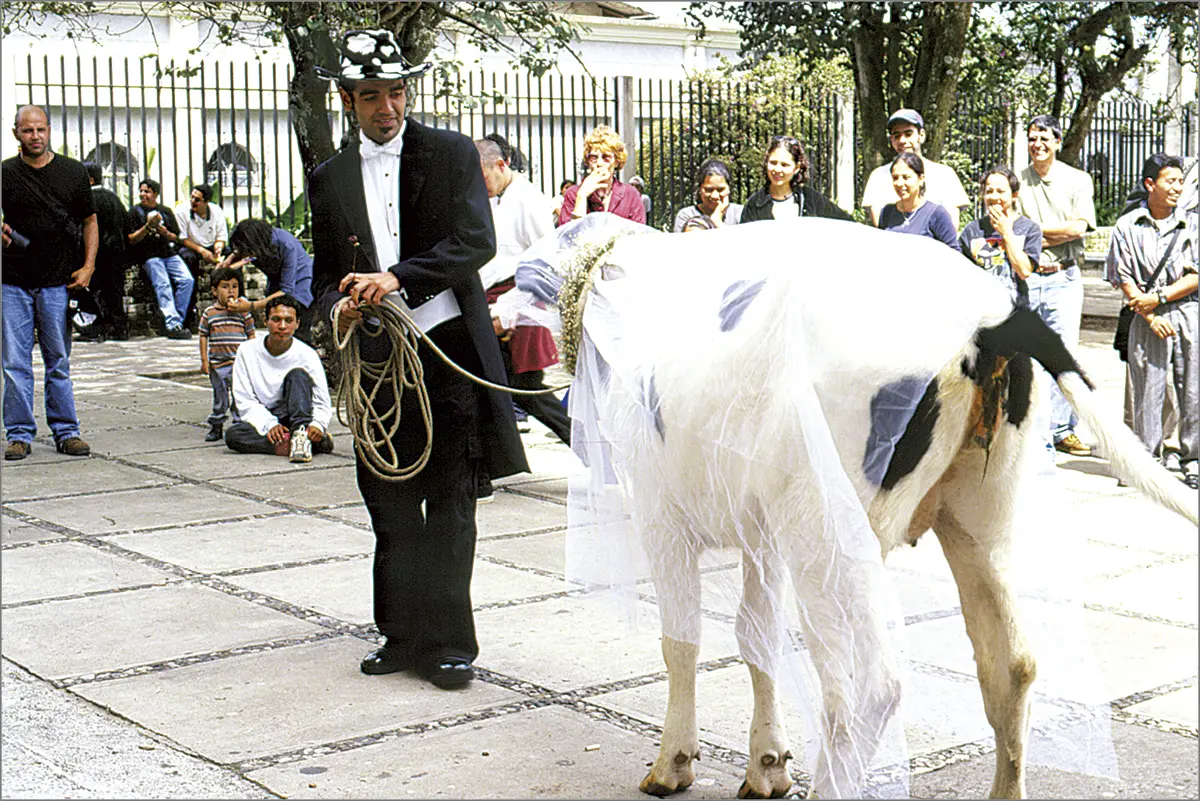
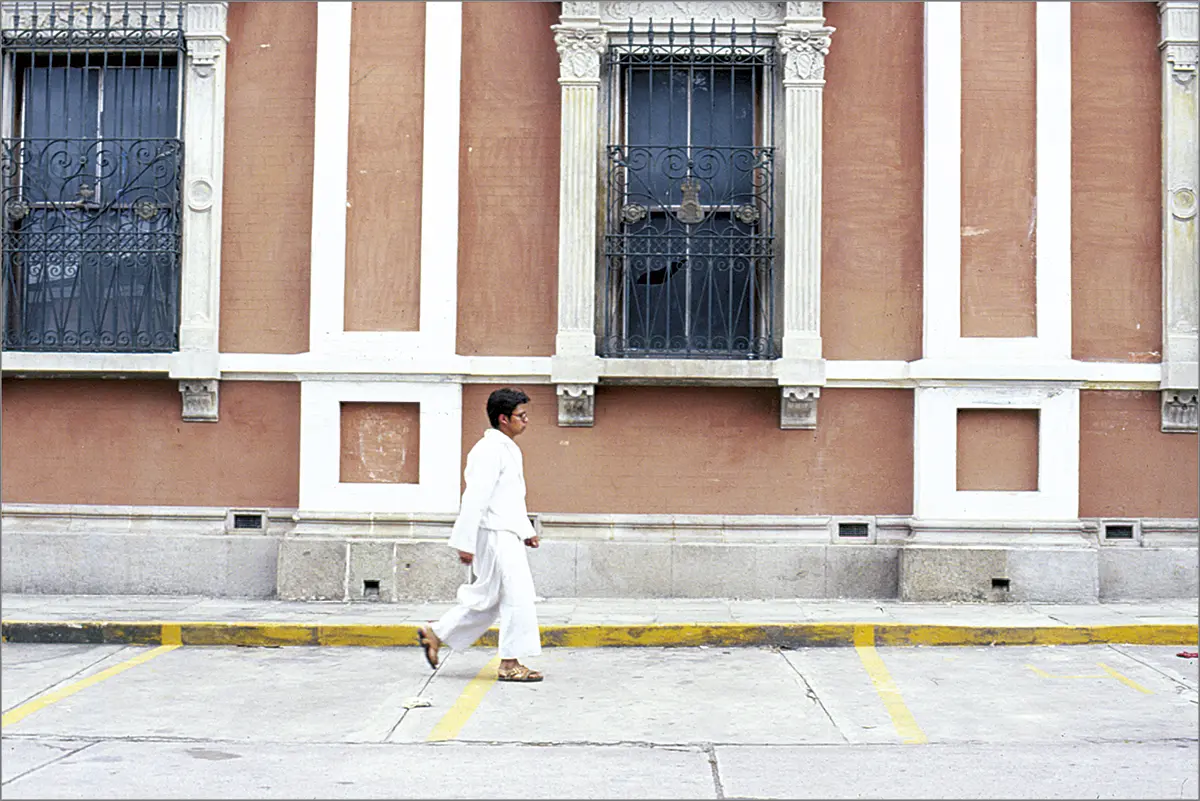
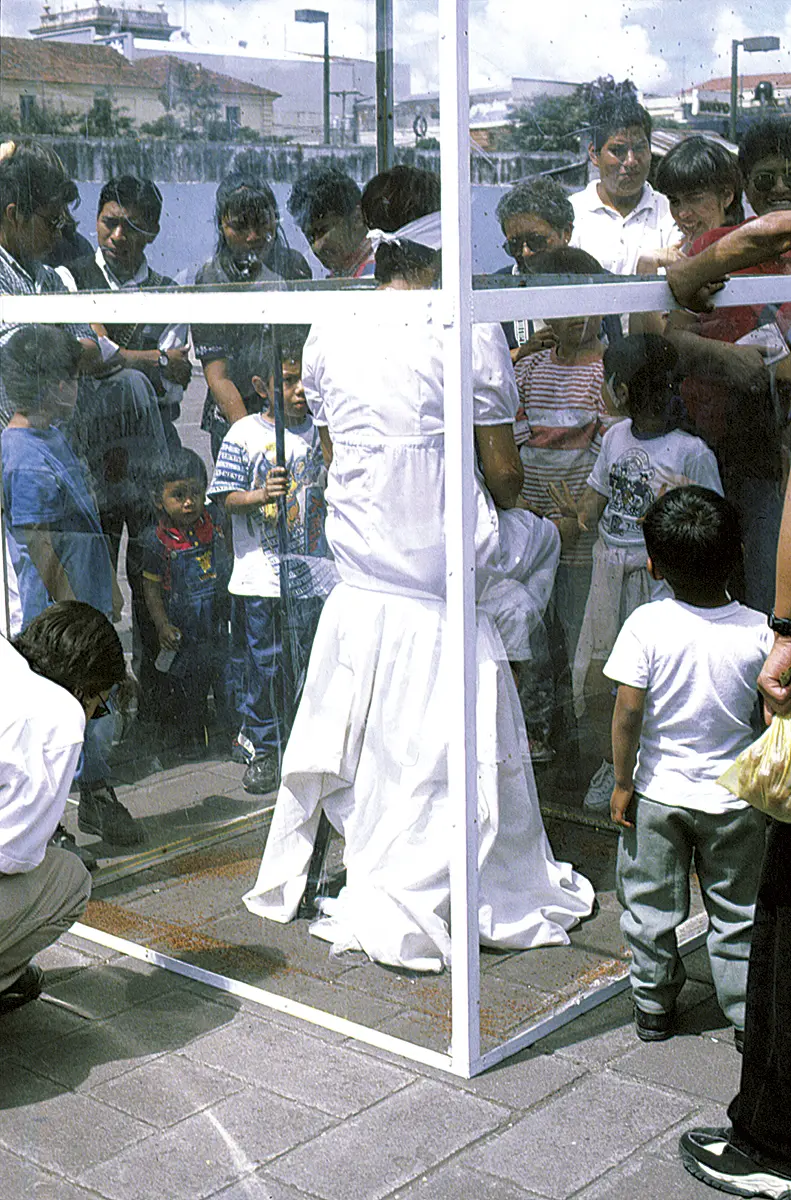
Although performances have begun to open new dimensions for artistic content, they have also opened new dimensions for developing a subversion of the logic of traditional exhibitions in privileged spaces or the commercial activity of galleries. Not to mention the logic that dictates that artists, especially those from peripheral environments, should find in art a means of subsistence. Then, how can we explain works like those of Benvenuto Chavajay, who for this festival created a several-hour walk, linking the city's two most distant points? The most coherent explanation comes from the reflection of the artist, who mentally seeks to draw a city where extremes coexist and where privation is our daily bread. Or the work of Alejandro Marré, who proposed his wedding with La Fabulosa, a cow that attended the ceremony with its own attire, like telling a story without a story and organizing a whole absurd event accompanied by the rhetoric of florid speeches In an action that could not elude the memory of the bodily self-aggressions of Cris Burden, Jorge de León proceeded to sew his lips, like a ritual vow of silence. María Adela Díaz stayed inside of a glass urn accompanied by two thousand flies that fluttered about her. And the conceptual work of José Osorio, who created a homage to the Revolution of '44 and to the democracy in the revolutions of a Ferris wheel, on which the visitors could ride free of charge. Thelma Álvarez, Igor Kubrik, and Javier Payeras created an installation in the National Museum of History, where they introduced a series of objects and fetishes typical of the period. Pokemon, Batman, the legendary heroes of Star Wars, and video projections overlapped with sculptures with classic lines, of great men and martyrs who strike up a questioning dialogue, of history itself, and of the codes of hidden power that they establish in hierarchies. As a metaphor for this useless dialogue, a few days after the opening, the show was censored by the director of the institution in charge of the museum.

With the ability to gather some one hundred activities with a strong tendency toward the experimental and the alternative, Octubreazul embraced non-traditional sensibilities of space like rock and rap, and the openly political manifestations of the gay and lesbian movement. In spite of the economy of resources, the dance proposals, street theater, concerts, happenings, and multimedia projects gathered an unprecedented number of viewers and artists. Tripiarte was a model of occupation and recycling of the old Post Office building, where for two days activities and installations were shown that were constructed with objects typical of the surroundings, combinations of furniture and the use of millions of letters and telegrams that never arrived at their destination, and which accumulated over decades in the basements of the building. All within a climate of celebration and creative euphoria.
As previously mentioned, in order to describe the leaders of this generation we resort to the disposable. In the attempt to obtain a sort of simplistic seismograph of their traumas, one tends to measure their disenchantment in the face of society as an explanation of their rebellion and fraud. I believe that the expression "to the point of madness" sums up and precisely describes the subjective elements that stimulate these artists. It explains that the participation of art and youth in Guatemalan society—in this "post" era—emerges with an uncontrollable spontaneity and a desire to break the silence. "Octubreazul" produced a collective situation that proves that it continues to suffer gaps in systematic training and that more solid intellectual and theoretical processes are needed. However, it is from these strategies of the periphery, which have no alternative but to become lived experiences, that they are stored in the memory as something unique and unrepeatable. Its balance is the certainty that the so-called postwar implies restoring lost humor. Not a humor that contradicts the seriousness of the moment, but rather, as Fernando Savater says, one which underlies it and protects it humorously from banalization.2
NOTES
1. Pacas (lit., "bundles" or "packs") refers to the bundles of used clothes imported from the United States for sale locally. The 999 warehouses make up one of the great phenomena of the local economy. They are small or large stores open to the public for low-cost sales of objects or foodstuffs with diverse origins, which generally have passed their expiration date or have some sort of production defect.
2. Taken from the essay by Fernando Savater, "La ciudad de los hombres," in Invitación a la Ética (Buenos Aires: Editorial Planeta, 1994).
ROSINA CAZALI
Independent curator. She lives and works in Guatemala, and directs the La Curandería and the Ilustración del Pacífico projects.