
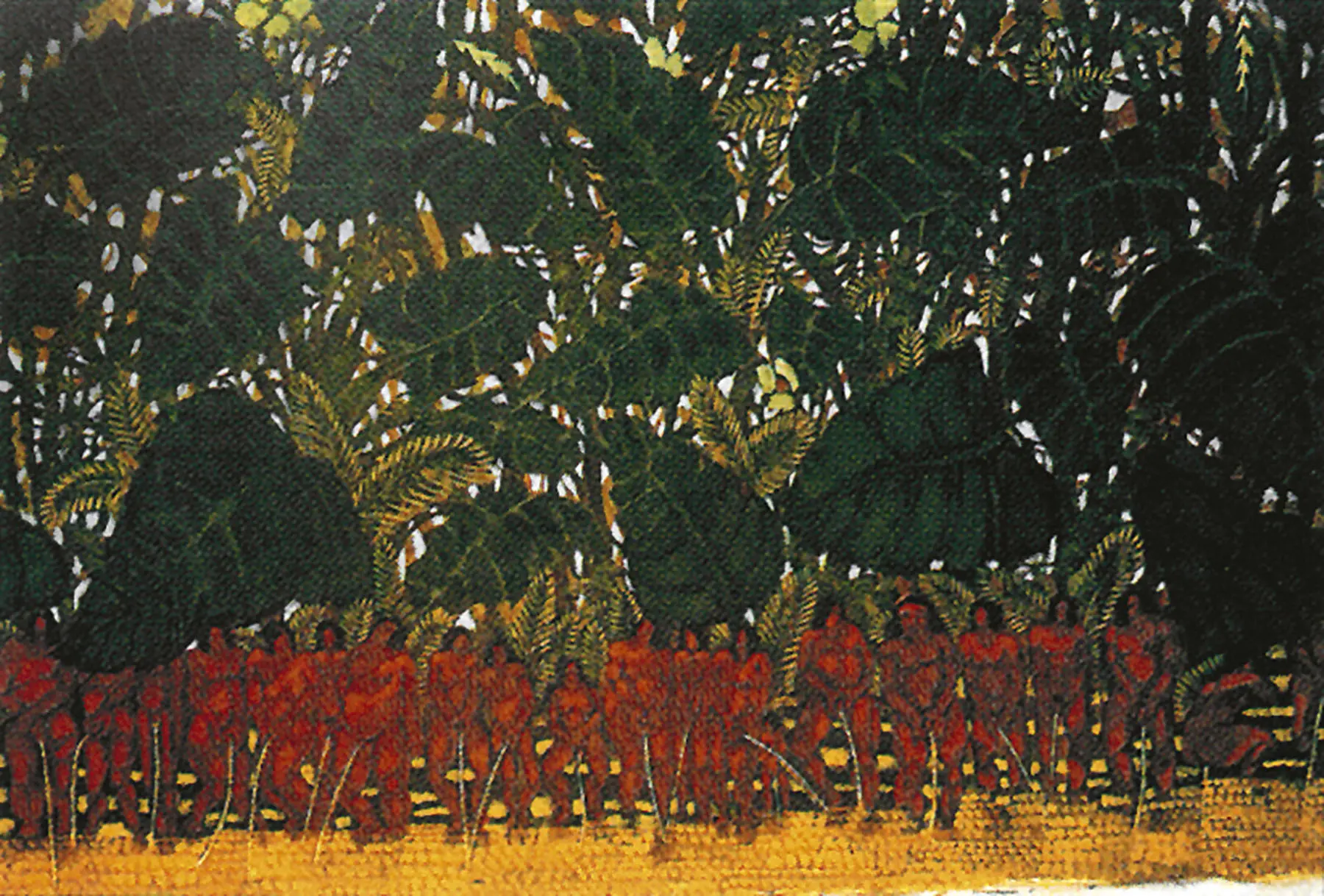
As a preparatory event for the naming of Lima as Latin American Cultural Capital during the year 2002, Casa de América in Madrid offered Resistencias (Resistances), a show of contemporary Peruvian art, accompanied by an excellent catalog.
The show's broad selection included all kinds of formats, from paintings to installations, photography, video, and digital arts, confirming the universality of contemporary art's techniques and technologies.
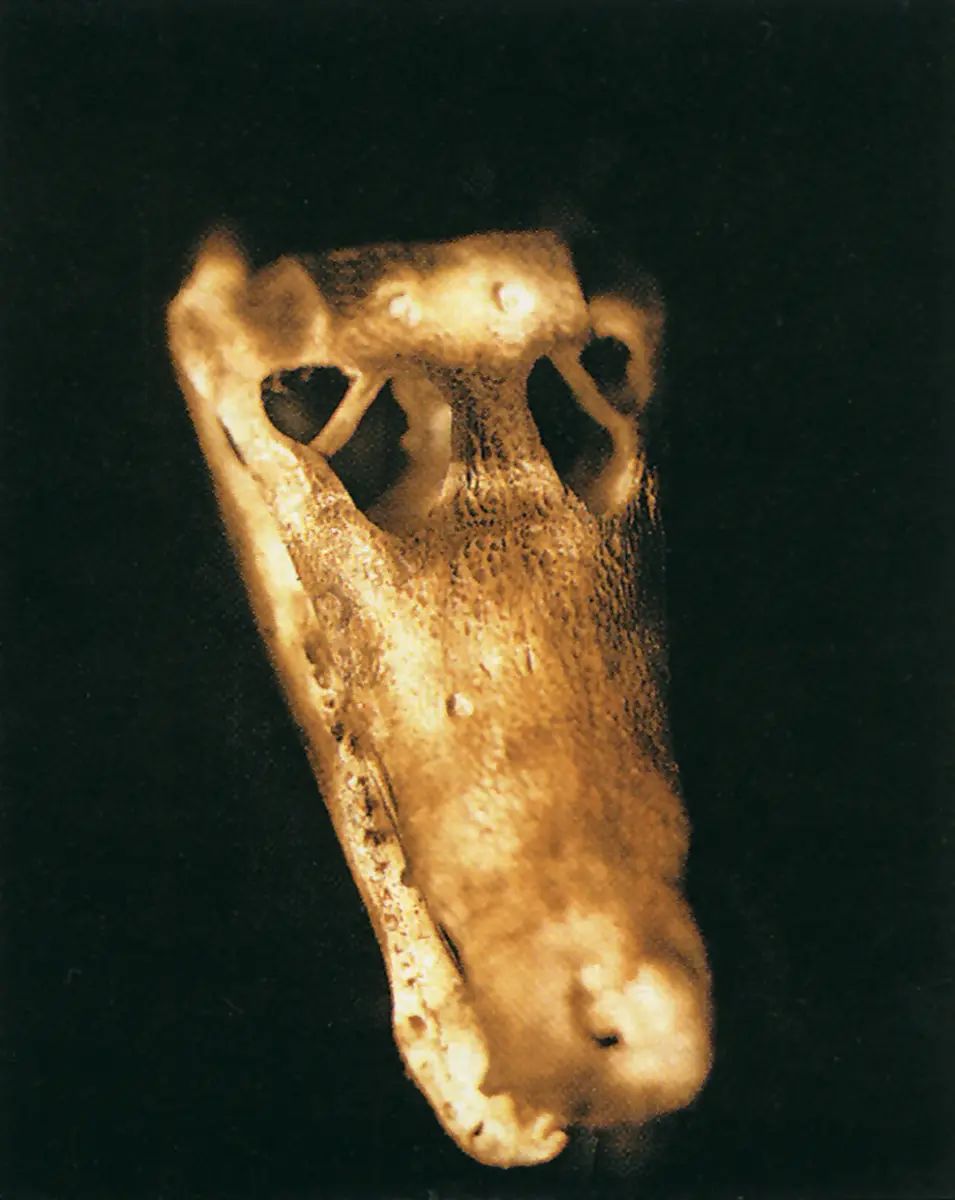
The show is organized around five nuclei—some thematic, some simply responding to the support employed—which, on the one hand, are not all that self-explanatory in the show's mounting, on the other hand, allow for interesting groupings of artists whose language may at first appear widely differing. Thus, a historical look at Peru is the point of departure in Moico Yaker's paintings, Fernando Bryce's drawings, Flavia Gandolfo's photographs, and Eduardo Tokeshi's flags. The apparently inescapable topic of gender is represented by Mónica Gonzáles' embroideries, Natalia Iguíñiz' and Juan Enrique Bedoya's photographs, Sol Toledo's acrylic flowers, Miguel Aguirre's and Andrea Miranda's images, as well as Patricia Bueno's installation. The video section includes pieces by Delia Ackerman, Roger Atasi, Ricardo Ayala, Angie Bonino Max Hernández, and Diego Lama; the complex urban experience is recorded in photographs by Luz María Bedoya, Pablo Hare, Philipe Gruemberg, and Roberto Huarcaya. Pictorial works by Enrique Polanco, Christian Bendayán, Jorge Cabieses, Jaime Higa, and Susana Torres round up the show.
Also present is the Laperrera collective, with a public intervention in the Internet titled Com.Pe, which could also be seen at the last Lima Biennial. Some of these artists are relatively well known outside Peru, thanks to the technical and/or conceptual quality of their work, or thanks to the interest they have aroused at a given moment in publics unfamiliar with the particular context of contemporary Peruvian culture. This poses a problem when it comes to analyzing the show in terms of the current pertinence—so often discussed nowadays—of presenting regional exhibitions that offer "panoramic" views of the arts in a given, obscure region of the world. Visiting this show drives us to acknowledge that such visibility is indeed necessary, but it also makes clear our profound ignorance of the environment from and in response to which have emerged most of the pieces selected by the curator.
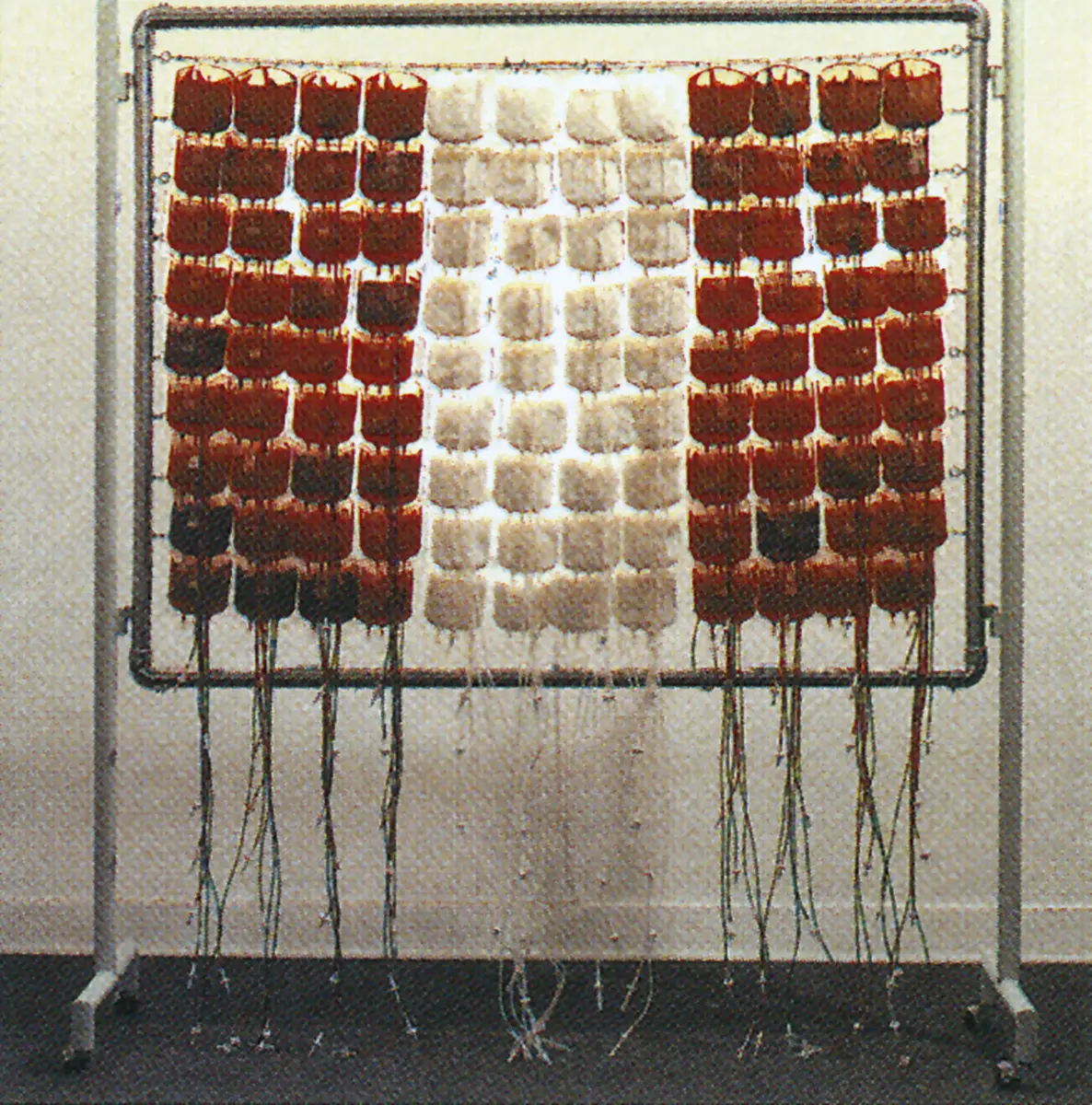
In any event, what cannot be doubted is that artistic production in Peru is alive and diverse and that it broaches a variety of topics and problems, ranging from the deepest political commitment to the deepest personal investigation. The recurrence of media and languages of a technological nature, or at least relatively new, such as videos and installations, seems to respond more to issues of content than to formal explorations, and it shouldn't be looked on condescendingly (as some Spanish critics have done). If there is a certain "naiveté" or a certain "clumsiness" at the formal level (which, by the way, is not true in every case), this is not due to the artists' ignorance of technique or a temporal lag in their adaptation of new languages, nor is it caused their lack of skill. It would seem related more to an eminently baroque sensibility—even if in saying so we run the risk of falling into empty generalizations—that manifests itself not only at the technical or formal level but also at the level of the contents and messages that many of these pieces seek to communicate—some of them failing noisily. In fact, it is possible that such failure has its roots in our own incapacity to read and interpret greatly complex thought processes produced by extreme political, geographical, social, and cultural situations, discourses that are willing to incorporate current international artistic paradigms only on their own terms.
More than anything, this show evidences the growing necessity of displaying, with a greater frequency, better critical faculties, giving the benefit of the doubt to artistic productions from those regions of the world whose proposals invite us to see the world from perspectives other than our own.
ISSA MARÍA BENÍTEZ DUEÑAS