Brazil is an enormous, multi-faceted country enriched by a melange of cultures and this immense exhibition highlights many of the nation’s visual achievements. Presented within a Guggenheim dramatically shrouded in black paint, the diverse collection of objects exhibited ranges from 17th-century Baroque masterpieces to 20th-century paintings and installations. One question from the onset is the curatorial logic behind exhibiting together such a vast history covering such multifarious visual expressions. The risk is, as was true of past blockbuster exhibitions presenting one nation’s visual history, that the audience is shown numerous objects but taught relatively little about the cultural and contextual specifics surrounding these works of art.
Upon entering the blackened rotunda of Brazil: Body and Soul, one encounters the most extravagant work in the exhibition, a towering 18th-century carved and gilded cedar altarpiece from the Benedictine Monastery of Sao Bento de Olinda in northeastern Brazil. It looms far above one’s head, its ornately carved façade bearing an altar with polychrome saints, columns, a crucifix, and countless flourishes. As the viewer climbs the winding walkway to the museum’s upper floors, he or she can examine its opulent detail.
After the altarpiece, the exhibition begins with 18th-century paintings on wood which record the Portuguese conquest, and moves to a shadowy stretch of walkway punctuated by the exquisite, brilliantly hued feather pieces created by indigenous peoples of Brazil. The mix of religious and colonial art with Amazonian and Afro-Brazilian creations defines this show, providing one with a sense of the multiplicity of cultures that comprise this nation. The threads of these many influences surface throughout the mostly chronological exhibition from the ground to the top floor. But due to the enormity of the show, only a brief history of each culture is permitted, supplemented by films documenting the religious and secular rituals and festivals celebrated nationwide. Ultimately, given the overwhelming scope of the exhibition and the limited contextual information provided, the viewer leaves wanting more.
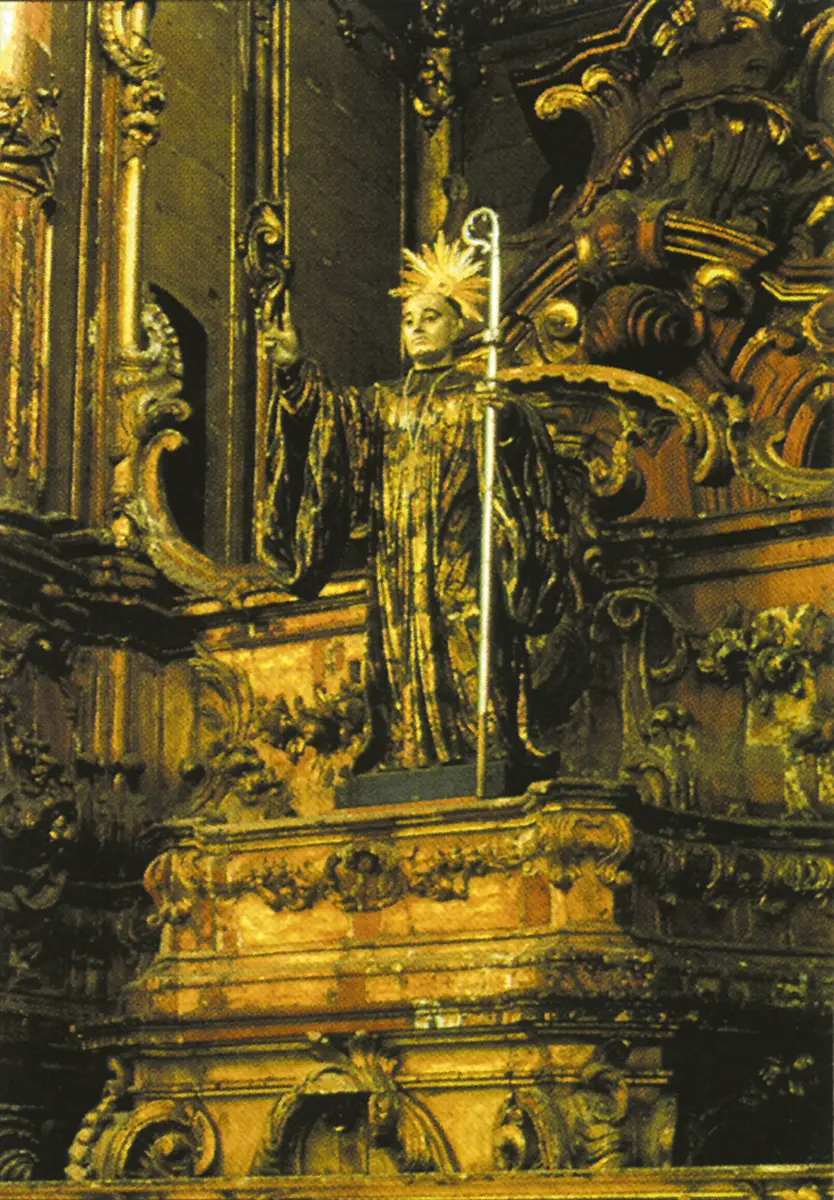
A lengthy portion of the exhibit focuses upon Baroque carved wooden sculpture, highlighted by the work of the 18th century master Antônio Francisco Lisboa, known as O Aleijadinho. Physically handicapped, this sculptor and architect created an extraordinary array of expressive figures. Attributed to him is Saint George, a stoic soldier elaborately polychromed in blues and golds, his arm raised menacing a spear and a shield clutched to his breast.
In marked contrast to these rococo sculptures, the exhibition includes simple, eerily lifelike figures of saints and a group of 18th-century Pentecostal figures, with penetrating glass eyes. In a small corner gallery, a profusion of wooden and ceramic ex-votos, (offered to the church for miraculous cures), are dramatically exhibited in a strangely disquieting installation of human legs, arms, breasts, heads, and feet which covers two walls and extends on to a platform beneath.
A series of connecting galleries explore the onset of modernism in the early 20th century, continuing up through the concrete and neo-concrete movements that placed Brazil in the international avant-garde in the fifties and sixties. Highlights of the early modernist section include the memorable paintings of Tarsila do Amaral, such as Anthropophagy from 1929. Also present is Candido Portinari’s famous Mestizo of 1934, which portrays an Afro-Brazilian man.
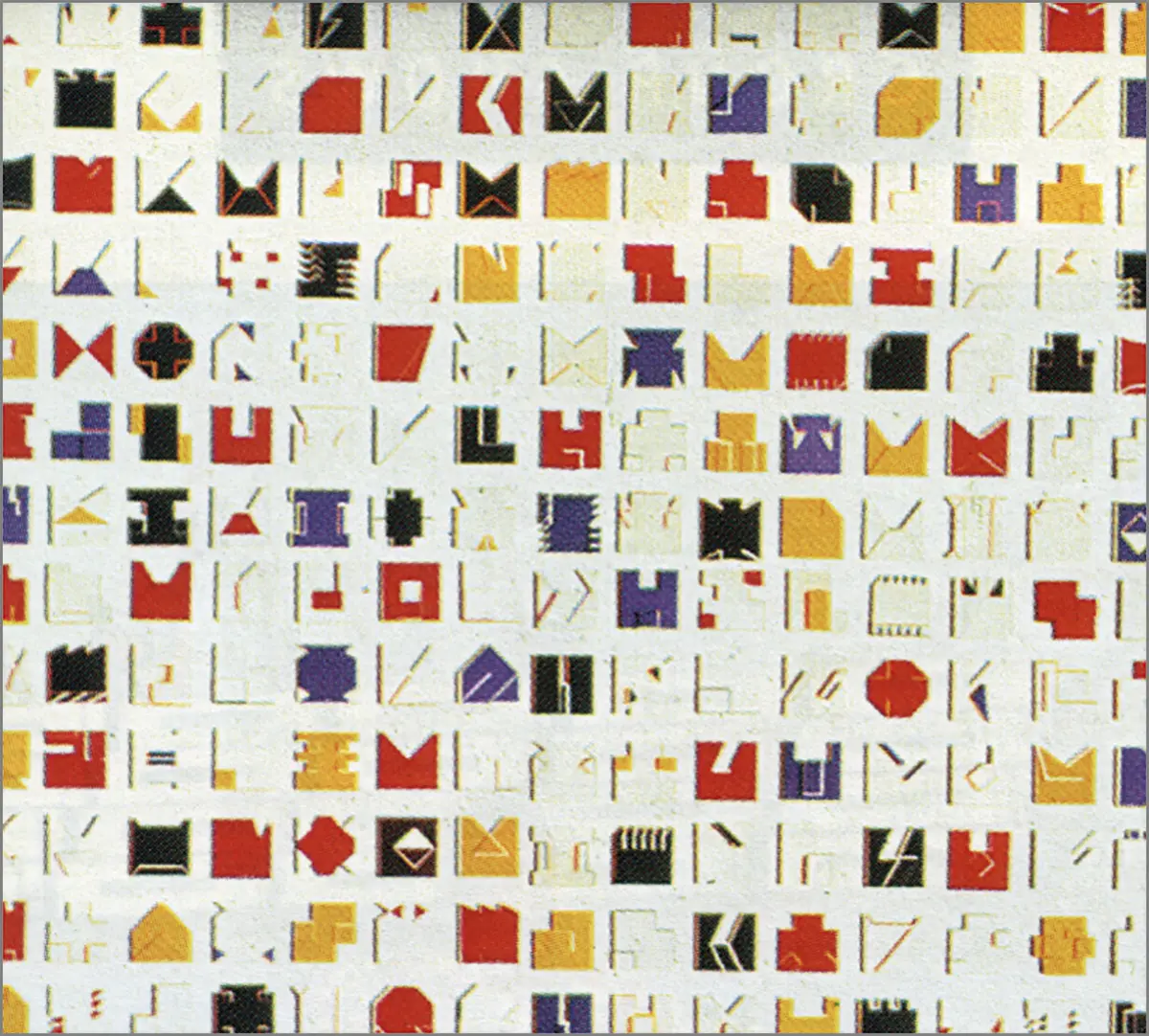
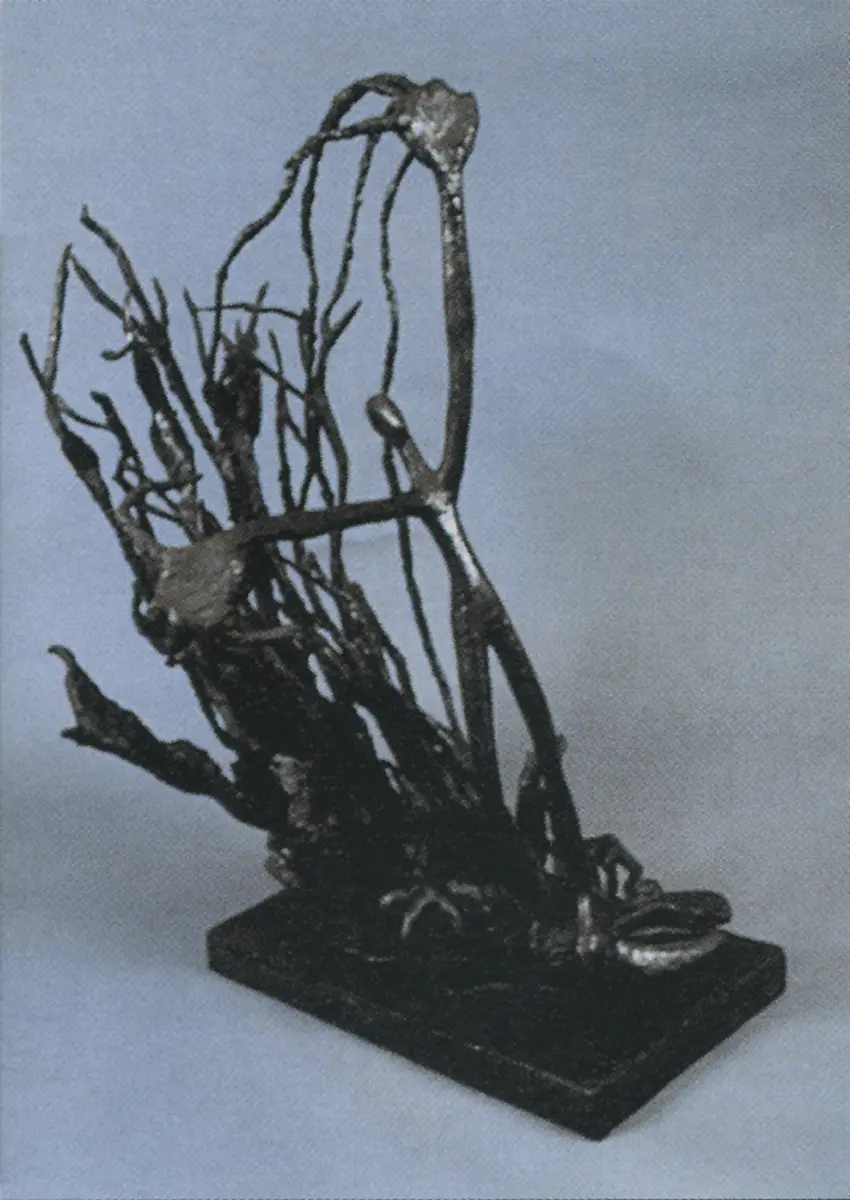
The bronze, surrealist sculpture of Maria Martins, such as Without Echo of 1943, characterized by its anthropomorphic body with threatening, elongated appendages, vividly contrasts with the pure abstraction of Lygia Pape’s Book of Time 1961 in the next gallery. Pape’s installation includes a vibrant wall of some fifty small boxes made of acrylic and wood, each bearing white, black, blue, red, or yellow geometric shapes.
The following galleries lay out the evolution of the 1950s and later abstraction from the concrete to the neo-concrete projects explored by Lygia Clark and Helio Oiticica. Included is a singular abstract canvas by Oiticica, Red Cutting Through White from 1958, in which white rectangles appear to shift across a red ground, and Clark’s Egg from 1959, a black circle almost enclosed in a white circular frame. A nearby gallery presents the dramatic red and black Afro-Brazilian wooden altars of Ronaldo Rego and the totemic wooden reliefs of Rubem Valentim.
Proceeding up the ramp, the viewer enters an exhibition highlight—galleries where Clark and Oiticica’s interactive pieces are presented along with copies of them for audience participation. Few previous exhibitions of their work have included this participatory opportunity for the viewer, an aspect both artists believed integral to their projects at the time. In the first space, duplicates of Oiticica’s cape-like Parangolés from 1964, pieced together with used cloth, vinyl, potato sacking, and burlap, hang on a wall, waiting to be worn Opposite is the projection of a film recording performances with the original Parangolés in the barrios of Rio, made thirty-plus years ago. In the adjacent gallery, a selection of Clark’s interactive objects—the moveable piece, Bicho from the 1960s, the Sensorial Masks (1967), and rubber suits connected by a vacuum-cleaner hose known as The I ant8the You: Clothing-Body-Clothing from 1967—are exhibited beside photographs portraying them when used under Clark’s guidance. Copies of these objects are placed throughout the space allowing the viewer to fold the aluminum Bicho, or don a Sensorial Mask with smells, sounds, and textures placed at one’s facial orifices.
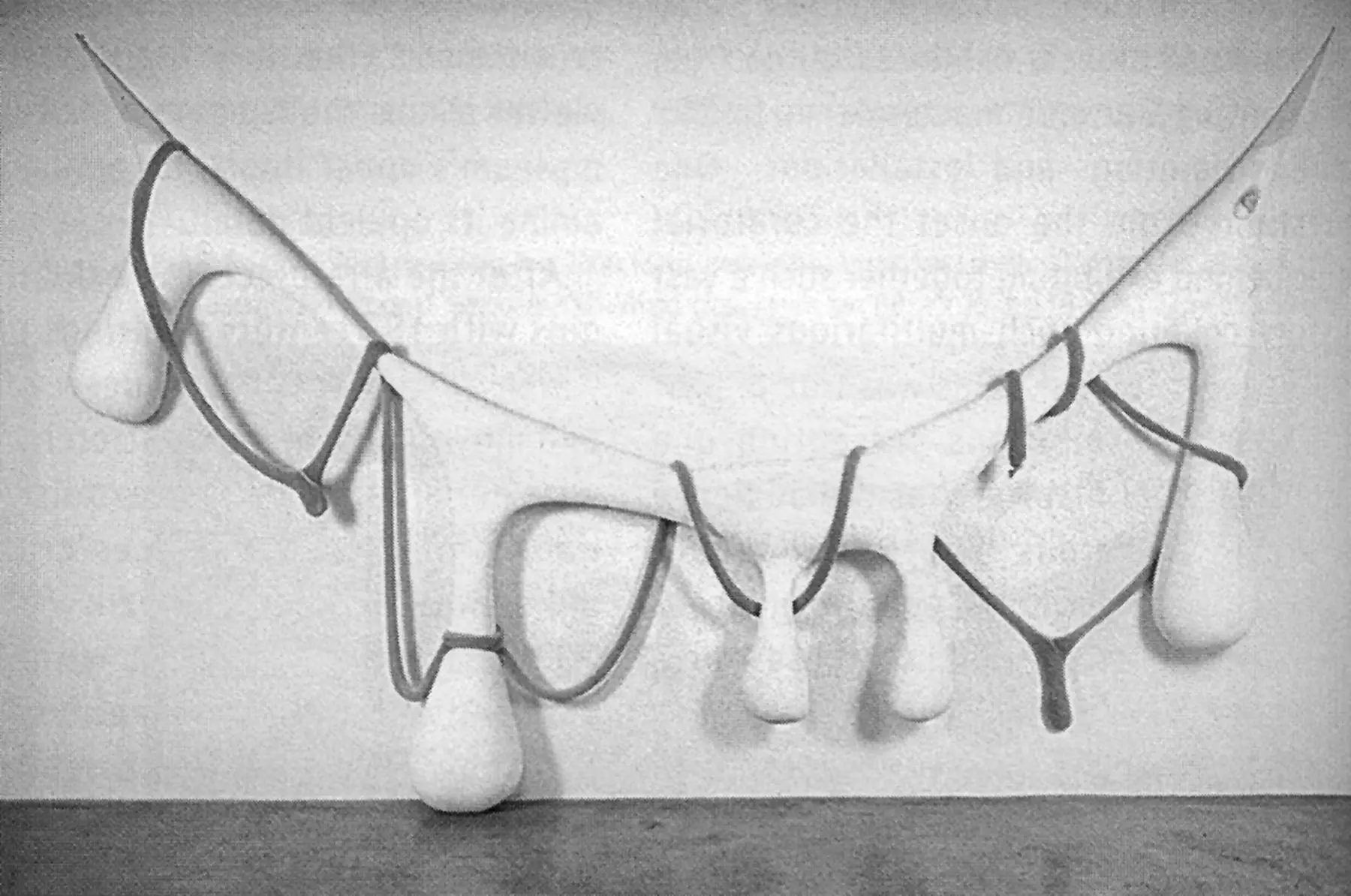
The final section of the exhibition explores the work of several contemporary artists who have achieved international recognition. Ernesto Neto’s piece, We Live in a Symbiotic Love (2001), includes his characteristic, filled nylon forms, suspended against the wall in long white tendrils bulging with Styrofoam pellets inside. A smaller, nude nylon strand filled with scented lavender flowers loops over and around the larger white nylon shapes, creating a sensual expression that envelopes the viewer in fragrant, flowing forms.
The exhibition ends with the provocative wall reliefs of Adriana Varejao, who vibrantly comments on the effects of colonialism. Her classic work, such as Folds (2000-2001), conveys a wall of Portuguese tiles buckling beneath the weight of an abundant mass of entrails trapped inside. Varejão’s work never fails to remind the viewer that the surface masks the hidden truths in her country. As this exhibition reveals, surveying four hundred years of Brazil’s visual history is an impossible task, resulting in an oversimplification of the complex histories and cultures that comprise the nation. That said, curator Edward Sullivan and the curatorial team provide an intoxicating selection of Brazil’s visual achievements, whetting one’s appetite for more, albeit on a scale that delves more deeply.
MARY SCHNEIDER ENRÍQUEZ