
Quisqueya Henríquez, Jorge Pineda, and Fernando Varela presented a collection of works in a show destined to go down in the annals of Dominican art, thanks to its propositions, procedures, and, above all else, its exceptional quality.
Curador curado (Curated Curator) sent shock waves through The Dominican Republic's Art World. Three artists renowned for their avant-garde stance, one show radically different from what we are accustomed to seeing, one strong and polemic theoretical proposition. The event could have adopted as its motto the phrase "One for all, all for one," such as the homogeneity of the artists' ideological and aesthetic philosophy, shared at the level of theory and at the level of practice. Besides, the show rhymed perfectly with the new directions at the Santo Domingo Museo de Arte Moderno.
It was also a nice surprise to see a good number of visitors in the show, in a country always reticent about contemporary art. These visitors, mostly young, were clearly interested in and intrigued by what they saw; this public belongs to the future, and they are the ones who could change the dominant taste: special attention should be paid to them.
The show's title, Curated Curator, has been widely explored, in interviews and round table discussions. The artists —let's call them A, B, and C— played the parts of both creators and curators, with two of them selecting the works of the third: A and B selected C, B, and C did the same for A, A, and C were curators of B. The three of them chose to meditate determinedly on the human condition in our times and, secondarily, in the Dominican Republic. Methodically, they wanted to generate a specific reading of their discourses. They even became producers, public relations agents, critics, and museographers; over a period of years, each of them took on several roles, which are not the usual ones assigned to the creators of art.
Now, if it hadn't been for the serious and strong text preceding the second-floor show, a visitor could have been forgiven for not noticing the first intention: To think about the urgent need for professional curatorship in the Dominican Republic, the lack of which the artists blame (in good part) for the stagnant state of Dominican art in the international scene.
This view, both fair and unfair, will continue to be debated; posed as a "profession of faith," it has the merit of signaling certain problems and advancing others, no less important. The blame for the current situation should not go only to Dominicans and their poor curatorial practices. The international art scene frequently responds to the market's interests, to political recommendations, and to one's contacts with better-known figures. The absence of official support and the feeble help offered by the private sector (with a handful of patrons covering almost the entirety of private contributions) are just as much at fault, if not more, regarding the international fortunes of Dominican art.
If that introduction to "Curated Curator" was important from a critic's standpoint, it didn't shape the reception of the works, given an extraordinary coupling of individual and collective exhibitions. For the public, a text about contemporary art would have been more illuminating, helping to appreciate the richness, diversity, and originality of these pieces. To guide the public in the reading of a certain style of art is also curatorial work!
As a whole, "Curated Curator" defines the contemporary, in the sense of current art, in terms of constant recreation and questioning. Henríquez, Pineda, and Varela are permanent experimenters, and their work here differs from what they've done in the past. They constantly add to their formulas and their proposals, enriching them, which is a contemporary trait of art.
The three artists created spaces of communication. The interrelation, the interaction between the works, specifically around the topic of the body, dominates the individual treatment of images. They reflect on bodily representations and turn anatomy into an exploration: of forces, gestures, behaviors, materials, and topography. Thus, a very modern relationship is established, both ontological and sociological.
Categories coexist without hierarchy or preeminence: painting, drawing, installation, architecture, pottery, photography, (intervened) objects, and mixed techniques. Each artist, already multifaceted by conviction and craft, emphasizes creative pluralism.
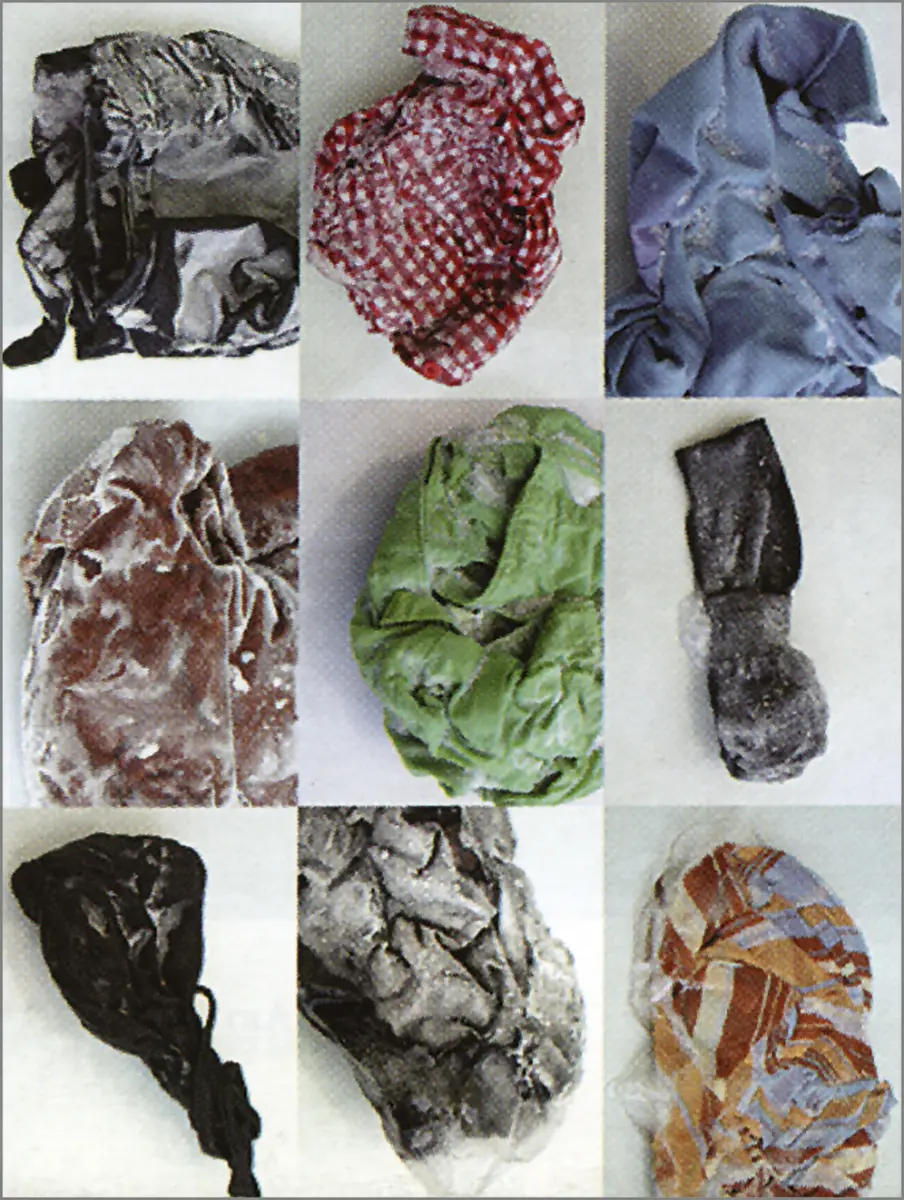
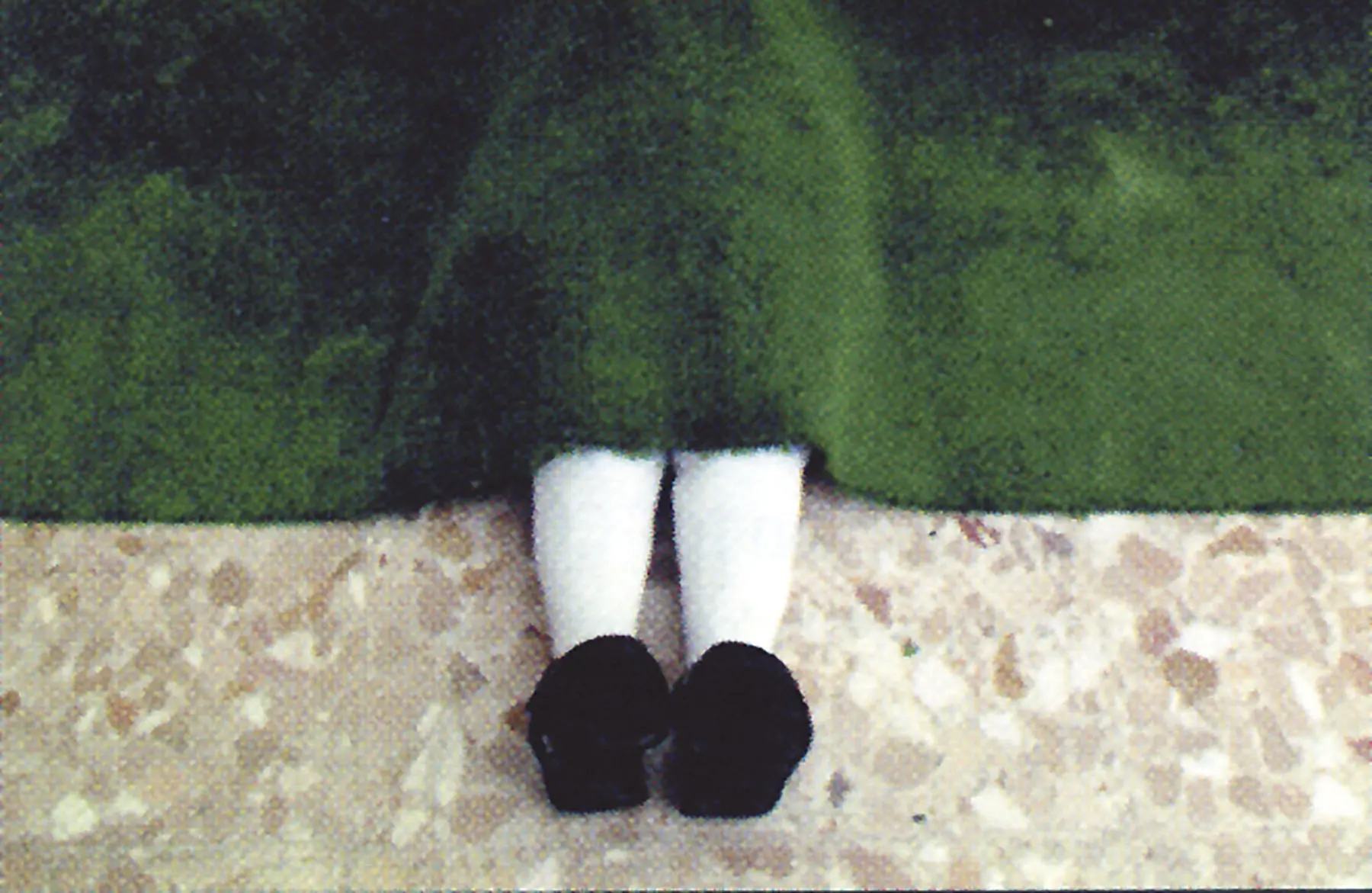
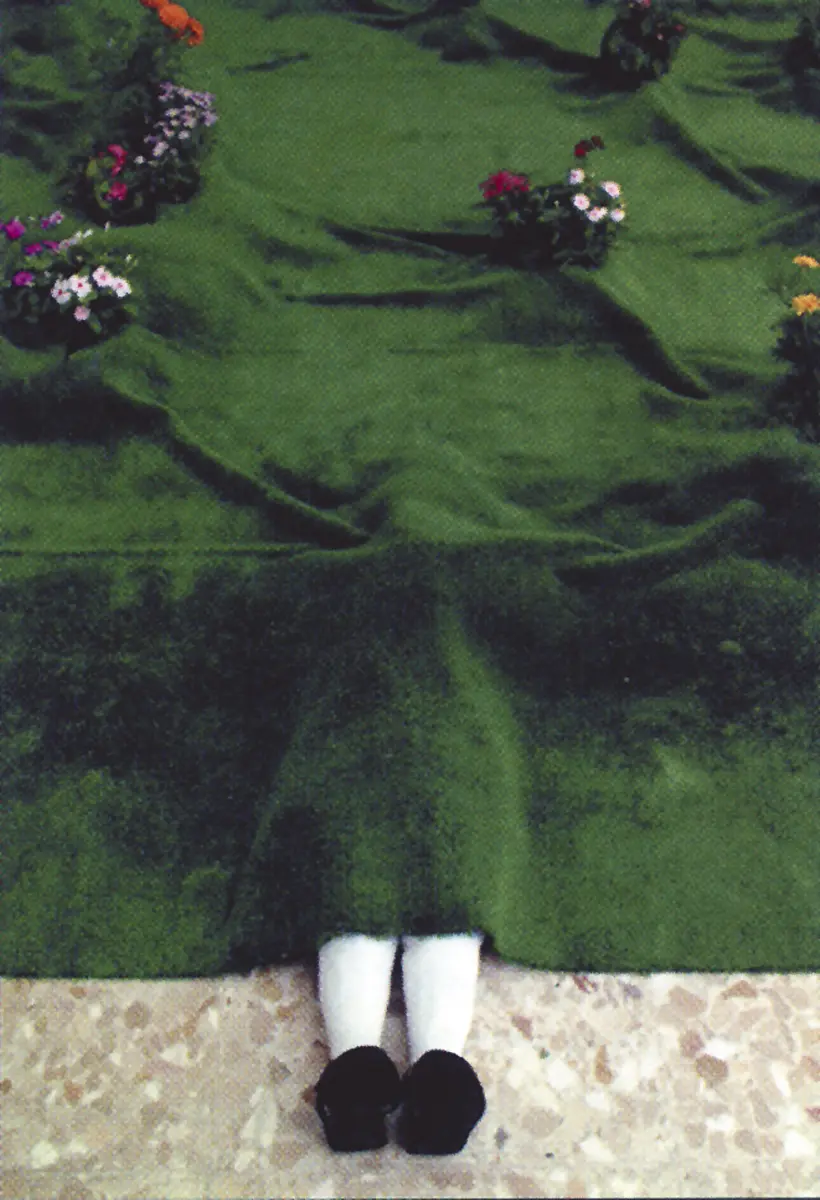
This point is equally valid regarding the show's formats. Fernando Varela oscillates between the "infinitely" big sculpted scissors, which metaphorize the fate of the Americas, and the diminutive iconography of Quisqueya Hernández's Ropa congelada (Frozen Clothes), where the artist gathers a large number of little squares to magnify and multiply the piece's conceptual work; Jorge Pineda, a visual poet, moves from the vast and luscious grass of Sueño de Winnie de Pooh (Winnie the Pooh's Dream) —a sad ode— to the small, virtual Jardín interior (Interior Garden) —a haiku—. Despite the coherence of the whole, each piece becomes a permanent revelation: what will I find now? We notice this reaction —happy surprise!— among the public. This is what contemporary art is all about.
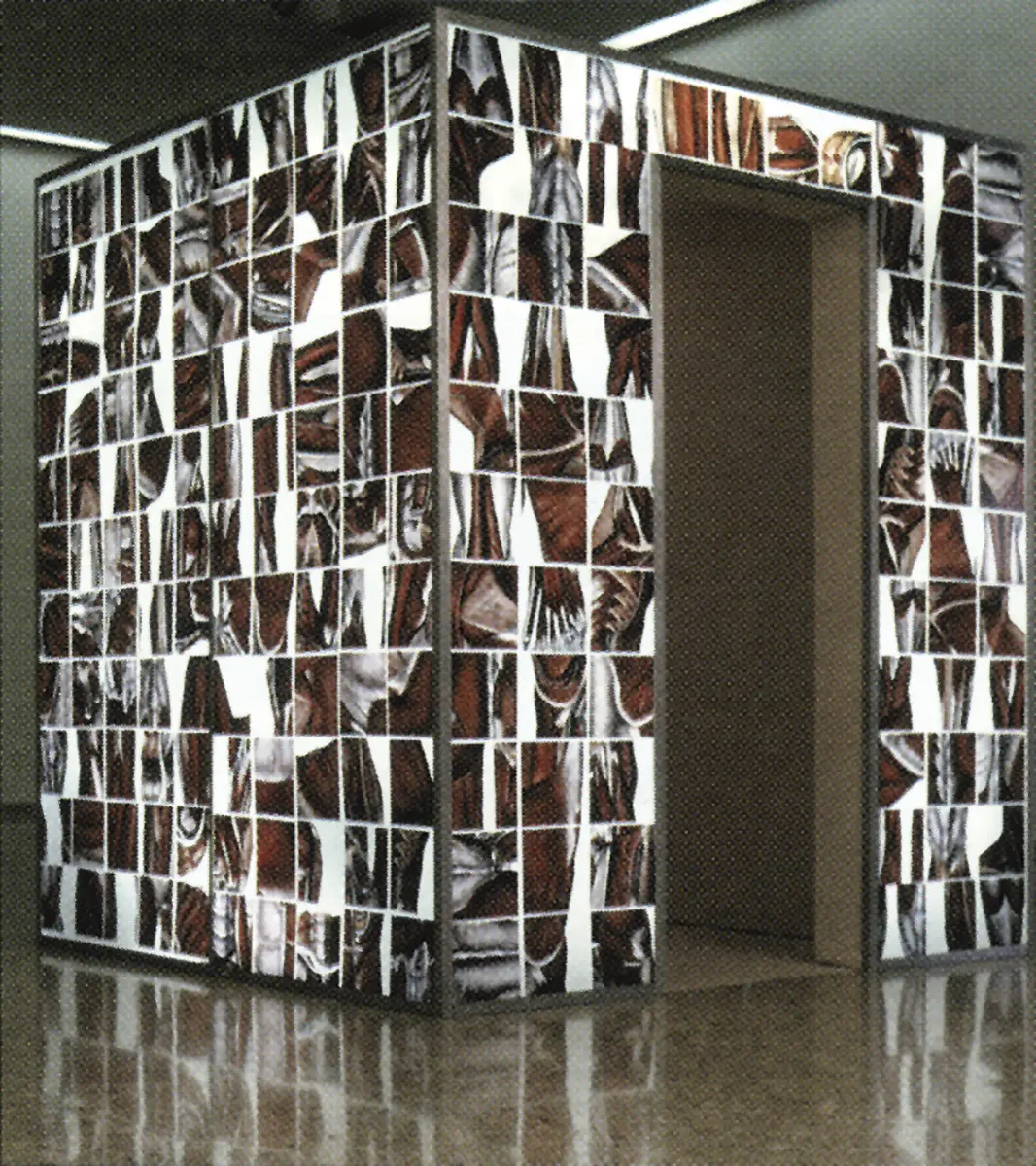
As a corollary to the last observation, we need to talk about freedom and play, so different from the "forced conversion" of so many radical contemporary art exhibitions. Here the approach is natural¿ the spectator moves forward, smiles, stops, returns, enters, leaves. He is invited to playfulness in Quisqueya's sliding stools, disconcerted by Jorge Pineda's closed circuit, enticed to quiet meditation in Fernando Varela's The Healing Room.
When they appear, the vestiges —such as in Quisqueya Henríquez's well-manipulated photography in Ese país de mierda (That Shitty Country)— are metaphorized into a perfectionist, professional image of extraordinary technological finish, contrasting with the captured and recreated landscape. Of the three artists, Hernández deserves notice as the most sensorial —the totalizing perceptions of Rumia— and the most sensual —El sabor de los contrastes (The Flavor of Contrasts)— radiates an overwhelming eroticism, beyond Gina Pane's enticing tongue. Photography, used as a means and not as a demonstration of technique, is obsessive. We should be grateful: at this point, her work is easier to decode and reaches many, not only the initiated.
Fernando Varela refuses to adopt a superficial gaze. He crawls under the skin, dismounts muscles, shows the ramifications of veins and arteries and turns into an artist of the brain scan in which his verses are inscribed. His Gnostic beliefs and faith are not erased. Through the evolution and transformation of technique, spirituality remains intact.
Jorge Pineda evolves similarly, especially in his installations. He, however, keeps one of his favorite themes, besides those masterfully drawn masked dogs: child abuse —in the shocking Frágil (Fragile), probably raped and killed— and molestation of women —the Niña tatuada (Tattooed Girl) is the object, in her own body, of many dirty, lubricious "compliments."
"Curated Curator" will go down in the annals of Dominican art. Only a closed mind and a closed gaze could remain indifferent in front of such value, intelligence, and sophistication. If, after this show, there are people who refuse to update their tastes and their outlooks, we should feel sorry for them.
MARIANNE DE TOLENTINO