If it was ever thought that Venezuelan art lacked tradition, today this assessment is self-evident. Venezuela’s artistic production is more complex than appears at first sight. If in the mid-twentieth century, geometric abstraction and kineticism were questioned as "internationalizing" tendencies, the product of a "corporative," wealthy culture, today these same tendencies, far from representing "the foreign," doubtless better define a condition inherent to a mode of conception of the reality of modern plastic art. They are, to be exact, persistently self-referential tendencies.
Fifty years after the students of the School of Plastic Arts of Caracas—who, for the most part, joined in the recent geometric avant-garde—rejected the academic norm and landscape painting, we may observe how the more recent generations cannot evade that important influence. The geometric abstraction of those years is still intact as a pure form among the younger artists (see the work of Pedro Fermín, or even that of Magdalena Fernández) or as a way of "overcoming" it, without removing, however, the underlying structure (Eugenio Espinoza, Oscar Pellegrino, and Sigfredo Chacón, among others).
These assessments are clear in the masterful show titled Geometría como vanguardia (Geometry as avant-garde), comprised of works from the Colección Banco Mercantil, exquisitely curated by Katherine Chacón. This exhibit makes up one of the most relevant of the year 2001 within the Venezuelan artistic realm, and it is now touring various areas of the country. It began in Ciudad Bolívar at the Museo de Arte Moderno Jesús Soto, it then went to the Museo de Barquisimeto in the State of Lara, it continued on to the Museo de Arte Contemporáneo del Zulia in Maracaibo, and it will end its tour in the year 2002 at the Museo Alejandro Otero in Caracas.
This show demonstrates the implications that the modern project had in Venezuelan culture. So writes Katherine Chacón in the book catalog. In this sense, the decade of the '50s was a transcendental period in the cultural history of the country and it is decisive in the flux of the country's art through adherence or through frank rejection.
Currently, we stand before an opening toward those movements that today represent our most immediate tradition. The moment is doubtless interesting because it forms part of a revision of the processes that make up our modernity. Far from carrying it out through a "leftist" posture, which could be based on figurative (that naturally carries a great deal of influence in Venezuelan art), it is done through an opening toward abstract movements, which until recently had been weakened. This show has the virtue—and the intention—of making the works of artists from different generations and dissimilar styles engage in a dialogue within geometrism, with the goal of visualizing this plastic tradition's sense of belonging, to put it in linguistic terms. The Barquisimeto museographical version was carried out by John Lange, and it gives precisely this reading.
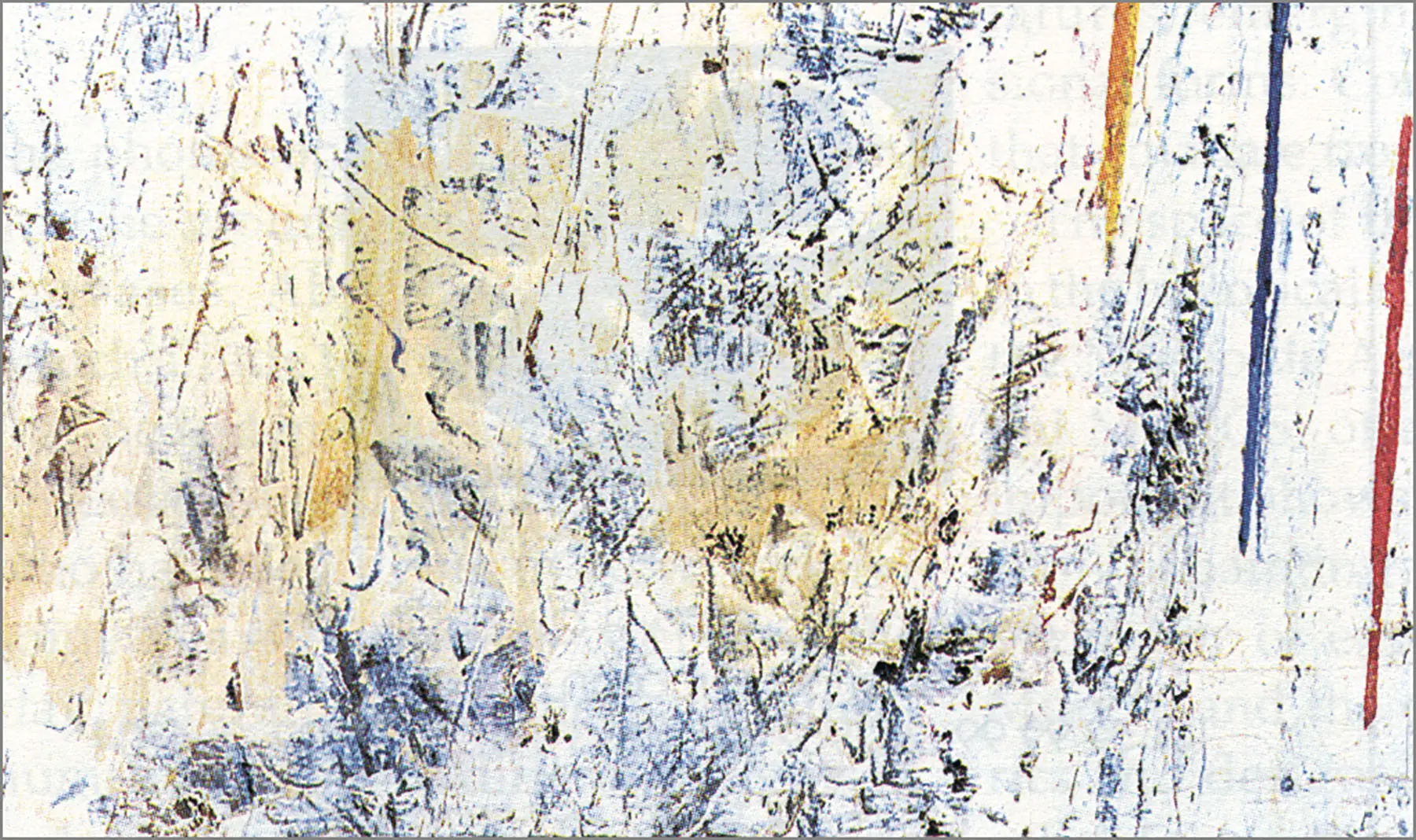
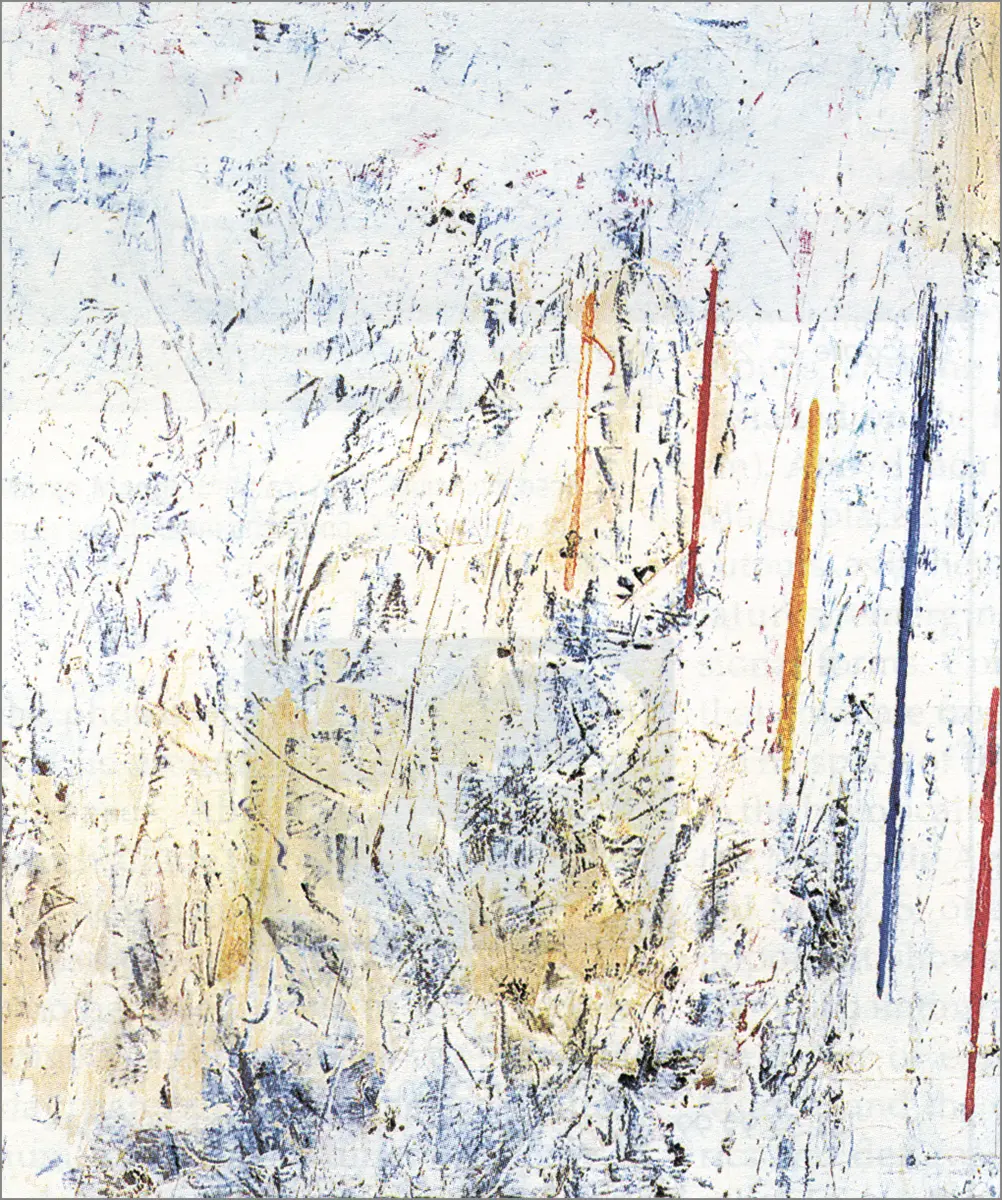
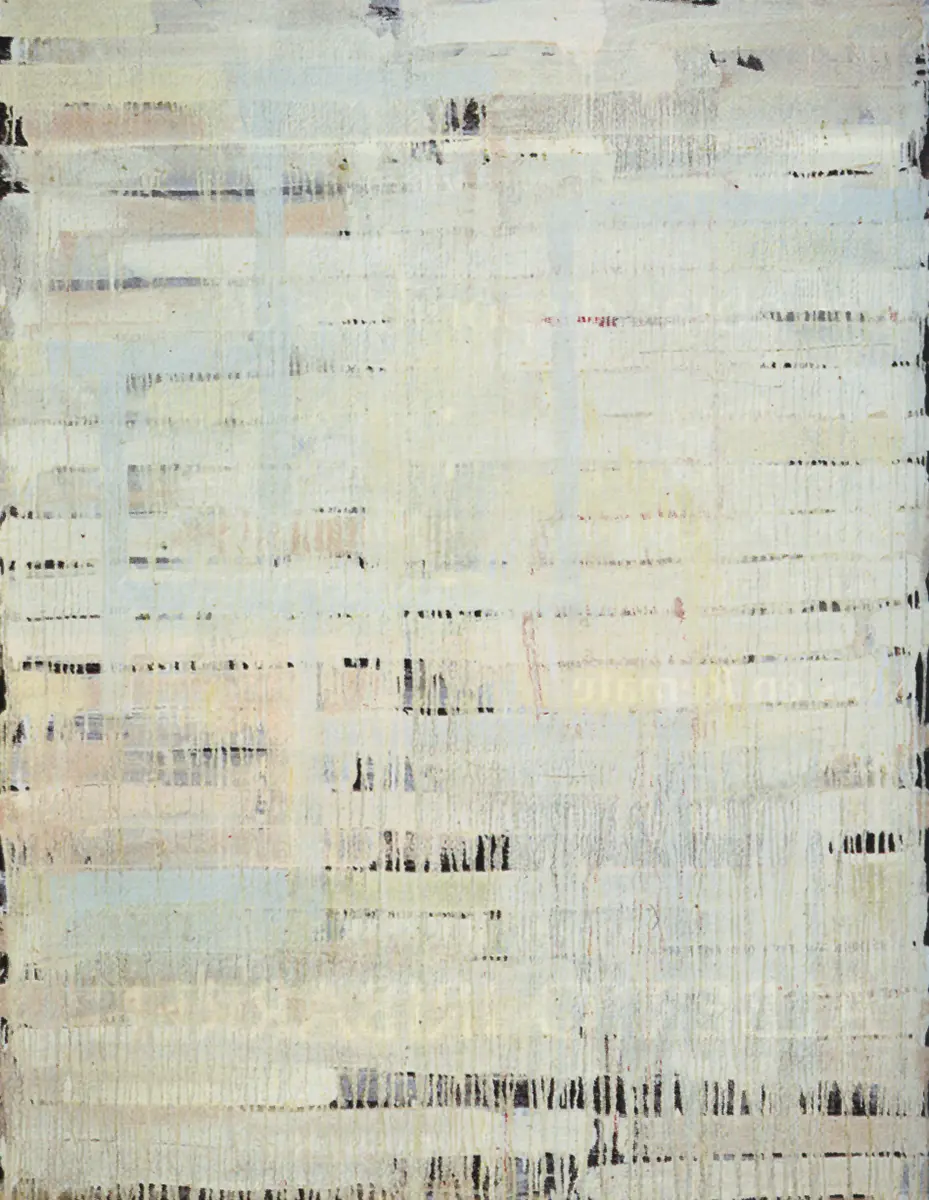
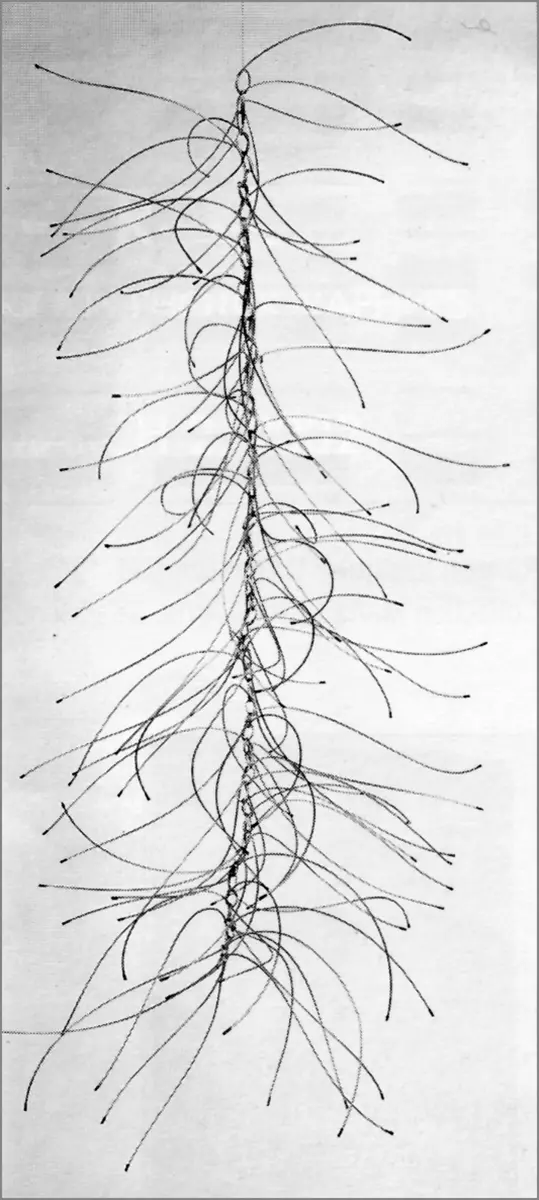
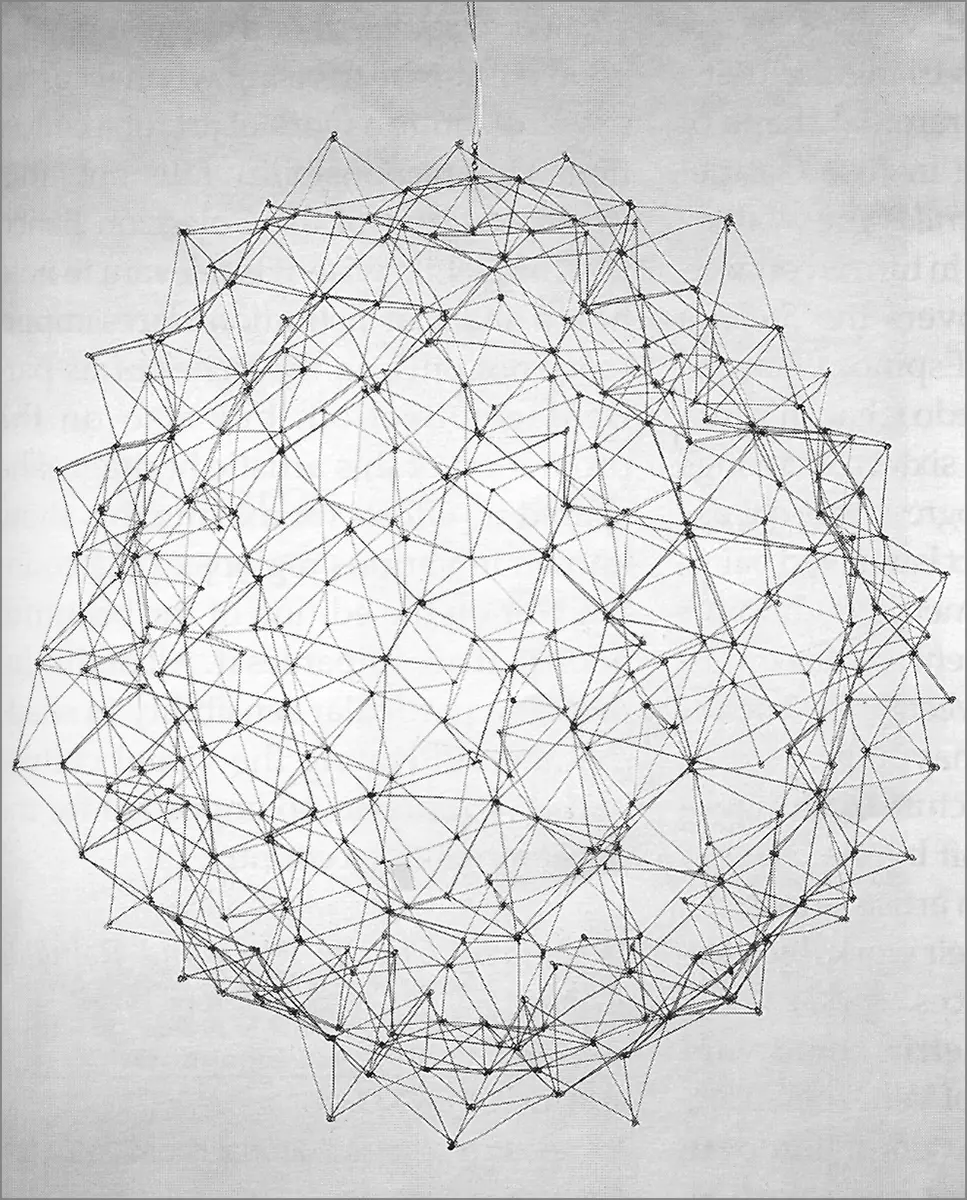
All of the works are connected to one another in the montage, even between one room and another: a painting by Alejandro Otero from his more "informal" stages (from the series Líneas inclinadas, [Slanted lines, 1950]) is quite subtly connected to a painting by Eugenio Espinoza from the late 1990s seen from the center of the final room. A mobile by Marcel Floris from 1975, placed between Otero and an Estructura cinética (Kinetic structure) by Soto from 1957, shares the same airiness and interest in the line in space as Magdalena Fernández’s Helecho (Fern, 1998), placed at an angle to the following room. Pedro Fermín, an artist born in 1950, is connected to geometric works of perfect and pure lines by Omar Carreño created in 1957. Josef Albers’s Homenaje al cuadrado (Homage to the square, 1957) gives full details of color, as does Elsa Gramcko, with R-32 from 1960, placed at the end of the same wall. The linear "nervousness" based on the diagonal, asymmetric direction of Pascual Navarro’s collage, somehow decenters the immanent mobility of one of Luis Guevara Moreno’s pieces. The purest, and at the same time most expressive, linearity is staged with Gego (drawings from 1968), Héctor Fuenmayor’s Líneas verticales (Vertical lines, 1975-1986), and Pedro Tagliafico, in the adjoining room. Seen on the diagonal, Gego’s Esfera (Sphere, 1976), with its triangular units, is connected to the pyramidal shape of the bullfighter’s cape in José Gabriel Fernández’s El espejo herido (The wounded mirror, 1998), which in turn is connected to the veil that covers the Sudario (Shroud) in Eugenio Espinoza’s series Orla (Edging). Sigfredo Chacón’s reticle is seen in a series of sixteen drawings in which the square progressively changes in size, and an abstract laminated painting, in which the geometric tradition is ironized through pigment and the impurity of the surface. Between both, a painting by Héctor Fuenmayor, created in 1998, in which the structure of rectangular planes is marked off by the changes in surface texture. Both artists enrich the monochromatism of their works by altering their formal resources.

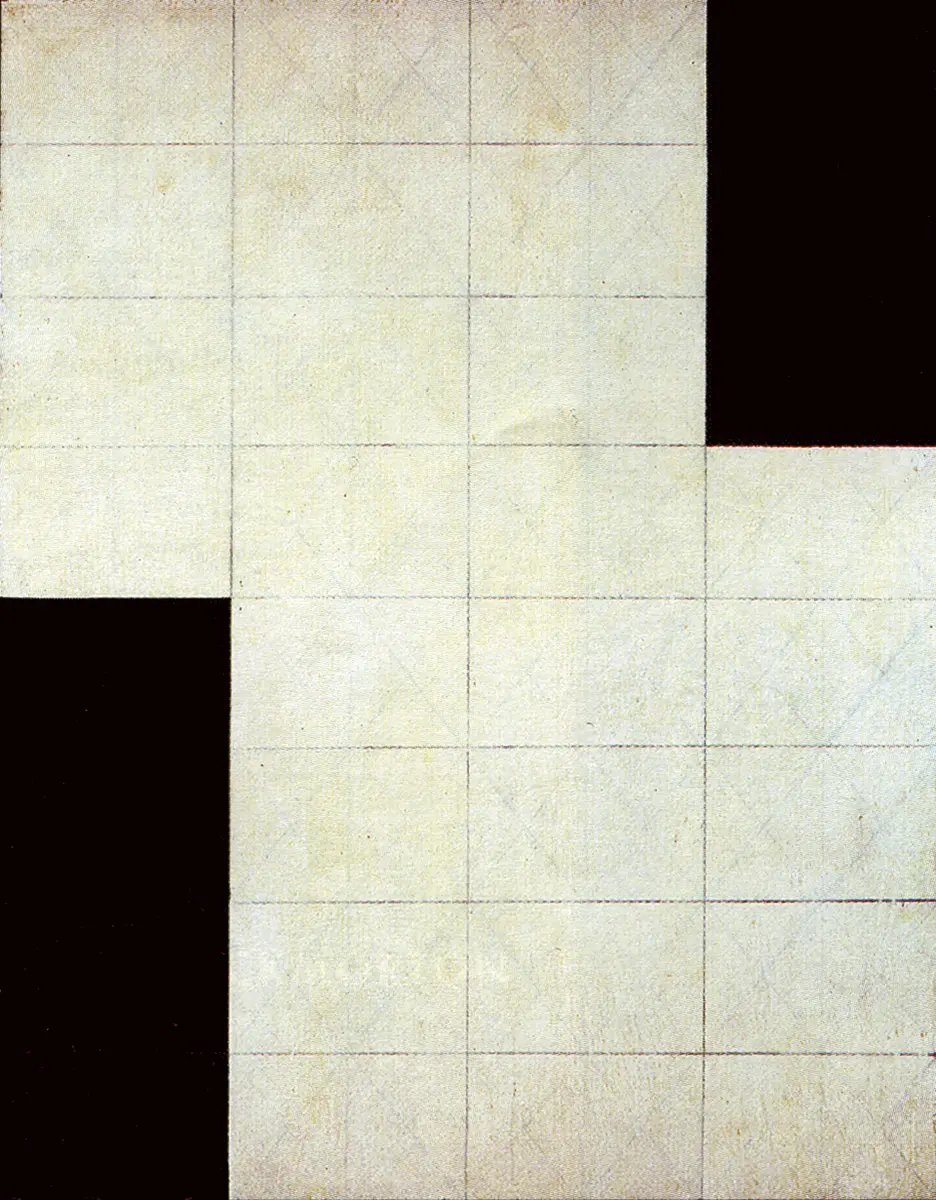
In essence, Geometría como vanguardia is an exhibit of Venezuelan artists. However, three masters of European geometrism accompany this selection, since they had been a fundamental reference in the development and diffusion of geometric abstraction on an international scale: Víctor Vasarely, represented with a small and spectacular oil on wood, created in 1950; the aforementioned Josef Albers; and Piet Mondrian, with a drawing that clearly points out the implicit relation that underlies the squares realized by artists like Espinoza and Chacón. Both works, that of Albers and that of Mondrian, were given on loan by the Museo de Arte Moderno Jesús Soto.

Moreover, all of the works in this show have value in and of themselves. Although the connections established in the museographical reading are possible depending on the spectator’s location or point of view in the various exhibition spaces, each work in and of itself casts a spell on account of its quality and its importance in the plastic development of each one of the artists exhibited. This is the case, for example, of artists not previously mentioned, such as Carlos González Bogen, Mateo Manaure, Oswaldo Vigas, Ramón Vásquez Brito, and Víctor Valera. As well as works of special interest, like an early Construcción cromocinética (Chromokinetic construction) by Carlos Cruz-Díez, created in 1959. All of this presupposes good curatorial advising when it comes time to acquire a work of art for a collection. This responsibility falls on Tahía Rivero, curator of the Colección Banco Mercantil. Likewise, it is relevant to note how a financial institution places importance not only on the riches of its particular collection but also on the promotion of this artistic heritage. She spared no efforts for making this show known in various regions of the country. Nor on the edition of the beautiful book that accompanies it. All of this indicates a particular sensibility in shaping and cultivating the visual culture of the Venezuelans, so important for the development of the country.
* Photos by Charlie Riera and Reinaldo Armas.
SUSANA BENKO
Art research-scholar. Editorial coordinator for ArtNexus in Caracas.