
The show Politics of Difference, organized by Spain's Generalitat Valenciana, brings together 96 contemporary artists from 26 Ibero-American countries. The exhibit, whose first stop is Recife, Brazil, will go on to several countries in the Americas before reaching Valencia, Spain. It is the first of many mega shows of Latin American art organized in Europe and the United States that has in fact been held in Latin America. According to their place of origin, eleven curators were responsible for selecting the artists, to wit: Ticio Escobar (Paraguay), Gabriel Peluffo Linari (Uruguay), Virginia Pérez-Ratton (Costa Rica), Víctor Zamudio Taylor (United States), Justo Pastor Melado (Chile), Aracy Amaral (Brazil), Cuauhtémoc Medina (Mexico), Cecilia Fajardo Hill (Venezuela), Michelle Marxuach (Puerto Rico), Kevin Power (The Caribbean), and Fernando Castro (Spain).
Organizing a show that proposes to research a specific geographical and cultural context (which goes against the grain of current curatorial tendencies) inevitably leads us, on the one hand, to ask ourselves if there is an identity common to the production of Ibero-American artists; and on the other, to search for the particularities of the art produced in each of the countries represented. The curators themselves have reflected on these topics in the essays they have written for the important catalog accompanying the show. For example, for Virginia Pérez-Ratton, at the beginning, Latin American art shows —in which many times the artists were grouped only because they belonged to a wide and many-sided territory such as this continent— were the only strategies available to include art from these countries into the international scene. Meanwhile, she claims, "in these current times of general transterritorialization" notions such as Latin American art are useless and becoming increasingly invalid. According to Cuauhtémoc Medina, "it is not an exaggeration to claim that curatorship by country has become the tell-tale sign of neocolonial subordination."
On the other hand, given the multiplicity of today's art, many times it is necessary to have prolonged contact with the artist or be constantly on his/her side in order to have a better understanding of his/her work. This reality of contemporary art increases the possibility that a professional from any given part of the world develops a better and deeper understanding of the art produced in his/her locality. As such, each curator acts as a region's specialist, someone who is particularly capable of recognizing and gathering the relevant pieces from the country where he/she works.
Kevin Power, the show's general and artistic curator, proposes a layout that gives importance to each piece without taking into account its origin. He then groups several together while creating new thematic or conceptual axes. If a thematic division serves to dilute the geographical boundaries from which the project was borne, thus offering a reading of current Latin American art based on other possible groupings; then it's necessary not to lose perspective that those other categorizations put the works' multiple readings at risk.
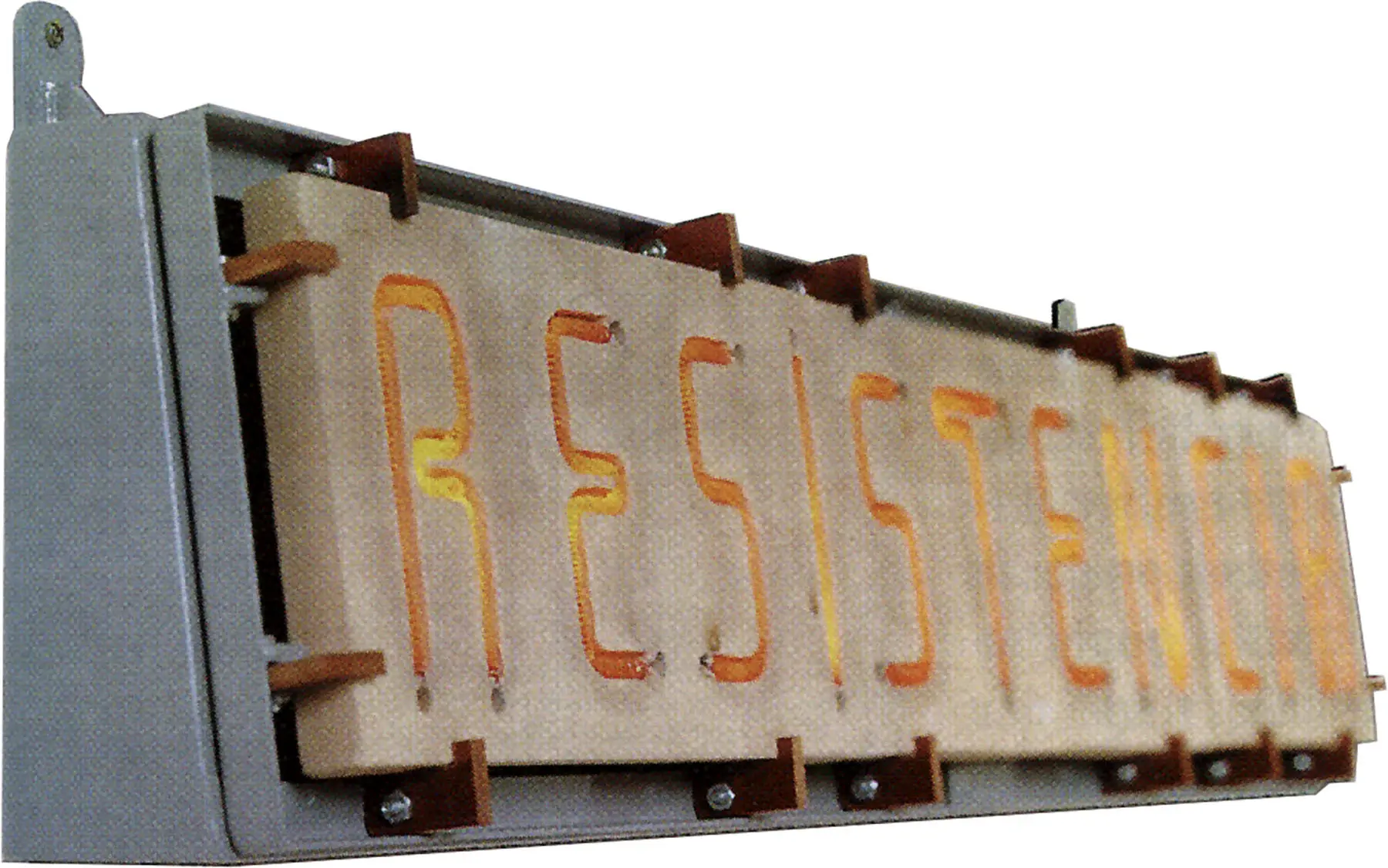
The first work that can be seen after entering the Centro de Convençoes de Recife's area adapted for the show is Resistencia (Resistance) (1999) by the Chilean Gonzalo Díaz. The piece is the title word written with an electrical resistance that turns red when it's plugged in. It's an interesting example of the neoconceptual trend in which semantic games and issues related to metalanguage are presented as allies to political and poetic contents —a key element found in the show's first nucleus, dedicated to works with sociopolitical content. In this nucleus, Brazil's Rosângela Rennó's photos are enlargements of found negatives— a common practice for this artist. In this case, the photos are of military personnel enlarged close to natural size. Blown-up with red hues and set in low contrast, the photos barely show the subjects' facial features but they accentuate the uniforms and postures. The recovered images, with their intense tones, are like frames of a recent past that must not be forgotten.
The show's second moment brings together works with content related to memory. From this group, we can highlight Las siete vidas de la basura (The Seven Lives of Garbage) (1995), by Francis Alÿs, Belgian artist living in Mexico City. For this piece, he abandoned seven identical objects in different garbage dump sites around the city and then tracked them down in local flea markets. So far he has been able to recover two of the pieces, giving testimony to the circular processes from which consumer societies nurture themselves.
Proposals intimately related to personal experience and autobiographical topics, together with a series of pieces around the body and the every day, constitute the show's third nucleus. The photographic self-portraits from the series El miedo (Fear) (1997-1999) by Maggy Navarro (Venezuela), or the many photos that Mónica Bengoa (Chile) took of two children brushing their teeth, are two clear examples of the types of works found in this section.
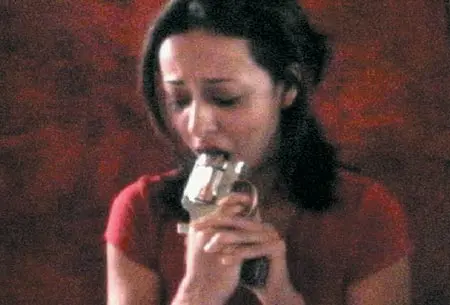
The fourth and last section is dedicated to videos and slide projections, grouped together more due to technical needs than to conceptual approximation. Among the works done in these media, the video series Lecciones (Lessons) (1998-2000), by Costa Rica's Priscila Monge, is particularly interesting for the way she uses the language of film, conscious of its implications and possibilities, and for the critical way in which she approaches the position of women in society, questioning the roles of victim and victimizer as participants in a dynamic and ambiguous game.
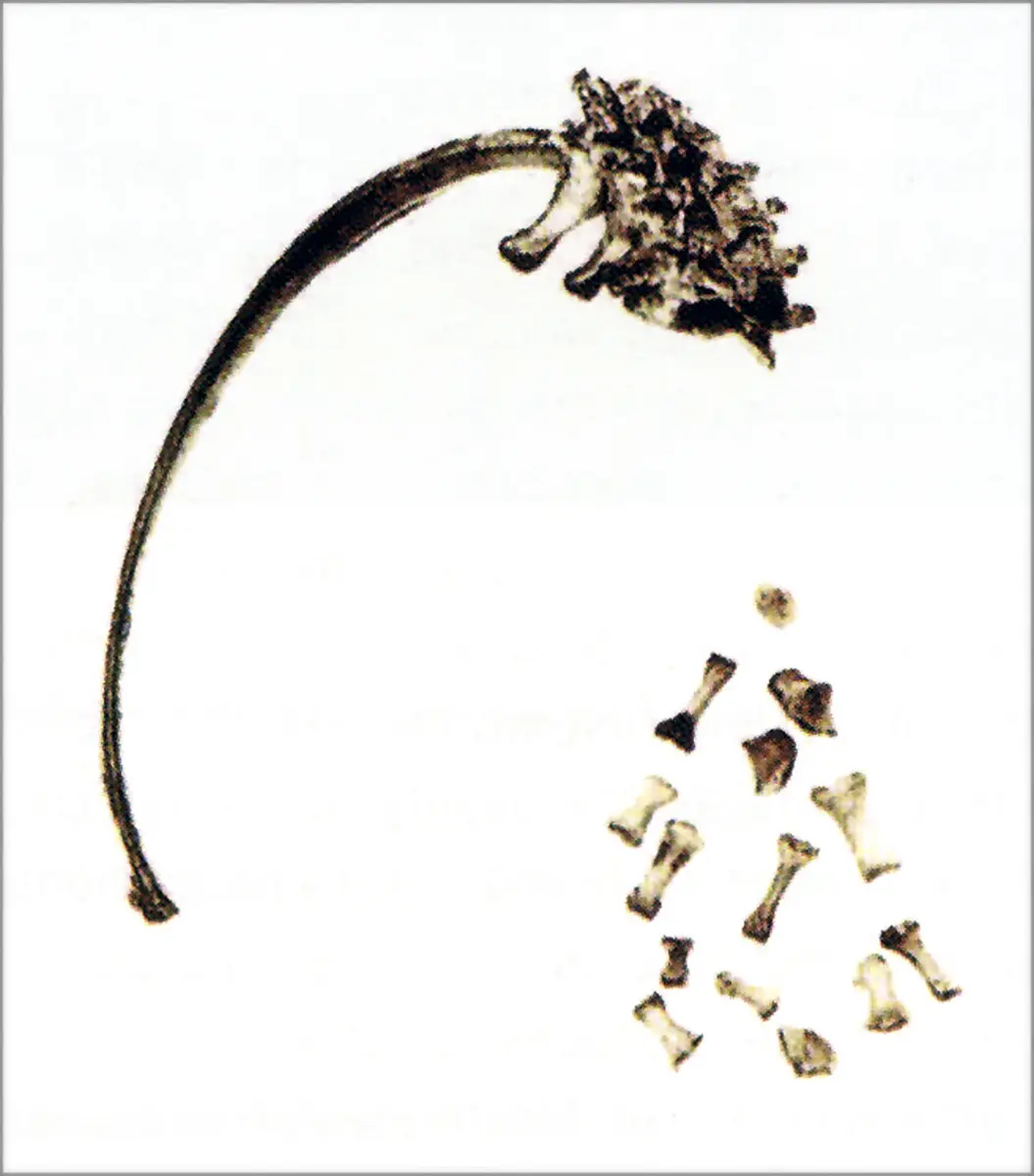
It's clear that these diverse themes and concepts have cross-references with several works in the show. Rosângela Rennó's work, while well placed in the sociopolitical section, could also be included in the nucleus dedicated to memory. By the same token, Corte de florero (Flower Vase Cut) (1997) —a series of black-and-white photographs by the Colombian Juan Manuel Echavarría, whose compositions made out of bones remind us of the old botany albums— is a delicate allusion to memory while at the same time, it references the violent murders perpetrated during Colombia's political confrontations of the 1950s. Another piece that goes beyond the distinctions established by the curatorship is Pratos típicos (Typical Foods) (2000), a photo series by the Brazilian Rochelle Costi. The photographs depict plates of food in situations that are repeated every day, which of course fit perfectly in the nucleus covering daily life. But they also become loaded with sociopolitical undertones given the contrasts in quality and quantity of the different food regimes around the continent. It is necessary to always take into account that no selection can completely represent a country, and that works of art cannot be grouped together based on their geographical origins, nor can they be reduced to being a mere reflection of the sociopolitical conditions contextualizing their production. If this show does not present a panorama and it doesn't issue a statement regarding the particularities or generalities of Ibero-America, it does present itself as an important opportunity to be in contact and discuss truly good works that are virtually unknown outside their country of origin.
CARLA ZACCAGNINI