The Tijuana-based artists' collective Torolab creates art that proposes solutions to the visual blight of industrial city life. Mingling fine art, architecture, furniture design, clothing, music, and film, their works propose aesthetic solutions to chaotic visual phenomena of city landscapes. Utopian in aspiration, their premises recall those of the early 20th-century Russian Constructivists and subsequent German-based Bauhaus artists. Even though more than sixty years have elapsed since then, and even though in North America such preoccupations have spun into the dystopian reality of mounting consumer debt, for the Torolab collective it is a dream whose time has come again.
Interested in addressing the socio-economic disparities of Tijuana, the Torolab collective was founded by Raul Cardenas Osuna and Marcela Guadiana Cardenas, a husband-and-wife team. Aspiring to improve and modernize life in a city of 1.2 million, their team designs architecture, furniture, clothing, music, and videos of aesthetic distinction. Ironically, their works have begun to assume an exclusivity whose market value now vies with the collective's original democratic objectives.
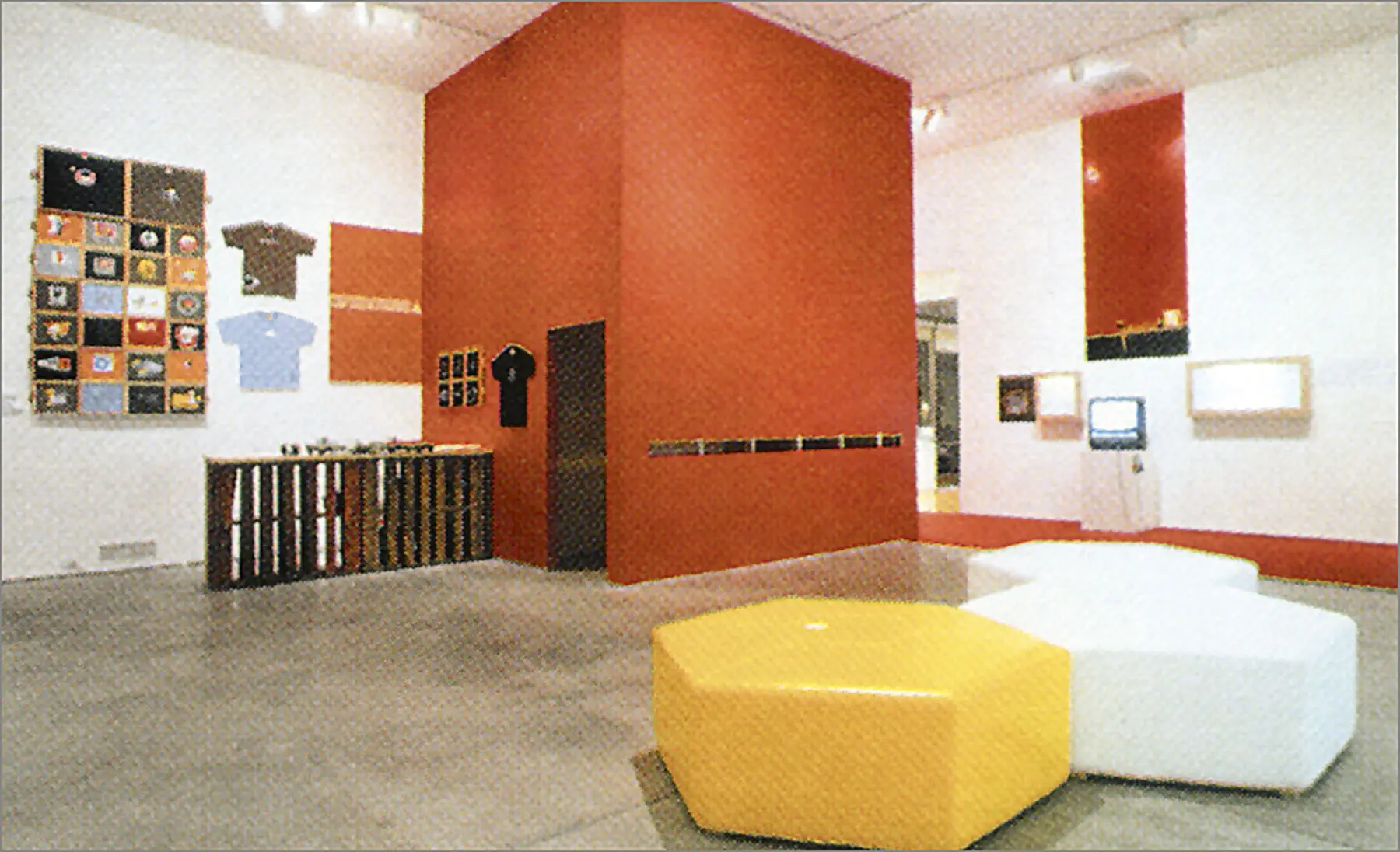
The show's opening room signals that dilemma, showcasing a suite of architectural drawings for an exclusive personal residence designed for Jose Rangel, performer for the Cafe Tacuba Mexican band. Those building blueprints are accompanied by actual modular furniture designed to be used as storage chests, individual seats, or if stacked together as a sofa, bed, or even wall. Nearby a state-of-the-art sound system provides music on demand that transforms the usual silence of the museum into a lively Nortec sound environment.
Functional clothing, marketed under the label Torovestimenta, which highlights T-shirts and jeans and is sold in boutiques from Tijuana to Tokyo, is also profiled. Like the furniture, the clothes carry wry double-entendres. There is, for example, a T-shirt that appropriates the U.S. freeway sign that appears on superhighways as one approaches the Mexico-U.S. border. It shows a family of three fleeing across space accompanied by the word "caution" in English and "prohibido" in Spanish. This type of layering of meaning or function has come to be a conceptual trademark of Torolab works. It reoccurs in the final exhibition room, where a four-part video entitled White Noise, identifies four actual and metaphoric land uses.
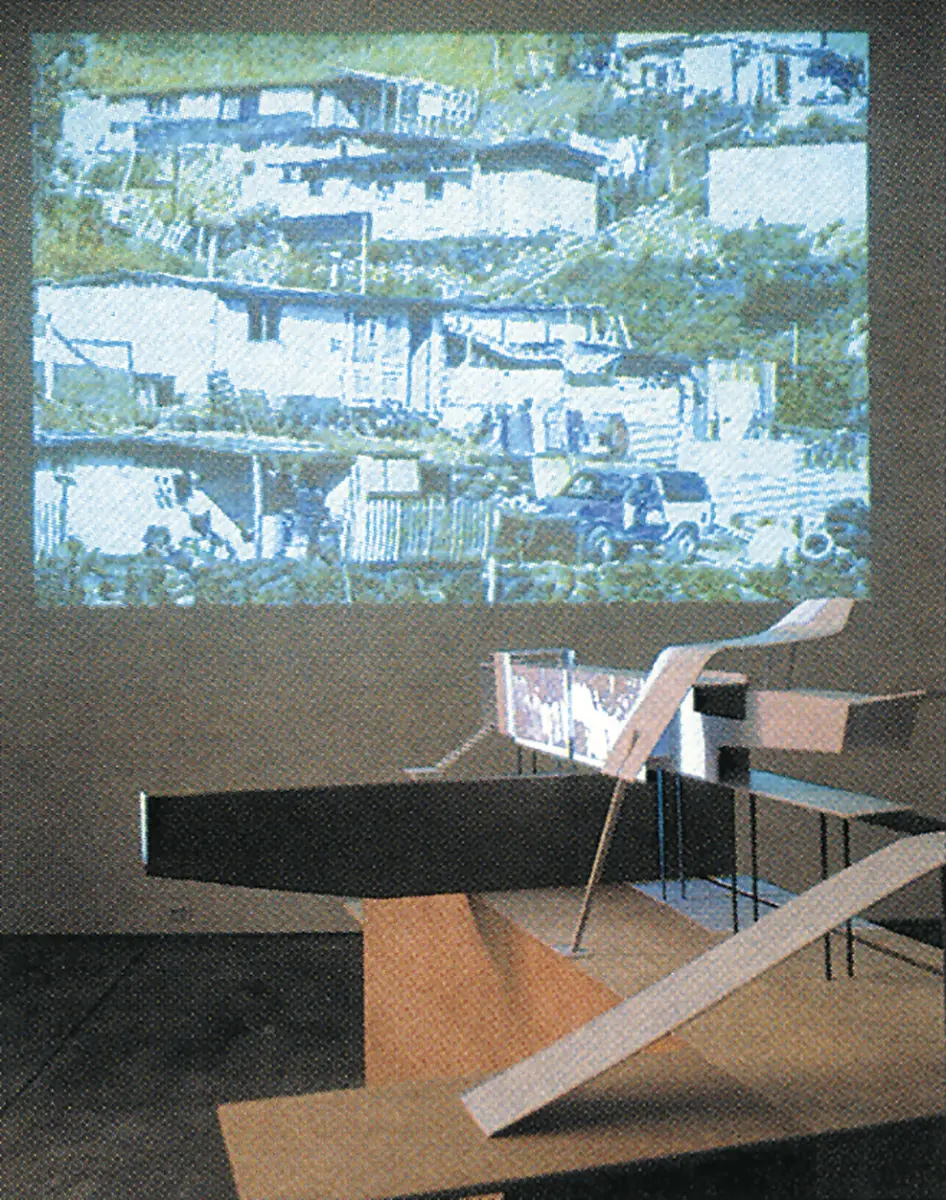
In contrast to the private residence featured in the opening gallery, the video focuses on the collective concept of a city. Part one shows Tijuana's shipyards, and alludes to the aesthetic blight of coastlands whose land use possibilities seem perpetually denied. The second section parodies, in turn, Tijuana's "bad copies" of uninspiring American structures, suggesting the squandering of wealth. Then the focus segues to makeshift housing solutions that exist elsewhere in the city, accenting solutions born of necessity. The concluding scenes infused with democratic social innuendoes, hint at more equitable uses of land and material resources.
Infused with ideological dreams of social change, the Torolab exhibition thus concludes by aspiring to art's noblest ambition. But sadly, the collective's growing success as profiled in the opening rooms suggests how consumer society co-opts such artistic aspirations, rendering utopian theory impotent at the moment it charges bull-like into reality.
COLLETTE CHATTOPADHYAY