
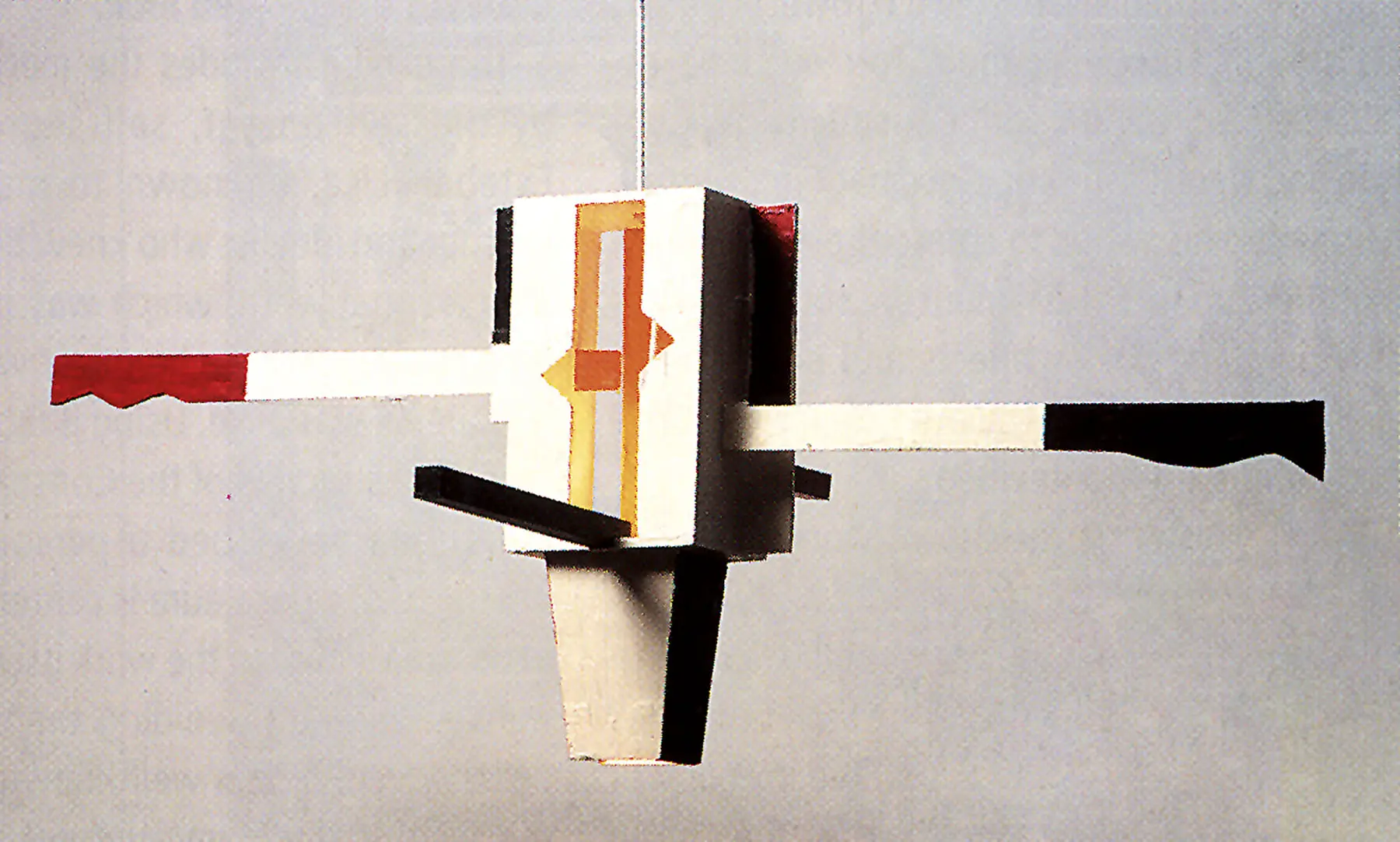
A large part of Latin American art exhibits center around valuable regional characteristics, of which the pristine value of popular, indigenous, primitive, and non-European elements is one of the most well-known. But amongst the greatest creators of universal abstraction, concrete art, and kinetic art we also find Latin American artists. As proven by the Abstract Art from Río de la Plata, Buenos Aires, and Montevideo, 1933-1953 exhibit, the continent's southern cone has produced a noticeable body of work that highlights its early and high intellectual sensitivity. The movement's origins and coordinates, its divergences, and worldwide contributions, are now registered in the originality and effervescence that took place for twenty years in those capital cities, and today, for the first time, they have a completely dedicated presentation in New York City. Carefully curated by Mario H. Gradowczyk and Nelly Perazzo, Abstract Art from Río de la Plata, Buenos Aires, and Montevideo, 1933-1953 was held at The Americas Society. There were two exhibits held simultaneously in galleries dedicated to Latin American art: Arte del Río de la Plata: pinturas, esculturas, dibujos y una colección de libros (Art from Río de la Plata: Paintings, Sculptures, Drawings, and a Book Collection) at CDS Gallery, and Modernismo en Montevideo y Buenos Aires: 1930's-1960's (Modernism in Montevideo and Buenos Aires: 1930's-1960's) at Cecilia Torres' space in Soho. Studies about the topic were presented in other places around the world, along with small places in collective exhibits. In the past, the topic has merited the attention of European specialists—although not nearly enough when compared with the Old World's great abstractionists from the period. Some coincidences, as well as contributions and differences, have been established between the artistic circles of both continents. In this regard, we could mention an extensive bibliography that would surely exceed this note's space, but we cannot afford to mention Nelly Perazzo's El arte concreto en la Argentina (Concrete Art in Argentina), Gaglianone, 1983; Abstracción: el paradigma amerindio (Abstraction:The Amerindian Paradigm), IVAM, Spain; or Argentina 1920-1940, Oxford Museum of Modern Art, where Gabriel Pérez-Barreiro, current visual arts director at The Americas Society, tackles the chapter on abstract art, recognizing its powerful authorship and originality.
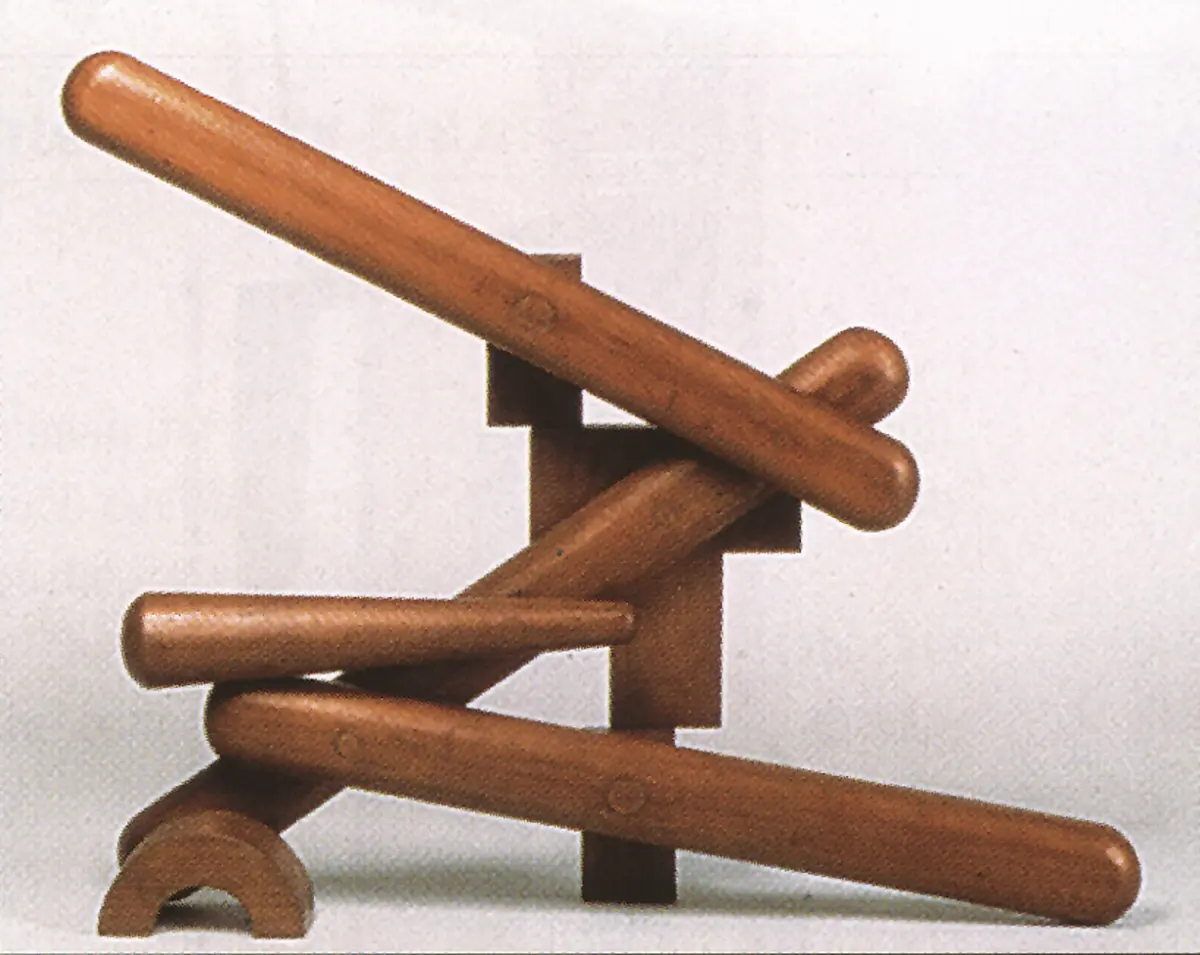
Abstract Art from Río de la Plata, Buenos Aires, and Montevideo, 1933-1953 - The Americas Society
Latin American art is a powerful manifestation that transcends its geographical boundaries and cultures. Hardly 20 years ago there was still some discussion going on about whether Latin American art was "on to something" or "if it existed" or whether "they were attractive works referring only to local characteristics;" someone even said that it was a "commercial boom." With the passing of the years, towards the end of the 20th century, the consistency and the verbosity have both increased, proving beyond doubt the existence of such art. At the end of 2001, New York City received that body of work that since its origins has proven to be one of the key points in the creative torrent that started at the last century's onset. One of this show's outstanding traits is that it presents several virtually unknown artists. This perspective of rescue responds to the curatorship's professional vision, as well as to the concept of expanding horizons beyond those names frequently named in auction houses. A metaphor is established here: by expanding the registry, the artistic building's plot grows, gaining even more strength and height.
Since the end of the 19th century, artists from the Southern Cone have been asking themselves, Who are we? The lack of indigenous roots-oriented an elaboration different than the European influence—a fact that shouldn't or cannot be denied. In the search for new ways, Xul Solar and Emilio Pettoruti are unarguable parameters. Other early seeds of abstraction can be found in Buenos Aires, in the multidisciplinary Grupo Florida that in the 1920's searched for a modern movement that would respond to the socialist answers found by the Grupo Boedo, its rival in art and in intellectual and working demands. The political situation of the 1930's on both shores of Río de la Plata reveals that before World War II, the area was governed by conservative ideas while it enjoyed a certain degree of socioeconomic tranquility. Even before knowing each other or establishing professional links, the artists we deal with here were not comfortable with the rigid characteristics of their respective societies and esthetic territories. Among the first relevant facts, we register the return from Europe of Juan del Prete, to Buenos Aires in 1933, and Joaquín Torres-García, to Montevideo in 1934. Del Petre's abstractions and Torres-García's theories differed from one another, but less so than with the concepts prevailing locally. As with the general public, artists and intellectuals alike had little acceptance for the freedom of form, media, and materials. In his search for modernity, del Petre knew how to collect and save the fragments that the public destroyed during his 1933 exhibit, reusing them later to make other works (let's just say that they weren't pieces of painted cloth, but thread and twisted paper glued on to the canvas). This represents the background of the Abstract Art from Río de la Plata, Buenos Aires, and Montevideo, 1933-1953 exhibit, where we can find the value assigned to "anti perfection" and its paths to the irregular contour, and the use of materials not strictly artistic, such as the wire to make sculptures (that can be compared with the notion of "the structure as building and the structure at plain sight" instituted by the Eiffel Tower). During his stay in Europe, Joaquín Torres-García established a direct link with Constructivism, Cubism, and Neo-Plasticism. Once back in Uruguay, he opened his wings to create the most meaningful group of Latin American authors—not only painters but architects and designers as well—, publishing Círculo y Cuadrado (Circle and Square) in Montevideo.
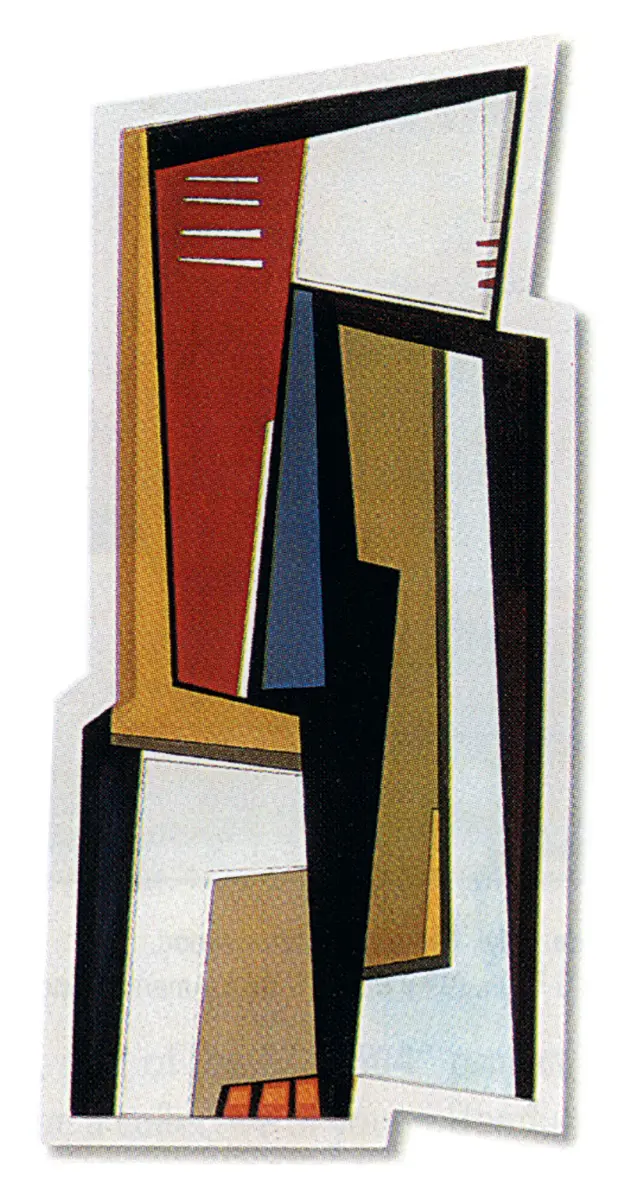
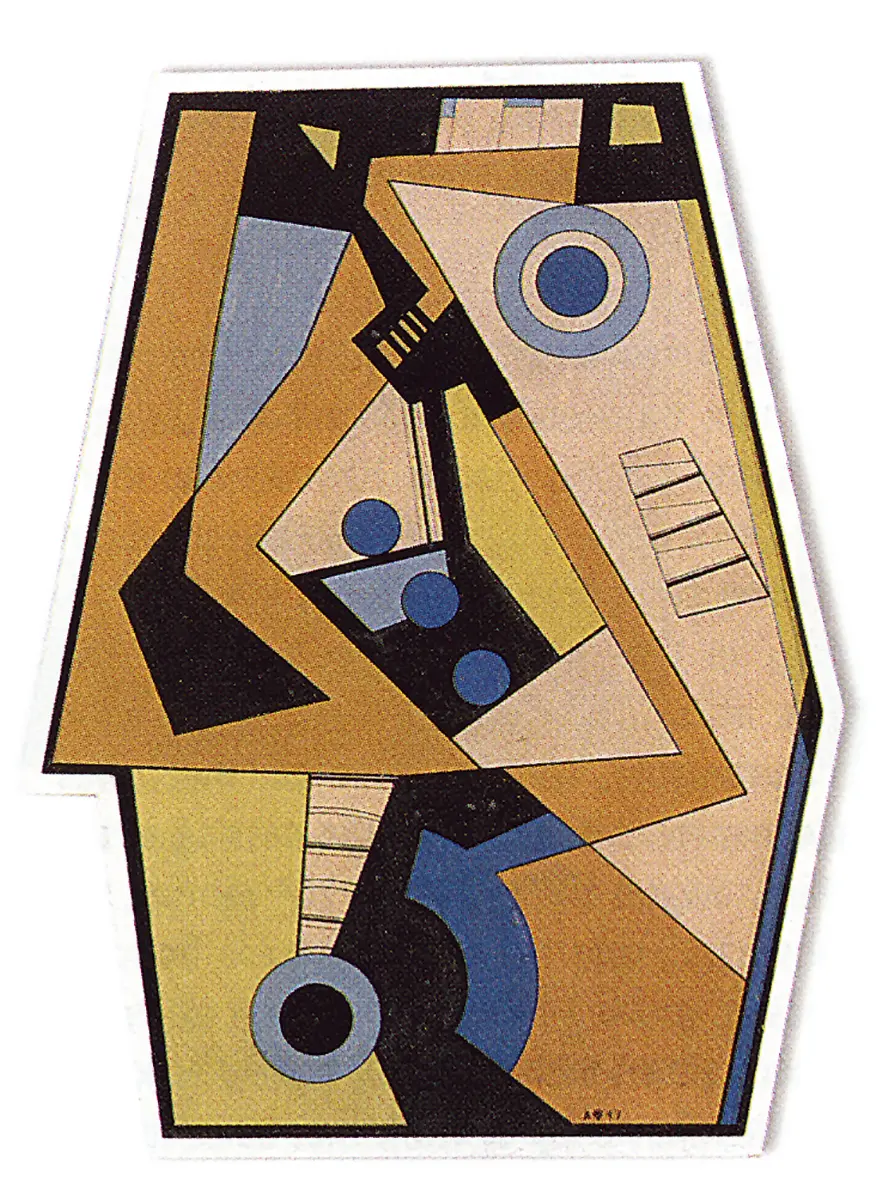
Perusing some of the show's works, Arlequín (Harlequin), by Rod Rothfuss, circa 1994, from the Patricia Phelps de Cisneros collection, is an oil on canvas that establishes a variety of links with its contemporaries, to wit: The irregular or shaped canvas is characteristic of the Grupo Madí, while the earthly palette (not in the grays of other abstract artists) is Italianizing and closer to del Prete and Torres-García. The composition, image, and dynamics remind us of Los bailarines (The Dancers) and other works by Emilio Pettoruti. Many documents can be consulted thanks to Gyulia Kosice, the most daring of these precursors, the one with the most publications under his belt, who expanded his madismo in all directions, and who has not been properly recognized. With the sole presence of Roÿi and the Serie Espacio Objetivo (Objective Space Series) plexiglass, we can cast a glance at the type of adventures these creators undertook when technology and materials back then were not as advanced as today's. Even if they are not mentioned here, every single piece of the group has a risky creative ingenuity that deserves a dedicated look.
The exhibit includes the meritorious works by the self-taught, self-segregated artist Esteban Lisa, unknown to many, a tireless teacher and idealist who knew how to preserve his personal work, which was presented only after his death since he never wished to show it while he was alive. Using a technique of successive destruction of the Constructivist parameters, Lisa developed a personal search for abstraction, whose aura is centered more on the act of creation than the work itself. In this sense, he was probably avoiding the creation of yet another canon (it is well-known that throughout history, the many ruptures with academicism have led to new types of academicism). Other little-known authors in the exhibit are Antonio Llorens, Rodolfo Ian Uricchio, María Freire, and José Pedro Castigliolo. The 21 authors and 49 works are well selected, even though some of them have only one piece, while others have up to seven. We also have, aside from those already mentioned, Carmelo Arden Quin, Martín Blaszco, Juan del Prete, Manuel Espinosa, Claudio Girola, Alfredo Hlito, Enio Iommi, Gyula Kosice, Raúl Lozza, Víctor Margariños D., Tomás Maldonado, Juan Mele, Lidy Prati, Gregorio Vardanega, Joaquín Torres-García, and Rhod Rothfuss. Many of these works had little value in their day, but today they have become privileged documents. The show is, for this reason, valuable in two ways—it has presented background research and has gathered and transferred these new authorities in modernism.
The show also has an adequate extension. The catalog's essays register theories, movements, divergences, splittings, and regroupings, as well as international connections and exhibits. Asociación Arte Concreto-Invención, Madí, Perceptismo, the publications (where we can highlight Arturo magazine), declarations by the participants and experts—all this is conjugated in an effort to reintegrate the value of these artists' contributions. In both sites, besides the mentioned documentation, it would have been a good educational measure to include charts and synoptic tables (which are found in some of the existing biographies), thus giving visitors a clearer view of the times, characters, exhibits, and other activities in Abstract Art from Río de la Plata, Buenos Aires, and Montevideo, 1933-1953.
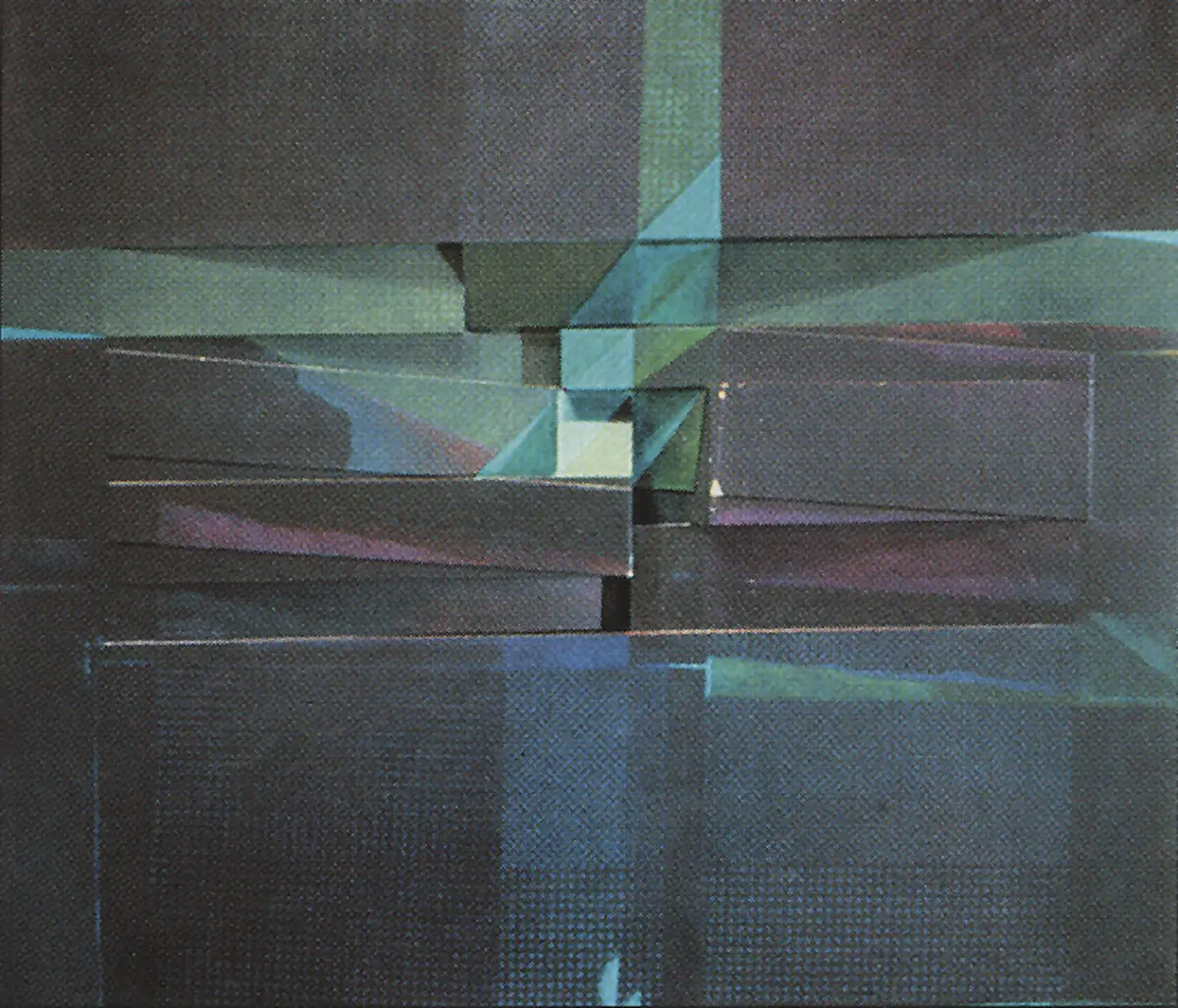
Art from Río de la Plata: Paintings, Sculptures, Drawings, and a Book Collection - CDS Gallery
In order to expand the knowledge of the Southern Cone's spectrum of creativity, CDS Gallery presented a total of 20 pieces, 18 Argentines and 2 Uruguayans, alive and dead, most of them renowned, coming from different walks of life, almost none of them are abstract creators like Pedro Figari or Juan Battle-Planas. Or those who produced their works in the field of abstraction in such personal ways or in such specific moments of their careers as Lucio Fontana, Marcelo Bonevardi, Emilio Pettoruti, Gonzalo Fonseca, Xul Solar, Roberto Aizenberg, Clorindo Testa, Guillermo Kuitca, Alfonso Michell, Antonio Fernández Muro, Luis F. Benedit, Joaquín Torres García y Sarah Grilo. For the gaze of the discerning spectator, many of these pieces offered original details within each artist's habitual context. The work Fato per Musei, created by Antonio Seguí in 1972, stands out in this sense. For beginners in Latin American art, the exhibit showcased good works reflecting different capacities.
Modernism in Montevideo and Buenos Aires: 1930's-1960's - Cecilia Torres
A coherent title bringing together 19 works by 12 artists from the River Plate Basin who, between 1930 and 1960, were related in the search for modernity. (Included is a truly original piece, a small Anonymous, AAC, Asociación Arte Constructivo, ink on paper, ca. 1936-1937.) They were artists who participated in the Taller Torres-García, the Asociación Arte Constructivo, the Arte Concreto Invención, and the Grupo Madí. The show is consistent; works done on small- and medium-size backgrounds predominate abstract paintings, drawings, and wood constructions. Some of them can be highlighted for their freshness and esthetic strength, both in their original context and in today's art world as well. Blue Grid-Primary Colors (1957), by Francisco Matto, references a South American poetics but it also has an interesting relationship with certain Navajo elements; Form in Relief (ca. 1947), a painted wood relief by the still unfairly unrecognized Gonzalo Fonseca; Negativo-Positivo (Negative-Positive, 1959), an oil-on-masonite diptych (92 x 60 cm. each panel) attributed to Antonio Llorens, an important piece by itself but also because it's so rare to see works by this artist. With this diptych he confronts us with a constant among these authors: invention, followed by research, turned into works of art, a process that's more important than the works themselves, always producing notable results. A constructive hanging sculpture by Horacio Torres, conceived also as something utilitarian—a lamp—is an exact replica of the original. This piece, an oil on wood, highlights the fact that Constructivism did not shy away from other disciplines; instead, it directed itself to the most diverse aspects of everyday life. In this sense, it ratifies itself as an inclusive and humane movement that not only is circumscribed in the esthetics of a particular moment in time, but it also caters to life itself, both the artist's and the public's.
GRACIELA KARTOFEL